
High uninsured rates plague Alabama’s rural areas, new report shows

Alabama’s small towns and rural areas have among the highest rates of uninsured low-income adult citizens in the country, and residents there are more likely to be uninsured than those in metro areas, according to a new report by Georgetown University’s Center for Children and Families (CCF) and the University of North Carolina’s NC Rural Health Research Program. The uninsured rate for Alabama adults with low incomes is 36 percent in rural communities and small towns, and 29 percent in metro areas. Both rates are much higher than the national averages of 26 percent for rural areas and 18 percent for metro areas. In rural areas and small towns across Alabama, the report unveiled that the uninsured rate for low-income adults has grown stagnant — it has remained virtually unchanged between 2008-09 and 2015-16. Medicaid and the uninsured Alabama Arise — a nonprofit, nonpartisan coalition of congregations, organizations and individuals promoting public policies to improve the lives of low-income Alabamians — believe this number could look even worse in Alabama if the Medicaid “work requirement” plan that Alabama submitted for federal approval goes through. They say it would drive the uninsured rate even higher by stripping Medicaid coverage from thousands of parents in poverty. The proposal would require 35 hours of work, job training, education or volunteer service each week. Exceptions would be made for people with young or disabled children. State officials says the proposal only impacts a small number of Medicaid recipients, able-bodied parents and caretakers who qualify because their income is less than 18 percent of the federal poverty level. Most Medicaid beneficiaries in the state are children, disabled or elderly. But Alabama Arise disagrees — they believe, virtually all of those parents would be left with no realistic alternative for affordable coverage. “Not only has Alabama failed to move forward on health coverage, but now our state is seeking to move backward by leaving even more people uninsured,” said Alabama Arise policy director Jim Carnes. “Alabama should drop its cruel efforts to punish people living in poverty and focus instead on expanding Medicaid so all Alabamians can get the care they need to become and stay healthy. Medicaid expansion would save hundreds of lives, create thousands of jobs and keep rural hospitals and clinics open to serve residents across our state.” According to the report, nationally, the uninsured rate for low-income adults fell by more than half – from 35 percent to 16 percent – in rural areas and small towns in states that expanded Medicaid. For states that have not expanded, the decline was much smaller: from 38 percent to 32 percent. “Medicaid expansion would reduce the uninsured rate for residents across the entire state; however, the most dramatic improvement likely would be felt in small towns and rural areas of Alabama,” Georgetown CCF executive director Joan Alker explained. “Improved coverage rates typically translate to a more stable health care system and help rural areas and small towns maintain availability of health care providers in areas where shortages are all too common. Access to rural health providers is especially important to women of child-bearing age and those with chronic conditions like asthma.” In July 2018, 10 of the 11 Alabama counties with the highest unemployment rates were rural counties.
Terri Sewell leads effort to address wastewater systems in rural Alabama
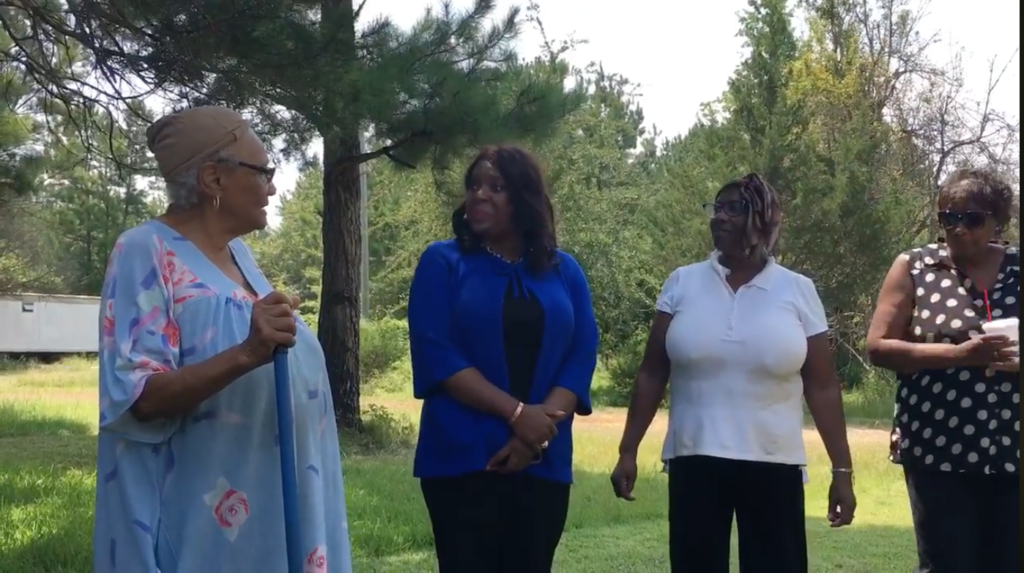
Alabama 7th District U.S. Rep. Terri Sewell joined local officials and experts in Lowndes County on Monday to address what she referred to as a “public health crisis” in rural Alabama Black Belt and surrounding counties. For decades, homes in rural communities in the state have not been connected to their local wastewater and sewage systems, causing a myriad of problems for the residents. For some, brackish wastewater fills their yard and the smell of sewage, only increased by the heat, wafts through the air. In poverty-stricken Lowndes County the situation has led to a surge of tropical diseases mostly found in developing countries; hookworm, toxocara, and the perfect breeding grounds for mosquito-borne illnesses, including Zika and West Nile. Experts suggest 60 percent of homes in some parts of rural Alabama drain wastewater without treatment from a septic system.1 Researchers from the University of Alabama estimate that more than 500,000 gallons of raw sewage enter rivers and streams in Alabama’s Black Belt each day. “In most countries in the Western world, it’s assumed governments will one way or another make sure basic facilities like clean running water, sewage, and sanitation are available,” Philip Alston, the United Nations Special Rapporteur on extreme poverty and human rights, told the Montgomery Advertiser. “What was striking to me in Alabama was the extent to which there’s no sense that a government should be working towards providing basic infrastructure,” Alston continued. “If you happen to live in one of the big cities, you will get access, but if you don’t — and particularly if you live in one of the poor counties like Lowndes — there isn’t any obligation and there are no plans in place.” But Sewell is hoping to change that. On Monday, she called on state departments to stop fining those residents who are living with insufficient and failing water systems; instead asking that they relax the citation practice for a year to give residents time to be identified, and ask for help. “They [the health department] have been been lenient,” Sewell told the Montgomery Advertiser. “But in order to really have people self-identify, you’re going to have to incentivize that.” “These are remote areas; they are 40 miles from nowhere,” Sewell continued. “And it’s not just Lowndes County. It’s rural America. Even in Alabama, the problems are not just in the Black Belt. We can’t fine people. We need to help them.” Sewell met with experts from several fields and local residents to discuss the problem posting a video of her interactions on Facebook, saying that solving the issue “is going to take all of us working together!!” Sewell’s visit come just a few days after The United States Department of Agriculture announced over $4 billion in national agriculture loan funds assigned to fund rural wastewater infrastructure projects. The experts she met with said that one-size-fits-all solutions will not work in Lowndes County, saying a mixture of solutions will be necessary for any real change to occur.
Senate to consider bill providing broadband service to rural areas

Sen. Tom Whatley (R-Auburn) has introduced legislation in the Senate that would remove coverage area restrictions for public providers of municipal telecommunication services and allow those providers more leeway in providing broadband service to rural areas of Alabama. Providers are already supplying these areas with cable and phone service, but Whatley’s bill would open up avenues for providing high-speed internet service. Republicans and Gov. Robert Bentley have made it a priority to provide Alabama’s rural areas with high-speed Internet service, a move they believe will make great strides in lowering the unemployment rate and, thereby, the state’s poverty rate. Currently, only 44 percent of Alabamians outside of major cities have access to broadband Internet service, according to the Federal Communications Commission. “My legislation will improve Internet access by creating new providers, which will directly correlate to increased economic development,” Whatley said in a statement on the Senate Republicans’ website. “Locking our municipal telecom providers into arcane coverage areas is a shortsighted approach to protect growth-limiting monopolies.” To be sure, rural Alabamians face significant hurdles in having access to top-notch Internet service – only 66 percent of Alabamians have access to broadband Internet service and only a small portion of them have access to service provided through fiber-optics, a method more efficient and faster in delivering broadband service. Whatley noted in his statement that Google has recently announced plans to “partner” with Huntsville, but that partnership does little good for Alabama’s smaller cities. The senator’s legislation, SB56, would make great strides in providing Internet service to rural Alabama and create a climate of competition which will benefit consumers. “Over 1.6 million Alabamians lack access to high-speed Internet: that number must be reduced, and quickly, if our state is going to compete and thrive in the 21st century,” Whatley said.
