
Alabama riverfront brawl videos spark a cultural moment about race, solidarity and justice
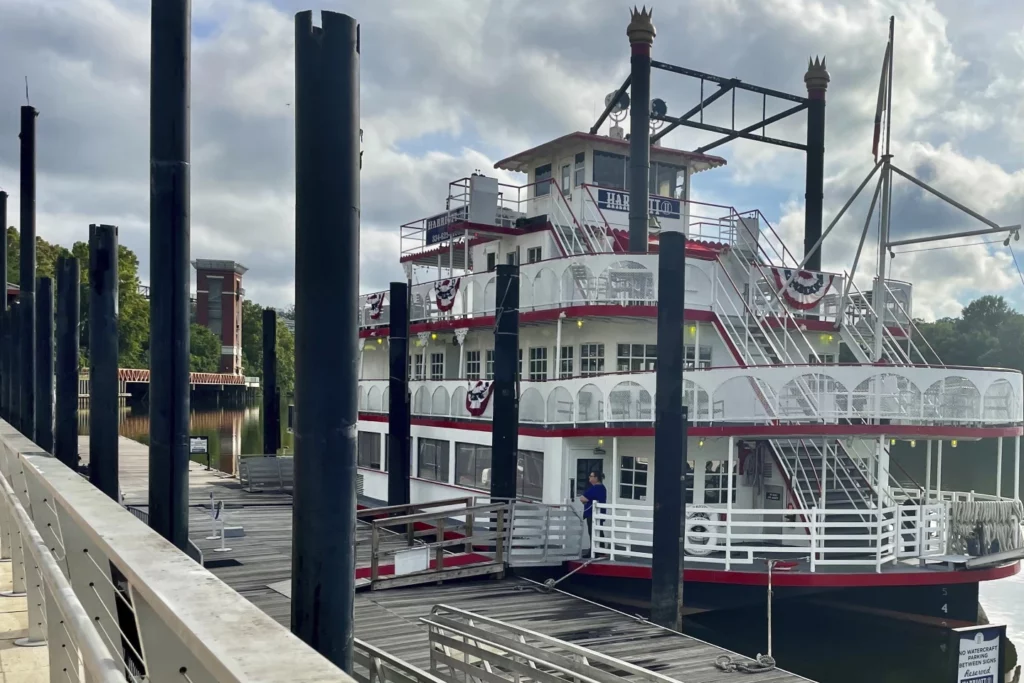
As bystanders trained their smartphone cameras on the riverfront dock while several white boaters pummeled a Black riverboat co-captain, they couldn’t have known the footage would elicit a national conversation about racial solidarity. Yet, a week after multiple videos showing the now-infamous brawl and valiant defense of the outnumbered co-captain were shared widely on social media, it’s clear the event truly tapped into the psyche of Black America and created a broader cultural moment. Andrea Boyles, a sociology professor at Tulane University, said a long history of anti-Black racism and attacks and current events likely magnified the attack’s impact and response. “Especially at a time like now where we see an increase in anti-Black racism through legislation and otherwise, whether we’re thinking about history, the banning of Black history and curriculum and all sorts of things across the state of Florida” and elsewhere, Boyles said. “So this is why it is on the forefront of people’s minds. And folks are very much tuned in, Black people in particular.” Many see the Aug. 5 ordeal on the riverfront dock in Montgomery, Alabama’s capital city steeped in civil rights history, as a long-awaited answer to countless calls for help that went unanswered for past Black victims of violence and mob attacks. “We witnessed a white mob doing this to him,” said Michelle Browder, an artist, and social justice entrepreneur in Montgomery, describing the attack by boaters on the Black riverboat co-captain. “I call it a mob because that is what it was; it was a mob mentality,” she added. “It then became a moment because you saw Black people coming together.” After being inundated with images and stories of lethal violence against Black people, including motorists in traffic stops, church parishioners, and grocery shoppers, the video from Montgomery struck a chord because it didn’t end in the worst of outcomes for Black Americans. “For Montgomery to have this moment, we needed to see a win. We needed to see our community coming together and we needed to see justice,” Browder said. Videos of the brawl showed the participants largely divided along racial lines. Several white men punched or shoved the Black riverboat co-captain after he took a separate vessel to shore and tried to move their pontoon boat. The white boaters’ private vessel was docked in a spot designated for the city-owned Harriott II riverboat, on which more than 200 passengers were waiting to disembark. The videos then showed mostly Black people rushing to the co-captain’s defense, including a Black teenage riverboat crew member who swam to the dock. The videos also showed the ensuing brawl that included a Black man hitting a white person with a folding chair. As of Friday, Alabama police had charged four white people with misdemeanor assault. The folding chair-wielding man turned himself in Friday and was charged with disorderly conduct. Jim Kittrell, the captain of Harriott II, told The Daily Beast that he thought race might have been a factor in the initial attack on his co-captain, but the resulting melee was not a “Black and white thing.” “This was our crew upset about these idiots,” Kittrell also told WACV radio station. He later explained that several members of his crew, seen confronting the pontoon boat party after the riverboat docked, “felt they had to retaliate, which was unfortunate.” “I wish we could have stopped it from happening, but, when you see something like that, it was difficult. It was difficult for me to sit there in the wheelhouse watching him being attacked,” Kittrell told the station. Kittrell told The Associated Press by phone that the city had asked him not to talk about the brawl. Major Saba Coleman of the Montgomery Police Department said on Tuesday that hate crime charges were ruled out after the department consulted with the local FBI. But several observers noted the presence of a hate motivation, or lack thereof, on the part of the pontoon boat party was not why the event resonated so strongly. “All these individuals having smartphones and cameras have democratized media and information. In the past, it was a very narrow scope on what news was being reported and from what perspectives,” NAACP President and CEO Derrick Johnson said. The technology, Johnson added, “opened up an opportunity for America as a whole to understand the impact of racism, the impact of violence, and the opportunity to create a narrative that’s more consistent with keeping African Americans and other communities safe.” The riverfront brawl spawned a multitude of memes, jokes, parodies, reenactments, and even T-shirts. “Lift every chair and swing,” read one shirt in a play on “ Lift Ev’ry Voice And Sing,” the late-19th century hymn sometimes referred to as the Black national anthem. Another meme likened the co-captain’s toss of his hat into the air to sending the “bat signal,” a reference to the D.C. Comics character Batman. One image of the scene captured from bystander video was altered to imitate Marvel Comics’ Avengers characters assembling through magic portals on the dock to defend the Black co-captain. Many observers on social media were quick to point out the significance of the city and location where the brawl took place. Montgomery was the first capital of the Confederacy, and the riverfront is an area where enslaved people were once unloaded to be sold at auction. The area is a few blocks from the spot where Rosa Parks was arrested for disobeying bus segregation laws. “Much of (the riverfront brawl reaction) is emblematic of the history of Montgomery,” said Timothy Welbeck, the director of the Center for Anti-Racism at Temple University in Philadelphia. “This is the home of the bus boycott; this is the home of intense, racialized segregation and various forms of resistance today,” he said. “Even if there wasn’t an explicit mention of race, many people saw a white man assaulting a Black man as a proxy for some of the racist behavior that they’ve seen before. It brought about a sense of solidarity and unified fate, too, in this
4th person charged in riverside brawl in Alabama that drew national attention
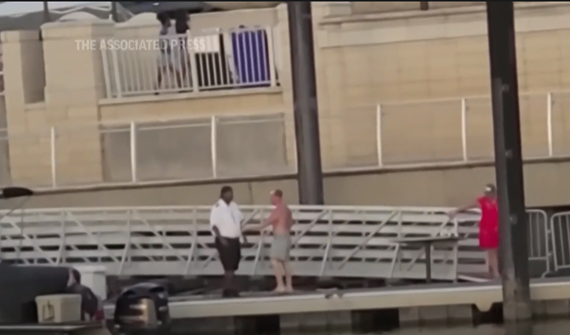
Police in Alabama said Thursday that a fourth person has been arrested on a misdemeanor assault charge in connection with a riverside brawl that drew national attention. Major Saba Coleman of the Montgomery Police Department said the 21-year-old woman turned herself in to be arrested. She is the fourth person charged with assaulting a Black riverboat crew co-captain in a riverside brawl in Alabama’s capital city. The melee, where sides largely broke down along racial lines, began Saturday evening when a moored pontoon boat blocked the city-owned Harriott II riverboat from docking in its designated space along the riverfront so more than 200 passengers could disembark. The riverboat co-captain took another vessel to shore to move the pontoon boat and was attacked by several white people from the private boat, police said. Video showed him being punched and shoved. Riverboat crew members later confronted the pontoon boat party, and more fighting broke out, police said. Video of the brawl circulated on social media and put a national spotlight on Alabama’s capital city. Republished with the permission of The Associated Press.
Political gadfly Perry Hooper Jr. arrested on sex abuse charge
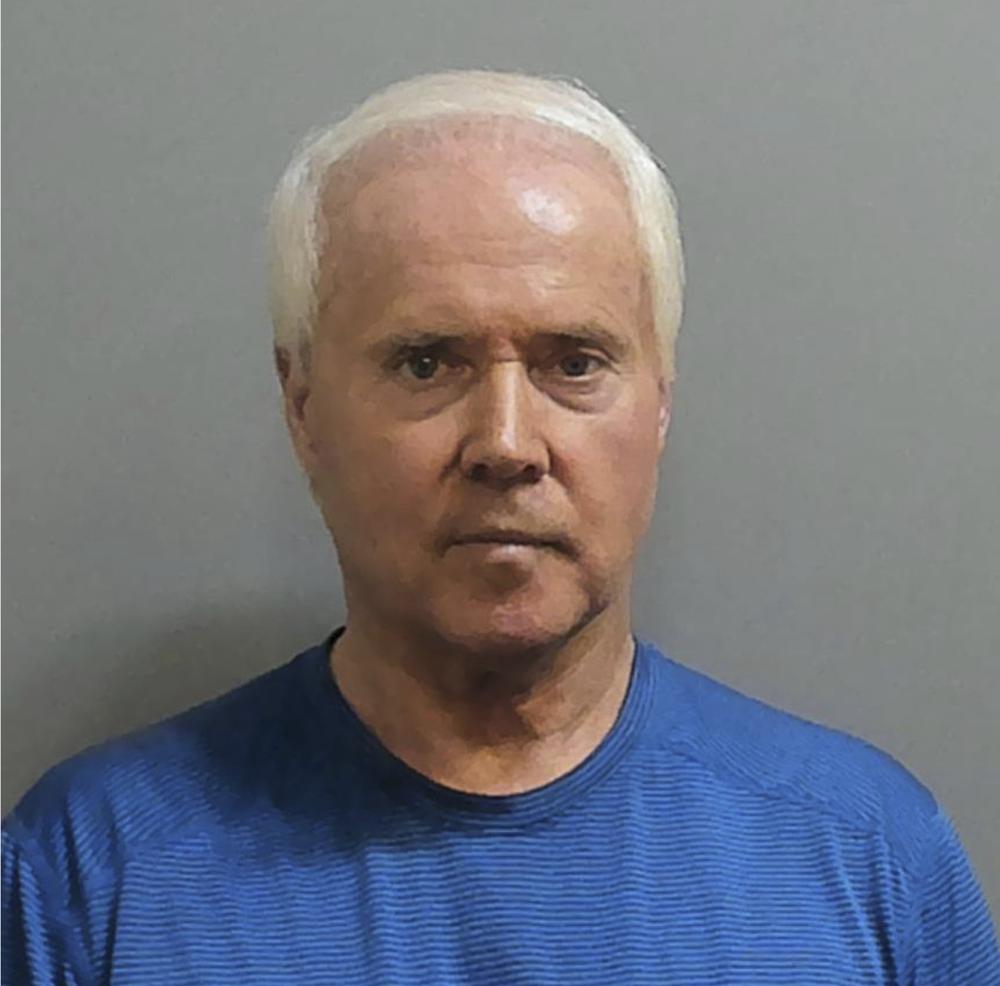
A former Alabama legislator was arrested Tuesday on a sex abuse charge, police said. Perry Hooper, Jr., 67, was charged with first-degree sex abuse related in connection to an incident that occurred in downtown Montgomery on Aug. 16, Capt. Saba Coleman, a spokesperson for the Montgomery Police Department, confirmed by email. The police department did not immediately provide details about the charge. However, state law defines first-degree sex abuse as subjecting someone to sexual contact when the person is incapacitated and incapable of giving consent or subjecting a person to sexual contact by forcible compulsion. Coleman said Hooper was identified as a suspect in the incident that occurred around 8 p.m. in the 100 block of Commerce Street in Montgomery. The area has several hotels, restaurants, and bars. He was taken into custody Tuesday by the U.S. Marshals Task Force and then placed in the Montgomery County Detention Facility. Jail records show he was being held on a $15,000 bond. A text message to Hooper was not immediately returned. It was unclear if he had an attorney to speak on his behalf. Hooper served in the Alabama House of Representatives from 1983 to 2003. His father, Perry Hooper, Sr., was the former chief justice of the Alabama Supreme Court. Hooper campaigned and raised money for former President Donald Trump’s 2016 campaign. Hooper said he was chairman of the Alabama Trump Victory in 2016. Two other lawmakers served as the chairmen of Trump’s 2016 Alabama campaign. Republished with the permission of The Associated Press.
Police examine substance splattered on Alabama Capitol steps
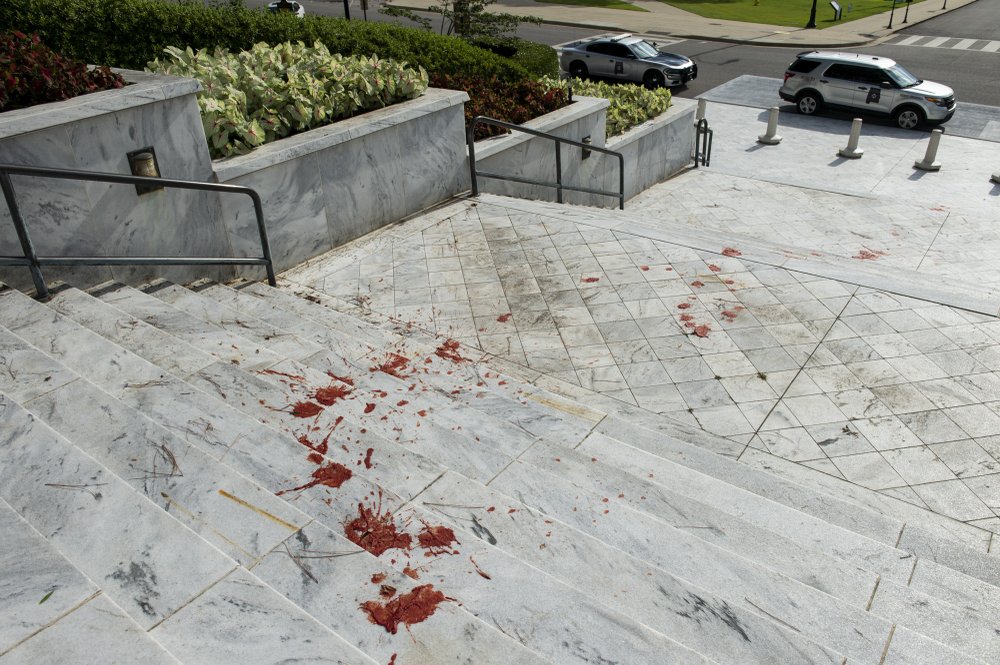
Troopers responded to the steps outside the government building at around 5 p.m. to examine the substance.
