
Colin Powell, exemplary general stained by Iraq claims, dies

Colin Powell, who served Democratic and Republican presidents in war and peace but whose sterling reputation was forever stained when he went before the U.N. and made faulty claims to justify the U.S. war in Iraq, has died of COVID-19 complications. He was 84. A veteran of the Vietnam War, Powell rose to the rank of four-star general and in 1989 became the first Black chairman of the Joint Chiefs of Staff. In that role, he oversaw the U.S. invasion of Panama and later the U.S. invasion of Kuwait to oust the Iraqi army in 1991. But his legacy was marred when, in 2003, he went before the U.N. Security Council as secretary of state and made the case for the U.S. war against Iraq at a moment of great international skepticism. He cited faulty information claiming Saddam Hussein had secretly stashed away weapons of mass destruction. Iraq’s claims that it had no such weapons represented “a web of lies,” he told the world body. In announcing his death on social media, Powell’s family said he had been fully vaccinated. “We have lost a remarkable and loving husband, father and grandfather, and a great American,” the family said. Powell had been treated at Walter Reed National Medical Center in Bethesda, Maryland. Powell was the first American official to publicly lay the blame for the 9/11 terrorist attacks on Osama bin Laden’s al-Qaida network and made a lightning trip to Pakistan in October 2001 to demand that then-Pakistani President Pervez Musharraf cooperate with the United States in going after the Afghanistan-based group, which also had a presence in Pakistan, where bin Laden was later killed. As President George W. Bush’s first secretary of state, Powell led a State Department that was dubious of the military and intelligence communities’ conviction that Saddam Hussein possessed or was developing weapons of mass destruction. And yet, despite his reservations, he presented the administration’s case that Saddam indeed posed a major regional and global threat in a speech to the U.N. Security Council in the run-up to the war. That speech, replete with his display of a vial of what he said could have been a biological weapon, was later derided as a low-point in Powell’s career, although he had removed some elements that he deemed to have been based on poor intelligence assessments. Bush said Monday that he and former first lady Laura Bush were “deeply saddened” by Powell’s death. “He was a great public servant” and “widely respected at home and abroad,” Bush said. “And most important, Colin was a family man and a friend. Laura and I send Alma and their children our sincere condolences as they remember the life of a great man.” Powell rose to national prominence under Republican presidents and considered a presidential bid of his own but ultimately moved away from the party. He endorsed Democrats in the last four presidential elections, starting with former President Barack Obama. He emerged as a vocal Donald Trump critic in recent years, describing Trump as “a national disgrace” who should have been removed from office through impeachment. Following the Jan. 6 storming of the U.S. Capitol, Powell said he no longer considered himself a Republican. Powell rose from a childhood in a fraying New York neighborhood to become the nation’s chief diplomat. “Mine is the story of a black kid of no early promise from an immigrant family of limited means who was raised in the South Bronx,” he wrote in his 1995 autobiography “My American Journey.” At City College, Powell discovered the ROTC. When he put on his first uniform, “I liked what I saw,” he wrote. He joined the Army, and in 1962 he was one of more than 16,000 military advisers sent to South Vietnam by President John F. Kennedy. A series of promotions led to the Pentagon and assignment as a military assistant to Secretary of Defense Caspar Weinberger, who became his unofficial sponsor. He later became commander of the Army’s 5th Corps in Germany and later was national security assistant to President Ronald Reagan. During his term as Joint Chiefs chairman, his approach to war became known as the Powell Doctrine, which held that the United States should only commit forces in a conflict if it has clear and achievable objectives with public support, sufficient firepower, and a strategy for ending the war. Defense Secretary Lloyd Austin, a retired Army general, said the news of Powell’s death left “a hole in my heart.” “The world lost one of the greatest leaders that we have ever witnessed,” Austin said while traveling in Europe. “Alma lost a great husband, and the family lost a tremendous father, and I lost a tremendous personal friend and mentor. He has been my mentor for a number of years. He always made time for me, and I can always go to him with tough issues; he always had great counsel.” Powell’s appearances at the United Nations as secretary of state, including his Iraq speech, were often accompanied by fond reminiscing of his childhood in the city, where he grew up the child of Jamaican immigrants who got one of his first jobs at the Pepsi-Cola bottling plant directly across the East River from the U.N. headquarters. A fan of calypso music, Powell was the subject of criticism from, among others, singing legend Harry Belafonte, who likened Powell to a “house slave” for going along with the decision to invade Iraq. Powell declined to get into a public spat with Belafonte but made it known that he was not a fan and much preferred the Trinidadian calypso star, the “Mighty Sparrow.” Powell maintained, in a 2012 interview with The Associated Press, that on balance, U.S. succeeded in Iraq. “I think we had a lot of successes,” Powell said. “Iraq’s terrible dictator is gone.” Saddam was captured by U.S. forces while hiding out in northern Iraq in December 2003 and later executed by the Iraqi government. But the insurgency grew, and the war dragged on far
Joe Biden says U.S. combat mission in Iraq to conclude by year end
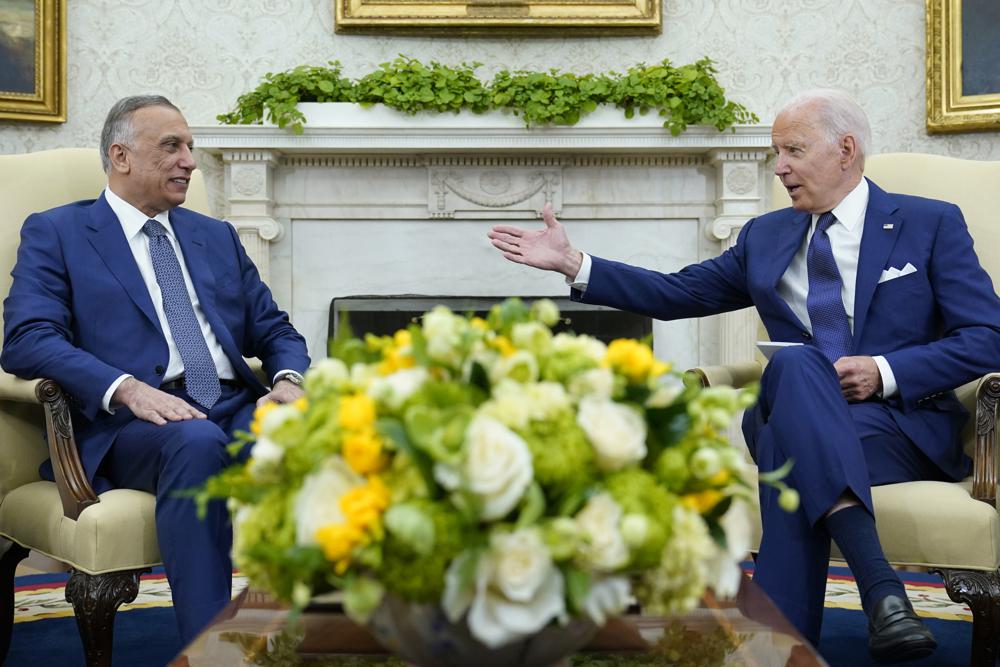
President Joe Biden said Monday the U.S. combat mission in Iraq will conclude by the end of the year, an announcement that reflects the reality on the ground more than a major shift in U.S. policy. Even before Biden took office, the main U.S. focus has been assisting Iraqi forces, not fighting on their behalf. And Biden did not say if he planned to reduce the number of troops in Iraq, now about 2,500. The announcement comes on the heels of Biden’s decision to withdraw fully from Afghanistan nearly 20 years after the U.S. launched that war in response to the Sept. 11, 2001, attacks. Together, the wars in Afghanistan and Iraq have heavily taxed the U.S. military and kept it from devoting more attention to a rising China, which the Biden administration calls the biggest long-term security challenge. For years, U.S. troops have played support roles in Iraq and neighboring Syria, which was the origin of the Islamic State group that swept across the border in 2014 and captured large swaths of Iraqi territory, prompting the U.S. to send troops back to Iraq that year. Speaking to reporters during an Oval Office session with Iraqi Prime Minister Mustafa al-Kadhimi, Biden said his administration remained committed to a partnership with Iraq — a relationship that has been increasingly complicated by Iranian-backed Iraqi militia groups. The militias want all U.S. troops out of Iraq immediately and have periodically attacked bases that house American troops. Dan Caldwell, a senior adviser to Concerned Veterans for America, said U.S. troops will remain at risk. “Regardless of whether their deployment is called a combat mission, U.S. troops will remain under regular attack as long as they remain in Iraq,” Caldwell said in a statement. “An American military presence in Iraq is not necessary for our safety and only risks the loss of more American life.” Biden said the U.S. military will continue to assist Iraq in its fight against the Islamic State group, or ISIS. A joint U.S.-Iraq statement said the security relationship will be focused on training, advising, and intelligence-sharing. “Our shared fight against ISIS is critical for the stability of the region, and our counterterrorism operation will continue, even as we shift to this new phase we’re going to be talking about,” Biden said. The shift from a U.S. combat role to one focused on training and advising the Iraqi security forces was announced in April when a joint U.S.-Iraqi statement said this transition allowed for the removal from Iraq of any remaining U.S. combat forces on a timetable to be determined later. It did not specify what combat functions the U.S. was engaged in then, nor did Biden get into such specifics on Monday. “We’re not going to be, by the end of the year, in a combat mission,” he said. White House press secretary Jen Psaki declined to say how many troops would remain in Iraq by year’s end. “The numbers will be driven by what is needed for the mission over time, so it is more about moving to a more advising and training capacity from what we have had over the last several years,” she said. The U.S. troop presence had stood at about 2,500 since late last year when then-President Donald Trump ordered a reduction from 3,000. The Iraqi government in 2017 declared victory over the Islamic State group, which is now a shell of its former self. Still, it has shown it can carry out high-casualty attacks. Last week, the group claimed responsibility for a roadside bombing that killed at least 30 people and wounded dozens in a busy suburban Baghdad market. In his remarks alongside Biden, al-Kadhimi thanked the United States for its support. Back home, al-Kadhimi faces no shortage of problems. Iranian-backed militias operating inside Iraq have stepped up attacks against U.S. forces in recent months, and a series of devastating hospital fires that left dozens of people dead and soaring coronavirus infections have added fresh layers of frustration for the nation. For al-Kadhimi, the ability to offer the Iraqi public a date for the end of the U.S. combat presence could be a feather in his cap before elections scheduled for October. Biden administration officials say al-Kadhimi also deserves credit for improving Iraq’s standing in the Mideast. Last month, King Abdullah II of Jordan and Egyptian President Abdel Fattah al-Sisi visited Baghdad for joint meetings — the first time an Egyptian president has made an official visit since the 1990s when ties were severed after Saddam Hussein invaded Kuwait. The Iraqi prime minister made clear before his trip to Washington that he believes it’s time for the U.S. to wind that mission down. “There is no need for any foreign combat forces on Iraqi soil,” al-Kadhimi told The Associated Press last weekend. The U.S. mission of training and advising Iraqi forces has its most recent origins in President Barack Obama’s decision in 2014 to send troops back to Iraq. The move was made in response to the Islamic State group’s takeover of large portions of western and northern Iraq and a collapse of Iraqi security forces that appeared to threaten Baghdad. Obama had fully withdrawn U.S. forces from Iraq in 2011, eight years after the U.S. invasion. Pentagon officials for years have tried to balance what they see as a necessary military presence to support the Iraqi government’s fight against IS with domestic political sensitivities in Iraq to a foreign troop presence. The vulnerability of U.S. troops was demonstrated most dramatically in January 2020 when Iran launched a ballistic missile attack on al-Asad airbase in western Iraq. No Americans were killed, but dozens suffered traumatic brain injury from the blasts. That attack came shortly after a U.S. drone strike killed Iranian military commander Qassim Soleimani and senior Iraqi militia commander Abu Mahdi al-Muhandis at Baghdad International Airport. Republished with the permission of the Associated Press.
Iran Strikes Back at US with Missile Attack at Bases in Iraq

Iranian state TV said it was in revenge for the killing of Revolutionary Guard General Qassem Soleimani.
Martin Dyckman: The road to Middle East stability isn’t through war
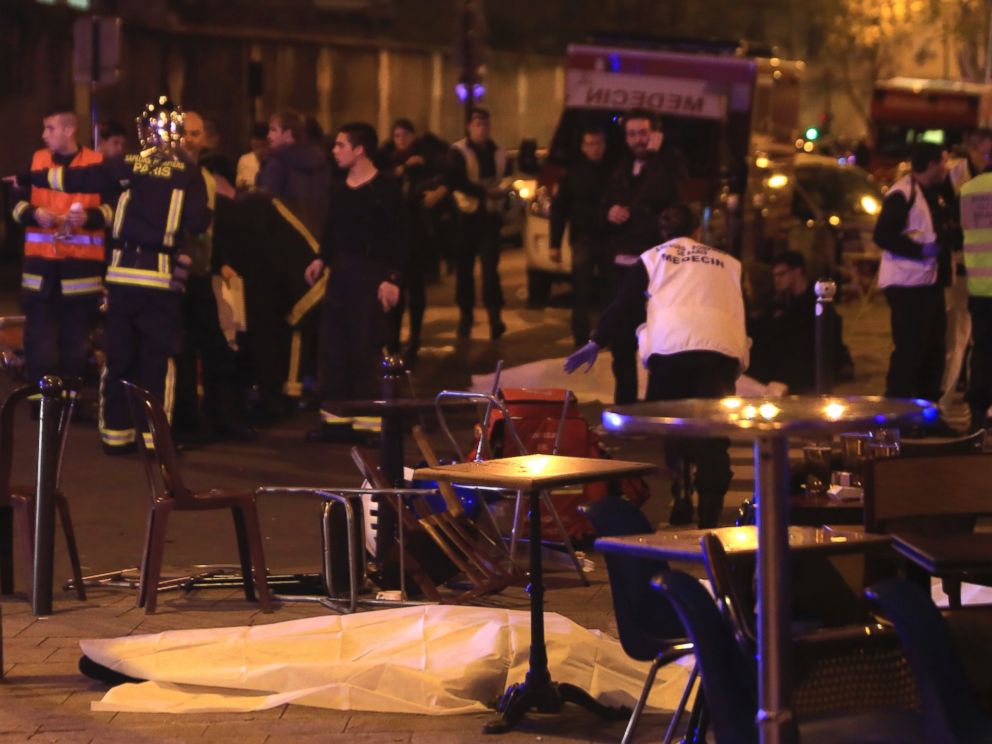
Remember “freedom fries?” That was how some Americans expressed their spite toward France when that nation, with vastly more experience than ours in the Middle East, wisely declined the opportunity to participate in George W. Bush‘s ego-driven war on Iraq. There was a congresswoman from Florida who called for exhuming our military graves and bringing the remains home. She was ignorant of the fact that a grateful France had ceded those sites to the United States forever. The heartbreakingly beautiful cemetery atop the Normandy beachhead is as much American soil as Arlington itself. But in Paris on Friday, France paid a terrible price for the chaos we created when we invaded Iraq and destroyed its government with no thought of history or of the consequences beyond the premature boast, “Mission accomplished.” The evil we didn’t know proved to be worse than the evil we did. Saddam Hussein, for all his crimes, was a stabilizing influence on Iraq and an effective counterweight to Iran – which, unlike Iraq, had declared its enmity of the U.S. and remains an essential ally of the Syrian dictatorship that provides the so-called Islamic State with a plausible raison d’etre. When Bush’s civilian viceroy sacked the entire Iraqi army, he created legions of recruits for al-Qaida and its successor, the Islamic State of Iraq and Syria – aka ISIS. Our failure in nation-building created a corrupt prime minister, Nouri Kamal al- Maliki, whose refusal to renew the status of forces agreement gave President Obama no choice, whatever other he might have chosen, but to bring all our troops home. No president of either party could have left them there exposed to Iraqi laws, arrests and prosecutions. To understand this history is to be warned against repeating it. But America doesn’t learn that lesson very well. Vietnam should have taught us the difficulty of imposing our values on a different culture and to be leery of war where our national interest is not at stake. But the only lesson the politicians took to heart from that unpopular lost war was to abandon the draft and fight the next one with a volunteer force, a force that has been cruelly abused with too many successive combat deployments. In the aftermath of the Paris massacres, we will be hearing again, from the usual suspects, that it’s time to unleash American military might to whatever extent it takes to exterminate ISIS. But even if we could do that – and we can’t – something else would take its place, just as the burgeoning ISIS supplanted a decapitated al-Qaida. The Democratic presidential candidates were right as they agreed, in their separate ways Friday night, that the fight against ISIS must be led by the Muslim states that are the radical movement’s primary intended victims. The United States can help, and should. We are helping already, as are the French, and there is surely more that we can do, short of sending sophisticated weapons to dubious allies who might surrender them to ISIS. But it cannot be seen as an American war, or as French or British. The more important point is that the ultimate solution can not be military. That can only prolong the strife and suffering. By coincidence, the Imam of Asheville’s Muslim community, Egyptian-born Mohamed Taha, was the scheduled speaker Sunday at a brunch sponsored by the Brotherhood of my Reform Jewish congregation. It was well-attended. He talked mainly about the beliefs of Islam and its many similarities to Judaism, and its devotion to peace. But the slaughter at Paris hovered over the morning. “These people,” he said, speaking of ISIS and its ilk, “they are extremists. The majority of Muslims don’t consider these people as Muslims. Mohamed warned against such people … they take some verse of the Koran and they twist its meaning. “They don’t,” he added, “consider us as Muslims.” To defeat the jihadists, he said, requires overcoming the conditions they exploit. “They live in poverty,” he said of the populations where the jihadists enlist most of their support. “They have nothing. We have to help them to establish good countries, good communities. They have nothing in this life, so the extremists promise them everything in the next life.” The solution is not military. The wiser of our American experts on the Middle East, notably including The New York Times columnist Thomas Friedman, have been saying that for years. After World War II, the United States deployed a non-military solution, the Marshall Plan, to help a ravaged Europe rise to its feet in democracy rather than communism. We surely could use a Marshall plan for the Middle East. But how to help the people there to their feet without having the assistance stolen by the corruption that is endemic among the rulers there? I asked that question. Taha acknowledged the difficulty. It begins, he said, with affording an American education, steeped in American traditions and values, to Middle Eastern students who want to study here. Inevitably, perhaps, some few of those students will have other values in mind, like those who prepared here for 9/11. And in the aftermath of Paris, there are politicians who would slam the door, to students as well as refugees, for fear of the few who would exploit our hospitality. But that would be a mistake. It would betray that our values are not, in truth, what we would wish them to be. It would postpone the redemption of the Middle East and perpetuate a war that cannot be won by arms alone. Martin Dyckman is a retired associate editor of the newspaper formerly known as the St. Petersburg Times. He lives in Asheville, North Carolina.
Veterans frustrated by presidential debate on Iraq war
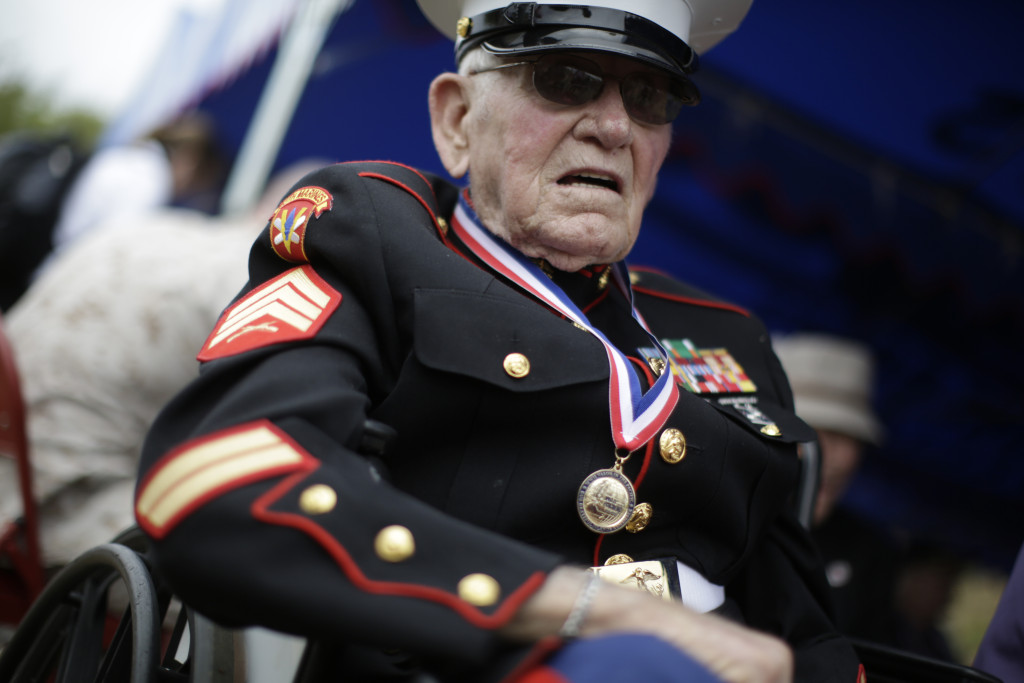
Veterans of the Iraq War have been watching in frustration as Republican presidential contenders distance themselves from the decision their party enthusiastically supported to invade that country. Some veterans say they long ago concluded their sacrifice was in vain, and are annoyed that a party that lobbied so hard for the war is now running from it. Others say they still believe their mission was vital, regardless of what the politicians say. And some find the gotcha question being posed to the politicians — Knowing what we know now, would you have invaded? — an insult in itself. “Do-overs don’t happen in real life,” said Gregory Diacogiannis, 30, who served as an Army sniper in Baghdad trying to spot militants laying roadside bombs and chased high-value targets in the city of Baqouba. “I have trouble with the question itself just because it lends itself to disregarding the sacrifices that have been made.” Diacogiannis left the Army in 2008, but says even now he feels such a strong attachment to Iraq that he’s thought about going back to fight as the country has plunged into chaos since U.S. troops left. The war became a campaign issue when likely presidential contender Jeb Bush was asked about the invasion ordered by his brother, former President George W. Bush. After days of questioning, Jeb Bush said that in light of what’s now known — that Saddam Hussein did not have WMD stockpiles — he would not have invaded. Other possible Republican hopefuls including New Jersey Gov. Chris Christie, Sen. Marco Rubio, Sen. Ted Cruz and Ohio Gov. John Kasich all later gave similar responses. Aaron Hinde, 33, is appalled at what he feels the U.S. invasion did to Iraq. He served there in 2003, mostly in the volatile northern city of Mosul and became active in the antiwar movement after leaving the army in 2004. He’s glad Republicans are being held accountable for the invasion, but says that answer’s been known for a long time. “It’s a legitimate question to ask and a legitimate answer should be an unequivocal no,” he said. Marla Keown, who drove trucks in Iraq for a year during her time in the Army Reserve, said it’s taken too long for politicians to admit the mistake of a war that killed 4,491 U.S. troops and left countless Iraqis dead. “It’s hard to see the good in war in general — let alone a war that everyone just now is realizing we shouldn’t have done,” said Keown, 34, who now works as a photographer in Denver. But many vets, regardless of whether WMD was found or not, found legitimate reasons for being in Iraq. John Kriesel lost both his legs when a 200-pound bomb went off underneath his Humvee outside the western city of Fallujah. He’s written a book called “Still Standing: The Story of SSG John Kriesel” detailing what he went through. He said he’s proud of what he and his unit did in Iraq to make their area safer. He speaks fondly of Iraqi children he encountered and said he’d do it again in a “heartbeat.” So many questions, he said, like whether to invade Iraq or not, are easier to answer in hindsight. “I think it’s naive to just assume that we can just wave this magic wand and know what we would do in that situation,” Kriesel said. The discussion comes at a particularly fraught time for veterans, who have watched Iraq steadily descend into chaos. In recent days, Islamic State militants routed Iraqi government troops to take control of the city of Ramadi, the capital of Anbar province, despite American airstrikes designed to help the Iraqi forces. Kevin McCulley, a former army medic, said Iraqis told him about their struggles under Saddam and he feels there were good reasons to get rid of the longtime dictator. He feels the emphasis really shouldn’t be on the decision to invade but on whether the U.S. should have stayed past its 2011 departure date to secure the gains made. Many vets blame President Obama — not Bush — for the current state of affairs, saying he was in too much of a hurry to withdraw. “There’s a huge issue for me about why we left Iraq,” he said. On Friday, Democratic presidential contender Hillary Rodham Clinton said despite the militants’ gains, U.S. ground forces should not be sent back to Iraq. Clinton has previously called her support for the invasion a mistake. “A mistake doesn’t sum up the gravity of that decision,” said Matt Howard, a Marine twice deployed to Iraq who now works with the group Iraq Veterans Against the War. He said many vets have been frustrated by the “flip-flopping,” not just of the Republican candidates, but of Clinton as well. Mike Barbero, a retired general who served three tours in Iraq, said he isn’t sure the value of the hypothetical questions being asked of the candidates and would rather they be pressed on their criteria for sending troops into a potential future battle. “What are your criteria for putting young Americans in harm’s way? What lessons learned did you take away from Iraq and Afghanistan? Then you’re getting into the mind of a future commander-in-chief,” he said. Republished with permission of The Associated Press.
