
Sally Bradshaw’s bolt from GOP a sign of Donald Trump’s impact on party
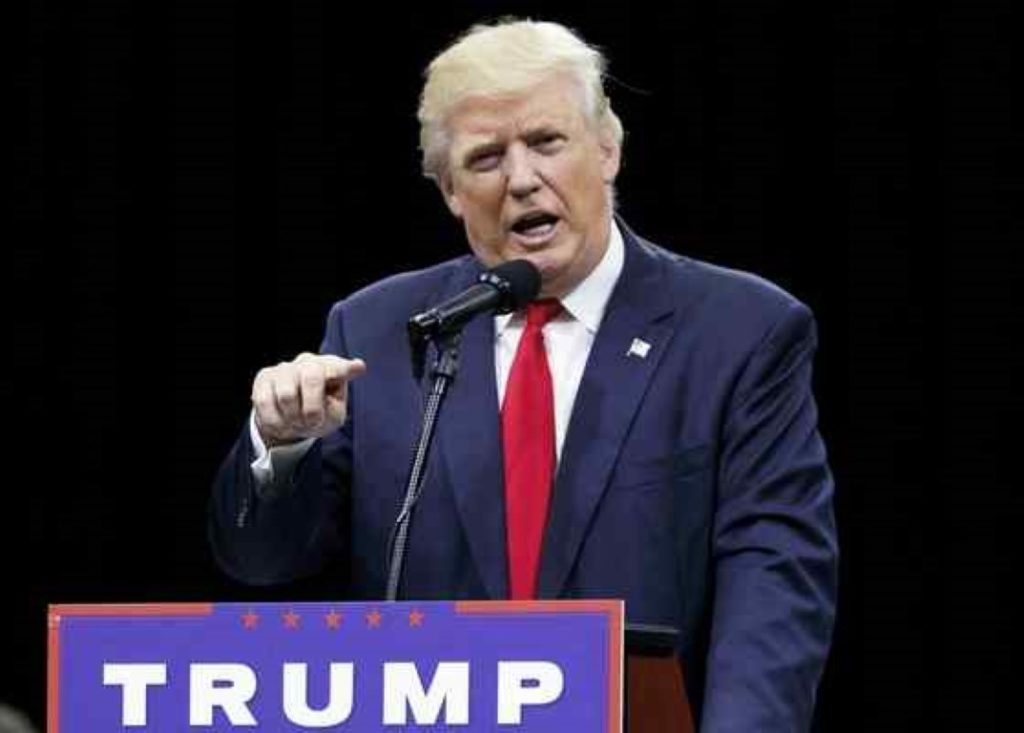
Less than four years ago, the Republican Party tapped a few respected party officials to help the GOP find its way forward. This week, one of them says she’s leaving the party — driven out by Donald Trump. While not a household name, Sally Bradshaw‘s decision to leave the GOP rocked those who make politics their profession. The longtime aide to former Florida Gov. Jeb Bush was one of the five senior Republican strategists tasked with identifying the party’s shortcomings and recommending ways it could win the White House after its losing 2012 presidential campaign. Now, she says, she’ll vote for Democratic nominee Hillary Clinton if the race in her home state of Florida appears close come Election Day. “Sally is representative of an important segment of our party, and that is college-educated women, where Donald Trump is losing by disastrous margins,” said Ari Fleischer, who worked with Bradshaw on the GOP project and was a senior adviser to President George W. Bush. “Trump has moved in exactly the opposite direction from our recommendations on how to make the party more inclusive.” Fleischer still supports Trump over Clinton. But Bradshaw is among a group of top Republican operatives, messengers, national committee members and donors who continue to decry Trump’s tactics, highlighting almost daily — with three months until Election Day — the rifts created by the billionaire and his takeover of the party. This past weekend, the billionaire industrialist Charles Koch (coke) told hundreds of donors that make up his political network that Trump does not embrace, nor will he fight for, free market principles. That’s one reason Koch‘s network, which has the deepest pockets in conservative politics, is ignoring the presidential contest this year and focusing its fundraising wealth on races for Congress. Donors and elected officials gathering at a Koch event in Colorado said they accepted the Koch brothers’ decision, even if it hurts the GOP’s White House chances. Kentucky Gov. Matt Bevin, among the high-profile Republicans on hand, refused to endorse Trump and referenced now defunct political parties, such as the Whigs, when asked about the health of the modern-day GOP. “The party is not really what matters. It’s the principles,” Bevin told The Associated Press. Another of those in attendance, House Speaker Paul Ryan, didn’t even mention his party’s presidential nominee during his speech to the group. Yet he referenced an election he called “personality contest” devoid of specific goals or principles. Liberals and those on the political left are hardly fully united around Democratic nominee Hillary Clinton, whose convention was interrupted on occasion by supporters of Vermont Sen. Bernie Sanders. But after beating Sanders in the primaries, Clinton took steps to win over Sanders and his supporters — including agreeing to changes to the party’s platform. Trump has shown little such inclination, pushing ahead instead with the approach and policy proposals that proved successful in the GOP primary. Among the key recommendations of the post-2014 report that Bradshaw helped write was for the party to be more inclusive to racial and ethnic minorities, specifically Latino voters. One of Trump’s defining policies is his call to build a wall on the U.S. border with Mexico, and forcibly deport the millions of people — many of whom are Hispanic — living in the country illegally. Bradshaw told The Associated Press her decision to change her voter registration in her home state of Florida was “a personal decision,” with the tipping point being Trump’s criticism of the Muslim mother of a U.S. soldier killed in Iraq in 2004. In an email to CNN, Bradshaw wrote that the GOP was “at a crossroads and have nominated a total narcissist — a misogynist — a bigot.” Her decision to leave the party isn’t “a good sign, given the role she’s played at the national level with the RNC and the high esteem in which she’s held,” said Virginia Republican Chris Jankowski, among the nation’s leading GOP legislative campaign strategists. Another member of the panel that examined Mitt Romney‘s 2012 loss is Henry Barbour, a Republican National Committee member from Mississippi. In a message to the AP, he joined the many Republicans who called on Trump to apologize to the family of the late Capt. Humayun Khan, a suggestion the billionaire has rejected to date. Like Fleischer, he does not plan to follow Bradshaw out of the party, but insisted that Trump must work harder to unify it. “If we are to gain anything by this, Donald Trump must show he wants to unite Americans so he can win in November and the best way to do this would be to apologize,” Barbour said. “There’s no excuse, particularly for his comments about Mrs. Khan.” Republished with permission of the Associated Press.
Report: Sally Bradshaw says she may vote for Hillary Clinton

A prominent Jeb Bush aide has said she might vote for Hillary Clinton come November. Sally Bradshaw told CNN on Monday that she has left the Republican Party to become an independent. Bradshaw, a close adviser to Bush, also said if the presidential race in Florida is close, she will vote for Clinton come Election Day. “This election cycle is a test,” she told CNN. “As much as I don’t want another four years of (President Barack) Obama‘s policies, I can’t look my children in the eye and tell them I voted for Donald Trump. I can’t tell them to love their neighbor and treat others the way they wanted to be treated, and then vote for Donald Trump. I won’t do it.” Bradshaw is a longtime Bush family supporter, working first on George H.W. Bush’s 1988 presidential campaign. She remained close with the family, and has served Jeb Bush in several capacities over the years, including a significant role in his 2016 presidential bid. Her comments come as Trump criticizes a family of a Muslim soldier killed in action in Iraq in 2004. Bradshaw told CNN that Trump’s remarks were despicable. Bradshaw told CNN she had been considering switching parties for a while, but Trump’s recent comments solidified her decision. She said she had worked hard to make the party “a place where all would feel welcome,” but Trump has taken the GOP in a different direction. While she told CNN she wasn’t sure who she would vote for in November, she said if the race in Florida is close she “will vote for Hillary Clinton.” She said she disagrees with her on several issues, but the country is at a crossroads and “this is a time when country has to take priority over political parties.”
New York Jets owner Woody Johnson tapped as Jeb Bush campaign finance chair
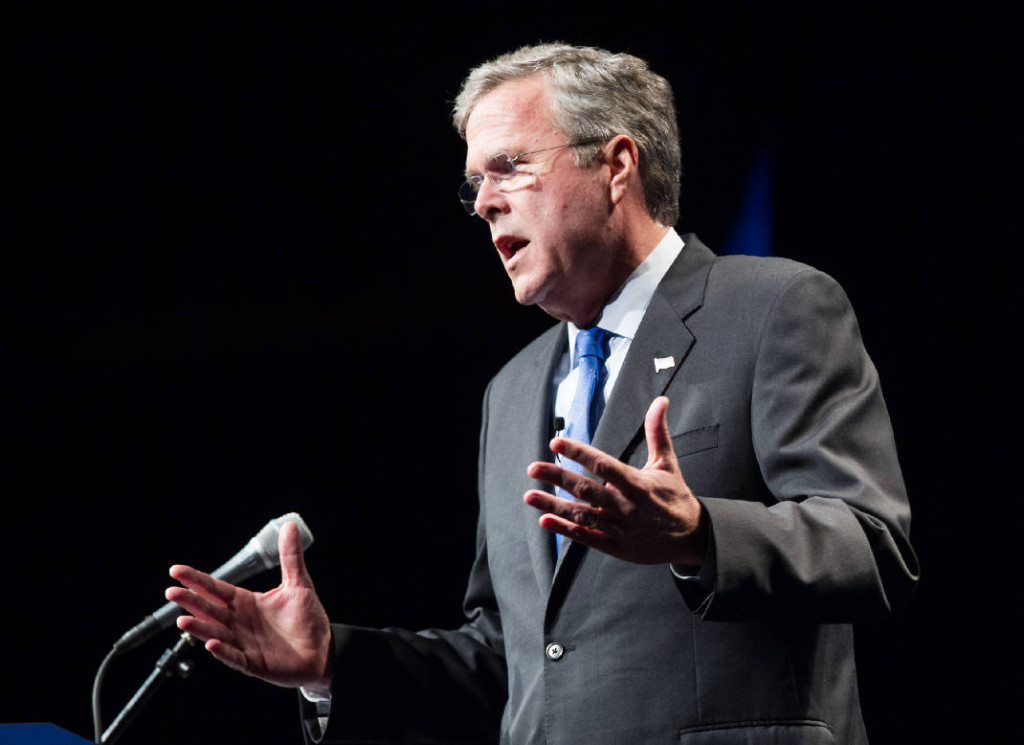
Jeb Bush tapped two major Republican fundraisers to lead his national finance team: billionaire New York Jets owner Woody Johnson as chairman, with Jack Oliver as co-chairman. Johnson has been spending much time helping out the former Florida governor in the lead up to his presidential campaign, reports the Miami Herald, such as lending his private jet for Bush’s recent European trip. Johnson also appeared with Bush Tuesday at a Greenwich, Conn., fundraiser. The Wall Street Journal first broke the news of Johnson’s selection as chair. Bush will spend the second week of his official presidential campaign on the road, with fundraising trips to Miami, Tampa, Jacksonville, Orlando, New York, Chicago, Houston, Dallas and Tulsa, Okla. In a prepared statement to reporters, Bush spokeswoman Sally Bradshaw pointed to Johnson’s “longstanding commitment to public service and strong track record of working with people of different backgrounds to accomplish big goals represent the values and priorities of Jeb’s campaign.” “Under the leadership of Woody, Jack Oliver, Heather Larrison and so many others,” Bradshaw said, “I’m confident Jeb will have the resources needed to share his message of expanding economic opportunity for all Americans to voters across the nation.” Johnson responded to his new role, calling Bush “a bold and thoughtful leader with the vision and experience to ensure our nation’s greatest days remain ahead. “As governor, he was able to unite Floridians around the shared goals of opportunity, growth, prosperity and freedom, achieving tremendous results for his state.”
Jeb Bush preparing to delegate many campaign tasks to super PAC
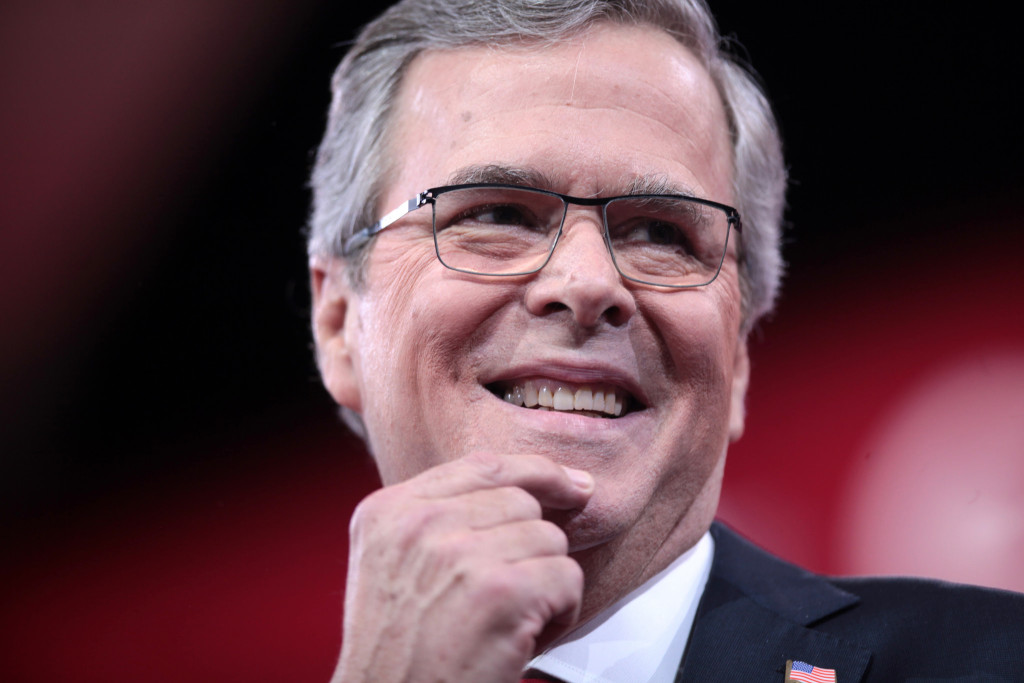
Jeb Bush is preparing to embark on an experiment in presidential politics: delegating many of the nuts-and-bolts tasks of seeking the White House to a separate political organization that can raise unlimited amounts of campaign cash. The concept, in development for months as the former Florida governor has raised tens of millions of dollars for his Right to Rise super PAC, would endow that organization not just with advertising on Bush’s behalf, but with many of the duties typically conducted by a campaign. Should Bush move ahead as his team intends, it is possible that for the first time a super PAC created to support a single candidate would spend more than the candidate’s campaign itself — at least through the primaries. Some of Bush’s donors believe that to be more than likely. The architects of the plan believe the super PAC’s ability to legally raise unlimited amounts of money outweighs its primary disadvantage, that it cannot legally coordinate its actions with Bush or his would-be campaign staff. “Nothing like this has been done before,” said David Keating, president of the Center for Competitive Politics, which opposes limits on campaign finance donations. “It will take a high level of discipline to do it.” The exact design of the strategy remains fluid as Bush approaches an announcement of his intention to run for the Republican nomination in 2016. But at its center is the idea of placing Right to Rise in charge of the brunt of the biggest expense of electing Bush: television advertising and direct mail. Right to Rise could also break into new areas for a candidate-specific super PAC, such as data gathering, highly individualized online advertising and running phone banks. Also on the table is tasking the super PAC with crucial campaign endgame strategies: the operation to get out the vote and efforts to maximize absentee and early voting on Bush’s behalf. The campaign itself would still handle those things that require Bush’s direct involvement, such as candidate travel. It also would still pay for advertising, conduct polling and collect voter data. But the goal is for the campaign to be a streamlined operation that frees Bush to spend less time than in past campaigns raising money, and as much time as possible meeting voters. Bush’s plans were described to The Associated Press by two Republicans and several Bush donors familiar with the plan, who spoke on condition of anonymity because the former Florida governor has not yet announced his candidacy. “This isn’t the product of some genius thinking,” said a Republican familiar with the strategy. “This is the natural progression of the rules as they are set out by the FEC.” Bush spokeswoman Kristy Campbell said: “Any speculation on how a potential campaign would be structured, if he were to move forward, is premature at this time.” The strategy aims to take maximum advantage of the new world of campaign finance created by a pair of 2010 Supreme Court decisions and counts on the Federal Election Commission to remain a passive regulator with little willingness to confront those pushing the envelope of the law. One reason Bush’s aides are comfortable with the strategy is because Mike Murphy, Bush’s longtime political confidant, would probably run the super PAC once Bush enters the race. Meanwhile, David Kochel, a former top adviser to Mitt Romney‘s campaigns and an ally of Bush senior adviser Sally Bradshaw, would probably be the pick to lead Bush’s official campaign. “Every campaign is going to carefully listen to the lawyers as to what is the best way to allocate their resources and how to maximize them,” said Al Cardenas, former chairman of the American Conservative Union and a Bush adviser. “Nobody wants to relinquish any advantage.” For Bush, the potential benefits are enormous. Campaigns can raise only $2,700 per donor for the primary and $2,700 for the general election. But super PACs are able to raise unlimited cash from individuals, corporations and groups such as labor unions. In theory, that means a small group of wealthy Bush supporters could pay for much of the work of electing him by writing massive checks to the super PAC. Bush would begin a White House bid with confidence that he will have the money behind him to make a deep run into the primaries, even if he should stumble early and spook small-dollar donors, starving his own campaign of the money it needs to carry on. Presidential candidates in recent elections have also spent several hours each day privately courting donors. This approach would not eliminate that burden for Bush, but would reduce it. “The idea of a super PAC doing more … means the candidate has to spend less time raising money and can spend more time campaigning,” said longtime Mitt Romney adviser Ron Kaufman, who supports Bush. The main limitation on super PACs is that they cannot coordinate their activities with a campaign. The risk for Bush is that his super PAC will not have access to the candidate and his senior strategists to make pivotal decisions about how to spend the massive amount of money it will take to win the Republican nomination and, if successful, secure the 270 electoral votes he will need to follow his father and brother into the White House. “The one thing you give away when you do that is control,” Kaufman said. Bush will also be dogged by advocates of campaign finance regulation. The Campaign Legal Center, which supports aggressive regulation of money and politics, has already complained to the FEC that Bush is currently flouting the law by raising money for his super PAC while acting like a candidate for president. Others are on guard, too. “In our view, we are headed for an epic national scandal,” said Fred Wertheimer, president of the pro-regulation group Democracy 21. “We intend to carefully and closely monitor all the candidates and their super PACs, because they will eventually provide numerous examples of violations.” All of the major candidates for president
