
U.S. House passes stopgap spending bill in bipartisan vote, in crucial test for new speaker
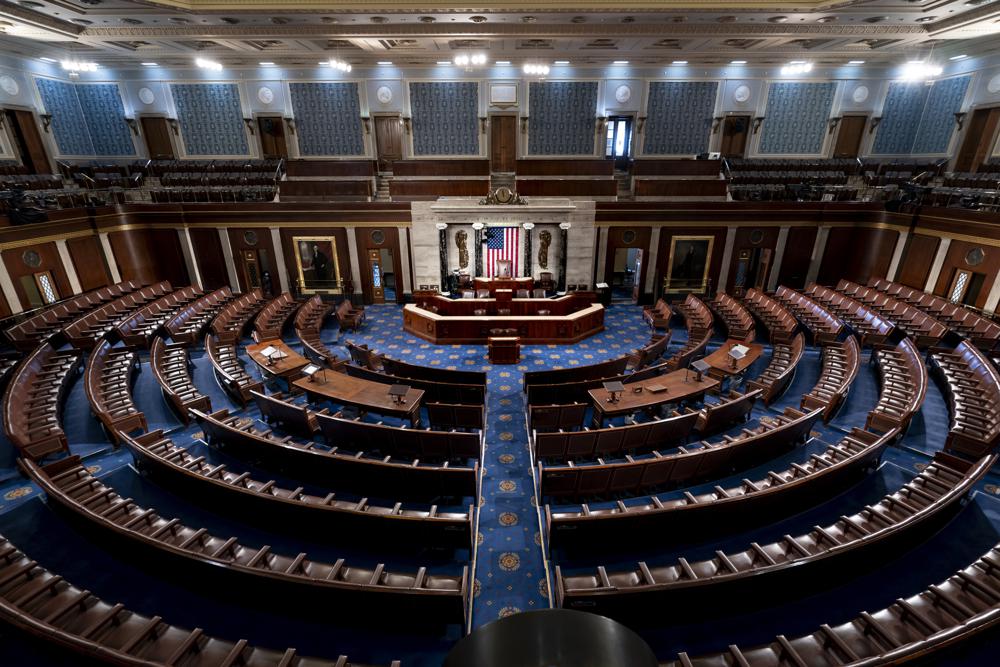
Jennifer Shutt, Alabama Reflector WASHINGTON — The U.S. House took a broadly bipartisan vote Tuesday to fund the government into the new year, though the measure must pass the Senate by the end of the week if Congress is going to avoid a partial government shutdown. The 336-95 House vote was the first major legislative test for Speaker Mike Johnson, the Louisiana Republican who took on the role after the former speaker was ousted after passing a similar bipartisan short-term funding bill in late September. A total of 93 House Republicans voted against the bill, but enough Democrats supported it to send the measure to the Senate. In the Alabama delegation, U.S. Reps. Robert Aderholt, R-Haleyville; Terri Sewell, D-Birmingham, and Dale Strong, R-Madison, voted for the bill. U.S. Reps. Jerry Carl, R-Mobile; Barry Moore, R-Enterprise; Gary Palmer, R-Hoover and Mike Rogers, R-Saks, voted against it. Senate Majority Leader Chuck Schumer, a New York Democrat, said Tuesday that he and Minority Leader Mitch McConnell, a Kentucky Republican, both agree the Senate needs to pass the bill quickly to avoid a funding lapse. “If the House should pass it, and I hope they do, Leader McConnell and I will figure out the best way to get this done quickly,” Schumer said. During a press conference prior to the vote, Johnson defended his decision to move the short-term spending bill, saying it would prevent Congress from passing an omnibus spending package in mid-December before the holiday break. Republicans have repeatedly said they oppose such massive packages, which wrap together all 12 government spending bills, often on short notice. He rejected criticism from fellow GOP lawmakers that he was making a mistake and taking the wrong approach to funding the government. “We’re not surrendering, we’re fighting. But you have to be wise about choosing the fights,” Johnson said. “You’ve got to fight fights that you can win, and we’re going to, and you’re going to see this House majority stand together on our principles.” Johnson said he was optimistic that Congress would be able to pass the dozen full-year appropriations bills before the new deadlines next year, avoiding the need for another stopgap spending bill. “Part of the reason I’m confident about this is, I’ve been drinking from Niagara Falls for the last three weeks. This will allow everybody to go home for a couple of days for Thanksgiving,” Johnson said. “Everybody can cool off.” During that time, Johnson said he would get a group together to “map out that plan to fight for” conservative principles in the final set of 12 spending bills. The current fiscal year ends on September 30, 2024. “I look forward to rolling that out,” he said. “You’ll see much more of that.” Two deadlines The 32-page short-term spending bill, sometimes called a continuing resolution or CR, would fund part of the federal government through January 19 and the remainder of the annual appropriations bills through February 2. The short-term funding measure is intended to give Congress and the White House more time to negotiate the dozen full-year spending bills. But there are several pitfalls along the way. Former GOP Speaker Kevin McCarthy was ousted from his leadership role after moving the short-term government funding bill in late September that will keep the federal government up and running through Friday. The decision by eight House Republicans and Democrats to vote to “vacate the chair” plunged the chamber into gridlock for weeks as GOP lawmakers debated who should lead the party. After nominating three Republicans who couldn’t get the votes on the floor to hold the gavel, the party finally coalesced behind Johnson. But some of the especially conservative members became frustrated this week with his decision to put the stopgap spending bill on the floor. The short-term spending bill would give the House and Senate until January 19 to work out an agreement on the Agriculture-FDA, Energy-Water, Military Construction-VA, and Transportation-HUD spending bills. The remaining eight spending bills — Commerce-Justice-Science, Defense, Financial Services, Homeland Security, Interior-Environment, Labor-HHS-Education, Legislative Branch, and State-Foreign Operations — would have funding until February 2. The House and Senate would need to reach an agreement well before those deadlines on the total amount of spending for the current fiscal year that began back on October 1. The leaders of the Appropriations committees would then determine how much of the money goes to each of the dozen bills. Democrats have said the total spending level should match what Congress and President Joe Biden agreed to in the debt limit law this summer. But some Republicans have pressed for lawmakers to go below that level. Lawmakers sound off on spending Idaho Republican Rep. Mike Simpson, chair of the Interior-Environment spending panel, said that leaders need to clarify the total spending number, though he expects that will ultimately match the debt limit law. “I think it will end up being that, but leadership needs to tell us,” Simpson said. Georgia Rep. Sanford Bishop Jr., the top Democrat on the Agriculture spending panel, said the total spending level for the final slate of bills that the House and Senate will negotiate in the coming weeks and months needs to adhere to the number in the debt limit law. “Some of them, particularly the MAGA Republicans, pretty much don’t agree with it. They want to cut much more drastically than is beneficial for the American people,” Bishop said. “The moderate, reasonable minds of that side think that we probably should do something that is reasonable.” Maryland Rep. Steny Hoyer, the top Democrat on the Financial Services spending panel, said a key challenge to getting full-year bills agreed to is that “Republicans have been unable for eight or nine months to get their act together on fiscal issues.” “And we’d lost a speaker over that,” Hoyer said. “They were unable to elect speakers for some period of time, and there is still no guarantee that we know what the overall spending levels are.” Ohio Democratic Rep. Marcy Kaptur, ranking member
