
Sandra Day O’Connor, who made history as the first woman on the Supreme Court, dies at 93
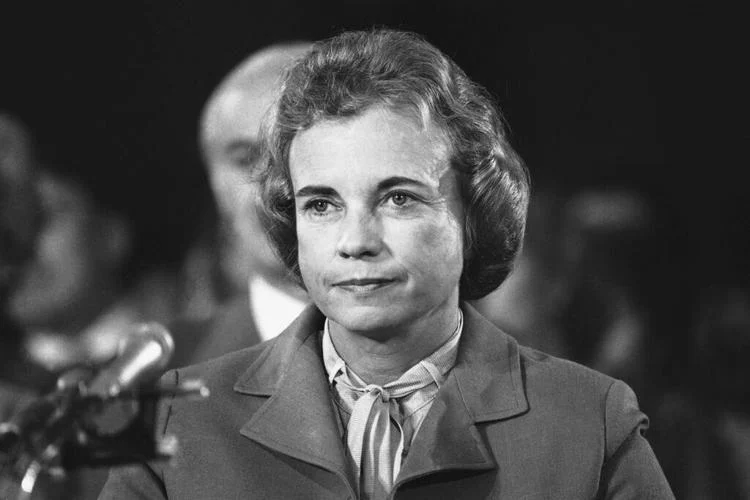
Ashley Murray, Alabama Reflector WASHINGTON — The first woman to serve on the nation’s highest court is dead at 93. Sandra Day O’Connor, a groundbreaking justice on the U.S. Supreme Court, died Friday in Phoenix, Arizona of complications related to advanced dementia, probably Alzheimer’s, and a respiratory illness, according to an announcement from the court. President Ronald Reagan nominated O’Connor in 1981, and she was confirmed by the full Senate, 99-0, in September of that year. The moderate O’Connor, who served on the bench until her retirement in 2006, was often the decisive vote in major cases that reached the Supreme Court in her nearly quarter-century as associate justice. The justices issued rulings in high-profile cases during O’Connor’s tenure, including Bush v. Gore, which settled the 2000 presidential contest in George W. Bush’s favor, and Planned Parenthood of Southeastern Pennsylvania v. Casey, a 5-4 decision that affirmed the constitutional right to an abortion but with leeway for states to impose some restrictions. O’Connor sided with the majority in both cases. “She was consequential,” journalist and historian Evan Thomas told the National Archives in 2019 while promoting his biography “First: Sandra Day O’Connor.” She cast the so-called “swing vote” 330 times in 24 years, Thomas said. “And where it really mattered was in abortion rights and affirmative action,” he said, referring to several cases, including Grutter v. Bullinger, which upheld the consideration of race in the University of Michigan’s law school admissions. In 2022, O’Connor’s successor, Justice Samuel Alito, wrote the majority opinion overturning Planned Parenthood v. Casey and Roe v. Wade, striking down abortion rights at the federal level. A ‘true public servant’ and ‘trailblazer’ Chief Justice John Roberts said in a statement Friday that O’Connor “blazed a historic trail as our Nation’s first female Justice.” “She met that challenge with undaunted determination, indisputable ability, and engaging candor. We at the Supreme Court mourn the loss of a beloved colleague, a fiercely independent defender of the rule of law, and an eloquent advocate for civics education. And we celebrate her enduring legacy as a true public servant and patriot,” he said. Senate Minority Leader Mitch McConnell of Kentucky said in a statement that the “nation mourns the passing of a towering figure in the history of American law.” “… From her election as the first female Majority Leader in the history of American legislatures to her confirmation as the first female Justice of the U.S. Supreme Court, Sandra Day O’Connor led with a brilliance and conviction that disarmed resistance. Her vote on the court frequently determined the majority in landmark cases, and the legacy of her role in landmark decisions reviving federalism during her first several terms on the Court continues to resound in Constitutional jurisprudence,” McConnell said. In the mid-1990s and 2000, O’Connor provided decisive votes in two 5-4 decisions that found federal laws unconstitutional under the Commerce Clause, including sections of the Violence Against Women Act and a federal law that criminalized carrying a firearm within 1,000 feet of schools. Senate Majority Leader Chuck Schumer of New York said O’Connor was the “conscience of the Court.” Schumer said in a statement issued Friday that O’Connor “was one of the true historic figures of the 20th century. In decision after decision, Sandra Day O’Connor was often the key vote in defending the rights of Americans—in protecting clean air, in protecting women’s rights, in protecting against discrimination, in protecting voting rights. I join Americans all across the country in mourning her passing today.” Speaker of the House Mike Johnson of Louisiana described O’Connor as a “trailblazer” and “legal giant” in a Friday morning post on X. “As the first woman to ever serve on the Supreme Court, Justice O’Connor inspired a generation of women — including the five female Justices that succeeded her — to chart a path that previously seemed unattainable,” he said. “Despite never serving as Chief Justice, she was widely regarded as the most powerful Justice on the bench during her tenure.” The women who followed O’Connor’s appointment to the court included Ruth Bader Ginsburg, nominated by former President Bill Clinton in 1993; Sonia Sotomayor and Elena Kagan in 2009 and 2010, both nominated by former President Barack Obama; Amy Coney Barrett, nominated by former President Donald Trump in 2020; and Ketanji Brown Jackson, nominated by President Joe Biden in 2022. Obama released a statement Friday recounting the well-known story of O’Connor’s challenges finding a job in the legal field as a woman in the 1950s, when she was asked about her typing skills and offered work as a legal secretary. “Fortunately for us, she set her sights a little higher – becoming the first woman to serve as a U.S. Supreme Court justice,” Obama said. “As a judge and Arizona legislator, a cancer survivor and child of the Texas plains, Sandra Day O’Connor was like the pilgrim in the poem she sometimes quoted – forging a new path and building a bridge behind her for all young women to follow. Michelle and I send our thoughts to Sandra’s family and everyone who learned from and admired her.” From the Southwest to the nation’s capital O’Connor was born on March 26, 1930, in El Paso, Texas, and grew up on a ranch in Arizona. She graduated near the top of her law school class at Stanford University in 1952. O’Connor began her law career as deputy county attorney of San Mateo County, California, followed by a position as a civilian attorney for Quartermaster Market Center, Frankfurt, Germany, from 1954 to 1957. O’Connor practiced law in Maryvale, Arizona, until 1960 and went on to serve as assistant attorney general of Arizona from 1965 to 1969. She followed her time in the attorney general’s office with multiple terms in the Arizona State Senate beginning in 1969 and eventually serving as the body’s majority leader. In 1975, she was elected as a Maricopa County Superior Court judge and served until 1979, when she was appointed to the Arizona Court
Kay Ivey: An inspirational pick
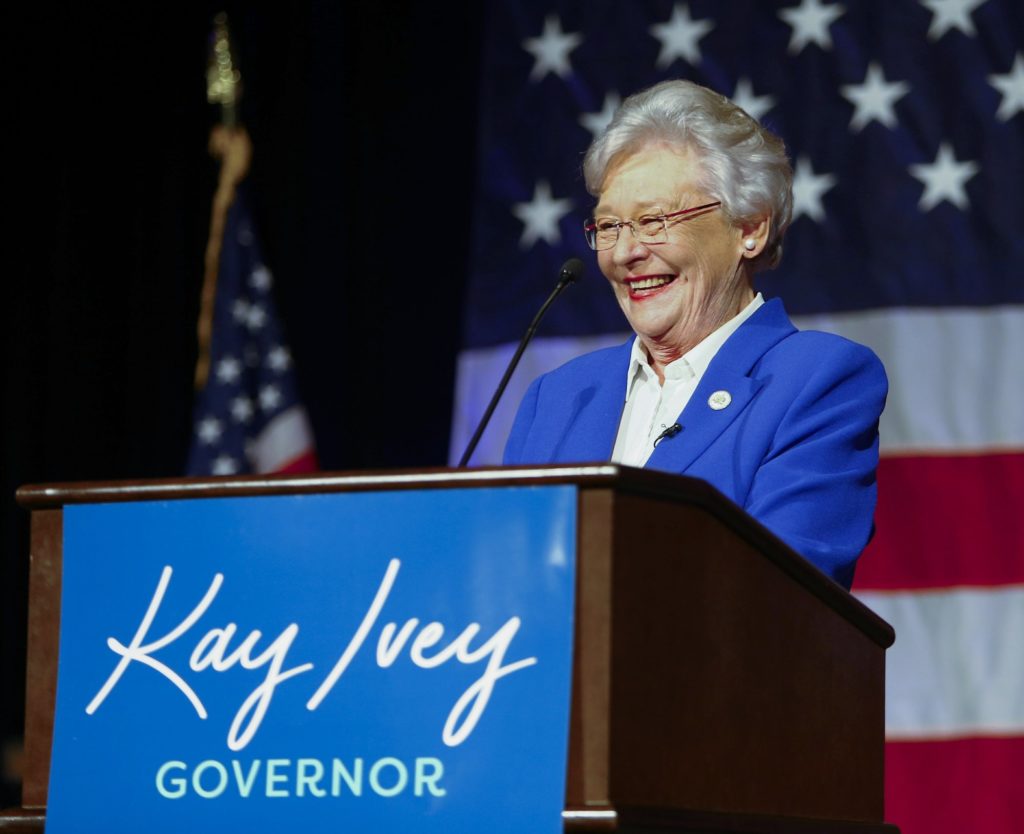
A century ago, the Suffragettes finally succeeded in winning the right to vote for women. They would be thrilled to see the nomination of a woman so uniquely qualified to serve on the U.S. Supreme Court as Judge Amy Coney Barrett, were they alive today. It’s easy to imagine them storming the streets of America and urging that Judge Barrett be confirmed, and by a wide margin. After all, the four female justices nominated before her were confirmed with lopsided votes by the U.S. Senate: 99-0 for Justice Sandra Day O’Connor, 68-31 for Justice Sonia Sotomayor, 63-37 for Justice Elena Kagan and 96-3 for the late Justice Ruth Bader Ginsburg. Sadly, it speaks to the times in which we are living that Judge Barrett’s vote by the Senate will most likely come down to a tight vote, with nearly every Democrat opposing her nomination. As governors who are either the first or second females to be elected in our respective states, we are rightfully proud to see diversity expand among the highest levels of government. Notably, however, our support for Judge Barrett hinges not on her being a female, but rather her superior intellect, unflappable composure and impeccable integrity, all which combine to make her eminently qualified in every way. Regretfully, we know – as do many others – that the climb for women into the upper echelon of American leadership has always been a bit steeper. After all, when was the last time a man’s haircut, the color of his tie or suit, or the number of children in his family were scrutinized as part of the public discourse? It is bittersweet that Judge Barrett followed her father’s advice that she could do anything her male counterparts could do, only better, and yet, sadly, millions of women appear to oppose her nomination simply because she interprets the law as-written, rather than siding with them on every issue. Is this the new standard for qualification? Many progressives, it seems, claim to believe in the power of women, but only for women who think and talk like they do. We applaud President Donald Trump for choosing Judge Amy Coney Barrett for service on our nation’s highest court; she may well be one of the most qualified, extraordinary picks during the past century, and we urge the United States Senate to confirm her nomination in short order. We especially like the direct answers Judge Barrett provided to two of the Senate Judiciary Committee members who questioned her last week. When Sen. Chris Coons, D-Delaware, suggested that Judge Barrett would vote in the same manner as the late Justice Antonin Scalia, a conservative for whom she had clerked earlier in her career, she calmly responded, “I assure you I have my own mind.” And when the Committee’s ranking Democrat, Sen. Dianne Feinstein, D-California, asked her whether she believed that Medicare was unconstitutional, she cited the “Ginsburg Rule,” so named for the late justice she will be following, of providing “no hints, no previews, no forecasts.” Perhaps one of the most powerful witnesses to speak in support of Judge Barrett was her former law student at Notre Dame, Laura Wolk. Ms. Wolk is totally blind, but before pursuing the “impossible dream” of becoming the first blind law clerk at the Supreme Court last year, she was struggling with her classwork as a first-year law student, fearful of failing. Laura recalled, “Judge Barrett leaned forward and looked at me intently. ‘Laura,’ she said, with the same measured conviction that we have seen displayed throughout her entire nomination process, ‘this is no longer your problem. It’s my problem.’” Ms. Wolk went on to say that Judge Barrett helped her see a pathway to success. She said the Judge will “serve this country with distinction not only because of her intellectual prowess, but also because of her compassionate heart and her years of treating others as equals deserving of complete respect.” When Judge Barrett raises her right hand to take the oath to “administer justice without respect to persons” and to “support and defend the Constitution of the United States,” it will be a win-win for every female – young and old alike during the past 100 years – who has dreamed of seeing women advance to the top positions of our government. Moreover, it will be a signal to every little girl – and boy – that the most qualified individual will get the job. Governors Kay Ivey of Alabama, Kristi Noem of South Dakota and Kim Reynolds of Iowa authored this column.
Donald Trump interviews Amy Barrett while weighing a high court nominee
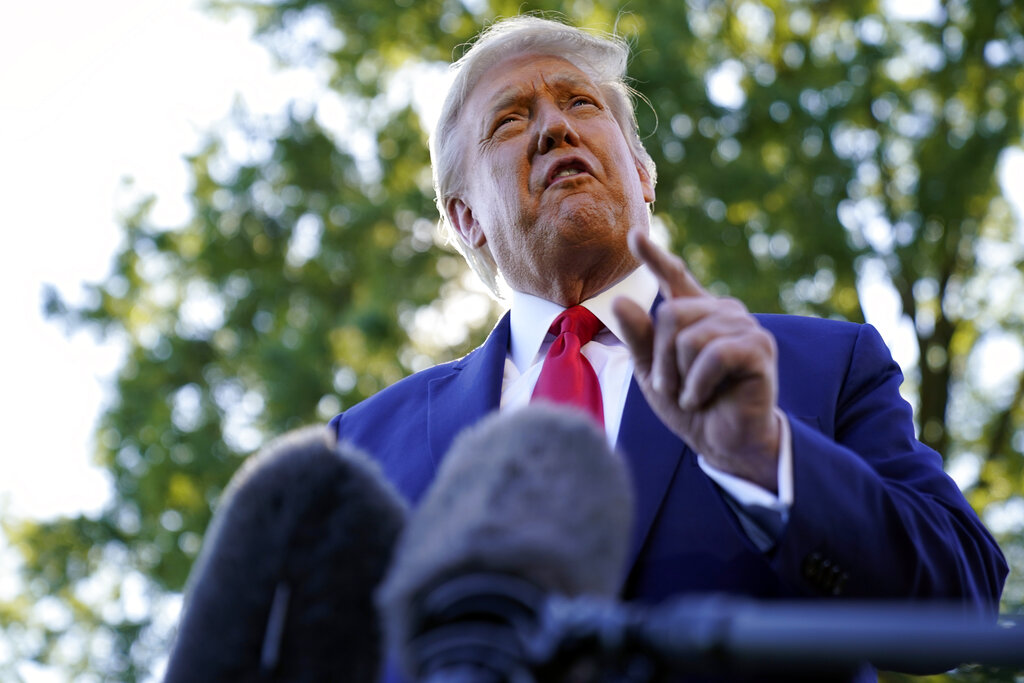
Trump said Monday he expects to announce his choice by week’s end, before the burial next week of Ginsburg.
Supreme Court Justice Ruth Bader Ginsburg dies at 87
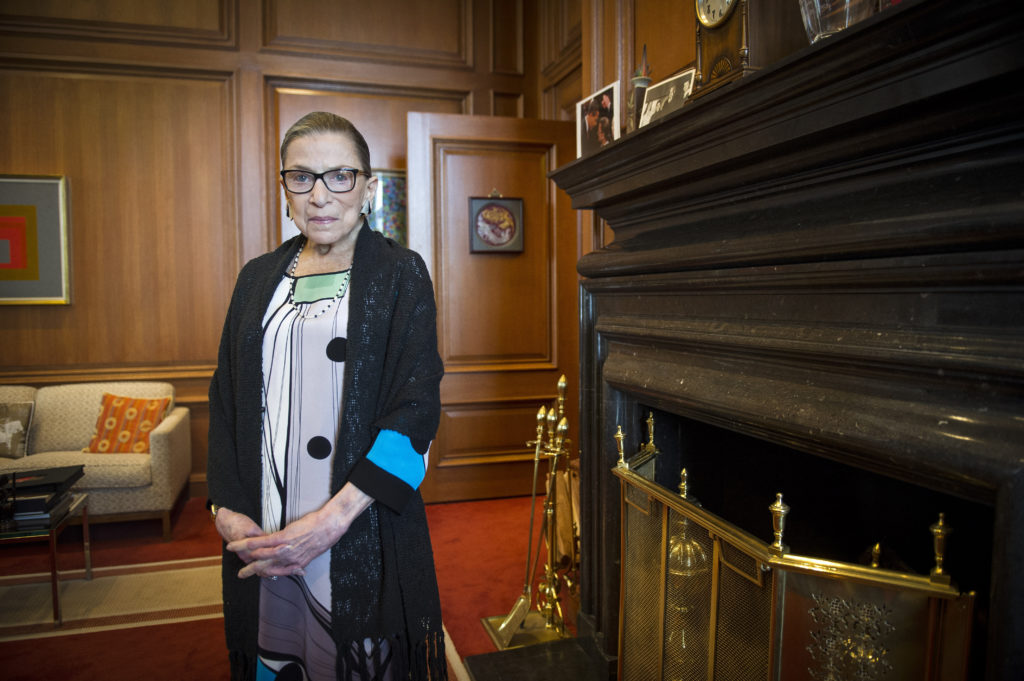
Supreme Court Justice Ruth Bader Ginsburg, a diminutive yet towering women’s rights champion who became the court’s second female justice, died Friday at her home in Washington. She was 87. Ginsburg died of complications from metastatic pancreatic cancer, the court said. Her death just over six weeks before Election Day is likely to set off a heated battle over whether President Donald Trump should nominate, and the Republican-led Senate should confirm, her replacement, or if the seat should remain vacant until the outcome of his race against Democrat Joe Biden is known. Chief Justice John Roberts mourned Ginsburg’s passing. “Our Nation has lost a jurist of historic stature. We at the Supreme Court have lost a cherished colleague. Today we mourn, but with confidence that future generations will remember Ruth Bader Ginsburg as we knew her — a tireless and resolute champion of justice,” Roberts said in a statement. Ginsburg announced in July that she was undergoing chemotherapy treatment for lesions on her liver, the latest of her several battles with cancer. Ginsburg spent her final years on the bench as the unquestioned leader of the court’s liberal wing and became something of a rock star to her admirers. Young women especially seemed to embrace the court’s Jewish grandmother, affectionately calling her the Notorious RBG, for her defense of the rights of women and minorities, and the strength and resilience she displayed in the face of personal loss and health crises. Those health issues included five bouts with cancer beginning in 1999, falls that resulted in broken ribs, insertion of a stent to clear a blocked artery, and assorted other hospitalizations after she turned 75. She resisted calls by liberals to retire during Barack Obama’s presidency at a time when Democrats held the Senate, and a replacement with similar views could have been confirmed. Instead, Trump will almost certainly try to push Ginsburg’s successor through the Republican-controlled Senate — and move the conservative court even more to the right. Ginsburg antagonized Trump during the 2016 presidential campaign in a series of media interviews, including calling him a faker. She soon apologized. Her appointment by President Bill Clinton in 1993 was the first by a Democrat in 26 years. She initially found a comfortable ideological home somewhere left of center on a conservative court dominated by Republican appointees. Her liberal voice grew stronger the longer she served. Ginsburg was a mother of two, an opera lover and an intellectual who watched arguments behind oversized glasses for many years, though she ditched them for more fashionable frames in her later years. At argument sessions in the ornate courtroom, she was known for digging deep into case records and for being a stickler for following the rules. She argued six key cases before the court in the 1970s when she was an architect of the women’s rights movement. She won five. “Ruth Bader Ginsburg does not need a seat on the Supreme Court to earn her place in the American history books,” Clinton said at the time of her appointment. “She has already done that.” On the court, where she was known as a facile writer, her most significant majority opinions were the 1996 ruling that ordered the Virginia Military Institute to accept women or give up its state funding, and the 2015 decision that upheld independent commissions some states use to draw congressional districts. Besides civil rights, Ginsburg took an interest in capital punishment, voting repeatedly to limit its use. During her tenure, the court declared it unconstitutional for states to execute the intellectually disabled and killers younger than 18. In addition, she questioned the quality of lawyers for poor accused murderers. In the most divisive of cases, including the Bush v. Gore decision in 2000, she was often at odds with the court’s more conservative members — initially Chief Justice William H. Rehnquist and Justices Sandra Day O’Connor, Antonin Scalia, Anthony M. Kennedy, and Clarence Thomas. The division remained the same after John Roberts replaced Rehnquist as chief justice, Samuel Alito took O’Connor’s seat, and, under Trump, Neil Gorsuch and Brett Kavanaugh joined the court, in seats that had been held by Scalia and Kennedy, respectively. Ginsburg would say later that the 5-4 decision that settled the 2000 presidential election for Republican George W. Bush was a “breathtaking episode” at the court. She was perhaps personally closest on the court to Scalia, her ideological opposite. Ginsburg once explained that she took Scalia’s sometimes biting dissents as a challenge to be met. “How am I going to answer this in a way that’s a real putdown?” she said. When Scalia died in 2016, also an election year, Senate Majority Leader Mitch McConnell refused to act on Obama’s nomination of Judge Merrick Garland to fill the opening. The seat remained vacant until after Trump’s surprising presidential victory. McConnell has said he would move to confirm a Trump nominee if there were a vacancy this year. Reached by phone late Friday, Sen. Lindsey Graham, R-S.C., the chairman of the Judiciary Committee, declined to disclose any plans. He said a statement would be forthcoming. Ginsburg authored powerful dissents of her own in cases involving abortion, voting rights, and pay discrimination against women. She said some were aimed at swaying the opinions of her fellow judges while others were “an appeal to the intelligence of another day” in the hopes that they would provide guidance to future courts. “Hope springs eternal,” she said in 2007, “and when I am writing a dissent, I’m always hoping for that fifth or sixth vote — even though I’m disappointed more often than not.” She wrote memorably in 2013 that the court’s decision to cut out a key part of the federal law that had ensured the voting rights of Black people, Hispanics, and other minorities was “like throwing away your umbrella in a rainstorm because you are not getting wet.” Change on the court hit Ginsburg especially hard. She dissented forcefully from the court’s decision in 2007 to
Martin Dyckman: In wake of Bob McDonnell case, Congress needs to close bribery loophole

What might have been only a run-of-the-mill bribery case became a major chapter in Florida history, and a forerunner of a recent deeply disturbing decision at the U.S. Supreme Court. A Ft. Lauderdale labor union local wanted to dig a canal on property it owned. Seeking a shortcut, the president and two henchmen passed $1,000 in cash to a county commissioner. He was wearing a wire. The law was watching. In April 1973, the Florida Supreme Court voted 4-2 to throw out the resulting convictions and prison sentences. The majority concluded that the union would not have needed the commission’s permission after all. As there was no point in bribing the commissioner, there was no crime. Never mind the criminal intent, or the fact that at the time everyone thought a permit was necessary. The two dissenters, Joseph A. Boyd Jr., and Richard Ervin, were the only justices who had held any political office other than judge — Boyd as a Dade County commissioner and Ervin as attorney general. They understood retail politics and the danger of, as Boyd put it, “the scurrilous peddling of one’s influence …” “Because of personal and political connections, public officials can persuade others vested with legal authority to grant favors to people which he (sic) could not personally grant through his own single vote or through the exercise of his official duties,” Boyd protested. The Legislature plugged the enormous hole that case created with Florida’s present law criminalizing unauthorized compensation to an official who either thinks he has a duty in the matter or tries to influence someone else. It also led to the resignation, under threat of impeachment, of Justice David L. McCain, who had cast the decisive vote for the defendants, campaign supporters of his. Earlier, he had tried to fix the case by influencing judges of the lower court that first heard the appeal. I wrote that McCain himself had been bribed. Boyd’s dissent in that old case describes to a precise T what (former) Virginia Gov. Bob McDonnell did to earn his recently overturned corruption conviction in federal court. He took $175,000 in loans, gifts and favors — including a Rolex watch for him and $20,000 worth of designer clothing for his wife — from a man named Johnnie Williams, who wanted Virginia’s universities to conduct research studies on a nutritional supplement his company had developed. McDonnell set up a series of meetings between Williams and university officials to help Williams. It didn’t work. The universities politely practiced passive resistance, and McDonnell never actually ordered them to do anything. As the prosecution saw it, however, McDonnell had broken several federal laws just by peddling his influence. But as the U.S. Supreme Court saw it — unanimously — McDonnell had taken no “action,” nor had he agreed to do so, on behalf of Williams. “The District Court,” Chief Justice John Roberts wrote, “should have instructed the jury that merely arranging a meeting or hosting an event to discuss a matter does not count as a decision or action on that matter.” In reversing the conviction, the court left an opening to the prosecution to retry McDonnell. But it’s an infinitely slim one. Consider Roberts’s closing remarks: “There is no doubt that this case is distasteful. It may be worse than that. But our concern is not with tawdry tales of Ferraris, Rolexes and ballgown. It is instead with the broader legal implications of the Government’s boundless interpretation of the federal bribery statutes. A more limited interpretation of the term ‘official act’ leaves ample room for prosecuting corruption, while comporting with the text of the statute and the precedent of this Court.” Balderdash. If “official act” is limited to something like a signature on legislation or on a direct order, that’s a loophole wide enough to drag the entire District of Columbia through it, and the Grand Canyon besides. It might even be large enough to let Rep. Corinne Brown of Jacksonville wriggle out of her freshly minted federal corruption indictment. The Roberts opinion reflects either a naiveté or lack of concern with what it’s like in the grubby trenches of retail politics; they crawl with people eager to find and patronize influential politicians who can pull strings with colleagues or regulatory agencies. No one on that court has any real-world experience appropriate to cases like McDonnell’s. Not since Sandra Day O’Connor‘s appointment 35 years ago has there been a justice who ever ran for any office, and she retired 10 years ago. So there was no dissent. It took Jack Abramoff, the celebrated and repentant political fixer, to explain what’s wrong with the McDonnell decision. “When somebody petitioning a public servant for action provides any kind of extra resources—money or a gift or anything — that affects the process,” he told The Washington Post. That is, of course, true of campaign contributions, a million times more so. But the law recognizes a distinction — even if there is no practical difference — between money intended to elect someone and largesse for his personal use. One bridge at a time. Congress needs to do what the Florida Legislature did: make it a crime for someone to offer, or an official to accept, monetary favors for wielding his or her influence. I’m not holding my breath. ___ Martin Dyckman is a retired associate editor of the newspaper now known as the Tampa Bay Times. He lives in suburban Asheville, North Carolina.
Martin Dyckman: Politics mars the Supreme Court nomination process
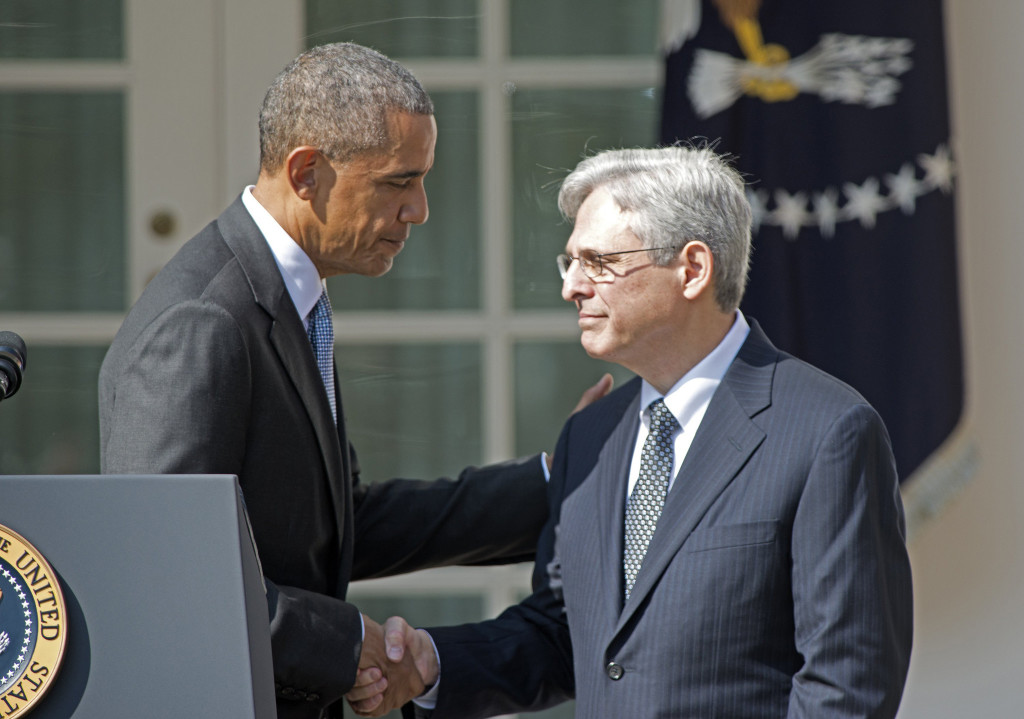
The maxim that “no good deed goes unpunished” is often borne out in politics these days, and if President Barack Obama hasn’t taped it to his shaving mirror, he should. In Merrick Garland, he found an ideal Supreme Court candidate, one whom, were the present roles reversed, a Republican president might have nominated and a Democratic Senate would have been obliged to confirm. His credentials are impeccable: Ivy League degrees. Clerkships at a Court of Appeals and at the Supreme Court. Antitrust practice in one of Washington’s blue ribbon firms. Distinguished service in the Justice Department, where he supervised the investigations and prosecutions of the Kansas City, Unabomber and Atlanta Olympics bombings. A centrist record in nearly 20 years as a judge of the Court of Appeals for the District of Columbia Circuit, where he is now the chief judge, and where he befriended John Roberts, the current chief justice of the United States. Garland is known as a diligent scholar who respects Supreme Court precedents, strives for consensus, and writes opinions that are “models of judicial craftsmanship,” according to Adam Liptak of the New York Times. Seven still-serving Republican senators supported Garland’s confirmation to the Circuit Court in 1997. Among them is Orrin Hatch of Utah, who was quoted in 2010 as saying Garland would have made a “consensus nominee” for the Supreme Court and dropped his name after Antonin Scalia died. Now, the oleaginous Hatch is saying “Let the voters decide,” as if they didn’t already do that when they re-elected Obama. At 63, Garland is a decade older than the usual Supreme Court nominee. The not-so-subtle message to the Senate majority is that a future Republican president might be able to fill the seat sooner than any Democrat might anticipate replacing Roberts. Despite all that, Senate Republicans are still refusing a hearing on the nomination and most aren’t even willing to meet with Garland privately. They’re holding out in the hope that a Republican will be elected in November to nominate a conspicuous reactionary like Scalia. In so doing, they’re catering to the Koch brothers, the NRA, and other elements of the rabid right that actively oppose Garland. What they might get instead, of course, is the nomination of someone younger and more liberal if a new Democratic president finds Scalia’s seat still vacant. While praising Garland’s qualifications and calling on the Senate to act, Hillary Clinton has been notably silent about whether she would resubmit his name in January 2017. As for Bernie Sanders, he too has demanded the Senate act on the nomination, which he said he would vote to confirm. But he also said explicitly that if it does not, he would ask Obama to withdraw it so that he could nominate someone considered to be more progressive. Both he and Clinton are open about wanting the court to overturn the Citizens United decision, which she said would be a criterion for any justice she might appoint. That’s where Obama must truly feel punished. Although the Democratic Party, most of its candidates and virtually all their center and left-of-center supporters are making hay — i.e., campaign contributions — out of the Senate majority’s position, their enthusiasm for Garland himself is notably muted. Jeffrey Toobin, the New Yorker’s eminent authority on the Supreme Court, took note of this in writing that Obama’s choice reflected not only his “boundless faith in the meritocracy” but also his “distaste for the vulgar realities of politics.” He could, Toobin continued, “have chosen a nominee who would rally his core supporters, and thus assist his party in races up and down the ballot.” The short-listed candidates included a woman, an African-American and an immigrant from India who are respected judges. But, says Toobin, “this President prefers technocrats to Democrats.” That said, Toobin thinks it is “outrageous,” and I agree, for the Senate to act as if Obama were re-elected for only three years rather than four. In signaling to their core voters — and more importantly, their allied lobbies — that the election will be in large part about the future of the Supreme Court, the Republicans have also made that quite clear to Democrats and independents. Fair enough. Vote Democratic as if your life depends on it, because it does. Although there have been three Democratic presidents since Lyndon Johnson, the Supreme Court has been controlled by Republican appointees since Warren Burger replaced Chief Justice Earl Warren in 1969. It would still be so even if Garland is confirmed. Interestingly, Republican presidents have been almost as much in thrall of the meritocracy as Bill Clinton and Obama have been. Like Scalia and Garland, every present justice has an Ivy League law degree — all from Harvard, like Obama himself, or from Yale, like Clinton, except for Ruth Bader Ginsburg, who started at Harvard and finished at Columbia. Moreover, the last justice who wasn’t Ivy League was Sandra Day O’Connor, also the last who ever had experience as an elected politician. O’Connor’s service in the Arizona Senate informed her vital role as a consensus builder and frequent deciding vote on the Supreme Court. The present court’s deficiency in that regard is reflected in the frequent 5-4 splits over hot-button political issues such as Obamacare and campaign finance. This is a condition that impairs the legitimacy of the court in the public’s eyes. Imagine if Brown v. Board of Education, the historic decision against racial segregation in public school, had been decided by anything less than a unanimous vote. Warren’s great service to his country, reflecting his background as California’s attorney general and governor, was to write the opinion in such a way as to ensure that it would be unanimous. He wasn’t Ivy League either, by the way. His law degree was from the University of California at Berkeley. *** Martin Dyckman is a retired associate editor of the St. Petersburg Times. He lives in suburban Asheville, North Carolina.
Martin Dyckman: Refusing to approve Obama nominee could hurt the Party of No in November
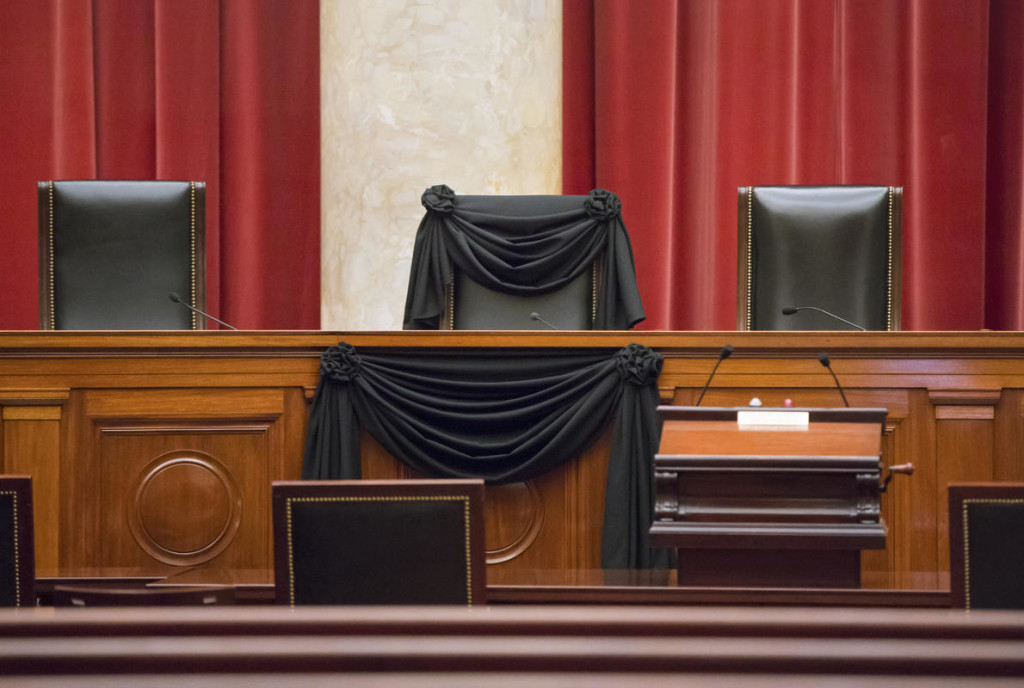
Mitch McConnell couldn’t even wait until Justice Antonin Scalia‘s corpse was cold before exploiting his death for partisan politics. The oleaginous majority leader means to keep the seat empty, no matter the likelihood of that paralyzing the sharply divided Supreme Court for a year, on the chance that voters might elect a Republican president to appoint Scalia’s replacement. The people, he said, “should have a voice in the selection of their next Supreme Court justice.” As Elizabeth Warren promptly reminded him, voters had that choice when they elected President Barack Obama and re-elected him four years ago with a winning margin of nearly 5 million votes. Most Americans understand that short of making or preventing war, the appointment of a Supreme Court justice has the longest-lasting consequences of anything a president does. They have trusted Obama with that responsibility. Twice. But the Party of No has never forgiven him for winning and has treated him with degrees of obstructionism and contempt that were never practiced by Democratic Congresses against Ronald Reagan or George W. Bush. The scheme of keeping Scalia’s seat empty for a year is consistent with the Party of No having shut down the executive branch to try win with extortion what it couldn’t win at the ballot box — the repeal of Obamacare. Belying the current Republican reinvention of history, there has never been a policy of deliberately perpetuating Supreme Court vacancies on the rare occasions when they occur during the last year of a president’s term. Quite the contrary. Some examples: There were only 10 months left in Reagan’s when the Senate unanimously confirmed Justice Anthony Kennedy, as Reagan urged it to do. John Adams had only four months left in his term when he appointed John Marshall to be chief justice in December 1800. That was easily the most consequential appointment ever. Thomas Jefferson, who had defeated Adams, could do nothing but gnash his teeth over the Federalists’ parting shot. Herbert Hoover was in the last year of his term, and facing all-but-certain defeat in the 1932 election, when he successfully nominated Benjamin Cardozo. When President Lyndon Johnson failed to promote Justice Abe Fortas to chief justice, it wasn’t because of timing but because Fortas had woeful ethical problems. There is nothing in the Constitution to require — or authorize — Congress to wait for an intervening election before carrying out any duty other than counting electoral votes. The 27th amendment merely postpones the effective date of any congressional salary increase until after the ensuing election for the House. That was James Madison‘s idea, 202 years before it was finally ratified, on the premise that lawmakers should think twice about giving themselves a pay raise of which the voters might disapprove. Today, there are Republican senators up for re-election who might want to rethink the McConnell scheme to hold the Supreme Court hostage for the next election. Five of the 17 seats the party is defending are in states, including Florida, which Obama carried four years ago. Obama will fulfill his constitutional duty to nominate a justice even if the Republican senators insist on defaulting on their duty to advise and consent. The voters will then have an opportunity to judge the senators. Two of the people said to be on Obama’s shortlist are circuit court of appeals judges whom the Senate confirmed unanimously two and three years ago. One would be the first Indian-American justice. The other is from Iowa and was enthusiastically supported by Iowa Sen. Charles Grassley, chairman of the judiciary committee, who is up for re-election this year. Is Grassley really prepared to stonewall her? Maybe not. He’s now saying he might hold hearings on a nominee although he still thinks the next president should make the appointment. At least the Party of No is making it vividly clear to voters what’s at stake for the Supreme Court — and for the entire concept of equal justice under law — this year. For the first time since Lyndon Johnson’s presidency, a majority of the court might be Democratic appointees. More to the important point, will the new justice be an ideologue like Scalia, or disposed to compromise like Sandra Day O’Connor and David Souter, both of whom were Republicans? They were the last justices who had ever held political office — O’Connor as a legislator and Souter as an attorney general — and the court was richer for that experience. The Supreme Court did its greatest work — Brown v. Board of Education comes to mind — when it valued consensus. It has been at its worst — think Citizens United — when an ideological majority insisted on scoring points that weren’t necessary to resolving the case. The American people want a new justice who will be judicious in every sense of the word. If Obama nominates such a person and the Republicans refuse to confirm him or her, it will be as good a reason as any for voters to reject the Party of No on Nov. 8. *** Martin Dyckman is a retired associate editor of the newspaper formerly known as the St. Petersburg Times. He lives in suburban Asheville, North Carolina.
