
Some schools teaching online, requiring masks as cases surge
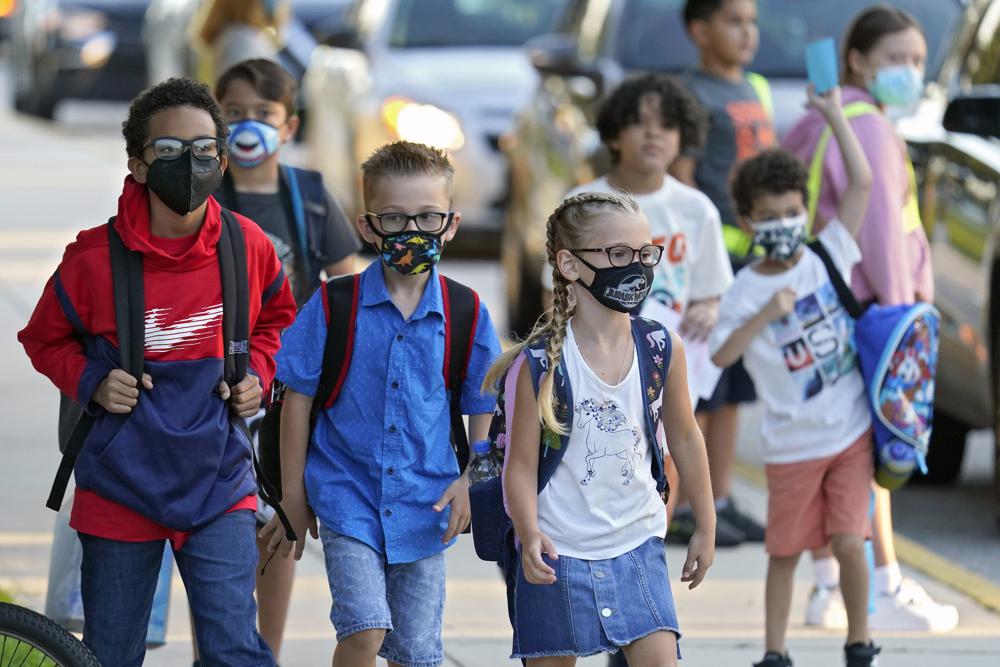
With Alabama hospitals treating more COVID-19 patients daily and the positivity rate for coronavirus tests exceeding 35% statewide, some state school systems are returning to online learning or implementing mask restrictions to avoid classroom outbreaks. In Sylacauga, students will attend classes remotely for three days when the new semester begins on Wednesday, Superintendent Michele Eller said in a statement. “Considering the surge right here in our community following the holiday gatherings, this is the reasonable course of action to protect our students and teachers from exposure,” she said. Shelby County schools in metro Birmingham started the post-holiday grading period online Monday for its nearly 21,000 students as part of a plan implemented before the latest surge. The system did the same thing last year to allow for additional quarantine time for anyone who might have been exposed to the virus or gotten sick over the break. Pike County’s public schools will hold classes in person but require masks for all workers and students through January 28, officials said in an announcement on social media. “Our focus will remain on keeping our students and employees safe. By implementing these steps, we hope to keep our schools open through this surge,” said the system located in southeast Alabama. More than 1,100 people were hospitalized statewide with COVID-19 on Monday, or more than 3.5 times as many as in mid-December. About 36% of COVID-19 tests came back positive statewide over the last week — a high for the pandemic — and the positivity rate exceeds 40% in 10 of the state’s 67 counties, according to statistics from the Alabama Department of Public Health. “Community transmission is just spreading like wildfire right now,” said Dr. Sarah Nafziger, vice president of clinical support services with UAB Health System. Less than 48% of the state’s population is fully vaccinated, giving Alabama one of the nation’s lowest vaccination rates despite months of work by health officials to promote the shots. With more than 16,450 dead of the illness, Alabama has the nation’s third-highest death rate from COVID-19, according to researchers at Johns Hopkins University. The rolling average number of daily new cases has increased by about 5,004 over the past two weeks, a jump of about 630%. There were nearly 1,058 new cases per 100,000 people in Alabama over the past two weeks, which ranks 20th in the country for new cases per capita. Hospitalizations aren’t increasing as quickly as the overall COVID-19 case total, apparently because the highly contagious omicron variant doesn’t make patients as sick as earlier versions of the virus, Nafziger said. But the latest surge is still straining health systems because of the large number of workers who are being exposed to the highly contagious variant or infected, she said. “We’re having a lot of staff who are testing positive, who are having to stay out of work because of that,” said Nafziger. Dr. Don Williamson, president of the Alabama Hospital Association, said the number of medical workers who are out because of COVID-19 or flu is “creating some staffing issues” at hospitals across the state. “It’s just a much more transmissible virus,” Williamson said of the omicron variant. “I worry that as our cases continue to rise, we are going to see more and more people in the hospital, and it’s going to happen when staffing was already challenging.” Williamson said that even though omicron seems to be less severe, it is wrong to dismiss the variant as the equivalent of a cold. There are 210 COVID-19 patients in hospitals, about double the amount at the beginning of the month. “If you believe that this variant is nothing more than the common cold, you are mistaken because we don’t hospitalize for the common cold. Yet, we are seeing patients with this surge being hospitalized at increasing rates,” Williamson said. “Based on what we’re seeing, there are fewer people who get severe disease, but there are clearly some who get severe disease.” Republished with the permission of the Associated Press.
UAB Health mandates shots as events canceled, masks ordered
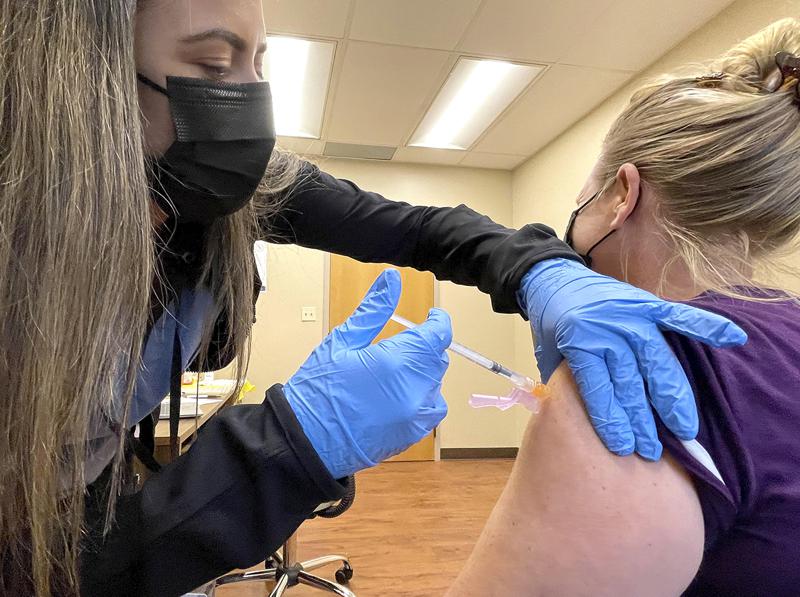
A major state employer, the University of Alabama at Birmingham Health System, said Tuesday it would require workers to be vaccinated against COVID-19 as communities large and small canceled events and more schools ordered face masks to confront the worsening surge of the coronavirus. UAB Health announced that both employees and others working in its hospitals and clinics must be fully vaccinated against COVID-19 by Nov. 12. The requirement affects 16,000 employees and could help boost the state’s last-in-the-nation ranking for the shots. Employees of UAB Health are already required to be vaccinated against other health threats, including the flu, the system said, and COVID-19 is threatening its ability to provide care. “If more people don’t get vaccinated, and hospitalizations continue to increase, we will not be able to care for patients who need us; we’ve already decreased important services,” said Dr. Sarah Nafziger, vice president of clinical support services. Nearly 100 doctors, nurses, and other workers have contracted COVID-19 at UAB Hospital, a report showed. It wasn’t clear exactly how many people would have to be vaccinated. The city of Montgomery announced Monday that band shows and other events connected with back-to-back football games planned in the city next month between historically Black colleges were being called off because of the pandemic. The games themselves would be held between Alabama State University and Miles College on Sept. 4 and Tuskegee University and Fort Valley State on Sept. 5. The biggest annual event in the 4,500-person town of Winfield, Mule Day, also was called off for the second year straight because of rising cases of COVID-19 in northwest Alabama. The gathering wasn’t scheduled until Sept. 24, but health officials say the state’s health system could still be in crisis then. In Cullman, where the Rock the South country music festival held last week drew thousands, health officials were concerned about a rise in COVID-19 cases linked to the gathering. Judy Smith, area administrator of the state health department, said 41% of recent COVID-19 cases were in people between the ages of 21 and 49. “That’s probably the majority of what went to Rock the South,” she told the Decatur Daily. “Sadly enough, we’re pulling our teams together right now to do additional testing because we know it’s going to happen. It’s not going to be just Cullman County. Those folks, if they gave it to each other … took it back to their counties.” Other large events are pushing ahead. The National Shrimp Festival, which can attract as many as 250,000 people to Gulf Shores, remains scheduled for October, said city spokesperson Grant Brown. It will be held in Baldwin County, which is already among the worst in the state for new cases. With classes resuming across much of the state this month, Geneva County schools said more than 400 students already were at home as close contacts of someone with COVID-19, so all students, teachers, and staff were required to wear face masks for at least two weeks beginning Wednesday. Larger systems, including Birmingham and Opelika, already had ordered mask-wearing. With about 11,800 dead of COVID-19 in the state, Alabama has the 16th worse death rate in the nation, according to researchers from Johns Hopkins University. Over the past two weeks, the rolling average number of daily new cases has increased by 1,176, a jump of about 48%. More than 2,720 people were hospitalized statewide with COVID-19 as of Tuesday, and critical care beds were all but full. The vast majority of the seriously ill haven’t been vaccinated, officials say. With less than 35% of its population fully vaccinated against COVID-19, Alabama is last in the nation for inoculations, according to the Centers for Disease Control and Prevention. Republished with the permission of the Associated Press.
Kay Ivey issues state of emergency as hospitals face COVID surge
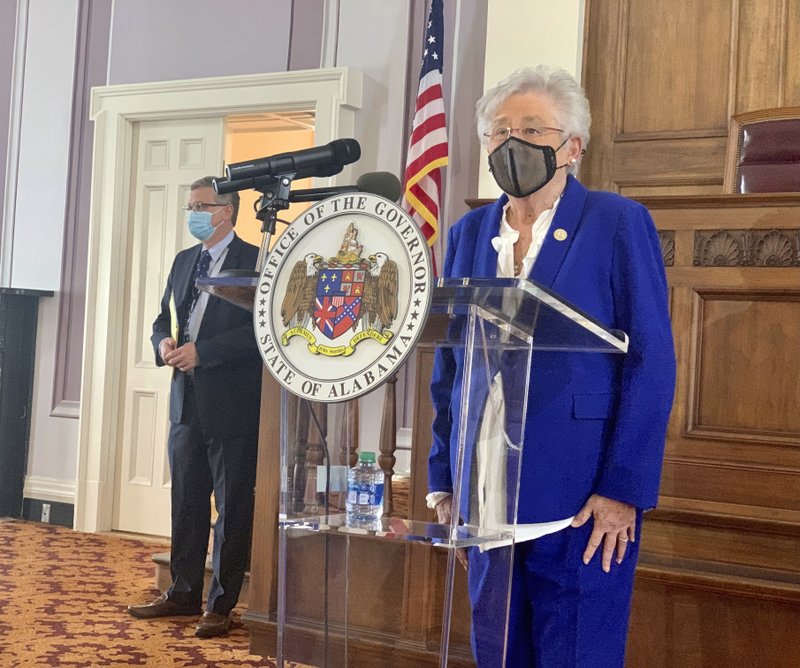
Alabama Gov. Kay Ivey on Friday issued a state of emergency as state hospitals face a surge in COVID-19 cases, an order that came the same day the state tied a record low for available intensive care unit beds. Ivey issued a limited state of emergency aimed at giving medical providers flexibility on staffing and capacity decisions and easier shipment of emergency equipment and supplies. The Republican governor stressed she would not be issuing any closure orders or mask mandates. ”I want to be abundantly clear: there will be absolutely no statewide mandates, closures, or the like. This state of emergency is strategically targeted at removing bureaucracy and cutting red tape wherever we can to allow our doctors, nurses, and hospital staff to treat patients that come through their doors,” Ivey said in a statement. The order came as medical providers described a “tidal wave” of COVID-19 cases that is putting severe stress on Alabama hospitals. The state on Friday tied the record low for available intensive care unit beds with just 39 vacant beds statewide, said Dr. Don Williamson, the former state health officer who now heads the Alabama Hospital Association. “The system is slowly becoming overwhelmed,” Williamson said. Of the state’s 1,567 intensive care unit beds, 689 are filled with COVID-19 patients, and just 39 are empty. Alabama ranks fifth in the country for new cases per capita, according to researchers at Johns Hopkins University. The state on Friday also saw a record number of pediatric cases with 40 children hospitalized with COVID-19, Williamson said. Williamson said the emergency declaration will allow hospitals to take steps such as expanding facilities or opening an antibody infusion center without getting state permission. It will increase the number of nurse practitioners and other staff positions that a doctor can supervise. Medical officials have said a surge in cases is being driven by low vaccination rates and the highly contagious delta variant and implored people to get vaccinated and wear masks to combat the spread and prevent severe illness. Alabama has one of the lowest vaccination rates in the country. “Unlike last year when we were hoping for a miracle, our greatest weapon against COVID-19 today is the vaccine, so, if you can, roll up your sleeve and get the shot,” Ivey said. Dr. Sarah Nafziger, vice president of the University of Alabama at Birmingham Hospital Clinical Services, said Thursday that the hospital has had to limit the number of procedures they are doing and decline transfers to the hospital. “We are seeing an absolute tidal wave,” Nafziger said. She said the hospital is providing care and emergency services, but she said the trends and projections are alarming. “When you think about running out of hospital beds and running out of health care resources, that is the path that we are on.” Republished with the permission of the Associated Press.
Tidal wave of virus cases hits Alabama hospitals
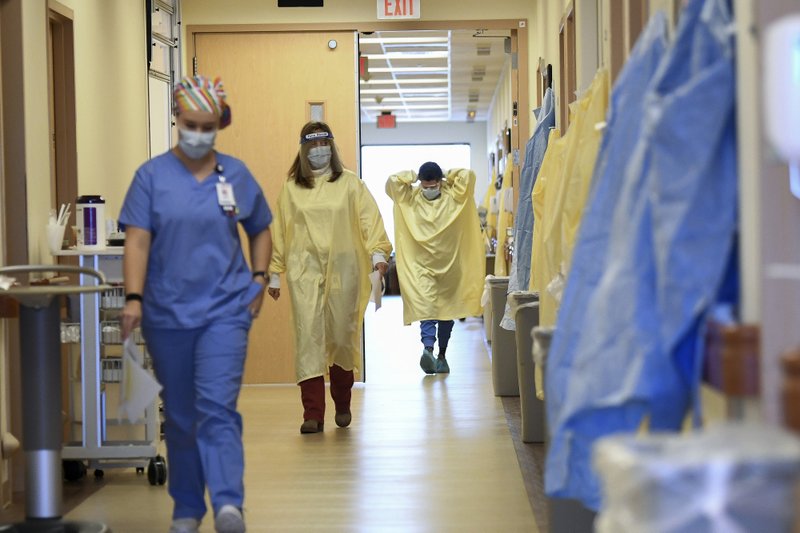
A “tidal wave” of COVID-19 cases is putting severe stress on Alabama hospitals, medical officials said Thursday, adding the state will likely soon surpass the previous record for hospitalizations. “We need Alabamians to understand we are in a difficult position right now. We are seeing case numbers again as high as we have ever seen,” State Health Officer Scott Harris said in a weekly briefing with reporters. “That has put a severe stress on our hospital situation. We have only 5% of our ICU beds available statewide. many facilities, particularly in the southern part of the state, do not have available ICU beds at this time.” Medical officials have said a surge in cases is being driven by low vaccination rates and the highly contagious delta variant and implored people to get vaccinated and wear masks to combat the spread and prevent severe illness. Dr. Sarah Nafziger, vice president of the University of Alabama at Birmingham Hospital Clinical Services, said the hospital has had to limit the number of procedures they are doing and decline transfers to the hospital. “We are seeing an absolute tidal wave,” Nafziger said. She said the hospital is providing care and emergency services, but she said the trends and projections are alarming. “I hate to even talk about these things happening, but that’s what happening. That’s the reality of what’s happening. When you think about running out of hospital beds and running out of health care resources, that is the path that we are on.” There were 2,441 COVID-19 patients in state hospitals on Thursday, according to numbers provided by the Alabama Department of Public Health. If the trajectory continues, Harris said the state will surpass the previous high of 3,087 within a few days. The overwhelming majority of patients hospitalized for COVID-19 are unvaccinated, Harris said. Numbers provided by state hospitals indicate that 89% of COVID-19 patients in state hospitals have not been fully vaccinated. Harris said 11% of hospitalized virus patients have been fully vaccinated, and 3% have been fully vaccinated, according to numbers provided to the state by hospitals. At UAB, Nafziger said 91% of hospitalized patients are unvaccinated. Alabama ranks fifth in the country for new cases per capita, behind Florida, Louisiana, Arkansas, and Mississippi, according to researchers at Johns Hopkins University. Alabama is seeing an average of 3,400 new cases per day. Republished with the permission of the Associated Press.
Doctor: COVID-19 ‘raging’ in Alabama as many refuse shots
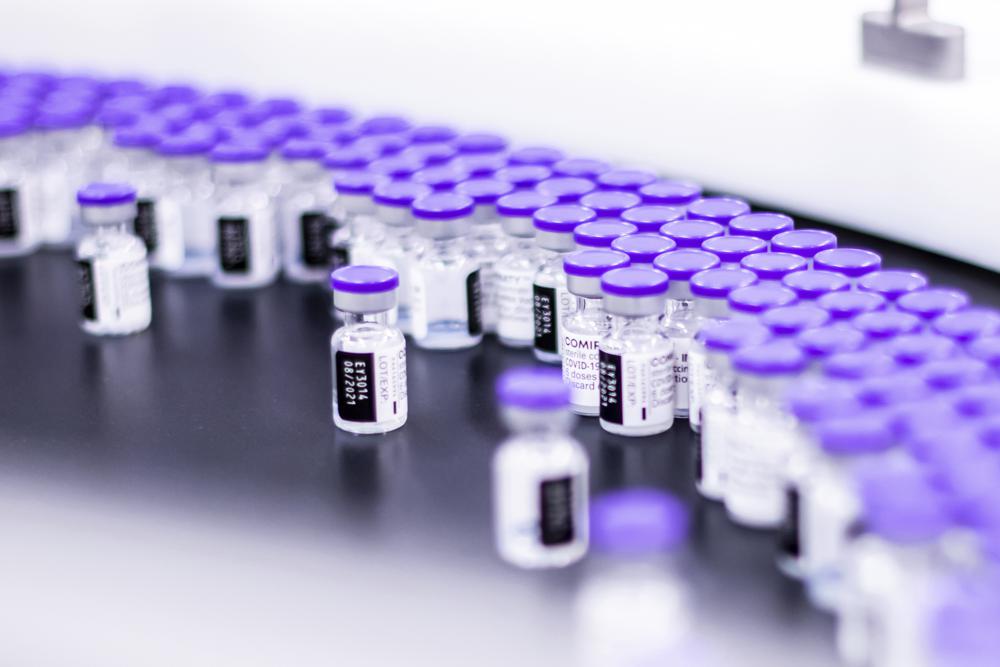
COVID-19 is “raging” through Alabama as thousands refuse vaccinations that nearly always prevent serious illness and a highly contagious strain races through communities where many have quit taking basic safety precautions, a health leader said Thursday. With more than 1,250 people hospitalized statewide with the illness caused by the new coronavirus — nearly all of whom aren’t inoculated — Alabama now has the nation’s highest positivity rate, and there’s no sign the rapid increase in cases will end soon, Dr. Sarah Nafziger said. The vaccines against COVID-19 would have prevented the surge and saved lives if only more people got them, said Nafziger, vice president of clinical services at UAB Hospital. “Unfortunately, it looks like it’s going to get worse before it gets better,” she told a news briefing. Only 34% of Alabama’s population is fully vaccinated, which is the lowest in the nation. Health officials were encouraged by a recent increase in the vaccination rate, but it’s unclear whether the small boost could help stem the flood of new cases since it takes weeks for a newly vaccinated person to be fully protected. While some school systems and government installations, including the Army’s Redstone Arsenal, have announced a return to mandatory face mask rules, Nafziger said she sees few masks in public and worries that many people will simply ignore new recommendations, as has happened throughout the pandemic. Nafziger said she and her family recently returned to wearing masks in public places because of how quickly the pandemic is worsening as the delta variant spreads even faster than the original coronavirus. “We hate it. But it’s what we have to do to keep ourselves safe and our neighbors safe,” she said. More than 11,500 people have died of COVID-19 in Alabama, which is 17th highest nationally overall and seventh-highest per capita at 236 deaths per 100,000 people, according to researchers at Johns Hopkins University. Over the past two weeks, the rolling average number of daily new cases has increased by 1,402, a jump of 265.2%. Republished with the permission of the Associated Press.
Alabama NewsCenter: UAB partners with ADPH to launch Alabama Regional Center for Infection Prevention and Control
Alabama NewsCenter The University of Alabama at Birmingham has been awarded nearly $2 million by the Alabama Department of Public Health to support the establishment of the Alabama Regional Center for Infection Prevention and Control (ARC IPC). This new center will provide consultation and support services across Alabama. It was approved by the board of trustees of the University of Alabama System at its June meeting. The ARC IPC will bring together experts from the university and state to assist the ADPH Infectious Disease and Outbreaks Division in management and response to emerging and reemerging diseases. Key to the center’s mission is training and technical assistance to increase workforce skills. “Our efforts will work to enhance and support infection prevention and control efforts across Alabama’s health care and public health systems,” said Lisa McCormick, associate professor and associate dean for Public Health Practice in the UAB School of Public Health and director of the ARC IPC. “I am excited to be working with a diverse team of IPC experts to assist the ADPH in strengthening Alabama’s capacity to prevent, control and manage infectious disease outbreaks.” IPC experts are playing a critical part role during the pandemic through surveillance, detection, response, and prevention of future outbreaks. McCormick hopes the efforts will build capacity within the workforce combating COVID-19 and increase awareness of the need for and importance of professionals in the field. The pandemic has resulted in immense impacts on the economy, health, and social well-being of Alabamians. As of June, there have been more than 548,000 COVID-19 cases and 11,250 deaths due to the virus in Alabama. The state’s vaccination rates are lagging as new, increasingly transmissible variants, such as the Delta variant, are emerging. In addition, Alabama continues to see increases in cases of hepatitis A and RSV, into the summer months when concerns of vector-borne and foodborne illnesses increase. Suzanne Judd (UAB) “As a nation and state, we were really caught flat-footed by SARS-CoV-2 even though scientists had been warning that coronaviruses had the potential to create a global pandemic,” saidSuzanne Judd, professor, co-director of the ARC IPC and director of the Lister Hill Center for Health Policy in the UAB School of Public Health. “Working together with the ADPH will help us to be ready when a new virus or bacteria threatens the health of Alabamians. We will be better prepared to communicate risks to the public to help prevent future pandemics.” The center will provide training and technical assistance to local, district, and state health department IPC personnel, infection control managers, and nurses at in-patient and out-patient health care facilities and long-term care facilities, hospital epidemiologists, school nurses, and other infection control practitioners. “The UAB faculty and staff involved in this center have extensive experience in infectious disease prevention and control, epidemiology and surveillance, behavioral health, public health preparedness, and forecasting and modeling, as well as in implementing and evaluating public health programs whose purpose is to strengthen the current public health and health care workforce,” McCormick said. The ARC IPC investigators include Dr. Paul Erwin, Dr. Rachael Lee, Dr. Marjorie White, Dr. Sarah Nafziger, Dr. James Crosby, Bertha Hidalgo, Greg Pavela, Tamika Smith, and Judd McCormick. The ARC IPC is currently launching its efforts. Visit the website to request training or technical assistance, access infection prevention resources, see upcoming training opportunities or learn more about the center. For more information, with questions or to sign up for the ARC IPC’s newsletter, email ARCIPC@uab.edu. This story originally appeared on the UAB News website. Republished with the permission of the Alabama NewsCenter.
UAB Physician: Too soon to ease Alabama mask mandate
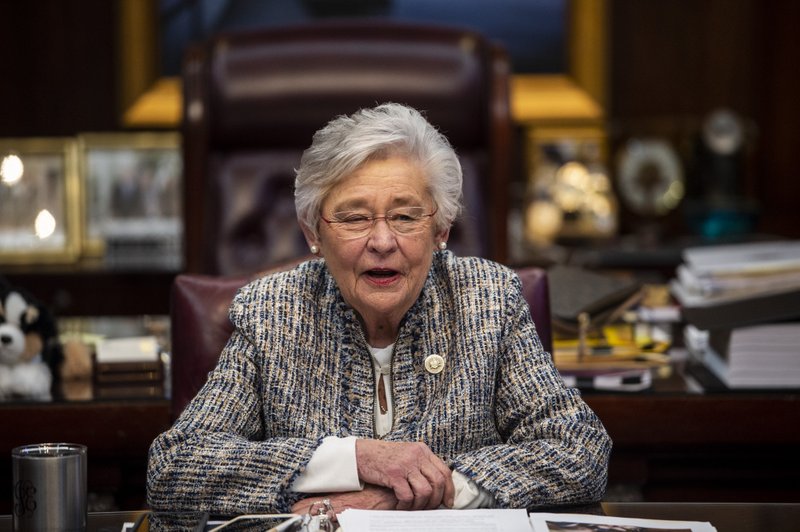
Alabama “isn’t out of the woods yet” with COVID-19 and it’s too early for Gov. Kay Ivey to lift a mask order that has been in place since July, a top health expert said Wednesday as state pandemic deaths topped 10,000. Dr. Sarah Nafziger, vice president of clinic support services at the University of Alabama at Birmingham, told a news briefing she favors retaining the requirement, which is set to expire Friday afternoon without an extension. Previously, Dr Nafziger has served as the Assistant State EMS Medical Director for the Alabama Department of Public Health where she worked on implementation of regionalized specialty systems of care for time-dependent illness and injury, disaster preparedness including the Ebola response, and EMS protocol development. Other Republican-led states including Texas and neighboring Mississippi are easing health restrictions as vaccination numbers rise and illnesses linked to the new coronavirus decline, and Ivey is facing pressure to eliminate the mask order. On social media, some are sharing the phone number to the governor’s office and asking callers to voice opposition to the rule. Hospitalizations are at the lowest point than any time since June, and Nafziger said a reduction in testing indicates fewer people are having symptoms that prompt them to seek a test. But easing restrictions before more people are vaccinated could reverse the overall trend of improvement since mask-wearing reduces illness and infection, Nafziger said. “Is it time to do away with the mask mandate in Alabama? No,” she said, adding: “We have a lot of vulnerable people in our population, and the last thing we want is for them to get sick or die.” Ivey scheduled a news conference for Thursday morning to discuss the pandemic. Citing the decline in cases, Republican Lt. Gov. Will Ainsworth asked Ivey to end the mask requirement, which he has opposed all along. Local governments and businesses can make their own rules if needed and individuals can make decisions for themselves and follow safety rules until vaccinations and immunity levels are sufficient, he said. “But we can do all of these things without a Big Brother-style government mandate looming over us,” he said in a statement. The Alabama Senate on Wednesday evening also approved a resolution urging Ivey to end the mask mandate. While the coronavirus causes only mild to moderate symptoms for most people, it is particularly dangerous for the elderly and people with other, serious health problems. The Alabama Hospital Association has asked Ivey to extend the mask rule, which requires facial coverings in indoor public places and outside when social distancing can’t be maintained, but the governor’s office has not said what she will do. Ivey has said she prefers “personal responsibility” to government mandates and the state is headed in the right direction, yet “we still have some work to be done,” spokeswoman Gina Maiola said Monday. The state’s death toll from COVID-19 hit 10,029 on Wednesday, state statistics showed, and more than 497,000 people have tested positive. Of more than 1.4 million vaccine doses delivered to providers in the state, almost 973,000 shots have been administered to patients. With the state lagging behind others in delivering immunizations, Nafziger said UAB — one of the top shot providers in the state — isn’t “sitting on doses.” Shipments typically arrive with little notice and in varying amounts, she said, so most scheduling has been “very last minute.” Patients don’t like the system, she said, “and we hate it.” Republished with the permission of the Associated Press.
Alabama virus hospitalizations hit lowest point since fall
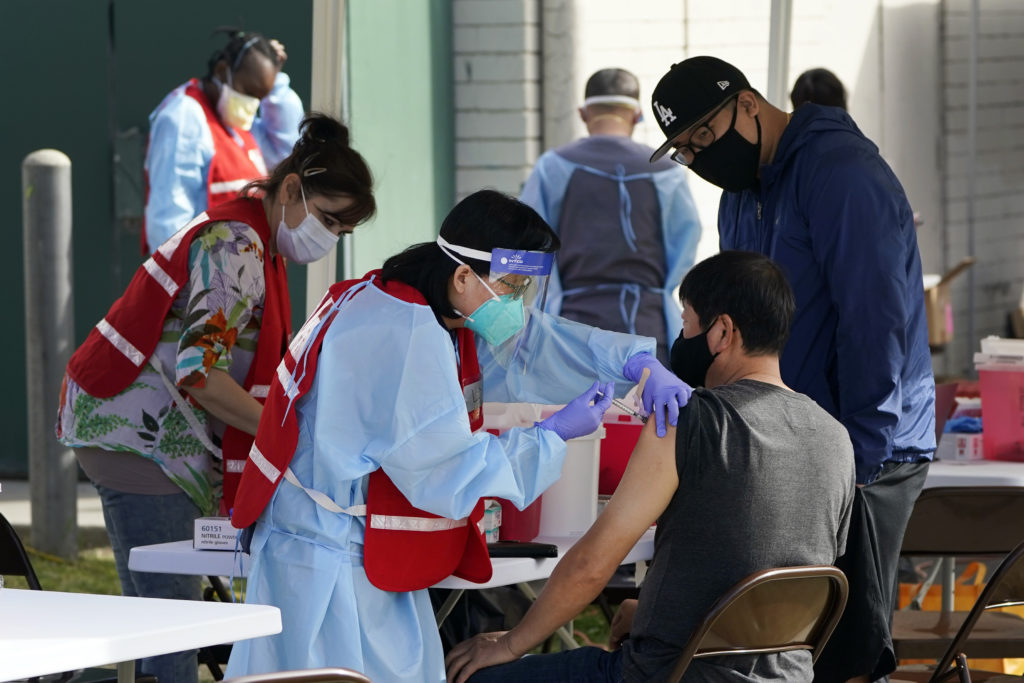
The number of people in Alabama hospitals with COVID-19 dipped Thursday to around 1,000, the lowest since late autumn. The decline in hospitalizations, daily new cases and the percent of tests coming back positive — three major barometers of the pandemic’s severity — is an encouraging sign that the state has emerged from the record-setting winter surge, said Dr. Don Williamson, the president of the Alabama Hospital Association. An unknown, however, is if the state will see another spike from the spread of variants. COVID-19 hospitalizations have declined from more than 3,000 on Jan. 11 to 1,003 on Thursday, the lowest level since early November “These are the best numbers we’ve seen certainly since November,” “We are headed in the right direction if we don’t do anything to mess it up,” Williamson said. Williamson attributed the drop in hospitalizations to both a drop in cases and treatment with monoclonal antibodies to lessen the severity of illness. Other states have also seen a drop in cases. Alabama ranked 22nd among U.S. states in the number of new cases per capita in the past 14 days. The seven-day rolling average of daily new cases in Alabama fell from 2,281 on Feb. 3 to 1,014 on Feb. 17, according to The COVID Tracking Project. Williamson said an unknown is if the state will see another spike from virus variants. At least eight cases of a highly transmissible variant that was first identified in the United Kingdom has been found in the state, according to the Alabama Department of Public Health. The department said many infectious disease experts have indicated that the current vaccines should be effective against the strain, and that the variant has not been definitively linked to worse outcomes. Since the pandemic began, more than 480,000 confirmed and probable virus cases have been reported in Alabama, and 9,424 people have died. Alabama has so far distributed about 685,000 of the 1 million vaccine doses it has received. Early numbers suggest a racial disparity in who is getting the vaccine. Thus far, whites have received about 55% of the doses compared to 12% received by Blacks. The numbers are incomplete, however, because the race of 28% of vaccine recipients was not reported. About 28% of Alabama’s population is Black. Tuskegee University and the University of Alabama at Birmingham School of Medicine have scheduled a town hall for Friday to answer questions about the vaccine and discuss vaccine hesitancy among minority communities. The event will be held via Zoom and is open to the public and the news media. The University of Alabama at Birmingham and UAB Medicine said this week that almost 21% of the 59,167 vaccinations they administered were to individuals who self-identified as Black. “While our early results are better than the national average with Black communities, we are not satisfied and will continue our efforts to increase outreach among underrepresented groups,” Dr. Sarah Nafziger, vice president of clinical operations for UAB Hospital, said in a statement.
Thousands flocking to virus vaccination sites across Alabama
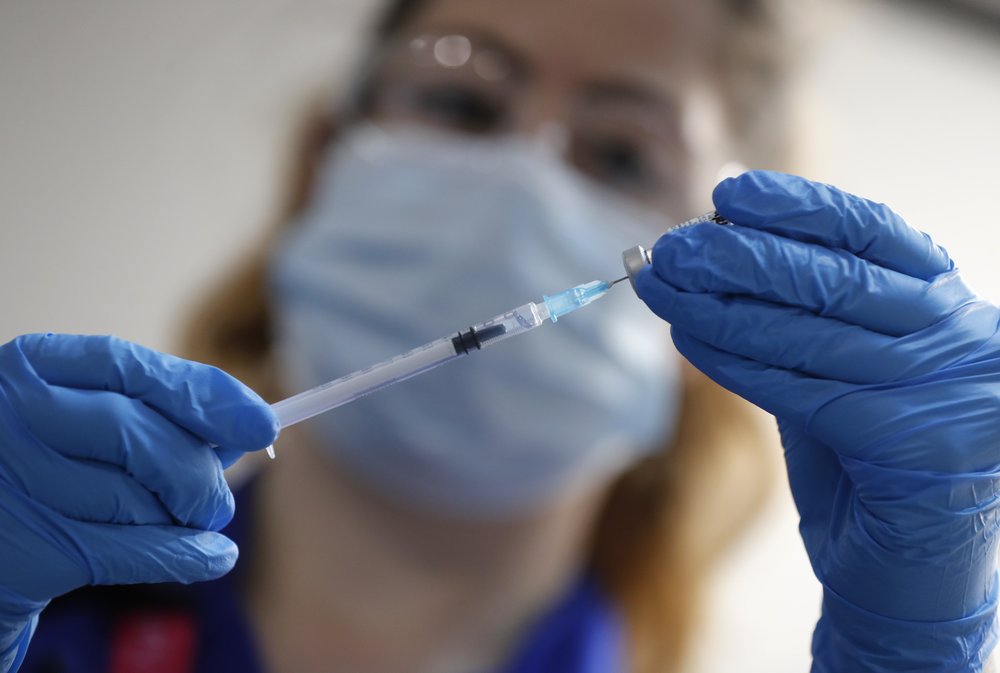
Thousands of people showed up at sites from the coast to the Tennessee Valley as Alabama began vaccinating senior citizens for the coronavirus that causes COVID-19. People spent the night in cars waiting for shots in Baldwin County, where health workers began immunizing people early Tuesday. County health workers in Huntsville vaccinated 500 people on Monday although only 300 people had appointments. Other sites opened in cities ranging in size from Birmingham to Rainsville. The state is offering vaccines to people 75 and older after limiting the initial doses to health workers. Alabama is among the Southern states trailing the nation in the rate of vaccinations. In Limestone County, Pat White showed up to get her first of two doses of the Moderna vaccine Monday. She said she misses going to church and has done little other than buy groceries to protect against catching the virus. “We’ve lost many friends to COVID, and we’re older, so that made me think it was probably the right thing to do,” White told WAAY-TV. Alabama Department of Public Health statistics show about 150,000 have received shots statewide, but the number does not include those who were immunized most recently. More than 600,000 people are currently eligible for vaccinations in Alabama, including 325,000 health care workers and 350,000 people who are 75 or older. The state has so far received 446,000 doses, according to state numbers. The University of Alabama at Birmingham Hospital has been notifying patients, who are 75 and older, to have them come to get vaccinated. “At the vaccine site, it’s not uncommon for people just to break down in tears when they receive their vaccine. People are just so tremendously relieved to finally have received the vaccine and have some hope,” Dr. Sarah Nafziger, vice president of Clinical Support Services at UAB Medicine, said. More than 6,100 people have died of COVID-19 in Alabama, and more than 424,000 people have tested positive for the new coronavirus. Over the past two weeks, the rolling average number of daily new cases has decreased by 881, a decline of almost 24%, according to researchers at Johns Hopkins University. The virus causes only mild or moderate symptoms in most people, but it is particularly dangerous for the elderly and people with other, serious health problems. Nafziger said the delivery of the vaccinations is also providing a boost to health care workers who spent much of 2020 battling the pandemic. “We’ve been in a really rough place, especially in health care. For the last year, it’s been a tremendous burden. We’re exhausted. But just finally having hope has been a tremendous boost for all of us and I hope it is for the community as well,” Nafziger said. The Alabama Department of Public Health last week disputed rankings that put Alabama last in vaccination delivery and said that was because some entities had not reported given vaccinations. Four state senators wrote a letter Tuesday raising concern about the process and asking for updated numbers on vaccinations given. They expressed concern that incomplete reporting could threaten the flow of vaccine to the state if federal officials see the state has unused vaccine on the shelf. “While the supply pipeline is definitely an issue, our pipeline in Alabama has a kink,” Sens. Jim McClendon, Greg Albritton, Tom Whatley, and Randy Price wrote. The Alabama Department of Public Health responded in a statement disputing the assertion. The department said that the number of COVID-19 vaccine doses allocated to Alabama is based on our population, and “is not determined by how much vaccine is on hand in the state.” “The biggest obstacle to vaccination in Alabama is the limited supply of vaccine. Alabama currently has approximately 676,000 people in Alabama who qualify to receive a COVID-19 vaccine, but since our state is allocated only around 50,000 – 60,000 primary doses each week, the supply is not available to reach these numbers at this time,” the department said. Republished with the permission of the Associated Press.
Alabama reports first coronavirus death as cases near 400
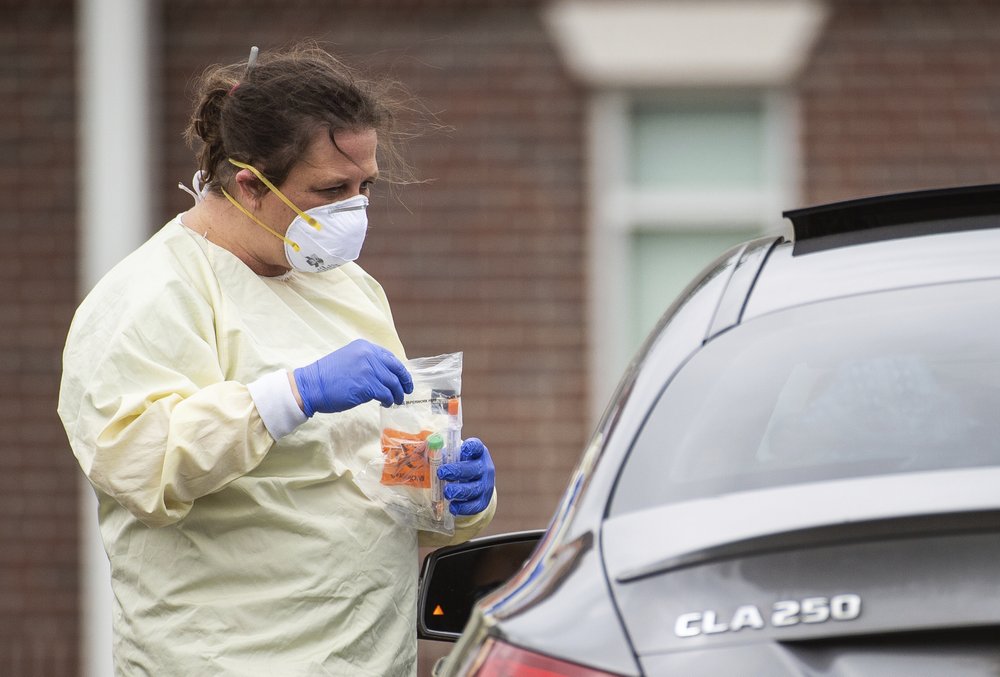
The patient had underlying health problems and passed away in a facility outside the state of Alabama.
Alabama unemployment claims skyrocket amid pandemic
Health officials have acknowledged the economic cost of mandatory closures.
Kay Ivey: No plans for a statewide shelter in place order
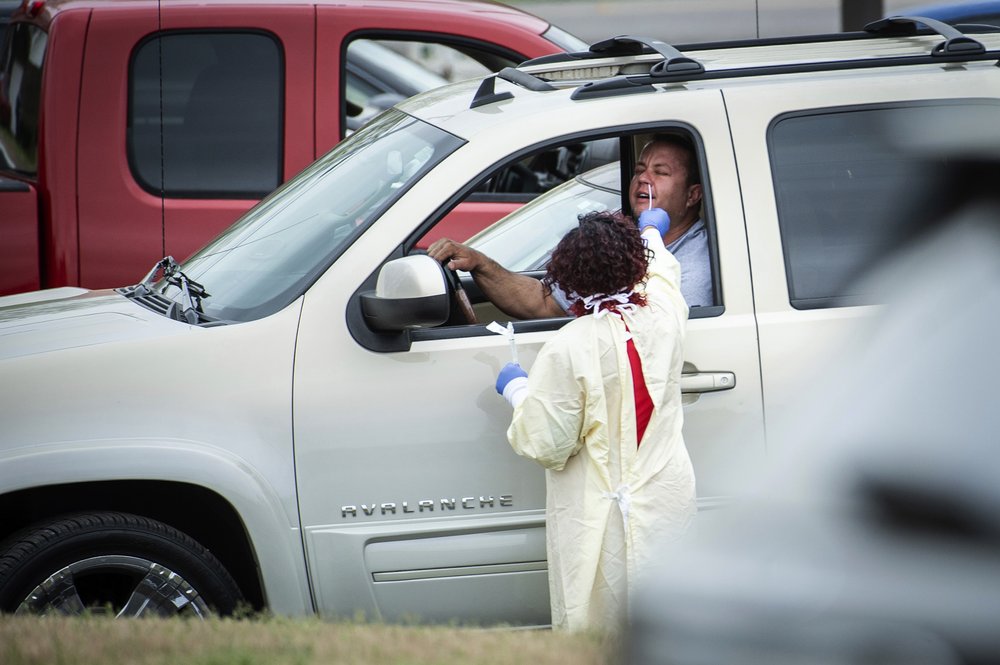
The announcement came the same day as the Birmingham city council approved a “shelter in place” ordinance.
