
Senate Rules panel quickly moves array of bills to Special Order Calendar
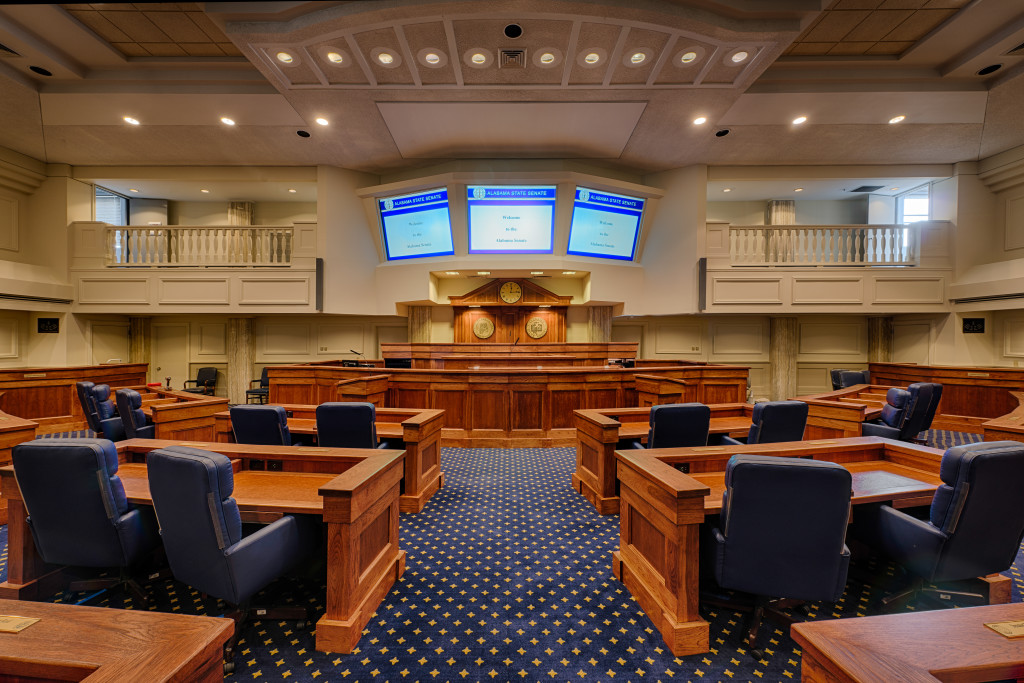
In a meeting that lasted less than 10 minutes, the Senate Rules Committee approved a number of bills for addition to the Special Order Calendar. Unlike other committees, the Rules Committee does not give favorable or unfavorable reports. It simply approves or disapproves of bills slated to be added to the daily calendar of bills headed for their respective bodies. With little discussion, the committee approved the entire slate of legislation that included 20 bills. Among those approved for a move before the full Senate was SB136 from Sen. Vivian Figures (D-Mobile), which would raise money for Medicaid via a 5-mill increase in the state’s low property tax. Figures noted in an earlier committee meeting that the move would net about $280 million by 2019 and every year thereafter. The committee also approved SB268 from Sen. Cam Ward (R-Alabaster), which would revoke the Medicaid benefits of city and county jail inmates while incarcerated. SB285 from Sen. Arthur Orr (R-Decatur) was also approved by the committee. Orr’s bill would put further restrictions on public assistance programs, such as Supplemental Nutrition Assistance Program (SNAP) and Temporary Assistance for Needy Families (TANF) benefits. The bill specifies that SNAP benefits should be terminated if a recipient is late on child support or any “court-ordered support payments.” The bill would also put a lifetime limit of 36 months on TANF benefits and require the Medicaid Agency to better track the income and assets of benefit recipients. Further, the bill would require out-of-state purchases with TANF money to be tracked and a person’s citizenship to be questioned if too many such purchases are made. The committee also approved the Unborn Infants Dignity of Life Act, HB45 from Rep. April Weaver (R-Alabaster), which provides for the “dignified final disposition of the bodily remains” of infants and prohibits the already-illegal sale of fetal tissue. Weaver’s bill has already cleared the House and its addition to the Senate calendar poises it to approach final passage.
Senate committee green-lights 2 Medicaid bills

The Senate Committee on General Fund Finance and Taxation gave a favorable report on two Medicaid-related bills Tuesday, one aimed at curbing fraud and another aimed at increasing funding. SB284 from Sen. Trip Pittman (R-Daphne) specifies that a person must “knowingly engage” in Medicaid fraud in order to be charged for the crime and applies “safe harbor” laws, similar to those in federal law, which are established to protect certain “business arrangements.” Further, the legislation would provide for prosecuting corporations, as well as individuals, and put in place a six-year statute of limitations on the prosecution of such charges. “I believe this kind of legislation, not only provides the vehicle to better enforce the law, it will help to encourage compliance,” Pittman said. “We all want to trust, but this ensure that things are being done properly.” Concern was voiced over the bill’s call for charging offenders with a Class C felony for offenses amounting to more than $10,000 in fraud, noting that a Class D felony would be more in line with a nonviolent offense, but Pittman noted that such crimes rob people desperate for assistance. “I would say, if you’re taking taxpayer money, these types of crimes are of the worst type,” Pittman said, and with that the committee green-lighted the bill to be sent before the Senate. SB136 from Sen. Vivian Figures (D-Mobile) offered a bill that provide an additional 5-mill property tax, the proceeds going to help fund the state’s beleaguered Medicaid program. Figures noted that the additional tax would amount to about $15 for a property worth $50,000 and would generate $280 million annually starting in 2019. The bill had widespread support from committee members during discussion, many noting that Alabama’s Medicaid program is among the state’s biggest expenses and that such a move would go a long way in addressing that problem. Further, many praised the legislation for putting the issue before the public for a vote, rather than simply applying a tax increase. The legislation narrowly gained a favorable report, since six senators voted against it.
