
Bill passed to keep abortion clinics 2,000 feet from Alabama schools

An Alabama House committee has passed a bill to keep abortion clinics at least 2,000 feet away from public schools. The House Health Committee voted Wednesday in favor of HB 301 sponsored by Rep. Ed Henry, a Decatur Republican. The bill directs the Alabama Department of Public Health not to reissue licenses for any clinic within 2,000 feet of a school. The bill passed the state Senate in March by a vote of 27-6, and will now move to the full House for a vote. “If we currently protect a physical buffer between students and liquor stores, it is common sense that we would protect them from attending school near an abortion clinic,” Sen. Paul Sanford of Huntsville said upon the Senate’s passage of the bill. “This will not mandate any abortion clinic to shut down, but I have no problem if it forces a clinic or two to move away from our kids.” If signed into law, the bill would force two abortion clinics in the state to close, including one in Huntsville stationed across the street from Edward H. White Middle School, which was forced to move to its current location near a public school after the state mandated new facility requirements in 2013. The American Civil Liberties Union (ACLU) of Alabama has vowed to challenge the restrictions in court if it clears the House, which would be the fourth lawsuit in the last three years challenging abortion restrictions in Alabama. “We all agree that protecting our children is a top priority. But this law isn’t about protecting Alabama’s children,” stated Susan Watson, Executive Director of the ACLU of Alabama in March when the bill passed the state Senate. “It’s about making a sure a woman who has decided to have an abortion can’t get one.” “And make no mistake about it: If the legislature passes this bill, the ACLU will challenge this law in court,” Watson stated. If the bill is signed into law, Alabama will become one of the first states in the nation to have a school proximity provision for abortion clinics.
Alabama legislative week in review: March 21 – March 25, 2016
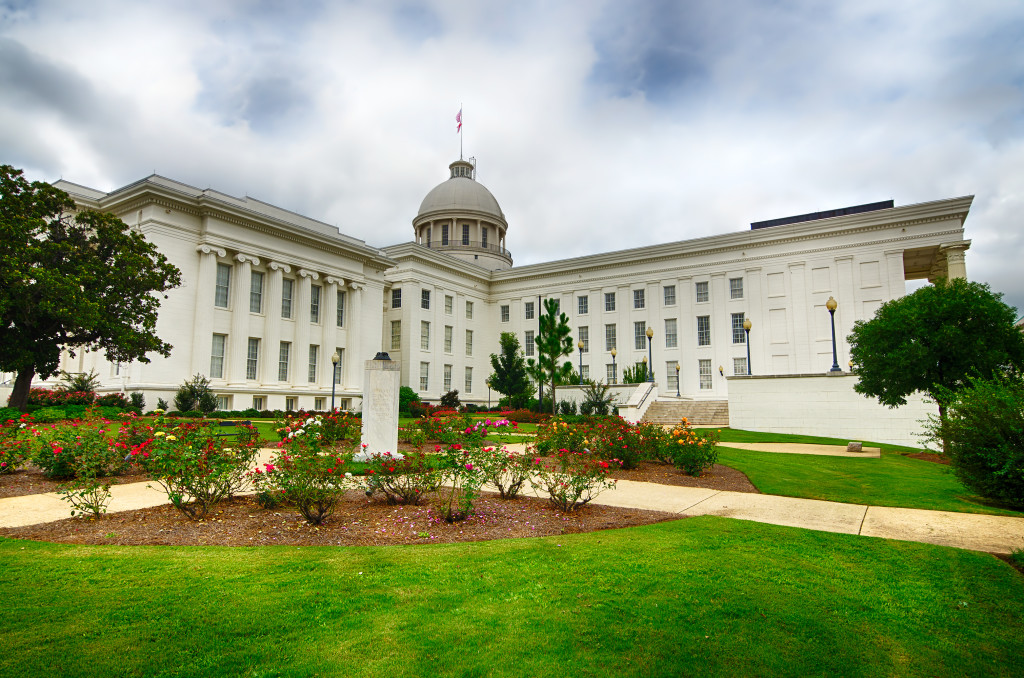
Legislators briefly passed through Montgomery this week with an eye toward their spring break, which began Thursday and won’t have them back in the statehouse until April 5. Despite only two legislative action days this week, both bodies took up high-profile legislation. Tuesday, the 17th day of the legislative session, got under way with the Alabama House of Representatives clearing the long-contested bill to provide a path to visitation rights for grandparents. HB334 from Rep. Mike Jones (R-Andalusia) passed with an affirmative vote from 97 lawmakers, though debate came over the fact that the bill may circumvent the will of fit parents to make decisions regarding the welfare of their children. Over in the Senate, lawmakers passed SB260 from Sen. Clay Scofield (R-Guntersville). The bill would bar the state from taking money from the state’s park system to prop up the General Fund. The practice is a legitimate concern, as lawmakers have taken $15 million from state park coffers over the past five years to deposit into the General Fund. The Senate also cleared HB34 from Rep. Mac McCutcheon (R-Capshaw). The bill, which was carried by Sen. Greg Reed (R-Jasper), provides tax breaks for state ports in an effort to remain competitive among states with similar incentives. Supporters say the move will attract large businesses and bring jobs to the state. The Senate continued on its roll Wednesday with the passage of SB205 from Sen. Paul Sanford (R-Huntsville), which would prohibit the location of abortion clinics within 2,000 feet of a school and bar the Alabama Department of Public Health from reissuing licenses to any clinic in violation of the new law. The Senate also approved a General Fund budget, which lacks sufficient funding for Medicaid, despite a veto threat from Gov. Robert Bentley. The Senate’s session came to a halt when it stalled a vote on Bentley’s landmark prison transformation bill. In committee hearings this week, the Mobile delegation declined a bill along party lines that would allow county residents to vote on whether or not to raise the local minimum wage to $10.10 an hour. A house committee approved a bill that will put to a vote the notion that a person is a person from the time of fertilization, effectively outlawing abortion in the state. A Senate committee took up a bill that would decriminalize possession of the epilepsy-relieving drug cannabidiol (CBD), but did not vote on the measure. It will likely come up for discussion again when legislators return from spring break April 5.
Senate passes bill banning abortion clinics located near schools
On Tuesday, the Alabama Senate passed a bill that would prohibit abortion clinics from being within 2,000 feet of a school, which will directly impact a clinic in Huntsville stationed across the street from Edward H. White Middle School. The Alabama Women’s Center for Reproductive Alternatives moved to its current location in 2014 when it was forced to vacate its old location to comply with the Women’s Health and Safety Act, HB57, which required that clinics meet “all ambulatory health care occupancy standards.” The new facility is near Huntsville Hospital’s emergency room, which puts it in compliance with the law’s requirements. SB205 from Sen. Paul Sanford (R-Huntsville) directs the Alabama Department of Public Health not to reissue licenses for any clinic within 2,000 feet of a school, effectively closing down the Huntsville clinic in its new location. “If we currently protect a physical buffer between students and liquor stores, it is common sense that we would protect them from attending school near an abortion clinic,” Sanford said in a statement release Tuesday. “This will not mandate any abortion clinic to shut down, but I have no problem if it forces a clinic or two to move away from our kids.” With passage of the bill, Alabama will become one of the first states in the nation to have a school proximity provision for abortion clinics. “Abortion clinics can attract unrest and protest – from people on both sides of the issue – and therefore can pose a public safety risk to young students,” Sanford added in the release. “Having an abortion clinic so close to an elementary school that children are required to walk on the sidewalk past the clinic is not in their best interest.” An floor amendment changed the bill to where a clinic could stay open if a school is built near an already-operating facility.
Alabama legislative preview: March 21 – March 25, 2016
The Alabama House of Representatives will convene at 1 p.m. Tuesday, and the Senate an hour later, as state lawmakers gather for the 17th day of the regular session. This week, the Senate will take up SB89 from Sen. Arthur Orr (R-Decatur), which would require Alabama public school students to pass a civics test as a requirement for graduation. Orr’s legislation has been on the agenda for a while, but has likely been stalled due to a focus on more contentious issues. The body is also slated to take up SB148 from Sen. Jim McClendon (R-Springville), which would require all vehicle passengers to wear a safety belt, and SB114 from Sen. Paul Sanford (R-Huntsville), which would regulate fantasy contests and “exempt fantasy contests from certain criminal penalties associated with gambling activity.” The bill would increase spending by the Attorney General’s office, which would be responsible for overseeing such activities, by $1 million in the first year. Also on the Senate’s agenda this week are SB14 from Sen. Gerald Allen (R-Tuscaloosa), which would allow citizens to carry a firearm in their vehicle without a permit, and SB205 from Sanford, which would bar the Alabama Department of Human Resources from renewing health center licenses for an “abortion clinic or reproductive health center” within 2,000 feet of a school. In the House, lawmakers will take up HB46 from Rep. Alan Boothe (R-Troy), which would allow Alabama spirit makers to sell fifths for off-premise consumption. The body is also slated to debate HB13 from Rep. Alan Harper (R-Northport), which would allow citizens to vote on whether or not to allow a lottery in the state – the legislation provides no details on how proceeds from such an operation would be used, which is likely why it hasn’t been discussed thus far. HB218 from Rep. Dickie Drake (R-Leeds) is also on the agenda and would require that all elementary school students be instructed in cursive writing before the end of their third grade year. HB244 from Rep. Connie Rowe (R-Jasper) will also be taken up this week – the bill prohibits law enforcement from requiring victims of a sexual offense to take a polygraph examination. Committee hearings get underway Tuesday, though the vast majority take place on Wednesday, beginning with the Senate Judiciary Committee, which will take up SB237 from Sen. Quinton Ross (D-Montgomery). Ross’s legislation would make it unlawful for employers to request information regarding arrests and convictions on employment applications. The committee will also take up Sanford’s SB115, the Senate version of “Leni’s Law” from Rep. Mike Ball (R-Madison), which would decriminalize possession of the marijuana-based medicine cannibidiol. The Senate Committee on Constitution, Ethics and Elections will debate SB360 from Sen. Tom Whatley (R-Auburn), which would require voters to register as a Democrat or Republican before voting in a primary. Voters who do not will not be allowed to vote on party candidates, only on ballot measures and nonpartisan issues. The House Committee on Agriculture and Forestry will take up HB393 from Rep. Ken Johnson (R-Moulton), which would allow for the growing of industrial hemp in the state for use in a variety of products. The House Committee on Mobile County Legislation will mull over HB248 from Rep. Napoleon Bracy (D-Mobile), which would establish a $10.10 minimum wage in Mobile County. At the close of business this week, legislators will adjourn for spring break.
