
Utah attorney general claims victory in Wawa data breach settlement case
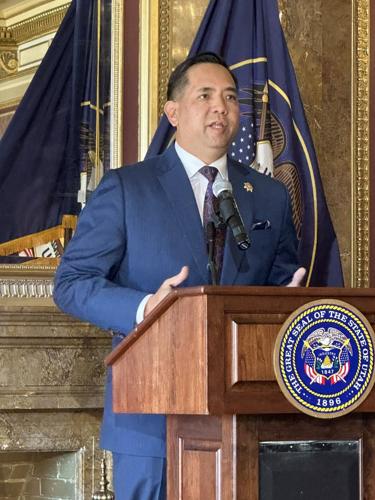
The United States Court of Appeals for the Third Circuit recently sided with a coalition of attorneys general led by Utah Attorney General Sean D. Reyes. It happened after Reyes led an amicus brief in Wawa v. Frank. The decision gave, “the Utah Attorney General’s Office a legal victory in an important case involving a question of reasonable settlement awards to consumer class members and class counsel,” according to Reyes’ office. This challenge came about after Wawa’s settlement of a nationwide data breach case gave more money to class counsel ($3.2 million in fees) than it did to the victims in question; the victims received $80,000 cash and a potential for $2.8 million in low-value gift cards. The class counsel got that amount based on $9 million in gift cards initially being made available to class members by Wawa. However, that figure was scaled down, and the attorneys general argue that the actual relief delivered is far lower and that fewer than 5% of these gift cards are likely to be redeemed. The attorneys general argued that the attorneys should receive fees based on what settlement relief class members receive. In this instance, class counsel would likely receive over 93% of the settlement value due to the low redemption rates of the low-value gift cards, the attorneys general contended. “For example, if recipients of the delivered gift cards redeemed on the high end of the studies (5%), that would represent an award of $140,000 (in addition to the $80,000 in cash) to consumer class members compared to the $3.2 million designation to class counsel,” a release said. In the appeals court opinion, a panel of three judges sided with the attorneys general; their ruling axed the previous determination of awarded fees and remanded the case to the district court for reconsideration. Judge Paul Matey wrote the decision. In it, he directed the lower court “to consider whether ‘the funds made available to class members rather than the amount actually claimed during the claims process’ is the best measure of reasonableness; and whether the fee award is reasonable in light of any side agreements between class counsel and Wawa.” Reyes praised the Court for its decision. “Throughout my time in office, I have worked to safeguard the economic interests of hard-working Americans,” Reyes said. “In this case, our team in Utah led a national coalition of states determined to fight for our citizens. I applaud the decision of the Court to stand with consumers and create sensible precedent for future class actions. Thank you to all of my AG colleagues who joined in our successful amicus brief.” Other states that joined Utah on the amicus brief include Alabama, Arkansas, Indiana, Kentucky, Montana, South Carolina, Tennessee, Texas, and Virginia. Read the amicus brief here. Republished with the permission of The Center Square.
Attorneys general challenge SEC’s stock buyback rule
Utah Attorney General Sean D. Reyes led 14 other states in filing an Amicus Brief on July 18 in support of the U.S. Chamber of Commerce, which is challenging the Securities and Exchange Commission’s new rules on stock buyback reporting. The coalition of attorneys general pointed out in the brief, “..stock buybacks are an important, economically beneficial way companies return value to shareholders and reallocate capital. Corporate governance traditionally is a matter of state, not federal regulation, and Amici States oppose inefficient, burdensome regulations on stock buybacks.” “We are leading this coalition of states in opposition to the SEC buyback rule because the federal government again overreaches with a shortsighted and misguided policy,” Reyes said. On May 3, 2022, the Securities and Exchange Commission adopted a new rule on stock buybacks. The new rule requires daily stock buybacks to be reported on a quarterly basis reflecting detailed characteristics about the shares, the issuers – both domestic and foreign, the class of stocks, the repurchase plans, the trading plans, and compliance dates, among other details, to be filed on regulation forms. Reyes noted, “This rule will have severe consequences not only for investors and companies but for everyday Americans and retirement account holders. We applaud the advocacy of the U.S. Chamber in this matter and join with it in standing up for the people of America.” On May 12, 2023, the U.S. Chamber of Commerce, the Texas Association of Business, and the Longview Chamber of Commerce sought to stop the SEC from implementing the rule in a lawsuit filed with the U.S. Court of Appeals for the Fifth District. “Stock buybacks play an important role in the functioning of healthy and efficient capital markets,” said U.S. Chamber Executive Vice President and Chief Policy Officer Neil Bradley. “The SEC’s stock buyback rule doesn’t protect investors. Instead, it puts the thumb on the scale to discourage buybacks despite the fact that the repurchasing of shares improves returns for savers and investors across the economy.” The coalition believes that the SEC’s rule will make buyback programs of companies less attractive as it forces a public disclosure of sensitive financial information about companies, and the strategies and reasoning behind their buyback decisions. “Research has found that buybacks save investors hundreds of millions annually by stabilizing prices and reducing risk,” the Utah Office of the Attorney General stated. Disclosing company strategies “may provide competitors with critical insights or (become) fodder for lawsuits.” That concern which may cause companies to reduce buyback programs is a risk acknowledged by the SEC’s statement “the potential legal risk stemming from such disclosures, and the potential costs of leaking valuable private information to competitors that may infer proprietary information about the issuer,” can be derived from reports. The brief presents two arguments against the SEC rule: Joining Utah on this brief are the States of Alabama, Arkansas, Florida, Georgia, Idaho, Indiana, Iowa, Kansas, Kentucky, Louisiana, Mississippi, Missouri, Montana, Nebraska, New Hampshire, North Dakota, Ohio, Oklahoma, South Carolina, South Dakota, Tennessee, Texas, Virginia, West Virginia, and Wyoming. Republished with the permission of The Center Square.
