
Prosecutors: Man threatened Donald Trump, Vladimir Putin, vowed to kill kids
An Alabama man with a history of mental illness is accused of threatening to “destroy” President Donald Trump and Russian President Vladimir Putin, and kill the children of U.S. officials. Deryke Matthew Pfeifer also used Facebook to video himself in a hotel room with two handguns as he berated a federal judge and threatened to kill anyone who tried to arrest him, prosecutors said. Pfeifer was indicted this month on a federal charge of being a felon in possession of ammunition and ordered to undergo a mental health exam. In a Facebook video recorded in a south Alabama hotel room, Pfeifer names employees of the Secret Service and U.S. Attorney’s office and vows to slay their children, authorities said. He said, “I promise you I will kill your children and put a bounty on your children,” a special agent with the Bureau of Alcohol, Tobacco, Firearms and Explosives wrote in a criminal complaint. A loaded Ruger LCP .380 handgun was found in his vehicle, and three types of ammunition were found in the hotel room, a federal agent wrote in court documents. Pfeifer underwent an earlier mental health exam in 2014, after the U.S. Secret Service accused him of threatening to kill then-President Barack Obama and blow up a federal building in Jackson, Michigan, court records state. Pfeifer told a Secret Service special agent in 2014 that “he often channels God’s words in his videos on Facebook,” the agent wrote in a sworn affidavit. Pfeifer was diagnosed with delusional disorder. He has also been diagnosed with paranoid personality disorder, which involves pervasive distrust and suspicion of others, court records state. After lengthy mental health evaluations, Pfeifer appeared to be much better, his lawyer in the 2014 case told court officials. In a telephone call, “he presented himself in a very calm manner, appeared to be doing quite well, was not delusional during our conversation (as he has been in the past), had normal speech and presented that he was doing well with no problems to report,” Montgomery lawyer Richard Keith wrote to court officials in late January. “While he has not been compliant with mental health treatment, there does not appear to be any adverse problems without it,” Keith stated. The probation department and prosecutors then agreed to release Pfeifer and the case was closed, according to a Feb. 1 order from U.S. District Judge Myron Thompson. Pfeifer is charged with being a felon in possession of ammunition since he was convicted of robbery and drug dealing in McLean County, Illinois, in the mid-1990s, authorities said. Pfeifer has been ordered to undergo another mental health exam following his recent indictment on the ammunition charge and the complaint accusing him of threatening Trump and Putin. His attorney in the current case did not immediately respond to telephone and email messages from The Associated Press on Tuesday. Republished with the Permission of the Associated Press.
No tapes: Donald Trump says he didn’t record meetings with James Comey
President Donald Trump said Thursday on Twitter that he “did not make” and doesn’t have any recordings of his private conversations with ousted former FBI Director James Comey. “With all of the recently reported electronic surveillance, intercepts, unmasking and illegal leaking of information,” Trump said he has “no idea” whether there are “tapes” or recordings of the two men’s conversations. But he declares he “did not make, and do not have, any such recordings.” The tweets are the latest chapter in a high-stakes guessing game after Trump hinted that he might have recordings of his private conversations with Comey at the White House and over the phone. The tale of mystery began last month, just days after Trump fired Comey, who was then leading an investigation into contacts before and after the election between the president’s campaign and Russian officials. The absence of recordings almost certainly elevates in significance to investigators the notes made by Comey right after his conversations with Comey. A New York Times report cited two unnamed Comey associates who recounted his version of a January dinner with the president in which Trump asked for a pledge of loyalty. Comey declined, instead offering to be “honest.” When Trump then pressed for “honest loyalty,” Comey told him, “You will have that,” the associates said. Trump tweeted the next day that Comey “better hope that there are no ‘tapes’ of our conversations before he starts leaking to the press!” Trump’s tweets on Thursday raised questions about why the president would have staked his reputation and political capital on promoting something that wasn’t real. His earlier suggestion about tapes immediately evoked the secret White House recordings that led to Richard Nixon’s downfall in the Watergate scandal. Under a post-Watergate law, the Presidential Records Act, recordings made by presidents belong to the people and can eventually be made public. Destroying them would be a crime. Comey says any recordings that might exist would support his version that Trump asked him to pledge loyalty and urged him to drop the investigation into Trump’s former national security adviser. “Lordy, I hope there are tapes,” Comey declared at a congressional hearing. But the president has steadfastly refused to clarify whether any tapes existed. Two weeks ago, he teased reporters in the White House Rose Garden by saying that he’d explain “maybe sometime in the very near future.” He cryptically added: “You are going to be very disappointed when you hear the answer.” White House deputy press secretary Lindsay Walters said Wednesday that an answer would be provided this week, presumably by the Friday deadline set by the House intelligence committee for turning over any tapes. The Secret Service had said it had no audio copies or transcripts of any tapes recorded within Trump’s White House, according to a freedom of information request submitted by The Wall Street Journal. But that didn’t exclude the possibility that recordings were created by another entity. Republished with permission of The Associated Press.
Martin Dyckman: Donald Trump’s America on trial in modern day ‘Judgment at Nuremberg’
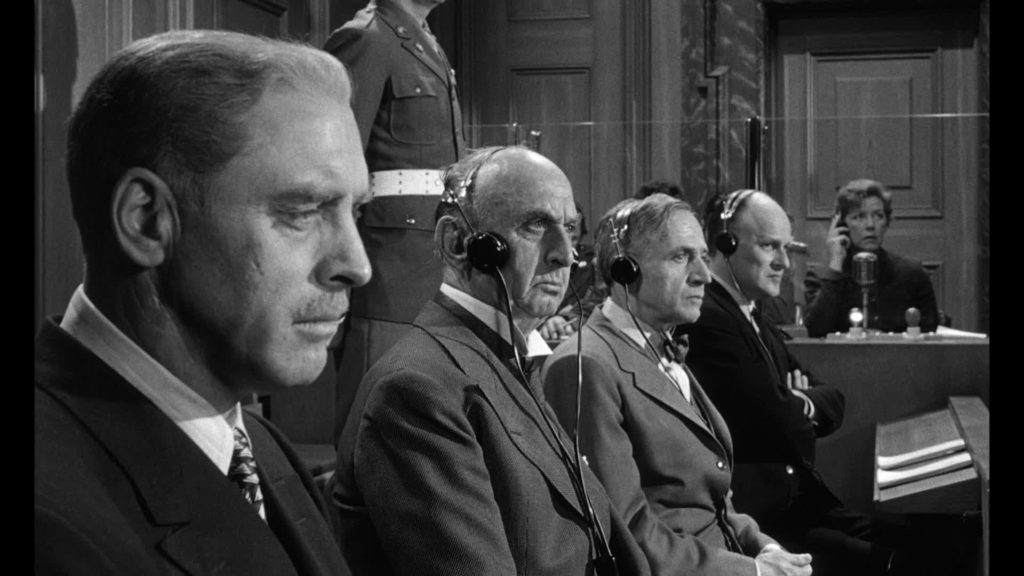
Above all, there was fear: fear of today, fear of tomorrow … fear of our neighbors, and fear of ourselves … Only when you understand that, can you understand what Hitler meant to us: “Lift your heads. Be proud to be German. There are devils among us: Communists, liberals, Jews, Gypsies. Once these devils will be destroyed, your misery will be destroyed.” Those words are from the 1961 film Judgment at Nuremberg. They address an eternal question: Why do good people do terrible things? The speaker, Ernest Janning, played by Burt Lancaster, is a former German judge on trial before an Allied tribunal for crimes he committed in service to the Third Reich. He had been a decent man, widely respected for his legal acumen and his integrity. Now, over the objection of his defense attorney, he insists on testifying for the prosecution. He is explaining why he conducted a show trial of an elderly Jewish man falsely accused of sexual relations with a Gentile woman, and why he determined to convict him and sentence him to death even before hearing any testimony … It was because the future of Germany was at stake. And if a few minorities had to suffer, so be it. The screenplay was closely modeled on actual events, including a Nazi show trial, and on the excuses that “good” Germans gave for their participation. Turner Classic Movies showed the film the other night (Aug. 11). Whether the scheduling had to do with the current election campaign I don’t know. But the timing couldn’t have been better. Comparisons with Adolf Hitler and Nazi Germany should be made rarely lest they trivialize those monstrosities. But there is much — too much — about Donald Trump and his campaign that resembles them. Only the targets of Trump’s demagoguery are different. The methods are the same. He cannot tell a truth if there’s a lie to be told. He peddles fear and capitalizes on hate. He whips his crowds into froths of rage against Hillary Clinton and against reporters whose lives, too, he puts in danger by targeting them at his rallies. The Secret Service had to see to the safety of one of them. All across our country — in schools, on streets, at public meetings, and even from pulpits — Trump’s venom is being echoed in denunciations and harassment of Americans because of their religious faith. In New York City Saturday, an imam and his assistant were murdered execution-style on a city street. The motive remains unknown, but it would surprise no one if it turns out to be a hate crime. The message of Judgment at Nuremberg is not that such things happen. It is, rather, in the question that Ernest Janning asks during his confession: “What of those of us who knew better? We who knew the words were lies, and worse than lies. Why did we sit silent? Why did we take part? Because we loved our country … “And then, one day, we looked around … and found that we were in an even more terrible danger.” We should take that scene as a parable for what’s happening in the United States of America right now. We are in terrible danger — though it appears to be diminishing — of debasing our country and endangering the world with the most unprepared, unsuited and unworthy person who has ever sought the presidency. “I think he’s mentally unstable., I think he’s dangerously unqualified,” says former Sen. Gordon Humphrey of New Hampshire, the latest prominent Republican to put country above party. That’s what John McCain should be doing too. But McCain still pretends that Trump is fit for the presidency. If Trump’s death threat against Clinton didn’t shock McCain’s conscience, what could? Surely McCain knows better. Surely, so do Paul Ryan, Mitch McConnell, and other Republicans who have mortgaged their reputations to the delusion that Trump would be better than Clinton. Or is it just because they crave to share in the power of a Trump presidency? Do they miscalculate, as so many Germans once did, that they could control the monster they are making? If the polls are correct, Trump will lose. But the dangerous hatreds he deliberately inflames will continue to fester. We will all be the losers for that. And those who know better but who continue to support him, with endorsements or money or even with just their silence, will have lost more than an election. They will have forfeited the respect of people who once admired them. ___ Martin Dyckman is a retired columnist and editorial writer for the newspaper now known as the Tampa Bay Times. He lives in suburban Asheville, North Carolina.
Only Donald Trump can decide to curb aggressive campaign language
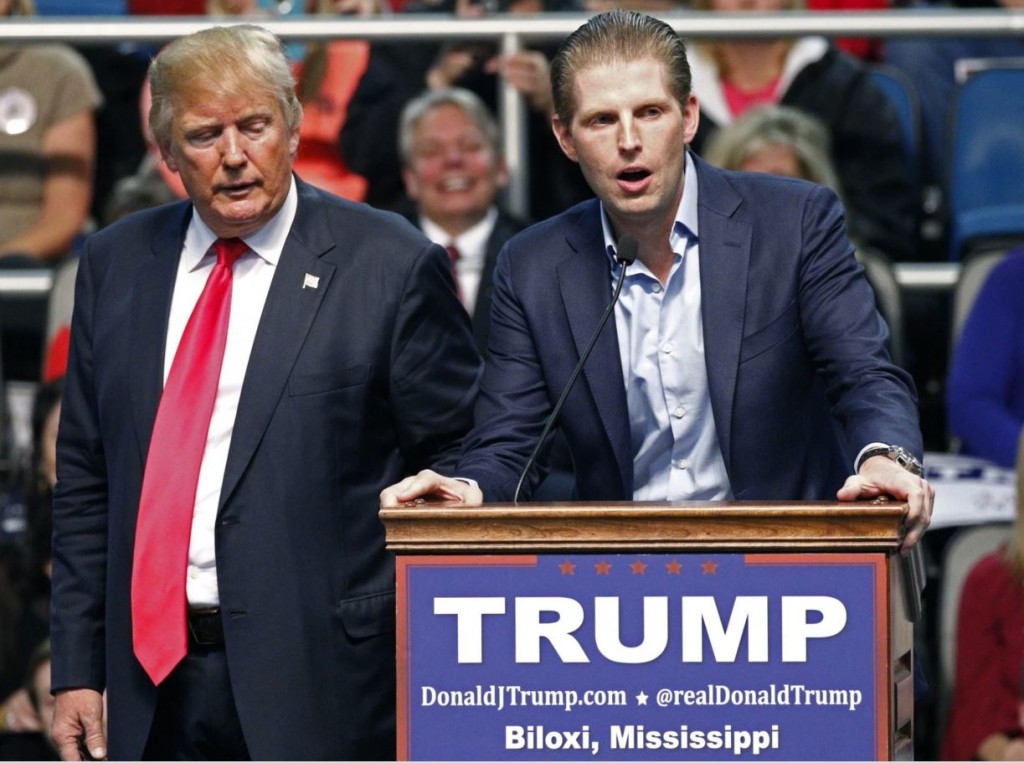
The security ring protecting Donald Trump includes Secret Service agents, his own private bodyguards, local police, sometimes even the Transportation Security Administration. But even that show of force has not halted disturbing episodes of violence. The only person who can stop Trump from egging on the brawling crowds is Trump himself. His Secret Service detail is limited to keeping Trump safe and the venues where he speaks secure. Local law enforcement officers are there to keep the peace, along with private security hired either by the venues or Trump. “The Secret Service is not the word-police,” said Jon Adler, president of the Federal Law Enforcement Officers Association Foundation, a union that represents Secret Service agents. Trump denies that he contributes to the violence at events around the country, even though on Tuesday night he predicted “riots” and “a tremendous problem” if Republican leaders try to maneuver the nomination away from him. He has said at a rally he wished he could punch a protester in the face and longed for the days when someone who interrupted a rally would be “carried out on a stretcher.” “Our concern is overt acts of threats to our protected” officials, Secret Service Director Joseph Clancy told Congress on Tuesday. “People have the right to voice their opinions, and it’s for the host committee to decide whether or not that’s disruptive to that event.” Agents with the campaign detail only advise campaign staff or a candidate about security concerns, Clancy said. The campaign, he said, generally decides whether a protester should be removed — something Trump usually does by saying, “Get’m outta here.” Clancy declined to discuss specific security plans for large rallies. “There’s a lot of give-and-take with all these events,” Clancy said. “And there’s no question, some of these events create more challenges for us.” In fact, New York police and the FBI are investigating a threatening letter sent Thursday to Trump’s adult son Eric. Trump asked for Secret Service protection in October as his popularity swelled, along with the crowds at his rallies. His federally funded security detail was put in place in early November. The Secret Service has declined to say how many agents have been assigned to protect Trump, citing security concerns. Such protection is routinely afforded to candidates for president and vice president 120 days before an election. But past candidates, including President Barack Obama, have received protection far earlier. Democratic front-runner Hillary Clinton gets Secret Service protection as a former first lady, and Vermont Sen. Bernie Sanders was approved for a protective detail earlier this year. Even before federal security protection, private security surrounded Trump during campaign events. Through the end of January, his campaign reported paying about $170,000 for security, according to Federal Election Commission filings. That includes at least $55,000 to security firms and local police departments since Trump asked for Secret Service protection. The campaign doesn’t include the nearly $78,000 paid to Trump’s personal security chief, Keith Schiller. The majority of that money the campaign reports as “pre-paid payroll.” At the University of Illinois at Chicago, where Trump cancelled a rally because of security concerns, a phalanx of uniformed local police, suit-clad officers and private security watched entry lines wrapped around the building and made periodic rounds throughout the venue as it filled with thousands of people. Uniformed airport security screeners staffed metal detectors and inspected bags as people passed through. A handful of uniformed Secret Service officers and dozens of other police and security officers were also stationed outside and throughout the arena. The audience, following instructions from an unidentified speaker on the public address system, routinely pointed out protesters to security officers and cheered their removal. At least one man, dressed in combat boots, camouflage pants and a matching Trump hat, appeared to scout the audience on his own and take pictures with his cellphone. He appeared to share the photos with a security official dressed in a suit and to point to various groups in the audience. Still, scuffles broke out around the arena after the rally was canceled. Arnette Heintze, a retired senior Secret Service agent who now runs the corporate security firm Hillard Heintze, said he doesn’t recall seeing such scenes in past campaigns that he had worked since the early 1980s. He said there’s surely a more tactful approach Trump could take than shouting to the crowd and security “get them out.” “It is entirely out the purview of the Secret Service to speak with the candidate about anything they are going to say or do at an event,” Adler said. “They are not confidants. They are not speech writers.” Republished with permission of the Associated Press.
Report: Black students removed from Donald Trump rally in South Georgia
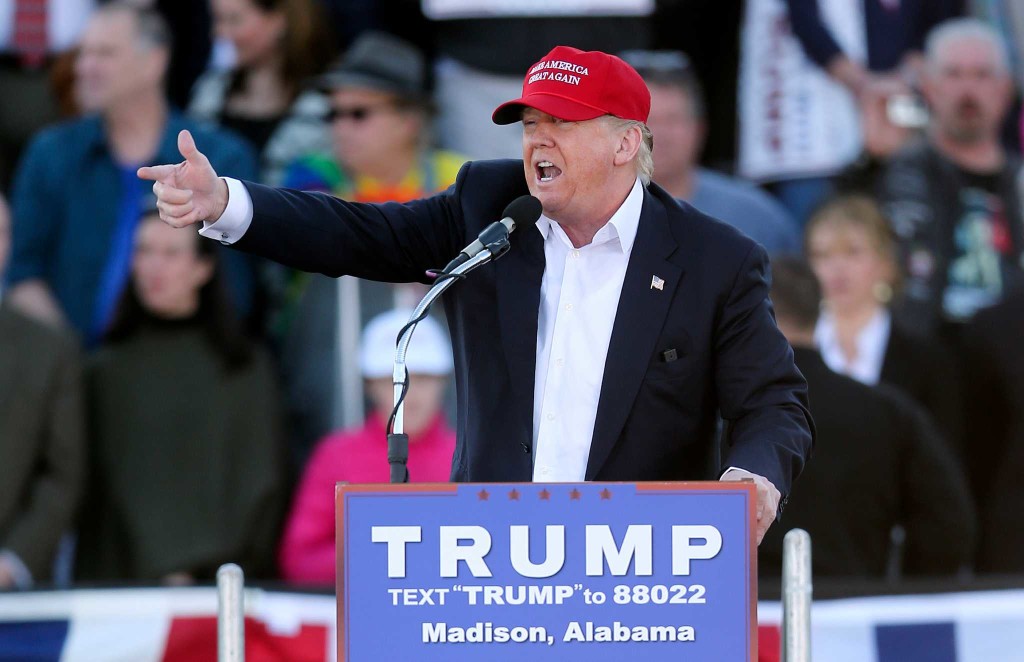
Another day for GOP Presidential frontrunner Donald Trump brings another race-related scandal. This latest race-related incident involves 30 black students being kicked out of a Trump rally at Valdosta State University in South Georgia, according to multiple reports. Even though there were 7,500 at the rally, there wasn’t room for 30 black students, according to USA Today: About 30 black students who were standing silently at the top of the bleachers at Donald Trump’s rally here Monday night were escorted out by Secret Service agents who said the presidential candidate had requested their removal before he began speaking. The sight of the students, who were visibly upset, being led outside by law enforcement officials created a stir at a university that was a whites-only campus until 1963. “We didn’t plan to do anything,” said a tearful Tahjila Davis, a 19-year-old mass media major, who was among the Valdosta State University students who was removed. “They said, ‘This is Trump’s property; it’s a private event.’ But I paid my tuition to be here.” “We are going to win at every single level. We are going to win with health, with education, at the borders, with our military. We’re going to win, win, win, win,” he told the crowd. Trump, who has been under fire in recent days for a seeming inability or unwillingness to forthrightly repudiate the endorsement of David Duke, will undoubtedly face further scrutiny for his team’s latest questionable move.
