
John Merrill requests emergency opinion from AG’s office to postpone runoff election
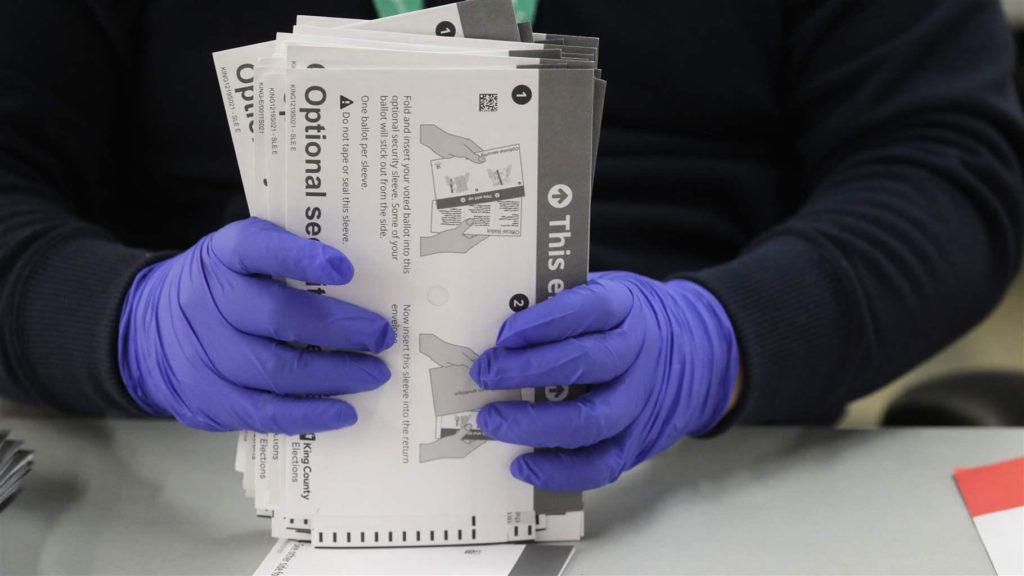
Following the outbreak of the Coronavirus (COVID-19) in the State of Alabama Secretary of State John Merrill has requested an emergency opinion from the Attorney General’s Office related to the possible postponement of the March 31 runoff election given the fact that President Donald Trump has declared a National Emergency and Gov. Kay Ivey has declared a State of Emergency. Merrill’s request seeks to keep Alabamians safe from the potential spread of the virus. He has asked whether, under the emergency powers granted to the Governor under Section 31-9-1 et seq. Ala. Code, the Governor has the authority to postpone the election. Currently, neither the Code of Alabama nor the Constitution of the State of Alabama allow for the suspension, delay, or postponement of an election once the date has been set. According to Merrill’s office, “the health and well-being of the people of this state are of paramount importance. In order to effectively practice social distancing, as recommended by the President of the United States, the Centers for Disease Control & Prevention (CDC), the Alabama Department of Public Health, etc., the March 31 runoff election must be postponed.” Since absentee ballots have yet to be mailed out, Merrill’s office confirms that votes in the runoff election would not be affected.
38 people cited for violations in Hillary Clinton email probe
The State Department has completed its internal investigation into former Secretary of State Hillary Clinton’s use of private email and found violations by 38 people, some of whom may face disciplinary action. The investigation, launched more than three years ago, determined that those 38 people were “culpable” in 91 cases of sending classified information that ended up in Clinton’s personal email, according to a letter sent to Republican Sen. Chuck Grassley this week. The 38 are current and former State Department officials but were not identified. The investigation covered 33,000 emails that Clinton turned over for review after her use of the private email account became public. The department said it found a total of 588 violations involving information then or now deemed to be classified, but could not assign fault in 497 cases. For current and former officials, culpability means the violations will be noted in their files and will be considered when they apply for or go to renew security clearances. For current officials, there could also be some kind of disciplinary action. But it wasn’t immediately clear what that would be. The department began the review in 2016 after declaring 22 emails from Clinton’s private server to be “top secret.” Clinton was then running for president against Donald Trump, and the now-president made the server a major focus of his campaign. Then-FBI Director James Comey held a news conference that year in which he criticized Clinton as “extremely careless” in her use of the private email server as secretary of state but said the FBI would not recommend charges. The Justice Department’s inspector general said FBI specialists did not find evidence that the server had been hacked, with one forensics agent saying he felt “fairly confident that there wasn’t an intrusion.” Grassley started investigating Clinton’s email server in 2017, when he was chairman of the Senate Judiciary Committee. The Iowa Republican has been critical of Clinton’s handling of classified information and urged administrative sanctions. By Matthew Lee and Mary Clare Jalonick Associated Press Republished with the permission of the Associated Press
John H. Merrill: Doing more with less

Just last week, Forbes reported that President Donald Trump has reduced his payroll and saved American taxpayers more than $20 million. He reduced staff, eliminated excess spending, and still, government continued to operate more successfully than it has in years. While his predecessor spent 8 years filling the Executive Branch with political employees, friends and cronies, President Trump is actively reducing his office budget and returning money to the taxpayers. Here in Alabama, I have followed that same philosophy. Reducing overhead and staffing costs and increasing efficiency. Since January 19, 2015, the Office of Alabama’s Secretary of State has set new standards for excellence in efficiency and cost savings in state government. In total, we have saved more than $2.8 million dollars for Alabama taxpayers by reducing staff and increasing efficiencies, just as President Trump has done at the federal level. We reduced our office staff from 49 employees to its current staff of 36 employees. We reduced the wait time for business filings. When we arrived, those filings could take from seven to nine months to complete. For the last three years, we were able to condense that time to same-day processing. We have also introduced automatic business filings that are available to every county, which our office pays for at no expense to the county of origin. We no longer receive a general fund appropriation from the Legislature because in 2016 we asked them to zero our office out of the general fund budget making us fully self-sufficient without using general fund tax dollars. We no longer operate at the speed of government, we operate at the speed of business! We have done all this with less money and less people. Simply put, we’ve done more with less and have made it easier and quicker for new business to form in our state. It can be done and it should be done throughout all sectors of our State and Federal government. The swamp in DC is full of wasteful spending that is propagated by endless debt hike politicians. Government should not be in the business of creating GOVERNMENT jobs. They should be in the business of creating an environment where the free market creates private sector jobs. It’s not enough for government to operate like a business, we also must force it to operate at the speed of business and that means doing more with less, so taxpayers have more, not less. We’ve done exactly that in the Alabama Secretary of State’s office and we encourage all sectors of our government to do what we have done and what President Trump has done. Cut waste and do more for the taxpayers without spending so much taxpayer money. John H. Merrill currently serves as Alabama’s Secretary of State. He was elected in 2014 and reelected in 2018. He is currently seeking the Republican nomination for the United States Senate.
Secretary of State’s office recovers over $100,000 in campaign finance fines

Alabamians, like most Americans, want transparency when it comes to politics. Part of that means being able to see who’s funding political candidates. Which is exactly why political candidates and Political Action Committees (PACs) are required to file campaign finance reports. But sometimes those reports aren’t filed on time, or at all. Which is why the state legislature passed act 2015-495 in 2015 that allows the Alabama Secretary of State’s office to issue fines when Principle Campaign Committees (PCCs) or Political Action Committees (PACs) don’t file their monthly, weekly, or daily campaign finance reports on time. The act went into effect with the start of the 2018 Election Cycle and since that time Secretary of State John Merrill‘s office has issued 1,166 penalties or warnings for a total amount of $197,657.84. Thus far, $102,249.05 has been paid. The money not yet paid has either been waived by the Alabama Ethics Commission or the office is still waiting to collect the funds from the committee. According to the Secretary of State’s office, “Penalties are issued to any committee that does not file their campaign finance report by midnight on the date the report is due. Most reports are due by 12:00 p.m. on the 2nd of each month. Committees are required to report all contributions and expenditures incurred by their campaign during the previous month.” Accordingly, penalty amounts increase as the number of late reports increases from the candidate. Additionally, the first report a candidate files late, but within 48 hours of the date the report is due, the committee is given a warning that does not count against them or require a fine be paid. Further, the code specifically states that warnings are not violations of the law. In addition to the warning process, committees have the ability to appeal their penalty to the Alabama Ethics Commission. Of the 1,166 penalties and warnings, 166 have been overturned. Fines paid by committees to the Secretary of State’s office is deposited directly into the state general fund.
John Merrill says don’t count write-in votes for Alabama state or federal offices
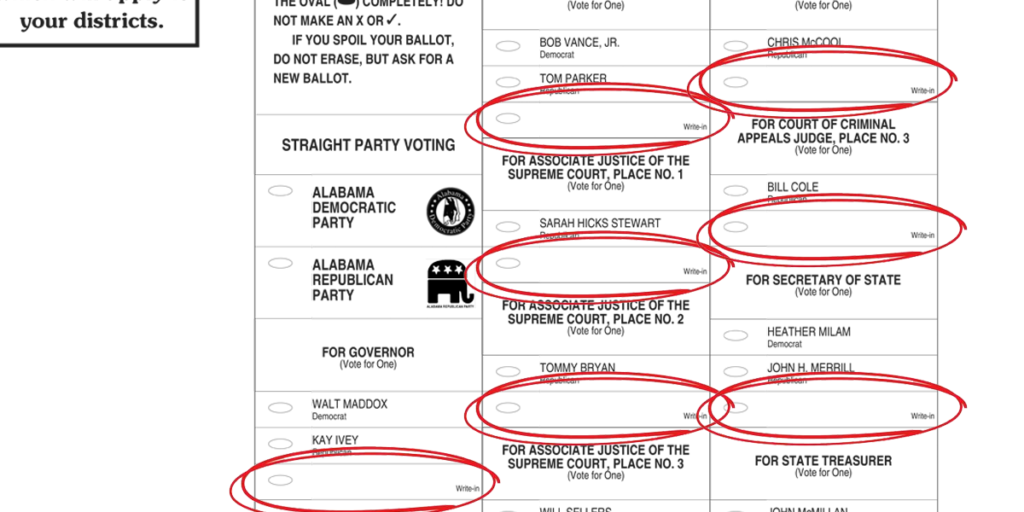
Alabama voters who are unhappy with the choices at the polls often choose to write-in candidates instead of casting their vote for someone they can’t get behind. But that doesn’t necessarily mean their vote will ever be counted. At least not in a public way that they might otherwise expect. Such is the case in the 2018 midterm elections. Alabama Secretary of State John Merrill‘s office on Tuesday announced there were not enough write-in votes cast to merit counting them by name — as they won’t change the final outcome. According to Alabama law, 17-6-28, write-in votes don’t need to be counted unless they may impact results. State law requires the Secretary of State’s Office to review county vote totals and compare those totals to the number of write-in votes cast in each statewide race involving a Federal or State office. Following the completion of that review, the Secretary of State’s Office is tasked with determining whether the total number of write in votes is less than the difference in votes between the candidates receiving the greatest number of votes for that office. “Merrill and his team have completed a review of the offices and it has been determined that no county is required by law to count and report write-in votes as there were not enough votes cast,” according to a news release from the Secretary of State’s office. But that doesn’t mean the write-in votes aren’t “counted.” The total number of write-in votes are recorded, but since the number is inconsequential to the outcome of the race, election officials aren’t required to tally specific votes for each individual write-in. “All write in votes are counted and acknowledged and recorded, and documented. They just don’t have to be delineated for the public to see because they did not affect the outcome of the race. All votes counted for those individuals whose names were written in,” Merrill explained on Alabama Today’s Facebook page. Hypothetical scenario To better understand how the write-in vote counting process works, imagine that in a given county there were 100 ballots cast total in one particular race. Suppose Candidate A received 53 votes, Candidate B received 35 votes, and a Candidate 3, a third-party candidate, received 10 votes. That means there were just two write-in votes in the race. Given that two votes would not be enough to change the outcome of the election, the names of those votes would not be recorded. All 100 votes, and their break-down — Candidate A: 53 votes, Candidate B: 35 votes: Candidate C: 10 votes, Write-ins: 2 votes — will be documented. Final vote totals County election officials must still make this determination for any county offices not included in the Secretary of State’s review. Final vote totals as certified by the County Canvassing Board are due to the Secretary of State’s Office by Friday, November 16. *This story has been updated to further clarify the write-in vote counting process.
29 of 67 counties to electronically sign-in voters for upcoming election; Is yours?

On Nov. 6, Alabama voters in 29 of the state’s 67 counties will be able to sign-in electronically at their respective precincts. These counties will be ditching paper rosters and will check in using an iPad-esque system called KNOWiNK’s Poll Pad. The system, which was first tested in select precincts in 2016, has fully digitized Alabama’s voter rolls. While, the actual act of filling out a ballot and casting a vote will not change, the sign-in process will be speed up significantly making it easier than ever before. John Bennett, Deputy Chief of Staff/Press in the Secretary of State’s office, said Merrill hopes to have the system in all Alabama Counties no later than the 2020 election cycle. “The electronic poll books have been a major success for all of the counties that used them,” Bennett explained. “During the 2016 pilot Mobile County was able to process more than 600 voters an hour using these systems.” He continued, “Using these systems makes that data available instantly where as previously registrars would be required to manually scan each voter’s name to provide credit to the voter for participating in a particular election.” KNOWiNK’s Poll Pad allows voters to swipe their driver’s licenses through a card reader, and it will call up the voting information. Voters also have the option of punching in a few characters of their last names, and their information would be displayed on the iPad. Election officials expect the check-in iPads will cut line times as voters will now have the option of going to the shortest line available, rather than waiting in a specific line based on the first letter of his or her last name. The devices are also expected to leave less room for error in voter data. The following counties will use electronic check-in on Nov. 6: Autauga Baldwin Barbour Blount Chambers Cherokee Chilton Colbert Elmore Franklin Henry Jefferson Lowndes Madison Marengo Marion Montgomery Randolph Shelby Cullman Etowah Houston Jackson Morgan St. Clair Talladega Tallapoosa Tuscaloosa Washington
Perhaps Alabama’s most transparent leader, John Merrill, allows you to digitally stalk him
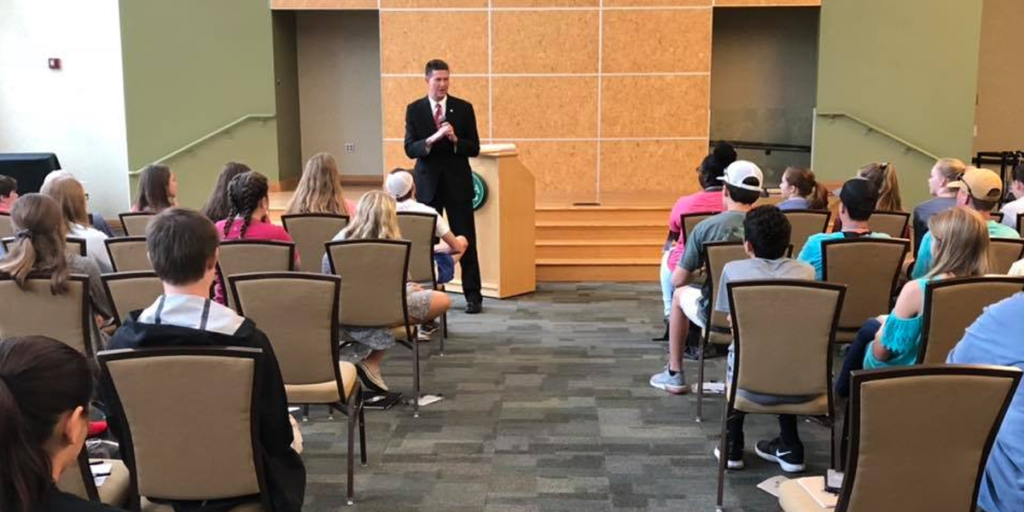
When it comes to connecting with the people of Alabama, there’s one statewide leader who goes above and beyond the call of duty to ensure he is as transparent and accessible as possible. The Alabama Secretary of State, John Merrill, not only fulfills his duties of office, but he also goes to great lengths to connect with those he serve. The proof? His Facebook page. On a daily basis Merrill takes to the social media platform to post public snaps of everyone he’s meeting with in the State Capitol and at events across the state. His daily updates are not only transparent, but seem to serve as a digital diary of his efforts in the Secretary of State’s office that he welcomes constituents to follow along. Here’s a look at this past week: Saturday Sunday Monday Tuesday Wednesday Thursday Friday The office of Secretary of State The Alabama Secretary of State is the Chief Clerk of the state and acts as the primary custodian of important state records. These records include business registrations, legislative acts, land records, campaign finance records, trademarks, and more. In addition to keeping the Great Seal of the State, the Secretary of State is the state’s Chief Election Officer, responsible for running and recording the results of all state elections.
John Merrill orders registrars back to school to conduct voter registration drives
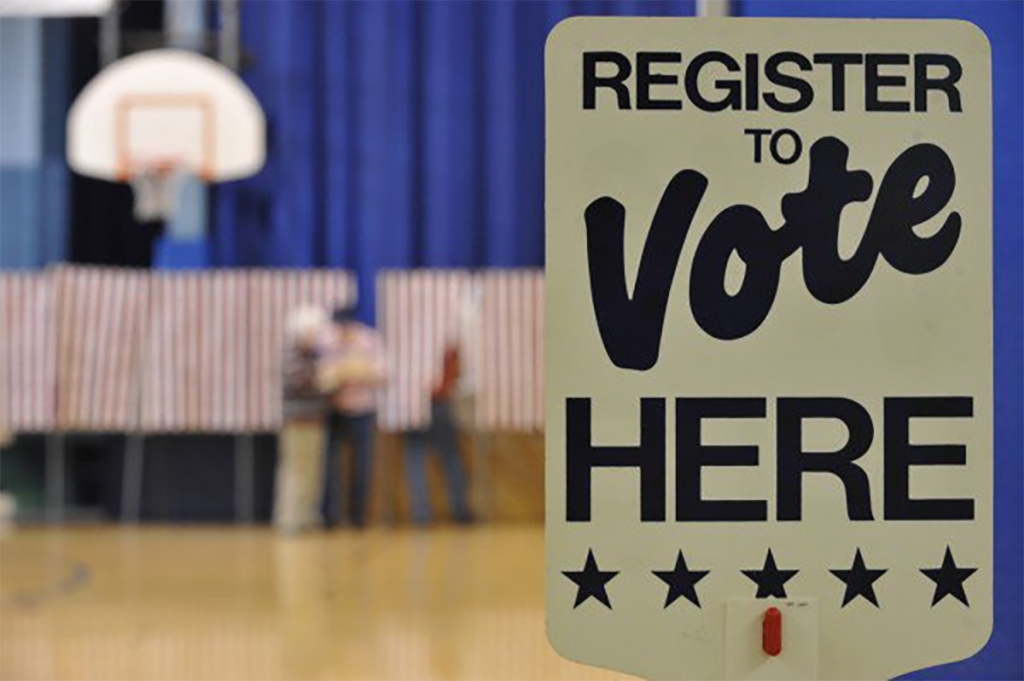
Alabama Secretary of State John Merrill is ordering members of the Alabama Board of Registrars to go back to school. That is, he is asking all registrars — those tasked with registering voters in and outside the office — to return to all schools of higher learning (two-year, four-year, technical schools, trade schools, liberal arts schools, private schools, etc.) in their respective county to register students to vote no later than October 22, the last day tor register to vote. Merrill’s office says each school will have a scheduled time no later than Friday, October 5. The Alabama Board of Registrars’ offices are required to be available to the people of Alabama who attend Alabama’s many two and four-year universities. While many registrars already completed these trips once this year, registrars have been instructed to return to conduct drives for any students not yet registered to vote or need to submit a voter update form to make voting easier in their location. These efforts are a part of Merrill’s ongoing efforts to ensure each and every eligible U.S. citizen that is a resident of Alabama is a registered voter with a photo ID. How to register to vote Alabamians who are at least 18 years old, a U.S. citizen, have not been convicted of a disqualifying felony or declared “mentally incompetent” by a court may register one of three ways: Via an electronic voter application through the Alabama Secretary of State’s website here. By using the Vote for Alabama app. Available here. Via a mail the application. You may download and print a copy of the form here. In person at your local Board of Registrars’ office. Office locations can be found here. As well as when you are applying for or renewing a State of Alabama driver’s license or nondriver identification card; at state and local government offices when applying or recertifying for Aid to Dependent Children, SNAP, TANF, Food Stamps, WIC, Medicaid, or Rehabilitation Services; at public libraries; and at armed forces recruiting stations. Not sure if you’re registered? Want to find your polling place? Check here.
John Merrill, Heather Milam win nominations for Secretary of State
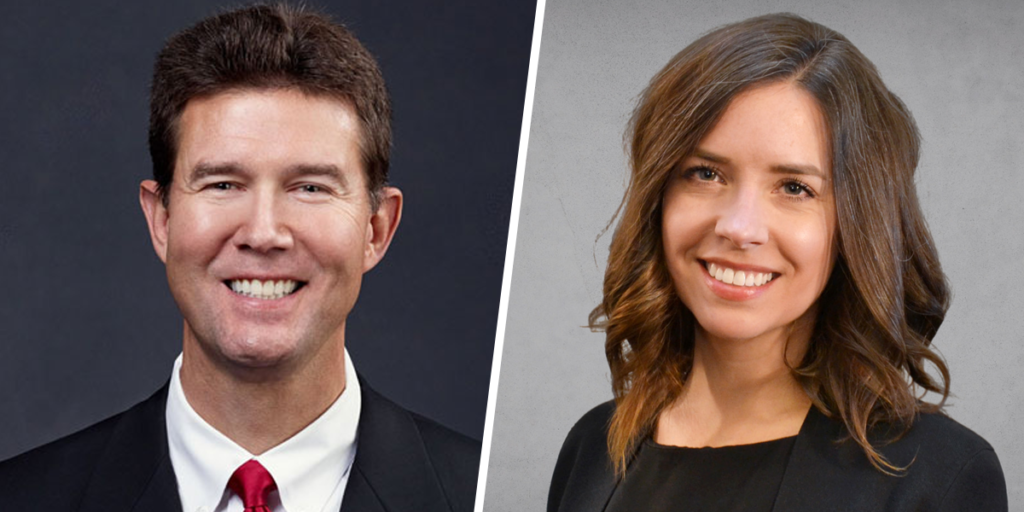
Incumbent Secretary of State John Merrill has won his party’s nomination for Secretary of State. Marshall bested Marshall County Revenue Commissioner Michael Johnson in the Republican primary on Tuesday, 70-29 percent. Meanwhile, Heather Milam defeated her Democratic opponent, Lula Albert, for her party’s nomination, 64-36 percent. The office of Secretary of State The Alabama Secretary of State is the chief clerk of the state and acts as the primary custodian of important state records. These records include business registrations, legislative acts, land records, campaign finance records, trademarks, and more. In addition to keeping the great seal of the state, the secretary of state is the state’s chief election officer, responsible for running and recording the results of all state elections.
State cuts burdensome red tape for Alabama businesses

Ask any business attorney or accountant and you will discover the business division of the office of the Secretary of State has not been traditionally recognized for either speed of services, customer service, or efficiency. Secretary of State John Merrill is working hard to change that. On Wednesday, his office announced corporate filings in the area of business services have now been processed the same day that they are received by the Office for 100 consecutive weeks. At the direction of Merrill, his team undertook some significant restructuring and reorganization to allow the staff in that division to process Alabamian’s business formation documents the same day that they are received in the Office of the Secretary of State, which he believes is an indication the office “no longer moves at the speed of government,” but is now “moving at the speed of business.” “When I started campaigning to become Secretary of State in 2013, I was informed that the business division at the Alabama Secretary of State’s Office was seven to nine months behind on business filings. That was shocking and unacceptable to the people of Alabama and something that I knew needed attention, structure, and accountability. Through the implementation of common sense measures, and the removal of team members that were not willing and able to contribute to the team’s overall goal, we have rebuilt the business services team and processes into one that no longer moves at the speed of government, we are now moving at the speed of business,” Merrill explained. The Alabama Secretary of State’s Office is the repository for all business filings in the state of Alabama. State law requires the state to record these filings and for them to be made available to the public for inspection. It also requires a fee be charged and empowers the Secretary of State to charge an additional $100 to expedite the filings process; however, with Merrill’s increased efficiencies in the administration of these processes, this fee is no longer necessary, providing additional cost savings to the people of the Alabama. In an effort to further expedite the processing time for new or existing businesses in Alabama, Secretary Merrill has implemented an online filing system to allow businesses to complete the registration process without extended time away from their new venture. At the time, Baldwin County’s Probate Judge Tim Russell and Jackson County’s Probate Judge Victor Manning are the only counties that have implemented the program, which is completely free for any county that agrees to participate, but Merrill believes more are coming soon. Merrill continued, “Taking this service online provides additional access and resources to the people of Alabama and allows small business owners to focus on the important things that come with starting or managing a small business. This will continue to help move Alabama forward allowing for the expeditious creation of jobs and overall improvements in the life of all Alabamians, through the removal of inefficient bureaucratic red tape.”
Mo Brooks urges Doug Jones to confirm Mike Pompeo as Secretary of State
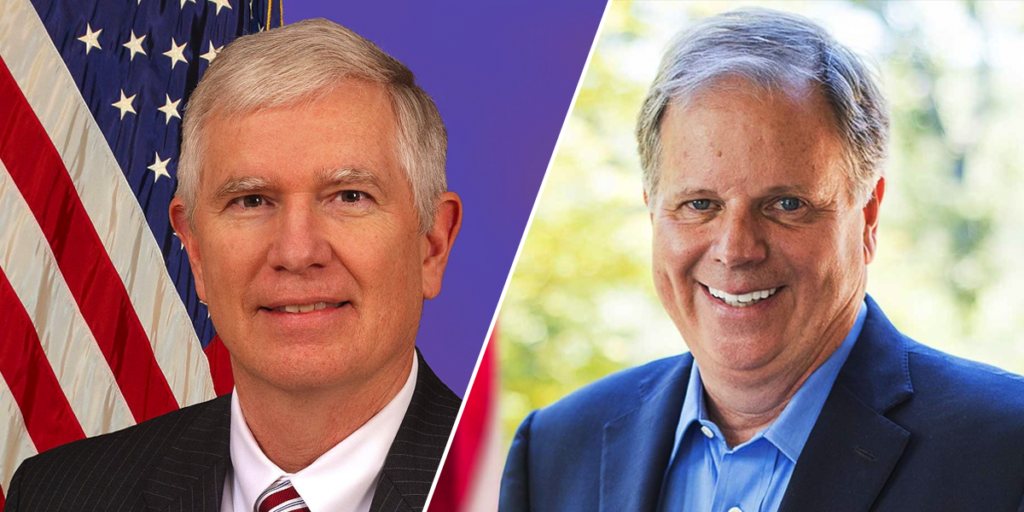
Alabama’s 5th District U.S. Congressman Mo Brooks said on Monday newly elected Alabama Sen. Doug Jones has the opportunity to keep his campaign promise to be bipartisan s in confirming President Donald Trump’s pick to replace outgoing Secretary of State Rex Tillerson by confirming Central Intelligence Agency (CIA) Director Mike Pompeo for the position. Brooks sent a letter to the Senate office of Jones urging him to vote in Pompeo’s favor. “I urge Senator Jones to vote to confirm Mike Pompeo for Secretary of State,” said Brooks. “I personally know Mike Pompeo. He has an impeccable reputation, graduated first in his class at West Point, served as a Captain in the U.S. Army, graduated Harvard Law School (where he made Law Review), and has served capably and honorably as the Director of the Central Intelligence Agency.” Brooks continued, “With the upcoming vote on Mike Pompeo, Senator Jones has the opportunity to keep his campaign promise to be bipartisan and put the interest of America above the partisan obstructionism that has plagued the Senate for years.” Pompeo’s fate is still not entirely certain with the Senate Foreign Relations Committee set to consider his nomination Monday afternoon. Should the committee give him the green light the full Senate, including Jones, will have the opportunity to vote to confirm him. Brooks believes Pompeo has had no major disqualifying flaw and thus should be quickly confirmed. “Each president of the United States has the right to select his cabinet and, absent some major nominee flaw, it is incumbent upon the Senate to confirm those nominees so that the president can put together the team he needs to properly carry out his duties. Mike Pompeo has no major, disqualifying flaw,” Brooks explained. “As such, I ask and hope Senator Jones will put aside partisanship and defer to the wishes and judgment of President Trump and vote to confirm Mike Pompeo as Secretary of State.” Read Brooks’ full letter below:
Rex Tillerson takes low-key approach as America’s top diplomat
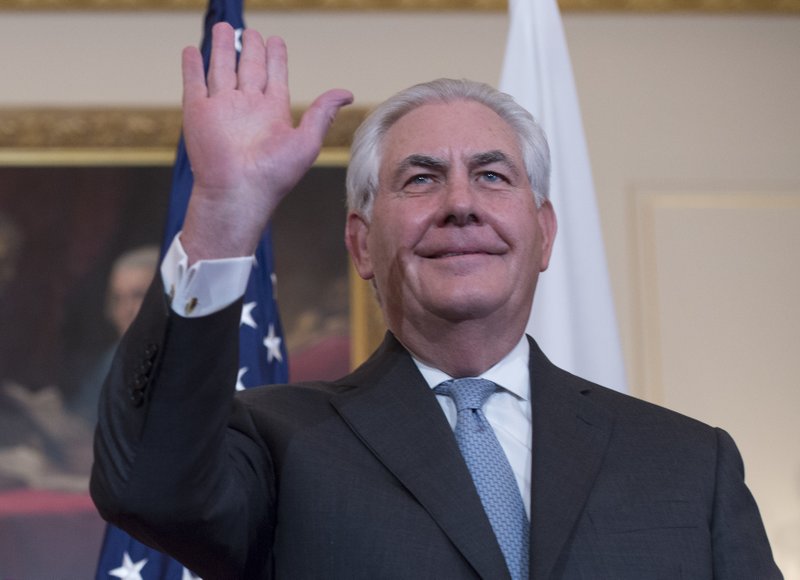
When North Korea fired a ballistic missile into waters between South Korea and Japan, President Donald Trump moved quickly to show U.S. resolve. He appeared within hours alongside visiting Japanese Prime Minister Shinzo Abe and said the U.S. “stands behind Japan, its great ally, 100 percent.” Trump happened to be hosting Abe that day in Florida. Yet his lack of any mention of a U.S. treaty ally South Korea didn’t go unnoticed by the new secretary of State, Rex Tillerson. So, while on his first official trip, Tillerson arranged a three-way meeting in Germany with the Japanese and South Korean foreign ministers to show the U.S. wasn’t picking favorites, according to a senior State Department official. The talks culminated in a joint declaration in which the U.S. pledged to defend a pair of Asian nations that don’t always get along. There was no elaborate ceremony before the video cameras, no speeches, as their written statement went out in low-key fashion. It was Tillerson’s way. Cautious, reserved and intent on avoiding the spotlight, the former Exxon Mobil CEO is proving to be everything his extroverted Oval Office boss is not. In his first weeks as America’s top diplomat, Tillerson has gone to great lengths to avoid attracting attention, despite a growing perception in Washington that the State Department is being sidelined by a power-centric White House. Some State Department officials have been told by the White House to expect drastic budget cuts, with much of the reduction potentially coming out of U.S. foreign aid money. Trump and his team have also told those interviewing for top State Department jobs that significant staffing cuts will come. Some appear to have started already. While Tillerson was in Germany, several senior management and advisory positions were eliminated. The staffers were reassigned. Some other top posts are vacant, and there are no signs they’ll be quickly filled. While Tillerson has met or spoken with dozens of foreign counterparts in his first weeks, the White House is driving the front-page diplomacy. The lack of State Department involvement has flustered many long-time diplomats. When Trump met Israeli Prime Minister Benjamin Netanyahu last week, acting Deputy Secretary Tom Shannon was assigned to represent the agency in the meeting because Tillerson was flying to Germany. At the last minute, Shannon was blocked from participating in the meeting. The meeting went on without State Department representation. It was “modified to allow for a more personal discussion,” according to a U.S. official, who was not authorized to discuss the matter publicly and spoke on condition of anonymity. Tillerson had dined the evening before with Netanyahu and Jared Kushner, Trump’s son-in-law and a White House aide who has emerged as Trump’s top emissary to Israel, Mexico and other countries. That is a role that traditionally has fallen to the secretary of state. Tillerson has barely spoken in public, save for greeting U.S. diplomats on his first day and brief comments after a get-together with Russia’s foreign minister. It’s a sharp contrast with the Obama administration’s last secretary of state, John Kerry, who routinely found his way to the center of global crises, enthusiastically fulfilling the “public diplomacy” part of the job. Whereas Kerry exhausted staff with impromptu, whirlwind foreign trips and constant press appearances, Tillerson has made it known to his staff that he wants a lower profile. In private, the Texas oilman with the booming baritone voice is deliberate, independent and cool-headed, according to U.S. and foreign diplomats who have interacted with him and who spoke on condition of anonymity in order to avoid possible diplomatic fallout from discussing private conversations. A common thread in Tillerson’s meetings with diplomats has been an emphasis on the safety of U.S. personnel, State Department officials said. It’s a continuation of a theme Tillerson touched on when he spoke to staffers on his first day, and one he plans to echo this coming week on a trip to Mexico City with Homeland Security Secretary John Kelly. Tillerson will stop at the U.S. Embassy to meet with American diplomats, officials said. Diplomats from several foreign countries said Tillerson is playing it safe in high-level meetings so far, avoiding extemporaneous comments. He shows up seeming well-prepared and confident on the substance of issues, rarely consulting his aides or written notes, they reported. In Germany last week, Tillerson urged China to help address North Korea’s nuclear threat. He called on Russia to honor a 2015 peace plan for Ukraine. While those signs of continuity in U.S. policy may have assuaged some foreign leaders’ concerns about Trump, Tillerson’s tight-lipped nature unsettled others. After meeting Tillerson, French Foreign Minister Jean-Marc Ayrault lamented the “vague” U.S. position on issues such as the Israeli-Palestinian conflict. Tillerson told several of his international partners the U.S. is still in “listening mode,” leaving some with the perception that Trump may craft U.S. foreign policy on the fly. In a rare interaction with reporters, Tillerson said before leaving Germany he was bringing home “many” messages for Trump. Asked to share a few, he demurred. “Not until I share it with him,” he said. Republished with permission of The Associated Press.
