
AG nominee William Barr seeks to assure senators he won’t be a Trump loyalist
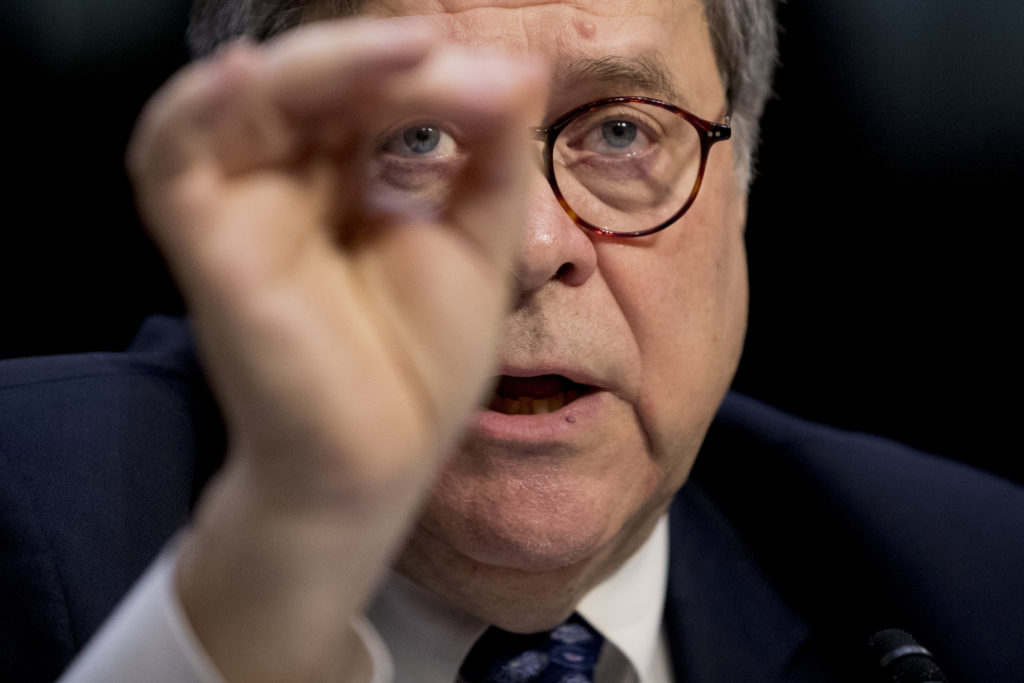
Vowing “I will not be bullied,” President Donald Trump‘s nominee for attorney general asserted independence from the White House, saying he believed that Russia had tried to interfere in the 2016 presidential election, that the special counsel investigation shadowing Trump is not a witch hunt and that his predecessor was right to recuse himself from the probe. The comments by William Barr at his Senate confirmation hearing Tuesday pointedly departed from Trump’s own views and underscored Barr’s efforts to reassure Democrats that he will not be a loyalist to a president who has appeared to demand it from law enforcement. He also repeatedly sought to assuage concerns that he might disturb or upend special counsel Robert Mueller‘s investigation as it reaches its final stages. Some Democrats are concerned about that very possibility, citing a memo Barr wrote to the Justice Department before his nomination in which he criticized Mueller’s investigation for the way it was presumably looking into whether Trump had obstructed justice. Sen. Dianne Feinstein of California, top Democrat on the Senate Judiciary Committee, told Barr the memo showed “a determined effort, I thought, to undermine Bob Mueller.” The nominee told senators he was merely trying to advise Justice Department officials against “stretching the statute beyond what was intended” to conclude the president had obstructed justice. Though Barr said an attorney general should work in concert with an administration’s policy goals, he broke from some Trump talking points, including the mantra that the Russia probe is a witch hunt, and said he frowned on “Lock Her Up” calls for Hillary Clinton. Trump has equivocated on Russian meddling in the 2016 election and assailed and pushed out his first attorney general, Jeff Sessions, for recusing because of his work with the Trump campaign. Barr stated without hesitation that it was in the public interest for Mueller to finish his investigation into whether the Trump campaign coordinated with the Kremlin to sway the presidential election. He said he would resist any order by Trump to fire Mueller without cause and called it “unimaginable” that Mueller would do anything to require his termination. “I believe the Russians interfered or attempted to interfere with the election, and I think we have to get to the bottom of it,” Barr said during the nine-hour hearing. He said that, at 68 years old and partially retired, he felt emboldened to “do the right thing and not really care about the consequences.” If a president directs an attorney general to do something illegal, he said, an attorney general must resign. “I will not be bullied into doing anything that I think is wrong by anybody, whether it be editorial boards or Congress or the president,” Barr said. Consumed by the partial government shutdown, Trump remained out of sight at the White House but also kept an eye on the news coverage of the hearing and told aides he was pleased with how Barr was handling himself, said two White House officials and a Republican close to the White House who spoke on condition of anonymity because they were not authorized to discuss internal conversations. On other topics, Barr echoed in part Trump’s hardline immigration stance and said the Justice Department would not go after marijuana companies in states where the drug is legal. He also would not rule out jailing reporters for doing their jobs, saying he could envision circumstances where a journalist could be held in contempt “as a last resort.” Barr’s hearing continues Wednesday with a lineup of character witnesses, including former Attorney General Michael Mukasey. Barr’s confirmation is likely, given that Republicans control the Senate. Even some Democrats have been looking to move on from acting Attorney General Matthew Whitaker, who declined to remove himself the Russia probe and has faced scrutiny over his private dealings. But he nonetheless faced skeptical questions from Democrats over whether he could oversee without bias or interference the remainder of Mueller’s probe. Feinstein said the nominee’s past rhetoric in support of expansive presidential powers “raises a number of serious questions about your views on executive authority and whether the president is, in fact, above the law.” Barr, responding with a more moderate view, said he believed a president who ordered an attorney general to halt an investigation would be committing an “abuse of power” if not necessarily a crime. Barr said under questioning from Sen. Chris Coons, a Delaware Democrat, that he wouldn’t interfere with a Mueller request to subpoena Trump for his testimony “if there was a factual basis.” But he also said he saw no reason to change Justice Department legal opinions that have held that a sitting president cannot be indicted. Barr called Mueller a friend of 30 years and said “it is vitally important” that Mueller be allowed to complete his investigation. “I don’t believe Mr. Mueller would be involved in a witch hunt,” he said when asked by the panel’s Republican chairman, Sen. Lindsey Graham of South Carolina. The special counsel is required to report his findings confidentially to the Justice Department. Barr said he then expected to produce his own report to Congress and said it was his goal to release as much information as possible to the public, though he stopped short of a direct pledge. He also noted the Justice Department does not typically disclose information about people it decides not to prosecute. He disclosed having discussed Mueller with Trump during a meeting in 2017 when Barr declined to join his legal team. He said he and his wife had been “sort of looking forward to a bit of respite and I didn’t want to stick my head into that meat grinder.” Trump wanted to know what Mueller, who worked for Barr when he led the Justice Department between 1991 and 1993, was like. “He was interested in that, wanted to know what I thought about Mueller’s integrity and so forth and so on,” Barr said. “I said Bob is a straight shooter and should be dealt with
Mick Mulvaney, Donald Trump’s budget pick, clears initial Senate hurdle
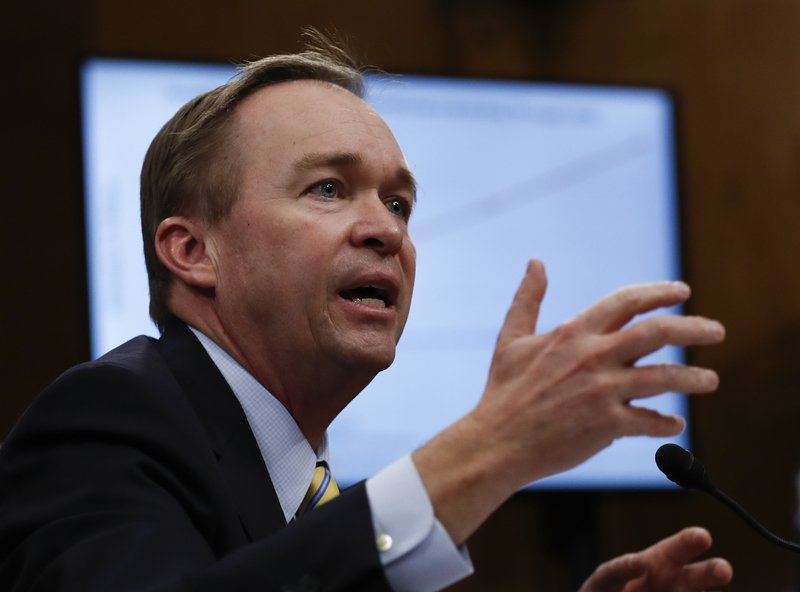
President Donald Trump‘s choice to run the White House budget office Tuesday cleared a routine Senate hurdle. But at least two senior Republicans have voiced doubts about supporting him in Thursday’s confirmation vote. Rep. Mick Mulvaney is a tea party congressman from South Carolina who has attracted likely opposition from Armed Services Committee Chairman John McCain. McCain says Mulvaney’s record of support for military operations in Afghanistan and the Pentagon budget generally is too soft. The Senate voted 52-48 along party lines to advance Mulvaney to a final vote on Thursday, where the outcome is in greater doubt. McCain voted to advance Mulvaney to a final vote but again told reporters that he’s likely to oppose him. Powerful Appropriations Committee Chairman Thad Cochran of Mississippi is also unwilling to commit to supporting Mulvaney in Thursday’s up-or-down vote. Cochran met with Mulvaney on Tuesday and is unwilling to commit to supporting him. “He’s never been a friend of the Appropriations Committee,” Cochran said. “I don’t think he’s ever (liked) an appropriations bill.” Since Democrats are unified against Mulvaney over his support of cutting Medicare spending and his past positions as a tea party firebrand in the House, only two Senate Republicans can defect if he is to be confirmed. If McCain and Cochran oppose Mulvaney on Thursday, Vice President Mike Pence would have to cast a tie-breaking vote to confirm him. The Senate is moving slowly on Trump’s Cabinet. Majority Leader Mitch McConnell on Wednesday warned that continued delays are putting the chamber on course to “working well into the weekend.” Republished with permission of The Associated Press.
Jeff Sessions: there was an organized effort to caricature me as something that wasn’t true
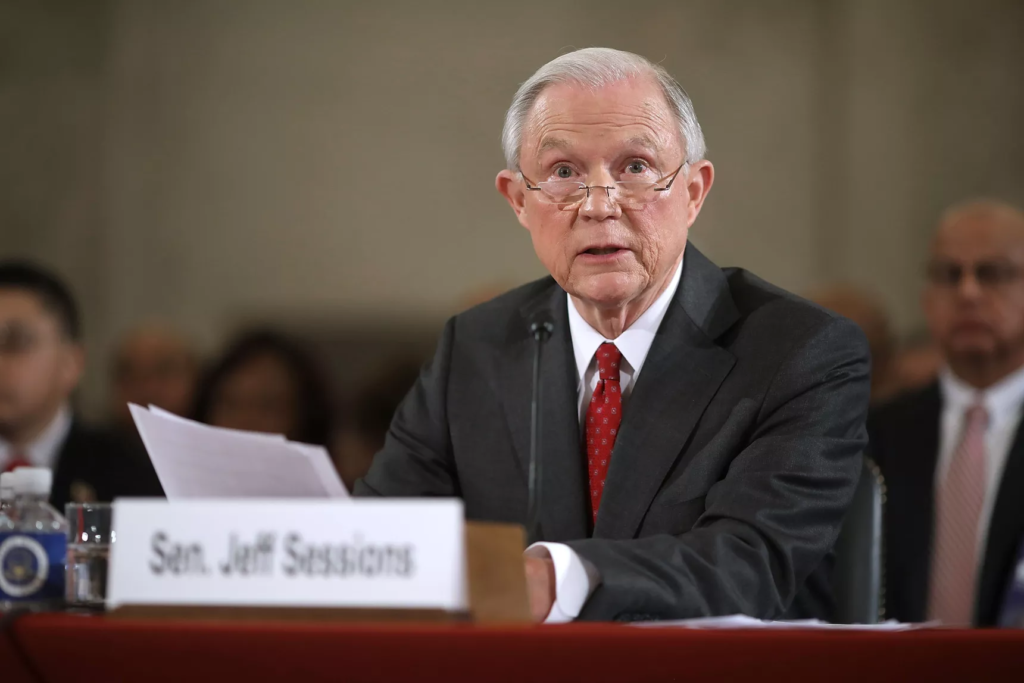
Sen. Jeff Sessions addressed accusations of racism Tuesday during his Senate confirmation hearing for U.S. Attorney General — explaining he was first unfairly caricatured as racist during his 1986 confirmation hearing to be President Ronald Reagan’s nominee for U.S. District Judge for the Southern District of Alabama. “When I came up as a United States Attorney, I had no real support group, I didn’t prepare myself well in 1986, and there was an organized effort to caricature me as something that wasn’t true,” Sessions said before the Senate Judiciary Committee. “I hope my tenure in this body has shown you that the caricature that was created of me was not accurate. It wasn’t accurate then, and it’s not accurate now,” he continued. Fellow Southern, Republican Sen. Lindsey Graham asked Sessions, “I am from South Carolina so I know what it means to be accused of being a conservative from the South — meaning a racist or a bigot. How does that make you feel?” “It was very painful, I didn’t know how to respond, and didn’t respond very well. I hope my tenure in this body has shown you that the caricature that was created of me wasn’t accurate, it wasn’t accurate then and it’s not accurate now,” the junior senator from Alabama added. Sessions was denied the federal judgeship in 1986 after issues were raised about comments he had made regarding the Klu Klux Klan. Tuesday’s hearing is the first of two days of hearings scheduled for Sessions’ confirmation as attorney general under President-elect Donald Trump.
Watch live: Senate hearing for attorney general nominee Jeff Sessions

The confirmation hearing for Alabama Sen. Jeff Sessions will begin Tuesday morning, putting the Republican Senator under a microscope by his U.S. Senate colleagues as he hopes to become U.S. Attorney General in President-elect Donald Trump’s administration. The hearing is scheduled to begin at 9:30 a.m. Watch the proceedings live here.
