
Bill seeks higher fines for taking down Confederate statues
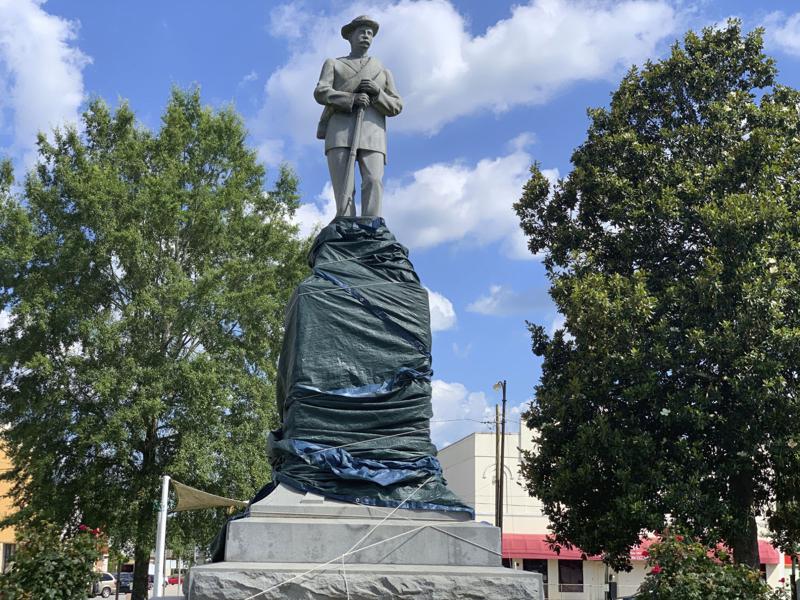
A legislative committee advanced a proposal Tuesday to increase the fines on cities that take down Confederate monuments in Alabama. The Senate Governmental Affairs Committee advanced a bill by Republican Sen. Gerald Allen of Tuscaloosa that would increase the fine for violating the Alabama Memorial Preservation Act, which prohibits the removal and renaming of monuments and memorials that have stood for at least 40 years. The bill would increase the fine from a $25,000 one-time fee to a $5,000 per day fine that would accumulate until the monument is replaced. Allen said he believed the heftier fine would serve as a deterrent. Some Alabama cities have opted to pay the current $25,000 fine as part of the cost of taking down a Confederate monument “The fine will stay there until the monument, statue, street sign — whatever it may be — is replaced,” Allen told the committee. Sen. Linda Coleman-Madison, a Democrat from Birmingham, said she believed the $5,000 daily fine was excessive, particularly for smaller cities. “You are going up and up and up and up, and now you are in the punitive stage,” Coleman-Madison said of the total fines a city could face. While the Alabama Memorial Preservation Act does not mention Confederate monuments, it was enacted as some Southern states and cities began removing monuments and emblems of the Confederacy. Birmingham and several other cities have been fined under the law for taking down Confederate monuments. Most recently, the Alabama attorney general’s office told Montgomery officials that the city faces a $25,000 fine for renaming Jeff Davis Avenue for Fred Gray, a famed civil rights attorney who represented Rosa Parks and the Rev. Martin Luther King Jr. The bill also calls for the Alabama Historical Commission to design, construct and place a statue of the late civil rights leader John Lewis by the Edmund Pettus Bridge in Selma. Lewis, a native of Alabama who became a long-serving Georgia congressman, was beaten by state troopers on the bridge in a melee known as Bloody Sunday. The committee also advanced a bill that would make it a felony offense, punishable by up to 20 years in prison, to damage a historic monument while “participating in a riot, aggravated riot, or unlawful assembly.” Both bills now move to the full Alabama Senate. Republished with the permission of the Associated Press.
Committee gives favorable report to Heritage Preservation Act
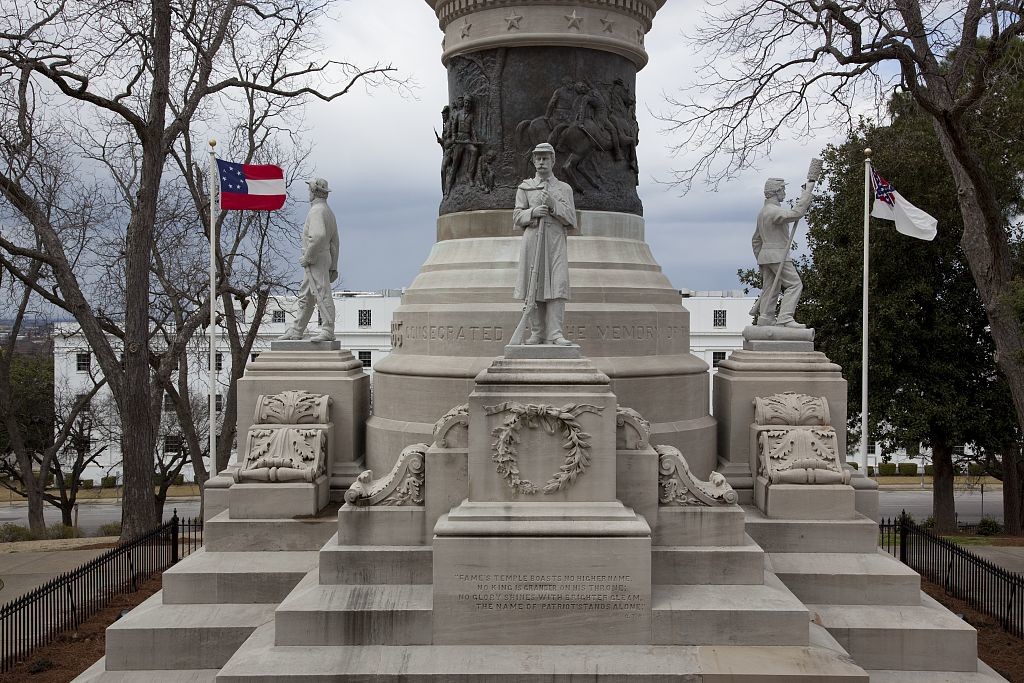
In a 5-2 vote down party lines, the Senate Governmental Affairs Committee gave a favorable report to SB 13, a bill from Sen. Gerald Allen (R-Tuscaloosa) that would prohibit the removal of historical monuments placed on public property. The bill would also create a committee tasked with reviewing the requests of municipalities interested in removing protected monuments. Sen. Linda Coleman-Madison (D-Birmingham) voiced opposition to the bill on the grounds that, perhaps, the state should direct its edict only to state monuments, allowing local governments to act in the interest of their cities. Further, she noted the need to provide funding to municipalities to maintain such monuments. “I understand where you’re going with this bill and your intent,” Coleman-Madison said. “I agree with your intent. I don’t think we need to be about changing history or trying to cover it up. I’m not for taking those Confederate statues down, but I’m not for your bill because I do not believe this legislative body has more wisdom than the people who put [the monuments] there.” Sen. Dick Brewbaker (R-Montgomery) noted his agreement with most of Coleman-Madison’s comments, but added that the need for this bill has arisen out of the public’s disdain for the decision by Gov. Robert Bentley to remove the Confederate flag this year. Brewbaker said that disdain is currently manifesting itself in efforts to place a Confederate flag on a small lot near Alabama State University in Montgomery. “We’re dealing with an issue in Montgomery right now that’s not going to do anybody any good,” Brewbaker said. In response, Coleman-Madison again noted the need to provide funding for the monuments. “If we do this, the state best come up with some money to maintain them,” Coleman-Madison said. “I do think the backlash you’re going to have (will be) some vandalism of some things.” The committee then voted and gave the bill a favorable report, sending it before the Senate in the coming week.
