
Michael Cohen expected to claim lying, racism and cheating by Donald Trump
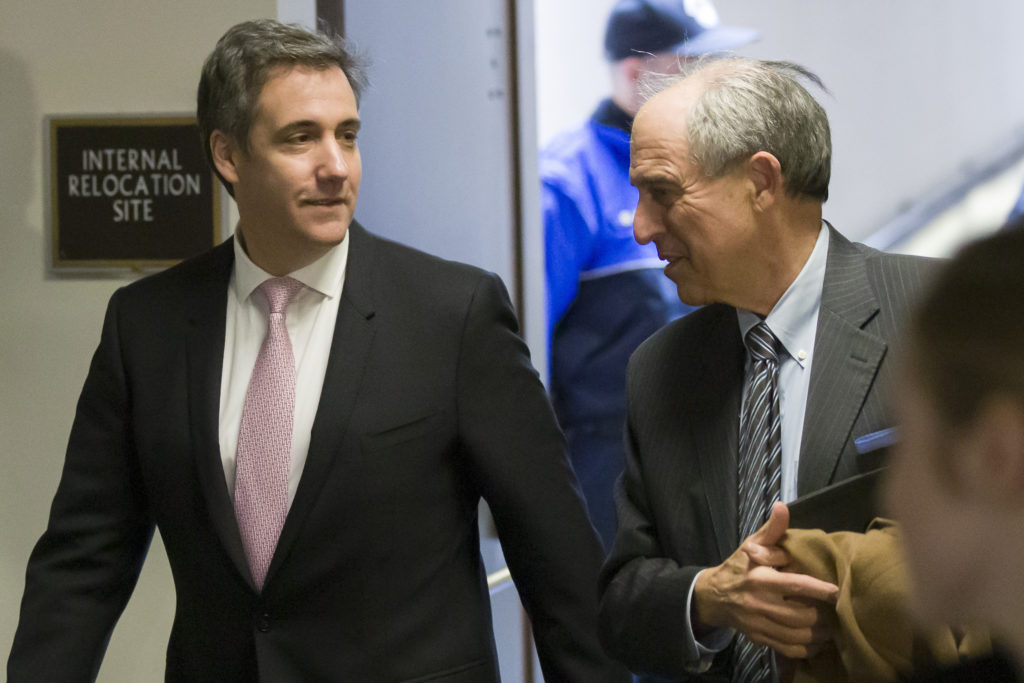
President Donald Trump‘s former personal lawyer, Michael Cohen, is expected to give a behind-the-scenes account of what he will claim is Trump’s lying, racism and cheating, and possibly even criminal conduct, when he testifies publicly before a House committee on Wednesday, according to a person with knowledge of the matter. Cohen is expected to provide what he will claim is evidence, in the form of documents, of Trump’s conduct, said the person, who requested anonymity to discuss the confidential testimony. Trump’s former personal “fixer” arrived on Capitol Hill Tuesday to begin three days of congressional appearances, starting with a closed-door interview with the Senate intelligence committee. The public won’t have a chance to hear from him until Wednesday, when he testifies before the House Oversight and Reform Committee. He will go behind closed doors again when he talks to the House intelligence committee on Thursday. Lawmakers are alternately suspicious of Cohen, who is set to serve time in prison for lying to the House and Senate intelligence committees in 2017, and eager to hear what Cohen has to say after he turned on his longtime boss. Senators on the intelligence panel are expected to attend Tuesday’s meeting, a departure from the committee’s usual practice, where witness interviews are conducted by staff only. Senate Intelligence Committee Chairman Richard Burr told The Associated Press that senators will have staff ask questions but will be in the room to observe. He said no topics will be off limits and Cohen “should expect to get any question from anywhere about anything.” Burr said committee members know a lot more than they did when they first interviewed Cohen, who later pleaded guilty to lying to the House and Senate intelligence committees about abandoning a proposal for a Trump Tower in Moscow in January 2016. Cohen has since acknowledged he continued pursuing the project for months after that. Burr suggested that the committee will take steps to ensure Cohen is telling the truth. “I’m sure there will be some questions we know the answers to, so we’ll test him to see whether in fact he’ll be truthful this time,” Burr said. As a close confidant of Trump for many years, Cohen’s testimony is among the most anticipated since the House and Senate started investigating the Trump campaign’s Russia ties two years ago. In addition to lying to Congress, Cohen pleaded guilty last year to campaign finance violations for his involvement in payments to two women who allege they had affairs with Trump. He is set to begin a three-year prison sentence in May. Federal prosecutors in New York have said Trump directed Cohen to arrange the payments to buy the silence of porn actress Stormy Daniels and former Playboy model Karen McDougal in the run-up to the 2016 campaign. Trump denies the allegations and says that Cohen lied to get a lighter sentence. The person with knowledge of the matter said Cohen will provide information about Trump’s financial statements that he will claim shows Trump deflated assets to pay lower taxes on golf courses; will provide details of the Daniels payment and claim that Trump organized a cover-up by pretending Cohen would be repaid; and claim that Trump talked to him and asked him questions about the Trump Moscow project throughout 2016. He is also expected to discuss what he knows about a meeting between Trump campaign associates and a Russian lawyer in Trump Tower before the 2016 election, a matter that is of particular interest to special counsel Robert Mueller and congressional investigators. Cohen is only expected to discuss matters related to Russia in the closed-door interviews with the intelligence committees, as House Oversight and Reform Chairman Elijah Cummings has said he doesn’t want to interfere with Mueller’s investigation into Russian interference in the 2016 election and links to Trump’s campaign. Members of the Oversight panel are expected to ask questions about the campaign finance violations, Trump’s business practices and compliance with tax laws and “the accuracy of the president’s public statements,” according to a memo laying out the scope of that hearing. The hearing’s scope does not include Russia. Cohen’s week of interviews come as House Democrats launch multiple investigations into Trump’s ties to Russia and conflict-of-interest issues within the administration. House Republicans in the last Congress investigated whether Trump’s campaign coordinated with Russia, but ended that probe over Democratic objections, saying that there was no evidence that they did so. The Senate’s Russia investigation is ongoing. Cohen had been scheduled to speak to the three committees earlier this month, but rescheduled all of those appearances for different reasons. He said he needed to recover from surgery and also was concerned about what he considered to be threats to his family from Trump and the president’s lawyer Rudy Giuliani. House Intelligence Committee Chairman Adam Schiff postponed Cohen’s appearance before that committee saying it was “in the interests of the investigation,” with no additional details. Republished with permission from the Associated Press.
CIA nominee says ‘tough lessons’ learned from interrogation
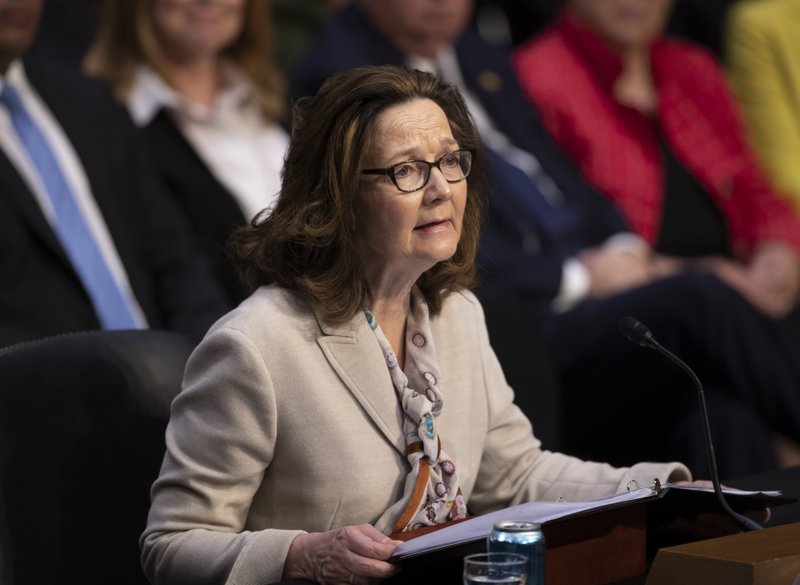
President Donald Trump’s nominee to be the next CIA director said Wednesday the spy agency learned “tough lessons” from its use of harsh detention and interrogation tactics on terror suspects after 9/11 and that if confirmed, she would not permit the CIA to restart such a program. “CIA has learned some tough lessons, especially when asked to tackle missions that fall outside our expertise,” acting CIA director Gina Haspel told the Senate intelligence committee. “For me, there is no better example of implementing lessons learned than what the agency took away from the detention and interrogation program.” “It is important to recall the context of those challenging times immediately following 9/11,” she said. “Having served in that tumultuous time, I can offer you my personal commitment, clearly and without reservation, that under my leadership, CIA will not restart such a detention and interrogation program.” Haspel’s promise could put her at odds with Trump, who spoke during the campaign about toughening the U.S. approach to fighting extremists and vowed to authorize waterboarding and a “hell of a lot worse.” Before the confirmation hearing got underway, protesters in the room shouted anti-torture slogans. Committee chairman Sen. Richard Burr, R-N.C., said those who disrupt the hearing will be escorted out. He said the hearing is not about the now-defunct CIA interrogation program, but about who should lead the agency in the future as it faces current threats to U.S. national security. The sound of dozens of clicking cameras greeted Haspel as she entered the room and shook hands with members of the committee. In her opening remarks, she acknowledged that the American public wants to know her views on the CIA’s now-defunct detention and interrogation program. Haspel said that being in the public spotlight is new for her because she spent more than 30 years “in the shadows” working undercover and acquiring secret information from dead drops and meetings in dusty back alleys of third-world capitals. She portrayed herself as a “typical middle-class American” with a “strong sense of right and wrong” who just doesn’t happen to have any social media accounts. She said she was born in Kentucky and while her family has deep roots there, she grew up as an Air Force “brat,” following her father to postings all over the world. Haspel emphasized her experience, saying, “I know CIA like the back of my hand.” “I joined CIA in 1985 as a case officer in the clandestine service,” she said. “From my first days in training, I had a knack for the nuts and bolts of my profession. I excelled in finding and acquiring secret information.” Haspel’s fate hinges on how well she fields tough questions from senators who want details of her time running a covert detention site where terror suspects were waterboarded, a tactic that simulates drowning, and seek an explanation for why she wanted videos of the sessions destroyed. Haspel’s critics outside Congress have stepped up their opposition, arguing that anyone who willingly participated in one of the CIA’s darkest chapters should not head the spy agency. They argue that having Haspel as the face of U.S. intelligence will undercut America’s effort to champion human rights. Democrats have complained that the CIA has failed to declassify enough information on her career, leaving the public in the dark about the person who might end up leading the CIA. Sen. Mark Warner of Virginia, the ranking Democrat on the committee, said that Haspel is among the most experienced people to be nominated to serve as CIA director. But, he said, many people, including him, have questions about the message the Senate would send by confirming someone for this position who served as a supervisor in the CIA Counterterrorism Center during the time of the detention and interrogation program. Sen. Ron Wyden, D-Ore., and three of his Democratic colleagues recently wrote a letter to Dan Coats, the director of national intelligence, asking that his office, which oversees all U.S. intelligence agencies, declassify the documents. He cited a provision of an executive order that prohibits information from being classified “in order to conceal violations of law, inefficiency or administrative error” or “to prevent embarrassment to a person, organization or agency.” Wyden warned it would set a damaging precedent “if this administration is allowed to get away with what I consider to be a secret confirmation” for the most visible official in U.S. intelligence. In her defense, Haspel said that in retrospect it is clear, as the Senate committee’s 2014 report on the program concluded, that the “CIA was not prepared to conduct a detention and interrogation program.” If confirmed, Haspel said she will follow the legal framework the U.S. has since imposed that bans any tactic not spelled out in the Army Field Manual. Under U.S. law, all government employees, including intelligence agents, must abide by Army guidelines for interrogating prisoners — guidelines that don’t permit waterboarding. Warner said he appreciates that Haspel has acknowledged the history of the program and that she is committed to upholding the law, but “it is not enough.” He said “no one should get credit simply for agreeing to follow the law.” Haspel didn’t mention the destruction of the tapes in her opening remarks, but last month, the CIA released a memo showing Haspel was cleared of wrongdoing in destroying the tapes. The memo, written in 2011, summarizes a disciplinary review conducted by then-CIA Deputy Director Mike Morell. He said that while Haspel was one of the two officers “directly involved in the decision to destroy the tapes,” he “found no fault” with what she did. Haspel said she would put more intelligence officers in the field abroad and says there has been an outpouring of support from young women at the CIA who hope she becomes the first female CIA director. “It is not my way to trumpet the fact that I am a woman up for the top job, but I would be remiss in not remarking on it — not least
Senators to preview proposals on improving election systems
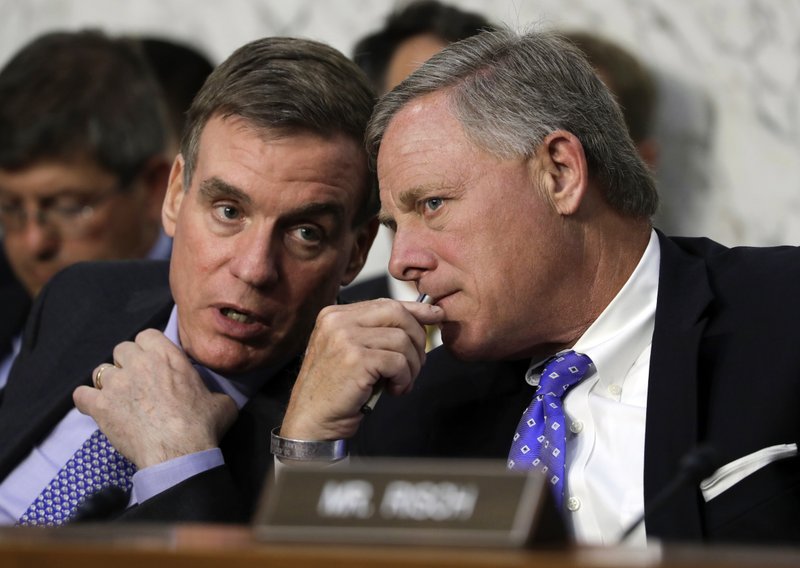
With the 2018 primary season already underway, leaders of the Senate Intelligence Committee are launching an effort to protect U.S. elections from a repeat episode of foreign interference. Senate Intelligence Committee Chairman Richard Burr, R-N.C., and Virginia Sen. Mark Warner, the top Democrat on the panel, will preview some of the committee’s recommendations for improving the nation’s election infrastructure at a news conference Tuesday. On Wednesday, the committee will hold a hearing examining attempted hacks on state elections systems in 2016 and the federal and state response to those efforts. The committee has prepared a larger report on the issue, one of what could be several reports to come out of the committee’s investigation into Russian meddling in the 2016 election. Burr and Warner have said this report is the most urgent because of the threat that it could happen again in 2018. It’s unclear when the full report will be released, but it is expected to include recommendations for elections officials around the country and also proposals for legislation to help ward off the hacking. Overall, experts say far too little has been done to shore up vulnerabilities in 10,000 U.S. voting jurisdictions that mostly run on obsolete and imperfectly secured technology. Russian agents targeted election systems in 21 states ahead of the 2016 general election, the Homeland Security Department has said, and separately launched a social media blitz aimed at inflaming social tensions and sowing confusion. Top U.S. intelligence officials have said they’ve seen indications Russian agents are preparing a new round of election subterfuge this year. There’s no evidence that any hack in the November 2016 election affected election results, but the attempts scared state election officials who sought answers about how their systems had been potentially compromised. DHS took nearly a year to inform the affected states of hacking attempts, blaming it in part on a lack of security clearances. Lawmakers in both parties have pressed the department on why it took so long. Warner has said he thinks the process to prevent such hacking needs to be more robust, especially since President Donald Trump has not addressed the matter as an urgent problem. “We’ve got bipartisan agreement we have to do something on this,” Warner said earlier this year. At the hearing Wednesday, former Homeland Security Secretary Jeh Johnson and current Homeland Security Secretary Kirstjen Nielsen will both testify. The Senate intelligence panel has put off making any assessments about whether Trump’s 2016 campaign in any way coordinated with Russia. Though that is one part of the panel’s investigation, Burr and Warner have decided to focus on less controversial issues where all members agree. Republished with permission from the Associated Press.
Jeff Sessions to face sharp questions on Russia contacts
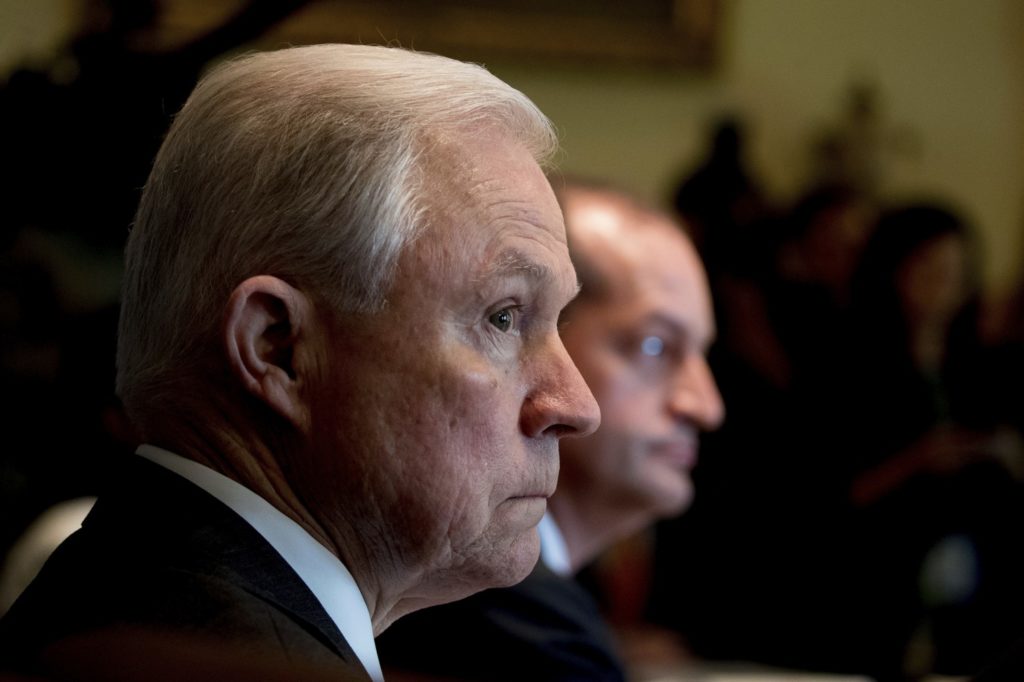
Attorney General Jeff Sessions is preparing for sharp questions from his former Senate colleagues about his role in the firing of James Comey, his Russian contacts during the campaign and his decision to recuse himself from an investigation into possible ties between Moscow and associates of President Donald Trump. The public testimony Tuesday before the Senate intelligence committee should yield Sessions’ most extensive comments to date on questions that have dogged his entire tenure as attorney general and that led him three months ago to step aside from the Russia probe. Lawmakers for weeks have demanded answers from Sessions, particularly about meetings he had last summer and fall with the Russian ambassador to the United States. Those calls have escalated since fired FBI Director James Comey cryptically told lawmakers on Thursday that the bureau had expected Sessions to recuse himself weeks before he did from an investigation into contacts between Trump campaign associates and Russia during the 2016 presidential election. Sessions, a close campaign adviser to Donald Trump and the first senator to endorse him, stepped aside from the investigation in early March after acknowledging he had spoken twice in the months before the election with the Russian ambassador. He said at his January confirmation hearing that he had not met with Russians during the campaign. Since then, lawmakers have raised questions about a possible third meeting at a Washington hotel, though the Justice Department has said that did not happen. Sessions on Saturday said he would appear before the intelligence committee, which has been doing its own investigation into Russian contacts with the Trump campaign. There had been some question as to whether the hearing would be open to the public, but the Justice Department said Monday he requested it be so because he “believes it is important for the American people to hear the truth directly from him.” The committee shortly after said the hearing would be open. The hearing will bring contentious questioning for Sessions and likely some uncomfortable moments for the Trump administration. Sessions is likely to be asked about his conversations with Ambassador Sergey Kislyak and whether there were more encounters that should have been made public. And he can expect questions about his involvement in Comey’s May 9 firing, the circumstances surrounding his decision to recuse himself from the FBI’s investigation, and whether any of his actions — such as interviewing candidates for the FBI director position or meeting with Trump about Comey — violated his recusal pledge. Asked Monday if the White House thought Sessions should invoke executive privilege to avoid answering questions about his conversations with Trump, presidential spokesman Sean Spicer replied, “It depends on the scope of the questions. To get into a hypothetical at this point would be premature.” He did not explicitly endorse Sessions’ appearance, saying in response to a question, “We’re aware of it, and we’ll go from there.” Comey himself had a riveting appearance before the same Senate panel last week, with some key moments centered on Sessions. Comey said Trump told Sessions and other administration officials to leave the room before Trump asked him in February to drop a probe into former National Security Adviser Michael Flynn’s contacts with Russia. In addition, Comey has said Sessions did not respond when he complained that he did not want to be left alone with Trump again. The Justice Department has denied that, saying Sessions stressed to Comey the need to be careful about following appropriate policies. The former FBI director also testified that he and the agency had believed Sessions was “inevitably going to recuse” for reasons he said he could not elaborate on. “We also were aware of facts that I can’t discuss in an open setting that would make his continued engagement in a Russia-related investigation problematic,” Comey said. Sessions’ appearance before the intelligence committee is an indication of just how much the Russia investigation has shaded his tenure. White House frustrations with the Justice Department spilled into public view last week, when Trump on Twitter criticized the legal strategy in defending his proposed travel ban. Spicer, the spokesman, declined to say then that Sessions enjoyed Trump’s confidence, though spokeswoman Sarah Huckabee Sanders said later in the week that the president had confidence “in all of his Cabinet.” Though the Justice Department maintains that it has fully disclosed the extent of Sessions’ foreign contacts last year, lawmakers have continued to press him for answers about an April 2016 event at the Mayflower Hotel in Washington, where both Sessions and Kislyak attended a foreign policy speech by Trump. Senate Democrats have raised the possibility that Sessions and Kislyak could have met there, though Justice Department officials say there were no private encounters or side meetings. Lawmakers, including Al Franken of Minnesota and Patrick Leahy of Vermont, have asked the FBI to investigate and to determine if Sessions committed perjury when he denied having had meetings with Russians. Republished with permission of The Associated Press.
Jeff Sessions to appear before Senate Intelligence committee on Russia meetings
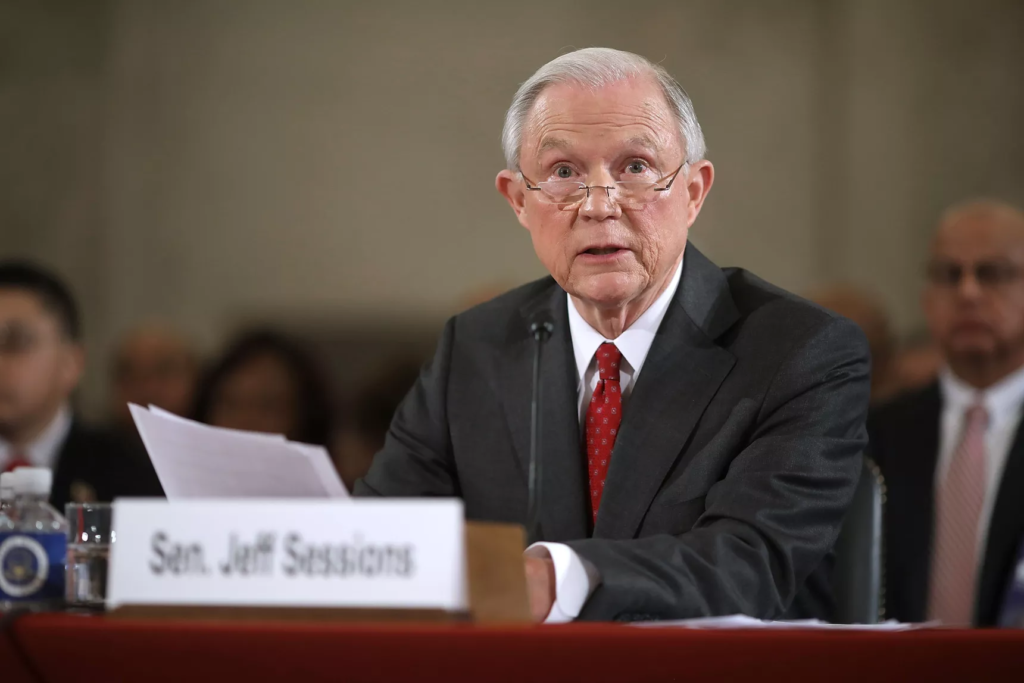
The Latest on President Donald Trump and the investigation into his campaign’s potential ties to Russia (all times local): 8:30 a.m. President Donald Trump is predicting that former FBI Director James Comey‘s “leaks will be far more prevalent than anyone ever thought possible.” Trump says on Twitter, “Totally illegal? Very ‘cowardly!’” Trump is again challenging Comey after the ousted FBI director’s testimony before the Senate Intelligence Committee last week. While many of Trump’s Republican allies have found Comey’s testimony credible, the president has called the man he fired a liar and a “leaker.” Comey said during his testimony that he asked a friend to release contents of the memos he’d written about his conversations with the president to a reporter. He contended that information was not classified or otherwise protected. — 2:45 a.m. Attorney General Jeff Sessions has agreed to appear before the Senate Intelligence Committee. The former Alabama senator was an early supporter of Donald Trump, and Sessions’ contacts during the campaign with Russia’s ambassador to the United States have raised questions. Back in March, Sessions stepped aside from overseeing a federal investigation into contacts between Russia and the Trump campaign after he acknowledged meeting twice last year with the Russian diplomat, Sergey Kislyak. Sessions had told lawmakers at his confirmation hearing in January that he hadn’t met with Russians during the campaign. Sessions has been dogged by questions about possible additional encounters with the ambassador. Republished with permission of The Associated Press.
Former Trump adviser Roger Stone vows to cooperate with Senate committee
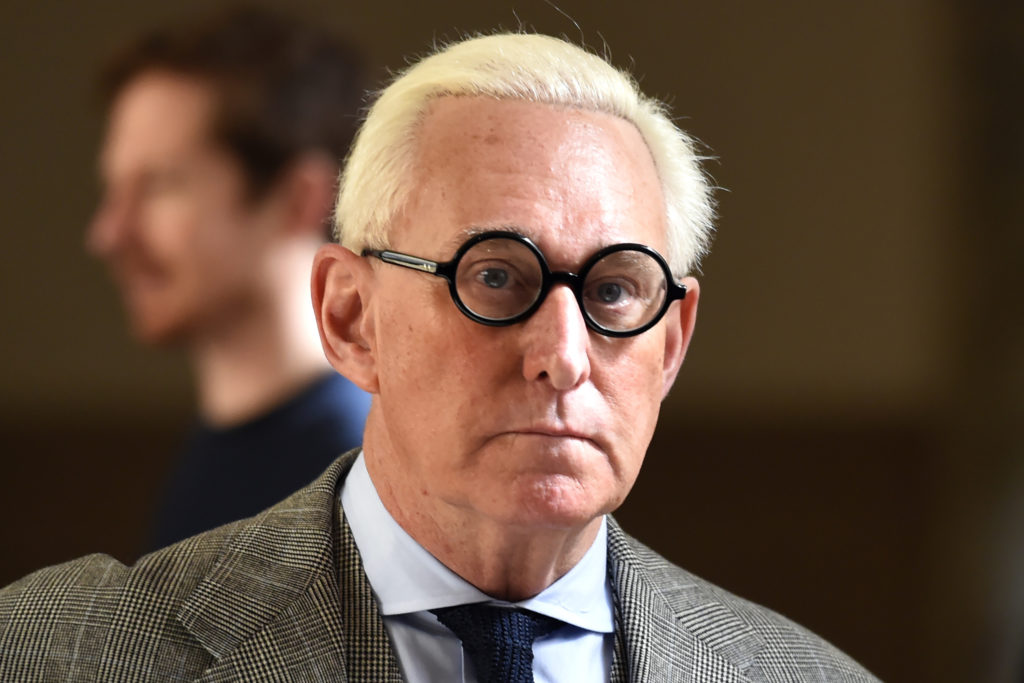
Former Trump adviser Roger Stone says he will “fully comply” with the Senate intelligence committee’s request for information and documents relating to its Russia investigation. But at the same time Stone says he wants to testify, since members of Congress’ panels involved in the Russia probe “have disparaged me publicly.” He also says in an appearance on NBC’s “Today” show that he favored the firing of FBI Director James Comey and thought that Trump “made the right decision.” Stone also said Comey had “become a law onto himself” and argued that likening his ouster to the Nixon era “Saturday Night Massacre” was like comparing “apples and oranges.” He said “the Russian collusion scandal is without any evidence to this day.” The longtime Trump confidante also said that Comey’s firing “had nothing to do with Russia.” Republished with permission of The Associated Press.
Democrat criticizes Barack Obama for slow response to Russian hacks
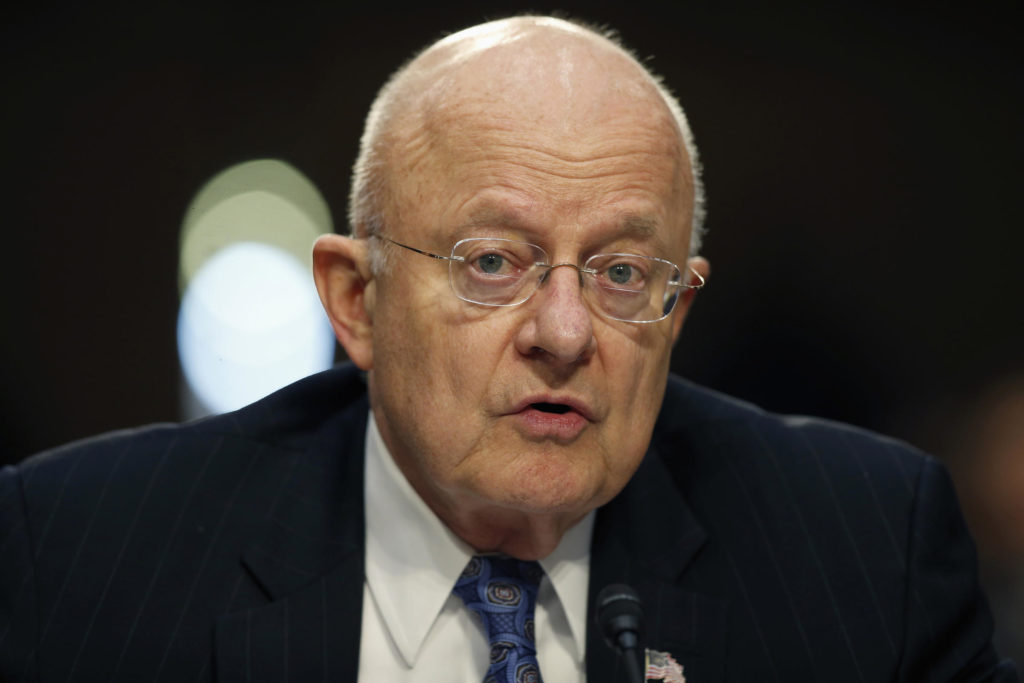
The Senate intelligence committee’s top Democrat criticized the Obama administration on Tuesday for its slow response to allegations of Russian hacking during the presidential campaign as the panel heard from the director of the FBI, whom several Democrats criticized for announcing a new probe of Hillary Clinton‘s emails 11 days before the election. Sen. Mark Warner‘s comments reflected the ongoing discontent among Democrats with how President Barack Obama handled evidence of the Kremlin’s tampering with the U.S. democratic process. The Virginia Democrat said the administration deserved at least some criticism for the pace of its response and made clear he thought it should have acted sooner and stronger. FBI Director James Comey and James Clapper, the director of national intelligence, were speaking to the committee about the conclusions of a report presented last week by U.S. intelligence agencies to Obama, President-elect Donald Trump and senior members of Congress. An unclassified version also was made public, outlining the agencies’ claims of Russian actions designed to undermine the election and help Trump by hurting Clinton. While Democrats say they accept the vote, many lawmakers feel that if Obama and his intelligence agencies were more forthright in the run-up to the election about putting up red flags and warning signs, the result may have been different. Sen. Richard Burr, R-N.C., the intelligence committee’s chairman, said he had no reason to doubt the findings of last week’s report. But he said “our democracy is not at risk,” adding that Americans can have faith in the democratic process. And he said his committee’s staff would assess the sourcing behind the intelligence agencies’ conclusions. The declassified report explicitly tied Russian President Vladimir Putin to the hacking of email accounts of the Democratic National Committee and individual Democrats like Clinton’s campaign chairman, John Podesta. Russia also used state-funded propaganda and paid “trolls” to make nasty comments on social media services, the report said, although there was no suggestion such operations affected the actual vote count. The report lacked details about how the U.S. learned what it says it knows, such as any intercepted conversations or electronic messages from Russian leaders, including Putin. It also said nothing about specific hacker techniques or digital tools the U.S. may have traced back to Russia in its investigations. Putin spokesman Dmitry Peskov told reporters on Monday the Kremlin believes the U.S. accusations of election hacking have no substance. He called them “amateurish.” According to U.S. intelligence agencies, Russia provided the emails to WikiLeaks. The website’s founder, Julian Assange, has denied that is the case, but Democratic and Republican members of Congress have largely backed the accusation and many have demanded a sterner response than Obama has ordered. Obama struck back at Moscow in late December with penalties aimed at Russia’s leading spy agencies, the GRU and FSB, that the U.S. said were involved in the hacking. The GRU is Russia’s military intelligence agency. The FSB is the main successor to the Soviet-era KGB. On Monday, the U.S. levied economic sanctions against five Russians in connection to a 2012 U.S. law punishing Russian human rights violators. Americans are now banned from doing business with the men and any assets they may have in the United States are now frozen. The most prominent individual targeted by the new sanctions is Alexander Bastrykin, who heads Russia’s main investigative agency and is close to Putin. The two attended the same university together. Republish with permission of The Associated Press.
Amid attendance attacks, Marco Rubio focuses on Iowa
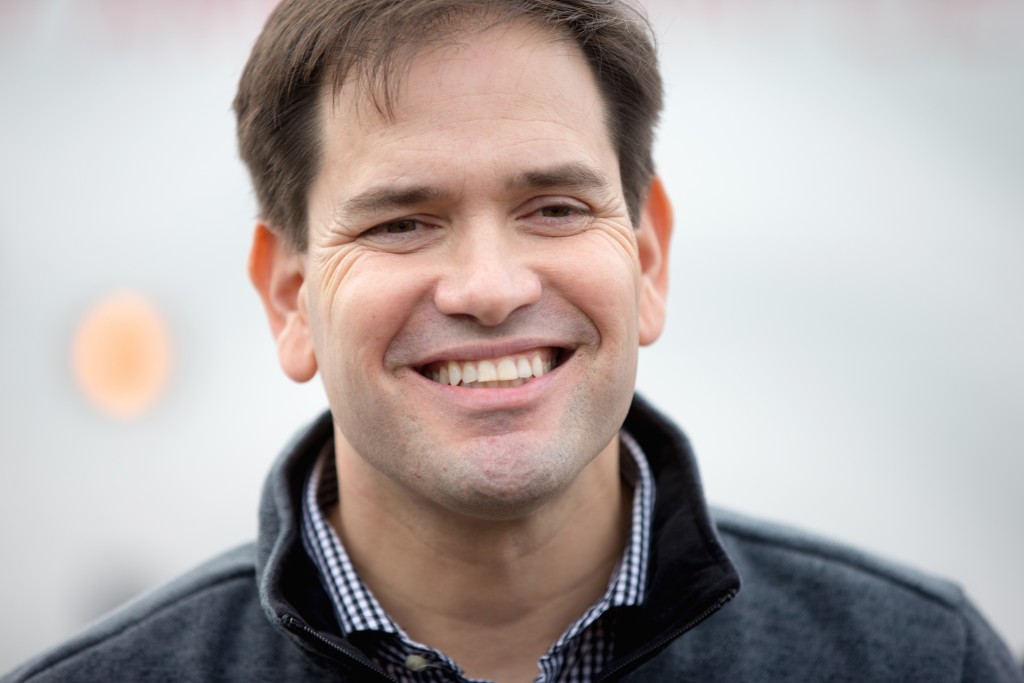
Amid new criticisms about his Senate attendance record, Marco Rubio says some of his rival candidates are getting “a little desperate and a little nasty.” The Florida senator kicked off an Iowa tour Tuesday, as a super political action committee backing Jeb Bush announced a new ad in the state accusing Rubio of missing a Senate meeting after the November terrorist attacks in Paris. New Jersey Gov. Chris Christie also piled on during an Iowa stop, questioning Rubio’s Senate attendance. After a town hall meeting in the leadoff caucus state, Rubio said the ad from Right to Rise “isn’t accurate,” adding that as a member of the Senate Intelligence Committee he attended a different briefing on the Paris attacks. Asked about Christie’s comments, he said the governor had been away from New Jersey “half the time.” “Candidates I think as we get down the stretch here some of them get a little desperate and a little nasty in their attacks,” Rubio said. Rivals have tried to make an issue of Rubio’s attendance in the Senate. In 2015, he has missed about 35 percent of roll call votes, according to GovTrack.us. That’s more than any of the other senators running for president. But several Iowans at the event said they weren’t troubled by Rubio’s Senate record. “He’s out here trying to get the popular vote of the people,” said Mary Reed, 65, of Bellevue, Iowa, who is considering supporting Rubio “Missing a few votes does not bother me. Before over 125 people in Clinton, Iowa, Rubio — who was joined by his family and Rep. Trey Gowdy, of South Carolina — kept his remarks focused on President Barack Obama and Democratic front-runner Hillary Clinton, rather than his Republican counterparts. “I have lived many of the things that people face,” Rubio said. “I want to know how Hillary Clinton is going to lecture me about people living paycheck to paycheck. I grew up paycheck to paycheck.” Rubio stressed his support for securing the borders, investing in the military and repealing the Affordable Care Act. He also said he would back a convention of the states to amend the U.S. Constitution, to pass amendments dealing with term limits and a balanced budget. Conservative groups have been pushing for such an event, which has never happened since the original convention in 1787. Rubio said he supported a convention limited to those two topics. Rubio is wrapping up his year in Iowa, where the Feb. 1 caucuses will kick off presidential voting, but has tried to avoid prioritizing any one of the early voting states, by running a nationally focused campaign that leans on strong debate performances and television advertising. Unlike Texas Sen. Ted Cruz, who has set his sights on Iowa, or former Florida Gov. Jeb Bush, who is pushing hard in New Hampshire, Rubio continues to spread his time and money across the early states, showing no indication he will choose just one to make his mark. While supporters say Rubio just needs to stay in the top cluster in the first few states, some see his approach as risky. But Rubio spokesman Alex Conant said the campaign has no plans to “give up on states we can win.” In Iowa, recent polls have found Cruz and Donald Trump battling for first place, with Rubio usually a distant third. He’s seen as competing most directly with others considered part of the GOP establishment: Bush, New Jersey Gov. Chris Christie and Ohio Gov. John Kasich. Most agree he doesn’t actually need to win the caucuses, but must emerge as the establishment’s leader. A good organization is important in Iowa because caucuses take more effort than a primary, requiring voters to show up at a fixed time on a winter night. The Republican caucuses drew about 120,000 voters in 2008 and 2012 , about 20 percent of registered Republicans. Rubio has fewer paid staff than some competitors and his state director hails from Arkansas. He draws large, enthusiastic crowds and has done at least 49 public events in the state this year — more than Bush or Christie, but significantly fewer than Cruz, who has done at least 80. Questions about Rubio’s organization efforts are echoed in other early voting states, including New Hampshire and South Carolina. Republished with permission of the Associated Press.
