
House committee advances legislation to send parents to jail if their child brings a gun to school

On Wednesday, the House Judiciary Committee voted to advance controversial legislation that would hold parents criminally responsible if their child brings their gun onto a school campus, even if the weapon is not used in any sort of criminal mischief. House Bill 123 (HB123) is sponsored by State Rep. Barbara Drummond. “This bill does not violate anyone’s Second Amendment right,” Drummond told the committee. “This is a bill that makes parents responsible.” State Rep. Tim Wadsworth asked, “A parent can be charged with a crime?” “Yes, if that weapon is not reasonably secured,” said Drummond. Drummond explained that “reasonably secured” could “be a trigger lock, in a lockbox, or a gun safe,” but is not defined exclusively by those means. Rep. Shane Stringer asked, “Can we do a bill that says if a weapon is used.” Drummond responded, “I don’t want to wake up tomorrow and see that weapon was used on a school. There is a responsibility to being a parent.” Drummond explained that the gun would have to belong to the parent or guardian. The committee approved an amendment to change the penalty from a Class D felony to a Class A misdemeanor. Rep. David Faulkner asked if the parent would be criminally liable if the child brought the gun to school, even if the gun was determined to be “reasonably secured” with a trigger lock. “If it is brought to school with a trigger lock, it would be ‘reasonably secured,’” under this bill, Drummond answered. Rep. David Standridge said, “I represent a rural district where hunting is popular.” Standridge explained that his area had had an incident where a student went hunting after school and forgot to take the rifle out of his truck, so they went to school the next day with the rifle still in the gun rack. Standridge asked if this bill would apply to an incident like that. “This is 17 and under,” Drummond replied. “That older student who is going hunting this would not address this.” Stringer asked, “How would this affect other people in the household?” “This is germane only to the parents,” Drummond said. “There is a ton of guns that are being confiscated on school campuses.” Wadsworth asked, “What if it was a grandparent?” Drummond answered, “This applies to parent or guardian.” “Most grandparents who look after their grandchildren do not get legal guardianship,” Wadsworth said. State Rep. Christopher England said, “What you are doing is not a foreign concept to the law. In juvenile court, we charge parents with contributing to the delinquency of a minor. All we are talking about is responsible gun owners. If you are a responsible gun owner you should not have a problem with this bill.” A total of three amendments were added to the bill in committee. HB123 received a favorable report in a close vote. The bill can be considered by the full House of Representatives as early as Thursday. Thursday will be day 10 of the 2023 Alabama Regular Legislative Session. To connect with the author of this story or to comment, email brandonmreporter@gmail.com.
State Auditor Andrew Sorrell addresses East Alabama Republican Assembly

Alabama State Auditor Andrew Sorrell was in Opelika on Monday to address the East Alabama Republican Assembly. Sorrell served in the Alabama House of Representatives from 2018 to 2022, prior to his election last year as state Auditor. “In my first four years in the Legislature, I was the most conservative one down there,” Sorrell said, citing the ranking of members by the American Conservative Union and Club for Growth. “And it wasn’t even close. On every conservative scorecard, I was either number one or tied for number one.” “They said I was too conservative to get elected statewide,” Sorrell said. “I got the highest percentage of any candidate on the ballot in November.” “I was born in California, but I got out of there as quick as I could,” Sorrell said. “I was only there six weeks. We were there because Dad was a preacher at a Church there. If there is one thing that California needs, it’s more preachers. Dad took a job teaching Greek at a college in Wisconsin. I lived there until I was six years old. Dad got laid off from that job.” Sorrel’s father was laid off at the college and worked as a truck driver until finally; he was offered a job as pastor of a Church in Muscle Shoals, so the family moved to Alabama. ” There is nowhere I would rather be,” Sorrell said. Sorrell and his wife have one daughter and are expecting another. “We are going to home-school our children,” Sorrell said. “I got a good education at Muscle Shoals,” Sorrell said. “I can’t believe what has happened to the schools. There is a transgender kid in Muscle Shoals. When I was growing up, all my teachers were Christians.” Sorrell said that he became an entrepreneur growing up. His brother, Matthew, went to college at the University of North Alabama and received a $200 scholarship, so he thought his books were paid for. “That only bought one book,” Sorrell said. Then when that course was over, the bookstore would only pay $50. His brother decided to buy books on Amazon for substantial cost savings. He wanted to buy books and then sell them for a profit but had no money, so he formed a 50:50 partnership with Andrew because Andrew could front the $2000 in startup capital. “He came back home with a basket full of textbooks and $2500,” Sorrell said. They began offering cash for textbooks at the end of the semester to resell them at the beginning. “We were the book guys on campus. At one point, we bought 856 books in four days.” “We started buying hundreds of textbooks a day,” Sorrell said. Before selling the company, Andrew and his brother had grown the company to forty employees and over a million dollars in revenue. Next, Sorrell decided to go into the pawn shop business to sell guns. “It took two and a half years,” to open the store, Sorrell said. “Then I opened a second one – Gold, Guns, & Guitars. I also have eight rentals around the state.” “I am not in politics to make money – in fact, I am losing money,” Sorrell said. “Most of them (legislators) are losing money. Dr. [Larry] Stutts – I guarantee you that he is losing money in the legislature instead of delivering babies.” The Sorrell brothers became involved in local GOP campaigns, but all the candidates they helped lost their races. “Andrew, we are doing something wrong,” Matthew Sorrell said that his brother told him. “There are schools that teach you how to learn to run campaigns.” So they spent a week at a D.C. event learning how to run campaigns, and things changed. “We learned how to be campaign managers,” Sorrell said. After that, they found growing success. Sorrell said that Republican dominance has brought its own unique problem. “A big problem we have in the state is if you can’t run as a Democrat, you run in the Republican primary,” Sorrell said. “That is why we need party registration. I know you have a large problem with that down here with that.” Sorrell ran for House District 3 when he could not recruit a candidate to challenge incumbent Rep. Marcel Black (D-Tuscumbia). Black ultimately decided not to run again. “I narrowly won,” Sorrell said. “The gentleman that replaced me got 64% where I just got 52%. Part of that is redistricting made it a lot more fair, but it is also a lot more acceptable to vote Republican in Colbert County than it was.” Sorrell said one of his greatest legislative accomplishments was seeing constitutional carry law passed. That removed the requirement that gun owners purchase a pistol permit from their sheriff to carry their handguns concealed. “The guy that had it before I got elected got elected as a circuit judge, so I agreed to carry it,” Sorrell said. “I only had seven cosponsors,” Sorrell said that first year. That second year State Rep. Connie Rowe, a member of the leadership, “Stuck her neck on it” and agreed to cosponsor the bill after 22 members had signed on to cosponsor. “That took it to 26 or 27.” That third year, “I got it up to 28 or 29 (cosponsors),” Sorrell said. The bill would not come to the floor, so Sorrell decided to add it as an amendment to the lifetime permit bill to force a House floor vote on the legislation. Sorrell said that the Speaker of the House asked him to not bring that amendment and agreed to cosponsor the bill and bring it to the floor in 2022 if he would agree. “I decided to take the deal,” Sorrell said. “Fortunately for me, the Speaker kept his word.” Sorrell said that the decision by Mobile Sheriff Sam Cochran to fire State Rep. Shane Stringer as a deputy in the 2021 session over his support for constitutional carry was a key moment in passing the bill because legislators who weren’t fans of constitutional carry liked Stringer. “I wanted to introduce an amendment to name it the
Alabama’s top ten stories in 2022

2022 is winding down. Now is a good time to look back on the year that was and remember the political news that impacted our lives here in Alabama. Katie Britt wins the Senate. Britt had never held a public office before, was not a self-made multi-millionaire with her own corporation, was not a war hero, and was not a household name. Yet the mom from Enterprise managed to put together a diverse band of supporters that included among its ranks both the rich and powerful and thousands of just everyday ordinary Alabama folks. Alabama does not change Senators very often. Richard Shelby, whom she replaces, spent the last 44 years in Congress. At age 40, Britt is young enough to potentially duplicate that feat. Republicans hold onto their supermajorities in the Alabama Legislature. The Alabama Legislature is nationally recognized as the most conservative legislature in the entire country. Republicans entered the 2022 election cycle with the daunting challenge of defending 77 seats in the Alabama House of Representatives and 27 seats in the Alabama Senate. Alabama voters showed that they liked what the legislature did in the last four years and will enter the new quadrennium with the same historic filibuster-proof majorities they had in the previous four years. Republicans in the legislature can work across the aisle in the spirit of bipartisan cooperation if they want to. They can also ram through whatever red-meat agenda items that the GOP wants. Alabama Democrats in the legislature can do little to stop them. Alabama prisons are still horrible. Alabama prisons are overcrowded, woefully understaffed, do a poor job of rehabilitating prisoners, and according to a report by the Department of Justice, are the most dangerous in the country. This has all been well documented. The only conclusion that is possible to reach is that the people of Alabama just don’t care how we treat our prisoners. The Bureau of Pardons and Paroles has been hesitant to release prisoners. The state has 70, 80, and even 100-year-old prisons housing far more prisoners than they were designed to hold. The state has had to suspend executions because of botched attempts in which the state failed in its efforts to kill the condemned man. The state is trying to hire more prison guards, and the Alabama Department of Corrections has begun work on building two new mega prisons in Elmore and Escambia Counties. Time will tell if these efforts will satisfy the federal government, which is suing the state because they believe our prisons are so wretched that incarceration in Alabama constitutes a “cruel and unusual punishment” in violation of the Eight Amendment of the Bill of Rights. Kay Ivey was re-elected as governor. Ivey entered 2022 as the oldest governor in the country and one of the most popular. Ivey was challenged by a self-made millionaire, a former governor’s son, successful businessmen, a mayor and former legislator, a prison guard and former county commissioner, and a conspiracy theorist preacher in the Republican primary. They all blasted Ivey’s tenure as governor and said they could do a better job. The voters ignored millions of dollars in negative ads, rumors about the governor’s health, and her refusal to debate, and Ivey won the GOP primary without a runoff. Ivey then faced a woefully underfunded Democrat, a Libertarian, and two write-in candidates. Seventeen people ran for governor in 2022, and Ivey coasted to re-election. The Alabama Democratic Party imploded. America has a two-party system. Democrats have a one-seat majority in the U.S. Senate, and Republicans have a slim majority in the U.S. House of Representatives. Democrats won the presidential election in 2020, and Republicans won in 2016. Either party could be in charge in 2024. The nation could not be more evenly divided – not so in Alabama. Every Republican nominee for a statewide office prevailed in Alabama’s 2022, and it was not even close. In fact, the Republican domination surprised no one as only one Democrat, Doug Jones in 2017, has won a statewide race since 2008. The Alabama Democratic Party (ADP) was hemorrhaging money so badly that the state director and most staff quit weeks before the election. ADP Chairman State Rep. Chris England announced leadership elections before the elections and that he was not running again. Randy Kelley, deposed with the blessing of the Democratic National Committee in a bizarre ADP power struggle in 2019 as vice chair, was elected Chairman of the ADP in August. The Joe Reed and Alabama Democratic Conference-supported Chairman found the party with no money, weak candidates, no donors, and no hope. The party was effectively steamrolled outside of majority-minority Black legislative districts. Alabama legislature passed permitless carry. Despite the best efforts of anti-gun groups and the Alabama Sheriffs Association, constitutional carry passed the Alabama Legislature in 2022. Every Alabamian who still has their gun rights will be able to carry their handguns concealed on their person or in their vehicle without purchasing a permit from their local sheriff starting Sunday, January 1. The concealed carry bill was the most controversial item to pass the legislature in 2022. State Rep. Shane Stringer and State Sen. Gerald Allen successfully carried that legislation to the finish line. Legal medical marijuana moved much closer to reality. The Alabama Medical Cannabis Commission passed rules and regulations for the new industry in 2022, and the deadline for persons to turn in an application to get a state of Alabama license to be a marijuana grower, processor, transporter, dispenser, or operate an integrated facility that does all of the above in house is on Friday, December 30. The Commission will award the licenses in June, and the first legally sold Alabama-raised marijuana will be available by late 2023. Financial strength prevailed in 2022. Unemployment is historically low, wages are rising, and the state is receiving record streams of tax money. In 2022 the state legislature passed record education trust fund and state general fund budgets for fiscal year 2023 and rolled hundreds of millions of dollars in surplus funds from fiscal year 2022 into FY2023. Not only is proration in the coming session not likely, but there is also the
Alabama won’t require background checks for concealed guns
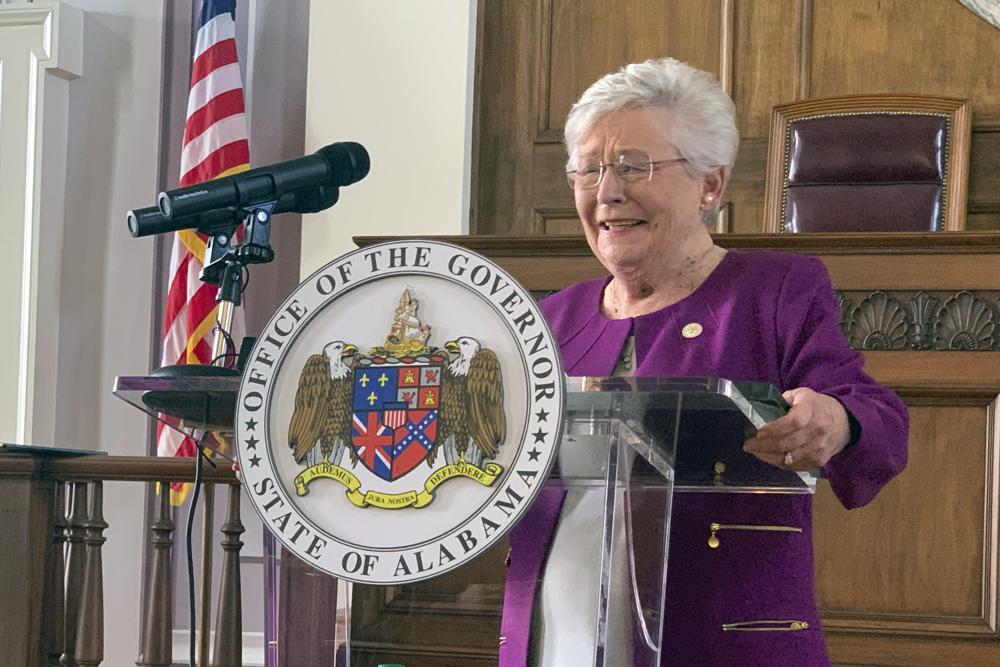
Alabama will become the latest state to allow people to carry concealed handguns without first undergoing a background check and getting a state permit. Alabama Gov. Kay Ivey signed the measure into law Thursday shortly after it was approved by state lawmakers. The new law, which takes effect January 1, will end the requirement for a person to get a concealed carry permit to carry a loaded handgun concealed under their clothes, in a car, or in a purse or bag. “Unlike states who are doing everything in their power to make it harder for law-abiding citizens, Alabama is reaffirming our commitment to defending our Second Amendment rights. I have always stood up for the rights of law-abiding gun owners, and I am proud to do that again today,” Ivey said in a statement. The legislation is championed by gun rights advocates who call it “constitutional carry,” in reference to the Second Amendment right to keep and bear arms. Opponents, including state sheriffs and others in law enforcement, said the permits help combat crime and enhance public safety. Paula Wilson, a volunteer with the Alabama chapter of Moms Demand Action, called the legislation “reckless” and said the politicians who supported it “have chosen the gun lobby over law enforcement and public safety.” “They want you to believe that they’re standing up for law-abiding gun owners, but don’t let them fool you. They’ve done the exact opposite — putting our families, communities, and first responders at greater risk,” Wilson said in a statement. There are 21 states that allow concealed weapons in public without a permit. The Alabama House of Representatives voted 70-29 for the bill approved by a conference committee. The Alabama Senate voted 24-6. “I don’t think that just because you own a firearm that you should have to pay a tax, or a fee, to carry it,” GOP Rep. Shane Stringer, the legislation’s sponsor, said. The bill does not do away with concealed carry permits, and Stringer said he thinks many people will still get them voluntarily. “You are making it easier for the lawless,” Rep. Thomas Jackson, a Democrat from Thomasville, told Stringer during the debate. Opponents have pointed to the state’s already high rate of gun violence. Alabama in 2020 had the country’s fifth-highest rate of gun-related deaths – including suicides and murders — with 1,141 deaths, according to numbers from the Centers for Disease Control and Prevention. The Alabama Sheriffs’ Association opposed the bill. During public hearings, law enforcement officials said the permits are a tool officers use daily to remove weapons from the hands of individuals who should not have them in the first place. A new state database is under development to help officers flag people who are prohibited from possessing a handgun. Stringer, a former captain in the Mobile County sheriff’s department, said he believes that will be a better system to catch people who should not have handguns. The president of the Alabama Sheriffs’ Association has said he does not think the database will effectively replace the safety checks provided by the permits because of inevitable gaps in data collection. Lawmakers made several changes to the bill to try to alleviate some of law enforcement’s concerns. During a traffic stop or other investigation, an officer who has a reasonable suspicion that a person was about to engage in criminal conduct could temporarily take a handgun and run it through databases to see if the gun was stolen. The officer could also check the person’s criminal history. An officer could also temporarily take a weapon if a reasonable person would believe it is necessary for the safety of the officer or others, but it must be returned unless there is an arrest or the person is posing a safety threat. The legislation would steer up to $5 million in state funds to sheriffs’ offices to compensate for the funding loss from permit fees. Republished with the permission of the Associated Press.
Senate votes to allow concealed handguns without permit

The Alabama Senate approved legislation Thursday that would end the state’s requirement for a person to get a permit to carry a concealed handgun in public. Senators voted 23-6 for the House-passed bill. The legislation now returns to the House of Representatives where members will decide whether to accept minor Senate changes to the bill. The proposal is championed by gun rights advocates who call it “constitutional carry” and argue that people should not have to get a permit, which requires a background check and a fee, to carry a concealed handgun. Opponents, including state sheriffs and others in law enforcement, said the permits help combat crime and enhance public safety. “It wasn’t meant for us to pay a fee, or a dime, or anything to be able to arm ourselves to protect our families, our properties. It’s a right,” Republican Sen. Gerald Allen said in reference to the Second Amendment. Republicans, who hold a lopsided majority in the chamber, cut off debate after an hour and forced a vote on the bill. “We are fixing to open ourselves up to the wild, wild west,” Sen. Rodger Smitherman, a Democrat from Birmingham, said. “You are going to literally have conflicts settled in wide-open shootouts because everybody is going to have their gun on them.” Proponents of the bill noted there are 21 states that allow concealed weapons in public without a permit. Opponents pointed to the state’s already high rate of gun violence. Alabama in 2020 had the country’s fifth-highest rate of gun-related deaths – including suicides and murders — with 1,141 deaths, according to numbers from the Centers for Disease Control and Prevention. “We’ve got a war going on right here in Alabama, and we want to add fuel to the fire,” Sen. Linda Coleman-Madison, a Democrat from Birmingham, said. Democratic Sen. Bobby Singleton of Greensboro, accused Republicans of kowtowing to political pressure from groups like the National Rifle Association. “The conservative party of the state of Alabama wants to defund the police … You are taking tools out of the toolbox to be able to protect citizens,” Singleton said. Permit fees have gone to sheriffs’ offices. One Senate change to the bill would steer $5 million in state funds to sheriffs’ offices to compensate for the funding loss. But Singleton said that would take money from other state needs. Alabama currently requires people to get a concealed carry permit, which requires a background check, to carry a handgun under their clothes or in a purse or bag when they go in public. The bill, sponsored by Republican Rep. Shane Stringer of Citronelle, would do away with the requirement, although people could still choose to get a permit if they wanted. It would also do away with the current requirement for people without concealed carry permits to keep handguns unloaded and secured when driving. The House of Representatives could give the legislation final approval as soon as next week. Proponents of the bill said the Alabama Law Enforcement Agency is developing a database, authorized by existing state law creating a lifetime concealed carry permit option, that officers will be able to use to flag people not legally entitled to carry a handgun. The president of the Alabama Sheriffs’ Association has said he does not think the database will effectively replace the safety checks provided by the permits. Amanda Wasden, a spokesperson for the Alabama Law Enforcement Agency, said the agency hopes to have the database operational by October 1. Republished with the permission of the Associated Press.
Bill advances to allow concealed handguns without permit
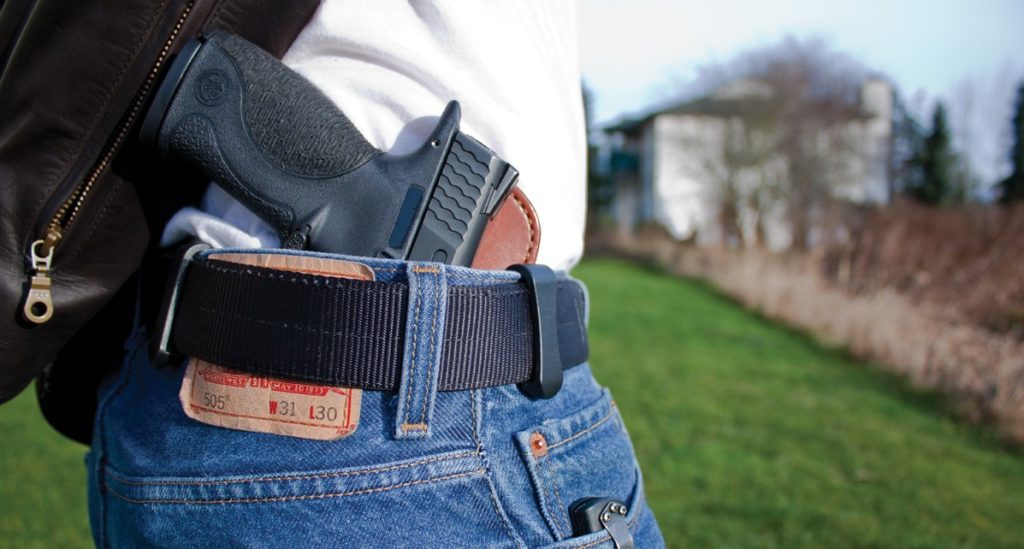
Alabama lawmakers advanced legislation Wednesday that would end the requirement for a person to get a permit to carry a concealed handgun in public. The Senate Judiciary Committee approved the House-passed bill, which now moves to the Alabama Senate. Gun rights advocates have championed the proposal they call “constitutional carry.” They argue that people should not have to get a permit, which requires a background check and paying a fee, to carry a handgun they legally own. Many state sheriffs and other law enforcement officials have opposed the legislation, arguing the permits provide a crucial tool to combat crime and enhance public safety. Republican Rep. Shane Stringer, the sponsor of the bill, said people “shouldn’t have to get permission to carry” a legally owned handgun. “House Bill 272 simply allows law-abiding citizens that are legally able to own a firearm to carry that gun concealed or on or about their persons or in their vehicle without a permit,” Stringer, a former captain with the Mobile County sheriff’s office, told the committee. Law enforcement officials spoke against the bill in a public hearing “I assure you, it would take away some of our ability to protect our communities with a tool that effectively removes weapons from the hands of criminals,” Lee County Sheriff Jay Jones, the current president of the Alabama Sheriffs’ Association, told the committee. Alabama currently requires people to get a concealed carry permit, which requires a background check, to carry a handgun under their clothes or in a purse or bag when they go in public. The bill would do away with the requirement, but people could still choose to get a permit if they wanted. It would also do away with the current requirement for people without concealed carry permits to keep handguns unloaded and secured when driving. There are 21 states that allow concealed weapons in public without a permit, according to Stateline, an initiative of the Pew Charitable Trusts. “In the 21 states that have passed this legislation, there’s been absolutely no increase in crime or decrease in officer safety as associated with the law. That will remain the same here in Alabama,” Art Thomm, state director for the National Rifle Association, told the committee. A Democratic member of the committee, who recently had her home shot into 23 times, questioned the assertion that there would be no impact on crime. “It’s already like a wild, wild west. And I can just only imagine that this is going to help it escalate somewhat because people are going feel more brazen,” said Sen. Vivian Davis Figures, a Democrat from Mobile. Proponents of the bill said the Alabama Law Enforcement Agency is developing a database, authorized by a state law creating a lifetime concealed carry permit option, that officers will be able to use to flag people not legally entitled to carry a handgun. Stringer maintained that will be a better tool for law enforcement officers to remove guns from people who can not legally possess them. The database is not operational yet. Jones said that while the idea of the database is good, he believes it will have inevitable gaps in data. Amanda Wasden, a spokeswoman for the Alabama Law Enforcement Agency, said the database is currently in the developmental phase. She said the testing phase will begin in August, and the agency has a goal of having it fully operational by Oct. 1 as the law requires. Republished with the permission of the Associated Press.
House votes to allow concealed handguns without permit

The Alabama House of Representatives on Tuesday approved legislation ending the requirement for a person to get a permit in order to carry a concealed handgun in public. Lawmakers voted 65-37 for the bill after Republicans in the chamber limited debate to two hours. The bill now moves to the Alabama Senate. Gun rights advocates have championed the proposal they call “constitutional carry,” arguing that people should not have to get a permit, which requires a background check and paying a fee, to carry a handgun they legally own. Many state sheriffs and other law enforcement officials have opposed the legislation, arguing the permits provide a crucial tool to combat crime and enhance public safety. “This bill does not change who can and cannot carry a gun. The people that are prohibited now will still be prohibited,” Republican Rep. Shane Stringer of Citronelle said of his bill. Stringer, a former law enforcement officer, disputed arguments that the permits enhance public safety. “The fact of the matter is, criminals don’t obey laws. This $20 piece of plastic, a permit, is not going to stop an evil person from committing a crime or doing wrong and it will not protect our law enforcement from getting hurt or killed.” Alabama currently requires people to get a concealed carry permit, which requires a background check, to carry a handgun under their clothes or in a purse or bag when they go in public. The bill would do away with the requirement, but people could still choose to get a permit if they wanted. It would also do away with the current requirement for people without concealed carry permits to keep handguns unloaded and secured when driving. Rep. Pebblin Warren, a Democrat who represents Tuskegee, said the change will encourage young people to “just go wild in the street with guns.” “We’re opening the door to really encourage violence,” Warren said. Warren, the wife of a former state sheriff, read a letter from Montgomery County Sheriff Derrick Cunningham, who now heads the Alabama Sheriffs Association, opposing passage of the bill. Republican Rep. Allen Farley, a retired assistant sheriff and the only Republican to vote against the bill in committee, said the permits are a tool “for us to catch those people who should not have a firearm.” Farley said the permit fees help fund small sheriffs’ offices and that the arrests for permit violations have led to seizures of drugs and the solving of crimes. “Why are we making the thin blue line in Alabama thinner?” Farley said. There are 21 states that allow concealed weapons in public without a permit, according to Stateline, an initiative of the Pew Charitable Trusts. Proponents of the bill said the Alabama Law Enforcement Agency is developing a database, authorized by a state law creating a lifetime concealed carry permit option, that officers will be able to use to flag people not legally entitled to carry a handgun. Stringer maintained that will be a better tool for law enforcement officers to remove guns from people who can not legally possess them. Lee County Sheriff Jay Jones last week said the intent of the database is good but said he did not think it could take the place of permits because there will be inevitable gaps in collecting data. Republished with the permission of the Associated Press.
Bill advances to allow concealed handguns without permit
Alabama lawmakers on Wednesday advanced legislation that would do away with the requirement for a person to get a permit to carry a concealed handgun in public. A divided House Public Safety Committee on Wednesday approved a bill that would do away with the current permit requirement for a person who carries a handgun under their clothes or in a purse or bag when they go in public. It would also do away with the current requirement for people without concealed carry permits to keep handguns unloaded and secured when driving. The proposal now moves to the full Alabama House. Similar legislation is pending in the Senate. State sheriffs and other law enforcement officials have opposed the legislation, arguing that the permits provide a crucial tool to combat crime and enhance public safety. The bill has been championed by gun-rights groups who argue that people shouldn’t have to get a permit, which requires paying a fee, to carry a handgun they legally own. “This bill gives law-abiding citizens, that are able to own a firearm, the ability to carry that firearm concealed, or in their car, for their protection. It’s not very complicated. It doesn’t change who can or cannot carry, and it does not change where you can or cannot carry. It only addresses the permit itself,” Republican Rep. Shane Stringer of Citronelle said of his legislation. There are 21 states that allow concealed weapons in public without a permit, according to Stateline, an initiative of the Pew Charitable Trusts. Several sheriffs and other law enforcement officials attended the committee meeting at the Alabama Statehouse to oppose the bill. “We are opposed to the bill because we know how unsafe it makes the community,” Jefferson County Sheriff Mark Pettway told reporters after the vote. “It’s going to allow more guns to be on the street. We do not need more guns on the street,” Pettway said. Lee County Sheriff Jay Jones, the incoming president of the Alabama Sheriffs Association, said the permits are a tool that officers use daily to remove “weapons from the hands of individuals who should not have them in the first place.” “We’re able in using the permit requirement — using that as a tool — to remove that weapon from that individual’s hands and take that individual into custody. And a lot of times that we’ll uncover evidence of other crimes as well, burglaries, thefts, and even homicides and assaults,” Jones said. Republican Rep. Allen Farley, a retired assistant sheriff from McCalla, said the fees from the permits help sheriffs buy bulletproof vests, put resource officers in schools and carry out other law enforcement functions. “Let’s be serious. What we are doing here is defunding the police,” Farley said. Similar bills have been introduced unsuccessfully in Montgomery for at least the last five years. However, the House Republican Caucus this year has backed the legislation as an agenda item. Proponents said the Alabama Law Enforcement Agency is developing a database, authorized by a state law creating a lifetime concealed carry permit option, that officers can use to flag people not legally entitled to carry a handgun. Jones said the intent is good but said he didn’t think that would be effective because of the inherent gaps in collecting data. Stringer, a former captain with the Mobile County sheriff’s office, has disputed the value of the permits in stopping crime. “A $20 piece of plastic is not going to stop an evil-hearted person,” Stringer said. Jones said after the meeting that he agrees that criminals won’t obey the law but said the current permit requirement “helps us” bring those criminals to justice. Republished with the permission of the Associated Press.
Lawmakers advance bill on permitless carry
Alabama lawmakers on Wednesday advanced legislation to end the requirement to get a permit to carry a concealed handgun in public. The Senate Judiciary Committee voted 6-4 for the legislation. The bill now moves to the full Alabama Senate. House Republicans have named the bill a priority for the year, but the committee approval came over the objections of law enforcement officials who spoke against it. The legislation, sponsored by Republican Sen. Gerald Allen of Tuscaloosa, would end the requirement to obtain a permit to carry a concealed handgun although people could still get one if they choose. Rep. Shane Stringer, a Republican from Citronelle, has filed similar legislation in the House of Representatives. The proposal, as it has in past years, drew opposition from law enforcement officers during a public hearing Wednesday. Lee County Sheriff Jay Jones told the committee that the bill would take away a valuable tool for law enforcement officers to remove stolen weapons from the streets and to solve and prevent crimes. Edward Delmore, the chief of police for the Gulf Shores Police Department, said officers can now ask a person if they have a permit when they encounter a gun. Delmore said Oklahoma City bomber Timothy McVeigh was initially arrested for carrying a concealed weapon without a permit after a trooper noticed the gun during a traffic stop. “If you pass this, that arrest would not have happened in the same situation here,” he said. Representatives from gun rights groups, including the National Rifle Association, urged lawmakers to advance the bill, arguing that 21 states allow concealed carry without a permit. They argued Alabama already allows open carry— meaning that a person can legally carry a non-concealed handgun — and that it doesn’t make sense to require a permit if the person puts on a jacket or gets in a car. “As an elected official who swore to uphold the constitutions of this state and country, I will always do everything in my power to preserve the rights of Alabamians, especially those granted by the Second Amendment,” Allen said in a statement, commenting on committee passage. Democrats on the committee voted against the legislation. “A life is a way more important than the inconvenience of somebody having to get a permit to carry a gun,” Democratic Sen. Rodger Smitherman of Birmingham said. The bill has been introduced for several years without success, but House Republicans have named the bill a priority for the year. Republished with the permission of the Associated Press.
Shane Stringer & John R. Lott, Jr.: Constitutional carry gun rights legislation in Alabama
Gun-control advocates keep making the same predictions of doom and bloodshed from law-abiding citizens having guns for protection. They warn us of pending disaster if Alabama becomes the 22nd state to adopt so-called constitutional carry rules that would allow law-abiding adults who legally own a handgun to conceal-carry it without a permit. Thirty-four states already allow open carry without a permit. Alabama and other states faced the same predictions of disaster when they first adopted right-to-carry laws, which now exist in 43 states. None of the dire predictions came true. These predictions are occurring again when states adopted Constitutional carry. But not a single one of these states has seen the need to reverse the laws. Indeed, none have even held a legislative hearing on undoing these laws, let alone a vote. Much will remain unchanged with Constitutional carry. Businesses and private property owners still have the right to exclude guns from their premises. Prohibitions remain in sensitive places, and laws about gun misuse are unchanged. Alabamians must still be able to legally own a gun to carry it. The most significant change from constitutional carry is how quickly people can carry a gun if needed. Right now, it takes about a month for Alabama to issue a concealed handgun permit after someone has met the requirements. If a woman is being stalked or threatened, the harm from that threat may have already occurred well before a month is up. To make matters worse, during the coronavirus outbreak, getting permits was delayed up to three months. Under Constitutional carry, that woman won’t have to wait for a license. And Constitutional carry will save Alabamians the cost of obtaining a license, which runs $100 for five years. These costs matter; just compare the numbers in neighboring states, Illinois and Indiana. In Illinois, the total cost of getting a five-year permit is $450; there is no license fee in Indiana. While only 4% of Illinoisans have a concealed handgun permit, 22% of adults in Indiana already have one, the second-highest number of permits per capita. More importantly, the people who benefit the most from carrying are the most likely victims of violent crime, overwhelmingly poor blacks who live in high-crime urban areas. They are also the most sensitive to the fees required to get a permit. In Illinois, wealthy white males who live in the suburbs are overwhelmingly the ones who get permits. In Indiana, people living in urban, heavily minority zip codes get many more permits. Some opposition to Constitutional Carry is ironic. While some of the same people oppose even free voter IDs as imposing too much of a burden, they have no problem with people paying over $100 to have the right to defend themselves and their families. They demand same-day registration for voting, saying people can’t plan ahead, but they have no problem making people wait weeks to get a carry permit. One concern involves the bill’s potential financial impact; Alabama could lose the money it collects through permit fees. But in practice, states that adopt constitutional carry have seen very little change in the number of permits. People still get permits to travel with their guns to states without constitutional carry. Gun control advocates claimed there would be blood in the streets when then-Gov. Guy Hunt signed Alabama’s concealed carry law in 1990. That didn’t happen. The fact that several dozen peer-reviewed academic studies show there’s no evidence of any uptick in gun crimes linked to concealed carry laws, and most show violent crime declines. Research also shows that murder rates fall even more when states move to Constitutional Carry laws. When PoliceOne asked its 450,000 law enforcement members about the effects of private gun ownership, 76% of officers answered that legally armed citizens are either very or extremely important in reducing crime. Today, there are over 21.5 million concealed handgun permit holders nationwide. Permit holders nationwide are incredibly law-abiding. Police officers are extremely rarely convicted of firearms-related violations, but it still happens at a rate twelve times more often than for permit holders. In the 19 states with comprehensive permit revocation data, the average revocation rate is one-tenth of one percent. Usually, permit revocations occur because someone moved or died or forgot to bring their permit while carrying. Gun control advocates keep trying to take advantage of people’s fears of the unknown and claim that bad things will happen when people are allowed to defend themselves and their families. But Alabamians don’t have to guess what will happen with Constitutional carry. Twenty-one states are proof that Constitutional carry is common sense. Shane Stringer is a state representative for District 102 and is the sponsor of the state’s Concealed Carry bill. John Lott is the president of the Crime Prevention Research Center.
Alabama Sheriffs Association comes under fire for opposition of new gun legislation
Alabama Sheriffs Association (ASA) director Robert ‘Bobby’ Timmons is coming under fire for his recent commentary on the new constitutional carry bills that have been set for debate in the Alabama legislature this year. There are currently three bills that have been pre-filed in the Alabama House and Senate that would legalize permitless or “Constitutional Carry” in the state. This means citizens would be able to legally carry handguns without having to purchase a permit from their local Sheriff’s office. In a recent 1819 report, Timmons was asked about his views on the Second Amendment, and Timmons commented that he believes that the amendment wasn’t meant to allow citizens to carry a concealed weapon. He believes the Second Amendment was written to allow citizens to defend their homes. When asked if ASA would support amending the Constitution to limit the Second Amendment to only allowing firearms for the defense of a person’s home, Timmons told 1819, “Oh yeah. I’d be in favor of that. But, I mean, it would never get passed.” Timmons argued that gun permits are a matter of public safety. He commented, “Absolutely without question for public safety just like a driver’s license, you need a driver’s license. If you don’t have a license, you can’t drive. If you don’t have a permit, you can’t carry a concealed gun.” When asked if permits were a revenue stream for Alabama Sheriffs, Timmons agreed, stating, “It buys ammo, vehicles, and bulletproof vests. If you get rid of the permits, the taxpayers will have to pick up the bill.” The National Association for Gun Rights (NAGR) has criticized the ASA for its opposition to Constitutional carry. Shane Stringer introduced one of the bills currently being considered. Stringer argued that some sheriffs are trying to hold onto the fees, but said people shouldn’t have to pay to exercise a constitutional right. “I don’t think we should be taxing people for carrying a gun,” Stringer said. “I am a firm believer that law-abiding citizens should not be punished and forced to get a permit to carry a firearm when the criminal element is not.”
Conservative groups hold Welcome Back Rally at Statehouse today

Conservative groups around the state will hold their 11th Annual Welcome Back Rally today at the Statehouse. The event starts at 12:15 pm. The Common Sense Campaign, Eagle Forum, and HealthFreedom Alabama are sponsoring the rally. The Facebook event page stated, “We want the Legislators to not only see a big crowd of motivated voters, but we want you to go see your House and Senate members and lobby them to support some critical bills.” The Common Sense Campaign Tea Party President will open the rally, and pastor Dr. Terry Batton will give the invocation. State auditor Jim Zeigler will speak at 12:15 p.m. His address will be about Gov. Kay Ivey’s state of the state address. State House Rep. Bob Fincher will discuss replacing Common Core, and Rep. Shane Stringer will discuss repealing current conceal and carry legislation. Below is a tentative schedule: 12:14-Dr. Lou Campomenosi, President, Common Sense Campaign Tea Party, calls everyone to order Invocation: Pastor, Dr. Terry Batton, President, Barbour County, Taxed Enough Already Tea Party;Common Sense Campaign member Ms. Janet Taverna in period costume as Georgette Washington. 12:20-Key Note Speaker: State Auditor, Mr. Jim Zeigler,” Reply to Gov Ivey’s “State of the State Address” 12:30-State House Representative Bob Fincher, “Replacing Common Core–A Moral Imperative Now with Alabama at the Bottom of NAEP” 12:34-State House Representative Shane Stringer, “It’s Time for Constitutional Carry to Pass” 12:38–Ms. Becky Gerritson, Executive Director, Eagle Forum, Alabama, ” Pass VCAP to Protect our Children!” 12:42-Dr. Robin Litaker, Retired School Principal and Former Alabama Teacher of the Year, “Recovering From Common Core–The Way Forward” 12:46-Ms. Kim Harris, President, Baldwin Cty ‘Bama Carry, “Grassroots Support for Constitutional Carry” 12:50-Mr. Charlie Wycoff, President, ‘Bama Carry of Mobile 2:54-Dr. Lou Campomenosi, “What Will It Take for Gov Ivey to Replace Common Core?” 12:57-Dr. Lou Campomenosi, Closing remarks. Benediction, Pastor, Dr. Terry Batton
