
UAW workers reject proposal; nearly 4,000 go on strike against Mack Trucks
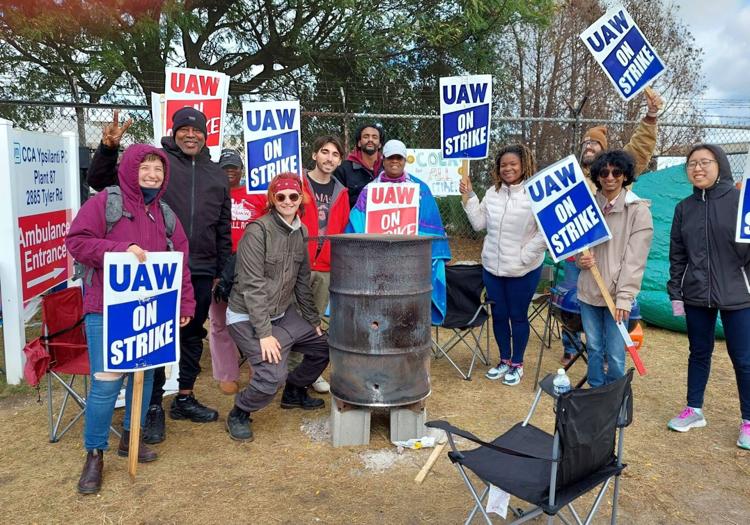
By Scott McClallen | The Center Square The United Auto Workers Union rejected a proposed contract by a 73% “no” vote and swore to strike Volvo-Group-owned Mack Trucks in three states beginning Monday morning. The UAW voted against ratification of a new five-year collective bargaining agreement covering about 3,900 employees in Pennsylvania, Maryland, and Florida. “I’m inspired to see UAW members at Mack holding out for a better deal, and ready to stand up and walk off the job to win it,” UAW President Shawn Fain said in a statement. Mack Trucks President Stephen Roy said he was “surprised and disappointed” over the strike that was nearly averted by the groups reaching a “tentative agreement” last week. “We are surprised and disappointed that the UAW has chosen to strike, which we feel is unnecessary,” Roy said in a statement. “We clearly demonstrated our commitment to good faith bargaining by arriving at a tentative agreement that was endorsed by both the International UAW and the UAW Mack Truck Council.” Mack Trucks said the tentative agreement included a 10% general wage increase in year one for all employees, a compounded 20% increase to general wages over five years, and a guarantee of no increases in health insurance premiums through the term of the contract. “The UAW called our tentative agreement ‘a record contract for the Heavy Truck industry,’ and we trust that other stakeholders also appreciate that our market, business, and competitive set are very different from those of the passenger car makers,” Roy said. UAW members have been striking against Ford, Stellantis, and General Motors for about 25 days, seeking better wages and benefits. About 25,000 workers are striking nationwide. The letter to Mack Trucks read in part, “The Union remains committed to exploring all options for reaching an agreement, but clearly we are not there yet. As you know, many topics remain at issue, including: wage increases, cost of living allowances, job security, wage progression, skilled trades, shift premium, holiday schedules, work schedules, health and safety, seniority, pension, 401(k), health care and prescription drug coverage, and overtime.” “We are confident that we can secure a fair contract that reflects our members’ sacrifice and contribution to Mack Trucks.” Mack Trucks said it is “committed” to the bargaining process. “We are committed to the collective bargaining process, and remain confident that we will be able to arrive at an agreement that delivers competitive wages and benefits for our employees and their families, while safeguarding our future as a competitive company and stable long-term employer,” Roy said in a statement. “We look forward to returning to negotiations as soon as possible.” Republished with the permission of The Center Square.
UAW strike against Stellantis, General Motors expands to 38 locations
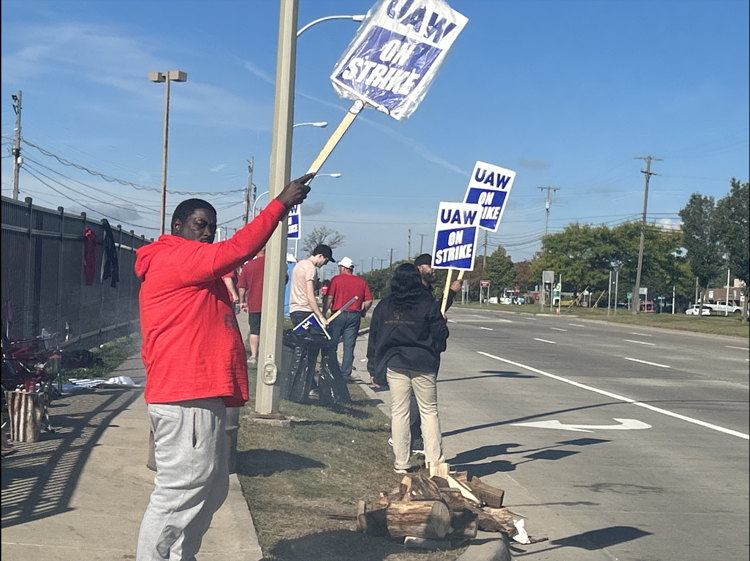
By Scott McClallen | The Center Square The United Auto Workers on Friday at noon expanded its strike against the Big Three automakers to 38 locations at General Motors and Stellantis. After failing to achieve significant progress at the bargaining table, UAW President Shawn Fain called on more workers to strike nationwide. “As expected, we’re planning to stand up strike in response to the lack of progress in bargaining with GM and Stellantis,” Fain said in a livestream video. “We will shut down parts distribution until those two companies come to their senses.” The 38 new parts and distribution facilities covering 20 states include Michigan, Ohio, Wisconsin, Minnesota, Colorado, Illinois, Nevada, Oregon, Georgia, Virginia, Florida, New York, Massachusetts, California, Kentucky, Texas, West Virginia, Mississippi, North Carolina, Tennessee and Pennsylvania. It adds 5,600 workers to the original 12,700 that walked out earlier this week. Friday marks Day 7 of the UAW strike, which includes 1,400 members striking Blue Cross Blue Shield of Michigan, seeking to eliminate pay tiers. The UAW initially sought wage increases of as much as 46% over four years, cost-of-living adjustments, pensions and retiree health care for all workers, and a 32-hour work week paid as 40 hours. The UAW spared Ford from more strikes, citing increased progress in bargaining, such as reinstating the cost of living adjustments suspended in 2009, the immediate conversion of all temporary employees with at least 90 days of employment upon ratification, and an enhanced profit-sharing formula. Fain said the UAW is focused on moving companies at the bargaining table. “That means maintaining our flexibility and our leverage to escalate as we need to,” Fain said. “We can and will go all out if our national leadership decides the companies aren’t willing to move,” Fain said. The UAW started the strike targeting facilities – one each in Michigan, Ohio, and Missouri – totaling 12,700 workers across all original equipment manufacturers instead of stopping work for all 146,000 UAW workers under the Big Three, which would deplete its roughly $825 million strike fund. Fitch Ratings anticipates the UAW strike will have minimal near-term credit implications on U.S. states affected by the strike. Fitch said the affected states and automakers have enough cash to withstand a labor stoppage between two and three months. The U.S. states with the most striking workers and facilities are Illinois, Indiana, Kansas, Kentucky, Michigan, Missouri, New York, Ohio, Tennessee and Texas. A University of Michigan Research Seminar in Quantitative Economics forecast estimated that Michigan could absorb roughly $180 million of tax revenue losses resulting from a 10-week strike involving all UAW members across OEM without credit deterioration. Republished with the permission of The Center Square.
