
Donald Trump arrives in Singapore for Tuesday’s summit with North Korea’s Kim Jong Un
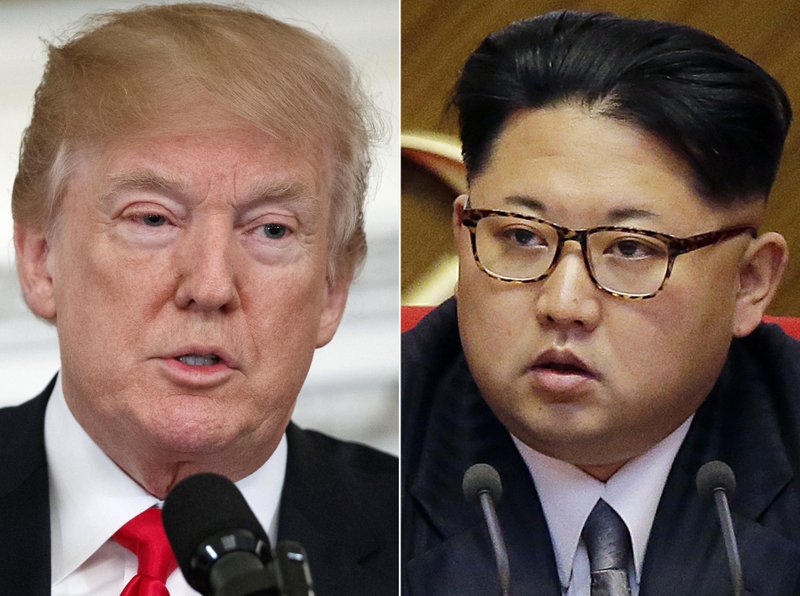
President Donald Trump arrives in Singapore for Tuesday’s summit with North Korea’s Kim Jong Un.
U.S. hopes North Korea will become close partner, Mike Pompeo says
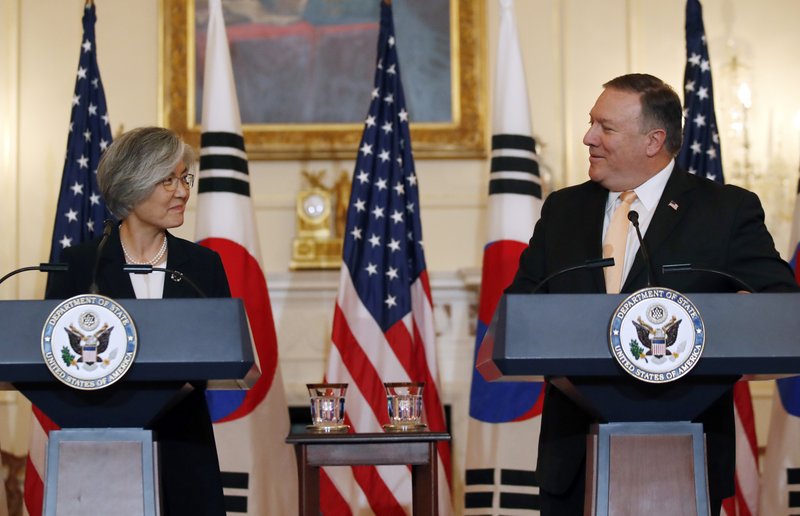
The United States aspires to have North Korea as a “close partner” and not an enemy, Secretary of State Mike Pompeo said, noting that the U.S. has often in history become good friends with former adversaries. Pompeo said he had told North Korean leader Kim Jong Un of that hope during his brief visit to Pyongyang earlier this week, during which he finalized details of the June 12 summit between Kim and President Donald Trump and secured the release of three Americans imprisoned in the country. He said his talks with Kim on Wednesday had been “warm,” ″constructive” and “good” and that he made clear that if North Korea gets rid of its nuclear weapons in a permanent and verifiable way, the U.S. is willing to help the impoverished nation boost its economy and living stands to levels like those in prosperous South Korea. “We had good conversations about the histories of our two nations, the challenges that we have had between us,” Pompeo told reporters at a news conference Friday with South Korea’s visiting foreign minister, Kang Kyung-wha. “We talked about the fact that America has often in history had adversaries who we are now close partners with and our hope that we could achieve the same with respect to North Korea.” He did not mention other adversaries by name, but Pompeo and others have often noted that the U.S. played a major role in rebuilding Japan and the European axis powers in the wake of World War II. With U.S. help, those countries recovered from the devastation of conflict. “If North Korea takes bold action to quickly denuclearize, the United States is prepared to work with North Korea to achieve prosperity on the par with our South Korean friends,” he said. Kang praised the upcoming meeting between Trump and Kim in Singapore as an “historic” opportunity, but added a few notes of skepticism as well. Amid concerns that North Korea will demand the U.S. withdraw its troops from neighboring South Korea, Kang emphasized that the U.S. military presence there must be “a matter for the U.S.-ROK alliance first and foremost,” using an acronym for South Korea’s official name, the Republic of Korea. She said the U.S. troop presence in the South for the past 65 years has played a “crucial role for deterrence,” peace and stability on the Korean peninsula. Therefore, she said, any change in the size of the U.S. forces in South Korea should not be on the table at the summit. “The next few weeks will be critical, requiring air-tight coordination between our two countries,” Kang said, noting that South Korean President Moon Jae-in would be in Washington to see Trump later this month. Since Trump announced plans to hold a summit with Kim, questions have been raised continually about whether the two leaders have the same objective in mind when they speak about “denuclearization.” To the U.S., that means the North giving up the nuclear weapons it has already built. But North Korea has said it’s willing to talk now because it’s already succeeded in becoming a nuclear-armed state, fueling skepticism that the North would truly be willing to give those weapons up. Pompeo said there would need to be “complete” and “verifiable” denuclearization that would remove North Korea as a threat to the South, the United States and the rest of the world. He said a major inspection and monitoring regime would be required to ensure the North’s compliance. “I think there is complete agreement about what the ultimate objectives are,” Pompeo said, though he declined to offer more detail. Republished with the permission of the Associated Press.
Obama’s trade agenda draws GOP support in U.S. House
Legislation to strengthen President Barack Obama‘s hand for a new round of trade deals advanced Thursday in the U.S. House of Representatives courtesy of Republicans and over the protests of Democrats, a political role reversal that portends a bruising struggle over passage later this spring. The vote was 25-13 in the House Ways and Means Committee as pro-business Republicans outpolled labor-aligned Democrats. It was the second straight day the GOP-controlled Congress voted handed Obama a victory on trade. The Senate Finance Committee approved a nearly identical bill Thursday night that would allow lawmakers to vote yes or no without making changes in trade deals, like the one now taking shape among Pacific Rim trading partners. “They’re waiting for this to put their best offers on the table,” Republican U.S. Rep. Paul Ryan of Wisconsin, the House committee chairman, said of negotiating partners that include Japan, Singapore, Chile and Peru. The president put in a plug for the legislation while speaking dismissively of its critics. “When people say this trade deal is bad for working families, they don’t know what they’re talking about,” Obama told activists and donors with Organizing for Action, a group with roots in his presidential campaigns. Democrats said the legislation didn’t go far enough to assure labor standards and environmental protections strong enough to avoid placing American companies at a disadvantage, and said failure to prohibit currency manipulation abroad would cost U.S. workers their jobs. “Currency manipulation has caused more job loss than anything else connected to trade,” said Rep. Sander Levin of Michigan, the senior Democrat on the panel. But the Democrats’ attempt to substitute their own legislation — weakening Obama’s powers — was ruled out of order by Republicans on grounds that it exceeded the committee’s jurisdiction. As a result, no vote was taken on it. It would have set up a congressional committee with authority to decide if any trade deal had met negotiating objectives, taking the power away from Obama. Unlike the White House-backed measure, it would only have applied to the Trans-Pacific Partnership talks, and not to other possible deals over the next six years. In addition to trade talks involving countries bordering the Pacific, the administration is involved in negotiations toward a TransAtlantic Trade and Investment Partnership with the European Union and a Trade in Services Agreement with dozens of countries. Trade legislation is a perennial political irritant for Democrats, never more than now, given the post-recession political fault lines that have developed on the issue of income disparity. Democratic U.S. Rep. Nancy Pelosi of California, the party’s leader in the House, declined to say whether she supports the legislation. At a news conference, she said: “At the end of the day, you weigh the equities. Is this better than the status quo? How much better? Or is it a wasted opportunity? And right now, I’m disappointed.” She suggested that if the White House and Republicans fail to produce a majority for the measure, it would increase Democratic leverage to seek changes. Former Secretary of State Hillary Rodham Clinton, campaigning for the Democratic presidential nomination this week in New Hampshire, similarly declined to state a position. Some Democrats have been far less reluctant, though. Democratic U.S. Sen. Elizabeth Warren of Massachusetts, a persistent critic of large corporations, has engaged in something of a long-range debate with Obama over the subject in recent days. The House legislation is nearly identical to a bill that cleared the Senate Finance Committee on a bipartisan 20-6 vote. Seven of that panel’s 13 Democrats supported the bill. Sen. Richard Burr of North Carolina was the only Republican to oppose it. In the House committee, all Republicans joined with Democratic Reps. Earl Blumenauer of Oregon and Ron Kind of Wisconsin in supporting the bill. Republished with permission of The Associated Press.
