
Social Security checks getting big boost as inflation rises
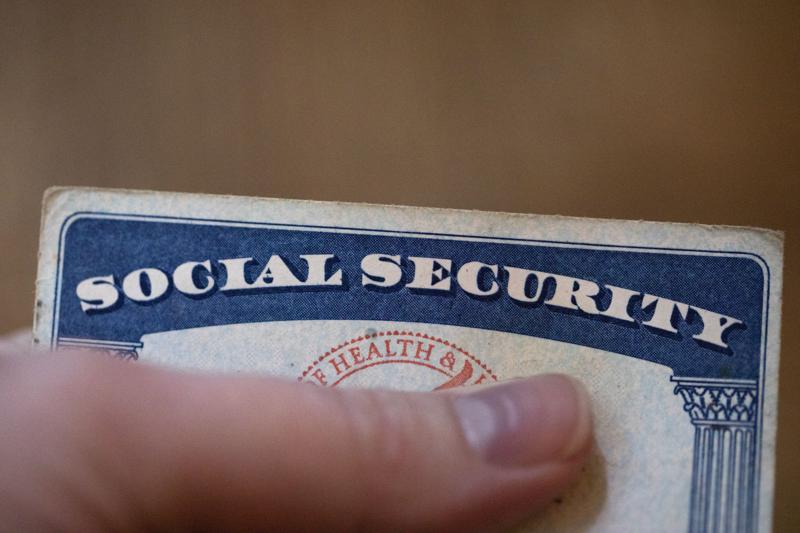
Millions of retirees on Social Security will get a 5.9% boost in benefits for 2022. The biggest cost-of-living adjustment in 39 years follows a burst in inflation as the economy struggles to shake off the drag of the coronavirus pandemic. The COLA, as it’s commonly called, amounts to an added $92 a month for the average retired worker, according to estimates Wednesday from the Social Security Administration. It’s an abrupt break from a long lull in inflation that saw cost-of-living adjustments averaging just 1.65% a year over the past 10 years. With the increase, the estimated average Social Security payment for a retired worker will be $1,657 a month next year. A typical couple’s benefits would rise by $154 to $2,753 per month. But that’s just to help make up for rising costs that recipients are already paying for food, gasoline, and other goods and services. “It goes pretty quickly,” retiree Cliff Rumsey said of the cost-of-living increases. After a career in sales for a leading steel manufacturer, Rumsey lives near Hilton Head Island, South Carolina. He cares at home for his wife of nearly 60 years, Judy, who has advanced Alzheimer’s disease. Since the coronavirus pandemic, Rumsey said he has also noted price increases for wages paid to caregivers who occasionally spell him and for personal care products for Judy. The COLA affects household budgets for about 1 in 5 Americans. That includes Social Security recipients, disabled veterans, and federal retirees, nearly 70 million people in all. For baby boomers who embarked on retirement within the past 15 years, it will be the biggest increase they’ve seen. Among them is Kitty Ruderman of Queens in New York City, who retired from a career as an executive assistant and has been collecting Social Security for about 10 years. “We wait to hear every year what the increase is going to be, and every year it’s been so insignificant,” she said. “This year, thank goodness, it will make a difference.” Ruderman says she times her grocery shopping to take advantage of midweek senior citizen discounts, but even so, price hikes have been “extreme.” She says she doesn’t think she can afford a medication that her doctor has recommended. AARP CEO Jo Ann Jenkins called the government payout increase “crucial for Social Security beneficiaries and their families as they try to keep up with rising costs.” Policymakers say the adjustment is a safeguard to protect Social Security benefits against the loss of purchasing power and not a pay bump for retirees. About half of seniors live in households where Social Security provides at least 50% of their income, and one-quarter rely on their monthly payment for all or nearly all their income. “You never want to minimize the importance of the COLA,” said retirement policy expert Charles Blahous, a former public trustee helping to oversee Social Security and Medicare finances. “What people are able to purchase is very profoundly affected by the number that comes out. We are talking the necessities of living in many cases.” This year’s Social Security trustees report amplified warnings about the long-range financial stability of the program. But there’s little talk about fixes in Congress, with lawmakers’ consumed by President Joe Biden’s massive domestic legislation and partisan machinations over the national debt. Social Security cannot be addressed through the budget reconciliation process Democrats are attempting to use to deliver Biden’s promises. Social Security’s turn will come, said Rep. John Larson, D-Conn., chairman of the House Social Security subcommittee and author of legislation to tackle shortfalls that would leave the program unable to pay full benefits in less than 15 years. His bill would raise payroll taxes while also changing the COLA formula to give more weight to health care expenses and other costs that weigh more heavily on the elderly. Larson said he intends to press ahead next year. “This one-time shot of COLA is not the antidote,” he said. Although Biden’s domestic package includes a major expansion of Medicare to cover dental, hearing, and vision care, Larson said he hears from constituents that seniors are feeling neglected by the Democrats. “In town halls and tele-town halls they’re saying, ‘We are really happy with what you did on the child tax credit, but what about us?’” Larson added. “In a midterm election, this is a very important constituency.” The COLA is only one part of the annual financial equation for seniors. An announcement about Medicare’s Part B premium they pay for outpatient care is expected soon. It’s usually an increase, so at least some of any Social Security raise gets eaten up by health care. The Part B premium is now $148.50 a month, and the Medicare trustees report estimated a $10 increase for 2022. Economist Marilyn Moon, who also served as public trustee for Social Security and Medicare, said she believes the current spurt of inflation will be temporary, due to highly unusual economic circumstances. “I would think there is going to be an increase this year that you won’t see reproduced in the future,” Moon said. But policymakers should not delay getting to work on retirement programs, she said. “We’re at a point in time where people don’t react to policy needs until there is a sense of desperation, and both Social Security and Medicare are programs that benefit from long-range planning rather short-range machinations,” she said. Social Security is financed by payroll taxes collected from workers and their employers. Each pays 6.2% on wages up to a cap, which is adjusted each year for inflation. Next year the maximum amount of earnings subject to Social Security payroll taxes will increase to $147,000. The financing scheme dates to the 1930s, the brainchild of President Franklin D. Roosevelt, who believed a payroll tax would foster among average Americans a sense of ownership that would protect the program from political interference. That argument still resonates. “Social Security is my lifeline,” said Ruderman, the New York retiree. “It’s what we’ve worked for.” Republished with the permission of the Associated Press.
Social Security and Medicare finances weakening

An unexpected weakening in the finances of Social Security and Medicare has raised concern about the bedrock programs for the middle class. The problems may only keep getting worse in a time of political tension and deep partisan divisions. Here are some questions and answers on an issue that ultimately will affect every American family and isn’t going away: WHAT’S NEW? The government’s annual Trustees Reports on the programs shows the financial condition of both worsening significantly since last year. The projected insolvency for Social Security stayed unchanged — in 2034 — but Medicare’s moved three years closer, to 2026. A more immediate warning signal caught the eye of experts. Both programs will start tapping their reserves this year, meaning that income from payroll taxes and interest earned by the Social Security and Medicare trust funds will no longer cover costs. That threshold was still a few years away in the 2017 checkup. “The near-term outlook in both programs got substantially worse,” said Republican economist Charles Blahous, a former public trustee helping to oversee program finances. “What is unusual in the space of one year is to go from something that isn’t supposed to happen for four or five years to something that’s happening right now.” As a result, Social Security and Medicare will need a $416 billion transfer from the government’s general revenues this year, when the federal deficit is shooting up due to tax cuts and increased spending. __ SHOULD WE BE WORRIED? “Yes,” said Leon Panetta, a Democratic elder statesman who held many government posts over a long career, from California congressman to White House budget director, defense secretary and CIA director. “What people have to worry about is that in a democracy we govern either by leadership or by crisis,” Panetta added. “What you are looking at right now is a situation where crisis is going to be driving decisions. Rather than fixing it today, which is what we should be doing, we’re simply going to postpone the day.” Panetta is co-chair of the Committee for a Responsible Federal Budget, a nonpartisan watchdog group. __ WHAT’S WRONG WITH WAITING? “A lot of people in Congress are focused on what’s going to happen tomorrow, not what’s going to happen in 2026,” observed Rep. Frank Pallone, D-N.J. But waiting in the context of Social Security and Medicare inflicts more pain, leading to bigger tax increases, benefit cuts as high as 20 percent, or some combination of both, as the programs slide deeper into the hole. Younger people, less likely to be following the debate, have the most to lose. “Really the system is fine for older people; it’s not fine for younger people,” said Robert Bixby of the Concord Coalition, a nonpartisan group that advocates better control of federal budgeting. “People under 50 are paying into a system that can’t afford to pay them the benefit it’s promising them, and I don’t think they realize it. The more we delay reforms, the more sudden and draconian they would be, especially for younger people.” __ WHAT ARE SOME POLICY OPTIONS? They boil down to tax increases and benefit cuts, with an effort to spare current retirees of modest means. Options for Social Security include lifting the limit on which payroll taxes are levied (now $128,400), reducing annual cost-of-living increases, raising the underlying payroll tax rate, changing the benefit formula, and raising the full retirement age (now gradually rising to 67). Options for Medicare include raising the eligibility age —now 65— to match Social Security’s, cutting payments to medical service providers, raising premiums for beneficiaries, and raising the payroll tax. Some groups are drawing a line against benefit cuts. “Core Medicare coverages which exist under current law should not be diminished for current or future beneficiaries,” said Judith Stein, head of the Center for Medicare Advocacy, which provides legal help to beneficiaries. “Until we actually try to negotiate Medicare drug prices, we are spending billions of dollars a year that could be saved for the program.” __ WHERE DO TRUMP AND LAWMAKERS STAND? Trump promised not to cut Social Security or Medicare, and Treasury Secretary Steven Mnuchin recently suggested that tax cuts, rolling back regulations, and better trade agreements could boost economic growth and help stabilize the programs. But nonpartisan government experts who produced the annual Social Security assessment don’t seem to be buying that, forecasting “sustained moderate economic growth.” Republicans in Congress are losing their most prominent advocate for overhauling benefit programs with the retirement of House Speaker Paul Ryan of Wisconsin. Their budget credibility is seen as damaged after passing major tax cuts and spending increases. Democrats want to expand social programs, not pare them back. Problem-solving is becoming a lost skill in Washington, said GOP economist Douglas Holtz-Eakin. “There used to be a playbook where the White House provided leadership and gave air cover to Congress to do hard things, so members could go home and defend their votes,” said Holtz-Eakin. “Maybe such a strategy is being hatched behind closed doors at the White House,” he added, but “to date, there is no evidence.” Republished with the permission of the Associated Press.
Trustees report warns Medicare, Social Security finances worsening
Medicare will run out of money sooner than expected, and Social Security’s financial problems can’t be ignored either, the government said Tuesday in a sobering checkup on programs vital to the middle class. The report from program trustees says Medicare will become insolvent in 2026 — three years earlier than previously forecast. Its giant trust fund for inpatient care won’t be able to fully cover projected medical bills starting at that point. The report says Social Security will become insolvent in 2034 — no change from the projection last year. The warning serves as a reminder of major issues still languishing while Washington plunges deeper into partisan strife. Because of the deterioration in Medicare’s finances, officials said the Trump administration will be required by law to send Congress a plan next year to address the problems, after the president’s budget is submitted. Treasury Secretary Steven Mnuchin said in a statement that there’s time to fix the problems. “The programs remain secure,” Mnuchin said. Medicare “is on track to meet its obligations to beneficiaries well into the next decade.” “However, certain long-term issues persist,” the statement added. “Lack-luster economic growth in previous years, coupled with an aging population, has contributed to the projected shortages for both Social Security and Medicare.” Social Security recipients are likely to see a cost of living increase of about 2.4 percent next year, said government number-crunchers who produced the report. That works out to about $31 a month. At the same time, the monthly Medicare “Part B” premium for outpatient care paid by most beneficiaries is projected to rise by about $1.50, to $135.50. Both the cost-of-living increase and the Medicare outpatient premium are not officially determined until later in the year, and the initial projections can change. More than 62 million retirees, disabled workers, spouses and surviving children receive Social Security benefits. The average monthly payment is $1,294 for all beneficiaries. Medicare provides health insurance for about 60 million people, most of whom are age 65 or older. Together the two programs have been credited with dramatically reducing poverty among older people and extending life expectancy for Americans. Financed with payroll taxes collected from workers and employers, Social Security and Medicare account for about 40 percent of government spending, excluding interest on the federal debt. But demands on both programs are increasing as America ages. Unless lawmakers act, both programs face the prospect of being unable to cover the full cost of promised benefits. With Social Security that could mean sharply reduced payments for retirees, many of whom are already on tight budgets. The report said the total annual cost of Social Security is projected to exceed total annual income in 2018 for the first time since the Reagan era, meaning the program will have to tap into reserves. For Medicare, insolvency would mean that hospitals, nursing homes and other providers of medical care would be paid only part of their agreed-upon fees. Medicare is widely seen as a more difficult problem that goes beyond the growing number of baby boomers retiring. It’s also the unpredictability of health care costs, which can be jolted by high-priced breakthrough cures, and which regularly outpace the overall rate of economic growth. The Cabinet secretaries for Treasury, Health and Human Services, and Labor usually participate in the annual release of the report, along with the Social Security commissioner, and take questions from reporters. None of those top officials was present Tuesday; an aide cited scheduling conflicts. The four top officials serve as the Social Security and Medicare trustees, along with two independent trustees who are supposed to represent the public. The public trustees are usually more candid, but those posts remain unfilled. President Donald Trump campaigned on a promise not to cut Social Security or Medicare, but he hasn’t offered a blueprint for either program. Democrats, meanwhile, want to extend the social safety net by spending more on health care and education. Advocates for the elderly said Tuesday there should be no cuts to Social Security benefits. But federal deficits keep rising, and the recent Republican tax-cut bill is expected to add to the debt. Last year’s tax law, which cut taxes on Social Security benefits, helped exacerbate the shortfall. So too did repeal of the individual mandate in so-called Obamacare, which promises to increase the number of people without health insurance and therefore Medicare payments for uncompensated medical care. Higher deficits mean less maneuvering room for policymakers when the day of reckoning finally arrives for Social Security and Medicare. In principle, the U.S. is supposed to be paying forward its Social Security and Medicare obligations by building up trust funds to cover future costs. That money is invested in special government securities, which also collect interest. But when the money is actually needed to pay for benefits, economists say a government deep in debt could be hard pressed to make good. Republished with the permission of the Associated Press.
Social Security recipients will see 2 percent boost in 2018

Millions of Social Security recipients and other retirees will get a 2 percent increase in benefits next year, the largest increase since 2012, thought it comes to only $25 a month for the average beneficiary. The cost-of-living adjustment, or COLA, affects benefits for more than 70 million U.S. residents, including Social Security recipients, disabled veterans and federal retirees. That’s about one in five Americans. The Social Security Administration announced the COLA Friday. By law, the COLA is based on a broad measure of consumer prices generated by the Bureau of Labor Statistics. Advocates for seniors claim the inflation index doesn’t accurately capture rising prices faced by seniors, especially for health care. “It doesn’t make your life any easier. It’s really made it tight,” said Barbara Bogart, who retired from a home health care company. “You have to be so careful to make it each month.” Bogart, 75, who lives near Indianapolis, said she gets less than $1,000 a month from Social Security, her only source of income. “I have all the normal costs that people have. I have groceries, gas for my car,” she said. “I have to be cautious.” Some conservatives argue that the inflation index is too generous because when prices go up, people change their buying habits and buy cheaper alternatives. Consumer prices went up only slightly in the past year despite a recent spike in gasoline prices after a series of hurricanes slowed oil production in the Gulf Coast, said Max Gulker, senior research fellow at the American Institute for Economic Research. “For the most part, there was a decline in energy prices for a lot of the year,” Gulker said. “But at the end of the year we saw that uptick in gas from the hurricanes.” The average monthly Social Security payment is $1,258, or about $15,000 a year. Congress enacted automatic annual increases for Social Security in 1975. Presidents often get blamed when increases are small or zero. But President Donald Trump has no power to boost the increase, unless he persuades Congress to change the law. In 2009, President Barack Obama persuaded Congress to approve one-time payments of $250 to Social Security recipients as part an economic stimulus package. Over the past eight years, the annual COLA has averaged just above 1 percent. In the previous decade, it averaged 3 percent. Multiple years of small or no COLA reduces the income of retirees for the rest of their lives, said Mary Johnson of The Senior Citizens League. “Think about the length of a retirement period. Eight years is about a third of a (healthy) retirement,” Johnson said. “It’s squeezing them. It’s causing them to dip into savings more quickly. The lifetime income that they were counting on just isn’t there.” The COLA is based on the Consumer Price Index for Urban Wage Earners and Clerical Workers, or CPI-W, a broad measure of consumer prices. It measures price changes for food, housing, clothing, transportation, energy, medical care, recreation and education. The cost of medical care has gone up by 1.5 percent over the past year, according to the September report released Friday. Housing prices are up by 2.8 percent while the cost of food and beverage has gone up by 1.2 percent. Gasoline prices are up 10 percent from a year ago, according to AAA, though they have dropped in the past month. The COLA is calculated using the average CPI-W for July, August and September, and comparing it to the same three months from the previous year. Social Security is financed by a 12.4 percent tax on wages, with half paid by workers and the other half paid by employers. Next year, the maximum amount of earnings subject to the Social Security tax will increase from $127,200 to $128,700. About 175 million workers pay Social Security taxes. Of those, about 12 million workers will pay more in taxes because of the increase in taxable wages, according to the Social Security Administration. Republished with permission from the Associated Press.
10 places in Alabama where your social security will go the furthest
Planning where you’ll spend your retirement can be difficult, especially for folks who will be relying heavily on Social Security as a main source of income. There are, however, places across the Yellowhammer State where Social Security goes further than others and in a new study, SmartAsset, a New York-based financial company, has crunched the numbers to find them. In its third annual study, SmartAsset analyzed Social Security income, cost of living data, and taxes across all counties to determine where people are getting the most bang for their buck when it comes to their Social Security checks. Here’s a look at the top 10 places in Alabama where Social Security benefits will cover the most of a person’s cost of living after paying taxes: Rank County Cost of Living Annual Social Security Social Security Taxed? Social Security Goes Furthest Index 1 Morgan, Ala. $17,292 $18,225 No 77.23 2 Lauderdale, Ala. $17,594 $18,247 No 75.66 3 Colbert, Ala. $17,762 $18,268 No 74.83 4 Lawrence, Ala. $17,128 $17,581 No 74.53 5 Cherokee, Ala. $17,303 $17,471 No 72.93 6 Etowah, Ala. $16,766 $16,895 No 72.71 7 Pickens, Ala. $16,790 $16,918 No 72.71 8 Chilton, Ala. $17,251 $17,313 No 72.34 9 Marion, Ala. $16,681 $16,696 No 72.07 10 Marshall, Ala. $16,977 $16,740 No 70.66
Social Security projects biggest payment increase in years
Good news for seniors: Millions of Americans who rely on Social Security are projected to receive their biggest payment increase in years this January. Bad news for seniors: It’s just a 2.2 percent increase, or about $28 a month for the average recipient. The trustees who oversee Social Security and Medicare released their 2018 projections Thursday, along with their annual warning about the long-term financial problems of the federal government’s two bedrock retirement programs. Social Security recipients have gone years with tiny increases in benefits because inflation has been low or non-existent. This year they received an increase of 0.3 percent, after getting nothing last year. The last time they got a bigger increase was in 2012, when the hike was 3.6 percent. In recent years, many Social Security recipients have seen their cost-of-living adjustments erased by higher premiums for Medicare Part B. The trustees say that shouldn’t be a problem next year. They project that Medicare Part B premiums will remain unchanged – $134 a month for most, though retirees with higher incomes pay more. Both Social Security’s cost-of-living adjustment and the Medicare Part B premium are to be announced in the fall. More than 61 million retirees, disabled workers, spouses and surviving children receive Social Security benefits. The average monthly payment is $1,253. Medicare provides health insurance to about 58 million people, most of whom are at least 65 years old. Unless Congress acts, the trust funds that support Social Security are estimated to run dry in 2034, the same year as last year’s projection. Medicare’s trust fund for inpatient care is projected to be depleted in 2029, a year later than last year’s forecast. If Congress allows either fund to be depleted, millions of Americans living on fixed incomes would face steep cuts in benefits. Neither Social Security nor Medicare faces an immediate crisis – they both currently have surpluses. But the trustees warn that the longer Congress waits to address the programs’ problems, the harder it will be to sustain Social Security and Medicare without steep cuts in benefits, big tax increases or both. For example, in 2034, Social Security is projected to have a $546 billion shortfall, which would grow to more than $3 trillion in the first five years. “Congress must act to ensure the long-term fiscal viability and sustainability and survival of Medicare and Social Security,” said Health and Human Services Secretary Tom Price. “There are a great many ways that the situation can be addressed. The bottom line is that it must be addressed.” A big reason why Congress doesn’t shore up Social Security and Medicare is that Democrats and Republicans don’t agree on the urgency of the problem. Many Democrats and liberals focus on the fact that both programs are funded for years to come. “Today’s reports reveal the claim Medicare is bankrupt as simply a political excuse to cut seniors’ benefits, and Social Security’s near term outlook is stable,” said Sen. Ron Wyden of Oregon, the top Democrat on the Senate Finance Committee. Republicans, meanwhile, note that both programs face steep shortfalls as soon as their trust funds run out of money. “With an aging population, our nation’s most critical retirement programs – Medicare and Social Security – are feeling an increased financial squeeze that puts their future viability at serious risk,” said Sen. Orrin Hatch, R-Utah, chairman of the Finance Committee. The programs’ long-term financial problems are in part because the U.S. is growing older. In 1960, there were 5.1 workers for each person getting Social Security benefits. Today, there are about 2.8 workers for each beneficiary. In addition to Price, the trustees who oversee Social Security and Medicare are Treasury Secretary Steven Mnuchin, Labor Secretary Alexander Acosta and acting Social Security Commissioner Nancy Berryhill. Republished with permission of The Associated Press.
Medicare plans to replace Social Security numbers on cards

Old Medicare cards will be going in the shredder. Officials said Tuesday the government is on track to meet a 2019 deadline for replacing Social Security numbers on Medicare cards with randomly generated digits and letters to protect seniors against identity theft. Planning for the massive transition has been underway for years. Beneficiaries and their families should start seeing changes next April, Medicare announced Tuesday. That’s when the agency will begin mailing out new cards to more than 57 million elderly and disabled beneficiaries. They’ll be instructed to destroy their old cards after they get the new one. New cards may be used right away. Health care transitions can be notoriously tricky for the government. Remember the “Obamacare” computer system that didn’t work at first? Or the Medicare drug program rollout, when millions of low-income beneficiaries couldn’t get their prescriptions filled initially? In a statement Tuesday, Medicare chief Seema Verma said the Trump administration is aiming for “a seamless transition” over a 21-month period that will involve coordination with beneficiaries, family members, hospitals, doctors, insurance companies, pharmacies and state governments. Congress has set an April 2019 deadline for all beneficiaries to have new cards. Medicare has set up a website that provides some basic information. True to government form, the new Medicare number already has an acronym: MBI, which stands for Medicare Beneficiary Identifier. No final prototype of the new card has been unveiled, but the MBI will have 11 characters, a combination of randomly generated numbers and upper-case letters. That will easily distinguish the MBI from the familiar Medicare number, which is based on Social Security numbers. Using Social Security numbers has been a recognized vulnerability for years, exposing seniors to identity fraud. In a digital society, having a Social Security number stolen can have immediate financial and legal consequences taking months and even years to untangle. “Most beneficiaries will carry that Medicare card in their wallet, so if their wallet is lost or stolen, that is exactly what the identity thief is looking for,” said AARP’s Amy Nofziger, a fraud prevention expert. Private insurers have stopped using Social Security numbers on ID cards, she added, and it’s imperative that Medicare is gearing up to make the change. Seniors are increasingly the victims of identity fraud, the government says, with a nearly 24 percent increase in such cases from 2012-2014, when 2.6 million incidents were recorded. Nofziger warned that confusion around the transition to new Medicare cards could become an opportunity for fraudsters. Beneficiaries may get unsolicited phone calls from official-sounding people asking for personal details so new cards can be sent. They should ignore that. Do not provide any information, said Nofziger, and instead report any such calls. “Your card will be automatically mailed to you,” she said. Republished with permission of The Associated Press.
Growing number of Americans are retiring outside the US

Newly widowed, Kay McCowen quit her job, sold her house, applied for Social Security and retired to Mexico. It was a move she and her husband, Mel, had discussed before he passed away in 2012. “I wanted to find a place where I could afford to live off my Social Security,” she said. “The weather here is so perfect, and it’s a beautiful place.” She is among a growing number of Americans who are retiring outside the United States. The number grew 17 percent between 2010 and 2015 and is expected to increase over the next 10 years as more baby boomers retire. Just under 400,000 American retirees are now living abroad, according to the Social Security Administration. The countries they have chosen most often: Canada, Japan, Mexico, Germany and the United Kingdom. Retirees most often cite the cost of living as the reason for moving elsewhere said Olivia S. Mitchell, director of the Pension Research Council at the University of Pennsylvania’s Wharton School. “I think that many people retire when they are in good health and they are interested in stretching their dollars and seeing the world,” Mitchell said. McCowen’s rent in Ajijic, a community outside Guadalajara near Mexico’s Lake Chapala, is half of what she was paying in Texas. And since the weather is moderate, utility bills are inexpensive. In some countries, Mitchell said, retirees also may find it less expensive to hire someone to do their laundry, clean, cook and even provide long-term care than in the United States. McCowen has a community of other American retirees nearby and has adjusted well. But for others there are hurdles to overcome to adjust to life in a different country. Viviana Rojas, an associate professor at the University of Texas at San Antonio, says the biggest obstacle is not speaking the language or knowing the culture. “Many of the people we interviewed said they spoke Spanish, but they actually spoke very little Spanish,” said Rojas, who is writing a book about retirees in Mexico. “They didn’t have the capacity of speaking enough Spanish to meet their basic needs like going to the doctor or to the store.” Access to health care also can be a challenge. While retirees still can receive Social Security benefits, Medicare is not available to those living abroad, Mitchell said. Joseph Roginski, 71, says that while the cost of living is higher in Japan, access to health care is not. “Things are very expensive here. It is impossible to live off Social Security alone,” said Roginski, who was stationed in Japan in 1968. “But health insurance is a major factor in staying here.” The former military language and intelligence specialist said he pays $350 annually to be part of Japan’s national health insurance. His policy covers 70 percent of his costs. The rest is covered by a secondary insurance program for retired military personnel. Japan experienced biggest growth, 42 percent, of American retirees than any other country between 2010 and 2014, according to data from the Social Security Administration. The large U.S. military presence in the country may be a factor. There are more than 50,000 U.S. military servicemen and -women stationed in Japan. The presence is so large that in the island of Okinawa, the U.S. military occupies about 19 percent of the area, according to Ellis S. Krauss, professor emeritus of Japanese politics and policy-making at the University of California, San Diego. Roginski, who volunteers for the Misawa Air Base Retiree Activities Office, said he helps connect more than 450 retirees and their families living in Northern Japan with resources. He said he would never move back to the United States. “We have a real strong sense of security here,” he said. “I can leave my door unlocked and no one will take anything. When I go to another country I feel nervous, but when I come back I feel like I’m home.” Mexico has become home for retired firefighter, Dan Williams, 72, and his wife, Donna, 68. The couple has been living near the same retirement community in Lake Chapala for 14 years. “The climate and the medical services are very good,” Williams said. Williams teaches painting to adults and children and puts together a monthly magazine for the local American Legion. He is also a member of the Lake Chapala Society, which offers daily activities for American retirees. It was those same services that attracted McCowen to the region. “Before moving, I found out how many widowed and divorced women lived here,” she said. “There is comfort in numbers.” She says she loves being in a lively community. “I see older people walking year round. I see them all over the place even in their wheelchairs. If they were in the U.S., they would probably be in a nursing home,” she said. “I don’t think I could move back.” Republished with permission of the Associated Press.
Republican looks to overhaul Social Security
A key Republican lawmaker wants to overhaul Social Security, the decades-old program that provides benefits to some 60 million retirees and disabled, with a plan to gradually increase the retirement age and slow the growth of benefits for higher-income workers. Rep. Sam Johnson of Texas, the chairman of the House Ways and Means subcommittee on Social Security, introduced legislation just before the end of the congressional session last week that he said would “permanently save” the program. He said the bill would increase benefits for lower-income workers. About 168 million people work and pay taxes toward the inevitable monthly Social Security benefits. About 42 million of the beneficiaries are retirees and their families. The trustees who oversee Social Security say it has enough money to pay full benefits until 2034, and then Social Security will collect only enough taxes to pay 79 percent of benefits. Unless Congress acts, millions of people on fixed incomes would get an automatic 21 percent cut in benefits. “Americans want, need, and deserve for us to finally come up with a solution to saving this important program,” Johnson said. Next year, with Donald Trump as president, congressional Republicans plan to take a wrecking ball to the eight years of President Barack Obama‘s policies, from the health care law to environmental regulations. Medicare, a program created under another Democrat, Lyndon B. Johnson, is in the crosshairs of Speaker Paul Ryan, R-Wis., and Trump’s pick for Health and Human Services secretary, Rep. Tom Price. Ryan and Price favor privatizing the program, arguing that a voucher-system is necessary to ensure Medicare’s long-term solvency. Conservatives like Johnson, who have pushed their priorities for years under divided government, see an opportunity to tackle Social Security next year. Johnson’s bill is designed to slow the growth of Social Security costs while boosting some minimum benefits for those who earned lower wages over longer careers. It would also limit the size of benefits for spouses and children of high-income earners, among other changes in how the benefits are calculated. The retirement age would be gradually increased to 69, starting with those who were born in 1968 and would likely retire in the mid-2030s. Currently, individuals can receive benefits as early as age 62. The bill’s summary says the new retirement age would better reflect Americans’ longer life expectancy. But it’s unclear if his proposal – or any others to revise Social Security – will move. Trump, who enjoyed strong support from working-class Americans, promised during the campaign not to cut Social Security and Medicare. Ryan told CBS’ “60 Minutes” earlier this month that he has no plans to change Social Security. The issue has long been unpopular on Capitol Hill, where even some GOP lawmakers are nervous about changing a program seniors rely on so heavily. President George W. Bush proposed a partial privatization of the program in his second term, but the effort failed in a Republican-led Congress and may have contributed to his party’s sweeping losses in the 2006 midterm elections. Neither Ryan nor the Republican chairman of the Ways and Means Committee, Texas Rep. Kevin Brady, would endorse Johnson’s bill. AshLee Strong, a spokeswoman for Ryan, said the bill “is one of many Republican ideas put forward to strengthen the program.” Lauren Aronson, a spokeswoman for Brady, said he appreciates Johnson’s commitment to a thoughtful conversation but also “sees the proposal as one of many ideas” to address the program’s challenges. Ryan has long been one of the most outspoken in his party on the need for entitlement reform, including Social Security. But he has indicated that he’s more likely to first focus on Medicare’s insolvency, now predicted for 2028. Democrats immediately rejected Johnson’s measure. “While Speaker Ryan sharpens his knives for Medicare, Chairman Johnson’s bill is an alarming sign that Republicans are greedily eying devastating cuts to Americans’ Social Security benefits as well,” said House Democratic Leader Nancy Pelosi of California. Republished with permission of the Associated Press.
Social Security recipients to get tiny increase in benefits

Millions of Social Security recipients and federal retirees will get a 0.3 percent increase in monthly benefits next year, the fifth year in a row that older Americans will have to settle for historically low raises. There was no increase this year. Next year’s benefit hike will be small because inflation is low, driven in part by lower fuel prices. The federal government announced the cost-of-living adjustment, or COLA, Tuesday. By law, the COLA is based on a government measure of consumer prices. The COLA affects more than 70 million people – about 1 in 5 Americans. The average monthly Social Security payment is $1,238. That adds up to a monthly increase of less than $4 a month. More bad news for seniors: Medicare Part B premiums, which are usually deducted from Social Security payments, are expected to increase next year to the point in which they will probably wipe out the entire COLA. By law, increases in premiums for most Medicare recipients cannot exceed their Social Security COLA. That’s known as the “hold harmless” provision, and it protects the majority of Medicare recipients. However, new enrollees and high-income retirees are not covered by the hold harmless provision, so they could face higher Medicare premiums. Those premiums will be announced later this year. Millicent Graves, a retired veterinary technician, says Medicare and supplemental insurance premiums eat up nearly a third of her $929 monthly Social Security payment. And don’t tell the 72-year-old from Williamsburg, Virginia, that consumer prices aren’t going up. She says her insurance premiums went up by $46.50 this year, and her cable TV, internet and phone bill went up, too. “I just lose and lose and lose and lose,” Graves said. More than 60 million retirees, disabled workers, spouses and children get Social Security benefits. The COLA also affects benefits for about 4 million disabled veterans, 2.5 million federal retirees and their survivors, and more than 8 million people who get Supplemental Security Income, the disability program for the poor. Many people who get SSI also receive Social Security. Since 2008, the COLA has been above 2 percent only once, in 2011. It’s been zero three times. “This loss of anticipated retirement income compounds every year, causing people to spend through retirement savings far more quickly than planned,” said Mary Johnson of the Senior Citizens League. “Over the course of a 25- or 30-year retirement, it reduces anticipated Social Security income by tens of thousands of dollars.” By law, the cost-of-living adjustment is based on the Consumer Price Index for Urban Wage Earners and Clerical Workers, or CPI-W, a broad measure of consumer prices generated by the Bureau of Labor Statistics. It measures price changes for food, housing, clothing, transportation, energy, medical care, recreation and education. The COLA is calculated using the average CPI-W for July, August and September. If prices go up, benefits go up. If prices drop or stay flat, benefits stay the same. Gasoline prices have fallen by more than 6 percent over the past year, according to the September inflation report, while the cost of medical care has gone up by more than 5 percent. For seniors who don’t drive much, they don’t get the full benefit of low gas prices, said Max Gulker, a senior research fellow at the American Institute for Economic Research. Many seniors, however, spend more of their income on health care. Graves said she appreciates lower gas prices, but the higher medical costs are a problem. “I just have to rely more each month on cashing in investments,” Graves said. “I’m lucky I can do that.” Some advocates complain that the government’s measure of inflation doesn’t reflect the costs many older Americans face. They note that the index measures prices for urban wage earners, not retirees. “As prescription prices skyrocket and Medicare premiums and other health costs increase, many older Americans have understandable concerns,” said AARP CEO Jo Ann Jenkins. Vermont Sen. Bernie Sanders, who unsuccessfully ran for the Democratic nomination for president, said, “Seniors and disabled veterans need more help than a few extra dollars in their monthly checks. These are the people who built this country – our parents, our grandparents and our soldiers.” Sanders has been pushing to expand Social Security benefits for years. His opponent in the Democratic presidential primary, Hillary Clinton, has embraced the idea of expanded benefits for certain low-income retirees. Clinton would pay for it by raising taxes on “the highest-income Americans.” Social Security has been largely absent from the presidential campaign. Breaking with other Republicans, GOP nominee Donald Trump has pledged not to cut benefits. However, he has offered few specifics on how he would address Social Security’s long-term financial problems. Social Security is financed by a 12.4 percent tax on the first $118,500 of annual wages, with the worker paying half and the employer paying the other half. The amount of wages subject to the payroll tax will go up to $127,200 next year, the Social Security Administration said. About 173 million workers will pay Social Security taxes next year – about 12 million of them will face higher taxes because of the higher cap, the agency said. Republished with permission of the Associated Press.
Martin Dyckman: Mike Huckabee’s tax plan is huckster’s scheme to slam seniors
There’s a Republican running for president who promises unequivocally to “protect Social Security and Medicare … to kill anything that poses a threat to the promises we have made to America’s seniors.” But he’s also calling for a “tax reform” that would bleed seniors as they’ve never been bled before. What do you call such a politician? Huckster, for one. Fraud, for another. Mike Huckabee, to be specific. “Robbing people of the benefits they have contributed is not a solution – it’s an escape,” says his website. Yet Huckabee is also the arch apostle for the so-called “Fair Tax,” which would replace income and payroll taxes with a national sales tax at likely 50 percent. Half again, in tax, added to what you pay for food, clothing, utilities and other necessities. Half again in tax, even on what you pay for doctors, medicine and insurance. That 50 percent isn’t a wild guess. It’s the sober estimate of Citizens for Tax Justice, a liberal group, and the bipartisan congressional Joint Committee on Taxation, on what it would take to replace current revenue from income and payroll taxes. The tax rate could be much less, of course, if a President Huckabee shut down the Pentagon, abolished food stamps, sold off the national parks and forests, and stopped putting money into the Social Security and Medicare trust funds. This radical scheme is Huckabee’s bid to win over the economically subversive wing of the Republican Party, epitomized by Grover Norquist, whose stated mission is to make the federal government small enough “to drown it in a bathtub.” Norquist and his fellow travelers have opposed Huckabee on account of some decent things he did as governor of Arkansas. Norquist himself won’t mistake Huckabee for a potential winner. But there are ordinary folk, in the Tea Party and elsewhere, who are susceptible to anti-IRS propaganda. Huckabee needs them. He figures to have a lock already on the party’s other extreme wing, the religious conservatives whose growing influence terrified even Barry Goldwater. It’s deceptively easy to dismiss Huckabee as a fringe candidate who might win early primaries in atypical states like South Carolina, but who wouldn’t be able to finish the race. One trouble with that view is in the damage he could do along the way to the not-so-whacko candidates in the Republican presidential rumble. Another is that he might give a camouflage of respectability to a “tax reform” scheme that’s beyond wrong: It’s fundamentally evil. It would switch the entire base of federal taxation from what people earn to what they spend, and from they earn to what they have saved — in many cases, on money they saved after paying taxes on it. Consider an elderly couple subsisting on Social Security, augmented by withdrawals from their small savings account. They spend all of it on necessities, most of which the states already tax. The federal government taxes none of it now. If your only income is Social Security, it is entirely exempt from the federal income tax. For those with other income, no more than 85 percent of Social Security is taxed. But while Huckabee’s scheme leaves that as it is, it would heap an enormous new federal tax on what that couple spends on necessities from their Social Security income and savings. For others whose income is great, the “Fair Tax” promises a windfall. According to the Institute on Taxation and Economic Policy, the top 1 percent would see their taxes fall by an average of $225,000 a year. Meanwhile, eight of every 10 Americans would be paying $3,200 more. There is a case that a sophisticated form of national sales taxation could make American exports more competitive and in that way contribute to the economy. The value-added tax common in Europe refunds the levy on goods taken or shipped out of their countries. The late Sam Gibbons, the Florida congressman who briefly chaired the House Ways and Means Committee, had this in mind when he proposed a value-added tax. But recognizing its regressive effect on most people, he would have offset it with a straight levy – with no exemptions – on higher incomes. However, that’s far from the case Huckabee is making. His is a cynical concoction of simple solutions – abolish the Internal Revenue Service, replace it with a national sales tax that the states would collect for Uncle Sam, and call it a day. This is what Huckabee claims: “The Fair Tax is the only plan that lowers everyone’s tax rates, untaxes the poor, broadens the tax base and helps protect Social Security and Medicare.” The last person who sounded like that was Bernie Madoff saying, “Just trust me.” Martin Dyckman is a retired associate editor of the St. Petersburg Times. He lives in Western North Carolina.
