
Utility-scale solar projects brighten Alabama’s tech recruitment efforts
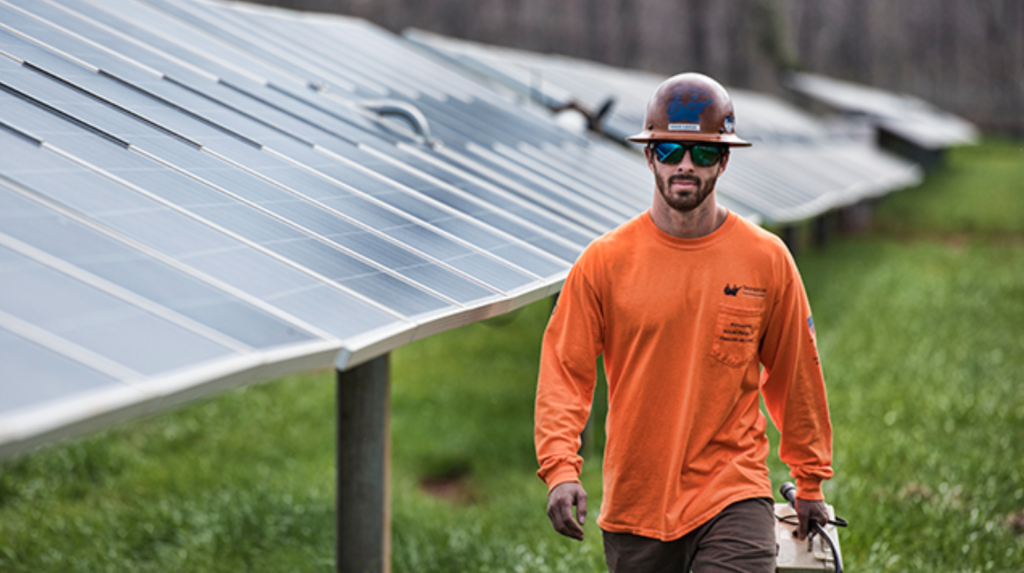
Massive new utility-scale solar farm projects are poised to dramatically expand Alabama’s solar power capacity as major technology companies make their first significant investments in the state. In the last three months alone, the Tennessee Valley Authority has announced plans for large solar installations in North Alabama tied to data centers being constructed by Google in Jackson County and Facebook in Huntsville. The new projects build on solar capacity in Alabama that only recently came on line. Alabama Power has also helped military bases in the state by installing solar projects to help them meet their goals. Alabama Power is using all the energy from the military projects and a portion from a Chambers County project to support its renewable programs. In the latest projects, TVA is teaming with developer First Solar to build what will be Alabama’s largest solar farm in Colbert County, serving Facebook. With an output of 227 megawatts, this project alone will almost double Alabama’s installed solar capacity of 252 megawatts, according to data from the Solar Energy Industries Association. “Solar power has a bright future for families in the Tennessee Valley if we can continue to attract top-tier companies like Facebook,” Doug Perry, TVA vice president of Commercial Energy Solutions, said in an announcement. Greg Canfield, secretary of the Alabama Department of Commerce, said the state’s economic development team is making a strategic push to recruit technology companies such as Facebook and Google. “These are world-class companies, and initial projects in Alabama represent an important first chapter in the growth of our high-tech sector,” Canfield said. “We’re working hard to set the stage for the arrival of other technology companies and the high-paying jobs they bring with them.” Like many high-tech companies, Facebook and Google have a commitment to using renewable energy. Between them, the companies are investing more than $1.3 billion in their Alabama data center projects. ‘Development boom’ These new utility-scale projects are rapidly expanding the state’s renewable energy landscape. TVA’s projects for Google and Facebook, which also include new solar farms in Tennessee communities, may have even set a precedent, according to pv magazine USA, an industry publication. “The net total of Google and Facebook’s actions are a development boom. If you had said last year that Alabama and Tennessee were on track to add 790 megawatts over just two development announcements, you’d have been accused of blasphemy,” pv magazine noted. In January, Google announced that in coming years it will purchase 413 megawatts of power from TVA for data centers it is building in Bridgeport, Alabama, and in Tennessee. The solar installation in Hollywood, Alabama, will produce around 150 megawatts. The two facilities will have 1.6 million solar panels. “These solar sites will be among the largest renewable energy projects in the Tennessee Valley region, and the largest solar farms ever to be built for Google,” the company noted in a blog post. “Thanks to the abundant solar power generated by these new farms, electricity consumed by our data centers in Tennessee and Alabama will be matched with 100 percent renewable energy from day one.” Last November, TVA announced plans for the Colbert County solar farm and a smaller facility in Tennessee, whose combined output of 377 megawatts will serve the Facebook data center in Huntsville. “This partnership aligns the core values of TVA’s public power model with Facebook’s mission to bring the world closer together — powered by renewable energy,” Perry said. Tracking the sun In LaFayette, Houston-based Centaurus Renewable Energy operates a 72-megawatt solar installation called AL Solar A. The facility sits on 1,100 acres in Chambers County and is made up of more than 338,000 solar panels that automatically track the sun for optimum efficiency. Alabama Power has a long-term power-purchase agreement with Centaurus to market the output of AL Solar A to its customers, chiefly to Walmart, which has adopted long-term sustainability goals. “Sourcing renewable energy from the AL Solar A project plays a crucially important role in providing power for Walmart facilities throughout Alabama,” Steve Chriss, director of Energy and Strategy Analysis for Walmart, said at an event marking the facility’s opening last year. Alabama Power has been involved in two other large-scale renewable energy projects, both on military bases in the state. A 10-megawatt installation at Fort Rucker comprises more than 115,000 solar panels on 90 acres. A 7-megawatt facility at Anniston Army Depot uses more than 87,000 solar panels. In addition to its planned projects, TVA purchases power from the River Bend Solar Energy Center in Lauderdale County. Operated by NextEra Energy Resources, the facility’s 300,000 solar panels have a generating capacity of 75 megawatts. Alabama could be in line for more large-scale TVA solar projects. Late last year, TVA said it is planning to invest $8 billion in renewable energy over the next 20 years. Alabama has another connection to solar power – on the manufacturing side. In June 2018, LG Electronics announced plans to invest $28 million to open an advanced solar module assembly plant in Huntsville, creating 160 jobs. LG’s new Alabama factory is expected to produce 500 megawatts of the company’s high-performance N-type solar panels annually, equivalent to about 1 million panels each year. This story originally appeared on the Alabama Department of Commerce’s Made in Alabama website. Republished with permission from the Alabama NewsCenter.
Google plans solar energy to offset Alabama, Tennessee data centers
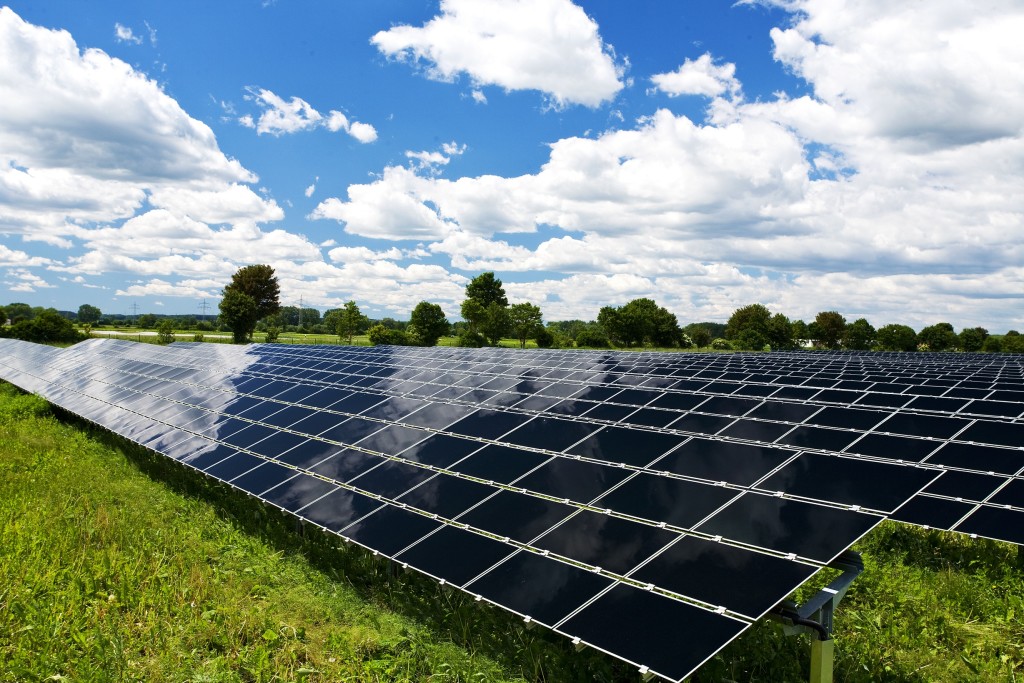
To ensure that electricity used by their new data centers in Alabama and Tennessee is matched 100 percent by renewable energy, Google has announced plans to purchase the output from two new solar farms. “Located in Hollywood, Alabama and Yum Yum, Tennessee, the two biggest solar farms will be able to produce around 150 megawatts each,” Amanda Corio, Google’s Senior Lead of Energy and Infrastructure wrote in a blog post. “These solar sites will be among the largest renewable energy projects in the Tennessee Valley region, and the largest solar farms ever to be built for Google. Thanks to the abundant solar power generated by these new farms, electricity consumed by our data centers in Tennessee and Alabama will be matched with 100 percent renewable energy from day one, helping us match our annual electricity consumption as we grow.” Data Center Dynamics reports that google has invested nearly $5 billion in renewable energy with more than 30 long-term contracts. The Alabama solar farm will be in Hollywood near Scottsboro and the data center, expected to be online later this year, will be near Huntsville.
Chambers County solar project now serving Walmart
After months of construction, one of the state’s largest solar energy facilities, built in partnership with Alabama Power, is up and running in Chambers County. The 72-megawatt Alabama Solar A project sits on 1,400 rolling acres, just south of LaFayette. Seventy-two megawatts is an amount of energy equivalent to what is typically needed to power about 18,000 homes. Most of the renewable energy attributes from Alabama Solar A are going to serve Walmart through a long-term contract, to help the retailer meet its renewable energy goals. Alabama Power is marketing the remaining energy and renewable energy attributes from the project to other customers interested in supporting new renewable generation in the state. The project is operated by Boise, Idaho-based Clenera and was built by Swinerton Renewable Energy, based in San Diego. Alabama Power has a long-term power-purchase agreement with the primary owner of the facility, Houston-based Centaurus Renewable Energy, to receive all the energy and environmental attributes from the solar farm, which it can then use for its own customers or resell to others – as in the contract with Walmart. The long-term agreements make the project cost-effective for Alabama Power customers, while also supporting Walmart, one of the state’s most important retailers and employers. “This project is great for Alabama Power customers because it puts downward pressure on rates. It also helps our partner, Walmart, meet its sustainability goals. And it supports the local economy in Chambers County. It’s a win-win-win,” said John Kelley, Alabama Power’s director of Forecasting and Resource Planning. Work began in February on the $140 million project, which began generating electricity a few days ago. More than 450 people were employed at the site during peak construction, many of them local workers. The facility’s permanent employees also are being hired locally. The site, which stretches across gentle, rolling hills, uses more than 338,000 solar panels that automatically track the sun for optimum efficiency. About 57,000 pilings were installed in 4,000 rows to create the solar energy facility. The project was built with sensitivity to the environment. Detention ponds capture rainwater, helping prevent erosion and protecting water quality. Tree stumps removed during construction were ground into mulch and used across the site to also prevent erosion, until grass planted throughout the facility had a chance to sprout and grow. “It’s been a great partnership, all around,” said Vince Longo, project engineer for Swinerton, who hails from Sacramento, Calif. It was the first time Longo was involved in constructing a solar facility in the deep South. He said local officials were helpful throughout the build-out, and treated him and other out-of-towners warmly. “Southern hospitality is real,” he said. “It really has been a good relationship, with all the partners,” said Kevin Winchell, field service manager for Clenera. “Everyone has worked well together, to get this project done.” Alabama Solar A is the third solar project connected to Alabama Power to begin operating in 2017. Earlier this year, Alabama Power unveiled company-owned solar facilities on two of the state’s military bases, Anniston Army Depot and Fort Rucker. The company also has rights to the generation from two wind farms in the Midwest and markets the renewable energy attributes from all these projects to interested parties. Alabama Power also produces clean, renewable hydro power at 14 hydroelectric facilities on the Coosa, Tallapoosa and Black Warrior rivers. “Alabama Power was founded on renewable energy, and we support new renewable energy projects where they make sense for our customers,” Kelley said. He said the company is looking for other opportunities to expand its use of renewable energy for the benefit of customers and the state. Alabama Solar A – Fun Facts $140 million investment 1,400 acres More than 450 workers at peak construction 338,662 solar panels 89 miles of direct-current, underground conductors 26 miles of medium voltage underground conductor 9 miles of fiber cable 34 detention basins for protection of water quality Republished with permission from the Alabama NewsCenter.
The not-so-sunny truth about rooftop solar subsidies
This week The Wall Street Journal printed an op-ed “The Hole in the Rooftop Solar-Panel Craze.” The bottom line of the article is clear, “Without subsidies, rooftop solar isn’t close to cost-effective.” This is something that free market advocates have been saying for a long time. Policies that promote solar over cheaper more affordable alternatives shift cost to everyone else. Subsidies keep solar prices low enough to look like they’re more cost effective but the fact is they’re not. Here’s an eye-opening excerpt from the piece: Increasingly, utilities across the country have been calling attention to the problems with rooftop solar. They’ve been urging the pursuit of large-scale solar and other renewables, the moderation of rooftop-solar subsidies, and a restructuring of electric rates to encourage new technologies. They’ve been vilified by armies of PR consultants armed with sound bites about how utilities want to kill solar. Yet the federal subsidies for solar amount to about $5 billion a year, with more than half of that amount going to rooftop and other, more expensive, non-utility solar plants. If the federal government spent the $5 billion instead subsidizing only utility-scale solar plants, I estimate that it could increase the amount of solar power installed in this country every year by about 65%. And without net metering and all of the other nonsensical state and local subsidies for rooftop solar, we could save this country billions of dollars every year. I’m all for free-market, unsubsidized or non-mandated solar. If you want to put panels on your roof and then pay your fair share of the grid go for it. I just don’t want to pay increased costs for my neighbor’s choice. Don’t worry; my aversion for paying for other people’s personal choices isn’t limited to energy. I’m all for you driving a beautiful BMW or the latest Lexus if you can afford one, but while I drive a 12-year-old Chevy I don’t want to subsidize the cost of your new car. More specific to the energy discussion and analysis, I don’t want to pay more for you to put premium unleaded gasoline in your luxury sedan. That’s your value judgment. And I applaud your ability to make it because it’s the American way. But it’s not fair and it’s not right for the elderly person on a fixed income trying to fill up behind you to pay more for their gas because of your personal choice. That’s also the American way. We are responsible for the actions we take and the products and services we choose. Our choices should have as little impact as possible on the next person, and that’s the crux of this debate. Oh, and by the way, that regular unleaded 87 octane gasoline I’m putting in my Chevrolet meets all federal regulations for clean air. There are groups in Alabama who will cry foul at the reality of the solar situation. They’ll say that if you take the free-market position you must be for big utilities. It’s as if those who support solar subsidies and mandates think consumers are too dumb to do simple math or are too naive to question the actual motives behind those pushing for more and more tax incentives that benefit an industry that otherwise couldn’t stand on its own. I’ve heard all the arguments before but the fact is if environmentalists really wanted to create change in the utility market, they’d promote utility grade solar based on a free market.
