
Google plans solar energy to offset Alabama, Tennessee data centers
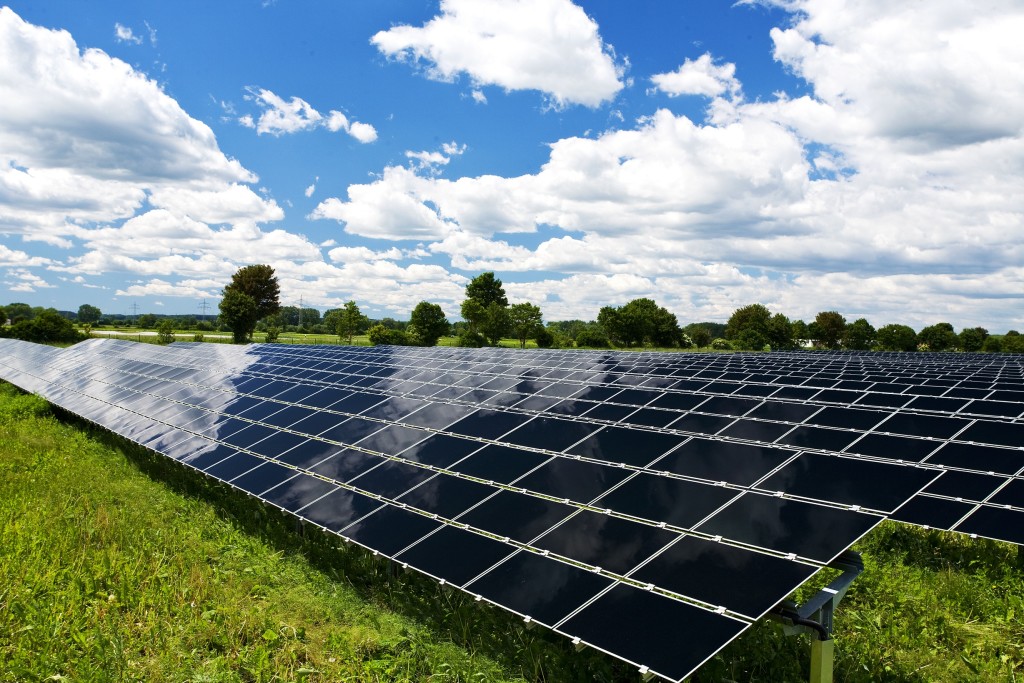
To ensure that electricity used by their new data centers in Alabama and Tennessee is matched 100 percent by renewable energy, Google has announced plans to purchase the output from two new solar farms. “Located in Hollywood, Alabama and Yum Yum, Tennessee, the two biggest solar farms will be able to produce around 150 megawatts each,” Amanda Corio, Google’s Senior Lead of Energy and Infrastructure wrote in a blog post. “These solar sites will be among the largest renewable energy projects in the Tennessee Valley region, and the largest solar farms ever to be built for Google. Thanks to the abundant solar power generated by these new farms, electricity consumed by our data centers in Tennessee and Alabama will be matched with 100 percent renewable energy from day one, helping us match our annual electricity consumption as we grow.” Data Center Dynamics reports that google has invested nearly $5 billion in renewable energy with more than 30 long-term contracts. The Alabama solar farm will be in Hollywood near Scottsboro and the data center, expected to be online later this year, will be near Huntsville.
Rauf Bolden: Local government blocking solar development in Orange Beach?
History shows us an innovative mind, creating a glimpse of what is possible in the future, founding the basis of solar technology, salting the earth with monikers like climate change is real, prompting reactions ranging from exasperation to outright dismay. “In 1839, Alexandre Edmond Becquerel discovered that certain materials produced small amounts of electric current when exposed to light,” according to a report in Course Hero. Fast-forward to 2018, and we find ourselves with thriving solar industries, producing everything from panels for your roof to driveway lights, being both efficient and affordable. Alternative energy enthusiasts in the western part of the United States have dedicated their lives to using solar power in their homes, and passing on this knowledge to their friends, and their communities, but not in Orange Beach. “As a solar power proponent for the last thirty five years on land and sea, I am baffled by the reluctance of people to avail themselves of the opportunity to engage something as dependable as the sunrise each day. Even my fellow Electricians and Instrument Technicians have lost hard earned money every day they put off this common sense means of saving for their own futures. The simplest grid tie systems I have developed in California and Utah have long since paid for themselves in utility savings, as well as through the Federal Tax Credits and rebates that are available for the asking. The cost of panels per watt has dropped to 1/3 of the prices in 2001, and though sales of panels have been surging, it appears from my Western States observation point that it is The Utility Companies [sic] that are buying them up,” said Rick Gustavson in an email from St. George, Utah, having built two solar homes with his wife Jean. The dilemma for solar homeowners in Orange Beach is unfettered regulation, because our local-electrical supplier Baldwin EMC (Electricity Membership Cooperative) is an electricity re-seller, making them beholding to their upstream vendor. According to documentation obtained in an email from Greg Gipson, Manager of Business Development, Energy Services, and Advanced Metering at Baldwin EMC, the electrical provider requires liability insurance and upgrade-payment guarantees from EMC’s solar customers. This procedure insulates their suppliers from financial exposure by pushing additional expenses for solar connectivity down onto the solar homeowner (EMC’s “Members Guide to Interconnected Distributed Resource”, pg. 8-9). The City of Orange Beach also has specific building codes about installing solar panels on your roof. ”Probably a Miscellaneous Application (from the Building Department) with wind rating info on [the] panels,” said Howard Stuart, Plans Examiner at Community Development in an email. Then there is insurance. Depending on the underwriter, they may or may not require re-certification, ensuring your roof is up to city standards. “Currently [our] carrier does not require a new certificate if you install solar panels in [the] roof. The credit for fortified gold would not be removed. However, for any reason other than insurance purposes, you would need to consult with IBHS [Insurance Institute for Business and Home Safety],” said Cindy Vines, Account Executive, South Shore Insurance Agency, in Daphne, Alabama in an email. Minimizing buyer’s remorse from complicated permitting and regulations is offset by tax credits, rebates and solar reliability, strengthening financial arguments for using alternative energy in your home. “The federal solar tax credit, also known as the investment tax credit (ITC), allows you to deduct 30 percent of the cost of installing a solar energy system from your federal taxes,” according to Energy Sage. Although Orange Beach does not provide tax incentives for solar a full-tax credit is available from the Federal Government. “To receive the full tax credit, you must have federal income tax liability that’s at least equal to the value of the tax credit. This credit may be carried over to future tax years,” according to Tesla Solar Roofs. Building a solar-powered home in Orange Beach is burdened with man-in-the-middle profit margins, encumbering the project with provider-imposed regulations; possibly arguing the added trouble is not worth the effort. Do not think Baldwin EMC is overly bureaucratic, demanding so much extra cash from solar-energy homebuilders. Their primary-power supplier is the real puppeteer, hamstringing potential-solar customers. “The Member (read: EMC customer) may be compensated for the power [on solar projects] that flows onto the distribution system,” according to EMC’s “Members Guide to Interconnected Distribution”, pg. 7, being conspicuously vague as to how much credit is given for each watt of solar generated, and the City of Orange Beach looks on as if at a passing summer cloud. Our city leaders made a definitive choice about climate change. Instead of insisting the new school (2017) run on solar, as an example to the rest of the state, the Council decided to pay $4 million for ball fields, and $4 million for a performing-arts center, powered in the traditional way, perhaps by coal-fired power plants. It is an opportunity lost, demonstrating the unintended consequence of uninformed decisions, affecting generations to come. ••• Rauf Bolden is retired IT Director at the City of Orange Beach, working as an IT & Web Consultant on the Beach Road. He can be reached at: publisher@velvetillusion.com.
Daniel Sutter: Sustainable solar energy
Oregon recently took back $13 million in tax credits awarded to SolarCity based on inflated costs reported on 14 solar projects. This is just the latest in a long series of legal issues for renewable energy companies. Our governments have encouraged solar and wind energy through tax credits, subsidies from tax dollars, and mandates. But perhaps letting markets and entrepreneurs work might be a better way to develop renewable energy to truly benefit America. One billion in tax dollars were spent on Oregon’s Business Energy Tax Credit program, which the state’s Department of Energy badly mismanaged. SolarCity (now part of Tesla Motors) was allowed to report costs far in excess of amounts paid for the 14 projects, receiving tax credits which were then sold to businesses with tax liabilities. Selling tax credits is a common practice; the legal concerns arose from the overstated costs. Unfortunately, this sounds like yesterday’s news. In 2017, SolarCity paid almost $30 million to the U.S. Treasury for employing the same accounting move rejected by Oregon. Solyndra received $535 million in Federal loan guarantees and was prominently promoted by the Obama Administration before going bankrupt in 2011. The U.S. Department of Energy Inspector General concluded that Solyndra officials deliberately overstated sales to secure the loan guarantees. And this year, solar panel installation company Legend Solar, which ranked 27th on Inc. magazine’s list of top startups for 2016, has failed to deliver new panels for customers or perform repairs on panels under warranty. Do these cases mean anything other than that some shady characters have run some solar power companies? I think so. First, government subsidies and mandates likely slow the detection of poor quality and fraud. Customers (which might be businesses themselves) provide the main line of defense against fraud. Homeowners who paid deposits for Legend Solar’s panels, for example, alerted state officials. And yet customers subsidized by tax dollars or forced by rules to use solar power may not discipline a failure to deliver products of expected quality. More significantly, subsidies and mandates may adversely impact technology. The transcontinental railroads illustrate the potential danger. In 1869, the Central Pacific and Union Pacific Railroads met in Utah, with a golden spike symbolically linking the nation. The transcontinental railroads were mostly built with generous government subsidies and large land grants and were an economic waste. The subsidized railroads went bankrupt and had to be rebuilt. Only, the Great Northern Railway built by entrepreneur James J. Hill without government subsidies, avoided bankruptcy. Government assistance affected railroad construction. The subsidized railroads were built on steep grades through the mountains, making the hauling of trains very costly; Mr. Hill selected more favorable grades and invested in spur lines to collect freight from surrounding communities. As economic historian Burt Folsom explains, this should come as no surprise. The Union Pacific and Central Pacific were in the business of collecting government subsidies, not railroads; they laid track to collect handouts, not to create a profitable business. The interjection of politics could additionally affect the individuals who become entrepreneurs and start businesses. As my Johnson Center colleague G. P. Manish and I explored in a 2016 paper, many of America’s great market entrepreneurs appear to have been motivated by what psychologists call the mastery motive, meaning the desire to excel at tasks; making money was almost secondary. Each purchase of a product by consumers in the market validates entrepreneurs’ desire to know they have mastered their business. Politicized markets offer a very different form of validation and may draw a very different set of entrepreneurs into an industry. From the energy shortages of the 1970s to concerns over fossil fuels’ greenhouse gases, politicians have seemingly had good reasons to encourage renewable power. Economically viable renewable energy would be a boon for America but will require solar and wind systems capable of creating value, not merely collecting government subsidies. Perhaps government should step aside and let market entrepreneurs develop renewable energy in an economically sustainable manner. ••• Daniel Sutter is the Charles G. Koch Professor of Economics with the Manuel H. Johnson Center for Political Economy at Troy University and host of Econversations on TrojanVision. The opinions expressed in this column are the author’s and do not necessarily reflect the views of Troy University.
Chambers County solar project now serving Walmart
After months of construction, one of the state’s largest solar energy facilities, built in partnership with Alabama Power, is up and running in Chambers County. The 72-megawatt Alabama Solar A project sits on 1,400 rolling acres, just south of LaFayette. Seventy-two megawatts is an amount of energy equivalent to what is typically needed to power about 18,000 homes. Most of the renewable energy attributes from Alabama Solar A are going to serve Walmart through a long-term contract, to help the retailer meet its renewable energy goals. Alabama Power is marketing the remaining energy and renewable energy attributes from the project to other customers interested in supporting new renewable generation in the state. The project is operated by Boise, Idaho-based Clenera and was built by Swinerton Renewable Energy, based in San Diego. Alabama Power has a long-term power-purchase agreement with the primary owner of the facility, Houston-based Centaurus Renewable Energy, to receive all the energy and environmental attributes from the solar farm, which it can then use for its own customers or resell to others – as in the contract with Walmart. The long-term agreements make the project cost-effective for Alabama Power customers, while also supporting Walmart, one of the state’s most important retailers and employers. “This project is great for Alabama Power customers because it puts downward pressure on rates. It also helps our partner, Walmart, meet its sustainability goals. And it supports the local economy in Chambers County. It’s a win-win-win,” said John Kelley, Alabama Power’s director of Forecasting and Resource Planning. Work began in February on the $140 million project, which began generating electricity a few days ago. More than 450 people were employed at the site during peak construction, many of them local workers. The facility’s permanent employees also are being hired locally. The site, which stretches across gentle, rolling hills, uses more than 338,000 solar panels that automatically track the sun for optimum efficiency. About 57,000 pilings were installed in 4,000 rows to create the solar energy facility. The project was built with sensitivity to the environment. Detention ponds capture rainwater, helping prevent erosion and protecting water quality. Tree stumps removed during construction were ground into mulch and used across the site to also prevent erosion, until grass planted throughout the facility had a chance to sprout and grow. “It’s been a great partnership, all around,” said Vince Longo, project engineer for Swinerton, who hails from Sacramento, Calif. It was the first time Longo was involved in constructing a solar facility in the deep South. He said local officials were helpful throughout the build-out, and treated him and other out-of-towners warmly. “Southern hospitality is real,” he said. “It really has been a good relationship, with all the partners,” said Kevin Winchell, field service manager for Clenera. “Everyone has worked well together, to get this project done.” Alabama Solar A is the third solar project connected to Alabama Power to begin operating in 2017. Earlier this year, Alabama Power unveiled company-owned solar facilities on two of the state’s military bases, Anniston Army Depot and Fort Rucker. The company also has rights to the generation from two wind farms in the Midwest and markets the renewable energy attributes from all these projects to interested parties. Alabama Power also produces clean, renewable hydro power at 14 hydroelectric facilities on the Coosa, Tallapoosa and Black Warrior rivers. “Alabama Power was founded on renewable energy, and we support new renewable energy projects where they make sense for our customers,” Kelley said. He said the company is looking for other opportunities to expand its use of renewable energy for the benefit of customers and the state. Alabama Solar A – Fun Facts $140 million investment 1,400 acres More than 450 workers at peak construction 338,662 solar panels 89 miles of direct-current, underground conductors 26 miles of medium voltage underground conductor 9 miles of fiber cable 34 detention basins for protection of water quality Republished with permission from the Alabama NewsCenter.
Ethics commission to weigh if PSC member can lease to solar company
A state ethics panel will reconsider whether a member of the Public Service Commission can lease land to a solar energy company that in turn would sell electricity back to a power company regulated by the PSC. Public Service Commissioner Chip Beeker asked for the opinion regarding the potential lease on his pasture land for the solar generation facility. The Alabama Ethics Commission deadlocked on the matter this month. The ethics panel listed the opinion on its Thursday agenda. However, a lawyer representing Beeker said he was surprised the request was being reconsidered this week. Attorney James Anderson says he will ask the commission to wait until its regularly scheduled October meeting. The PSC does not regulate the solar company. But it regulates Alabama Power, which might buy the electricity. Republished with permission of The Associated Press.
At Miami climate summit, Al Gore and Debbie Dooley make strange political bedfellows

A group of environmentalist political activists – “diverse,” to say the least – continued their conference at the Hyatt Regency in Miami on Wednesday. Continuing subsidies for solar and defeating the Koch Brothers were common themes center stage at a panel entitled “Solar Energy in Florida.” The panel, which included former Vice President Al Gore, Sierra Club leader Tom Larson, and Tea Party-turned-environmental activist Debbie Dooley, spoke stridently in favor of the environmentalist group’s amendment to liberalize state law regarding residential solar panels – and against Consumers for Smart Solar‘s counter-amendment. Speaking about the key strategic importance of allowing third-party sales via purchase agreements with outside vendors, which is illegal in Florida, Larson said “We are literally in a war. Solar is expanding, but there are lots of people who want to choke it in the crib. They want to kill it off early.” Despite claims by Floridians for Solar Choice that they are not for subsidies and mandates, Larson was quick to point out how important and necessary they are saying, “One of the things that matters most right now is the federal Investment Tax Credit, the ITC. It’s going to be up for renewal next year – we have got to be engaged in that debate.” “That is where people have been able to get a 30 percent federal tax credit if they put solar on their homes, which dramatically decreases the cost of solar, to incentivize this.” “There are forces that are trying to roll back the Investor Tax Credit next year and we have got to stand up and fight for that.” “The other thing that net metering – that’s where you put solar on your home and you sell [the energy] back to the grid – but now the utilities have decided ‘wait, wait wait – we’re in the business of selling electrons. Now all the sudden we’re reversing the flow’?” Larson cited a poll commissioned by the Southern Alliance for Clean Energy (SACE) which he says showed 82 percent of Floridians “want solar,” though they may or may not want his amendment. A recent Florida Chamber poll showed his group’s amendment was less popular among likely voters than that of rival group Consumers for Smart Solar. “There is no better time to run something like this in Florida than in a presidential year,” said Larson, referring to the more liberal orientation of voters in those years than in mid-term cycles. Larson said the group is on track to meet the requirements for inclusion on the 2016 ballot. Next it was former Vice President Al Gore‘s turn to assess the solar energy debate in Florida. “All over the world, there is this battle by the old, dinosaur, coal-burning fuel elites to keep their monopoly,” said Gore, who compared the utilities’ opposition to Floridians for Solar Choice’s amendment to that of Big Tobacco’s stance in the 20th century that cigarettes are not dangerous. In the beginning of mass electricity utilities, governments developed “Regulatory compacts, so that they would try to organize things in the right way, and see that it was fair and just for [utilities] to have a monopoly on all these power lines, because you don’t want a bunch of Gumbys plugging up all the holes in the lines, so there’s a natural monopoly there.” “But they also have a monopoly on the source of all the electricity flowing into that grid and their relationship with customers and all the services that are involved. But the world has changed in the last hundred years. There’s no longer a reason to give them a monopoly on the source of all the energy that flows into the grid.” “It really is outrageous,” said Gore. Next up to have her say was Debbie Dooley, founder of the Green Tea Coalition or as Gore calls it, “the Green Tea Party.” Dooley is a self proclaimed Republican activist who spends nearly all of her time these days speaking on behalf of conservatives alongside some of the nations most liberal environmentalist. Dooley who says her conservative principles led her to join the fight, along with natural enemies like Gore and the environmentalist movement, for increased access to residential solar panels. “I would just like to say one thing,” said Dooley when opposition from Americans For Prosperity was raised by another speaker. “Americans for Prosperity is a Koch-funded group. A lot of these groups throw principles out the window. 60 Plus, they’re very active in Florida. This is a group, on a national level, that complains about excessive regulation yet in Louisiana and in Florida they complain that solar isn’t regulated therefore consumers are not protected.” “Recently, Florida Power & Light wrote a million-dollar check to Jeb Bush’s super PAC,” noted Dooley, who later said in a question-and-answer session that her favored candidate in the 2016 GOP primary was “whoever the Koch brothers are not supporting.” She went on to say that both Florida natives Marco Rubio and Jeb Bush get Koch support. After a brief back-and-forth discussing strange political bedfellows between Dooley and Gore briefly she said, “Three activists and the regional director of 60 Plus crashed [a recent event where Dooley was speaking]… I gave the talking points and called out the hypocrisy that they oppose solar subsidies but didn’t say a word about the subsidies fossil fuels has received…” “Forty-four times larger than solar,” Gore interrupted. “At the same meeting, I had two activists come up to me who said ‘You changed our minds’,” said Dooley, who was met with a “Yay!” from Gore and cheers from the Miami crowd. Florida Politics reached out to 60 Plus Association‘s Apryl Marie Fogel about Dooley’s comments who responded saying, “If Debbie Dooley spent half as much time fighting for consumer protections and lower energy rates as she does fighting her personal war against the Koch brothers and shilling for solar companies she could possibly not have to resort to such baseless lies and far fetching stories.” Fogel explained that the event she “crashed” was open to the public and that she and guests politely listened to the presentation along with about 6 other general guests and two dozen solar employees and
Alabama Power seeking up to 500 megawatts of renewable generation, including solar
Alabama Power aims to boost its renewable power options in a move that could allow the company to offer more solar power than it has ever offered before. The company said, in response to growing customer interest, it is seeking approval for up to 500 megawatts of generation from renewable resources, including solar. In June, Alabama Power filed a petition with the Alabama Public Service Commission (PSC) to allow the company to pursue a variety of projects up to 80 megawatts each, totaling up to 500 megawatts over a six-year period. The company has identified solar as one of the areas for potential growth in renewables. “This proposal provides a common-sense path for expanding renewables in Alabama,” said Nick Sellers, Alabama Power vice president of regulatory and corporate affairs. “The Public Service Commission has been clear that they do not want renewables to be subsidized by all of our customers. This filing achieves that policy directive while also allowing for solar and new renewable energy projects that are expected to provide economic benefit for all of our customers.” If approved, the plan would allow Alabama Power to build its own renewable projects or purchase power from other renewable-generated sources. Sellers said 500 megawatts is between four percent and five percent of the company’s capacity. The company said it is prepared to move forward working with interested customers on projects upon receipt of PSC approval. “This program was driven by conversations with customers looking to meet renewable mandates pushed down from their headquarters,” said Tony Smoke, Alabama Power vice president of marketing. “Our field representatives have worked hard to identify customers who could be impacted and if this is approved, we will go directly to work with them to explore options.” As an example, 500 megawatts of solar power is enough renewable energy to serve about 100,000 homes during an hour of peak sun intensity on cloudless days. Alabama Power already has 1,600 megawatts of hydro resources across Alabama, and 404 megawatts of wind generation from projects in Kansas and Oklahoma. Alabama Power has the ability to resell this energy, or the associated renewable energy credits, to third parties to help keep rates low for customers. As more customers wanted solar within the mix of renewable options, Alabama Power has been exploring the best ways to meet that demand without adversely impacting existing customers. “The renewable generation program would provide broad options for us to work with customers willing to pay for renewable costs, while allowing us to protect other customers from bearing additional costs,” Smoke said. “As a service provider, our focus is to make sure we are providing customers access to choices they want,” Smoke added. “Through this plan, we are creating new customer options to sustain and grow industry in our state.” Sellers said the demand for the renewable mix and the costs of providing it are at a point now where Alabama Power can do so without impacting what other customers pay for electricity. “We’ve got customer interest in renewables, and particularly in solar right now. We want to make sure we have that offering available to those customers who are interested at looking at more renewables in the state,” he said. “We’ve seen a growing trend for more renewables and particularly for solar from some of our customers. It’s usually those customers that are under some sort of a mandate, either a government mandate or a corporate mandate.” The company is no stranger to renewable energy. “Our company was founded on renewable energy – hydroelectricity,” Sellers said. “As you know, we’ve got a significant amount of wind generation in our portfolio and now this gives us an opportunity to add solar to that renewable generation mix as well.” Solar energy could grow along with other forms of renewable energy as long as they don’t unfairly burden customers, Sellers said. Republished with permission of Alabama Newscenter Michael Tomberlin is the Editor of Alabama Newscenter, a senior communications specialist with Alabama Power, and an artillery officer in the Alabama National Guard.
