
Martha Roby: A season of new beginnings
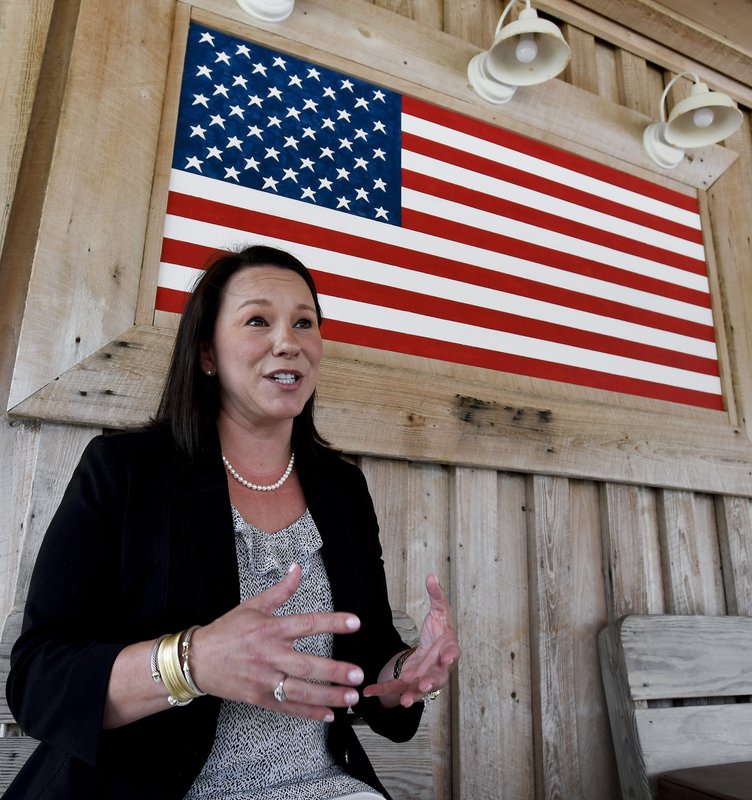
This time of year represents a season of new beginnings for many of us. Students across the country have gone back to school and are preparing to tackle another year of learning and growing. Teachers in every community throughout the nation are welcoming new faces to guide and mentor this school year. It’s also an important season for the agriculture community as these hardworking men and women are in the midst of a critical time for crops before harvest. If you are able, now is a great time to buy local and support our state’s farmers by purchasing Alabama-grown products. Fortunately, shoppers will soon have a new, easier way to identify Alabama products thanks to the newly-formed “Sweet Grown Alabama” non-profit foundation overseen by a group of leaders in the agriculture industry. Sweet Grown Alabama’s mission is to enhance marketing opportunities for our state’s farmers by connecting retailers and consumers to Alabama-grown foods and other agriculture products. Farmers will have the opportunity to join this program and brand their products with a special logo, so consumers have the option to buy local and support our state’s agriculture community. This is an exciting opportunity for both farmers and consumers throughout our state. You can learn more about the program here. Here in Alabama’s Second District, our agriculture community is facing an especially challenging time since Hurricane Michael made landfall during harvest last October. Now, more than ever, our district’s farmers need our support, and I have continued my efforts to help on the federal level. Earlier this month, I led my Alabama colleagues in sending a letter to USDA Secretary Sonny Perdue urging swift approval of the Alabama Agriculture Recovery Relief Program. This program will allow the State of Alabama to administer disaster aid to producers who were impacted by last year’s devastating hurricane. The program makes available disaster aid block grants, which are separate from the individual payments to farmers, and will help our agriculture industry get back on its feet after the severe setbacks. I am hopeful that this program finally helps farmers get the assistance they need to continue to feed Alabama and our entire country. During this time of year, as many people are going through different seasons of new beginnings, I offer my best wishes and strongest support. I will be praying for a productive and successful school year for our district’s students and educators, and I will always serve as a strong advocate for Alabama’s farmers and producers, especially as they work towards a new harvest season. It is an honor to serve Alabama’s Second District in Congress. Do not hesitate to reach out to my offices if I can ever be of assistance to you. Martha Roby represents Alabama’s Second Congressional District. She lives in Montgomery, Alabama, with her husband Riley and their two children.
What to watch during Donald Trump’s State of the Union address
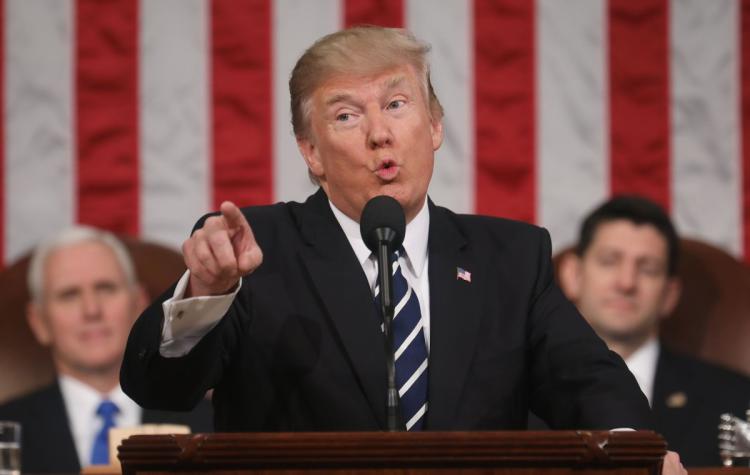
President Donald Trump, a uniter? That’s the approach advisers say Trump will take in his first State of the Union address delivered under divided government. A president who’s mocked everyone from women to the U.S. intelligence community, foreign leaders and members of Congress is expected to speak Tuesday night of setting aside hard feelings and moving forward. For an idea of how that goes over, keep an eye on House Speaker Nancy Pelosi, seated behind him and over his shoulder, and the record number of women and minorities who dot the audience after the November 2018 elections. And listen for how enthusiastically Republicans applaud Trump’s outreach. AMPED ATMOSPHERE Everything about the event, including the date, is framed by the longest government shutdown in history. Pelosi suggested Trump postpone the scheduled Jan. 29 speech until the government reopened. Trump, who commands the armed forces, then put off Pelosi’s trip overseas on a military plane. She then formally yanked the welcome mat by refusing to hold a vote to allow Trump to address a joint session of Congress. The tug of war ended Jan. 25, when Trump lifted the shutdown without getting new money for the wall he wants to build on the U.S.-Mexico border. Pelosi then re-invited Trump to deliver the address on Tuesday and he agreed. Trump has vowed to get his border wall and has threatened to declare a national emergency to pay for it without Congress’ approval. ___ TRUMP’S ENTRANCE The pomp begins the moment House Sergeant-at-Arms Paul Irving yells from the back of the chamber, “Madam Speaker, the president of the United States!” Trump will then walk down the center aisle flanked by Republican leaders, shaking hands with many of the lawmakers who grabbed seats earlier in the day in hopes of making it into photos and video with the president. Republicans will burst into raucous hoots and applause. Not likely to extend a hand to Trump: The star of the Democratic freshmen, Rep. Alexandria Ocasio-Cortez of New York. “But I’ll be there and I’ll be present to see and listen to what’s going on,” she told TMZ. ___ WHO’S IN THE ROOM It’s a rare moment when members of the three separate and co-equal branches of government meet under the same roof. The night’s key visual will be Pelosi sitting behind Trump along with Vice President Mike Pence. All 535 members of Congress are invited, along with members of Trump’s Cabinet and the justices of the Supreme Court, led by Chief Justice John Roberts. The balcony tells its own story. To the left, Trump will nod to first lady Melania Trump and the administration’s guests. Seated elsewhere in the gallery will be lawmakers’ invited guests, many chosen to send messages reinforcing each party’s agenda. This year the guests include people who have suffered because of the shutdown and those pushing for tougher immigration laws. ___ DESIGNATED SURVIVOR It’s not just a television show. By tradition, one Cabinet secretary is closeted away at a secure, undisclosed location to ensure continuity of government in case disaster strikes while government leaders attend the speech. Agriculture Secretary Sonny Perdue was last year’s “designated survivor.” But Trump’s choice this year could be limited by the number of “acting” secretaries in the Cabinet. Only Senate-confirmed secretaries (and natural-born citizens) in the line of succession to the presidency can assume control of government in a crisis. That means Acting Defense Secretary Patrick Shanahan, Acting Attorney General Matthew Whitaker, Acting Interior Secretary David Bernhardt and Transportation Secretary Elaine Chao can’t fill the role of designated survivor. Chao is a naturalized U.S. citizen who was born in Taiwan. ___ WHAT’S HAPPENING IN THE AUDIENCE Look for women on the Democratic side of the aisle wearing white, the color favored by early 20th century suffragettes and now worn by those who want Trump to easily spot his new opponents. Listen for boos, hisses or silence from the newly empowered Democratic side when Trump speaks. Note whether Trump can raise everyone’s gaze and hit feel-good themes that inspire both sides to applaud. For instance, who’s against “unity?” Both Trump and Georgia Democrat Stacey Abrams, who will deliver the rebuttal, have used that idea to preview their remarks. ___ DEMOCRATS RUNNING FOR PRESIDENT Nearly a dozen Democrats who dream of succeeding Trump serve in Congress. They will be sizing up the president and each other as well. Watch the body language among the would-be Democratic presidents: Who’s talking to whom, who gets or gives a hug or a kiss, whose heads are bowed in hushed conversation. Also watch their body language toward Trump. Cameras will be trolling the audience — and the presidential dreamers know it — to see if they can be caught responding with an eye roll or head shake. ___ ABRAMS AFTER WORDS Senate Democratic leader Chuck Schumer chose Abrams to deliver the rebuttal in a nod toward the black women who anchor the Democratic Party. Doing so elevates her among Democrats as the leaders woo Abrams to run for the Senate. Abrams also will provide a contrast with Trump, who has a history of making racially inflammatory remarks. Abrams is filling a role that for others has proven thankless and generated brutal reviews. Republican Sen. Marco Rubio’s lunge for a water bottle became a meme after he delivered his party’s response in 2013. Then-Louisiana Gov. Bobby Jindal, a Republican, was panned for being dull in 2009. Former New Jersey Gov. Chris Christie, appearing on “The Late Show with Stephen Colbert,” said he twice turned down offers to deliver the rebuttal. Why? “Because it sucks,” he said. … Follow Kellman and Superville on Twitter at twitter.com/APLaurieKellman and twitter.com/DSupervilleAP Republished with permission from the Associated Press
Cabinet chaos: Trump’s team battles scandal, irrelevance
One Cabinet member was grilled by Congress about alleged misuse of taxpayer funds for private flights. Another faced an extraordinary revolt within his own department amid a swirling ethics scandal. A third has come under scrutiny for her failure to answer basic questions about her job in a nationally televised interview. And none of them was the one Trump fired. President Donald Trump’s Cabinet in recent weeks has been enveloped in a cloud of controversy, undermining the administration’s ability to advance its agenda and drawing the ire of a president increasingly willing to cast aside allies and go it alone. Trump’s ouster of Secretary of State Rex Tillerson on Tuesday may have just been the first salvo in a shakeup of a Cabinet that, with few exceptions, has been a team of rivals for bad headlines and largely sidelined by the White House. “Donald Trump is a lone-wolf president who doesn’t want to co-govern with anybody and doesn’t want anyone else getting the credit,” said presidential historian Douglas Brinkley of Rice University. “For his Cabinet, he brought in a bizarre strand of outsiders and right-wing ideologues. Many are famed conservative or wealthy business people, but that doesn’t mean you understand good governance.” The string of embarrassing headlines for Trump’s advisers, as well as the president’s growing distance from them, stands in sharp contrast to how he portrayed the group last year. “There are those that are saying it’s one of the finest group of people ever assembled as a Cabinet,” Trump said then. On Tuesday, the president hinted after firing Tillerson that more changes may be forthcoming, saying an ideal Cabinet is in the making. “I’ve gotten to know a lot of people very well over the last year,” Trump told reporters at the White House, “and I’m really at a point where we’re getting very close to having the Cabinet and other things that I want.” Even as Trump routinely convened Cabinet meetings in front of the cameras for “Dear Leader”-type tributes over the past year, his relationship with many of its members began to splinter. Last summer he began publicly bashing Attorney General Jeff Sessions, a former close adviser who was the first senator to back his campaign. Furious that the attorney general recused himself from the Russia probe that has loomed over the White House, Trump has privately mused about firing Sessions and taken to delivering unprecedented Twitter broadsides against him. Trump has used the words “beleaguered” and “disgraceful” to describe Sessions, who only recently stood up to the president and defended his recusal decision. Tillerson also frequently clashed with Trump, who never forgave the outgoing secretary of state for reportedly calling him “a moron” last summer after grumbling that the president had no grasp of foreign affairs. The pair never developed a particularly warm relationship. Last November, during a full day of meetings in Beijing, Trump and his senior staff were served plates of wilted Caesar salad as they gathered in a private room in the Great Hall of the People. None of the Americans moved to eat the unappetizing dish, but Trump prodded Tillerson to give it a try, according to a senior administration official. “Rex,” the president said, “eat the salad.” Tillerson declined, despite Trump’s urging. After repeatedly undermining and contradicting Tillerson, Trump at last fired his secretary of state in a tweet. Trump in recent days has told confidants that he feels emboldened. He’s proud of his unilateral decisions to impose sweeping tariffs on metal imports and to meet with North Korean dictator Kim Jong Un, and far less willing to put up with disloyalty around him, according to a person who has spoken to the president in recent days but was not authorized to discuss private conversations publicly. Trump’s esteem for the Cabinet has faded in recent months, according to two White House officials and two outside advisers. He also told confidants that he was in the midst of making changes to improve personnel and, according to one person who spoke with him, “get rid of the dead weight” — which could put a number of embattled Cabinet secretaries on notice. The officials all spoke on condition of anonymity to discuss internal matters. Interior Secretary Ryan Zinke underwent questioning Tuesday by Senate Democrats, who accused him of spending tens of thousands of dollars on office renovations and private flights while proposing deep cuts to conservation programs. Zinke pushed back, saying he “never took a private jet anywhere” — because all three flights he had taken on private planes as secretary were on aircraft with propellers, not jet engines. Veterans Affairs Secretary David Shulkin’s days on the job may be limited after a bruising internal report found ethics violations in connection with his trip to Europe with his wife last summer, according to senior administration officials. He also has faced a potential mutiny from his own staff: A political adviser installed by Trump at the Department of Veterans Affairs has openly mused to other VA staff about ousting the former Obama administration official. Trump has floated the notion of moving Energy Secretary Rick Perry to the VA to right the ship, believing Shulkin has become a distraction, according to two people familiar with White House discussions. They were not authorized to discuss internal deliberations and spoke on condition of anonymity. Others under the microscope: —White House aides deemed Education Secretary Betsy DeVos’ recent appearance on “60 Minutes” a disaster as she struggled to defend the administration’s school safety plan and could not answer basic questions about the nation’s education system. —Housing and Urban Development Secretary Ben Carson came under fire last month after reports his agency was spending $31,000 for a new dining set, a purchase HUD officials said was made without Carson’s knowledge. —Environmental Protection Agency Administrator Scott Pruitt has faced questions about $25,000 spent on a soundproof “privacy booth” inside his office to prevent eavesdropping on his phone calls and another $9,000 on biometric locks. —The first Cabinet member to
Forest Service spends record $2B battling forest fires
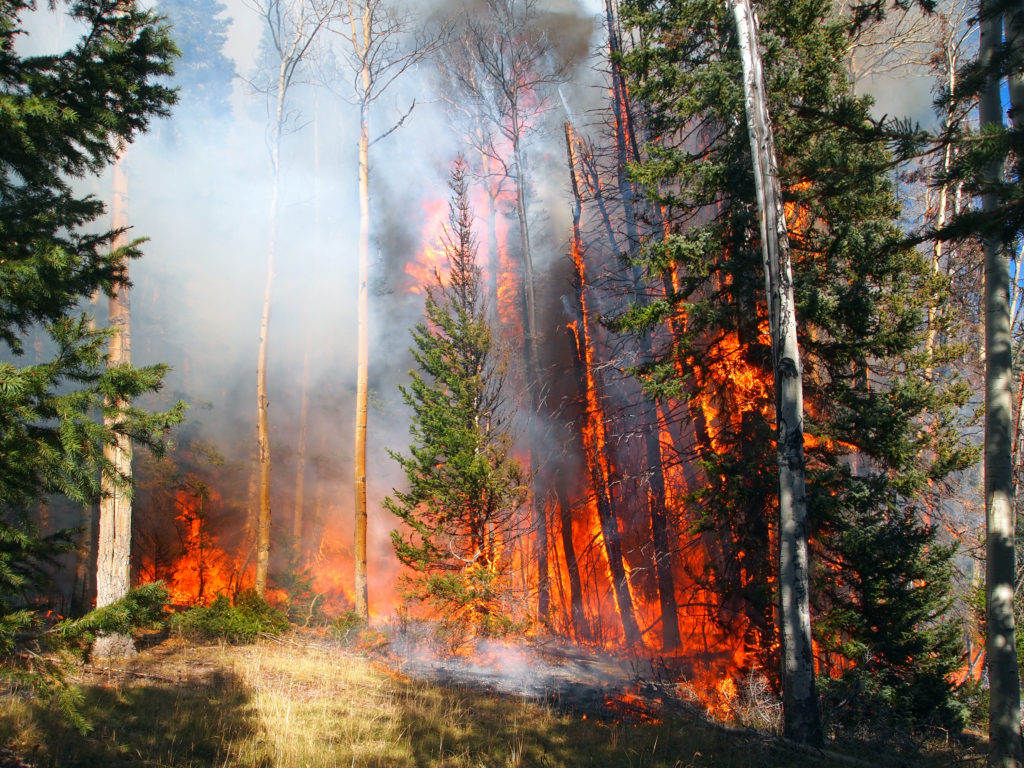
The Forest Service has spent more than $2 billion battling forest fires around the country – a record as wildfires blacken the American West in one of the nation’s worst fire seasons. Wildfires have ravaged the West this summer with 64 large fires burning across 10 states as of Thursday, including 21 fires in Montana and 18 in Oregon. In all, 48,607 wildfires have burned nearly 13,000 square miles (33,586 square kilometers). The fires have stretched firefighting resources, destroyed more than 500 homes and triggered health alerts as choking smoke drifted into major Western cities. The Forest Service, part of the U.S. Department of Agriculture, is the nation’s primary firefighting agency. Agriculture Secretary Sonny Perdue said the severe fire season means officials “end up having to hoard all of the money that is intended for fire prevention, because we’re afraid we’re going to need it to actually fight fires.” The emphasis on firefighting means that money for prescribed burns, insect control and other prevention efforts is diverted to putting out fires in what Perdue called a self-defeating cycle. The end result is that small trees and vegetation remain in the forest for future fires to feed on. “That’s wrong, and that’s no way to manage the Forest Service,” Perdue said. The Agriculture Department has been asking Congress for years to change the way firefighting is funded so the Forest Service does not have to raid non-fire programs in bad years. The spending figure announced Thursday marks the first time wildfire spending by the Forest Service has topped $2 billion. The previous record was $1.7 billion in 2015. The figures do not include spending by Interior Department agencies such as the Bureau of Land Management and National Park Service, nor do they include spending by state and local governments. The Interior Department says it has spent at least $391 million with several weeks left in the fire season. The previous record for combined federal firefighting costs was $2.1 billion in 2015. Some previous years have had bigger areas burn but lower costs to fight fires. “The level of continuous activity and the length of the fire season is driving our costs,” Forest Service spokeswoman Babete Anderson said. Parts of the West have suffered through above-average fires for months, she said. This year’s fires have renewed discussions about thinning overgrown forests to reduce the risk. Forest fuels are at “powder keg levels,” said Paul Hessburg Sr., a Forest Service research landscape ecologist. Interior Secretary Ryan Zinke on Tuesday directed land managers and park superintendents in his department to be more aggressive in cutting down small trees and underbrush. Republished with permission from the Associated Press.
Alabama receives $100K Farm to School grant to buy more local produce
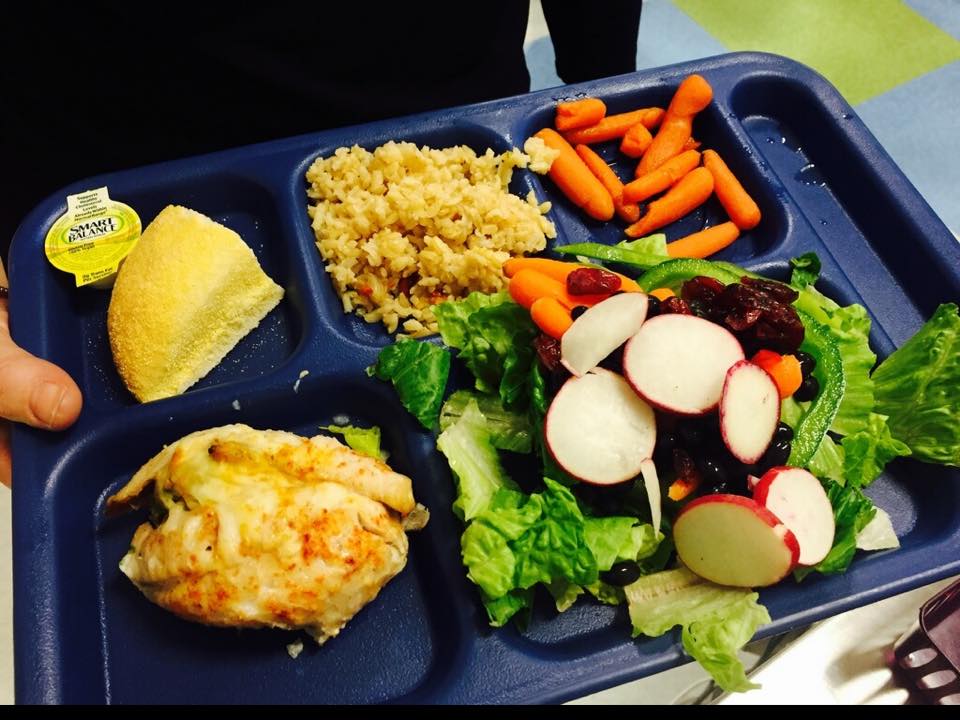
Alabama students will be seeing more locally grown produce on the school menus next school year thanks to a newly awarded $100,000 grant from the U.S. Department of Agriculture (USDA). Designed to increase the availability of local foods in schools, USDA Farm to School grants can help farm to school programs get started or expand existing efforts. “Increasing the amount of local foods in America’s schools is a win-win for everyone,” said USDA Secretary Sonny Perdue. “Our children benefit from the fresh, local food served in their meals at school, and local economies are nourished, as well, when schools buy the food they provide close to home.” The state’s Farm to School Cooperative — a coalition of state and community partners including the Alabama Department of Education, the Foodbank of North Alabama/Farm Food Collaborative, the Alabama Farmers Federation, Feeding the Gulf-Coast Food Bank, food hubs, Druid City Garden Project, and EAT South — was one of 65 projects recipients from across the country of the USDA’s 2017 Farm to School Grant. The co-op encourages schools to serve fresh, locally grown fruits and vegetables to students, implement hands-on education in school gardens, and provide nutrition and agriculture education. Specifically, the state will use grant funds to assist farmers with GAP certification, revise the Alabama farm to school website, develop a state-wide promotional campaign, and support school garden curriculum development. The Tuscaloosa-based Druid City Garden Project, part of the coalition, will utilize funds to facilitate building mobile cooking units for schools to engage students in cooking demonstrations with produce grown in school gardens. “The Alabama Farm to School Collaborative provides farmers an opportunity to develop relationships with the students in their local schools districts,” commented Alabama Agriculture Commissioner John McMillan. “Not only do the students enjoy locally grown food, but now they can make a connection to the person who grew it for them.”
