
Darryl Paulson: Candidate’s running mate rarely affects outcome of presidential election
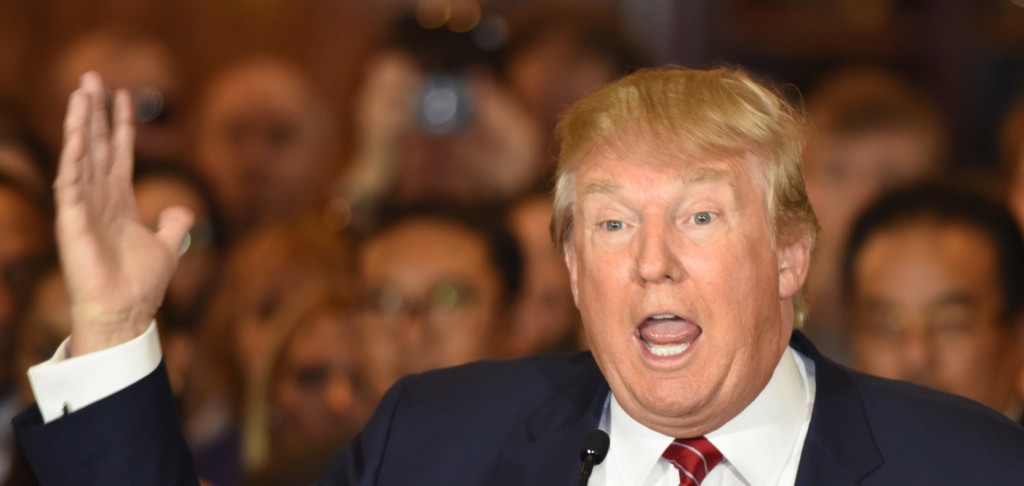
The national conventions are less than three months away and, as the nomination phase comes to a close, attention will gravitate toward potential vice presidential candidates. Let’s focus on the factors that have been used in selecting vice presidents. Most conventional wisdom is wrong. To begin with, most people and many presidential candidates select a vice president who they believe will help them win the election. Few vice presidents have had any effect on the election results. Jack Kemp did not help carry his home state for Bob Dole and Paul Ryan did not win Wisconsin for Mitt Romney. On the Democratic side, Sen. Lloyd Bentsen was not able to carry Texas for Michael Dukakis, nor did John Edwards help the Democrats win South Carolina or other southern states. One of the few times a vice president actually helped a president carry a state was in 1960 when John F. Kennedy picked Sen. Lyndon Johnson as his running mate. If Kennedy had not won Texas, Richard Nixon would have won the presidency. In like fashion, vice presidents are sometimes selected to provide regional balance, although there is no evidence that this helps. When Bill Clinton of Arkansas picked fellow southerner Al Gore as his vice president, many thought this unbalanced regional ticket was crazy. When the Clinton-Gore team captured the electoral vote of four southern states, something that Democrats had been unable to do in recent presidential elections, Clinton’s choice looked like genius. In addition to regional balance, vice presidents are sometimes selected to provide ideological balance. With increased polarization in recent years, this is becoming a less important factor. In 1976, Ronald Reagan announced Sen. Richard Schweiker of Pennsylvania as his vice presidential choice prior to the convention. Reagan hoped to alleviate the fears of some that he was too conservative and needed a moderate to balance the ticket. More importantly, Reagan hoped that picking Schweiker would convince some Pennsylvania delegates to support his candidacy over incumbent Gerald Ford. The pick of Schweiker did not help Reagan and Ford went on to win the nomination. Many Democrats in 2016 see Hillary Clinton as too conservative and too establishment and have urged her to choose a progressive as vice president. In addition to Bernie Sanders, other progressive names being floated are Sen. Sherrod Brown of Ohio and Sen. Elizabeth Warren of Massachusetts. A vice president is sometimes selected to stimulate participation by a particular group. Walter Mondale selected Geraldine Ferraro to get more women to vote. That pick didn’t provide much help. Mondale won only his home state of Minnesota and the District of Columbia against Reagan. Vice presidents have been picked to add gravitas to the ticket. Concerns about Reagan’s limited government experience led him to pick George Herbert Walker Bush as his vice president. Bush had been a member of Congress, the U.S. ambassador to the United Nations and to China, head of the Republican National Committee and head of the CIA prior to his selection. Bush’s son, George W., picked Dick Cheney as his vice president to add heft to his ticket. Cheney had served as Chief-of-Staff to Ford, been a member of the House, and served as Secretary of Defense for George W’s father. In fact, Cheney headed George W’s vice presidential selection team and concluded he was the best candidate. Do any of these factors help a presidential candidate win? The answer is no. A study by two political scientists, Bernard Grofman and Reuben Kline, analyzed 11 presidential elections between 1968 and 2008 and found the net effect of a vice president was 1 percent at most. If Clinton is the Democratic nominee, she may pick a progressive or choose someone like Secretary of Housing and Urban Development Julian Castro. Although not well known, Castro’s youth and Hispanic background might help stimulate Hispanic turnout. If Trump is the GOP nominee, it is easier to put together a list of people he would not select than those he would. There is little chance that “lying Ted,” “little Marco,” or “low energy Bush” would want to join forces with Trump. Gov. Scott Walker of Wisconsin is one possibility since he dropped out of the nomination race early before Trump had the opportunity to insult him. Chris Christie is another option because he was the first major candidate to endorse Trump after Christie withdrew. Another option is Florida Gov. Rick Scott. Florida is a “must win” state and Scott endorsed Trump as a “businessman outsider who will shake up the status quo in Washington.” Although most of the factors in the vice presidential selection process have been shown to have little impact, there are two general rules that no president should ignore. First, pick someone you feel comfortable working with. Second, and most important, pick someone who is ready to be president. Nothing else matters. *** Darryl Paulson is Professor Emeritus of Government at USF St. Petersburg.
Time is running out for Donald Trump’s rivals to stop him

Donald Trump‘s rivals are running out of time to stop him after his dominant performance in South Carolina. A close look at the election calendar suggests that if the New York billionaire’s rivals don’t slow him by mid-March, their only chance to deny him the Republican presidential nomination may be a nasty and public fight at the party’s convention this summer. “When you look at it right now, it looks like there’s this juggernaut,” said Rich Beeson, a senior aide to one of Trump’s main rivals, Florida Sen. Marco Rubio. The reason is delegates and how they’re awarded. Winning states generates headlines, but the nomination is earned by collecting a majority of the delegates awarded in primaries and caucuses. Next up: Nevada’s caucuses on Tuesday. This year, most contests award delegates proportionally, based on each candidate’s share of the vote. Beeson and strategists for other campaigns argue that could make it hard for Trump to build a big lead because even the second- and third-place finisher can win delegates. If one candidate can run up a significant lead, as Trump has begun to, then proportional contests also make it difficult for rivals to catch up. South Carolina is the perfect example of this problem for Rubio and Texas Sen. Ted Cruz. The state isn’t winner-take-all when it comes to delegates, but Trump’s strength in all parts of South Carolina allowed him to haul in all 50 delegates awarded in Saturday’s primary. Trump now has 67 delegates. Cruz and Rubio took home none from South Carolina, leaving them with a total of 11 and 10, respectively. Trump is well on his way, and he knows it. “Folks, let’s go, let’s have a big win in Nevada, let’s have a big win in the SEC,” Trump said in his South Carolina victory speech, referring to the states with universities in the Southeastern Conference that will vote next month. “Let’s put this thing away.” Only a small fraction of the delegates to be won in the GOP primary season, which began Feb. 1 in Iowa and ends June 7 in California and a handful of other states, have been awarded to date. But some of Trump’s opponents acknowledge he could build an insurmountable lead by mid-March if current trends continue. “There are going to be a lot of circumstances where we can declare some victories and at least get this thing to March 15,” Beeson said. “Once we get to March 15, if the die has not been cast by then, it’s a different game.” Why March 15? That’s the first day on which the GOP’s rules allow states to hold a winner-take-all contest. Florida will award 99 delegates that day, while Ohio will give out 66. The Missouri primary is that day, too. Like South Carolina, Missouri awards a pot of delegates to the statewide winner, as well as three delegates each to the winner of each congressional district. That makes it possible for one candidate to win all of Missouri’s 52 delegates, or at least a large majority. Put simply, it’s a day in which a candidate running second to Trump could catch up. Or fall even further behind. Altogether, there are 14 such contests on the GOP primary calendar, offering a total of 752 delegates. That’s not enough delegates to claim the nomination; it takes 1,237. But if one candidate wins most of those states, he could build a lead too big to overcome. In the modern political era, a candidate usually wins enough delegates to emerge as the presumptive nominee several weeks — or even months — before the end of primary voting. That happens when the candidate claims so many delegates it’s all but impossible for anyone else to catch up. But the nomination isn’t formalized until the party’s presidential nominating convention, scheduled for July this year. The last time the Republican nomination wasn’t decided before the convention was 1976. Yet some of Trump’s rivals are already talking about the possibility of a “contested” convention as they envision a series of second- or third-place finishes in the upcoming GOP primaries. Rubio’s campaign manager, Terry Sullivan, recently told The Associated Press, “I would be surprised if it’s not May or the convention” when the party settles on its nominee. At the convention, a lead in the race for delegates guarantees nothing if the candidate doesn’t have an outright majority, said Ben Ginsberg, a leading Republican election attorney. Under most state party rules, delegates are only required to vote for their candidate on the first ballot at the convention. “If no one comes into the convention with a majority of delegates, then all bets are off,” Ginsberg said. “You’re dealing with a potentially unruly and independent group of people.” Republished with permission of the Associated Press.
Marco Rubio, Ted Cruz jostle to claim ‘alternative-to-Donald Trump’ vote
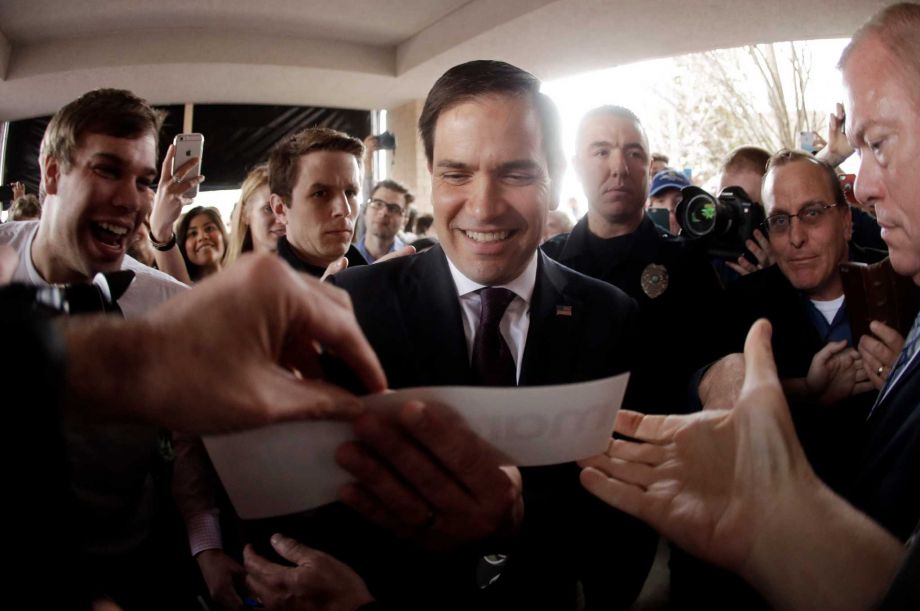
Republicans Marco Rubio and Ted Cruz battled to emerge as the true anti-Trump on Sunday as the billionaire businessman took an ever-so-brief break from his trademark braggadocio to say his drive for the GOP nomination isn’t unstoppable — yet. Fresh off a commanding victory in South Carolina, Donald Trump declined to say the nomination was his to lose. But he quickly went on to declare, “I’m really on my way.” Soon enough, in a television interview, he was toting up electoral math all the way through Election Day and concluding, “I’m going to win.” The candidates’ diverging flight plans demonstrated how the campaign spreads out and speeds up now. Nevada’s GOP caucuses are Tuesday, and then a dozen states vote in the March 1 Super Tuesday bonanza. Trump was in Georgia exulting over his latest victory, Cruz headed for Nevada, and Rubio embarked on a Tennessee-Arkansas-Nevada trifecta. On the Democratic side, Hillary Clinton savored her weekend win in the Nevada caucuses as Bernie Sanders acknowledged that while his insurgent campaign has made strides, “at the end of the day … you need delegates.” He looked past Tuesday’s Democratic primary in South Carolina to list Colorado, Minnesota, Massachusetts and Oklahoma as places where he has a “good shot” to do well. Rubio and Cruz used the Sunday morning news shows to spin rosy-road-forward scenarios after complete but unofficial returns in South Carolina put Trump way up top, with Rubio squeaking past Cruz for second. But with roughly 70 percent of Republicans in national polls declining to back Trump, Cruz and Rubio tried to cast themselves as the one candidate around whom what Rubio calls the “alternative-to-Donald-Trump vote” can coalesce. Rubio also took an aggressive run at Trump, faulting him for a lack of specifics on policy. “If you’re running for president of the United States, you can’t just tell people you’re going to make America great again,” he said on CBS’ “Face the Nation.” At a later rally in Franklin, Tennessee, a Nashville suburb, Rubio took note of the smaller GOP field after Jeb Bush‘s departure from the race, and celebrated his biggest crowd of the campaign, estimated at more than 3,000 people. Rubio avoided criticizing his GOP rivals, instead highlighting his efforts to help middle-class families. Cruz, for his part, stressed his conservative bona fides and said he was the lone “strong conservative in this race who can win. We see conservatives continuing to unite behind our campaign,” he told NBC’s “Meet the Press.” With Bush gone from the race, Rubio was hoping to pick off past donors to the Bush campaign and looking to benefit as well from a cessation in the millions of dollars in negative ads run by the Bush campaign and its allies. Rubio also suggested it was only a matter of time before John Kasich and Ben Carson folded as well. He hinted it would be better to get that winnowing over with, saying, “the sooner we can coalesce, the better we’re going to be as a party in general.” Not so fast, Kasich countered. “We’re getting big crowds everywhere we go,” the Ohio governor insisted, listing Vermont, Massachusetts and Virginia as places he can shine. Cruz tried to brush right past his apparent third-place finish in South Carolina and instead hark back to his victory over Trump in leadoff Iowa. “It is becoming clearer and clearer that we are the one campaign who can beat Donald Trump,” Cruz told reporters before a campaign stop in rural Nevada. The Texas senator said his path to victory calls for a strong showing on Super Tuesday, and that Texas was “clearly the crown jewel” of that day. Rubio, a Florida senator, highlighted the big delegate take available in the five-state round of voting on March 15, which includes his home state. He noted that round offers victors a “winner-take-all” share of delegates rather a proportional share. Cruz scoffed at Rubio’s strategy, saying: “They’re trying to wait until March 15 to win a state.” Trump suddenly had nice things to say about Bush, the candidate he had hammered so relentlessly when they were rivals. As for Rubio, Trump told “Fox News Sunday” that “I start off liking everybody. Then, all of a sudden, they become mortal enemies.” At a rowdy Atlanta rally, Trump crowed over his big South Carolina win, saying “we’re just doing one after another.” Spitting out the superlatives, he called his sweep of all 50 delegates there “amazing,” ”beautiful,” ”conclusive” and “very, very decisive.” Clinton was happy with her Nevada win but acknowledged she has work to do in persuading voters that she has their best interests at heart. “I think there’s an underlying question that maybe is really in the back of people’s minds and that is, you know, is she in it for us or is she in it for herself?” Clinton said on CNN. “I think that is a question that people are trying to sort through.” Working to increase his support among black voters, Sanders visited a Baptist church luncheon following services in West Columbia, South Carolina, and talked up the country’s economic recovery under President Barack Obama. Republished with permission of the Associated Press.
Email insights: It’s a big day for Marco Rubio and Tim Scott
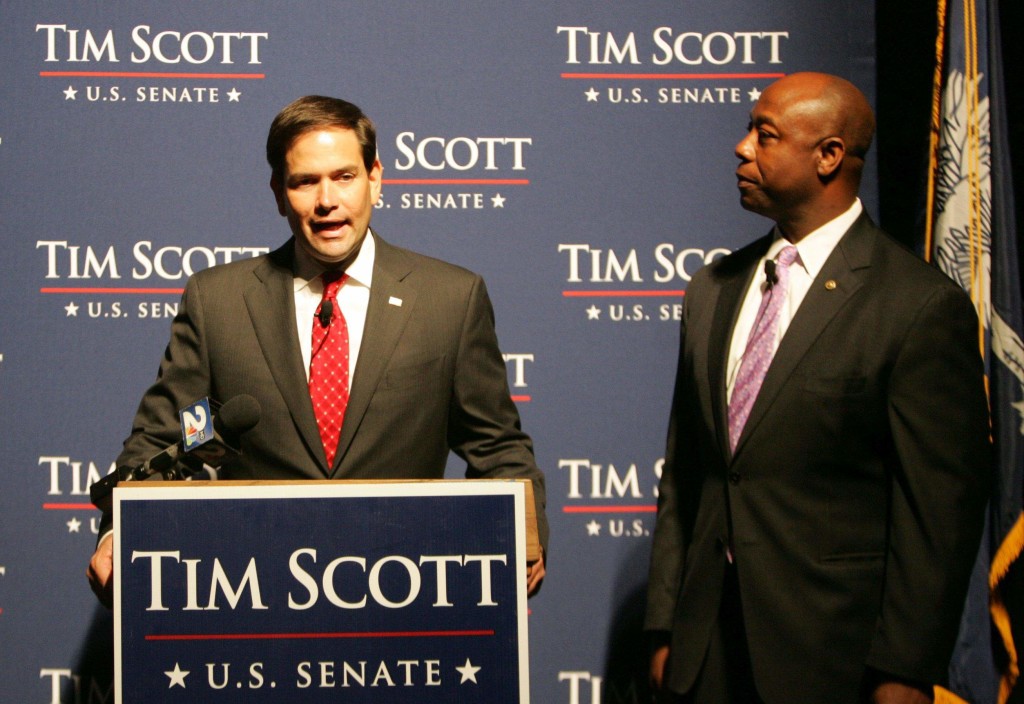
Today’s the big day in South Carolina for Tim Scott, one of two African-Americans in the U.S. Senate. Scott is also a recent convert to Marco Rubio’s presidential campaign. A new primary-day email fundraising pitch tells how Scott, with his “friend Trey Gowdy,” spent the past couple weeks crisscrossing the state to campaign for Rubio, whom Scott calls “the man who needs to be the next president of the United States.” South Carolina is only the beginning, Scott says, and the race is far from over. “In fact,” he writes, “it’s really just a minor skirmish compared with what’s to come.” An even bigger day comes March 1, and with more in next couple weeks after that. “Marco’s going to need a huge amount of resources to build up his national campaign — that’s why we’ve set an ambitious goal of raising $300,000 by the time the polls close tonight.” Who can argue with ambition, especially on primary day? Scott adds that not only is Rubio a “good friend and would make an awesome president,” but the stakes “couldn’t be higher” in 2016. “After two terms of President Obama, we need a conservative Republican nominee who has a vision for restoring the American Dream that’s defined my life, and Marco’s,” Scott says. “Will you go here to help make sure Marco gets to be that candidate?” Primary votes may be one thing, but cold hard cash is quite another. Scott’s support is no small feat; he is the first black Republican to serve in the U.S. Senate from the former Confederate States since Reconstruction. Scott’s endorsement, along with that of Gov. Nikki Haley, provides an essential sign of GOP diversity in a state with a large African-American population. “Make no mistake: This is a big endorsement for Rubio. Scott is very popular in South Carolina,” CNN had reported February 1. “Scott held town halls with every candidate in the lead-up to the primaries, and maintained an unbiased position on all of them.” Material from The Associated Press was used in this report.
Jeb Bush, seeking a much-needed revival in SC, calls in family

Jeb Bush has long kept his family at arm’s length in his effort to become commander-in-chief, but with the South Carolina primary looming, he’s embracing them like never before in the state that has historically stood by the Bush family in its previous White House bids. It’s a drastic shift from the approach he took at the start of his campaign hinting at how precarious his fortunes have become. Now, with his back to the wall, Bush is grabbing hold of the legacy, and hoping his front-row view of the world’s most difficult job means more to South Carolina’s military-minded Republican voters than a few awkward exchanges on the campaign trail ahead of Saturday’s critical primary. In Beaufort, S.C., Wednesday, Bush told an audience he had experienced “watching history unfold, in a unique way,” a reference to his father’s and brother’s wartime administrations. Bush’s best-known South Carolina advocate, the state’s senior Sen. Lindsey Graham, echoed that sentiment, stressing that Bush’s family is one of his biggest strengths and assets. “He understands the job because his brother and his father have had that job,” Graham said. Bush said in an Associated Press interview Thursday that his family legacy is actually what sets him apart from the others. “You get insight into things that are personal.” For example, Bush recounted the days when he saw the “burden of leadership that my dad felt” in the weeks leading up to the 1991 Persian Gulf War. “He didn’t talk specifically about what he was doing, or going to do,” Bush said. “You could just see the burden.” Bush also lists dozens of admirals, generals and Medal of Honor recipients who have endorsed him. And he points to his time as governor in charge of Florida’s robust national guard, consultation with military and foreign policy experts and vigorous foreign travel while in office and as a private businessman as evidence. But the family reference is a stark change from a year ago, when Bush, then weighing a potential run, said of his father George H.W. Bush and older brother George W. Bush during a Chicago speech: “I admire their service to the nation and the different decisions they had to make. But I am my own man and my views are shaped by my own thinking and own experiences.” Bush’s frequent family references this week reflect the name’s popularity in South Carolina, where both the former wartime presidents won the first-in-the-South primary. It also suggests how desperate Bush and his supporters are for signs of momentum, despite having built the 2016 race’s largest combined warchest of more than $150 million. And yet he finished sixth in Iowa’s leadoff caucuses on Feb. 1 and fourth in the New Hampshire primary on Feb. 8. Despite his efforts in South Carolina, where his family name still maintains some political clout, Bush’s attempt to gain traction hit a rough patch this week. The week started on a high note — a joyous reception from audiences as he campaigned with his former president brother, who came out of public political isolation to assist his younger brother’s at a critical juncture in his campaign. But the following day, Bush was ridiculed for posting a picture on Twitter of a handgun, inscribed with his name and given to him by a manufacturer in Columbia he visited. On an outdoor campaign stop in Summerville Wednesday, Bush fielded more advice on how to improve his underperforming campaign than questions about policy. That was the same day Rubio won the prized endorsement of South Carolina Gov. Nikki Haley, even after she met with George W. Bush in Columbia. Even little things wrinkled Bush’s efforts this week. In Summerville, his clip-on microphone didn’t work. And in Myrtle Beach, Bush, who has recently abandoned glasses for contact lenses, complained to staff about the lighting as he left the hall rubbing his eyes. Bush was hoping his fortunes would reverse on Friday when he was scheduled to campaign with his 90-year-old mother Barbara Bush, a beloved figure among a segment of South Carolina Republicans. Barry Wynn, a member of Bush’s national finance team and former South Carolina Republican Party chairman, says he is convinced Bush can benefit from the family’s popularity, but he also acknowledges the pressure Bush faces. Wynn and other Bush supporters have said he needs to beat or finish very close to Sens. Ted Cruz of Texas and Marco Rubio of Florida to justify asking donors to help him finance the next round of campaigning, which includes the Nevada caucuses and, more importantly, the Mar. 1 Super Tuesday primaries. All three trailed billionaire Donald Trump in a scrum according to most public polls of primary voters. “We’ve got to make sure that when they cut off the tail here, we’re not the tail,” Wynn said. “And then we have to have the resources to stay in the game.” MaryBeth Lewis of Florence put it more directly to Bush after a stop Thursday at the farmer’s market in her town. “Go get ’em!” she told Bush as she squeezed his hand. “I’m still standing,” Bush replied. Republished with permission of the Associated Press.
George W. Bush: From South Carolina cameo to starring role

George W. Bush won a bruising South Carolina presidential primary on his way to the Oval Office, as his father did before him. Now it’s his brother’s turn, and for Jeb Bush, the most consequential foreign policy decisions of his brother’s time in office are suddenly front-and-center of his bid to keep alive his campaign for the Republican presidential nomination — thanks to Donald Trump. The former president had already announced plans to campaign for his younger brother on Monday in South Carolina, marking his most direct entry into the 2016 race to date, when the GOP front-runner used the final debate before the state’s Feb. 20 primary as an opportunity to excoriate George W. Bush’s performance as commander-in-chief. The former president, Trump said, ignored “the advice of his CIA” and “destabilized the Middle East” by invading Iraq on dubious claims that Saddam Hussein had weapons of mass destruction. “I want to tell you: they lied,” Trump said. “They said there were weapons of mass destruction, there were none. And they knew there were none.” Trump didn’t let up as Bush tried to defend his brother, dismissing his suggestion that George W. Bush built a “security apparatus to keep us safe” after the 9/11 attacks. “The World Trade Center came down during your brother’s reign, remember that,” Trump said, adding: “That’s not keeping us safe.” The onslaught — which Jeb Bush called Trump enjoying “blood sport” — was the latest example of the billionaire businessman’s penchant for mocking his rival as a weak, privileged tool of the Republican Party establishment, special interests and well-heeled donors. But the exchange also highlighted the former Florida governor’s embrace of his family name and history as he jockeys with Florida Sen. Marco Rubio and Ohio Gov. John Kasich to emerge from South Carolina as the clear challenger to Trump, who won the New Hampshire primary, and Texas Sen. Ted Cruz, the victor in Iowa’s caucuses. The approach tacks away from Bush’s months-long insistence that he’s running as “my own man,” but could be a perfect fit for South Carolina. Noted South Carolina Sen. Lindsey Graham, who ended his GOP presidential campaign in December and endorsed Jeb Bush in January, said: “The Bush name is golden in my state.” George W. Bush retains wide appeal among Republicans, from evangelicals to chamber of commerce business leaders and retired members of the military. All are prominent in South Carolina, with Bush campaign aide Brett Foster going so far as to say that George W. Bush is “the most popular Republican alive.” After the debate, some Republicans again suggested Trump had gone too far. Bush wasn’t alone on stage leaping to his brother’s defense, with Rubio coming back to the moment to say, “I thank God all the time it was George W. Bush in the White House on 9/11 and not Al Gore.” The attack on George W. Bush carries risk for Trump, given the Bush family’s long social and political ties in South Carolina and the state’s hawkish national security bent, bolstered by more than a half-dozen military installations and a sizable population of veterans who choose to retire in the state. Trump has repeatedly defied predictions that his comments might threaten his perch atop the field. And as he jousted Saturday with Trump, Jeb Bush said, “this is not about my family or his family.” But the Bush family does have a history in the state that’s hard to overlook. In 2000, George W. Bush beat John McCain in a nasty contest, marred by rumors that McCain had an illegitimate black child. McCain adopted a child from Bangladesh. Exit polls showed George W. Bush won nearly every demographic group. George H.W. Bush, the 41st president, won twice here, beating Bob Dole in 1988 and demolishing Pat Buchanan in 1992. One of the elder Bush’s top strategists, Lee Atwater, hailed from South Carolina and remains a legend in GOP campaign annals. Last week, Jeb Bush touted the endorsement of Iris Campbell, the widow of former South Carolina Gov. Carroll Campbell, a national co-chairman of previous Bush presidential campaigns. Yet even as he defended his brother’s presidency at Saturday’s debate, Jeb Bush found a way to distance himself from George W. Bush’s business affairs and to criticize Trump at the same time. The issue: eminent domain. Before entering politics, George W. Bush was part-owner of the Texas Rangers, and their home city of Arlington, Texas, used eminent domain to take private land and build a stadium for the team. Trump has defended such uses of eminent domain as a way to foster economic development. Retorted Bush, who argued eminent domain should be reserved for public infrastructure projects, “There is all sorts of intrigue about where I disagree with my brother. There would be one right there.” Republished with permission of the Associated Press.
Marco Rubio eyes brokered convention after NH setback
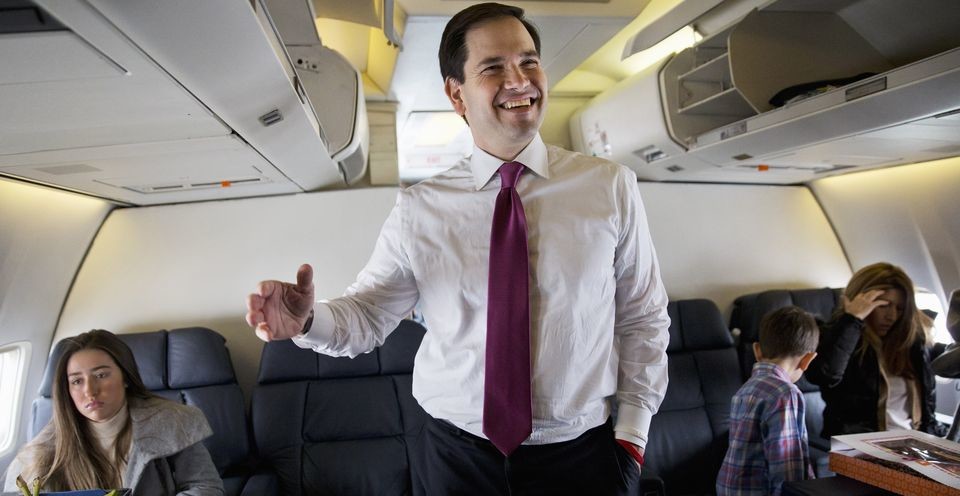
The best hope of the Republican establishment just a week ago, Marco Rubio suddenly faces a path to his party’s presidential nomination that could require a brokered national convention. That’s according to Rubio’s campaign manager, Terry Sullivan, who told The Associated Press that this week’s disappointing performance in New Hampshire will extend the Republican nomination fight for another three months, if not longer. It’s a worst-case scenario for Rubio and many Republican officials alike who hoped to avoid a prolonged and painful nomination fight in 2016. “We very easily could be looking at May — or the convention,” Sullivan said aboard Rubio’s charter jet from New Hampshire to South Carolina on Wednesday. “I would be surprised if it’s not May or the convention.” The public embrace of a possible brokered convention marks a sharp shift in rhetoric from Rubio’s top adviser that could be designed to raise alarm bells among Republican officials. Yet days after a disappointing fifth-place finish in New Hampshire and looking up at Donald Trump in next-up South Carolina, Rubio’s presidential ambitions are truly facing growing odds. While he downplayed his dilemma on his first day in South Carolina after the New Hampshire setback, the first-term Florida senator discussed his political challenges at length during an unusual 45-minute question-and-answer session with reporters aboard his campaign plane on Wednesday. He answered questions until there weren’t any more, noting afterward that he hadn’t held a session that long with reporters since his days as Florida’s House speaker. In remarks that were at times personal and others defiant, he also may have simply needed to talk it out to help process his predicament. It also seemed he needed to prove to the political world, himself and his family that he could face the biggest test of his young presidential bid. “My kids were watching me last night,” Rubio said of his nationally televised admission that a poor debate performance pushed voters away. “My kids knew that it didn’t go the way I wanted it to go. “I taught them more last night from that experience, I feel, than any words I’ll share. They were learning from that experience,” he said. As he shifts his attention to South Carolina’s Feb. 20 GOP contest, the 44-year-old freshman senator wants voters to know he’s learned an important lesson from his experience in New Hampshire. Instead of trying to avoid attacking his GOP rivals on the debate stage, Rubio said he’s now prepared to fight back when necessary — particularly with his party’s front-runner Donald Trump. “I don’t need to start these fights, but if someone starts one in the future we’re going to have to point out the differences in our records in a sharper way,” Rubio said. “I don’t think we have the luxury any longer to basically say ‘Look, I don’t want to argue with Republicans.’ “ New Hampshire destroyed any momentum Rubio had coming out of Iowa and for now, at least, locks the senator into a messy muddle in his party’s establishment wing. Both Ohio Gov. John Kasich and former Florida Gov. Jeb Bush beat Rubio in New Hampshire in the contest to emerge as the mainstream alternative to Trump and Texas Sen. Ted Cruz. And as senior aides embraced the possibility of a brokered national convention, GOP Rep. Trey Gowdy, of South Carolina, said the Rubio operation is “built for a long campaign.” “I don’t know of anyone who expected folks to fold up after New Hampshire and go on. There are a lot of candidates,” Gowdy said as he was traveling with Rubio on Wednesday. “He’s never indicated to me anything other than we’re built for the long haul and it’s going to be a long haul. But, you’re running to be the leader of the free world: It’s supposed to be a challenge.” There hasn’t been a contested national convention since 1976, yet Republican National Committee officials have already had preliminary discussions about the possibility of no candidate securing a majority of delegates in the state-by-state primary contests. It’s by no means assured that Rubio’s candidacy will survive that long. Despite his popularity among many Republican leaders, he will ultimately need to start winning primary contests to remain competitive — especially as Trump and Cruz perform well. Rubio’s team has long expressed confidence about his chances in South Carolina. Yet Rubio downplayed expectations when talking to reporters. “We obviously need to do better than we did in New Hampshire,” he said of the state where he finished in fifth place. Sensing weakness, Democrats and Republicans alike have begun to question Rubio’s long-term viability. “The debate performance hurt. We’ll see if he can turn it around,” said 68-year-old Rubio supporter Rusty DePass after a Wednesday rally in Columbia. “I’m mad as hell at the people who run his campaign for not having him prepared.” “It was awful,” DePass said. Republished with permission of the Associated Press.
Lindsey Graham ends his 2016 presidential campaign
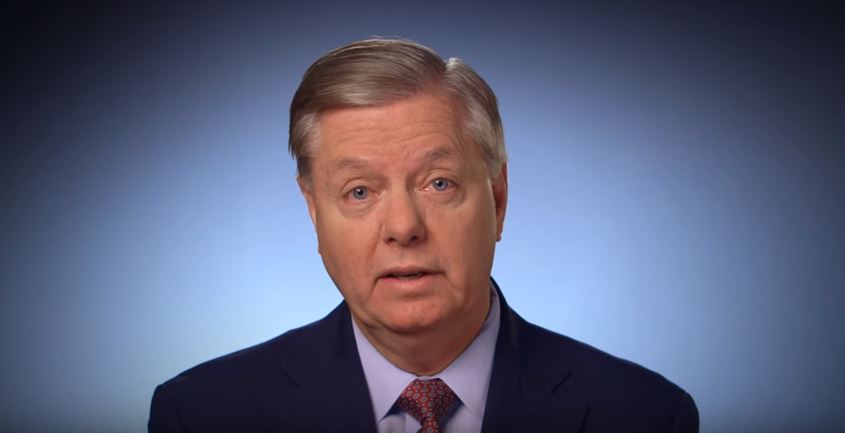
Republican Sen. Lindsey Graham has ended his 2016 presidential campaign. The South Carolina senator posted a video Monday, saying he was suspending his campaign. He said he had run “a campaign we can be proud of” that was focused on the nation’s security. Republished with permission of the Associated Press.
Super PACs dole out cash, whether candidates like it or not
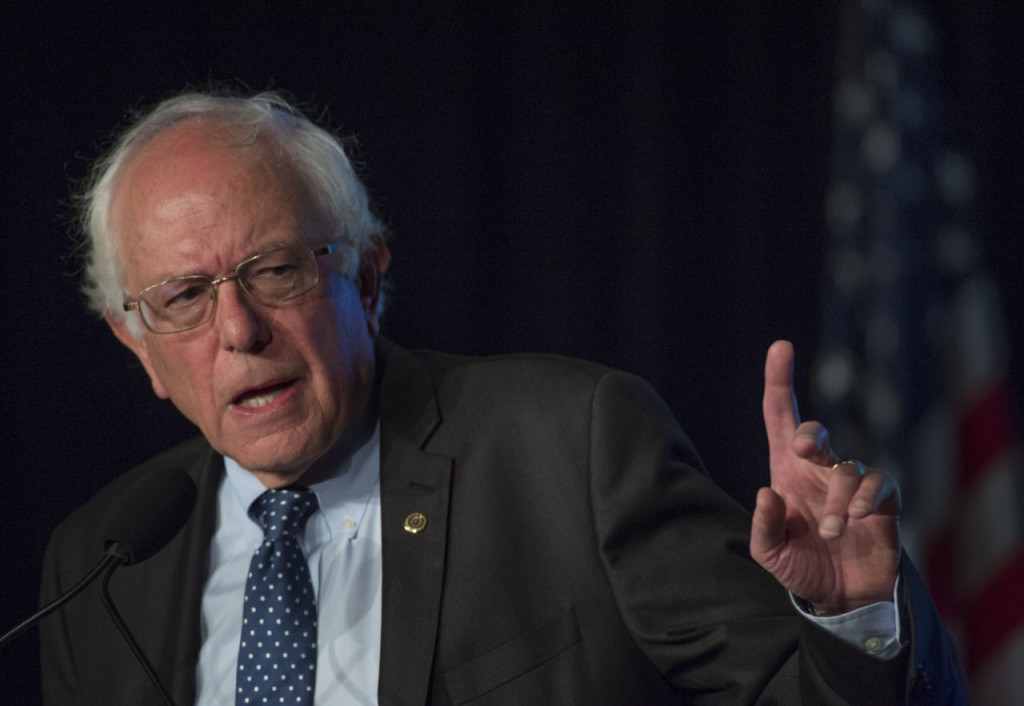
Donald Trump calls them a “crooked business.” Bernie Sanders says they’re “corrupt” organizations “buying elections.” But the barrage of insults hasn’t stopped the political groups known as super PACs and their donors from showing the two presidential candidates some love — no matter how loudly they may rail against their very existence. “I’m not going to be deterred just by that alone,” said Joshua Grossman, president of Progressive Kick, of Sanders’ anti-super PAC message. His liberal super PAC, funded by donors who have written checks as large as $250,000, has endorsed Sanders and is planning to spend money helping to elect him. Unlike formal campaigns for president, super PACs are allowed by law to accept donations of any size. That fact makes them a juicy political target for populist candidates such as Trump and Sanders. Yet already, a super PAC allied with a nurses’ union that endorsed Sanders over Democratic front-runner Hillary Clinton in August has put more than $600,000 into pro-Sanders digital and print ads in the important early primary states of Iowa, New Hampshire, South Carolina and Nevada. Billboards put up by the super PAC, National Nurses United for Patient Protection, proclaim: “Politics As Usual Won’t Guarantee Healthcare For All. Bernie Will.” The union is only able to spend that kind of money because of the 2010 Supreme Court ruling known as Citizens United, a decision that ultimately led to the creation of super PACs. Sanders has decried it as corrosive to democracy. That ruling also enabled unions to start spending member dues on political advertising in federal elections. Since that time, the nurses’ union has moved $3.4 million in dues into its super PAC, according to records filed with the Federal Election Commission. The group hasn’t raised money from anyone else. “Anti-labor folks might say that these unions are extorting money from their dues-paying members to use on politics, whether those members like it or not,” said Paul S. Ryan, senior counsel at the Campaign Legal Center in Washington, which advocates for stricter campaign finance rules. RoseAnn DeMoro, the union’s executive director, said the super PAC has helped other candidates in previous elections and is assisting Sanders’ bid because “we’ve never seen a better messenger” for causes important to the union’s members, citing as an example his plan to expand Medicare. “We are hoping to do as much as we can for him,” she said. “The nurses are extremely happy with what we’ve done with their money. He’s a vehicle for our voice. We laugh quietly among ourselves and say, ‘Bernie stole our issues.’” The nurses’ early endorsement was seen as a political victory for Sanders, who filmed a five-minute video thanking the group’s 185,000 members for their support. Nearly three months later, Sanders and his aides defended the group as “good” big money, drawing a contrast with the wealthy corporate donors he frequently vilifies on the campaign trail. “They are nurses and they are fighting for the health care of their people,” Sanders said in an interview last week on CNN. “They are doing what they think is appropriate. I do not have a super PAC.” Sanders has sought to distinguish himself from Clinton on the issue of big money. While both say they’d like to limit money in politics by rolling back the Citizens United court ruling, Clinton deployed close aides to a super PAC that aims to at least triple the $80 million it raised to support President Barack Obama‘s re-election. That group, Priorities USA, already has a half-dozen $1 million contributors. Sanders has not authorized any similar effort. In fact, in June, Sanders’ campaign attorney sent a cease-and-desist letter to a strategist who set up a “pro-Sanders” super PAC going by several names, including Bet on Bernie and Americans Socially United. Cary Lee Peterson, the man who set up the group, has credit and legal problems in several states, an investigation by the Center for Public Integrity found. A campaign finance report the group filed seven weeks late showed it was $50,000 in debt as of the end of June. The group is continuing to solicit money online. On the other side of the aisle, Trump accuses his opponents of being controlled by the super PACs backing their bids — even calling some “puppets” of their donors. But super PACs can’t seem to quit Trump. At one point his campaign identified nine that appeared to be raising money in the name of helping him. One, called Patriots for Trump, purchased Iowa and New Hampshire voter contact information as recently as late October, FEC records show. Trump himself attended a several events for a group called Make America Great Again — his slogan. In October, The Washington Post reported on ties between the leader of Make America Great Again and Trump’s own aides. Soon after, Trump asked the group to shut down, and they appeared to do so. At the same time, his campaign sent cease-and-desist letters to other supposedly pro-Trump super PACs, and he ramped up his anti-super-PAC rhetoric. Many seem to have stopped raising money. One group, called Let’s Trump Politics, remains operational — at least online. It formed in late September, according to the FEC, and hasn’t yet had to file any fundraising information. The group’s website includes a headline about how “Republicans support political outsiders” — and a disclaimer that its mission is “in no way a direct relation to Donald Trump or his 2016 presidential campaign.” Republished with permission of the Associated Press.
Jeb Bush makes stops in Upstate South Carolina

Republican presidential hopeful Jeb Bush is coming back for South Carolina for a series of events in the Upstate. The former Florida governor is starting his swing Tuesday with a Salvation Army event in Greenville at 1 p.m. At 3 p.m., he stops by Spartanburg’s Beacon Drive-In, a restaurant that has become a must-see for presidential campaigns as they visit South Carolina’s northwestern areas. At the end of his day, Bush is stopping in Rock Hill for a town-hall meeting at The Magnolia Room. Bush was in South Carolina last week, making stops in several cities and giving a speech at The Citadel in which he called for the U.S. to send more troops to the Middle East to fight the Islamic State group. Republished with permission of The Associated Press.
What does Jeb Bush get for $20 million in TV ad buys? Not much.

Jeb Bush and his supporters have spent more than twice that of any other candidate or outside group on TV ads in the 2016 presidential race. And what does the former Florida governor get for nearly $20 million, asks Mark Murray of NBC News. Apparently, not much. Bush’s poll numbers are currently languishing in the single digits both nationally and in the early primary states. Right to Rise, the pro-Bush super PAC, has made $19.5 million in ad spending for Iowa, New Hampshire and South Carolina. Murray notes that the campaign also spent another $438,000. In comparison, the 501c4 organization supporting fellow Floridian Marco Rubio – Conservative Solutions Project – paid half that amount, $8.4 million to date. Hillary Clinton’s presidential campaign, on the other hand, has spent $8.1 million, while her supporting Super PAC spent about $199,000. To put those numbers further in context, campaigns receive substantial discounts on TV ad time, whereas Super PACs and other outside groups may have to pony up to four times as much for similar ad space. Murray, along with NBC News partners SMG Delta, have calculated who spent what in the 2016 presidential ad wars – a not-quite-perfect way to measure winners of the secret advertising primary. Through Nov. 21, the leaders are Bush with $19.9 million ($19.5 million from Right to Rise Super PAC, $438K from campaign), followed by Rubio with $8.4 million (all from outside group Conservative Solutions Project), Clinton with $8.3 million ($8.1 million from campaign, $199K from Priorities USA Super PAC) and Ohio Gov. John Kasich with $7.3 million (all from two outside groups). After Kasich, comes New Jersey Gov. Chris Christie with $5.7 million ($5.3 million from America Leads Super PAC, $407K from campaign), Louisiana Gov. Bobby Jindal – who just dropped out of the race – with $3.3 million (all from outside groups), Vermont Sen. Bernie Sanders with $3 million (all from his campaign), South Carolina Sen. Lindsey Graham at $1.7 million ($1.6 million from Super PAC, $100K from campaign) and retired neurosurgeon Ben Carson with $1.5 million (all from his campaign). For the week of Nov. 15-21, the biggest spenders were Bush with $2 million, all from his Super PAC; Sanders with $940,000, all from his campaign; Clinton with $741,000, all from the campaign; Rubio with $619,000, all from Conservative Solutions; Kasich with $352,000, all from his supporting Super PAC New Day for America, Christie with $313,000, all from America Leads Super PAC; and Carson with $214,000, all of which came from his campaign.
Jeb Bush calls for U.S. ground forces to fight Islamic State
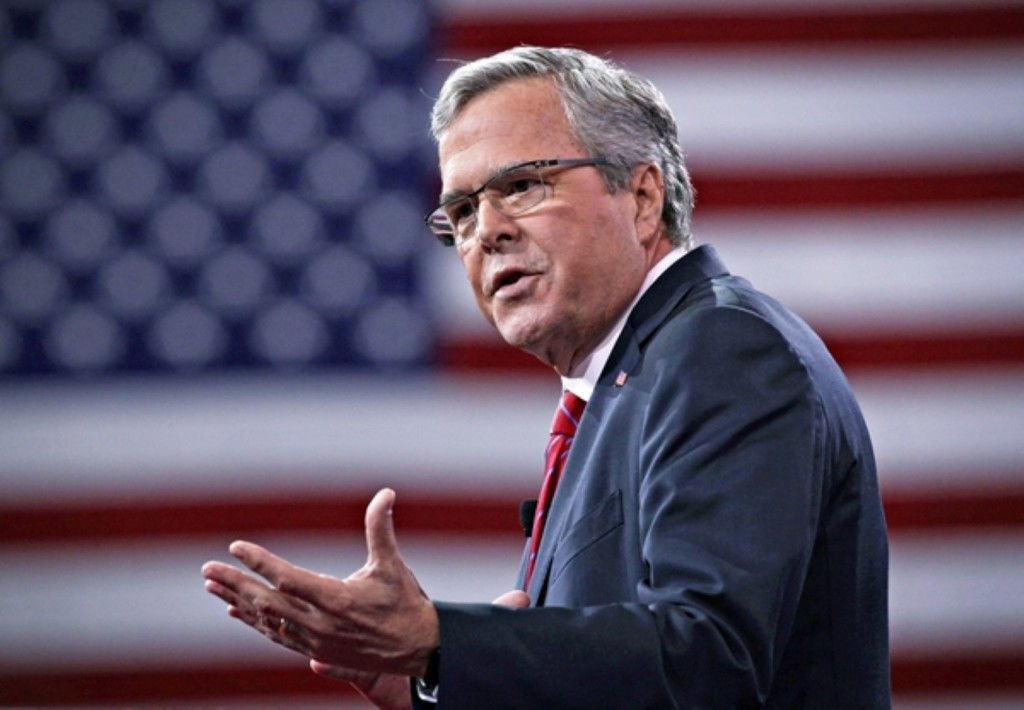
Republican presidential candidate Jeb Bush on Wednesday called for the U.S. to send more troops to the Middle East to fight the Islamic State. “This is the war of our time,” the former Florida governor said at the Citadel five days after Islamic State militants attacked Paris and killed 129 people. “Radical Islamic terrorists have declared war on the western world. Their aim is our total destruction. We can’t withdraw from this threat, or negotiate with it. We have but once choice: to defeat it.” Bush had planned for weeks to deliver a speech about Pentagon and military purchasing reform at the prestigious South Carolina military college. But the horrific events in France Friday moved Bush, who has supported the potential deployment of troops in Iraq and Syria, to call for ground troops. “The United States, in conjunction with our NATO allies and more Arab partners, will need to increase our presence on the ground,” he added, calling air power insufficient. He offered no specifics, but said the number of Americans sent to the region should be “in line with what our military generals recommend, not politicians.” The speech came as European nations hunted for conspirators in the attack and amid a fierce political debate within the U.S. over whether to limit or halt the resettlement of refugees fleeing war-ravaged Syria. One of the Paris bombers was thought to have arrived in a wave of migrants surging toward the West, but a top German official later said the Syrian passport found at a Paris attack scene was likely a fake. Bush, the brother and son of presidents, has projected himself as a potential commander in chief able to handle such challenges. But his focus on national security has increased as his own campaign for the presidential nomination has struggled to gain traction and especially since the Paris attacks. “The brutal savagery is a reminder of what is at stake in this election,” Bush said. “We are choosing the leader of the free world. And if these attacks remind us of anything, it’s that we are living in serious times that require serious leadership.” It’s no mystery why Bush made the speech in South Carolina. Many of the Republican primary voters in the early-voting Southern primary state are retired and active-duty military. Bush is not the only Republican presidential candidate who supports sending ground troops to fight the Islamic State. South Carolina’s own senior Sen. Lindsey Graham has been an aggressive advocate. Ohio Gov. John Kasich has also suggested sending U.S. troops. Florida Sen. Marco Rubio was generally supportive of President Obama‘s decision to put 50 special operations troops in Syria, and has suggested the number ought to grow. However, he hasn’t called for a larger scale mobilization. Bush has long faulted President Barack Obama’s administration, and former Secretary of State Hillary Clinton — the leading Democratic presidential candidate — for allowing wholesale federal spending cuts prompted by the 2013 budget reconciliation after Congress and the president were unable to craft more strategic cuts. The cuts affected military and non-military spending alike, at a time when conflicts in Syria and Iraq “spiraled out of control as President Obama and Hillary Clinton failed to act,” Bush said. And while Bush has often referred to the Islamic State as an unconventional threat, his prescription for the military includes heavier spending on its conventional elements. He called for doubling the U.S. Marine Corps’ battle-ready strength to 186,000, and updating the U.S. nuclear weapons capacity. He also called for increasing production of next-generation stealth bombers. Such aircraft, such as the F-35 joint strike fighter, carry a price tag of roughly $150 million apiece. Bush did not specifically propose a way to pay for the buildup. Bush, a year ago viewed as the likely front-runner, has failed to move to the top tier of GOP White House hopefuls in a field where political outsiders Donald Trump and Ben Carson and charismatic young lawmakers Marco Rubio and Ted Cruz have eclipsed him. While Bush projected himself as a potential wartime commander in South Carolina, he also appeared on Tuesday to be anticipating criticism that he would wage war in the Middle East, as his father and brother did when they were president. Bush’s brother, George W. Bush, left office with low approval in part due to his handling of the 2003 invasion of the war in Iraq, and its aftermath. “I think it’s important for the next president, whoever he or she may be, to learn from the lessons of the past and use those lessons to focus on the future,” Bush told an audience of more than 300 at Coastal Carolina University in Conway Tuesday. On Thursday in New York, Clinton will deliver an address outlining her strategy for defeating ISIS as well as her overall plan for fighting radical jihadism. Republished with permission of the Associated Press.
