
Donald Trump’s lead narrows; Marco Rubio, Jeb Bush battle for 3rd in South Carolina
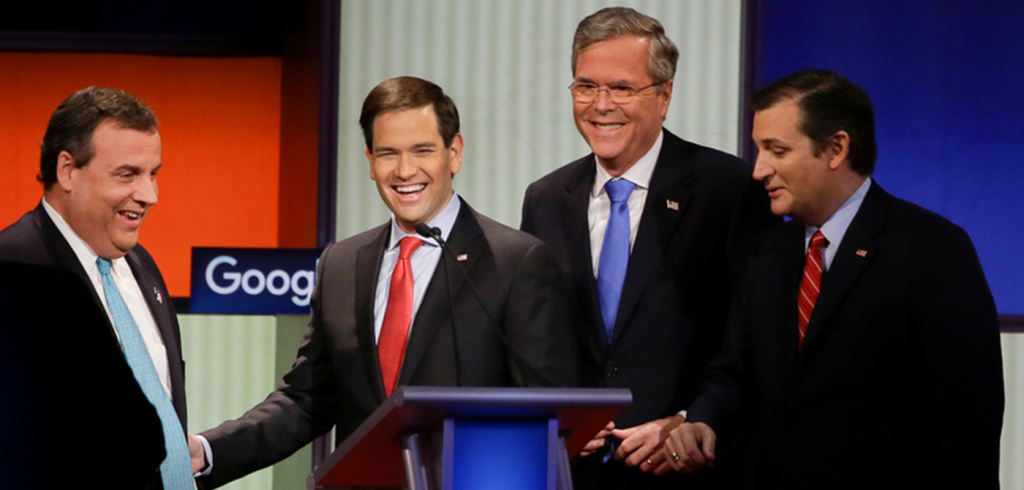
With just one day before the South Carolina primary, Donald Trump’s lead in the Palmetto State is narrowing. Trump still leads the pack, according to a new NBC News/Wall Street Journal/Marist poll of likely South Carolina Republican primary voters; however, Ted Cruz is now within 5 points of the New York businessman. Trump gets 28 support from likely GOP primary voters, followed by Cruz at 23 percent. Marco Rubio is at 15 percent, while Jeb Bush is at 13 percent. Rubio and Bush are in a statistical tie for third, according to the NBC/WSJ/Marist poll. John Kasich and Ben Carson are both polling at 9 percent. The new South Carolina poll might be an outlier, though. All other recent polls have Trump leading by a wide margin. An Emerson College Polling Society poll released this week found Trump was leading the field with 36 percent support. In that poll, Trump led his nearest competitor (Rubio at 19 percent) by 17 points. A Fox News poll released Thursday found Trump was at 32 percent and led his nearest competitor (Cruz at 19 percent) by 13 percent. On the Democratic side, Hillary Clinton leads Bernie Sanders, 60 percent to 32 percent. The NBC/WSJ/Marist poll was conducted from Monday through Wednesday. The poll surveyed 722 likely GOP primary voters and 425 Democratic voters. The GOP poll has a margin of error of 3.6 percent; while the Democratic survey has a margin of error of 4.8 percent. The South Carolina Republican primary is Saturday. Democrats head to the polls in the Palmetto State on Feb. 27.
Jeb Bush tells NBC News he’s in race for “long haul”

Jeb Bush is in the race for “the long haul.” Or at least that’s what the former Florida governor told NBC News reporter Peter Alexander during an interview this week. Bush brushed off questions about whether South Carolina would be his campaign’s last stand, saying he is doing well in the Palmetto State. “The obituaries have been written probably once a week and, we’re in it for the long haul,” said Bush. “But we are going to do well here.” Bush said he thinks Donald Trump has hijacked the Republican Party. Bush said he thinks that support is temporary, and said Trump “is not going to win the presidency.” “This guy is not serious,” said Bush, according to a transcript of the interview. “In a serious dangerous time, we need a serious person with a steady hand to be president of the United States.” Bush has spent the past week in South Caroling trying to rally support. On Monday, former President George W. Bush campaigned for his brother in the Palmetto State; and Barbara Bush is expected to hit the trail with Jeb Bush this week. CNN reported that the former first lady is expected to arrive in South Carolina on Thursday and will stay through the primary. Bush is in fourth place in South Carolina, according to polling averages compiled by RealClearPolitics. Bush told NBC News that he planned to go on to Nevada if he places fourth in South Carolina. “This is a, this is a long haul process particularly you now the rules of the Republican Party set up this time,” he said. Watch Jeb Bush’s interview with NBC News’ Peter Alexander.
Barbara Bush to campaign with son in SC
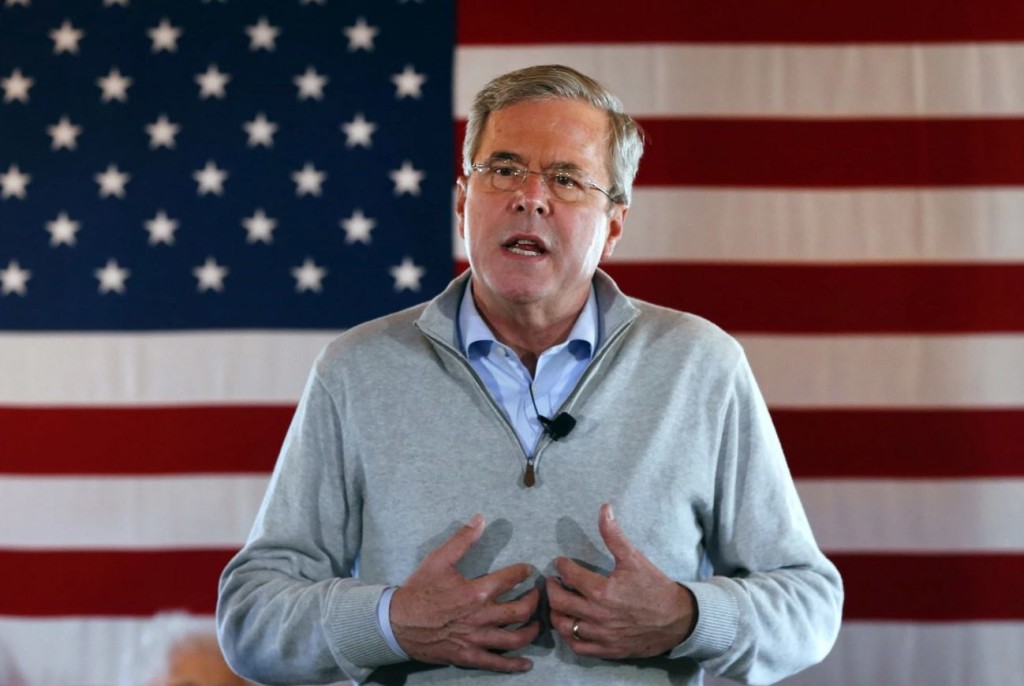
Jeb Bush says that his mother, Barbara Bush, will campaign for him again in South Carolina with days to go until the state’s Republican primary. The former Florida governor said Tuesday that his mother, the former First Lady, would join him on the road as she did ahead of the New Hampshire primary. Campaign spokeswoman Kristy Campbell said Barbara Bush would come to South Carolina on Thursday and stay through Saturday when South Carolina votes for a Republican presidential nominee. Republished with permission of the Associated Press.
In new ad Trey Gowdy says “no one is stronger” than Marco Rubio on national security
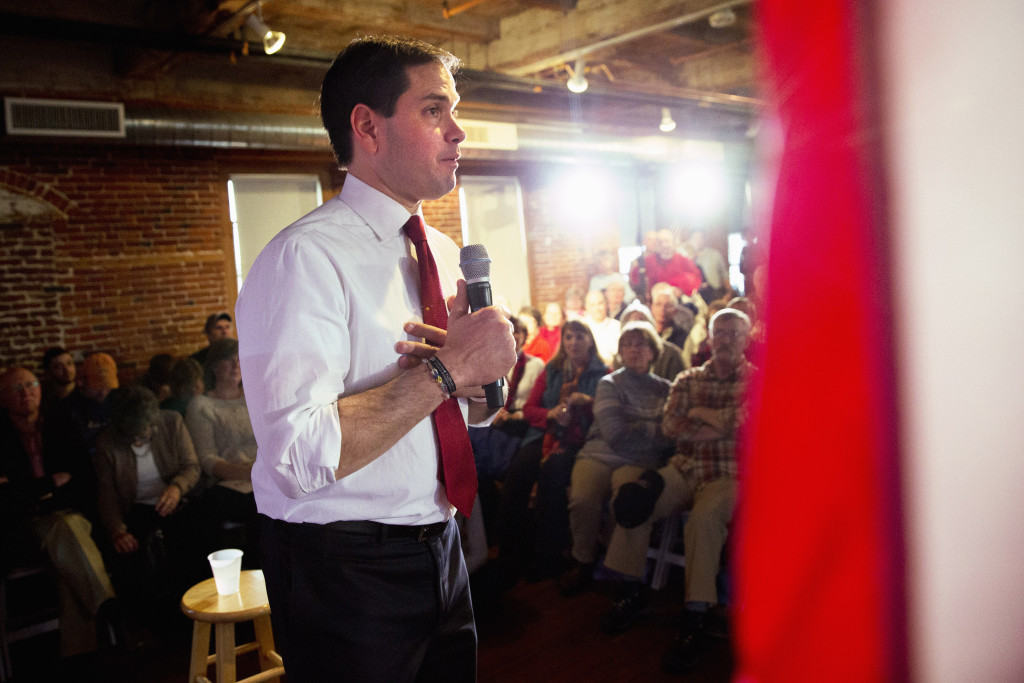
Marco Rubio is the best candidate to keep America safe. That’s the message U.S. Rep. Trey Gowdy is sending in a new advertisement set to air in the Palmetto State. “I have spent my life fighting to enforce the rule of law and keep Americans safe. And no one is stronger for America’s security than Marco Rubio,” the South Carolina Republican is shown saying in the advertisement. “Marco Rubio will be a commander in chief who brings back American strength. I’m Trey Gowdy — that’s why I support Marco Rubio and that’s why the Democrats fear Marco the most.” The 30-second spot — called “Fear” — is expected to hit the airwaves South Carolina on Tuesday. According to a new Public Policy Polling survey, Rubio is currently tied for second in South Carolina. The Republican primary is Saturday.
Donald Trump and Hillary Clinton maintain sizable leads in national NBC News tracking poll
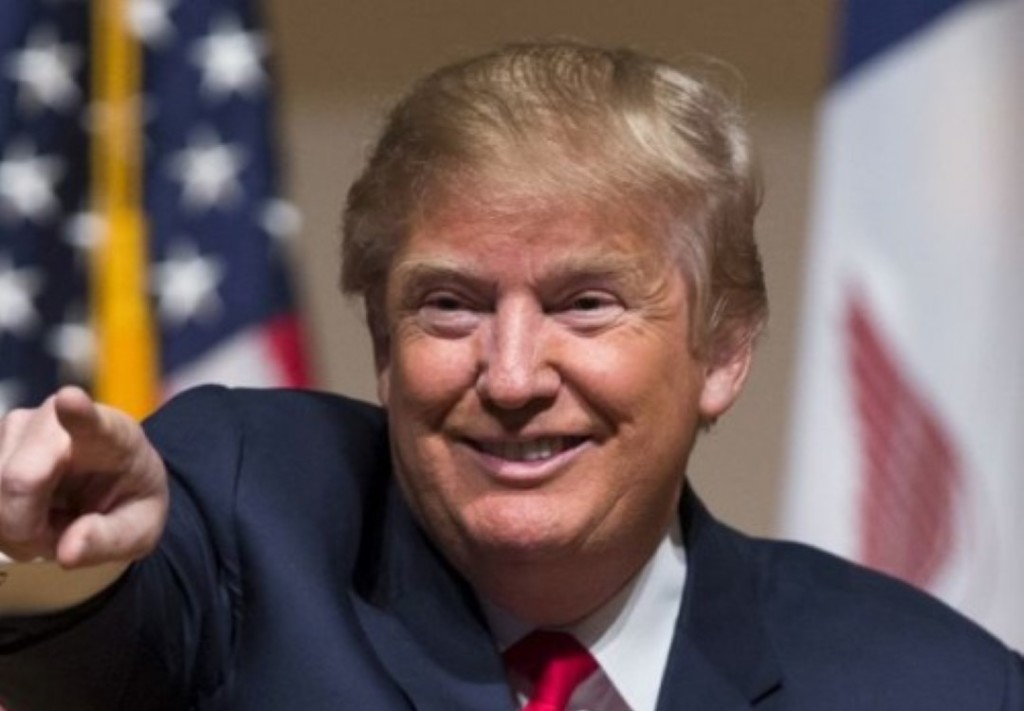
Republicans nationwide think Donald Trump will be their party’s nominee, according to a new NBC News|SurveyMonkey poll. The survey found 56 percent of Republicans and Republican-leaning voters believe Trump will be the eventual Republican nominee; while 22 percent said Ted Cruz would be the nominee. Ten percent of Republicans and Republican-leaning voters said Marco Rubio would be the nominee. The New York businessman continues to lead the Republican field with 38 percent support, followed by Cruz at 18 percent and Rubio at 14 percent. Ben Carson is at 8 percent, whileJohn Kasich is at 7 percent. Jeb Bush rounds out the field with 4 percent. On the Democratic side, Hillary Clinton leads Bernie Sanders, 50 percent to 40 percent. Sixty-six percent of Democrats and Democratic-leaning voters said they believe Clinton will be their party’s eventual nominee. The NBC News|SurveyMonkey weekly tracking poll was conducted from Feb. 8 through Feb. 14. The online survey sampled 13,1
New Right to Rise ad says SC voters should end Donald Trump charade
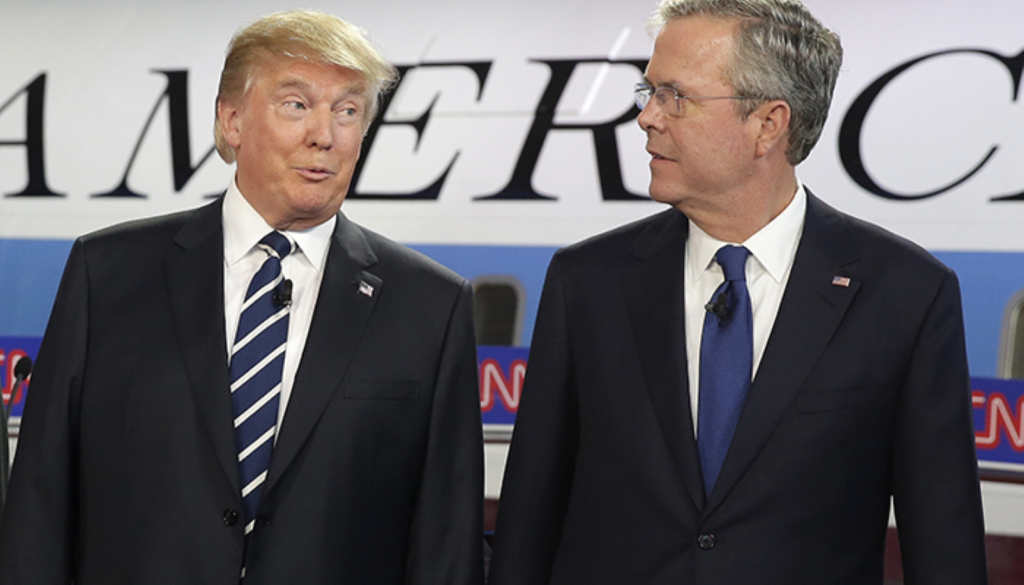
A new radio advertisement that takes a swipe at Donald Trump and his profanity-laced speeches is set to begin airing in South Carolina. The 60-second spot — paid for by Right to Rise USA, the super PAC backing Jeb Bush — ponders whether Trump shares South Carolina voters’ values. The advertisement features snippets from Trump’s speeches, where he is heard using some salty language. Right to Rise bleeps out any profanity. “The time is now for South Carolina to end the Trump charade,” a man says in the advertisement. “We need a serious leader in the White House. That man is Jeb Bush. He’ll unity our country, not divide us. He’s a man of deep faith who will make us proud.” The advertisement is set to begin airing on South Carolina radio stations Monday. The Bush campaign is pulling out all the stops in advance of the Palmetto State’s Republican primary on Saturday. Former President George W. Bush is scheduled to attend a campaign rally for his brother on Monday. The former president has also been featured in a radio spot paid for by the Bush campaign running in South Carolina. The former Florida governor is hoping for a strong finish in South Carolina. According to polling averages compiled by RealClearPolitics, he is currently in fifth. The South Carolina Republican primary is Saturday.
Marco Rubio in rivals’ crosshairs for GOP’s South Carolina debate
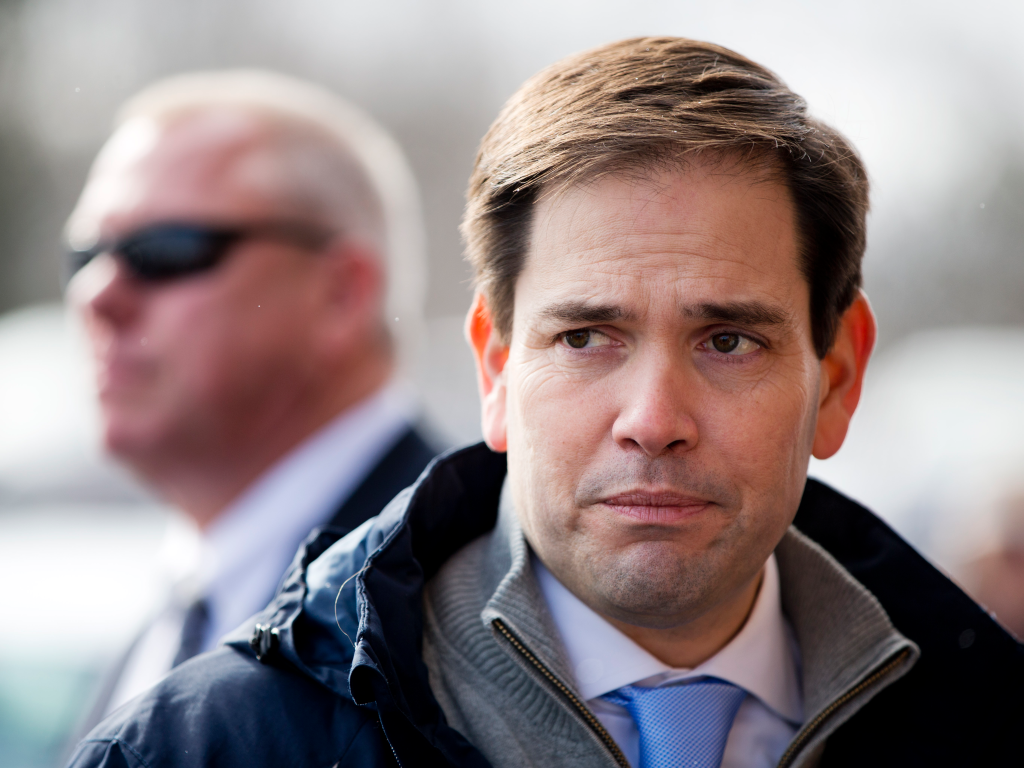
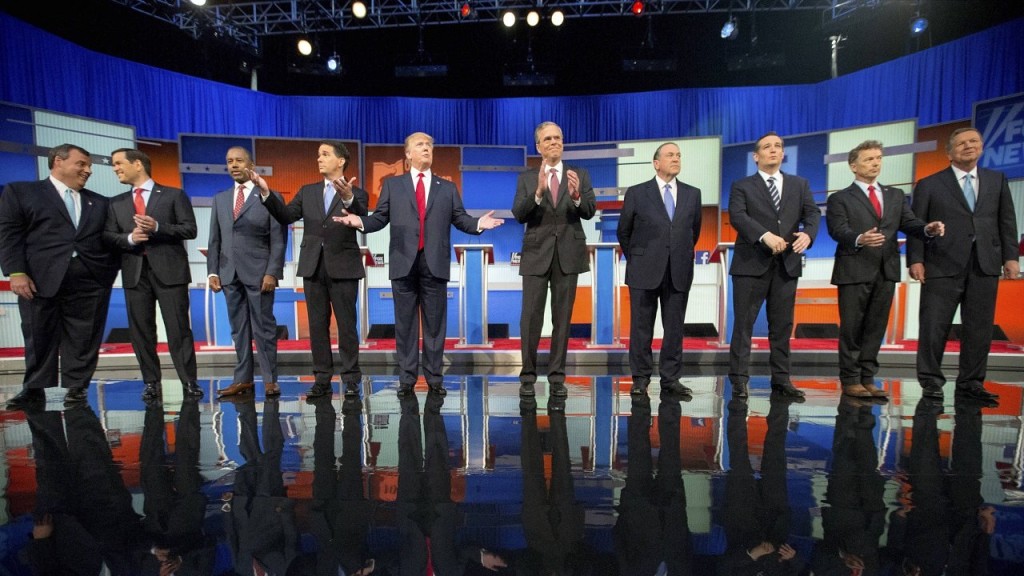
Marco Rubio enters Saturday night’s Republican presidential debate facing immense pressure to right his campaign after faltering badly in the last contest and finishing a disappointing fifth in New Hampshire. Rubio’s stumble re-energized some of his rivals as the race heads to the South and reignited questions about whether the 44-year-old first-term senator has the experience to be president. While he’s sought to shed some of his reliance on well-rehearsed talking points in recent days, the debate will be a prime test of whether he can rebound. Just six contenders will face off Saturday in Greenville, South Carolina, far from the long line of candidates who took the stage in earlier GOP debates. But even with a streamlined field, the Republican race remains deeply uncertain. Texas Sen. Ted Cruz and celebrity billionaire Donald Trump each have a state in their win column after respective victories in Iowa and New Hampshire, and both appear to be in a strong position heading into South Carolina’s Feb. 20 Republican primary. They’ve been sparring from afar for weeks but have so far kept their acrimony off the debate stage. Whether that pattern continues in Saturday’s contest is unknown. Cruz released a television advertisement before the debate accusing the real estate mogul of a “pattern of sleaze,” spurring Trump to fire back on Twitter with another round of questions about his Canadian-born rival’s eligibility to be president. If Cruz “doesn’t clean up his act, stop cheating, & doing negative ads, I have standing to sue him for not being a natural born citizen,” Trump wrote. While Trump will be standing at center stage, signifying his lead in national preference polls, Rubio will be the center of attention. Florida’s junior senator entered the last debate facing criticism from rivals who said that while he delivers a good speech and sharp answers in debates, he lacked depth. He played into that characterization when he repeated the same practiced line multiple times under pressure from New Jersey Gov. Chris Christie. Rubio’s poor performance has created a potential opening for former Florida Gov. Jeb Bush and Ohio Gov. John Kasich. Bush in particular will need a solid showing in South Carolina, given his prominent political family’s ties to the state, while Kasich is just hoping to remain viable until the race heads to friendly territory for the Midwestern governor. Katon Dawson, former chairman of the South Carolina GOP, said he expects the debate to have more of an effect on his state’s voters than the results in either Iowa or New Hampshire. “In the last couple of races, we have seen our voters hold their final pick until a couple of days before,” Dawson said. “After the church bells ring on Sunday, people are going to start paying a lot of attention.” Also on stage Saturday will be Ben Carson, the retired neurosurgeon who has struggled to stay relevant in the debates as his standing in the race sharply slipped. Carson pledged that he wouldn’t allow himself to be ignored. “I’m going to be much more boisterous,” he said on Fox TV. Poor showings in Iowa and New Hampshire led some frequent debate participants, including Christie and Kentucky Sen. Rand Paul, to end their campaigns. Nearly all lower polling candidates who have populated undercard debates have also all ended their White House bids.
Presidential contenders fight for minority voters in South Carolina
Presidential candidates in both parties battled for the crucial backing of blacks and Hispanics on Friday as the race shifted toward states with more minority voters. Republicans crisscrossed South Carolina looking to derail billionaire Donald Trump and Texas Sen. Ted Cruz, who each came to the state with a burst of momentum after the first two nomination contests. Several candidates embraced the chaos as they felt out the best strategies to survive South Carolina and advance into a grueling March primary schedule, when 58 percent of the party’s delegate total will be at stake. Former Florida Gov. Jeb Bush was embracing his family ties. Bush on Friday defended his decision to bring his brother, former President George W. Bush, to South Carolina to help him campaign. Speaking to ABC’s “Good Morning America,” Jeb Bush said recruiting the former president wasn’t a sign of desperation, as Trump has suggested. George W. Bush, who is slated to campaign for his brother on Monday, left the White House in January 2009 with low approval ratings. “This is the beginning of the campaign,” and “for my brother to speak on behalf of the skills I have to lead this country will be quite helpful,” Jeb Bush said. He later picked up the endorsement of South Carolina’s former first lady Iris Campbell, a longtime Bush family ally. Bush’s rival in the fight for the moderate establishment was still introducing himself to South Carolina voters. In a new biographical ad, Ohio Gov. John Kasich notes that his parents’ death in a drunk-driving crash in 1987 “transformed” him and helped him find his faith. A second new ad promises a whirlwind of activity in the first 100 days of a Kasich presidency — “no excuses, no surrender,” says a narrator with a hint of a Southern accent. Florida Sen. March Rubio, looking to re-establish his footing after a fifth-place finish in New Hampshire, lashed out at Trump, Cruz and Bush Thursday saying none of them possesses foreign policy experience required of a commander in chief. Trump was the only Republican to bypass South Carolina on Friday, redirecting his typically unconventional campaign to Florida, where he planned to hold a rally in Tampa. Meanwhile, at Thursday’s Democratic debate in Milwaukee, Hillary Clinton, who has cast herself as the rightful heir to President Barack Obama‘s legacy, accused rival Bernie Sanders of diminishing the president’s record and short-changing Obama’s leadership. “The kind of criticism I hear from Sen. Sanders, I expect from Republicans. I do not expect it from someone seeking the Democratic nomination,” Clinton said in a sharp exchange at the close of the two-hour debate. Her biting comments followed an interview in which Sanders suggested Obama hadn’t succeeded in closing the gap between Congress and the American people — something the president himself has acknowledged. Sanders responded: “Madam Secretary, that is a low blow.” And he noted that Clinton was the only one on the stage who ran against Obama in 2008. Long viewed as the overwhelming front-runner in the Democratic race, Clinton has been caught off guard by Sanders’ strength, particularly his visceral connection with Americans frustrated by the current political and economic systems. Clinton’s own campaign message has looked muddled compared to Sanders’ ringing call for a “political revolution,” and her connections to Wall Street have given the Vermont senator an easy way to link her to the systems his supporters want to overhaul. Clinton was scheduled to campaign in South Carolina on Friday, after which, the two Democratic rivals were scheduled to attend a dinner event in Minnesota. Republished with permission of the Associated Press.
Jumbled GOP field hopes for survival in South Carolina
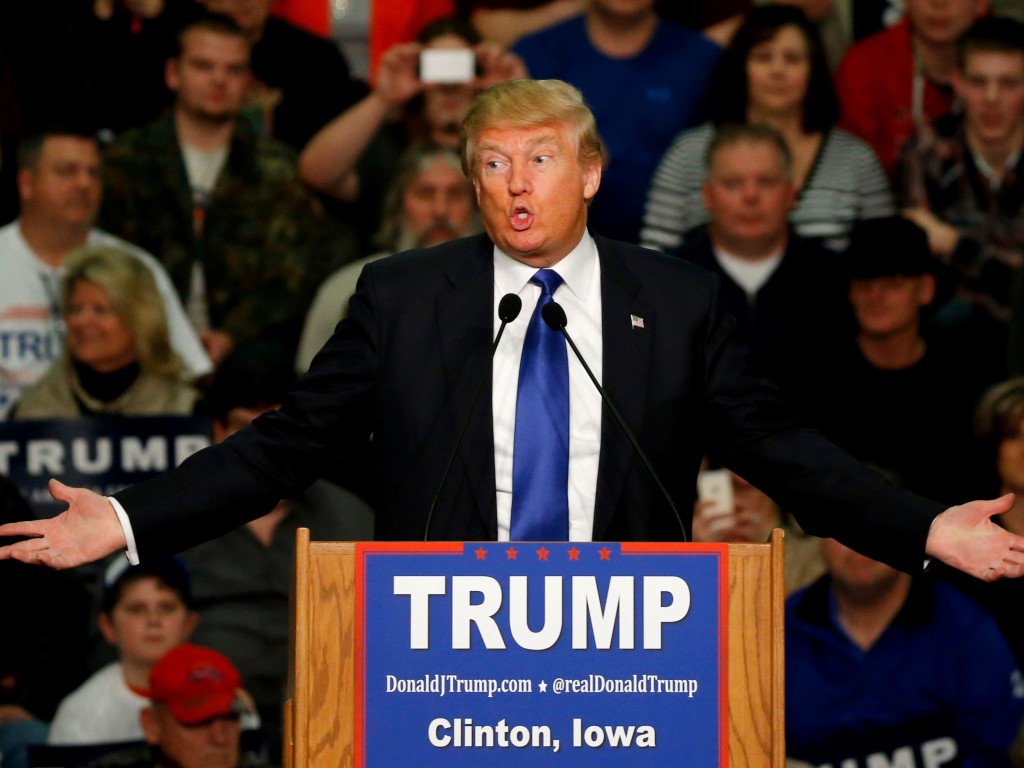
Hoping for survival in the South, a muddled field of Republican presidential contenders descended Wednesday on South Carolina, no closer to clarity about who can stand between Donald Trump and their party’s nomination. Not me, Carly Fiorina announced, dropping out of the campaign. A Chris Christie spokeswoman said his race was over, too. But a sizeable field remained. To the dismay of party leaders, all signs point to a drawn-out battle for delegates following Trump’s resounding victory in New Hampshire. Florida Sen. Marco Rubio, under immense pressure to prove himself after a devastating fifth-place finish, was looking for a fight that could last for months or even spill into the first contested GOP national convention since 1976. “We very easily could be looking at May — or the convention,” Rubio campaign manager Terry Sullivan told The Associated Press. If Trump had Republicans on edge, Democrats were feeling no less queasy. Rejected in New Hampshire, Hillary Clinton sought redemption in Nevada, where a more diverse group of voters awaited her and Bernie Sanders. Sanders, a Vermont senator and self-proclaimed democratic socialist, raised $5 million-plus in less than a day after his New Hampshire triumph. The contributions came mostly in small-dollar amounts, his campaign said, illustrating the resources he’ll have to fight Clinton to a bitter end. Both Clinton and Sanders — the first Jew to win a presidential primary — worked to undercut each other among African-Americans and Hispanics with less than two weeks until the Democratic contests in Nevada and South Carolina. Sanders met for breakfast in Harlem with the Rev. Al Sharpton, a civil rights activist. Clinton, meanwhile, announced plans to campaign with the mother of Sandra Bland, whose death while in police custody became a symbol of racial tensions. And Clinton’s campaign deployed South Carolina state Rep. Todd Rutherford to vouch for her support for minorities. “Secretary Clinton has been involved in South Carolina for the last 40 years,” Rutherford said. “Bernie Sanders has talked about these issues for the last 40 days.” Texas Sen. Ted Cruz, the conservative firebrand and victor in the leadoff Iowa caucuses, returned to the center of the fracas after largely sitting out New Hampshire. He drew contrasts with Trump as he told a crowd of 500 in Myrtle Beach that Texans and South Carolinians are more alike than not. “We love God, we’re gun owners, military veterans and we’re fed up with what’s happening in Washington,” Cruz said. Almost all the Republicans have spent months building complex campaigns and blanketing airwaves in South Carolina, which heralds the start of the GOP campaign’s foray into the South. After that primary on Feb. 20, seven Southern states including Georgia and Virginia will anchor the Super Tuesday primaries on March 1, with oodles of delegates at stake. The state, with its array of conservative GOP voters, will test Trump and the others in new ways. Having courted social conservatives in Iowa and moderates in New Hampshire, the candidates face an electorate infused with evangelical, pro-business and military-minded flavors. Rubio’s campaign has looked forward to the state. Yet his path grew far trickier after a fifth-place New Hampshire letdown, which terminated talk of Republican leaders quickly uniting behind him as the strongest alternative to “outsiders” Trump and Cruz. His campaign’s suggestion that the race could veer a contested convention seemed to signal to mainstream Republicans that the party would be ill-served by allowing the Trump phenomenon to last much longer. GOP officials have already had early discussions about such a July scenario, which could be triggered if no candidate secures a majority of delegates by convention time. For Gov. John Kasich, whose second-place showing was New Hampshire’s primary stunner, the task was to convert newfound interest into support in a state ideologically distant from his native Ohio. With a minimal South Carolina operation compared to his rivals, Kasich must work quickly. Seeking votes at a local business in Charleston, Kasich worked to burnish his reputation as a results-oriented leader. “If you don’t go to the gym, you get flabby,” Kasich said. “And if the country doesn’t solve its problems, it gets flabby.” Heading into the final two-week sprint, Trump was leading in South Carolina among all demographic groups, an NBC/Marist/Wall Street Journal poll showed, with Cruz and Rubio a distant second and third. Already, more than $32 million has been spent on TV ads here, according to CMAG/Kantar Media data — much of it by Right to Rise, the PAC backing former Florida Gov. Jeb Bush. Though he placed fourth on Tuesday, Bush was hoping that Rubio’s slump would forestall his own ouster from the race. After a rally in Bluffton, he said voters in New Hampshire “pushed the pause button” on anointing any candidate — and turned to his brother, George W. Bush, for help. His campaign debuted a new ad featuring the former president, who plans to campaign in the Palmetto State. Republished with permission of the Associated Press.
George W. (finally) to campaign for Jeb Bush
Jeb Bush’s South Carolina director says the presidential candidate may finally appear on the campaign trail alongside his brother, former President George W. Bush. Brett Doster says “George W. Bush is the most popular Republican alive” and that the GOP in South Carolina is “eager” for the visit. South Carolina holds a Feb. 20 primary, 11 days after New Hampshire. Jeb Bush has a large organization in the state, which gave his father and brother hard-fought primary victories on their paths to the 1988 and 2000 nominations, respectively. Doster says plans are not final, but notes that George W. Bush is popular among a cross-section of important South Carolina GOP groups, from evangelical Christians to the military community and large veterans presence. Republished with permission of the Associated Press.
