
Moon Jae-In to carry private message from Kim Jong Un to Donald Trump
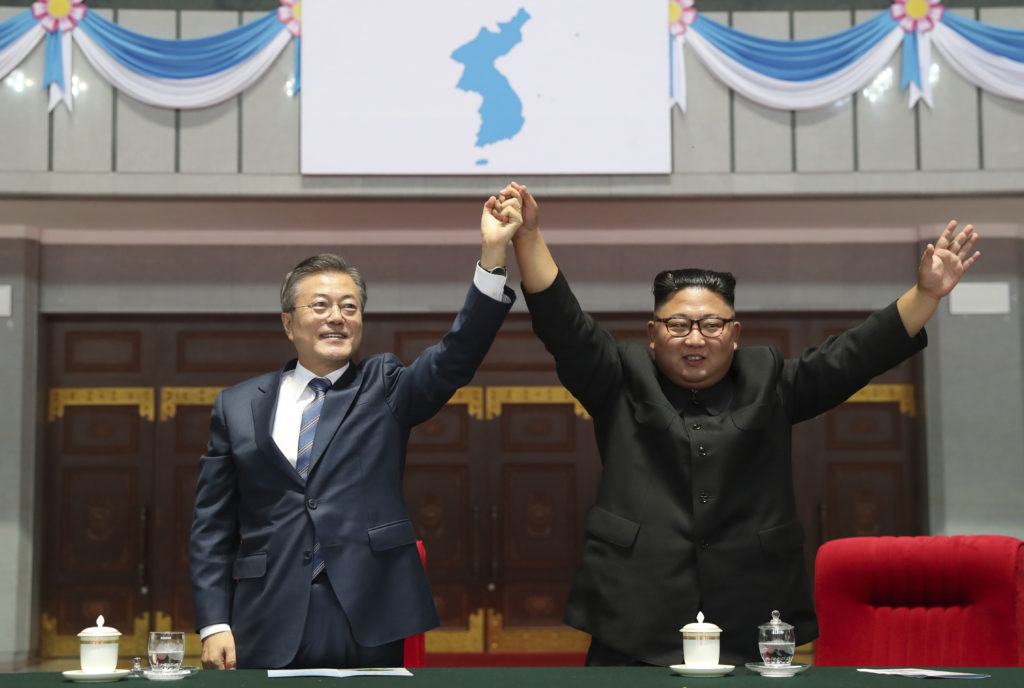
A beaming South Korean President Moon Jae-in, freshly returned home Thursday from a whirlwind three-day summit with Kim Jong Un, said the North Korean leader wants the U.S. secretary of state to visit Pyongyang soon for nuclear talks, and also hopes for a quick follow-up to his June summit with President Donald Trump. Only hours after standing with Kim on the peak of a volcano that’s at the heart of Kim dynasty propaganda, Moon told reporters in Seoul that he will be carrying a private message from Kim to Trump about the nuclear standoff when he meets the U.S. president in New York next week on the sidelines of the U.N. General Assembly session. Both Trump, who has repeatedly spoken of his good relationship with Kim, and the North Korean leader have expressed a desire to follow up on the June meeting in Singapore that was meant to settle an impasse that seemed to be edging toward war last year. But there are worries among observers about whether Kim is as committed to denuclearization as he claims. Moon faces increasing pressure from Washington to find a path forward in efforts to get Kim to completely — and unilaterally — abandon his nuclear arsenal, which is thought to be closing in on the ability to accurately target any part of the continental United States. “There are things that the United States wants us to convey to North Korea, and on the other side there are also things that North Korea wants us to convey to the United States,” Moon said at a press center in Seoul where reporters had watched parts of his summit with Kim on huge video screens that occasionally showed live streams from Pyongyang. “I will faithfully serve that role when I meet President Trump to facilitate dialogue between North Korea and the United States.” Moon, who set up the Singapore summit and is eager for another to happen, also told reporters that he’ll convey to Trump his and Kim’s desire to get a declaration on ending the Korean War by the end of this year. The war still technically continues because it ended in 1953 with a cease-fire, not a peace treaty. An end-of-war declaration would be the first step toward an eventual formal peace treaty, but the United States is wary about signing off on something that could result in Kim pushing for the removal of U.S. troops stationed in South Korea to deter the North. Earlier Thursday, Kim and Moon took to the road for the final day of their summit, hiking to the peak of Mount Paektu, which is considered sacred in the North, their hands clasped and raised in a pose of triumph. Their trip to the mountain on the North Korean-Chinese border, and the striking photo-op that will resonate in both Koreas, followed the announcement of wide-ranging agreements on Wednesday that they trumpeted as a major step toward peace. However, their premier accord on the issue that most worries the world — the North’s pursuit of nuclear-tipped missiles — contained a big condition: Kim stated that he would permanently dismantle North Korea’s main nuclear facility only if the United States takes unspecified corresponding measures. “Chairman Kim Jong Un has again and again affirmed his commitment to denuclearization,” Moon said after returning to Seoul. “He expressed his wish to finish a complete denuclearization as soon as possible and focus on economic development.” Moon said North Korea’s agreement to allow international experts to observe a “permanent” dismantling of a missile engine test site and launch pad was the same thing as a commitment to “verifiably and irreversibly” demolish those facilities. Moon says such steps, combined with North Korea’s unilateral but unverified dismantling of a nuclear testing ground earlier this year, would prevent the North from advancing its weaponry through further nuclear and missile tests. Experts say the destruction of the missile engine test site and launch pad wouldn’t represent a material step in the denuclearization of North Korea, which declared its nuclear force complete last year and has designed its most powerful missiles to be fired from vehicles. Moon also said that Kim hoped to visit Seoul soon. “I wish there would be an opportunity for my fellow citizens to see Chairman Kim Jong Un for themselves and hear him talking about the denuclearization of the Korean Peninsula, peace and prosperity with his own voice,” the South Korean president said. Earlier in the day, the leaders smiled broadly as they posed at the summit of Paektu, their wives grinning at their sides, a brilliant blue sky and the deep crater lake that tops the volcano in the background. They also toured the shores of the lake, where Moon and his wife filled bottles with its water and a South Korean pop singer delivered for the leaders a rendition of a beloved Korean folk song, “Arirang,” which is used in both Koreas as an unofficial anthem for peace. The mountain is important to the Kim family, members of which are referred to as sharing the “Paektu bloodline,” and the volcano is emblazoned on North Korea’s national emblem and lends its name to everything from rockets to power stations. Many South Koreans also feel drawn to the volcano, which, according to Korean mythology, was the birthplace of Dangun, the founder of the first ancient Korean kingdom, and has long been considered one of the most beautiful places on the peninsula. Not everyone was pleased, though. About 100 anti-North Korea protesters rallied in central Seoul to express anger about the summit and displayed slogans that read, “No to SK-NK summit that benefits Kim Jong Un.” The leaders are basking in the glow of the joint statement they signed Wednesday. Compared to the vague language of their two earlier summits, Kim and Moon seem to have agreed on an ambitious program meant to tackle soaring tensions that caused many to fear war last year as the North tested a string of increasingly powerful weapons. Both leaders also
Korean leaders meet in Pyongyang for potentially tough talks
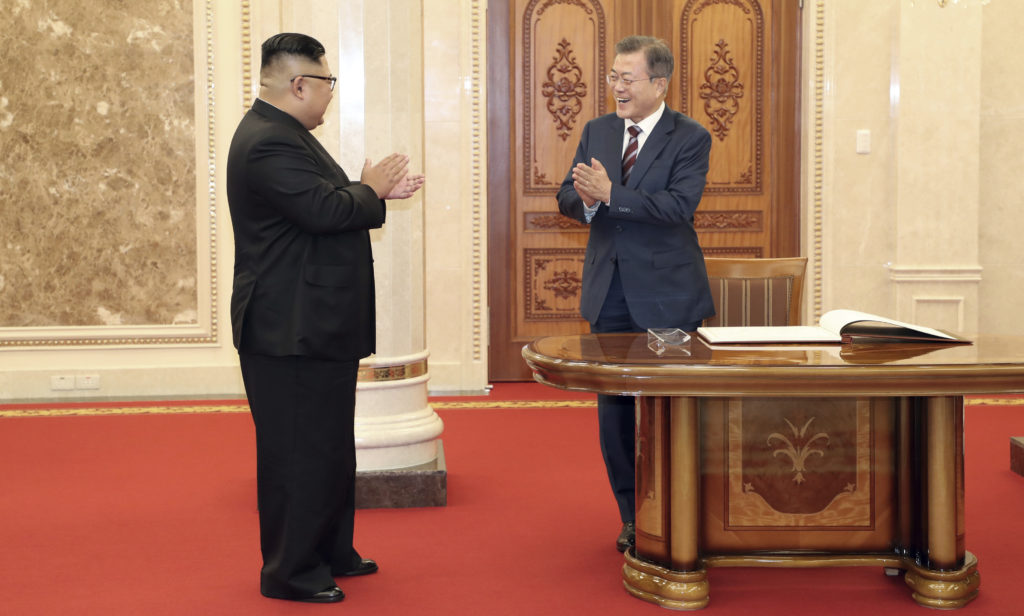
South Korean President Moon Jae-in began his third summit with North Korean leader Kim Jong Un on Tuesday with possibly his hardest mission to date — brokering some kind of compromise to keep North Korea’s talks with Washington from imploding and pushing ahead with his own plans to expand economic cooperation and bring a stable peace to the Korean Peninsula. Kim gave the South Korean president an exceedingly warm welcome, meeting him and his wife at Pyongyang’s airport — itself a very unusual gesture — then riding into town with Moon in an open limousine through streets lined with crowds of North Koreans, who cheered and waved the flag of their country and a blue-and-white flag that symbolizes Korean unity. The made-for-television welcome is par for the course for Moon’s summits with Kim. Hours after his arrival, Moon began an official summit with Kim at the ruling Workers’ Party headquarters. The two were joined by two of their top deputies — spy chief Suh Hoon and presidential security director Chung Eui-yong for Moon, and Kim Jong Un’s powerful sister, Kim Yo Jong, and senior Workers’ Party official Kim Yong Chol for the North Korean leader, according to Moon’s office. At the start of their meeting, Kim thanked Moon for brokering a June summit with U.S. President Donald Trump. “It’s not too much to say that it’s Moon’s efforts that arranged a historic North Korea-U.S. summit. Because of that, the regional political situation has been stabilized and more progress on North Korea-U.S. ties is expected,” Kim said, according to South Korean media pool reports and Moon’s office. Moon responded by expressing his own thanks to Kim for making a “bold decision” in a New Year’s speech to open a new era of detente and send a delegation to the South Korean Winter Olympics in February. Even though tens of thousands of people had witnessed Moon’s drive into the city with their leader, the arrival was not broadcast or even mentioned on the evening and night news on North Korea’s central television network. The North often holds off reporting stories until it has had time to review and edit the video for maximum propaganda impact. The results of the talks weren’t immediately available. Seoul officials earlier said they would focus on how to achieve denuclearization of the Korean Peninsula, decrease military tensions along their border and improve overall ties. The North’s media said the talks would reaffirm their commitment to Korean peace, unity and prosperity. During a conversation at the Paekhwawon guest house where Moon was to stay, Kim said North Koreans hope diplomacy will yield positive results. “I think it was our people’s wish that we come up with good results as fast as we can,” Kim said, according to the media pool reports. Moon responded that “Our hearts are fluttering, but at the same we have heavy hearts,” and added, “We have built trust and friendship between us, so I think all will be well.” The two are to meet again on Wednesday. More than in their previous encounters, when the mere fact of meeting and resuming a dialogue was seen as a major step forward, Moon is under pressure to leave Thursday with some concrete accomplishments. One of Moon’s objectives — and one that also interests Kim — was clear from the people he took with him. Traveling on Moon’s government jet was Samsung scion Lee Jae-yong and other business leaders, underscoring Moon’s hopes to expand cross-border business projects. Currently, however, all major joint projects between the Koreas are stalled because of U.S.-led sanctions. But the nuclear issue was sure to cast a shadow over negotiations on joint projects. Before leaving Seoul, Moon vowed to push for “irreversible, permanent peace” and for better dialogue between Pyongyang and Washington. “This summit would be very meaningful if it yielded a resumption of North Korea-U.S. talks,” Moon said Tuesday just before his departure. “It’s very important for South and North Korea to meet frequently, and we are turning to a phase where we can meet anytime we want.” But as Moon arrived, the North’s main newspaper lobbed a rhetorical volley at Washington that could make Moon’s job all the more delicate, blaming the United States alone for the lack of progress in denuclearization talks. “The U.S. is totally to blame for the deadlocked DPRK-U.S. negotiations,” the Rodong Sinmun said in an editorial, using the initials of the North’s formal name, the Democratic People’s Republic of Korea. It said Washington is “stubbornly insisting” that the North dismantle its nuclear weapons first, an approach “which was rejected in the past DPRK-U.S. dialogues,” while failing to show its will for confidence-building “including the declaration of the end of war which it had already pledged.” While signaling his willingness to talk with Washington, Kim’s strategy has been to try to elbow the U.S. away from Seoul so that the two Koreas can take the lead in deciding how to bring peace and stability to their peninsula. North Korea maintains that it has developed its nuclear weapons to the point that it can now defend itself against a potential U.S. attack, and can now shift its focus to economic development and improved ties with the South. Rarely do the North Korean official media even mention the word denuclearization. Talks between the United States and North Korea have stalled since Kim’s meeting with Trump in Singapore in June. North Korea has taken some steps, like dismantling its nuclear and rocket-engine testing sites, but U.S. officials have said it must take more serious disarmament steps before receiving outside concessions. Trump has indicated he may be open to holding another summit to resuscitate the talks, however. For Kim, the timing of this week’s summit is good. North Korea just completed an elaborate celebration replete with a military parade and huge rallies across the country to mark its 70th anniversary. China, signaling its support for Kim’s recent diplomatic moves, sent its third-highest party official to those festivities. That’s important because
Donald Trump hints at longer path for North Korea to de-nuke
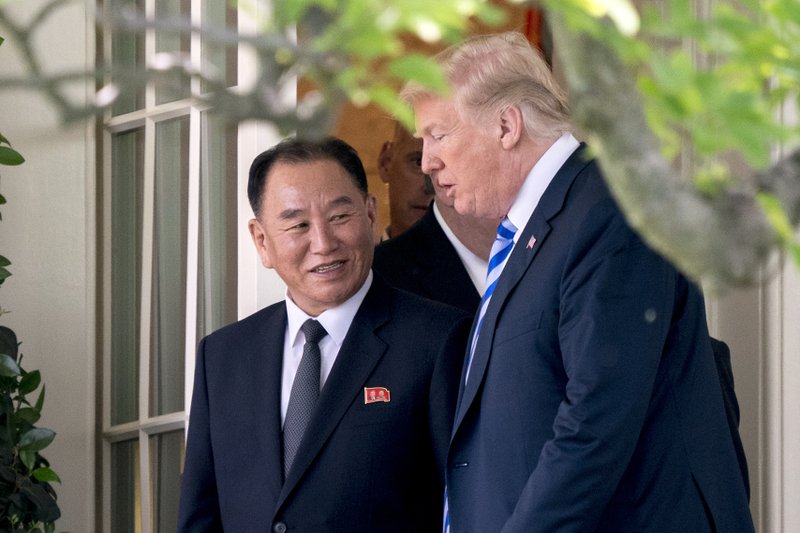
Even by President Donald Trump’s mercurial standards, it was a quick shift. A week after abruptly canceling his historic summit with Kim Jong Un, Trump announced it was back on — and in the process appeared to accede to a key North Korean demand. Beyond the symbolism of Friday’s Oval Office meeting between Trump and Kim Yong Chol — the most senior North Korean official to step inside the White House in 18 years — Trump signaled a subtle change in his administration’s approach toward the goal of getting the pariah nation to give up its nuclear weapons. U.S. officials have previously been calling for North Korea to abandon its nukes rapidly, with the expectation of getting benefits afterward in the form of security assurances, sanctions relief and the opportunity to boost its meager economy. But as he spoke to reporters Friday, Trump repeatedly referred to the June 12 summit in Singapore — a first between the leaders of the U.S. and North Korea — as the start of a “process,” and said it was likely that more than one meeting would be necessary to bring about his goal of denuclearizing the Korean Peninsula. “June 12th, we’ll be in Singapore,” Trump said after his lengthy goodbye with Kim Yong Chol, a former North Korean military intelligence chief, whom he escorted to a black SUV. “It will be a beginning. I don’t say and I’ve never said it happens in one meeting. You’re talking about years of hostility; years of problems; years of, really, hatred between so many different nations. But I think you’re going to have a very positive result in the end.” Trump gave no indication of what kind of timetable he might have in mind for getting North Korea to abandon a weapons program it views as a guarantee for the survival of its authoritarian regime. Still, his comments marked a sea change from the views expressed weeks earlier by his national security adviser John Bolton, who was notably absent from Friday’s meeting. Bolton, who before taking office in April advocated military action against North Korea, had pointed to the disarmament of Libya in 2003 and 2004 in exchange for sanctions relief as a model for a possible deal with North Korea. For the North, that was a deeply provocative comparison, because Libyan autocrat Moammar Gadhafi was killed following U.S.-supported military action in his country about seven years after giving up his fledgling nuclear program. Rather than surrender its program all at once as Gadhafi did, North Korea has repeatedly said it envisions a “progressive and synchronous” approach, where it gets benefits along the way. The latest expression of that came Thursday from Kim Jong Un himself when he met in Pyongyang with Russian Foreign Minister Sergey Lavrov. In a dispatch Friday, North Korean state news agency cited Kim saying “he hoped that the DPRK-U.S. relations and the denuclearization of the Korean peninsula will be solved on a stage-by-stage basis.” DPRK refers to the North’s official name, the Democratic People’s Republic of Korea. That sounds reminiscent of past U.S. efforts to negotiate North Korea’s disarmament with incentives of aid since the mid-1990s — efforts that have ultimately failed. The Trump administration has often said it can’t afford to repeat those mistakes because of the threat that North Korean nuclear-tipped missiles now pose to the continental U.S. But there’s always been doubt about whether it was realistic to expect instant results — both because of North Korea’s negotiating position and the scale and sophistication of its weapons program. This week, Stanford University experts — including nuclear physicist Siegfried Hecker, who has inspected North Korea atomic facilities firsthand — proposed a denuclearization road map spanning 10 years. They warned that the idea of shipping the North’s nuclear weapons out of the country was “naive and dangerous.” North Korea has shown some goodwill: halting missile tests for six months so far, and last week demolishing key areas of its nuclear test site in front of international journalists. It has also released three American detainees. Now Trump, keen to strike a historic deal with a bitter U.S. adversary, appears eager for rapprochement to work. After meeting Kim Yong Chol, the president said he was putting new sanctions against the North on hold and doesn’t want to use the term “maximum pressure” anymore — referring to his signature policy to isolate Pyongyang economically and diplomatically. That may ease fears of renewed confrontation that fueled fears of war last year. But doubts linger about North Korea’s intentions. By hosting a top official from the North — whose trip to New York and Washington required waiving a travel ban against him — Trump has provided an early public relations victory for an isolated government eager for international recognition. He’s also generated considerable expectations about how the summit can herald a warm relationship between longstanding enemies. Hawks in the U.S. administration may also be concerned that Trump, who often complained during his election campaign about American military burdens overseas, would ultimately agree to a timetable for denuclearization by North Korea in exchange for withdrawing American troops from South Korea — removing a military tripwire to deter aggression by the North. Republished with the permission of the Associated Press.
Both sides preparing as if U.S. – North Korea summit is a go
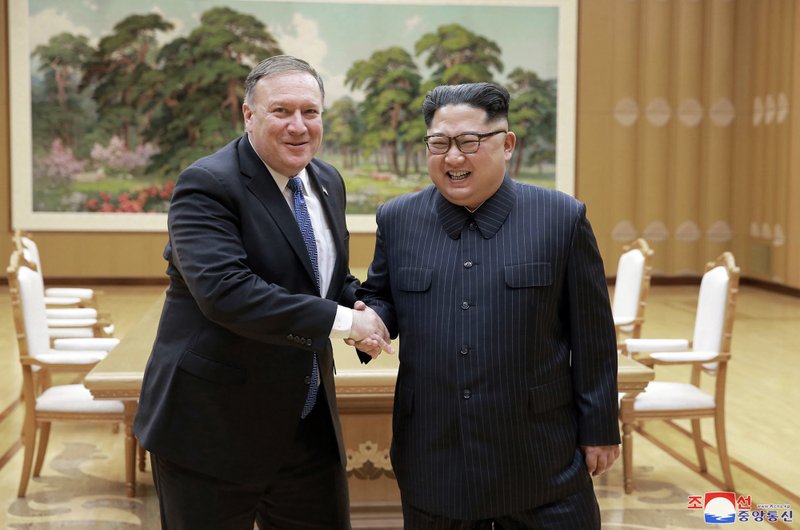
Rapid-fire diplomacy played out on two continents in advance of an “expected” summit between President Donald Trump and North Korea’s Kim Jong Un, the strengthening resolve coming after a series of high-risk, high-reward gambits by the two leaders. Officials wouldn’t say that the June 12 Singapore summit was back on, but preparations on both sides of the Pacific proceeded as if it were. Two weeks of hard-nosed negotiating, including a communications blackout by the North and a public cancellation by the U.S., appeared to be paying off as the two sides engaged in their most substantive talks to date about the meeting. Trump tweeted Tuesday that he had a “great team” working on the summit, confirming that top North Korean official Kim Yong Chol was headed to New York for talks with Secretary of State Mike Pompeo. In addition, teams of U.S. officials have arrived at the Korean Demilitarized Zone and in Singapore to prepare for the meeting. “Solid response to my letter, thank you!” tweeted Trump. He announced he had decided to “terminate” the summit last week in an open letter to Kim that stressed American military might, but also left the door cracked for future communication. White House officials characterized the letter as a negotiating tactic, designed to bring the North back to the table after a provocative statement, skipped planning talks and ignored phone calls. But aides almost immediately suggested the meeting could still get back on track. And after a suitably conciliatory statement from North Korea, Trump said the same. White House press secretary Sarah Huckabee Sanders said that since the letter, “the North Koreans have been engaging” with the U.S. Trump views the meeting as a legacy-defining opportunity to make the nuclear deal that has evaded others, but he pledged to walk away from the meeting if he believed the North wasn’t serious about discussing dismantling its nuclear program. U.S. officials cast the on-again, off-again drama as in keeping with Trump’s deal-making style, and reflective of the technically still-warring leaders testing each other. In his book “The Art of the Deal,” Trump wrote: “The worst thing you can possibly do in a deal is seem desperate to make it. That makes the other guy smell blood, and then you’re dead. The best thing you can do is deal from strength, and leverage is the biggest strength you can have.” After the North’s combative statements, there was debate inside the Trump administration about whether it marked a real turn to belligerence or a feint to see how far Kim Jong Un could push the U.S. in the lead-up to the talks. Trump had mused that Kim’s “attitude” had changed after the North Korean’s surprise visit to China two weeks ago, suggesting China was pushing Kim away from the table. Trump’s letter, the aides said, was designed to pressure the North on the international stage for appearing to have cold feet. White House officials maintain that Trump was hopeful the North was merely negotiating but that he was prepared for the letter to mark the end of the two-month flirtation. Instead, the officials said, it brought both sides to the table with increasing seriousness, as they work through myriad logistical and policy decisions to keep June 12 a viable option for the summit. The flurry of diplomatic activity intensified with Kim Yong Chol’s appearance at the Beijing airport Wednesday. South Korea-based Yonhap News cited diplomatic sources as saying Kim was on an Air China flight that departed in the afternoon, and U.S. officials familiar with planning have said he was scheduled to meet with Secretary of State Mike Pompeo on Thursday. Kim is a former military intelligence chief and now a vice chairman of the North Korean ruling party’s central committee. He will be the highest-level North Korean official to travel to the United States since 2000, when late National Defense Commission First Vice Chairman Jo Myong Rok visited Washington, South Korea’s Unification Ministry said. Pompeo has traveled to Pyongyang, North Korea’s capital, twice in recent weeks for meetings with North Korean leader Kim Jong Un, and has said there is a “shared understanding” between the two sides about what they hope to achieve. Meanwhile, a team of American diplomats is holding preparatory discussions with North Korean officials at the DMZ. The group first met with its counterparts Sunday, and was seen leaving a Seoul hotel on Tuesday, but it was unclear whether they went to Panmunjom, a village that straddles the border inside the DMZ. The U.S. officials are led by Sung Kim, the U.S. ambassador to the Philippines, who formerly was the U.S. ambassador to Seoul and a top negotiator with North Korea in past nuclear talks. It includes senior officials with the National Security Council and the Pentagon. The White House emphasized that it has remained in close contact with South Korean and Japanese officials as preparations for the talks continue. Sanders said Trump will host Japanese Prime Minister Shinzo Abe of Japan on June 7 to coordinate their thinking ahead of the summit. Trump hosted South Korean President Moon Jae-in last week. Moon, who has lobbied hard for nuclear negotiations between Trump and Kim Jong Un, held a surprise meeting with the North Korean leader Saturday in an effort to keep the summit alive. South Korean media also reported that a North Korean delegation arrived in Singapore on Monday night, where other U.S. officials, led by White House deputy chief of staff Joe Hagin, are preparing for the summit. Republished with the permission of the Associated Press.
US, South Korea work to keep North Korea summit on track
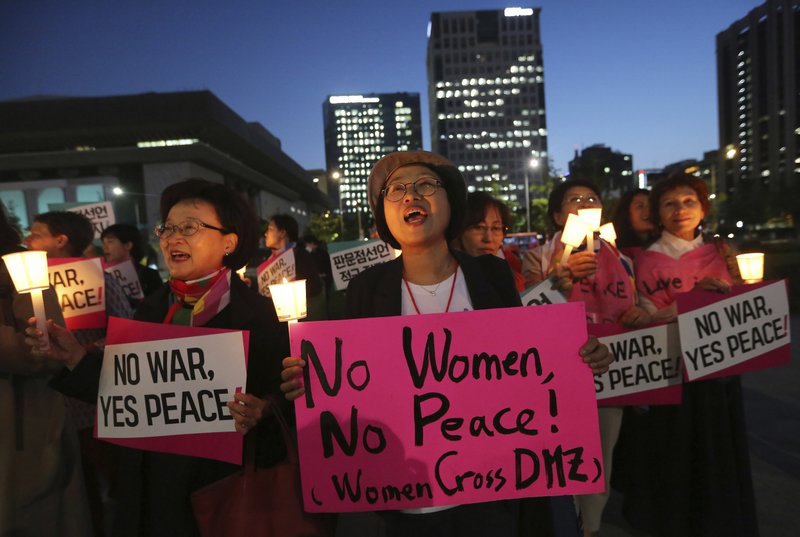
The United States and South Korea are laboring to keep the U.S. summit with North Korea on track even after President Donald Trump abruptly said “there’s a very substantial chance” it won’t go off as planned. “The fate and the future of the Korean Peninsula hinge” on the meeting, South Korea’s president told Trump in an Oval Office meeting Tuesday. The summit, scheduled for June 12 in Singapore, would offer a historic chance for peace. But there also is the risk of a diplomatic failure that would allow the North to revive and advance its nuclear weapons program. U.S. officials say preparations are still underway. “We’re driving on,” said Secretary of State Mike Pompeo, who was to testify before the House Foreign Affairs Committee on Wednesday. Trump’s newfound hesitation appeared to reflect recent setbacks in efforts to bring about reconciliation between the two Koreas, as well as concern whether the self-proclaimed deal-maker can deliver a nuclear accord with the North’s Kim Jong Un. Trump said Kim had not met unspecified “conditions” for the summit. But Trump also said he believed Kim was “serious” about negotiations, and South Korean leader Moon Jae-in expressed “every confidence” in Trump’s ability to hold the summit and bring about peace. “I have no doubt that you will be able to … accomplish a historic feat that no one had been able to achieve in the decades past,” Moon said. Trump said he didn’t want to “totally commit” himself on whether North Korea should denuclearize all at once or in phases. “It would certainly be better if it were all in one,” Trump said, before adding, “You do have some physical reasons that it may not be able to do exactly that.” Trump suggested the summit could be delayed rather than canceled: “It may not work out for June 12, but there is a good chance that we’ll have the meeting.” He did not detail the conditions he had laid out for Kim but said if they aren’t met, “we won’t have the meeting.” His spokeswoman, Sarah Huckabee Sanders, said Trump was referring to a commitment to seriously discuss denuclearization. Skepticism about the North’s intentions have mounted in recent weeks after Kim’s government pulled out of planned peace talks with the South last week, objecting to long-scheduled joint military exercises between U.S. and South Korean forces. The North also threatened to abandon the planned Trump-Kim meeting over U.S. insistence on rapidly denuclearizing the peninsula, issuing a harshly worded statement that the White House dismissed as a negotiating ploy. Trump expressed suspicion that the North’s recent aggressive barbs were influenced by Kim’s unannounced trip to China two weeks ago — his second in as many months. Trump said he’d noticed “a little change” in Kim’s attitude after the trip. “I don’t like that,” he said. The president said he hoped Chinese President Xi Jinping was actually committed to the goal of denuclearizing the Korean Peninsula, calling him a “world-class poker player.” Trump said he was displeased by China’s softening of border enforcement measures against North Korea. Trump encouraged Kim to focus on the opportunities offered by the meeting and to make a deal to abandon his nuclear program, pledging not only to guarantee Kim’s personal security but also predicting an economic revitalization for the North. “I will guarantee his safety, yes,” Trump said, noting that promise was conditioned on an agreement to complete, verifiable and irreversible denuclearization. Trump said if such an agreement is reached, China, Japan and South Korea would invest large sums to “make North Korea great.” Republished with permission from the Associated Press.
Donald Trump suggests summit with Kim Jong Un could be delayed
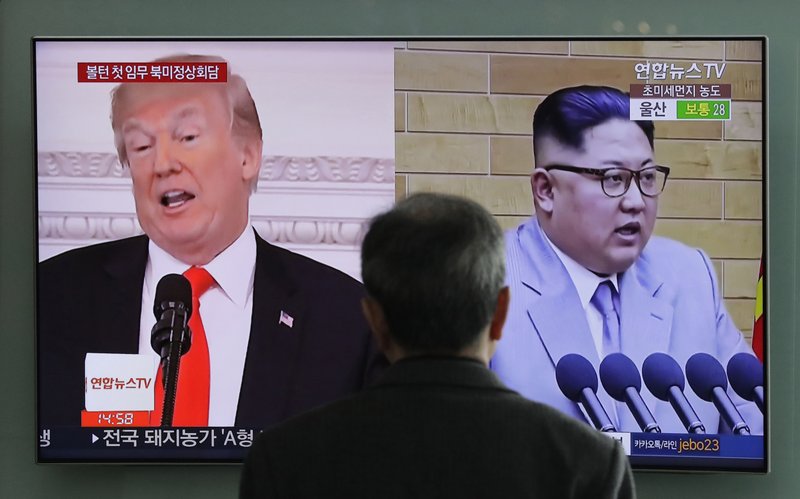
President Donald Trump suggested Tuesday that a planned historic meeting with North Korea’s Kim Jong Un could be delayed, saying the summit “may not work out for June 12.” Trump raised the possibility that the meeting could be pushed back during a White House meeting with South Korea President Moon Jae-in as the two leaders sought to coordinate strategy as concerns mounted over ensuring a successful outcome for the North Korea summit. Trump told reporters: “If it doesn’t happen, maybe it happens later,” reflecting recent setbacks to bring about reconciliation between the two Koreas. The North pulled out of planned peace talks with the South last week, objecting to long-scheduled joint military exercises between U.S. and the Republic of Korea forces, and it threatened to abandon the planned Trump-Kim meeting over the U.S. insistence on denuclearizing the peninsula. Moon said in the Oval Office that the “fate and the future” of the Korean Peninsula hinged on the talks, telling the U.S. president that they were “one step closer” to the dream of a denuclearized Korean Peninsula. “There are certain conditions that we want,” Trump said. He added if they aren’t met, “we won’t have the meeting.” He declined to elaborate on those conditions. Republished with the permission of the Associated Press.
North Korea threatens to cancel Trump-Kim summit over drills
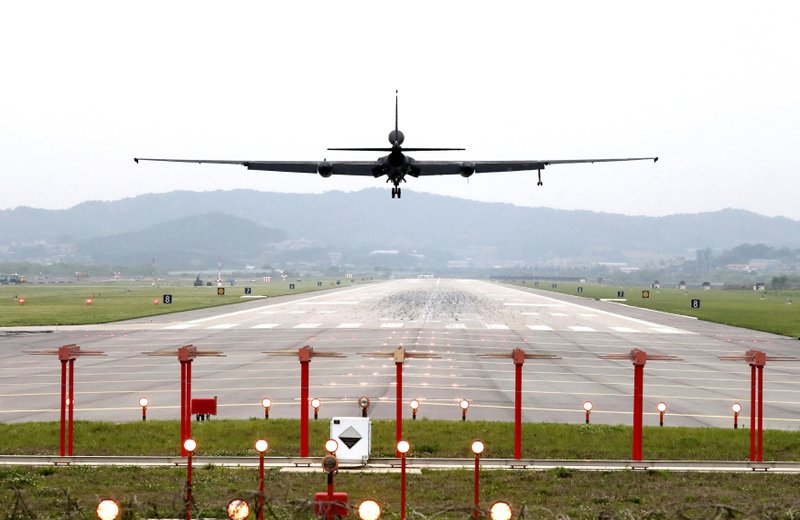
North Korea on Wednesday threatened to scrap a historic summit next month between its leader, Kim Jong Un, and U.S. President Donald Trump, saying it has no interest in a “one-sided” affair meant to pressure the North to abandon its nuclear weapons. The warning by North Korea’s first vice foreign minister came hours after the country abruptly canceled a high-level meeting with South Korea to protest U.S.-South Korean military exercises that the North has long claimed are an invasion rehearsal. The surprise moves appear to cool what had been an unusual flurry of outreach from a country that last year conducted a provocative series of weapons tests that had many fearing the region was on the edge of war. Analysts said it’s unlikely that North Korea intends to scuttle all diplomacy. More likely, they said, is that it wants to gain leverage ahead of the talks between Kim and Trump, scheduled for June 12 in Singapore. In Washington, Trump said the U.S. hasn’t been notified about the North Korean threat. “We haven’t seen anything. We haven’t heard anything. We will see what happens,” he said as he welcomed the president of Uzbekistan to the White House. White House spokeswoman Sarah Huckabee Sanders said the administration is “still hopeful” that the summit will take place, and that threats from North Korea to scrap the meeting were “something that we fully expected.” She said Trump is “ready for very tough negotiations,” adding that “if they want to meet, we’ll be ready and if they don’t that’s OK.” She said if there is no meeting, the U.S. would “continue with the campaign of maximum pressure” against the North. North Korean first vice foreign minister Kim Kye Gwan said in a statement carried by state media that “we are no longer interested in a negotiation that will be all about driving us into a corner and making a one-sided demand for us to give up our nukes and this would force us to reconsider whether we would accept the North Korea-U.S. summit meeting.” He criticized recent comments by Trump’s top security adviser, John Bolton, and other U.S. officials who have said the North should follow the “Libyan model” of nuclear disarmament and provide a “complete, verifiable and irreversible dismantlement.” He also took issue with U.S. views that the North should fully relinquish its biological and chemical weapons. Some analysts say bringing up Libya, which dismantled its rudimentary nuclear program in the 2000s in exchange for sanctions relief, jeopardizes progress in negotiations with the North. Kim Jong Un took power weeks after former Libyan leader Moammar Gadhafi’s gruesome death at the hands of rebel forces amid a popular uprising in October 2011. The North has frequently used Gadhafi’s death to justify its own nuclear development in the face of perceived U.S. threats. The North’s warning Wednesday fits a past North Korean pattern of raising tensions to bolster its positions ahead of negotiations with Washington and Seoul. But the country also has a long history of scrapping deals with its rivals at the last minute. In 2013, North Korea abruptly canceled reunions for families separated by the 1950-53 Korean War just days before they were scheduled to begin to protest what it called rising animosities ahead of joint drills between Seoul and Washington. In 2012, the North conducted a prohibited long-range rocket launch weeks after it agreed to suspend weapons tests in return for food assistance. On Wednesday, senior officials from the two Koreas were to sit down at a border village to discuss how to implement their leaders’ recent agreements to reduce military tensions along their heavily fortified border and improve overall ties. But hours before the meeting was to start, the North informed the South that it would “indefinitely suspend” the talks, according to Seoul’s Unification Ministry. In a pre-dawn dispatch, the North’s official Korean Central News Agency, or KCNA, called the two-week Max Thunder drills, which began Monday and reportedly include about 100 aircraft, an “intended military provocation” and an “apparent challenge” to last month’s summit between Kim Jong Un and South Korean President Moon Jae-in, when the leaders met at the border in their countries’ third summit talks since their formal division in 1948. “The United States must carefully contemplate the fate of the planned North Korea-U.S. summit amid the provocative military ruckus that it’s causing with South Korean authorities,” the North said. “We’ll keenly monitor how the United States and South Korean authorities will react.” Kim Dong-yub, a North Korea expert at Seoul’s Institute for Far Eastern Studies, said the North isn’t trying to undermine the Trump-Kim talks. The North’s reaction is more like a “complaint over Trump’s way of playing the good cop and bad cop game with (Secretary of State Mike) Pompeo and Bolton,” he said. Seoul’s Unification Ministry, which is responsible for inter-Korean affairs, called North Korea’s move “regrettable” and urged a quick return to talks. The Defense Ministry said the drills with the United States would go on as planned. Annual military drills between Washington and Seoul have long been a major source of contention between the Koreas, and analysts have wondered whether their continuation would hurt the detente that, since an outreach by Kim in January, has replaced the insults and threats of war. Much larger springtime drills took place last month without the North’s typically fiery condemnation or accompanying weapons tests, though Washington and Seoul toned down those exercises. The KCNA dispatch said the U.S. aircraft mobilized for the drills include nuclear-capable B-52 bombers and stealth F-22 fighter jets, two of the U.S. military assets it has previously said are aimed at launching nuclear strikes on the North. Seoul has said F-22s are involved in the drills, but has not confirmed whether B-52s are taking part. In Washington, the U.S. State Department emphasized that Kim had previously indicated he understood the need and purpose of the U.S. continuing its long-planned exercises with South Korea. State Department spokeswoman Heather Nauert said the U.S. had not
U.S. hopes North Korea will become close partner, Mike Pompeo says
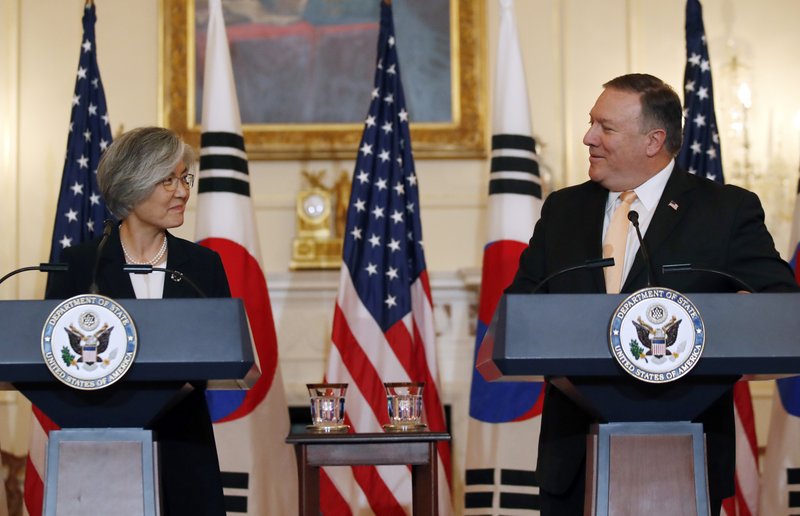
The United States aspires to have North Korea as a “close partner” and not an enemy, Secretary of State Mike Pompeo said, noting that the U.S. has often in history become good friends with former adversaries. Pompeo said he had told North Korean leader Kim Jong Un of that hope during his brief visit to Pyongyang earlier this week, during which he finalized details of the June 12 summit between Kim and President Donald Trump and secured the release of three Americans imprisoned in the country. He said his talks with Kim on Wednesday had been “warm,” ″constructive” and “good” and that he made clear that if North Korea gets rid of its nuclear weapons in a permanent and verifiable way, the U.S. is willing to help the impoverished nation boost its economy and living stands to levels like those in prosperous South Korea. “We had good conversations about the histories of our two nations, the challenges that we have had between us,” Pompeo told reporters at a news conference Friday with South Korea’s visiting foreign minister, Kang Kyung-wha. “We talked about the fact that America has often in history had adversaries who we are now close partners with and our hope that we could achieve the same with respect to North Korea.” He did not mention other adversaries by name, but Pompeo and others have often noted that the U.S. played a major role in rebuilding Japan and the European axis powers in the wake of World War II. With U.S. help, those countries recovered from the devastation of conflict. “If North Korea takes bold action to quickly denuclearize, the United States is prepared to work with North Korea to achieve prosperity on the par with our South Korean friends,” he said. Kang praised the upcoming meeting between Trump and Kim in Singapore as an “historic” opportunity, but added a few notes of skepticism as well. Amid concerns that North Korea will demand the U.S. withdraw its troops from neighboring South Korea, Kang emphasized that the U.S. military presence there must be “a matter for the U.S.-ROK alliance first and foremost,” using an acronym for South Korea’s official name, the Republic of Korea. She said the U.S. troop presence in the South for the past 65 years has played a “crucial role for deterrence,” peace and stability on the Korean peninsula. Therefore, she said, any change in the size of the U.S. forces in South Korea should not be on the table at the summit. “The next few weeks will be critical, requiring air-tight coordination between our two countries,” Kang said, noting that South Korean President Moon Jae-in would be in Washington to see Trump later this month. Since Trump announced plans to hold a summit with Kim, questions have been raised continually about whether the two leaders have the same objective in mind when they speak about “denuclearization.” To the U.S., that means the North giving up the nuclear weapons it has already built. But North Korea has said it’s willing to talk now because it’s already succeeded in becoming a nuclear-armed state, fueling skepticism that the North would truly be willing to give those weapons up. Pompeo said there would need to be “complete” and “verifiable” denuclearization that would remove North Korea as a threat to the South, the United States and the rest of the world. He said a major inspection and monitoring regime would be required to ensure the North’s compliance. “I think there is complete agreement about what the ultimate objectives are,” Pompeo said, though he declined to offer more detail. Republished with the permission of the Associated Press.
Like a showman, Donald Trump suggests Demilitarized Zone for ‘big event’
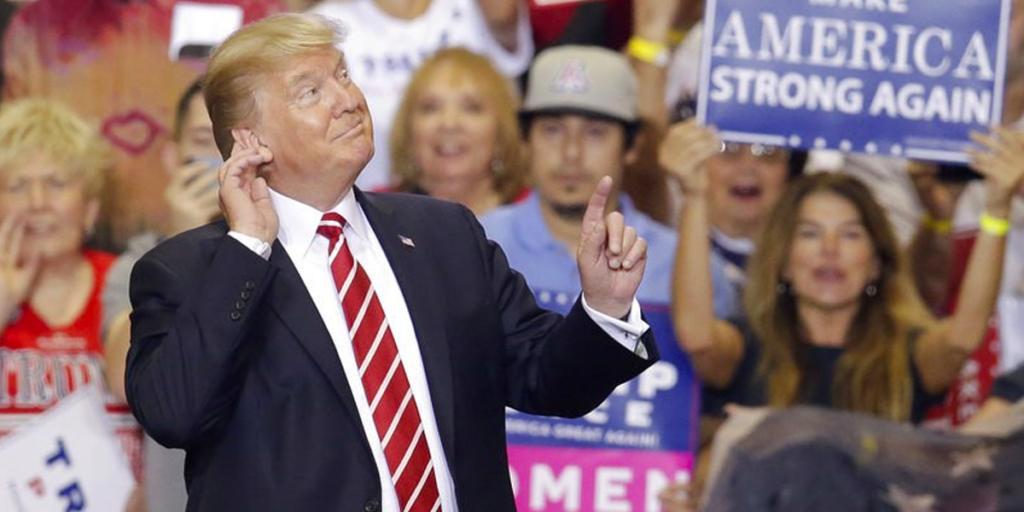
Like a consummate showman, President Donald Trump began rolling the drum Monday for his summit with North Korean leader Kim Jong Un, suggesting the “big event” take place in the Demilitarized Zone that divides the Koreas. That’s where Kim just met his South Korean counterpart. But Trump said that the Southeast Asian city state of Singapore was also in the running to host what few would have predicted when nuclear tensions were soaring last year — the first face-to-face meeting between the leaders of the United States and North Korea. While policy experts, and even his own national security adviser, voice skepticism that North Korea is sincere about giving up its nuclear efforts, Trump sounds like he’s gearing up for a date with history, and clearly wants the backdrop to be just right. First by Twitter, and then at a press conference in the White House Rose Garden, Trump said he likes the idea of going to the southern side of the demarcation line that separates the Koreas, where South Korean President Moon Jae-in met Kim on Friday. “There’s something that I like about it because you are there, you are actually there,” Trump said. “If things work out there’s a great celebration to be had on the site, not in a third-party country.” There’s been much speculation about where Trump and Kim might meet. Countries in Europe and Southeast Asia, in Mongolia and even a ship in international waters have all been suggested as possible venues. Monday was the first time that Trump had publicly named potential locations. His planned meeting with Kim will be the crucial follow-up to the summit between Kim and Moon on Friday where they pledged to seek a formal end this year to the Korean War — a conflict that was halted in 1953 by an armistice and not a peace treaty, leaving the two sides technically at war. They also committed to ridding the peninsula of nuclear weapons. Former reality television star Trump now has to help turn the Korean leaders’ bold but vague vision for peace into reality. Undaunted, he gave the impression Monday that governments were vying to host his face-to-face with Kim and share in the attention it would bring. “Everybody wants us. It has the chance to be a big event,” the president said on a bright spring day in Washington, alongside Nigerian President Muhammadu Buhari, whom he’d just met at the White House. “The United States has never been closer to potentially have something happen with respect to the Korean Peninsula that can get rid of the nuclear weapons, can create so many good things, so many positive things, and peace and security for the world.” It wasn’t clear whether his enthusiasm was stirred by the South Korean president’s suggestion Monday that Trump could take the Nobel Peace Prize if the two Koreas win peace. Moon’s remark came when he deflected a question about whether he might win the award as one of his predecessors, Kim Dae-jung, did in 2000 after the first ever inter-Korean summit. The United States has reached aid-for-disarmament deals with North Korea before, but they’ve ultimately failed. The most enduring effort negotiated by the Bill Clinton administration in 1994 halted the North’s production of plutonium for nearly a decade. But it collapsed over suspicions that North Korea had a secret program to enrich uranium, giving it an alternative route to make fissile material for bombs. Trump’s recently installed national security adviser, John Bolton, who has in the past advocated military action against North Korea, reacted coolly Sunday to its reported willingness to give up nuclear programs if the United States commits to a formal end to the war and a pledges not to attack. “We’ve heard this before,” Bolton told CBS’ “Face the Nation,” adding that the U.S. wanted to see concrete action “not just rhetoric.” This year, Kim has already suspended his nuclear and missile tests. According to South Korean officials, he told Moon that he’s going to shut down his country’s only known nuclear testing site and allow experts and journalists to observe. Trump cited that prospect with approval on Monday, saying Kim is “talking about no research, no launches of ballistic missiles, no nuclear testing.” But as usual, the president left open the possibility of pulling the plug on talks, saying: “If it’s not a success, I will respectfully leave.” Republished with the permission of the Associated Press.
Kim Jong Un says he’ll give up nukes if U.S. vows not to attack
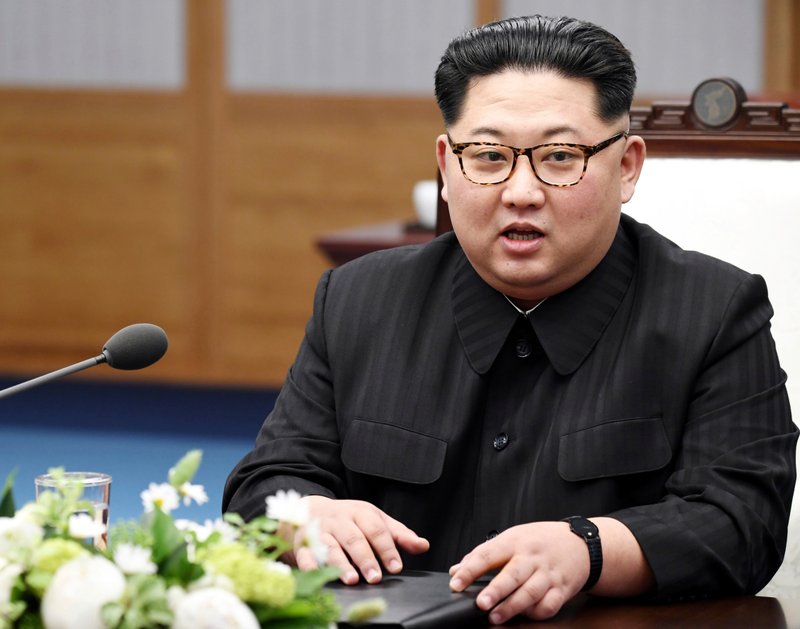
North Korean leader Kim Jong Un told his South Korean counterpart at their historic summit that he would be willing to give up his nuclear weapons if the U.S. commits to a formal end to the Korean War and a pledge not to attack the North, Seoul officials said Sunday. Kim also vowed during his meeting with South Korean President Moon Jae-in on Friday to shut down the North’s nuclear test site in May and disclose the process to experts and journalists from South Korea and the United States, Seoul’s presidential office said. While there are lingering questions about whether North Korea will ever decide to fully relinquish its nukes as it heads into negotiations with the U.S., Kim’s comments amount to the North’s most specific acknowledgement yet that “denuclearization” would constitute surrendering its weapons. U.S. national security adviser John Bolton reacted coolly to word that Kim would abandon his weapons if the United States pledged not to invade. Asked on CBS’ “Face the Nation” whether the U.S. would make such a promise, Bolton said: “Well, we’ve heard this before. This is — the North Korean propaganda playbook is an infinitely rich resource.” “What we want to see from them is evidence that it’s real and not just rhetoric,” he added. Seoul officials, who have shuttled between Pyongyang and Washington to broker talks between Kim and President Donald Trump that are expected in May or June, said Kim has expressed genuine interest in dealing away his nuclear weapons. But there has been skepticism because North Korea for decades has been pushing a concept of “denuclearization” that bears no resemblance to the American definition. The North has long vowed to pursue nuclear development unless Washington removes its 28,500 troops from South Korea and the nuclear umbrella defending South Korea and Japan. During their summit at a truce village on the border, Moon and Kim promised to work toward the “complete denuclearization” of the Korean Peninsula but made no references to verification or timetables. Kim also expressed optimism about his meeting with Trump, Moon’s spokesman Yoon Young-chan said. “Once we start talking, the United States will know that I am not a person to launch nuclear weapons at South Korea, the Pacific or the United States,” Kim said, according to Yoon. Yoon also quoted Kim as saying: “If we maintain frequent meetings and build trust with the United States and receive promises for an end to the war and a non-aggression treaty, then why would we need to live in difficulty by keeping our nuclear weapons?” The Korean Peninsula technically remains in a state of war because the 1950-53 Korean War was halted with an armistice, not a peace treaty. The closing of the nuclear test site would be a dramatic but likely symbolic event to set up Kim’s summit with Trump. North Korea already announced this month that it has suspended all tests of nuclear devices and intercontinental ballistic missiles and plans to close its nuclear testing ground. Still, Adam Mount, a senior defense analyst at the Federation of American Scientists, said Kim’s comments were significant because they are his most explicit acknowledgement yet that denuclearization means surrendering his nuclear weapons. “Questions remain about whether Kim will agree to discuss other nuclear technology, fissile material and missiles. However, they imply a phased process with reciprocal concessions,” Mount said in an email. “It is not clear that the Trump administration will accept that kind of protracted program.” Analysts reacted with skepticism to Kim’s previously announced plan to close down the test site at Punggye-ri, saying the northernmost tunnel had already become too unstable to use for underground detonations anyway following the country’s sixth and most powerful test blast in September. In his conversation with Moon, Kim denied that he would be merely clearing out damaged goods, saying the site also has two new tunnels that are larger than previous testing facilities, Yoon said. Some analysts see Moon’s agreement with Kim at the summit as a disappointment, citing the lack of references to verification and timeframes and also the absence of a definition on what would constitute a “complete” denuclearization of the peninsula. But Patrick McEachern, a former State Department analyst now with the Washington-based Wilson Center, said it was still meaningful that Moon extracted a commitment from Kim to complete denuclearization, which marked a significant change from Kim’s previous public demand to expand his arsenal of nuclear weapons in number and quality. “The public conversation should now shift from speculation on whether North Korea would consider denuclearization to how South Korea and the United States can advance this denuclearization pledge in concrete steps in light of North Korea’s reciprocal demands for concrete steps toward an eventual peace agreement,” McEachern said in an email. North Korea has invited the outside world to witness the dismantling of its nuclear facilities before. In June 2008, international broadcasters were allowed to air the demolition of a cooling tower at the Nyongbyon reactor site, a year after the North reached an agreement with the U.S. and four other nations to disable its nuclear facilities in return for an aid package worth about $400 million. But the deal eventually collapsed after North Korea refused to accept U.S.-proposed verification methods, and the country went on to conduct its second nuclear test detonation in May 2009. Yoon said Kim also revealed plans to sync its time zone with South Korea’s. The Koreas had used the same time zone for decades before the North created its own “Pyongyang Time” in 2015 by setting the clock 30 minutes behind South Korea and Japan. Yoon said the North’s decision to return to Seoul’s time zone was aimed at facilitating communication with South Korea and the U.S. Republished with the permission of the Associated Press.
US and South Korean troops start drills amid North Korea standoff
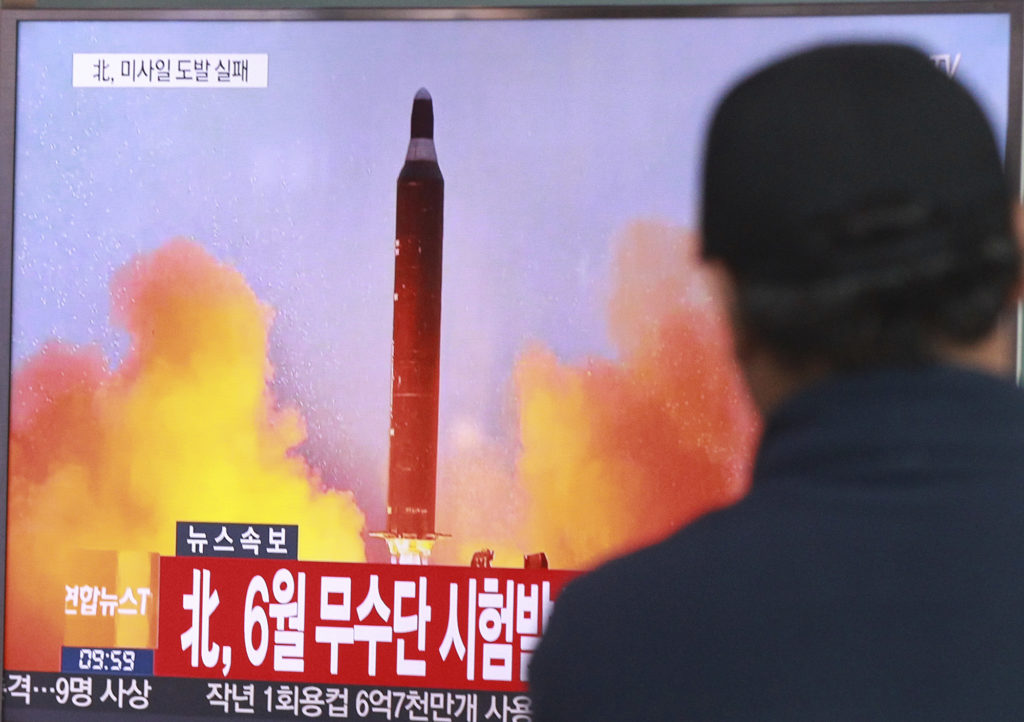
U.S. and South Korean troops kicked off their annual drills Monday that come after President Donald Trump and North Korea exchanged warlike rhetoric in the wake of the North’s two intercontinental ballistic missile tests last month. The Ulchi Freedom Guardian drills are largely computer-simulated war games held every summer and have drawn furious responses from North Korea, which views them as an invasion rehearsal. Pyongyang’s state media on Sunday called this year’s drills a “reckless” move that could trigger the “uncontrollable phase of a nuclear war.” Despite the threat, U.S. and South Korean militaries launched this year’s 11-day training on Monday morning as scheduled. The exercise involves 17,500 American troops and 50,000 South Korean soldiers, according to the U.S. military command in South Korea and Seoul’s Defense Ministry. No field training like live-fire exercises or tank maneuvering is involved in the Ulchi drills, in which alliance officers sit at computers to practice how they engage in battles and hone their decision-making capabilities. The allies have said the drills are defensive in nature. South Korea’s President Moon Jae-in said Monday that North Korea must not use the drills as a pretext to launch fresh provocation, saying the training is held regularly because of repeated provocations by North Korea. North Korea typically responds to South Korea-U.S. military exercises with weapons tests and a string of belligerent rhetoric. During last year’s Ulchi drills, North Korea test-fired a submarine-launched ballistic missile that flew about 500 kilometers (310 miles) in the longest flight by that type of weapon. Days after the drills, the North carried out its fifth and biggest nuclear test to date. Last month North Korea test-launched two ICBMs at highly lofted angles, and outside experts say those missiles can reach some U.S. parts like Alaska, Los Angeles or Chicago if fired at normal, flattened trajectories. Analysts say it would be only a matter of time for the North to achieve its long-stated goal of acquiring a nuclear missile that can strike anywhere in the United States. Earlier this month, President Donald Trump pledged to answer North Korean aggression with “fire and fury.” North Korea, for its part, threatened to launch missiles toward the American territory of Guam before its leader Kim Jong Un backed off saying he would first watch how Washington acts before going ahead with the missile launch plans. Republished with permission of The Associated Press.
How a single sentence from Donald Trump enraged South Korea

U.S. President Donald Trump‘s apparently offhand comment after meeting with Chinese leader Xi Jinping — that “Korea actually used to be a part of China” — has enraged many South Koreans. The historically inaccurate sentence from a Wall Street Journal interview bumps up against a raft of historical and political sensitivities in a country where many have long feared Chinese designs on the Korean Peninsula. It also feeds neatly into longstanding worries about Seoul’s shrinking role in dealing with its nuclear-armed rival, North Korea. Ahn Hong-seok, a 22-year-old college student, said that if Trump “is a person capable of becoming a president, I think he should not distort the precious history of another country.” Many here assume that Xi fed that ahistorical nugget to Trump, who also admitted that after 10 minutes listening to Xi, he realized that Beijing’s influence over North Korea was much less than he had thought. Here’s why Trump’s comments strike a nerve in South Korea: ___ WRONG, BUT WHOSE MISTAKE? It’s unclear whether Trump was quoting Xi or had misunderstood what he was told when he said Korea had been part of China. It never was, historians outside of China say, although some ancient and medieval kingdoms that occupied the Korean Peninsula offered tributes to Chinese kingdoms to secure protection. And for a period during the 13th century, both China and Korea were under the rule of the Mongolian empire. “Throughout the thousands of years of relations, Korea has never been part of China, and this is a historical fact that is recognized internationally and something no one can deny,” Cho June-hyuck, a South Korean Foreign Ministry spokesman, said Thursday. Asked whether Trump was quoting Xi, Lu Kang, China’s Foreign Ministry spokesman, didn’t provide a direct answer, but said, “Korean people should not be worried about it.” ___ HISTORICAL FEUD Trump stumbled into a long history dispute between the Asian neighbors; specifically, their views over the dominion of ancient kingdoms whose territories stretched from the Korean Peninsula to Manchuria. South Koreans see these kingdoms as Korean, but China began to claim them as part of its national history in the early 1980s. At the time, China’s state historians were exploring ways to ideologically support Beijing’s policies governing ethnic minorities, including the large communities of ethnic Koreans in the northeast, experts say. In the early 2000s, a Chinese government-backed academic project produced a slew of studies arguing that the kingdom of Goguryeo (37 B.C.-A.D. 668) was a Chinese state. This infuriated South Korea, where nationalists glorify Goguryeo for its militarism and territorial expansion. Seoul launched its own government-backed research project on Goguryeo in 2007. Some analysts say the argument is more political than historical as Goguryeo existed more than a thousand years before the foundation of modern states in Korea and China. ___ ‘KOREA PASSING’ Several South Korean newspapers mentioned the Chinese claims over Goguryeo as they lashed out at Trump over the comments, and at Xi for allegedly feeding the U.S. president Chinese-centric views. Chosun Ilbo, South Korea’s largest newspaper, said China was looking to “tame” South Korea and weaken the traditional alliance between Seoul and Washington in an attempt to expand its regional influence. Seoul has long worried about losing its voice in international efforts to deal with North Korea’s nuclear threat — something local media have termed “Korea Passing.” Seoul and Beijing are also bickering over plans to deploy in South Korea an advanced U.S. missile defense system that China sees as a security threat. In the meantime, Trump has reportedly settled on a “maximum pressure and engagement” strategy on North Korea, which is mainly about enlisting the help of Beijing to put pressure on Pyongyang. “It’s highly possible that China will try to solve the problems surrounding the Korean Peninsula based on a hegemonic stance that likens the Koreas to Chinese vassal states,” said the Munhwa Ilbo newspaper on Thursday. “If Trump has agreed with this view, you will never know what kind of a deal the two global powers will make over the fate of the Korean Peninsula.” Insecurities about both China’s and Trump’s intentions in the region will be among the big issues as South Koreans vote next month for their next president. Republished with permission of The Associated Press.
