
‘Save Space Camp’ drive prompted by virus reaches $1.5M goal
A corporate donation of $250,000 by the technology company SAIC Inc. pushed the effort over the top.
Space Camp in danger of closing permanently due to pandemic
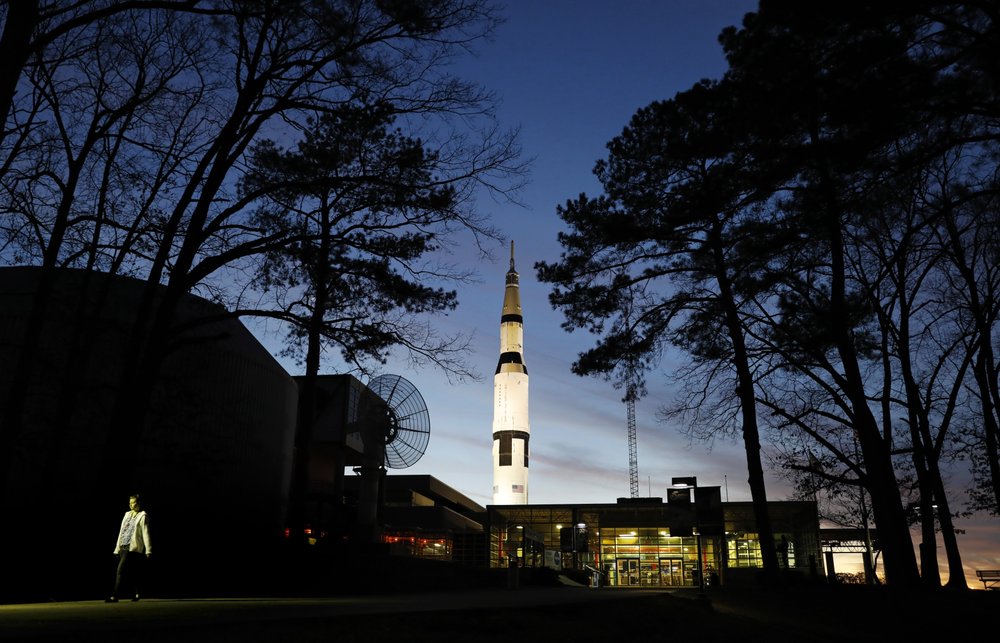
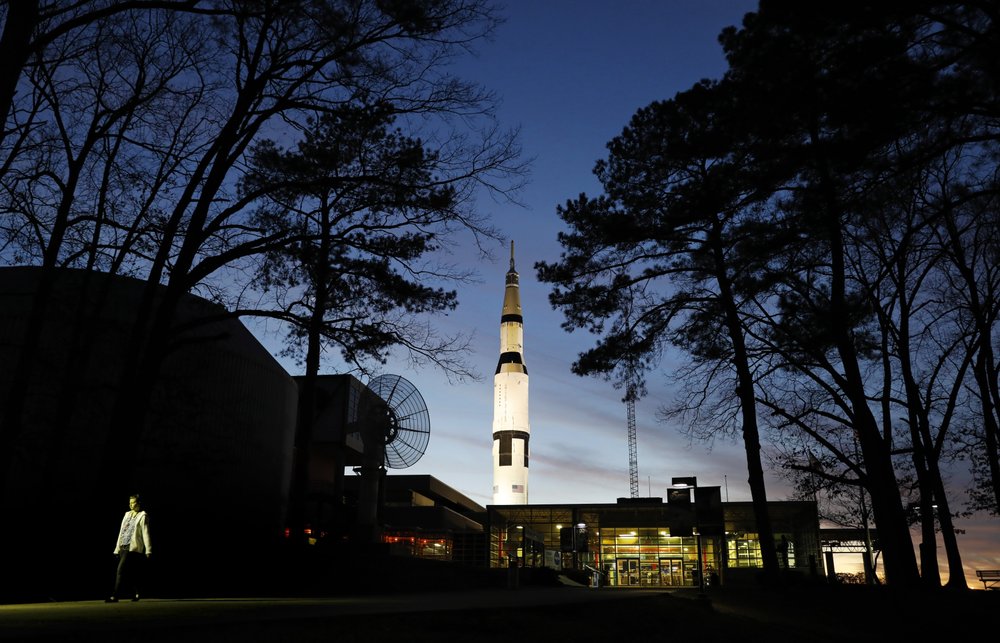
Space Camp, an educational program attended by nearly 1 million people, including a dozen who went on to become astronauts or cosmonauts, said Tuesday it’s in danger of closing without a cash infusion because of the coronavirus pandemic. Part of the state-owned U.S. Space and Rocket Center in Huntsville, Space Camp was shut down for weeks earlier this year and has been hampered by low attendance since reopening in June with limited capacity, officials said. With most of its typical staff slashed and the normal flow of international students and school groups down to nothing for the fall because of the virus, leaders held a news conference announcing a “Save Space Camp” drive. Officials hope to raise at least $1.5 million in donations they said were needed to keep the museum open through October, the end of the fiscal year, and to reopen Space Camp in April. “We are now struggling for our very survival,” said John Nerger, chair of a state board that oversees the center. Donors gave nearly $100,000 within a couple hours of the announcement. Located near NASA’s Marshall Space Flight Center, the museum features exhibits including an authentic Saturn V rocket, the Apollo 16 command module and a full-sized model of a space shuttle. Space Camp students have access to that area plus classes and mockups where they participate in simulated space missions. Since opening in 1982, Space Camp has had almost 1 million youth and adult attendees, and it was the inspiration for a 1986 movie of the same name. Ten people selected as astronauts and two who went on to become cosmonauts attended the camp, promoters said. “Space Camp is Huntsville’s most visible calling card,” said Alabama Tourism Director Lee Sentell, who worked as marketing director for the attraction in its early days. With government coffers lean because of decreased tax revenues, leaders hope corporations that are part of north Alabama’s aerospace industry will donate to the fundraising drive. But Nerger said the center, which is self-sustaining and doesn’t receive government money for operations, also is counting on private donations. “We just cannot afford for someone wearing a cape to swoop in and rescue us,” he said.
Women of Influence: U.S. Space and Rocket Center CEO Dr. Deborah Barnhart
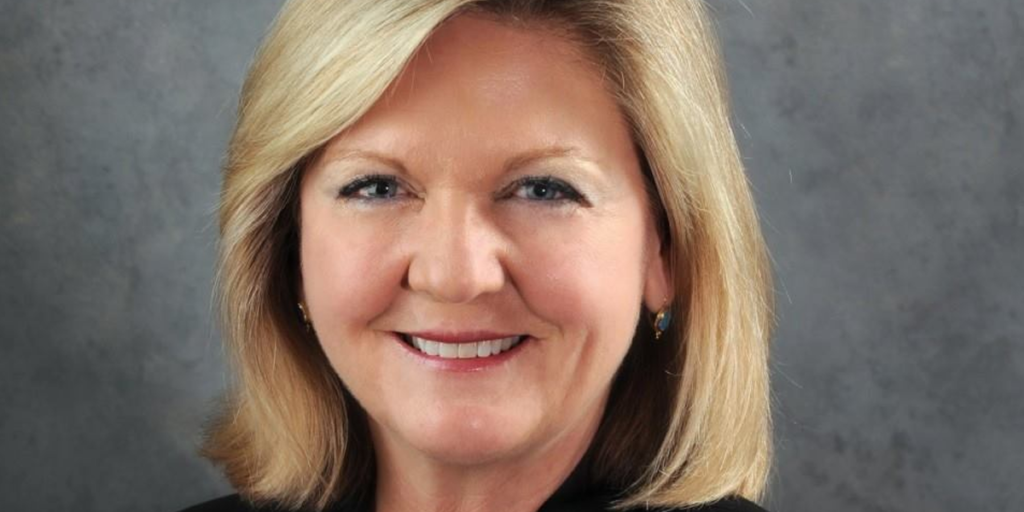
Huntsville, Ala. native Dr. Deborah Barnhart has been working on and off with the U.S. Space and Rocket Center in Huntsville for over 40 years. Her career has taken many different twists and turns, but she finally “landed” at her home base in January of 2011. Barnhart graduated from the University of Alabama in Huntsville in 1973; while she was finishing her senior year she worked in the public affairs and marketing offices at the U.S. Space & Rocket Center. A few years after graduation she came back on staff at the space center managing publicity for the museum’s newest addition — the Space Shuttle. At the age of 27, Barnhart decided to switch gears and joined the U.S. Navy, hoping to work with satellites. However, the Navy had other plans for her. She attended Officers Candidate Schoo (OCS)l, and after graduating at the top of a class of 500 people, was given the opportunity to become one of the first ten women ever to serve on a Navy sea vessel. And she took it. “I was the seventh woman to be certified to fight on and drive Navy vessels,” she told Kari Hawkins in an interview. “I drove ships on the west coast and the east coast. I loved the Navy, and the ability to see the world as a finite place. I’ve heard it said that everyone joins the military to get away from something, to ‘get out of Dodge.’ And maybe I did want to get out of Dodge, but I also joined the military to go toward something, to pursue an interest and an opportunity.” Barnhart commanded five units, experienced submarines, Navy air and space aspects, and missile defense systems throughout her 26 year military career. When she went into the Navy Reserves, she found her way back to the U.S. Space & Rocket Center for the third time in her career, this time serving as the director of Space Camp and the Space Academy. During this time she had two children and obtained a M.B.A. from the University of Maryland College Park. In 1990 Barnhart left the Space Center for the third time to pursue work in the private sector. That same year she received a doctorate degree in education from Vanderbilt University. After leaving the space center, she became vice president of Hamilton Sundstrand Space, Sea Systems International, and Honeywell Space and Defense, and reached a lifelong goal: working with satellites. She also acquired another M.B.A., this one from the Massachusetts Institute of Technology where she was a Sloan Fellow in 1998. She had retired from her long accomplished career when the Space Center contacted her in 2010, convincing her to return to the center for the fourth time, but this time to the helm of the “ship,” as Executive Director and CEO, a position she has held since January of 2011. The first year she served as CEO, Barnhart reduced the Space Center’s debt by $1 million, and brought attendance up by 13 percent after 10 years of decline. In 2017, the center had it’s all-time record attendance, with an 11 percent increase in revenue. “In everything that we do, we want to inspire that next generation of explorers,” Barnhart told Hawkins in an interview. Barnhart has received a lot of honors during her lengthy career. She is a recipient of NASA’s Distinguished Public Service Medal, the highest form of recognition awarded by NASA to a non‐government individual. A member of the Board of Managers of the Air Force Museum Foundation and a Trustee on the Board of the University of Alabama in Huntsville Foundation. She also served as Governor Robert Bentley’s appointee to the Alabama Space Authority Task Force. In October of 2017 Barnhart was inducted into the Alabama Academy of Honor alongside Governor Kay Ivey, and two other women, making her part of the first class of all female inductees. For over 20 years of service to our Nation through the Navy, her service to the state of Alabama through the U.S. Space and Rocket Center, and for setting the level of excellence the nation has come to expect from Alabama Women, Dr. Deborah Barnhart is absolutely and Alabama woman of Influence.
Rocket Center teams up with Legislature to send Ala. students to space camp

The Alabama Legislature and the U.S. Space & Rocket Center in Huntsville Ala. are teaming up to send middle-school students to Space Camp. Students ages 12-14 in Alabama are qualified to apply for an exclusive week-long Space Camp program free of charge through the Space Academy for Leading Students in Alabama (SALSA) scholarship. SALSA is a scholarship funded by the Alabama State legislature. Each Alabama legislative district will award two scholarships, one for a male and one for a female, to attend SALSA. During the week long program, students will learn how to solve complex problems using STEM concepts and critical thinking, to work together as a team, train like an astronaut, and board a simulator for a simulated space mission to the International Space Station, the Moon or Mars. To be eligible for the program students must apply for the scholarship. The U.S. Space & Rocket Center will then notify the members of the Alabama House of Representatives or the Alabama Senate representing the district in which the student lives. Each legislator will then choose two students to receive a scholarship to attend SALSA. SALSA takes place May 27 through June 1, 2018. Scholarships will include tuition, room and board for the program and a flight suit. Travel expenses to and from the U.S. Space & Rocket Center are not included in the scholarship. The deadline to apply is Friday, Feb. 16.
