
Daniel Sutter: Pro football in the spring again

Spring professional football returns in 2019 with the Alliance of American Football (AAF). I am very excited about this and think that the league has an excellent chance to be successful. The AAF’s potential also illustrates one of economics’ most difficult challenges. The Alliance’s eight teams will play a ten game season beginning after the Super Bowl. The AAF’s founders have great sports backgrounds: Charlie Ebersol is the son of long-time NBC Sports President Dick Ebersol, while Bill Polian was General Manager of three NFL teams. The Alliance will offer a partnership with the players and features former NFL players Troy Polamalu, Hines Ward, and Jared Allen in executive positions. The Alliance will feature some innovative rules, like only two point conversions after touchdowns. In place of dangerous kickoffs, teams will take possession on their own 25-yard line. Instead of on-sides kicks, a team can take the ball with fourth and ten on their own 35-yard line. Fantasy football will be promoted extensively. Steve Spurrier and Brad Childress will coach the teams in Orlando and Atlanta. The league will own the teams, which should allow maintenance of salaries consistent with projected revenue. Salaries will be well below the NFL’s average of $1.9 million. But attracting players should not be a problem; Canadian Football League fills its rosters with an average salary of around $80,000. As only about 2 percent of college players make the NFL, many recognizable players will be available. Many football fans find themselves in withdrawal after the Super Bowl, with the next games seven months away. Add in fantasy players and sports bettors, and the market seems available. The Alliance gives football junkies something to talk about, but what does this have to do with economics? It illustrates a critical and controversial element of economic performance. Spring pro football sounds like a great and profitable idea. But if spring football is such a great idea, why hasn’t it been tried since the United States Football League’s last spring season nearly 35 years ago? If I am right about the AAF’s prospects, then investors have been missing out on profits, fans on entertainment, and players on opportunity. In other words, the market has failed to deliver something of value. The fundamental question in economics is whether free markets or activist government provides the better path to prosperity. And the potential inefficiency in markets arises from products and services not available. The items businesses provide every day almost certainly create value, because customers will only repeatedly buy products they find worth the price, while firms won’t continue to sell at a loss. But would products and services which are not available provide value for the economy? Establishing conclusively that any product not available would make us better off is extremely hard. To see why, consider spring football. The idea must have occurred to investors, since the USFL, Arena Football, and Vince McMahon’s XFL all played spring and summer games. Investors may have explored the idea and identified challenges I do not see. I have never started a business, so professional investors should be more likely to see potential problems than me. Given the potential challenges, the AAF’s success may be far less certain than I think. Everybody probably has an idea for a new product or service that would make a fortune. As criticisms of the market, most of these claims are really like Monday morning quarterbacking. Further, the claims also invite a challenge: if I were sure that spring football was a “can’t miss” deal, I could invest in the AAF. Yet this well-founded skepticism of great products not available easily bleeds into ideological certainty that markets always provide all valuable new products. Spring football is returning. As a football fan, I am bullish on the Alliance’s prospects, but the economist in me remains cautious. If the league is successful, then we should ask why this didn’t happen years ago. And that will be an important economic question. ••• Daniel Sutter is the Charles G. Koch Professor of Economics with the Manuel H. Johnson Center for Political Economy at Troy University and host of Econversations on TrojanVision. The opinions expressed in this column are the author’s and do not necessarily reflect the views of Troy University.
Daniel Sutter: Protectionism for college sports?

College sports provide great opportunities for young people to play at a high level, make life-long friends and memories, and pay for their education. Student-athletes learn important life and business lessons about things like team work and time management. But who should get these opportunities, American or international students? I have observed a seemingly large proportion of international student-athletes in my classes in several sports over the years. To see if my perception was accurate, I examined the current rosters of Southeastern and Sun Belt conferences men’s and women’s tennis and golf teams. Four Alabama universities play in these conferences, including Troy in the Sun Belt. Tennis and golf, unlike football or softball, are played in many countries and should feature a large supply of skilled international recruits. In the SEC international students make up 43 percent of the tennis teams and about a quarter of the golf teams. The Sun Belt is even more international, at 39 percent for golf and 79 percent for tennis. Sun Belt rosters in these four sports include over 170 international student-athletes. What should we make of this? First, international students attending American universities and receiving athletic scholarships are totally separate questions. International students contribute enormously to our university communities, and I have had the opportunity to teach many excellent international students. Classmates from across the globe enrich American students’ experience by keeping academic standards high and bringing a diversity of cultures to campus. The international students benefit enormously as well, both from the education received and the experience. International exchanges are undoubtedly a win-win proposition for America’s universities. Furthermore, there are very good reasons for college sports to include the best student-athletes, beginning with competition. Sports are generally very meritorious, and many athletes would likely agree that the best players deserve scholarships. Additionally, young Americans wishing to pursue professional careers eventually must compete against the world’s best, and so might as well do so in college International recruiting elevates the quality of play and affords teams a competitive advantage, which fans often demand. The college I attended recruited hockey players from Canada, including several future NHL stars who helped win a national title. I happily celebrated the championship. Golf and tennis, however, are “non-revenue” sports, with few fans. Universities fund non-revenue sports and their scholarships using other athletics revenues or student fees. Because public universities use tuition and ultimately tax dollars, one can argue that athletic scholarships, at least in non-revenue sports, should help young Americans go to college. Additionally, public policy has specifically encouraged women’s sports through Title IX of the Education Amendments Act of 1972. Noting how polls show that Americans’ overwhelmingly support Title IX, the Women’s Sports Foundation claims that “The American public believes that sports participation is as important for our daughters as it is for our sons.” I totally agree with this sentiment, but it seemingly implies that American women should get to play. Signing more skilled international student-athletes helps teams enjoy success. This success benefits coaches and athletic directors. We should expect coaches to recruit the best student-athletes allowed by rule. Consequently, reserving more scholarships for Americans may require an NCAA rule, but it would hardly be without precedent in sports. The Canadian Football League, for example, limits the number of American players allowed. And a limit need not exclude international student-athletes totally. Normally preventing willing, qualified foreign workers from filling jobs increases costs and hurts our economy. And yet the economic consequences for non-revenue college sports are quite minor, as the cost would be basically unchanged. The absolute level of play may be somewhat lower, but conference and national champions will still be crowned every year. Our public universities use tuition and ultimately tax dollars to fund college sports competitions with little fan interest. The educational value of sports generally may make this worthwhile, and Federal policy specifically encourages women’s sports. Our universities definitely should continue to welcome international students, but we should also think about for whom we are staging college athletics. ••• Daniel Sutter is the Charles G. Koch Professor of Economics with the Manuel H. Johnson Center for Political Economy at Troy University and host of Econversations on TrojanVision. The opinions expressed in this column are the author’s and do not necessarily reflect the views of Troy University.
Daniel Sutter: Cheating in sports and international trade
Competition is important in economics and sports. Our knowledge about one of these arenas often helps illuminate the other. An important difference exists between economics and sports, however, which leads to a very different impact of cheating, particularly in international trade. Playing by the rules is crucial in sports. All competitors have an ethical obligation to follow the rules. The desire to win, of course, tempts some to break the rules. Widespread cheating, however, destroys the value of sports competitions. Rigged contests will diminish fan interest, while the satisfaction from winning arises from coming out on top against other competitors’ best efforts. And cheating by others definitely makes us worse off. The rules of fair market competition are nowhere written down. But because market exchanges are voluntary, fair competition should involve consumers choosing freely among all available products. Each firm should have to compete on its own, meaning that they pay their full cost of production. We can then say that the “best” product wins in the market. The difference between sports and economics occurs after competition concludes. Contests are the product in sports. College football entertains millions of fans, but the games (or talking about the games or recruiting) provide the value. Businesses compete to sell bread, vacuums, telephones, and cars. Customers then consume the goods, which generates value. Governments can do many things to violate the rules of market competition and help some firms. Suppose that China’s government provides subsidies to the makers of telephones. American firms let’s say get no government assistance (I’m being optimistic here), and so must charge a price which covers all of their costs. The resulting competition is unfair, as evaluated against the rules of the market. In sports, we would demand exclusion or punishment of a cheater to preserve the integrity of the competition. In economics, the Chinese firm can unfairly win customers away from American firms, because government help allows them to charge a lower price. This is unfair, outrageous … and a good deal for American consumers. When a foreign government covers some of a businesses’ costs of selling to Americans, this is the equivalent of giving us a gift. The foreign government effectively says, “We really need to charge $100 for this vacuum, but we’ll only charge you $70.” It’s like finding the items on our shopping list unexpectedly on sale. The resulting low prices help stretch the incomes of American families. If other governments want to continually subsidize exports, we can make a good case for accepting the gifts. Yes, American firms are hurt, but millions of American consumers are better off. Excluding subsidized foreign goods from our market through import restrictions like tariffs hurts American consumers. The benefits to American consumers must factor this into any decision about enforcing the rules of market exchange. Furthermore, leveling the playing field through tariffs would be hard to accomplish. Foreign government subsidies are often hidden, and sometimes foreign manufacturers out compete American firms while playing by the rules. American companies sometimes get lazy, as with automakers in the 1970s, and then cry foul when they lose in competition. Sometimes we will exclude a genuine cheater, but other times we will protect an American company from fair international competition. I think that economists should pay more attention to concerns about fair market competition. Our economy will be more prosperous if people accept the rules of market competition. None of us, however, wants to be on the losing end of even fair competition: being on the losing end means business closures and job losses. The temptation exists to ask government to help whenever things go poorly. If economists want Americans to accept when market competition goes against them, we should be sensitive to complaints about unfair competition. Cheating by sports rivals hurts our favorite teams. In economics, though, American consumers benefit when our trading partners “cheat” and subsidize exports to the U.S. Fair competition is a value, but so are low priced imports. Dealing with cheating in international trade is a complicated proposition. ••• Daniel Sutter is the Charles G. Koch Professor of Economics with the Manuel H. Johnson Center for Political Economy at Troy University and host of Econversations on TrojanVision. The opinions expressed in this column are the author’s and do not necessarily reflect the views of Troy University.
Athletes take issue with Donald Trump over “locker room talk”
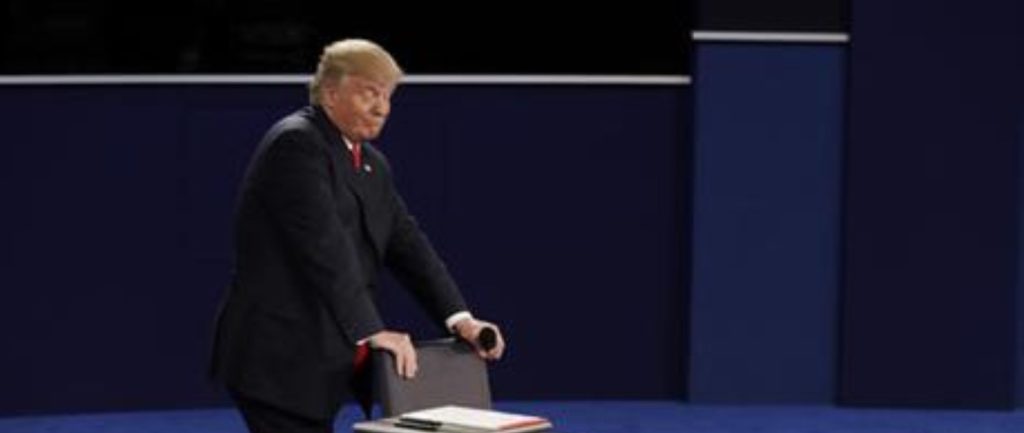
CJ McCollum, Jamal Crawford and Jacob Tamme are among current and former professional athletes on social media to criticize Donald Trump‘s characterization of his predatory, sexual comments about women from a 2005 video as “locker room talk.” Trump’s campaign described his remarks as “locker room banter” in a statement Saturday, and the Republican presidential nominee repeated the line multiple times Sunday during the presidential debate with Hillary Clinton. In the tape, obtained by The Washington Post and NBC News, Trump describes trying to have sex with a married woman and brags about women letting him kiss and grab them because he is famous. “When you’re a star they let you do it,” Trump says. “You can do anything.” He adds seconds later, “Grab them by the p—-. You can do anything.” “I haven’t heard that one in any locker rooms,” McCollum wrote on Twitter in a response to a tweet from Crawford. McCollum plays for the NBA’s Portland Trail Blazers and Crawford plays for the Los Angeles Clippers. I haven’t heard that one in any locker rooms https://t.co/Ci8NXOgFcI — CJ McCollum (@CJMcCollum) October 10, 2016 Please stop saying “locker room talk” — Jacob Tamme (@JacobTamme) October 10, 2016 It’s not normal. And even if it were normal, it’s not right. https://t.co/RQUWJJBSTn — Jacob Tamme (@JacobTamme) October 10, 2016 Dodgers pitcher Brett Anderson , Chiefs wide receiver Chris Conley and retired NFL players Donte Stallworth and Chris Kluweoffered similar condemnations. Have I been in every locker room? No. But the guys I know and respect don’t talk like that. They talk about girls but not like that. Period. — Chris Conley (@_flight17_) October 10, 2016 “Locker room talk” ? — Donté Stallworth (@DonteStallworth) October 10, 2016 Yes. That’s not locker room talk. https://t.co/egzC03ooQA — Chris Kluwe (@ChrisWarcraft) October 10, 2016 As an athlete, I’ve been in locker rooms my entire adult life and uh, that’s not locker room talk. — Sean Doolittle (@whatwouldDOOdo) October 10, 2016 Republished with permission of the Associated Press.
Hillary Clinton’s turn: Guide to the Democratic National Convention
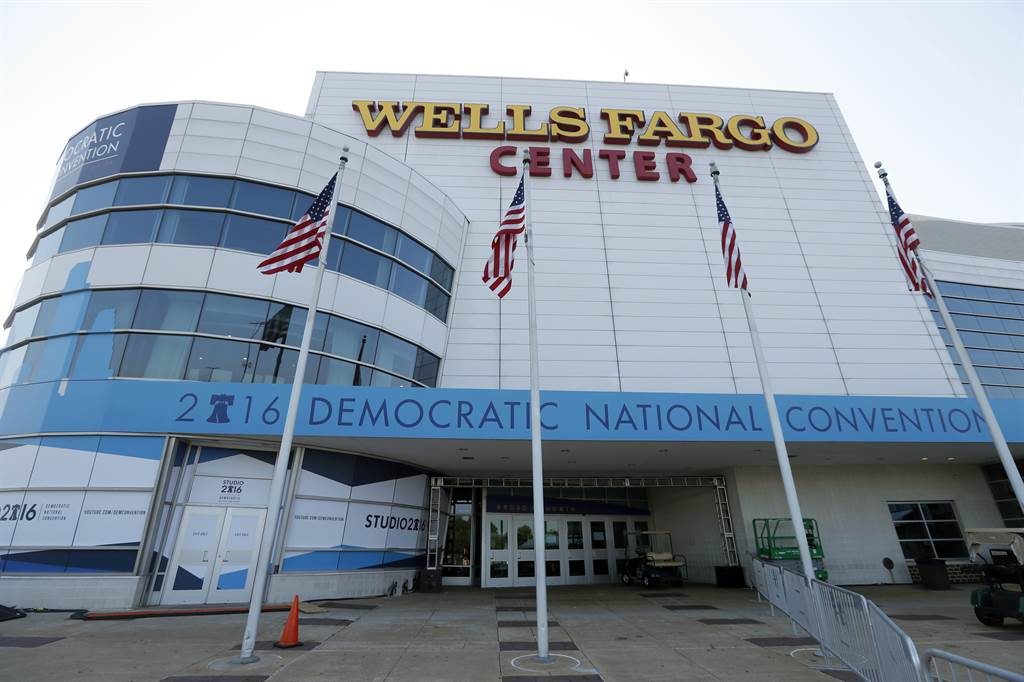
It’s Hillary Clinton‘s turn. The Democratic National Convention opening Monday in Philadelphia is Clinton’s chance to hit reset after a vigorous primary against Bernie Sanders and the unlikely movement that formed behind the Vermont senator. Sanders, a self-described democratic socialist, has endorsed Clinton, but many of his supporters have not. Some of them were dismayed by her choice of Sen. Tim Kaine, D-Va., as her running mate. Last week’s Republican National Convention in Cleveland exposed deep, lingering reservations about Donald Trump from within his own party. The Democratic gathering is expected to be a more smoothly choreographed display of unity among Clinton, Sanders and Democratic lawmakers and voters. What to know about the week: THE POINT Both parties use their national conventions to formally nominate candidates for president and vice president. Party leaders showcase their nominees, and the prime-time speeches by the candidates and prominent politicians win some of the largest television audiences of the campaign. That makes the convention a critical opportunity for a party to introduce its candidates to the country. Democrats also will adopt its platform, which lays out policy principles but has no binding effect. THE LOCATION The Wells Fargo Center, home to the NHL’s Philadelphia Flyers and the NBA’s Philadelphia 76ers, is the convention site. The arena has been transformed with stages, platforms, cameras and lights. Democrats are hoping that city’s historical role in the founding of American democracy will serve as a powerful backdrop for the themes they’ll highlight. WHO’S GOING More than 5,000 delegates are among the 50,000 people set to be in Philadelphia. They include alternates, lawmakers, special guests, journalists and protesters. Among the delegates, about 15 percent are superdelegates, mainly members of Congress and members of the Democratic National Committee. At the GOP convention, a striking number of prominent Republican lawmakers and party leaders were nowhere to be seen, including the party’s previous two presidents and its two most recent presidential nominees. In contrast, bold-name Democrats have been eagerly vying for a chance to speak in Philadelphia. Most Democratic senators and House members are expected to attend. THE SCHEDULE First lady Michelle Obama is set to speak Monday. That’s also when Sanders will give his speech — a closely watched moment for signs of whether his loyal supporters will line up behind Clinton, as he’s asked them to do. Former President Bill Clinton, the candidate’s husband, is the speech to watch Tuesday. A day later, President Barack Obama and Vice President Joe Biden come to Philadelphia. On Thursday, the final night, Chelsea Clinton will introduce her mother for her speech accepting the Democratic nomination. Kaine, who made his debut as Clinton’s running mate at a joint appearance Saturday, will give a speech introducing himself to the country. Officials haven’t yet said when, but the running mate typically speaks Wednesday. Other scheduled speakers are Massachusetts Sen. Elizabeth Warren, New Jersey Sen. Cory Booker, New York Mayor Bill de Blasio and House Minority Leader Nancy Pelosi. THE ENTERTAINMENT Shoop Dogg, Lady Gaga, Lenny Kravitz and Cyndi Lauper will appear in Philadelphia during the convention. Fergie will perform at The Creative Coalition’s gala. THE ROLL CALL States will get a chance to announce how their delegates are voting in the formal roll call Tuesday. It’s a high point for Sanders delegates; they’re pushing to have their votes fully tallied. In 2008, Clinton halted the roll call midway through to call for then-Sen. Barack Obama’s approval by acclamation, or unanimous vote. Sanders says he favors a state-by-state roll call, but he hasn’t indicated exactly what he will do. There’s a total of 4,763 delegates. It takes 2,382 to win the Democratic nomination. Clinton arrives in Philadelphia with 2,814 delegates to Sanders’ 1,893, according to an Associated Press count. That includes the superdelegates, who can vote for any candidate they choose. This year, those superdelegates overwhelmingly backed Clinton. The remaining 4,051 are pledged delegates, won by the candidates based on the results of state primaries and caucuses. THE PROTESTS If there are any fireworks in Philadelphia, expect them to come from Sanders supporters. They have said they plan to show up in full force. Philadelphia officials estimate between 35,000 and 50,000 people will demonstrate across the city each day. Activists have put the estimate higher, at roughly 100,000. Among the groups planning to demonstrate are gun control advocates, the group Occupy DNC Convention and Trump supporters from Pennsylvania. Republished with permission of the Associated Press.
