
Federal judges select new congressional map for Alabama
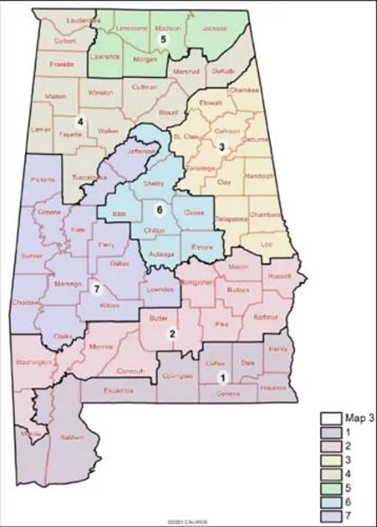
By Steve Wilson | The Center Square A three-judge panel chose the new congressional map for Alabama in an order issued Thursday that creates a second Black majority district. The three U.S. judges – Stanley Marcus, Anna Manasco, and Terry Moorer – picked the third of three potential remedial plans drawn by a court-appointed special master and a cartographer. They also ordered Alabama to use the map to conduct its 2024 elections. “We conclude that Remedial Plan 3 completely remedies the likely Section Two violation we identified while best preserving the State’s legislative preferences, as expressed through the 2023 Plan, and otherwise complies with the requirements of the Constitution and the Voting Rights Act of 1965,” the order read. In the order, the judges said voting in Alabama is “extremely racially polarized,” acknowledging that the minority “opportunity” district will likely be a pickup for Democrats in 2024. The plan will carve a new 2nd District that will stretch the width of the state from from northern Mobile County to the Wiregrass region of southeastern Alabama. The remainder of Mobile and Baldwin counties will remain together in the 1st Congressional District. The judges said in their order that this district will have a Black voting age population of 48.7%, smaller than the 7th District (the state’s existing minority-majority district) with a Black population of 51.9%. Also, the judges said “splitting the Gulf Coast is necessary to remedy the vote dilution we identified.” In a previous order that compared the three plans, the court said the third plan “is the most compact of the three plans” and “has only six county splits.” They also said the third plan “retains the largest portion of the population of the city of Mobile (90.4%) and the city of Birmingham (93.3%) within a single district.” The state tried to keep maps drawn during July’s special session that kept the state with one majority Black district, but the three-judge panel (with two judges appointed by former President Donald Trump) rejected those claims last month. On June 8, the U.S. Supreme Court issued a decision in Allen v. Milligan that said Alabama’s previously-drawn map violated the Voting Rights Act and ordered new maps that create an “opportunity district” for minority voters to cast ballots for the candidates of their choice. Republished with the permission of The Center Square.
Three judge panel will rule on Alabama’s congressional districts soon
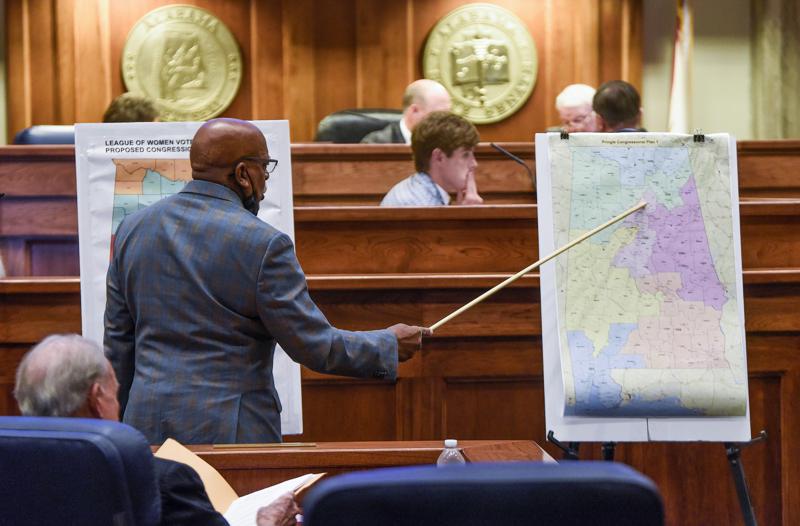
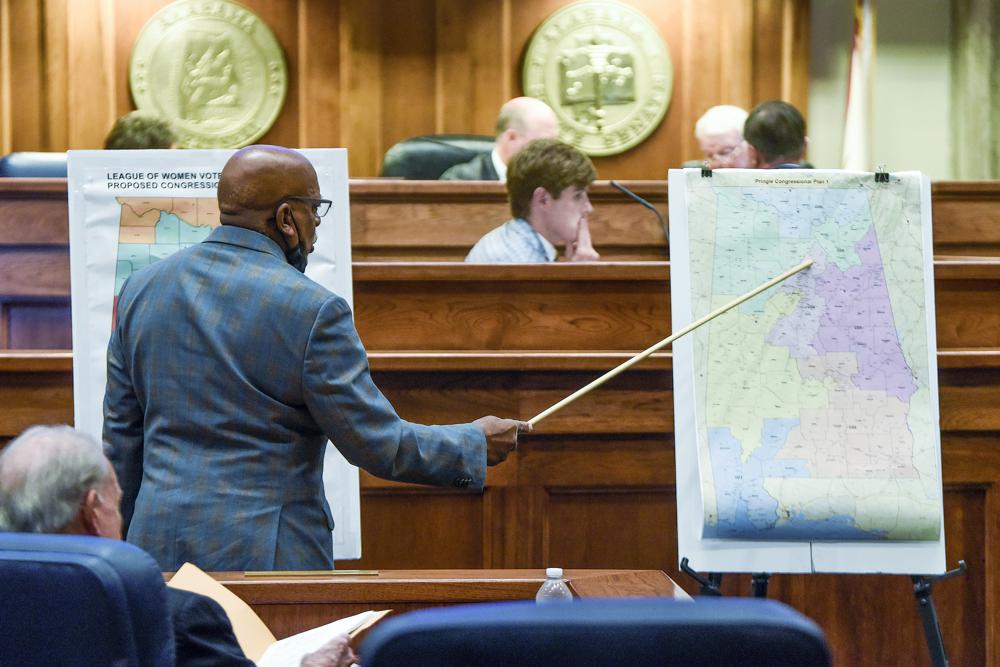
On Tuesday, the three-judge panel hearing the Alabama Congressional redistricting case listened to arguments for and against the three maps prepared by the special master, Richard Allen. The court held an 80-minute hearing at the federal courthouse in Birmingham on Tuesday. The three-judge panel includes U.S. Circuit Judge Stanley Marcus, federal District Judge Anna Manasco, and federal District Judge Terry Moorer. Plaintiffs tended to prefer map 1, which divides Houston County and includes the City of Dothan into Congressional District 2. The Alabama Attorney General’s office has objected to this entire process and has vowed to defend the July 2023 redistricting map prepared by the state Legislature. The court previously rejected a motion by Alabama Attorney General Steve Marshall to stay the proceeding while the State appeals. The U.S. Supreme Court has also rejected Marshall’s request for a stay. Incumbents Republican Congressmen Jerry Carl and Barry Moore both now live in the First Congressional District. All three maps divide Mobile County. In June, the three-judge panel ordered the Legislature to pass a new congressional redistricting map to include two majority-minority districts “or something close to it.” The Legislature refused and instead defied the court’s authority by passing their own map that kept White majorities in six of Alabama’s seven congressional districts. In August, the three-judge panel rejected the Legislature’s plan as having violated the Voting Rights Act of 1965. The court rejected the state’s map and appointed Allen to draw new maps. The federal courts have already ruled that the state’s 2021 congressional rezoning likely violated section two of the Voting Rights Act of 1965. Secretary of State Wes Allen has told the courts that the state needs to know which map is chosen due to the quickly approaching 2024 election cycle. Democratic candidate qualifying has already opened, and Republican candidate qualifying opens on October 16. The major party primaries will both be held on March 5. To connect with the author of this story or to comment, email brandonmreporter@gmail.com.
Federal appeals court rejects Alabama Congressional redistricting map
On Tuesday, a three-judge panel struck down the Alabama Legislature’s new congressional redistricting map. The Court is expected to appoint a special master to redraw Alabama’s congressional map because the state Legislature refused to draw a map compliant with the Court’s previous order to draw a map with two majority-minority districts. In June, the Court ordered the state to submit a map with two majority-minority districts or something close to that. Instead, Alabama Republicans simply drew a map increasing the percentage of Black voters in Republican Congressman Barry Moore’s Second Congressional District from 30% to 39.9%. “We are not aware of any other case in which a state legislature — faced with a federal court order declaring that its electoral plan unlawfully dilutes minority votes and requiring a plan that provides an additional opportunity district — responded with a plan that the state concedes does not provide that district,” the judges wrote in a 196-page ruling. The plaintiffs in the Milligan v Allen case that challenged the original 2021 redistricting as not compliant with the Voting Rights Act of 1965 rejected the second map. On Tuesday, the Court issued a ruling agreeing with the plaintiffs. None of this was unexpected. Alabama Attorney General Steve Marshall in August told the Alabama Republican Executive Committee meeting in Montgomery that he was skeptical of the three-judge panel ruling in favor of the state. The state lost a narrow 5 to 4 decision before the U.S. Supreme Court. The Court in June affirmed that the three-judge panel in Atlanta was correct in its initial 2022 decision to halt Alabama’s election under the 2021 redistricting. After the initial judgment, the three-judge panel’s decision to block the 2022 election, the Supreme Court ruled that the three-judge panel likely had been right that the 2021 redistricting was not compliant with the Voting Rights Act. The special master has been given until September 25 to redraw Alabama’s Congressional districts, creating a second majority-minority district. The state is expected to ask the Supreme Court to stay the three-judge panel ruling and hear this case as they did last year. The state will likely ask the Supreme Court to again stay the three-judge panel’s ruling to allow the 2024 elections to take place under the partisan 2022 redistricting. The plaintiffs suing the state will undoubtedly challenge any legal maneuvering by the state of Alabama. State Senators close to the redistricting decision explained to Alabama Today that the state is staking its hope on Supreme Court Justice Brett Kavanaugh switching sides and voting with the four conservative jurists: Samuel Alito, Amy Coney Barrett, Clarence Thomas, and Neil Gorsuch. All of this is dependent on the Supreme Court even considering the case. They are not obligated by law to take up the matter. Kavanaugh voted with Chief Justice John Roberts, who wrote the decision for the majority. The three-judge panel is comprised of one Clinton appointee, Circuit Judge Stanley Marcus, and two Trump appointees, District Judge Anna Manasco and District Judge Terry Moorer. Candidate qualifying with the two major political parties begins in October, so the state needs to know what the district boundaries will look like by October 1. If this decision is applied to other southern states, including Texas and Florida, Democrats could pick up as many as twelve new majority-minority districts, likely flipping control of the U.S. House of Representatives to the Democrats in the 2024 elections. To connect with the author of this story or to comment, email brandonmreporter@gmail.com.
Justices weigh Alabama’s bid to stop redistricting order
The U.S. Supreme Court is weighing Alabama’s request to freeze a court order requiring the state to draw new congressional lines and create a second district with a significant number of Black voters. Alabama has asked the court to halt an injunction issued by a three-judge panel blocking the use of the current map after the panel found it likely violates the Voting Rights Act. The Alabama attorney general argued the ruling will throw 2022 elections into chaos and require the state to put race above other redistricting criteria. But lawyers for people and organizations that brought the initial lawsuit dispute that and argue the current lines — similar to those in use since the 1990s — do not reflect a state that has grown more racially diverse. “This is very much a textbook case of a Voting Rights Act violation,” said NAACP Legal Defense Fund senior counsel Deuel Ross, whose organization represented the plaintiffs in the case. The three-judge panel last month found Alabama’s map, drawn by the GOP-dominated Alabama Legislature, likely violates the Voting Rights Act because, “Black voters have less opportunity than other Alabamians to elect candidates of their choice to Congress.” The decision cited Section 2 of the Voting Rights Act which prohibits racial discrimination in election procedures. Alabama’s congressional delegation has for years consisted of one Black representative elected from a heavily Black district and six white representatives elected from heavily white districts. The judges added that any “remedial plan will need to include two districts in which Black voters either comprise a voting-age majority or something quite close to it.” U.S. Census numbers show the state has grown racially more diverse since 1990. Black people make up about 27% of the state’s population while white people make up 63% of the population. “We think that Alabama has an obligation to draw fair maps that are reflective of the state’s very rich history of diversity, not just racial diversity, but diversity in terms of representation for everyone,” Ross said. The Alabama attorney general argues the ruling will improperly require states to prioritize race over other redistricting criteria. “The court-ordered redraw marks a radical change from decades of Alabama’s congressional plans. It will result in a map that can be drawn only by placing race first above race-neutral districting criteria, sorting and splitting voters across the State on the basis of race alone,” Alabama Attorney General Steve Marshall wrote in the state’s appeal to the U.S. Supreme Court. Fourteen conservative-led states signed on to a brief in support of Alabama, arguing that the ruling and “absence of clarity no doubt means litigation will ensue across the country over new maps.” Louisiana Attorney General Jeff Landry filed a brief along with attorneys general from Arizona, Arkansas, Georgia, Indiana, Kentucky, Mississippi, Missouri, Montana, Oklahoma, South Carolina, Texas, Utah, and West Virginia. Lawyers for plaintiffs argued Alabama is misrepresenting the ruling as prioritizing race instead of assessing whether an additional majority-Black district could be created consistent with compactness and traditional districting principles. It is unclear when the court will rule but Alabama faces a looming deadline to get new maps in place unless justices intervene. The three-judge panel pushed back the congressional candidate qualification deadline with political parties from Friday until February 11 to allow the Legislature the opportunity to enact a remedial plan. Alabama lawmakers appear to be waiting on the U.S. Supreme Court’s decision. The legislative reapportionment committee has not met since the ruling of the three-judge panel, some members said. “The attorney general has filed motions of stay and of appeal with the Supreme Court and we’re just going to need to see what the outcomes are, Senate President Pro Tem Greg Reed said. The three judges that issued the unanimous ruling consisted of one judge appointed by former President Bill Clinton — Senior U.S. Circuit Judge Stanley Marcus — and two judges appointed by former President Donald Trump — U.S. District Judge Anna Manasco and U.S. District Judge Terry Moorer. Evan Milligan, a Montgomery resident and the lead plaintiff in the lawsuit, said Alabama likely would have lost a congressional seat if not for the population growth of minority groups, including people born in other countries. “To produce maps that undercount the voting strength of the very population that’s contributing to the ability of the state to even have seven congressional districts is even more indefensible to me,” Milligan said. Republished with the permission of the Associated Press.
Judges maintain order for Alabama to draw new districts
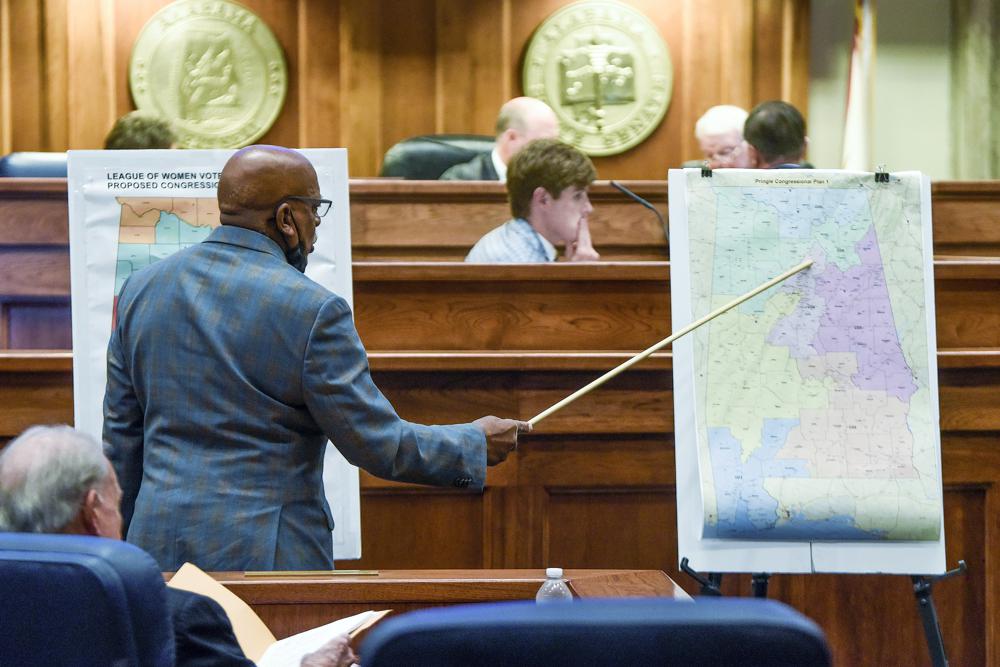
A three-judge panel on Thursday refused to stay its decision that effectively orders Alabama to draw new congressional districts before the 2022 elections and to create a second district of which Black voters are a sizeable portion of the population. The panel denied Alabama’s request to put a preliminary injunction on hold as the state appeals the decision. In a sometimes strongly worded ruling, the judges reiterated findings they believe show the current map likely violates the Voting Rights Act and that demographic shifts merit the creation of a second district — instead of this one — with a substantial number of minority voters. The judges wrote they are “aware that the preliminary injunction is consequential” but said it was necessary. “We discern no basis for a finding that this case is the extraordinary case in which we must allow an election to proceed under a map that we have determined — on the basis of a substantial evidentiary record — very likely violates the Voting Rights Act,” the judges wrote. A spokesman said the Alabama attorney general’s office did not have a comment on the ruling. Alabama is currently represented by one Black Democrat elected from the state’s only majority-Black district and white Republicans elected from heavily white districts. About 27% of the state’s population is Black. The three-judge panel said it was a “red herring” for the state to argue the current districts are lawful because they resemble long-used districts. “The argument also ignores the obvious reality that as maps age, demographic changes may eventually turn a lawful map into an unlawful map,” the judges wrote. Alabama’s Black population rose from 25.26% of the population in the 1990 census to 27.1% of the population in the 2020 census. At the same time, the white population dropped from 73.65% of the population in the 1990 census to 63.12% of the population in 2020. The three judges that issued the ruling consisted of one judge appointed by former President Bill Clinton — Senior U.S. Circuit Judge Stanley Marcus and two judges appointed by former President Donald Trump — U.S. District Judge Anna Manasco and U.S. District Judge Terry Moorer. Republished with the permission of the Associated Press.
Alabama appeals ruling ordering new congressional districts
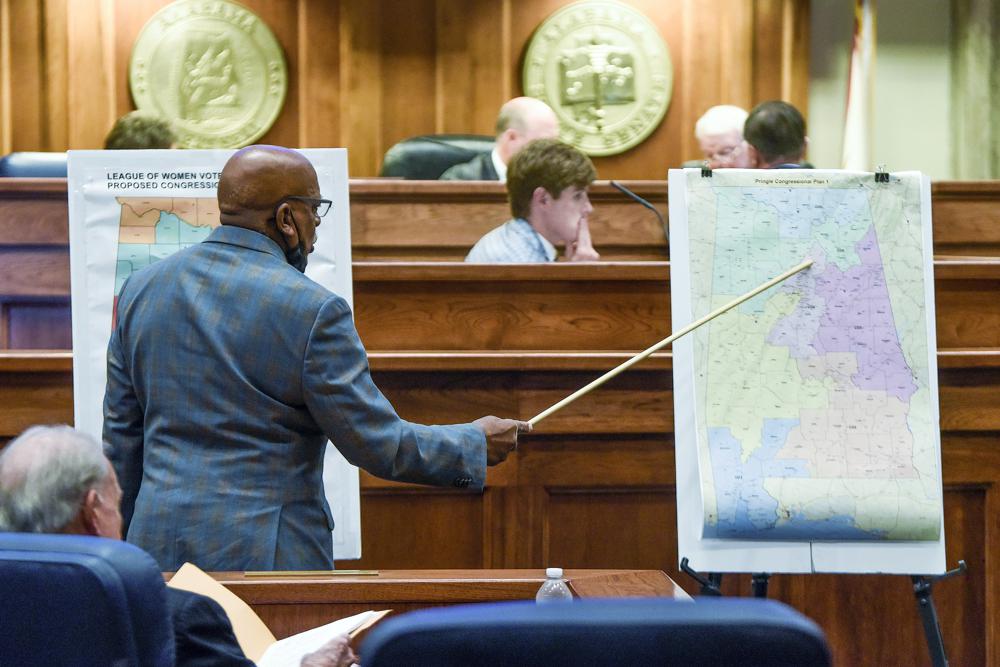
Alabama on Tuesday began appealing a federal court ruling that ordered the state to draw new congressional districts, including a second district with a substantial number of minority voters. The Alabama attorney general’s office filed a notice of appeal to the judges’ order that blocked the current map from being used in the upcoming 2022 elections. The state argued similar maps had been in use for decades with court approval, and the ruling is problematic with the closeness of May primaries. The state also asked the judges to stay their order during the appeals process. “And roughly two months before absentee voting begins, it is clear that the Court’s order will cause irreparable harm to Alabama, its aspiring congressional representatives, and the voters they seek to represent,” lawyers for the state wrote in the emergency motion. The state asked for a quick ruling, and a judge ordered attorneys for voters who filed the initial lawsuit to submit a response by Thursday night. A three-judge panel on Monday issued a preliminary injunction that blocked Alabama from using its current map that created one heavily Black district and six heavily white districts. “Black voters have less opportunity than other Alabamians to elect candidates of their choice to Congress,” judges wrote in the ruling. The judges wrote that any remedial plan will need to include two districts in which Black voters “either comprise a voting-age majority or something quite close to it.” The ruling was a victory for Democrats who had argued the lines pack many Black voters into a single district and limits the ability of Black voters elsewhere to influence elections because they live in overwhelmingly white Republican districts. House Minority Leader Anthony Daniels said districts lines should reflect the racial and political diversity of the state. Alabama’s congressional delegation consists of one Black Democrat and six white Republicans. Black people make up about 27% of Alabama’s population. “Well, for me, a state that is approximately 40% Democrat with only one representative out of seven, I mean, that speaks for itself,” he said. Daniels suggested it would be best for the court to go ahead and draw the districts. “I suspect this will probably make it up to the Supreme Court at some point, but I think that this is going to set the tone for the nation and addressing redistricting long-term,” he said. The three judges that issued the ruling consisted of one judge appointed by former President Bill Clinton — Senior U.S. Circuit Judge Stanley Marcus and two judges appointed by former President Donald Trump — U.S. District Judges Anna Manasco and U.S. District Judge Terry Moorer. The Alabama House speaker told reporters Tuesday that legislative leaders are discussing how to proceed. “Well, we’re meeting with legal, and we’re finding out what our options are, and at this point, we don’t know we just got to wait and see,” Republican House Speaker Mac McCutcheon of Monrovia told reporters. McCutcheon said the “reapportionment committee is ready to go to work” if needed. The state faces a tight timeline. Party primaries are in May. Republished with the permission of the Associated Press.
