
State House passes Silver Alert bill to protect missing persons with Alzheimer’s

There are an estimated 5.5 million Americans living with Alzheimer’s disease, and this number is expected to grow to as many as 16 million by 2050. According to the Alzheimer’s Association, six in 10 people with dementia will wander at some point during the course of the disease. Wandering can be dangerous, even life threatening, as person with Alzheimer’s may not remember his or her name or address, and can become easily disoriented, even in familiar places. If not found within a 24-hour period, up to half will suffer serious injury or death. It’s an incredibly stressful situation that weighs heavily on caregivers and family On Thursday, the State House took a step forward to help alleviate a bit of that stress and find missing seniors with the passage of HB427. Sponsored by Huntsville-Democrat state Rep. Laura Hall, HB427 updates a statewide Silver Alert system to provide families a way to locate lost or missing seniors who may be endangered. Similar to Amber Alert system, Silver Alerts allow law enforcement to disseminate statewide alerts for missing seniors. Currently, Alabama issues alerts for seniors under certain circumstances — including being over 60 years of age — but Hall’s bill includes adults with Alzheimer’s or other cognitive disorders, regardless of age. It also requires specialized training for law enforcement personnel who participate in searching for missing persons with Alzheimer’s disease or dementia. “This Silver Alert bill will play a significant role in the safety of those with Alzheimer’s and other types of dementia,” said Hall. “As a community, we need to do what we can to establish these protocols in order to keep our loved ones with dementia safe.” Lawmakers voted 99-0 in support of the legislation. It now moves to the State Senate.
After debate, Houses passes controversial ‘In God we trust’ bill
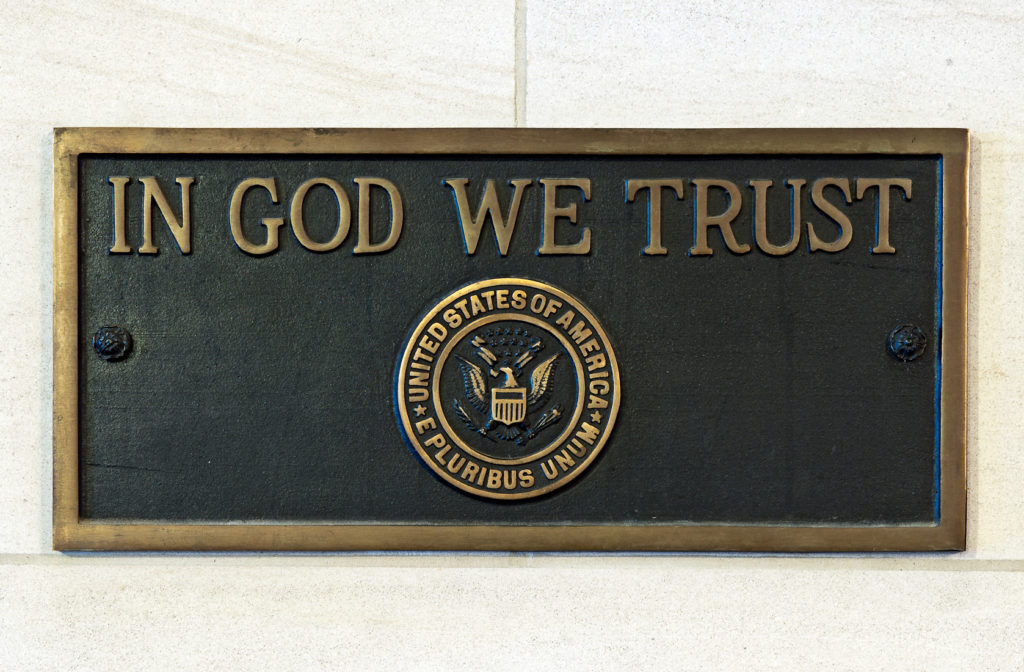
After lengthy debate, a bill passed through the state House on Tuesday that would allow “In God We Trust” to be displayed in public spaces across the state of Alabama. Hayden-Republican state Rep. David Standridge filed HB228: The National Motto “In God We Trust” Act ultimately passed 91-4. It would allow the national motto to be placed on government agencies and offices, in and on public buildings, including government office buildings, public school classrooms, and vehicles across the state. “In God We Trust” has been the official motto of the United States since 1956, but that didn’t stop legislators from discussing the bill and the origins of the phrase for over two hours. Where one state lawmaker, Indian Springs-Republican state Rep. Arnold Mooney, was accused of twisting history when he explained the phrase is from the national anthem, and added that Francis Scott Key once argued slaves on a captured ship should return to Africa. Black legislators said Mooney was wrong and didn’t know what he was talking about, as Key himself owned slaves and his third stanza is thought to celebrate the deaths of escaped slaves who actually fought with the British. It now moves to the Alabama Senate.
State House moves to special order calendar
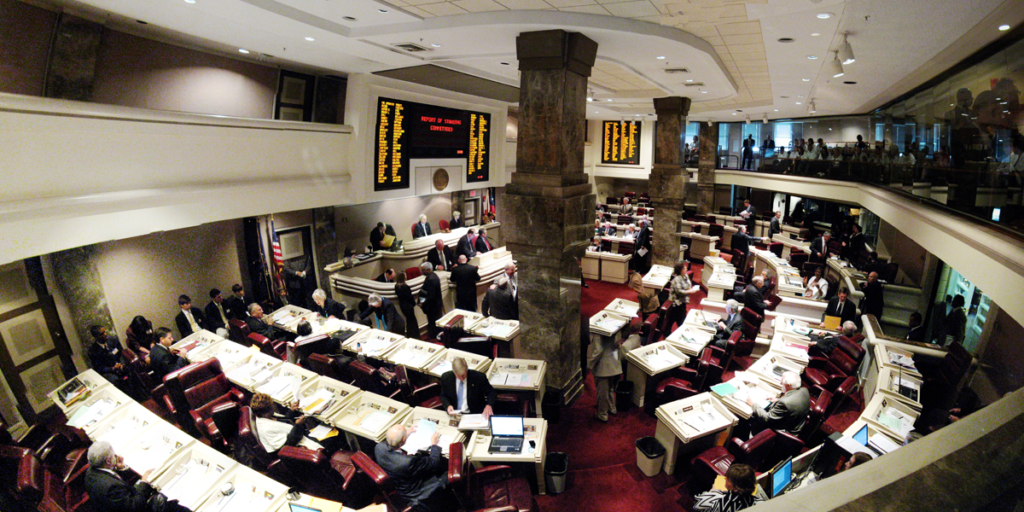
Typically, the Alabama Legislature votes on bills by number, that is in the order the bills leave a committee or as set by a specific committee. In order to change the order a bill is considered on the floor it must be added to the special order calendar and approved by the Rules Committee. For the first time this legislative session, the Rules Committee has put forth a resolution of a special order calendar. Upon the adoption of their resolution, the business they set “shall be the special and paramount order of business for the 7th legislative day taking precedence over the regular order of business or any pending or unfinished business.”
New laws enacted by the Alabama legislature
Wondering what bills became law this session? We’ve got a roundup of some of the latest measures enacted by the Alabama legislature. Check these out: House Bill 1, known as the Alabama Student Religious Liberties Act, protects religious expression in schools and bars local boards of education from discriminating against students or parents on the basis of religion. Officers of limited liability companies under House Bill 54 clarifies which jurisdiction can govern a limited liability company. After heated debate, Senate Bill 89, imposes membership, term, and compensation limits on the Birmingham Water Works Board and any other water works board serving customers outside its principal location. House Bill 91 says that as long as a car rental company is licensed as a whole, individual employees do not have to be licensed to sell insurance along with a rental contract. The Secretary of the Alabama Law Enforcement Agency can appoint a Homeland Security Adviser under House Bill 98. Under House Bill 101, 18 is now the age of consent for participating in research conducted by a college or university. Senate Bill 118 revises the citizenship qualifications for CPA certification and reduces the semester and quarter hour education requirements for eligibility to sit for the CPA examination. House Bill 179 outlines eligibility for members of the Credit Union Board of the Alabama Credit Union Administration and the governor’s new authority to approve or nominate members. Restaurants and food retailers will have to post the country of origin of certain products containing catfish, under House Bill 186. House Bill 189 clarifies the roles of the Department of Senior Services commissioner and its 16-member advisory board. A new board will oversee Alabama’s two-year colleges, under Senate Bill 191. House Bill 231 outlines new regulations for heating and air conditioning contractors, including training now available through the Alabama Home Builders Foundation. The Department of Children’s Affairs is now the Department of Early Childhood Education, thanks to House Bill 233. The change reflects new responsibility for developing a comprehensive system of high quality early learning and care. Under House Bill 246, heart defibrillators can only be operated by someone who has completed training in defibrillator use and CPR, including instruction on psychomotor skills and emergency cardiovascular treatment. Want more? Click here for the complete list, including local laws and those enacted earlier in the legislative session.
To Tax or Not To Tax: Is there ever a question?

The legislature is in session today. There’s much work to be done but one subject dominates: the state budget. Gov. Robert Bentley is pushing for tax increases. So far it looks like legislative leadership and most members are standing united against the governor’s efforts. I applaud them. While I try not to make statements like always and never, I can say with certainty additional taxes are rarely the solution. No surprise the usual suspects from the left, the ones who never think there’s enough to be spent by the government, have joined in the fight and are supportive of efforts to tax, tax, tax. While I’m not blind to the circumstances spending continues, costs are rising and current revenue isn’t enough I’m also not deaf to the fact that the chicken little sky is falling arguments aren’t true either. I worked on the Hill in D.C. as the sequester cuts were fought over repeatedly. I sat in meeting after meeting and read letter after letter about how across-the-board cuts would devastate services and cause havoc, death and destruction. When cuts started to take effect the destruction predicted didn’t follow. The problem is that government will continue to grow and the reality is there are cuts to be made along the way. Maybe those cuts aren’t all equal. It’s pretty clear that the Alabama prison system is one place where any dollar moved needs to be done so with thoughtful deliberation but that’s not to say there isn’t anything that can be done at all. It comes back to what is the role of the government in our state and our nation? What services must they provide and what can and should be left to private businesses and our communities? Our legislative leaders are facing tough questions, but I encourage them to exhaust all possibilities before resorting to any tax increase. They have the will of the people behind them.
