
Judge won’t release Siegelman on appeal bond
A federal judge on Thursday refused to free former Alabama Gov. Don Siegelman from prison while he continues to appeal his 2006 bribery conviction. Siegelman has raised significant issues, but the 11th U.S. Circuit Court of Appeals is unlikely to grant Siegelman a new trial since the court has already rejected similar arguments from his co-defendant, Richard Scrushy, U.S. District Judge Clay Land of Georgia said in his 31-page order. A federal jury in 2006 convicted Siegelman of federal funds bribery on allegations that he sold a seat on a hospital regulatory board to former HealthSouth CEO Richard Scrushy in exchange for $500,000 in donations to Siegelman’s unsuccessful 1999 campaign to get Alabama voters to approve a state lottery. Siegelman was also convicted of obstruction of justice. Siegelman, 68, has been serving a 6 1/2-year sentence at a Louisiana prison camp. Siegelman attended a Monday hearing in Montgomery before Land while shackled and wearing a red jail jumpsuit. The former Democratic governor is arguing his 2006 trial was tainted by the involvement of a prosecutor with ties to GOP politics. His lawyers also say the trial judge made legal mistakes when sentencing Siegelman. Then-U.S. Attorney Leura Canary announced her recusal from the investigation in 2002, three years before Siegelman was indicted, after Siegelman’s lawyer made an issue of her husband’s work in GOP politics. Siegelman’s lawyers argued she still remained improperly involved in the case. Justice Department lawyer John-Alex Romano argued Canary had no decision-making role in the case and handled only the management duties of her office. In his order, Land expressed concern over some of the issues raised by Siegelman, particularly that the court did not let him investigate the extent of Canary’s involvement. Land said there was some evidence that Canary did not completely “divorce” herself from the case, and he believes the trial court should have let Siegelman get more information through documents or testimony. However, he said that the 11th Circuit ruled against similar discovery requests by Scrushy, and Siegelman had not proven why the appeals court would rule any differently for him. Republished with permission of the Associated Press.
Alabama Supreme Court says no electronic bingo
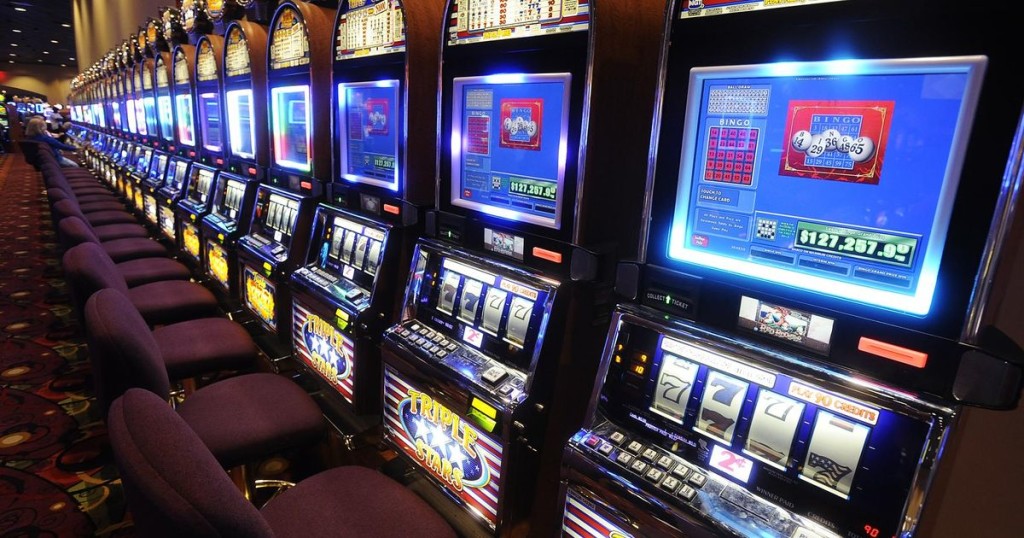
Alabama’s highest court on Friday upheld the attorney general’s raid on Center Stage gambling hall and made it clear that bingo can’t legally be played on electronic machines. The Alabama Supreme Court ruled bingo games allowed in some counties are traditional games that involve “meaningful human interaction in a group setting,” not games played on electronic machines. Attorney General Luther Strange had state police raid Center Stage near Dothan on July 25, 2012. They seized 691 gambling machines and $288,657 in cash. The Houston County Economic Development Authority, which operated Center Stage, challenged the raid and contended the machines were a legal form of bingo. A Houston County judge ruled the machines illegal and said the state could destroy the machines and keep the money. The Alabama Supreme Court affirmed that decision 9-0 Friday. “This ruling from the highest court in our state once again confirms that so-called ‘electronic bingo’ is illegal under state law,” Strange said. The Supreme Court based its decision on an earlier case upholding a 2009 raid at a Lowndes County casino. The justices said bingo is a form of a lottery, which is prohibited by the Alabama Constitution. They noted, however, that several counties, including Houston County, have constitutional amendments allowing bingo. They said bingo refers to traditional bingo with players using paper cards and numbers being drawn, and a win being announced. The games at Center Stage featured an electronic depiction of a bingo card, but the justices said that will not suffice. In earlier decisions involving Lowndes and Greene counties, the court said an announcer must be involved in bingo. The court went further Friday, saying the announcer must call the numbers one at a time and allow time between each number for a player to physically mark the card. “In accordance with the foregoing we reiterate today that the game traditionally known as bingo is not one played by or within an electronic or computerized machine, terminal, or server, but is one played outside of machines and electronic circuitry. It is a group activity, and one that requires a meaningful measure of human interaction and skill,” the justices said. Dothan attorney Ernie Hornsby, who represented the Houston County Economic Development Authority, called the ruling “extremely disappointing.” He said Houston County was the only county with bingo where a judge validated the bonds used to build the gambling complex, and the validation was clear that bingo machines would be used to help pay off the bonds. The Supreme Court said the bond validation process did not decide the legality of the machines seized by the state. Since 2009, state officials have raided several non-Indian-run gambling halls as they did Center Stage. Some have reopened. One that has not reopened is VictoryLand in Shorter, which was once the state’s largest casino. A Montgomery judge held a trial in September on whether the state can keep the games and cash seized in a 2013 raid, but he has not yet ruled. Assistant Attorney General John Kachelman, who is handling that case, said Friday’s ruling could be considered by the judge. During the VictoryLand trial, the casino’s attorney made an issue of the attorney general not presenting a gambling expert to testify how VictoryLand’s games worked. In Friday’s decision, the Supreme Court said expert testimony is not necessary. VictoryLand’s attorney, Joe Espy, was out of his office Friday and did not immediately return a call seeking comment. Republished with permission of the Associated Press.
