
Martha Roby: Supporting STEM Education
Did you know that four billion people on the planet use a mobile phone? Over the past two years alone, 90 percent of all the world’s data has been generated. NASA plans to put man on Mars within the next 20 years, and self-driving cars are being tested around the world. Right now, we are living in the “future” we’ve talked about for generations, and our modern world requires a workforce educated in science, technology, engineering, and math, commonly known as STEM. Between the years 2000 and 2010, STEM-related jobs grew at three times the rate of non-STEM jobs. But, at the end of 2018, nearly 2.4 million STEM jobs went unfilled, because STEM education is not readily available for many students, especially in rural areas of our country. This is a critical problem, and I will briefly share some numbers to demonstrate just how important it is that we fix it. The number of STEM jobs is projected to increase by 13 percent by 2027, compared to nine percent for non-STEM jobs. Opportunities in computing, engineering, and advanced manufacturing will lead. The average median hourly wage for STEM jobs is $38.85, while the median earning for all other types of jobs in the United States is $19.30. The national average for STEM job annual salaries is $87,570, whereas the national average for non-STEM occupations is $45,700 – roughly half. The STEM fields provide fantastic career opportunities, but according to the National Math and Science Initiative, only 36 percent of all American high school graduates are ready to take a collegiate science course. According to the Department of Labor, universities in the United States are only expected to produce 29 percent of the number of graduates necessary to fill the 1.4 million vacant computer specialist job openings. The demand isn’t going to disappear, so it is our responsibility to expose the next generation of workers to STEM education so they will be equipped to fill these important jobs that will lead us further into the future we envision. I recently participated in a Commerce, Justice, and Science Appropriations Subcommittee hearing on STEM engagement, during which I had the opportunity to speak directly with experts from NASA and the National Science Foundation. Since we are experiencing such a severe workforce shortage, I brought up the issue of how we can generate increased interest in STEM-based jobs for the next generation. I also asked for an update about the programs currently in place to target underrepresented, rural areas across our country. I appreciated their time and thoughtful responses to my questions, and I was encouraged by what I learned. In Congress, I have and will continue to support strong funding for STEM education opportunities. We must do all we can to expose more young people to these increasingly important fields so that today’s workforce is ready for tomorrow’s jobs. Martha Roby represents Alabama’s Second Congressional District. She lives in Montgomery, Alabama, with her husband Riley and their two children.
TechBirmingham helps kids prepare to join digitally literate workforce
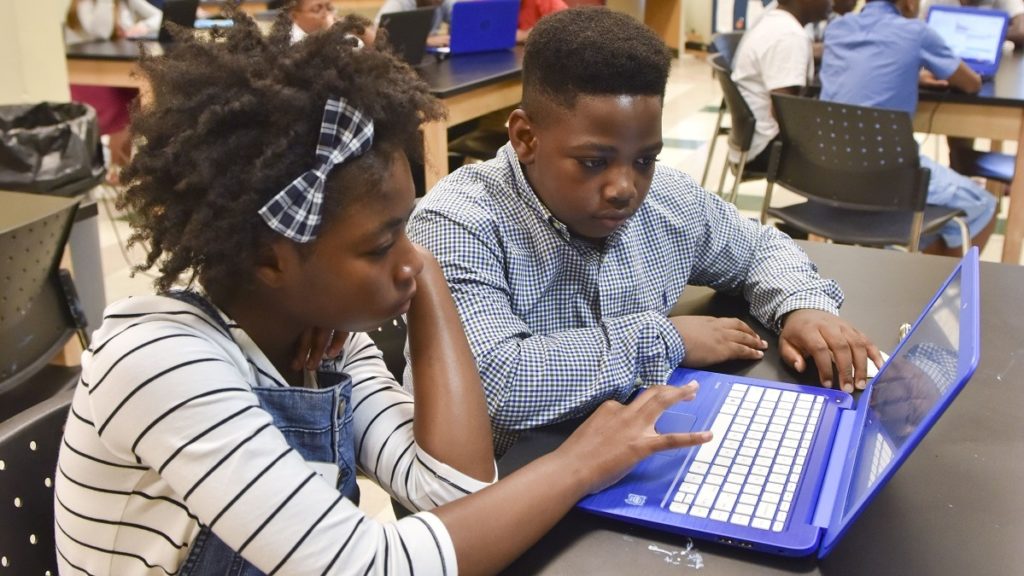
Every second Sunday of each month, Luke Robinson, 15, and his dad, Jason, travel about 80 miles from Winfield to the McWane Science Center in downtown Birmingham to participate in TechBirmingham’s coding class. The Robinsons are motivated to travel for two hours and devote another hour and a half on Sunday afternoons not only because of the lack of youth-oriented coding camps in Winfield but also because Luke is interested in computer animation. “I’m pretty passionate about computers,” Luke said. “Back home, they don’t really have any coding classes like this. This is my opportunity to do coding with other people.” Young people like Luke are taking advantage of coding camps and classes that will position them for careers in a world that’s becoming more high-tech. Computer coding — which involves writing programming language that makes computer software, apps and websites operate — is considered one of the fastest-growing fields in the job market. Computer coding “We need a digitally literate workforce,” said Deon Gordon, president of TechBirmingham. “In a lot of ways, every company now is a tech company.” “A lot of people 30 years ago thought we were going to be taken over by robots,” said Nicole Mubarak, director of Women Who Code Birmingham. “But we’ve been taken over more by software as opposed to hardware.” TechBirmingham’s Kids Code class teaches and encourages students to learn and experiment with computer code. (Frank Couch/The Birmingham Times) Because most companies and businesses rely heavily on computer software, the need for coding analysts and specialists is not just limited to jobs in the tech industry. “So many banks, insurance companies and health care providers are concerned about protecting the privacy of their clients’ information, they need to learn how to encrypt their important data,” said Christina Smith, TechBirmingham’s science, technology, engineering and mathematics (STEM) coordinator. TechBirmingham’s coding class, offered since 2015 at McWane, is designed to encourage digital literacy among children in grades three through 12. The free class, offered on the second Sunday of each month from 1:30 p.m. to 3 p.m., operates during the school year. Nearly 40 students participated in its August class. “What we want to do is give all kids access to the skills they’ll need for future jobs,” Smith said. “A lot of it is just learning basic coding skills and the fundamentals, the foundations of what they’re going to need if they want to pursue a career in computer software engineering.” Wave of the future Jajuana Smith of Birmingham said her 10-year-old son, Jalen, had taken a coding class previously, but he didn’t connect with the instructor’s personality and teaching style. She wanted to rekindle his interest before he lost it, so she brought him to the TechBirmingham class. “I needed him to get back in there,” she said. “I need him to grow with it because technology is the wave of the future. You have to be well versed in a lot of things for the new market. Technology is going to be on every career path no matter what you do. I need him to have a strong foundation, so if that’s what he chooses to do, he can do it.” During the coding class, students were divided into two groups. In one class, students learned basic coding encryption; in the other, they learned to use the basic language of Java to build apps. Students work on computer coding during a Kids Code class at McWane Science Center. (Frank Couch/The Birmingham Times) In Jalen’s class, he and another student learned how to crack a simple code. “I really like the fact that you get to interact with other people, meet new friends and still figure something out,” he said. “I’ve done coding, but I’ve never tried to crack a code.” In the app-development class, students created apps to produce music accompanied by dancing tigers and robots. Eight-year-old Sofia Aelterman was disappointed because she couldn’t get her robot to perform popular dance moves. “We were trying to make the robot dab (popularized a few years ago in music by songs like ‘Look at My Dab’ by Atlanta hip-hop group the Migos and in sports by NFL star Cam Newton), but it just wouldn’t dab. It wouldn’t floss, either (another dance that’s performed by characters in video games like Fortnite). We’ll get it next time,” she said. Mubarak, who serves as a volunteer instructor with TechBirmingham’s coding class, said incorporating coding with fun activities keeps kids engaged and sparks their interest. One exercise involved letting students create an app that flushed their homework down a toilet. “The kids get really creative,” she said. “They start seeing what they can do, they get their minds into it and that’s what they come up with — exploding homework and homework that flushes down the toilet. I just look at them and say, ‘Virtually, this is fine. In reality, don’t do it.’” For more information about TechBirmingham and its coding class, visit www.techbirmingham.com or contact Christina Smith at christina@techbirmingham.com. For more information about Women Who Code, visit womenwhocode.com/birmingham or follow them on Twitter @WWCBirmingham. This story originally appeared in The Birmingham Times. Republished with permission from the Alabama NewsCenter.
Alabama Power Foundation awards $150,000 grant to HudsonAlpha

The Alabama Power Foundation has awarded a $150,000 grant to the HudsonAlpha Institute of Biotechnology to help expand gene research education to students across Alabama. HundsonAlpha plans to grow its new program, Characterizing Our DNA Exceptions (CODE), by engaging small groups of college students with authentic genomic research. The students will computationally analyze DNA variants – a practice known as bioinformatics – from real-world, anonymous clinical samples. Current sequencing technologies make it possible to obtain the entire genetic code of an individual in a matter of days. Often, the process detects DNA variants, or genetic changes, that are not well understood because they have not been studied. These changes are known as variants of uncertain significance, or a VUS. The HudsonAlpha Institute for Biotechnology will use a $150,000 Alabama Power Foundation grant to expand bioinformatics to colleges throughout the state. (Getty Images) “A VUS undergoes extensive analysis and testing to determine whether it has a role in the development of a trait or disease, a process that is very time-consuming,” said Michele Morris, Workforce Development lead at HudsonAlpha. “Because of this, VUS interpretation has historically been conducted in larger universities. Through CODE, we want to lower those access barriers.” In doing so, HudsonAlpha is collaborating with five Alabama colleges and universities across a broader scope of academia. Schools range from nonprofit, to large community colleges, historically black colleges and universities (HBCUs), and liberal arts: Alabama College of Osteopathic Medicine Alabama State University Birmingham-Southern College Lawson State Community College Wallace State Community College Each school will select a faculty member to serve as program adviser who will then select five to 10 students to participate in CODE. HudsonAlpha researchers and educators are hosting a two-day workshop for advisers May 14-15. Dr. Jeremy Prokop presents at a workshop at HudsonAlpha to prepare advisers in the Characterizing Our DNA Exceptions (CODE) program. (HudsonAlpha) “It has always been the mission of the Alabama Power Foundation to support advances in our state. As technology continues to evolve and innovation is more vital than ever, it is important that we continue to expose Alabama’s students to cutting-edge initiatives to ensure their success,” said Myla Calhoun, president of the Alabama Power Foundation. Since its creation in 1989 with funds donated by shareholders, the foundation has supported Alabama communities, educational institutions and nonprofits with nonratepayer dollars through more than 20,000 grant and scholarship awards. “Programs like this one can be real game changers for these students, and we are proud to provide support,” Calhoun said. Pilot schools will participate in CODE for the 2018-2019 academic year. Students will present their work at a pilot group symposium in March 2019. Following the initial experience, pilot schools will be eligible to continue participation for a second year. This fall, HudsonAlpha will begin recruiting 25 more schools. “Enormous amounts of genomic data are being generated on a daily basis, so CODE participants will have access to that data and work to characterize newly identified DNA variants,” said Neil Lamb, Ph.D., vice president for Educational Outreach at HudsonAlpha. “We hope this experience will inspire more Alabama students to pursue a career in the STEM fields such as genomics and bioinformatics.” Republished with permission from the Alabama News Center.
Rocket Center teams up with Legislature to send Ala. students to space camp

The Alabama Legislature and the U.S. Space & Rocket Center in Huntsville Ala. are teaming up to send middle-school students to Space Camp. Students ages 12-14 in Alabama are qualified to apply for an exclusive week-long Space Camp program free of charge through the Space Academy for Leading Students in Alabama (SALSA) scholarship. SALSA is a scholarship funded by the Alabama State legislature. Each Alabama legislative district will award two scholarships, one for a male and one for a female, to attend SALSA. During the week long program, students will learn how to solve complex problems using STEM concepts and critical thinking, to work together as a team, train like an astronaut, and board a simulator for a simulated space mission to the International Space Station, the Moon or Mars. To be eligible for the program students must apply for the scholarship. The U.S. Space & Rocket Center will then notify the members of the Alabama House of Representatives or the Alabama Senate representing the district in which the student lives. Each legislator will then choose two students to receive a scholarship to attend SALSA. SALSA takes place May 27 through June 1, 2018. Scholarships will include tuition, room and board for the program and a flight suit. Travel expenses to and from the U.S. Space & Rocket Center are not included in the scholarship. The deadline to apply is Friday, Feb. 16.
Martha Roby: Highlighting outstanding 2nd District STEM programs

Studies increasingly show that the Science, Technology, Engineering, and Mathematics (STEM) fields are the drivers of our global economy and that these disciplines are the primary source of all innovation. Reports also show that many firms desperately need STEM-skilled employees but are struggling to find qualified individuals. It has become clear that we’re simply not producing enough individuals trained in STEM fields to fulfill current demand, and that’s a big problem if we want our country to remain globally competitive. I’m proud to report that our district’s own military installations, Maxwell-Gunter Air Force Base and Fort Rucker, are taking their own measures to expose elementary school students to the STEM fields and encourage students to pursue educations in these disciplines. This past Monday I had the opportunity to visit Starbase, Maxwell Air Force Base’s five-week STEM education program, that is available to 5th graders in the River Region. Students from Montgomery, Autauga, and Elmore Counties visit Maxwell Air Force Base for classes once per week for five weeks for classroom instruction and hands-on learning experiences leading up to a final robotics project. The Starbase experience is offered to all 5th graders, regardless of learning abilities, physical challenges, and disciplinary concerns. Starbase will serve approximately 2,000 students this year alone, but due to funding limitations, schools must rotate participation from year to year, meaning that each school participates in the program approximately every other year. I’m excited to report that Congress has restored $25 million to the national Starbase program in the 2018 National Defense Authorization Act (NDAA), which went to President Trump’s desk this week. I also recently had the opportunity to meet with COL Craig Taylor, Commander of the U.S. Army Aeromedical Research Laboratory (USAARL) at Fort Rucker, and he filled me in on their program called Gains in the Education of Mathematics and Science (GEMS). GEMS is an extracurricular STEM education program that enables 4th-11th grade students from the Wiregrass region of our state to engage in grade-appropriate, hands-on experiments. These students learn valuable math and science concepts, gain exposure to laboratory settings, and interact with military and civilian technicians, scientists, and engineers. USAARL’s GEMS program aims to reach those students who are underserved or underrepresented in STEM fields. GEMS is provided at no cost to students and since 2011 has been offered to more than 950 students from Fort Rucker, Enterprise, Ozark, Daleville, Dothan, and other communities. The Wiregrass is fortunate to have GEMS available to students in the area, and I’m excited to see its continued development of STEM students for our state. It is critically important that we train up future generations of STEM professionals in order to maintain our competitive edge in innovation. Our district’s military installations are answering that call in a big way, and we are fortunate to have the Starbase and GEMS programs available to our students. I’m proud of the work being done for STEM education at Maxwell and Fort Rucker, and I am eager to see it continue and flourish. ••• Martha Roby represents Alabama’s Second Congressional District. She lives in Montgomery, Alabama with her husband Riley and their two children.
National Governors Association selects Alabama for workforce development grant
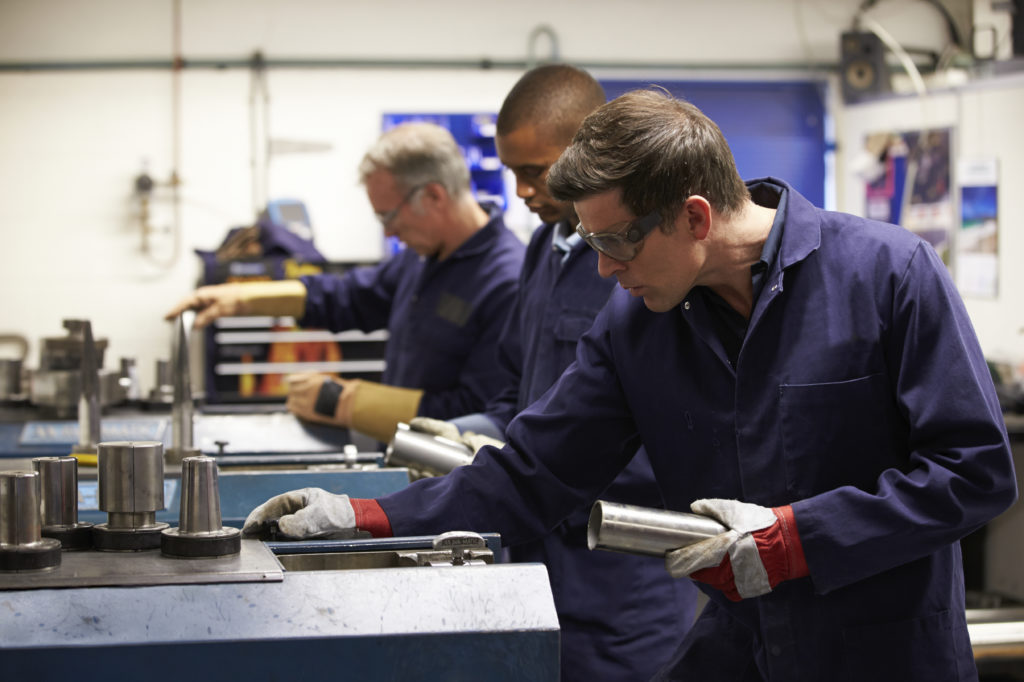
Alabama has been selected by the National Governors Association Center for Best Practices as one of six states to participate in a policy academy focused on work-based learning aimed at producing a skilled workforce, Governor Kay Ivey announced on Monday According to a new release from Ivey, work-based learning blends work experience and applied learning to develop foundational and technical skills in hopes of expanding a person’s education, career and employment opportunities. “When I announced my Strong Start, Strong Finish education initiative, I made clear my desire to give Alabamians the best opportunities possible to obtain the skills necessary to be competitive in the workforce,” Ivey said. “I am thankful to the National Governors Association for choosing Alabama to work collaboratively with other states to develop concrete plans to develop our workforce.” As part of the NGA policy academy, Alabama along with Idaho, Illinois, Nevada, North Carolina and Rhode Island, will share best practices; develop plans to identify and scale high-quality programs; and develop policies to support and sustain work-based learning initiatives. Specifically, a focus will be placed on creating opportunities for youth and young adults, ages 16 -29, to get hands-on experience in STEM industries, such as advanced manufacturing, health care, information technology and energy. “As our automotive, aerospace and technology sectors continue to expand, it is critical that Alabama begins preparing our people now for the work that surely is to come to our state,” Ivey continued. “Workforce development is a key factor in attracting new businesses and a critical component for encouraging existing firms to expand. Developing quality workers is so important. I am ever so grateful to those who helped secure this grant for Alabama; their work is going to help put other Alabamians to work.” The NGA work-based learning policy academy is funded by the Siemens Foundation. Alabama was only one of six states to be chosen from 16 applicant states.
Betsy DeVos touts school choice, STEM as education priorities

Education Secretary Betsy DeVos has put forth a new set of priorities for states, schools and universities competing for federal grant money. The priorities include school choice, science and technology, special education and school safety. The Education Department awards approximately $4 billion per year in new and continuation competitive grants across some 80 programs, the agency said Thursday. Education secretaries have historically used these competitions to push their priorities. “It’s a little nudge,” said Chad Aldeman, an associate partner at Bellwether Education Partners. “This allows the department to nudge the education field toward these priorities.” There are a total of 11 priorities on DeVos’ list. After receiving public comments on these proposals, the agency will settle on one or several of them. Promoting school choice has been a key focus of the Trump administration. School choice refers to providing parents and their children with options besides their district public school, such as charter schools, vouchers or education savings accounts to attend private schools. DeVos and her supporters say these options better serve students’ individual needs and can benefit children whose local schools are underperforming. Critics say charter and private schools don’t necessarily outperform neighborhood schools and they lack accountability mechanisms. Sen. Patty Murray of Washington, the top Democrat on the Senate committee devoted to education, criticized DeVos’ priorities as a way to privatize education and said the department should be focusing on supporting local, public education. “Since her confirmation hearing, I have voiced concern that Secretary DeVos would abuse her position to prioritize privatization, and that’s exactly what we’re seeing,” Murray said. “Instead of listening to the millions of students, parents and teachers who stood up against her extreme ideological agenda, her proposal will allow her to prioritize applicants that would siphon taxpayer funds away from the public schools that serve the vast majority of students.” Republished with permission from the Associated Press.
Terri Sewell announces 7th District Congressional App Challenge
Alabama U.S. Rep. Terri Sewell announced that Alabama’s 7th Congressional District will be participating in the third annual Congressional App Challenge (CAC). Student coders have until Nov. 1 to submit their code original mobile, web, or desktop apps for the chance to be selected for recognition, win prizes, and have their work put on display in the Capitol Building in Washington, DC. “This year’s Congressional App Challenge dares students in my district to think big, test their coding skills, and to build something of their own,” said Sewell. “By developing strong science, technology, engineering, and math (STEM) skills, our students will put themselves in a position to compete for the jobs of tomorrow. I encourage all students to explore STEM education and enter the challenge. As the product of our state’s public schools, I know firsthand how important it is for us to give our youngest generation opportunities to learn about emerging technologies. I cannot wait to see what our students come up with and to recognize our district’s talented young people.” The CAC is a congressional initiative to encourage student engagement in coding and computer science through local app challenges hosted by the Members of Congress. The challenge was created because Congress recognized that computer science and STEM skills are essential for economic growth and innovation, and that the U.S. is currently experiencing a death of adequately trained technical talent. By some estimates there are nearly a quarter of a million unfilled programming jobs in the US, right now. Thus, the CAC is a congressional effort to maintain American competitiveness, by proactively inspiring America’s youth and encouraging them to pursue these crucial skills. The competition is open to all students K-12 who meet eligibility requirements, regardless of their coding experience. Submissions will be judged by a panel of expert judges and announced on November 21 on the following criteria: quality of the idea, including creativity and originality; implementation of the idea, including user experience and design; and demonstrated excellence of coding and programming skills. The winner from the 7th District will be featured on CongressionalAppChallenge.us, and the winning app will also be on display in the U.S. Capitol, honoring winners from across the country. Registration is open now.
Outreach overdrive: University of Alabama robotics team goes the extra mile for young student
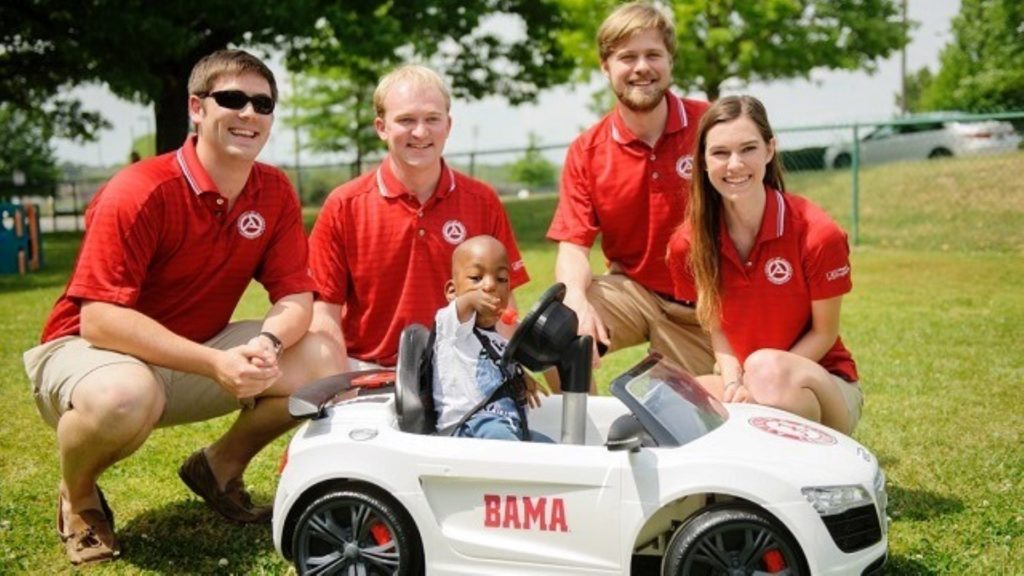
For the past eight years, the University of Alabama’s Astrobotics team has fared well in the various categories of NASA’s annual Robotic Mining Competition. But while it placed first in areas such as team spirit, presentation, communications, mining, autonomy and even first overall for four years, the outreach award proved to be elusive for this competitive team. After not placing in the outreach category last year, the team redoubled its efforts this year. Four members of the 60-person team didn’t just meet the criteria by conducting meaningful outreach to engage others in science, technology, engineering and mathematics (STEM); they decided to go a bit further by changing one boy’s life. Justin is a 5-year-old at the University of Alabama’s RISE school, which works with children with physical disabilities. He was born with a rare condition that resulted in shortened limbs. Justin cannot walk. To get around, he must roll or be pushed in a stroller. Enter Astrobotics. Four team members saw an opportunity to stretch their talents beyond a robotic vehicle fit for Mars — providing Justin with a whole new level of independence in the form of a small car customized to his needs. “From the first time we met Justin, we quickly learned several things,” team member Joseph Kabalin said. “One, he is a very bright kid that could learn to drive the car if we gave him the means to do so. Two, no matter what, we had to make the car work for him, because from the first time we met him he was constantly smiling and excited about the car. And three, we knew that no matter how much we personally gained from this project, nothing could compare to what Justin would gain once we gave him his new car.” The University of Alabama Astrobotics team celebrates its recent win in NASA’s Robotic Mining Competition. (Contributed) The team spent seven months working with Justin and his classmates to develop the control panel, which included a joystick and two push buttons he could easily reach. Team members outfitted an off-the-shelf battery-operated car with these controls, upgraded the battery to provide a longer charge during playtime and even included a parental control system that allows his parents or teachers to remotely control the vehicle from their smartphones. In April, the four members of the robotics team who’d worked on the project presented Justin with a means of independent mobility: an Alabama Audi. Justin now is cruising everywhere in style and, more importantly, on his own. It’s all thanks to the engineering spirit of one team not just looking to win a competition — which it did, finally taking home first place in the outreach category — but looking to make a difference. “Of all the senior projects we had the opportunity to work on, this project was by far the most meaningful and rewarding project we could have chosen. We were given the chance to work with an incredible young boy and the opportunity to change and improve his life through our work,” Kabalin said. This story originally appeared on the nasa.gov website. Republished with permission of Alabama NewsCenter.
Daniel Sutter: Do Americans really not want my job?
Our economy benefits when immigrants do jobs Americans do not want to do. I recently discussed grapefruit picking, as an example of manual labor jobs. Today I’ll consider another job that Americans do not want, my job as an economics professor. Economics professors are an example of Ph.D.’s in science, engineering and math, collectively referred to as STEM fields. (Add technology to the prior list to get the acronym.) This case adds a complication relative to grapefruit, because some Americans currently have Ph.D.’s in STEM fields, while almost no Americans pick grapefruit. I think that I have a great job, so I’m surprised that few Americans want my gig. But the statistics show otherwise. In 2014, U. S. citizens (and permanent residents) earned 39% of economics doctorates awarded by U.S. universities. Americans earned less than 30% of doctorates in computer engineering and electrical engineering, and less than 40% in fields like chemistry, finance, computer science, and statistics. The composition of the work force reflects Americans’ disinterest, as almost 40% of workers with Ph.D.’s in STEM fields are foreign born. Our nation benefits enormously from “importing” bright men and women for graduate study in economics and then employing them as professors. To see this, imagine what would happen if only Americans could work as Ph.D. economists in the U.S. First, we would need to get a lot more Americans to enroll in economics Ph.D. programs. This would not be easy, as I can attest from years of encouraging economics majors to consider graduate school. Many students find the prospect of another four (or more!) years of study beyond completion of a bachelor’s degree daunting. Economics majors have one of the highest average starting salaries, so our students can already make good money. And graduate school, especially the first year, is much more demanding than undergraduate studies. Substantially higher salaries for economics professors would increase the number of Americans getting Ph.D.’s. If economics professors made $500,000 a year, this would probably attract enough American students to fill all of the current Ph.D economist jobs. But if you think college is expensive now, imagine what tuition would be if economics (and STEM field) professors all made $500,000 annually. Salaries would not rise this much, because universities, businesses and governments would hire fewer economists as salaries rose. Not hiring as many Ph.D. economists would have other consequences, like larger class sizes and businesses doing without a high level of analysis. Perhaps the market would balance at salaries of $300,000 per year. The cost of employing only Americans with STEM Ph.D.’s would extend well beyond the university. University of California – Davis economist Giovanni Peri estimates that foreign-born scientists and engineers working in the U.S. contributed 10 to 20 percent of our economy’s productivity growth between 1990 and 2010. Professor Peri estimates that GDP is 4% higher than it would be without the contributions of foreign-born scientists and engineers. We do not have to miss out on this productivity, or run up the cost of college, because qualified doctoral degree holders are willing to work for the salaries currently paid. And beyond their economic contributions, they add to the diversity and character of communities across our nation, including Troy. Let’s now consider the complication, namely that some Americans are economics professors or Ph.D. scientists. Allowing foreign-born economics professors certainly makes me worse off. My salary would be substantially higher if we excluded immigrants. That would be a nice raise for me! The $300,000 figure mentioned above might be wishful thinking, but the general point holds: Americans with specialized training or skills will make less when we allow comparably qualified individuals to immigrate. Preventing foreign-born Ph.D.’s from working in the U.S. would cost our economy enormously, and curtail the life choices of these immigrants. Ph.D. holders already earn salaries well above the national average, so the case for harming the economy to help the already well-off is weak. Besides, I already think I have the best job in the world! • • • Daniel Sutter is the Charles G. Koch Professor of Economics with the Manuel H. Johnson Center for Political Economy at Troy University and host of Econversations on TrojanVision.
Alabama A&M, Alabama State receiving federal STEM grants

Two Alabama universities are among the minority schools receiving federal money to enhance education in science, technology, engineering and mathematics. The U.S. Education Department says A&M; will receive nearly $119,000 through the Minority Science and Engineering Improvement Program. Alabama State will receive nearly $250,000 through the program. Federal officials announced the funding on Monday. The grants are three-year awards that help fund projects including tutoring, faculty training, lab and classroom renovation and curriculum development. In all, 13 colleges and universities nationwide will receive more than $3 million in grants. Republished with permission of the Associated Press.
Alabama business roundup: Headlines from across the state

Here’s a roundup of some of the weekend’s top business headlines from across the state from over the weekend: AL.com: Southern Company announces $12 billion deal to buy natural gas company Southern Company will acquire the AGL Resources natural gas company in a transaction with an enterprise value of approximately $12 billion, according to a Southern Company news release issued Monday. AGL will become a wholly owned subsidiary of Southern Company, which will pay AGL stockholders $66 per share, a 36 percent premium over the company’s average stock price over the last 20 days. The total equity value of the purchase is approximately $8 billion. According to the news release, the merger was approved by both companies’ boards of directors and will create the “America’s leading U.S. electric and gas utility company.” The deal will make Southern Company the second largest utility company in the U.S. by number of customers, with 11 utility companies providing service to 9 million people across the Southeast. “As America’s leader in developing the full portfolio of energy resources, we believe the addition of AGL Resources to our business will better position Southern Company to play offense in supporting America’s energy future through additional natural gas infrastructure,” Southern Company Chairman, President and CEO Thomas A. Fanning said in a news release. “For some time we have expressed our desire to explore opportunities to participate in natural gas infrastructure development. “With AGL Resources’ experienced team operating premier natural gas utilities and their investments in several major infrastructure projects, this is a natural fit for both companies.” Fanning told the Atlanta Journal-Constitution that a major impetus for the deal was the ongoing transition away from coal as an energy source to natural gas, solar, and nuclear. According to the AGL web site, the company serves 4.5 million utility customers and 1.2 million retail customers in seven states, and is the largest natural gas-only distribution company in the country. AGL Resources does not currently operate in Alabama. AL.com: Alabama among top U.S. states where people spend the most money at Wal-Mart Wal-Mart shows no sign of slowing down in Alabama with the proliferation of Supercenters and Neighborhood Markets across the state. Why is the Yellowhammer State such a big target for Wal-Mart expansion? A new analysis from GOBankingRates, a personal finance news and features site, reveals Alabama is among the top five U.S. states for average Wal-Mart spending. Alabama ranked No. 4 on the top 10 list of states that spend the most money at Wal-Mart. The report says Alabama residents spend approximately 3.4 percent of their $43,330 median household income, or $123 a month, with the retail giant. Here’s what GOBankingRates found in Alabama: Annual per capita spending at Wal-Mart: $1,476.81 Estimated 2014 sales: $7.16 billion Total Alabama stores: 139 Sales per store: $51.52 million The top 10 states with the highest average Wal-Mart spending are: Oklahoma — $1,662.43 per capita spending South Dakota — $1,511.86 per capita spending Arkansas — $1,494.80 per capita spending Alabama — $1,476.81 per capita spending Kansas — $1,417.71 per capita spending Mississippi — $1,395.02 per capita spending Louisiana — $1,235.38 per capita spending Missouri — $1,230.66 per capita spending North Dakota — $1,189.45 per capita spending Tennessee — $1,125.68 per capita spending Alabama Newscenter: Southern Company/AGL Resources deal would create leading U.S. joint electricity-natural gas utility Southern Company and AGL Resources have agreed to a $12 billion deal that would make the natural gas giant a new Southern operating company and puts the electricity company into the growing natural gas business. The boards of directors of both companies said today they have a definitive merger agreement to create America’s leading U.S. electric and gas utility company. If finalized, AGL Resources will become a new wholly-owned subsidiary of Southern Company. Alabama Power is a Southern Company subsidiary with 1.4 million customers, 78,000 miles of power lines and 13,000 megawatts of electric generating capacity. Southern Company also owns Southern Power, which owns 3,175 megawatts of natural gas generating capacity in Alabama. In Alabama, AGL Resources owns a liquefied natural gas facility in Trussville that delivers about 60,000 gallons per day, its first such facility dedicated solely to the merchant market. Southern Company with AGL Resources under its umbrella would create a new electric and natural gas utility with approximately 9 million utility customers in nine states. It is Southern Company’s largest deal to diversify its utility holdings. “As America’s leader in developing the full portfolio of energy resources, we believe the addition of AGL Resources to our business will better position Southern Company to play offense in supporting America’s energy future through additional natural gas infrastructure,” Southern Company CEO Thomas A. Fanning said. “For some time, we have expressed our desire to explore opportunities to participate in natural gas infrastructure development.” Under the terms of the agreement, AGL Resources’ shareholders would receive $66 in cash for each share of common stock, a 36.3 percent increase in this month’s average trading price. Southern Company expects an increase in earnings the first year after the acquisition closes. The new company would become the second-largest utility company in the U.S. with: 11 regulated electric and natural gas distribution companies; 9 million customers with a projected regulated rate base of about $50 billion; Nearly 200,000 miles of electric transmission and distribution lines and more than 80,000 miles of gas pipelines; Generating capacity of about 46,000 megawatts. “With AGL Resources’ experienced team operating premier natural gas utilities and their investments in several major infrastructure projects, this is a natural fit for both companies,” Fanning said. “Moreover, this transaction is expected to position Southern Company to enhance earnings growth while maintaining a strong balance sheet and improving cost-effectiveness.” The Southern Company system is known for regularly outperforming industry peers in reliability, with prices below the national average and the highest customer satisfaction among peer utilities as measured by the Customer Value Benchmark survey. Alabama Power regularly tops such rankings along with other Southern Company operating companies Georgia Power, Mississippi Power and Gulf Power. “AGL Resources’ management team and board of directors wholeheartedly support
