Idea to dismiss articles of impeachment cools in Senate
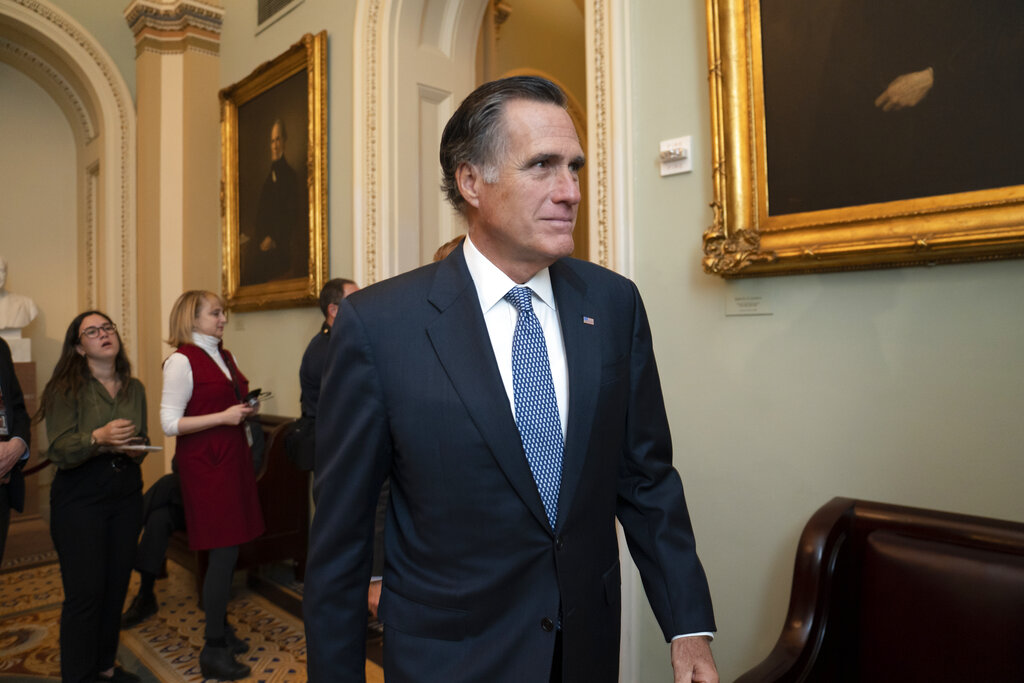
President Donald Trump had originally floated the idea.
Highlights of the $330 billion-plus bill to avoid shutdown
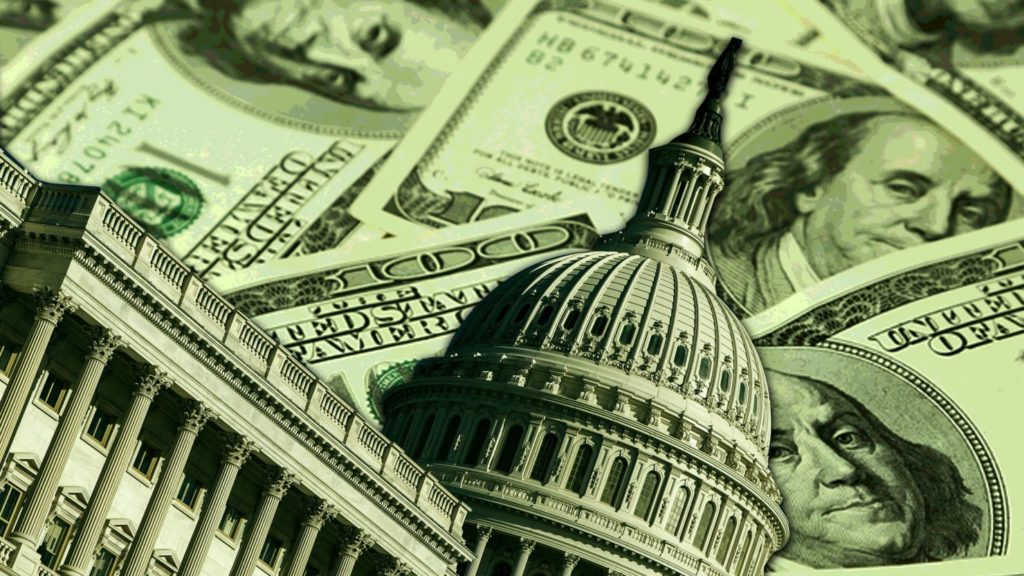
It’s not just about President Donald Trump’s border wall. The border security issues that sparked a 35-day government shutdown are but one element of a massive $330 billion-plus spending measure that wraps seven bills into one, funding nine Cabinet agencies, including the departments of Justice, State, Agriculture, and Commerce. It also contains a variety of other provisions, touching on Medicaid, pesticides and even the permitted length of sugar beet trucks in rural Oregon. While full details haven’t been released, highlights are expected to include: A BILLION HERE, A BILLION THERE Most of the bill deals with spending minutia such as a $1 billion increase to gear up for the 2020 census, an almost 4 percent budget increase for NASA and an $11.3 billion budget for the IRS. Most agencies are kept relatively level compared to last year, and the measure rejects big spending cuts — such as a $12 billion cut to foreign aid and the State Department — proposed by Trump. ___ FEDERAL EMPLOYEE PAY Trump has proposed a pay freeze for civilian federal employees, but the measure would guarantee those workers a 1.9 percent increase, according to No. 2 House Democrat Steny Hoyer of Maryland. The military got a 2.6 percent increase in legislation that passed Congress last year. ___ FLOOD INSURANCE The government’s troubled federal flood insurance program would be extended through Sept. 30 to give lawmakers time to reauthorize the program. The program expired last year but has been temporarily extended in order to avert disruptions in the housing market. ___ ODDS AND ENDS Since the bill is a must-pass vehicle, it’s serving as a locomotive to pull a host of miscellaneous provisions into law. There’s an extension of a Medicaid provision on home- and community-based nursing care, grants for the poor under the Temporary Assistance for Needy Families program and funding fixes to a trust fund that finances dredging and maintenance or ports and harbors. For fans of the truly obscure, there’s a provision to exempt sugar beet trucks in rural Oregon from length limits. Republished with permission from the Associated Press
Darryl Paulson: Obama’s electoral legacy: After 8 years, we get a Donald Trump

(Part 2 of the Obama legacy) With the inauguration of Donald Trump, it is a good time to review the electoral impact of eight years of the Obama White House. One of the impacts is the election of Trump which surprised the entire political universe. Whatever Obama may have achieved in public policy, it is that policy which is in great part responsible for setting “the post-World War II record for losses by the White House party,” according to Larry Sabato. Democrats lost over 1,000 seats at the state and national level. However important the Obama policies may have been, it is fair to argue that those policies contained the seeds of Democratic losses. The Wall Street and big bank bailouts led to the creation of the Tea Party. The Tea Party became a primary vehicle to organize disaffected Republicans against bailouts for Wall Street and not Main Street. Combined with opposition to the Affordable Care Act (ACA), mobilized Republicans took over control of both the House and Senate, and effectively denying Obama the needed votes to carry out the rest of his agenda. After the 2016 election, Democrats held 11 fewer Senate seats than they did Jan. 20, 2009, a 16 percent decrease. Democrats hold 62 fewer House seats than in 2009, a drop of 24 percent. They also lost control of the White House giving Republicans complete control of the national government. At the state level, the number of Democrat governors fell from 28 to 16, a 43 percent decline. In 2009, Democrats controlled both houses in 27 states; after 2016, the number dropped to dual control of only 14 states, a 48 percent drop. On top of this, Democrats lost 959 seats in the state legislatures, weakening them for years to come. These losses mean that Democrats will have a difficult time in passing their agenda at the state and national level. It also means that the Democratic bench of future leaders has been wiped out, making it difficult for them to find and finance competitive candidates. Finally, since Democrats foolishly changed the filibuster rules in 2013, cabinet nominees and most court appointees will need only 51 votes to be confirmed. This creates the possibility for more extreme nominees to win confirmation. One of the few positive thing for Democrats is that it is difficult to imagine them losing many more seats. The out-party normally makes gains in midterm elections. Unfortunately for Democrats, they must defend 25 of the 33 Senate seats up for election in 2018, and Trump won 10 of the 25 states that Democrats must defend. If the Democrats could pick up only two Senate seats in 2016 when Republicans had to defend 24 of the 34 seats, it is hard to imagine them doing better in 2018 when they must defend two out of every three Senate seats up for election. Without Obama on the ballot in 2016 and 2018, fewer young and minority voters will turn out at the polls. Although Democrats have dominated among young voters, few of them turn out, especially in off-year elections. Democrats have complicated their problem with young voters by having an array of senior citizen leaders. Nancy Pelosi has been the ranking Democratic leader for 6 terms, as has second-ranking Democrat Steny Hoyer. Third-ranking Democrat James Clyburn has served five terms as leader. Pelosi is 76, and Hoyer and Clyburn are 77. Although Democrats have been devastated during Obama’s tenure, he is not solely responsible. Obama is only the third Democratic president to twice win a popular vote majority, along with Andrew Jackson and Franklin Roosevelt. Democratic National Party Chair Debbie Wasserman Schultz, a Congresswomen from Florida, was widely viewed as an ineffective spokesperson for the party and was eventually ousted for what many Democrats viewed as her favoritism for Hillary Clinton over Bernie Sanders during the Democratic primaries. Obama appointed Wasserman Schultz to become chair of the Democratic Party and, critics contend, for standing by her for far too long. Politics is a strange beast. Six months ago, almost everyone believed the Republican Party was on its last legs, and the Trump nomination would doom them forever. Today the Republicans control all three branches of the federal government, and it appears that the Democrats are on life support. Who knows what tomorrow will bring? ••• Darryl Paulson is Emeritus Professor of Government at the University of South Florida St. Petersburg.