
Greg Reed: Alabama’s innovative reform to medicaid is paying dividends
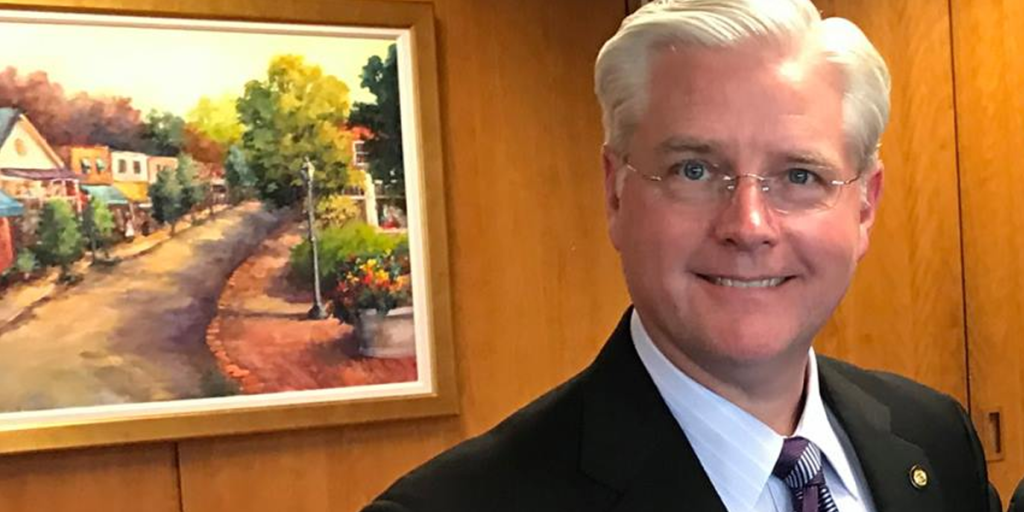
One of the toughest, yet least-talked about, challenges facing the U.S. today is how to effectively deliver affordable health care to America’s growing population of senior citizens. The U.S. Census Bureau has predicted that by 2035, the number of adults over the age of 65 will exceed the number of children under the age of 18. The graying of America’s population especially creates a challenge for what, at times, can be a fractured and overly complicated health care delivery system. In Alabama, over 90,000 senior citizens’ health care is funded in part via Medicaid, the federally-mandated insurance program that serves the elderly, the poor, and the disabled. Even though Medicaid is federally-mandated, that definitely does not mean that the federal government covers all of the costs — Alabama’s portion of the costs provided by the general fund was $755 million in Fiscal Year 2019, a figure which eats up 37 percent of all non-education spending by the State of Alabama. Over the past several years, I have worked closely with the past two Governors, other legislative leaders, Medicaid Commissioner Stephanie Azar, and private sector partners to identify new delivery models that will bend the cost curve down for Medicaid, while ensuring Alabama’s senior citizens on Medicaid still receive good medical care. In early 2017, I went to Washington, along with Speaker of the Alabama House of Representatives Mac McCutcheon, Medicaid Commissioner Azar, and other state leaders, to meet with Dr. Tom Price, who then served as President Donald Trump’s Secretary of Health and Human Services. That trip and subsequent phone calls and data presentations paid off: in 2018, the Centers for Medicare and Medicaid Services (CMS) in Washington granted Alabama the opportunity to pursue a new delivery model of health care services for the more than 20,000 senior citizens in Alabama who are receiving long-term care through Medicaid. Let me tell you: it is not an easy thing to persuade a federal agency to grant a state a waiver from any program’s requirements. Federal government employees – even the hardest-working and best-intentioned – are not necessarily keen on innovation. In October of 2018, Alabama launched the Integrated Care Network (ICN). In this new model, Medicaid contracts with an Alabama-based healthcare provider to serve the 22,500 patients who are receiving long-term care through Medicaid. These senior patients and their families have expanded choices through the ICN: most are in nursing homes, but about 30 percent have chosen to receive care in the comfort of their own homes. Where are we nearly a year down the road from the ICN launch? A few weeks ago, I convened a meeting of Medicaid, the Department of Senior Services, nursing home owners, and health care providers. Their reports were encouraging. According to Medicaid’s estimates, the ICN model has already saved the state $4 million — and Medicaid projects the savings to grow over the next few years. In 2039, if trends hold, 42 percent of Alabamians will be 60 years or older. For the senior citizens who will need Medicaid’s assistance, it is imperative that we continue to modernize and innovate in the area of health care, especially for programs like Medicaid that are funded by the taxpayers. Newton’s first law states that an object will remain at rest or in uniform motion along a straight line, unless it is acted upon by an external force — inertia, in a word. That is a concept that often applies to government programs and agencies. In this instance, the innovation of the Integrated Care Network represents the external force that is moving Medicaid to a sounder fiscal footing. Greg Reed is the Alabama Senate Majority Leader, and represents Senate District 5, which is comprised of all or parts of Walker, Winston, Fayette, Tuscaloosa, and Jefferson counties.
Alabama Medicaid to pursue RCO alternatives

Alabama is walking back its decision to shift its Medicaid program to managed care after nearly four years of development and millions in cost. The state will now begin to pursue an alternative to the Regional Care Organization (RCO) initiative. The Alabama Medicaid Agency announced its decision to abort the project Thursday due to the anticipated changes the Trump administration and Congress intend to make to Medicaid, along with the program’s high start-up costs. “It is highly likely that federal health care changes are on the horizon,” said Alabama Medicaid Commissioner Stephanie Azar in a statement. “While the financial implications could be challenging for our state, the new flexibilities and waiver options that the Trump administration is willing to consider gives our state Medicaid program new options to accomplish similar goals without incurring the same level of increased up-front costs associated with the RCO program.” RCO plan was created by the state Legislature in 2013 and 2014 following the passage of Obamacare. It would have moved the state’s current fee-for-service model to a regionally focused managed care system. According to the Medicaid website RCOs, “calls for the state to be divided into regions and for community and provider-led, regional organizations to coordinate the health care of Medicaid patients in each region, with networks ultimately bearing the risks of contracting with the state of Alabama to provide that care.” “When RCO’s were first proposed after the Affordable Care Act under the Obama Administration, the plan was appropriate; However, in today’s climate it is no longer the best use of taxpayer resources,” Azar added. Governor Kay Ivey supports Medicaid’s decision to move away from RCOs. “I support Medicaid’s shift in reform strategy, which has been fully shared with legislative leadership and other key stakeholders,” said Ivey. “I spoke with Health and Human Services Secretary Tom Price, and he has assured me of the Trump administration’s desire to work with the states to allow more flexibility in Medicaid services moving forward.” Ivey says the state was at a crossroads and decided to pursue less risky options. Ivey continued, “This flexibility brought us to a crossroads where we reconsidered the risks and rewards of RCOs, and decided instead to pursue new reform options which bring less risks and similar outcomes. The RCO model didn’t fail; instead the alternative is a recognition that the circumstances surrounding Medicaid have changed, thus our approach must change. Our end goal is clear – to increase the quality of services provided and protect the investment of Alabama taxpayers.”
Alabama lawmakers to hold hearings on state’s Medicaid dilemma

The countdown is on for Alabama lawmakers to come up with a solution for $85 million shortfall to fund the state’s Medicaid program in the eight remaining legislative days — or else risk coming back for a special session. Part of an ongoing budget impasse, funding for the state’s Medicaid program — which covers approximately a million Alabamians — has been an hot-button topic in the Legislature this year. Last month Alabama Gov. Robert Bentley vetoed the state’s General Fund budget over the lack of Medicaid funding, but lawmakers bucked his veto and voted to override it. The House and Senate general fund budget committee have scheduled a joint meeting Wednesday to discuss the Medicaid shortfall. Bentley and Alabama Medicaid Commissioner Stephanie Azar have said the program will see cuts in Medicaid services without additional funds, which could force the state to eliminate prescription drug coverage for adults, adult eyeglasses, prosthetics, outpatient dialysis, or requiring patients to go to one big box pharmacy, among other possibilities. “I think today it is very important for recipients to know that their access to care is at risk and for the Medicaid providers in the state to start preparing for the impact of these cuts,” Azar said.
