
At a glance: The three hush money cases in Donald Trump indictment
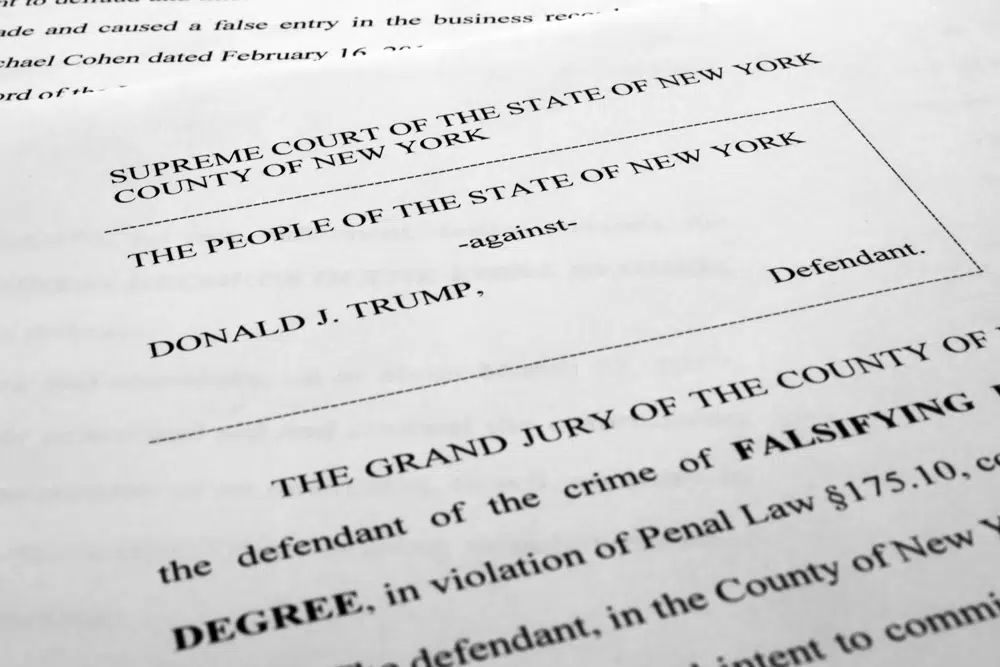
The criminal charges that Donald Trump is now facing in New York stem from three separate instances in which the former president and his associates are accused of making hush money payments during his 2016 campaign: to two women to suppress information about extramarital sexual encounters they said they had with years earlier, and to a onetime Trump Tower doorman who claimed to have a story about a child he alleged Trump had out of wedlock. Trump has been charged with 34 felony counts of falsifying business records. He surrendered earlier Tuesday in Manhattan and pleaded not guilty to all charges. A look at the three cases cited by Manhattan District Attorney Alvin Bragg, who outlined the charges: TRUMP TOWER DOORMAN Bragg first listed the incident involving a former Trump Tower doorman who was paid $30,000 after he claimed he had information about a child who Trump had out of wedlock. That doorman, Dino Sajudin, received the payment from the parent company of the National Enquirer in exchange for signing over the rights, “in perpetuity,” to a rumor that the president had fathered a child with an employee at Trump World Tower, a skyscraper he owns near the United Nations. The contract between Sajudin and the American Media Inc. would penalize Sajudin for $1 million if he disclosed either the rumor or the terms of his agreement with the tabloid’s parent company. In an interview with The Associated Press in August 2017, the woman at the center of the rumor denied that she had had an affair with Trump. The prosecutor also cited the case of Karen McDougal, a former Playboy model who received $150,000 from American Media after claiming she had a 10-month affair with Trump in the mid-2000s. The money was to gain the rights to McDougal’s story but to never run it — a practice known as “catch and kill.” The National Enquirer’s parent company has acknowledged that the payments were done specifically to help Trump’s presidential campaign. Bragg said Trump “explicitly” directed lawyer Michael Cohen, then working for the Trump Organization, to reimburse American Media in cash, then Cohen indicated to Trump that the payment should be made instead by a shell company. The alleged relationship between McDougal and Trump remained concealed until a Wall Street Journal report days before Election Day in 2016. Trump has denied her allegation. STORMY DANIELS: The third case involves the porn actor Stormy Daniels, who was paid $130,000 in exchange for her silence about a sexual encounter with Trump at Lake Tahoe, Nevada, in 2006. Trump has denied the encounter. Bragg said that 12 days before the election on November 8, 2016, Cohen had wired $130,000 to Daniels’ lawyer by using a shell corporation funded through a Manhattan bank. Daniels, whose real name is Stephanie Clifford, was paid after indicating she was willing to speak to either the National Enquirer or on television confirming the encounter. Trump insisted to reporters on Air Force One in April 2018 that he didn’t know about the payment made to Daniels through Cohen. But Bragg said Tuesday that Trump reimbursed Cohen after his 2016 victory with money from two sources: a trust that held the Trump Organization’s assets and from his personal bank account. Republished with the permission of The Associated Press.
Donald Trump chides Rudy Giuliani to ‘get his facts straight’ on Stormy Daniels
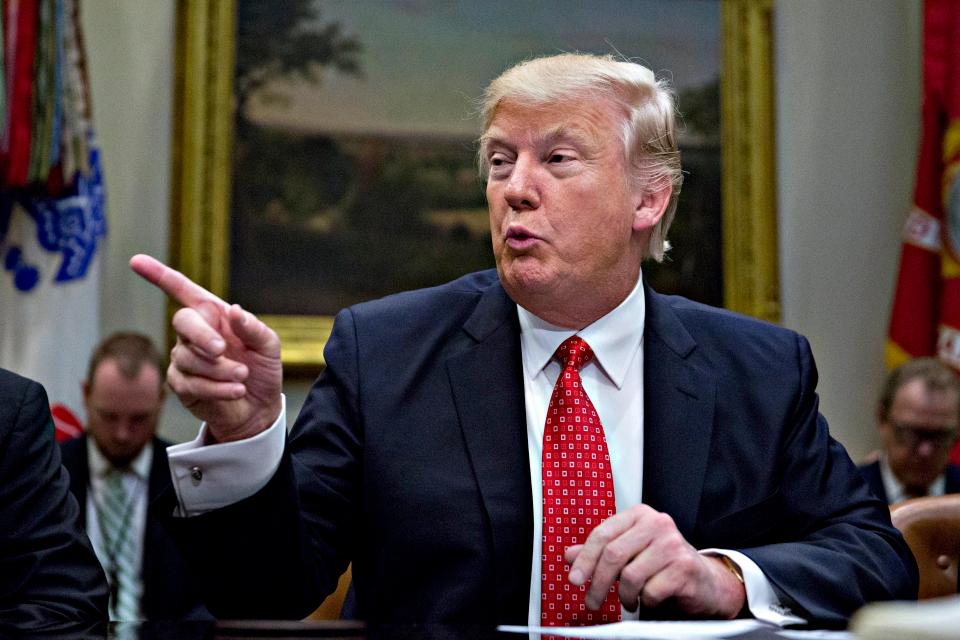
President Donald Trump is suggesting Rudy Giuliani, the aggressive new face of his legal team, needed to “get his facts straight” about the hush money paid to porn actress Stormy Daniels just before the 2016 election. Giuliani quickly came up with a new version. Trump on Friday chided Giuliani even while insisting “we’re not changing any stories” about the $130,000 settlement paid to Daniels to keep quiet about her allegations of a sexual encounter with Trump — a tryst Trump has denied. Hours later, Giuliani backed away from his previous assertion that the Oct. 27 settlement had been made because Trump was in the stretch run of his campaign. “The payment was made to resolve a personal and false allegation in order to protect the president’s family,” Giuliani said in a statement. “It would have been done in any event, whether he was a candidate or not.” A day earlier, Giuliani had told Fox News: “Imagine if that came out on October 15, 2016, in the middle of the last debate with Hillary Clinton.” Trump said Giuliani was “a great guy but he just started a day ago” on the defense team, and the former New York mayor was still “learning the subject matter.” Giuliani disclosed this week that Trump knew about the payment to Daniels made by Trump’s personal lawyer, Michael Cohen, and the president repaid Cohen. Giuliani insisted Trump didn’t know the specifics of Cohen’s arrangement with Daniels until recently, and he told “Fox & Friends” on Thursday that the president was unaware of all the details until “maybe 10 days ago.” Giuliani told The New York Times that Trump had repaid Cohen $35,000 a month “out of his personal family account” after the campaign was over. He said Cohen received $460,000 or $470,000 in all for expenses related to Trump. While Giuliani suggested Trump knew something about the payments, even as a monthly retainer, Trump had told reporters on Air Force One last month that he hadn’t known about a settlement with Daniels. Trump’s irritation was plain Friday when reporters reminded him of his previous denial. He blasted the media for focusing on “crap” stories such as the Daniels matter and the special counsel’s investigation of Russian meddling in the 2016 election. The president claimed that “virtually everything” reported about the payments has been wrong. He declined to elaborate. It was the Trump team’s own missteps that yielded another day of headlines about Daniels. In his statement, Giuliani said his previous “references to timing were not describing my understanding of the president’s knowledge, but instead, my understanding of these matters.” He didn’t elaborate on that either. Giuliani’s statement correcting himself came just a day after he said, “You won’t see daylight between me and the president.” The about-face came amid concern in the White House that Giuliani’s comments could leave the president legally vulnerable. Giuliani repeated his belief that the payment did not constitute a campaign finance violation. But legal experts have said the new information raises questions, including whether the money represented repayment of an undisclosed loan or could be seen as reimbursement for a campaign expenditure. Either could be legally problematic. The episode also revived worries in Trump’s inner circle about Giuliani, who enjoys the media limelight and has a tendency to go off script. He had been widely expected to join Trump’s administration but was passed over for secretary of state, the position he badly wanted. His whirlwind press tour this week bewildered West Wing aides, who were cut out of the decision-making process when Giuliani first revealed that Trump, who often boasts about signing his own checks, had some knowledge about the payment to Daniels. No debt to Cohen was listed on Trump’s personal financial disclosure form, which was certified on June 16, 2017. Asked if Trump had filed a fraudulent form, White House press secretary Sarah Huckabee Sanders said Thursday: “I don’t know.” Daniels, whose legal name is Stephanie Clifford, is seeking to be released from a nondisclosure deal she signed in the days before the 2016 election to keep her from talking about a 2006 sexual encounter she said she had with Trump. She has also filed defamation suits against Cohen and Trump. Her attorney, Michael Avenatti, tweeted Friday that “Mr. Giuliani and Mr. Trump are making it up as they go along.” He added: “How stupid do they think all of us are?” Trump is facing mounting legal threats from the Cohen-Daniels situation and the special counsel’s investigation of possible Russian coordination with the Trump presidential campaign. Cohen is facing a criminal investigation in New York, and FBI agents raided his home and office several weeks ago seeking records about the Daniels nondisclosure agreement. Trump has been playing down his relationship with Cohen but did acknowledge last week that Cohen represented him in the “crazy Stormy Daniels deal.” Republished with the permission of the Associated Press.
Donald Trump acknowledges he repaid lawyer for ‘Stormy Daniels’ hush money
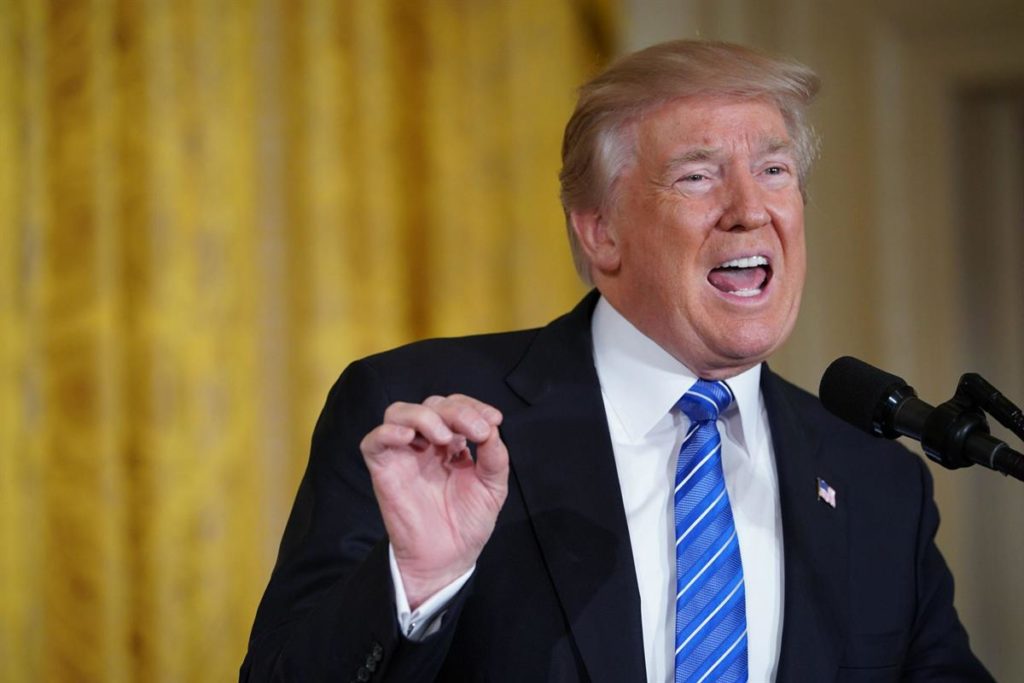
President Donald Trump acknowledged Thursday he repaid his personal lawyer for hush money given to porn actress Stormy Daniels after claiming previously he didn’t know about the payments. But the money, paid just before the 2016 election to stifle her claims of an affair, “had nothing to do with the campaign,” the president tweeted. Trump said his attorney Michael Cohen received a monthly retainer, which he used to pay the actress to sign an agreement not to talk about her allegations and thus “stop the false and extortionist accusations made by her about an affair.” Trump’s tweets outlining the arrangement came after Rudy Giuliani, one of his attorneys, said Wednesday that Trump reimbursed Cohen for $130,000 paid to Daniels. During an appearance on Fox News Channel’s “Hannity,” Giuliani said the money to repay Cohen had been “funneled … through the law firm and the president repaid it.” Asked if Trump knew about the arrangement, Giuliani said: “He didn’t know about the specifics of it, as far as I know. But he did know about the general arrangement, that Michael would take care of things like this, like I take care of things like this for my clients. I don’t burden them with every single thing that comes along. These are busy people.” Speaking on “Fox and Friends” Thursday, Giuliani said Trump didn’t know all the details until “maybe 10 days ago.” While stressing that Trump denies the relationship, he said Cohen may have seen $130,000 as “cheap.” “They said it wasn’t true,” Giuliani said. “However, imagine if that came out on October 15, 2016, in the middle of the last debate with Hillary Clinton. Cohen didn’t even ask. Cohen made it go away. He did his job.” The comments appeared to contradict statements made by Trump several weeks ago, when he said he didn’t know about the payment to Daniels. Giuliani later suggested to The Wall Street Journal that while Trump had repaid the $130,000, Cohen had settled the payment to Daniels without Trump’s knowledge at the time. Giuliani’s revelation was hardly a shock in the West Wing, where many aides assumed the president at least had knowledge of Cohen’s work on his behalf. In briefings and media appearances, however, White House aides have sought to avoid staking out a clear position on the matter, directing reporters to Trump’s own comments. Still, the way Giuliani announced it — on live television and imprecisely — surprised Trump staffers and raised fresh worries about the president’s uneven legal team. Law firms advance expenses for clients as a matter of course, so there’s nothing inherently improper about a lawyer covering a particular payment and then being reimbursed for it. In this case, though, the client who apparently reimbursed the expense was running for president and the money was paid just days before the election. That raises questions about whether Cohen’s law practice was functioning as a vendor for the campaign and the expense was therefore an unreported campaign expenditure. If so, that could be legally problematic. Asked aboard Air Force One last month whether he knew about the payment, Trump said flatly: “No.” Trump also said he didn’t know why Cohen had made the payment or where he got the money. In a phone interview with “Fox and Friends” last week, however, Trump appeared to muddy the waters, saying that Cohen represented him in the “crazy Stormy Daniels deal.” The White House referred questions to the president’s personal legal team. Giuliani, a former New York City mayor and ex-U.S. attorney who joined Trump’s legal team last month, said the president had repaid Cohen over several months, indicating the payments continued through at least the presidential transition, if not into his presidency. He also said the payment “is going to turn out to be perfectly legal” because “that money was not campaign money.” No debt to Cohen is listed on Trump’s personal financial disclosure form, which was certified on June 16, 2017. Giuliani also described the payment to Daniels as “a very regular thing for lawyers to do.” Daniels’ lawyer, Michael Avenatti, called the comment “a stunning revelation.” “Mr. Trump evidently has participated in a felony and there must be serious consequences for his conduct and his lies and deception to the American people,” he said. Giuliani made the statements to Fox host Sean Hannity, who has his own connection to the case. It was recently revealed in court that Hannity is one of Cohen’s clients. Hannity has described his personal dealings with Cohen as centered on real estate advice and said that it “never rose to any level that I needed to tell anyone that I was asking him questions.” Daniels, whose legal name is Stephanie Clifford, says she had a sexual encounter with Trump in 2006, months after his third wife gave birth to his youngest child, and was paid to keep quiet as part of a nondisclosure agreement she is now seeking to invalidate. She has also filed a defamation suit against Trump after he questioned a composite sketch she released of a man she says threatened her to stay quiet. The White House has said Trump denies having a relationship with Daniels. Cohen had said previously: “Neither the Trump Organization nor the Trump campaign was a party to the transaction with Ms. Clifford, and neither reimbursed me for the payment, either directly or indirectly.” He notably did not include the president personally. Asked about Cohen’s denial, Giuliani said he didn’t know whether Cohen had made the payment without asking Trump but that he had “no reason to dispute that.” Cohen himself is under increasing legal pressure. He is facing a criminal investigation in New York, and FBI agents raided his home and office several weeks ago seeking records about the nondisclosure agreement. Daniels’ lawsuit over the hush deal has been delayed, with the judge citing the criminal investigation. Giuliani’s revelation seemed aimed at reducing the president’s legal exposure. But outside experts said it raised a number of questions, including whether
Allegations from women in his past shadow Donald Trump
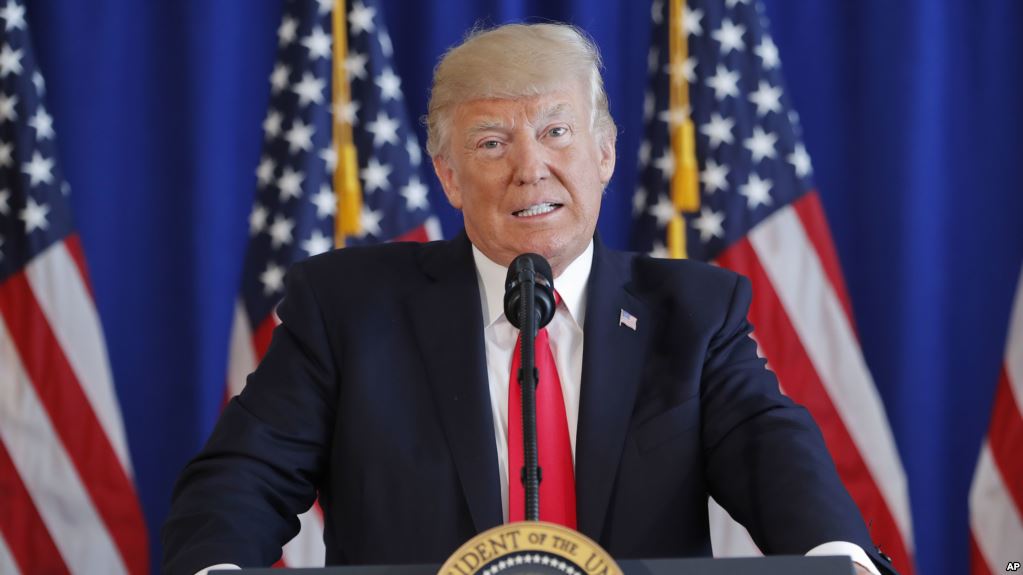
The chorus of women from President Donald Trump’s past is getting louder. Accusations about Trump’s past sexual exploits bubbled up on three fronts Tuesday, with two women pressing court cases and a porn actress publicly needling the president. Trump has so far weathered the rising #MeToo movement, but the latest developments served as a fresh reminder about the shadow thrown by questions about the thrice-married businessman’s past. In short order on Tuesday: —A former Playboy model who claims she had an affair with Trump in 2006 filed a lawsuit in California seeking to invalidate a confidentiality agreement so she can discuss her alleged relationship. —A New York City judge ruled that a defamation lawsuit by a former contestant on “The Apprentice” can move forward while Trump is in office. She has accused Trump of unwanted sexual contact. —Porn actress Stormy Daniels and her lawyer continued their media campaign against Trump as she seeks to invalidate a nondisclosure agreement she signed days before the 2016 presidential election so she can discuss their relationship. “People DO care that he lied about it, had me bullied, broke laws to cover it up, etc.,” Daniels tweeted. Trump has consistently denied accusations from all three women. He has previously called his accusers “liars” and has deemed such reports “made up stuff.” But it was another distraction for a White House already contending with a rash of high-level departures and a stalled legislative agenda. But the women aren’t going away. The former Playboy model, Karen McDougal, is set to do an interview with Anderson Cooper on CNN Thursday. And Daniels — whose legal name is Stephanie Clifford — has taped an interview with CBS’ “60 Minutes,” expected to air soon. McDougal’s attorney appeared on NBC on Wednesday morning. “Karen McDougal had a sexual relationship with Donald Trump for 10 months,” said Peter Stris. “It was a romantic relationship. They were together very often.” Some longtime allies questioned whether the accusations would have much impact. More than a dozen women came forward during the 2016 campaign to say that Trump had harassed them or worse, many speaking out in the wake of the “Access Hollywood” tape in which he was heard bragging about groping women. Some of them spoke out again as the #MeToo movement took off. “I think we learned through the campaign something we never thought was true. People were able to bifurcate the person from the policies,” said former campaign adviser Barry Bennett. “They were willing to overlook the personal behavior or the words on tape.” In the case of the Playboy model, Karen McDougal filed suit Tuesday in Los Angeles County Superior Court against American Media Inc., the company that owns the supermarket tabloid National Enquirer. It had paid her $150,000 during the 2016 presidential election. The lawsuit alleges that McDougal was paid for the rights to her story of an affair, but the story never ran. It also alleges that Trump’s attorney, Michael Cohen, was secretly involved in her discussions with American Media. McDougal’s lawsuit was filed on the same day a New York judge sided with Summer Zervos, a 2006 “Apprentice” contestant. She sued Trump after he dismissed as “fabricated” and “made-up” her claims of misconduct at a hotel in Beverly Hills, California, in 2007. Her lawsuit sought an apology and at least $2,914. In saying the suit can go forward, Judge Jennifer Schecter wrote, “No one is above the law.” Trump’s lawyers had argued the Constitution immunized him from being sued in state court while he’s president and had said the case should at least be delayed until he’s out of office. They said their position was supported by a long line of Supreme Court cases requiring courts to show deference to the president and his schedule. In 1997, the Supreme Court ruled that a sitting president was not immune from civil litigation on something that happened before taking office and was unrelated to the office. The ruling came after Paula Jones filed a sexual harassment lawsuit against President Bill Clinton. That case was dismissed by a judge, but was appealed. The appeal was still pending when Clinton agreed to pay $850,000 to Jones to settle the case. He did not admit wrongdoing. Also Tuesday, an attorney for Daniels — her real name is Stephanie Clifford — tweeted what he described as a 2011 photo of Clifford taking a lie detector test during which she addressed her relationship with Trump. Lawyer Michael Avenatti added the hash tags #searchforthetruth, #whosenext? and #buckle-up. Daniels and McDougal have offered strikingly similar stories about their alleged relationships with Trump. Both women claim to have had sexual encounters with him in Lake Tahoe, Nevada, in 2006. McDougal, who was the 1998 Playboy Playmate of the Year, said Trump also brought her to his private bungalow at the Beverly Hills Hotel. In a time of rising concern about the treatment of women, the president has repeatedly offered sympathy for men accused of misconduct. After White House aide Rob Porter was pushed out over public reports that two ex-wives had accused him of abuse, Trump praised Porter and then appeared to cast doubt on the ex-wives’ allegations. The president last year backed Alabama Senate candidate Roy Moore, who was accused of pursuing romantic relationships with teenage girls when he was in his 30s, saying that Moore “totally denies it.” Porter’s exit put White House leadership under a harsh spotlight, raising questions about the security clearance process, and prompting calls for the president to state his support for victims of domestic violence. A week later, Trump declared he was “totally opposed to domestic violence.” Republished with the permission of the Associated Press.
