
Justice Brett Kavanaugh seeks to dispel the notion that the Supreme Court is partisan
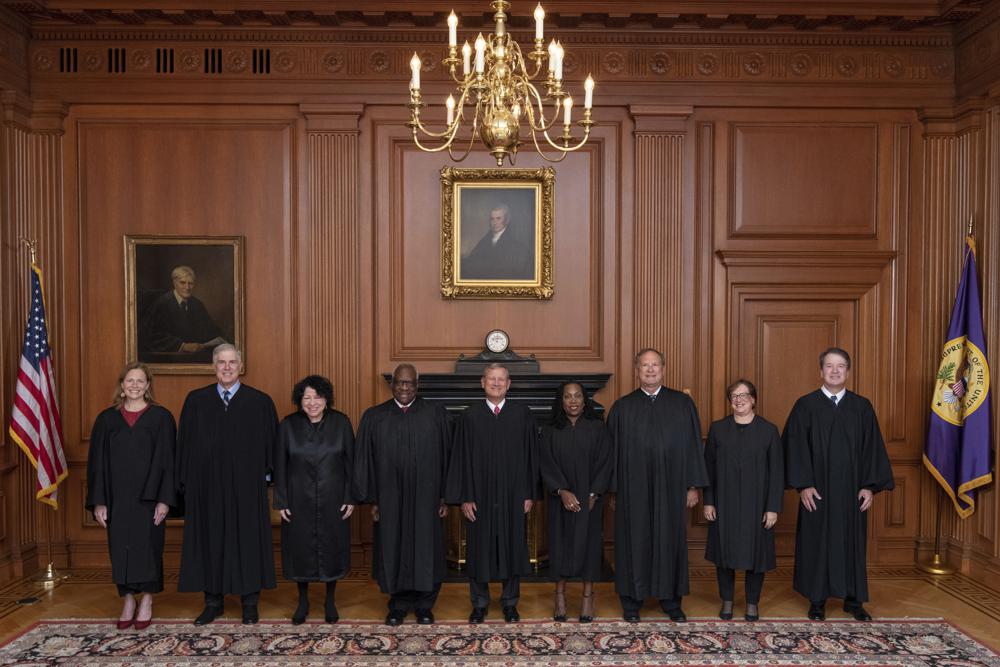
Justice Brett Kavanaugh pointed to the mixed U.S. Supreme Court decisions this term as he sought Thursday to dispel notions that it is partisan, even after conservatives brought about the end of affirmative action in college admissions and struck down President Joe Biden’s student loan debt relief program. “The court is an institution of law. It’s an institution of law, not of politics, not of partisanship,” Kavanaugh said at a judicial conference in Minnesota, in the first public remarks by a justice since the court recessed for the summer late last month. The Supreme Court has been reshaped by the three justices nominated by President Donald Trump, including Kavanaugh. Although Kavanaugh sided with the conservative majorities in the affirmative action and student loan rulings, as well as last summer’s ruling overturning the nationwide right to abortion, he was also part of the mixed conservative and liberal majorities this term that backed Black voters in Alabama and preserved a federal law aimed at keeping Native American children with Native families. And the term was marked by other notable surprises, rejecting conservative positions in a North Carolina redistricting case that could have reshaped elections across the country, while backing the Biden administration in a fight over deportation priorities. “We have lived up, in my estimation, to deciding cases based on law and not based on partisan affiliation and partisanship,” Kavanaugh said. “We don’t caucus in separate rooms. We don’t meet separately. We’re not sitting on different sides of the aisle at an oral argument. … We work as a group of nine.” Speaking to an audience of judges, attorneys, and court personnel from the 8th Circuit, which stretches from Minnesota and the Dakotas south to Arkansas, Kavanaugh said he didn’t fully appreciate until he joined the court how much time the nine justices spend alone with each other. He estimated that they eat lunch together around 65 times a year. “And the rule at lunch is you can’t talk about work,” he said. “It’s a good rule. … It builds relationships and friendships, and then when we have tough cases — and we only really have tough cases — you have a reservoir of goodwill toward each of the other people.” Kavanaugh said he was warmly welcomed in his first term in 2018 by then-Justices Ruth Bader Ginsburg and Stephen Breyer, who were part of the court’s liberal wing. He also praised his working relationships with the two newest justices, conservative Amy Coney Barrett and liberal Ketanji Brown Jackson. Kavanaugh, who was the justice most often in the majority this term in divided cases, said the Supreme Court hears 60 to 70 cases a term and that only a relative few might get most of the attention. But he said there are lots of 9-0 decisions, and there can also be a lot of 7-2 and 6-3 decisions. “All sorts of different lineups,” he said. “And so I might be working with Sonia Sotomayor on the Andy Warhol case, while we disagree on a case on the competition clause. We’re not going to let our relationship where we’re working together on one suffer just because we disagree on the other. And that’s going on with all nine of us on a daily basis.” Kavanaugh only briefly mentioned the ethics issues that have dogged some justices — including conservatives Clarence Thomas and Samuel Alito and the liberal Sotomayor — and potentially undermined public confidence in the court. He noted that Chief Justice John Roberts said in May that the justices were continuing to work on that as a group. “That’s accurate,” he said. “I’m not going to add anything to what the chief justice has said on that topic.” Roberts offered no specifics at the time, and the justices have not adopted an ethics code. Kavanaugh said people getting upset when the high court makes difficult decisions comes with the territory. He said the best the justices can do is try to be consistent, clearly explain their reasoning, and try to show that they actually are working as a team of nine on difficult cases instead of caucusing on a partisan basis. “You shouldn’t be in this line of work if you don’t like criticism,” he said. “Because you’re going to get it. And you’re going to get a lot of it.” Republished with the permission of The Associated Press.
U.S. Supreme Court poised to keep marching to right in new term
With public confidence diminished and justices sparring openly over the institution’s legitimacy, the Supreme Court on Monday will begin a new term that could push American law to the right on issues of race, voting, and the environment. Following June’s momentous overturning of nearly 50 years of constitutional protections for abortion rights, the court is diving back in with an aggressive agenda that seems likely to split its six conservative justices from its three liberals. “It’s not going to be a sleepy term,” said Allison Orr Larsen, a William and Mary law professor. “Cases the court already has agreed to hear really have the potential to bring some pretty significant changes to the law.” Into this swirling mix steps new Justice Ketanji Brown Jackson, the court’s first Black woman. Jackson took the seat of Justice Stephen Breyer, a member of the court’s liberal wing, who retired in June. She’s not expected to alter the liberal-conservative divide on the court, but for the first time the court has four women as justices, and white men no longer hold a majority. The court, with three appointees of President Donald Trump, could discard decades of decisions that allow colleges to take account of race in admissions and again weaken the federal Voting Rights Act of 1965, the crown jewel of the civil rights movement. In a separate elections case, a Republican-led appeal could dramatically change the way elections for Congress and the presidency are conducted by handing more power to state legislatures and taking it away from state courts. Also on the agenda is a clash over the rights of a business owner with a religious objection to working with same-sex couples on their weddings. In the term’s first arguments Monday, the justices are being asked to limit the reach of the Clean Water Act, nation’s main law to combat water pollution. The case involves an Idaho couple who won an earlier high court round in their bid to build a house on property near a lake without getting a permit under that law. The outcome could change the rules for millions of acres of property that contain wetlands. A Supreme Court decision for the couple could strip environmental protections from 45 million acres and threaten water quality for millions of people, said Sam Sankar, senior vice president of the Earthjustice environmental group. “It’s going to help a lot of industries. It’s going to hurt real people,” Sankar said. But Damien Schiff, representing the couple, said a favorable court ruling could free ordinary property owners from worrying about large fines and years of delays. “You don’t have to be a large industrial company or large property owner to have a problem,” Schiff said. There’s little expectation that the outcomes in the highest-profile cases will be anything other than conservative victories, following last term’s outcomes. In their first full term together, the conservatives ruled not only on abortion, but expanded gun rights, enhanced religious rights, reined in the government’s ability to fight climate change and limited Biden administration efforts to combat COVID-19. Deborah Archer, president of the American Civil Liberties Union, underscored the long odds facing defenders of affirmative action in college admissions. “It is most certainly an uphill climb. We’re in a scary place where we are relying on Justice Roberts,” Archer said. Her assessment stems from Chief Justice John Roberts’ long-standing support, both as a judge and a White House lawyer in the 1980s, for limits on considerations of race in education and voting. “It’s a sordid business, this divvying us up by race,” Roberts wrote in a 2006 redistricting case from Texas. Last term’s epic decisions might have produced bruised feelings among the justices anyway. But the leak of the abortion decision in early May, seven weeks before it was released, exacerbated tensions on the court, several justices have said. The court has apparently not identified the source of the leak, Breyer said in a recent interview on CNN. Justice Elena Kagan delivered a series of talks over the summer in which she said the public’s view of the court can be damaged especially when changes in its membership lead to big changes in the law. “It just doesn’t look like law when some new judges appointed by a new president come in and start just tossing out the old stuff,” Kagan said in an appearance last month at Salve Regina University in Newport, Rhode Island. Roberts and Justice Samuel Alito both took issue with Kagan, if obliquely. Roberts said it was wrong to equate disagreement with the court’s decisions with questions of legitimacy. In a comment Tuesday to The Wall Street Journal, Alito didn’t name Kagan. “But saying or implying that the court is becoming an illegitimate institution or questioning our integrity crosses an important line,” he said, according to the newspaper. Separately, Virginia “Ginni” Thomas, the wife of Justice Clarence Thomas, was interviewed on Thursday by the House committee investigating the January 6 insurrection. She stood by the false claim that the 2020 election was fraudulent, according to the committee chairman, Rep. Bennie Thompson, D-Miss. Ginni Thomas, a longtime conservative activist, texted with White House chief of staff Mark Meadows and contacted lawmakers in Arizona and Wisconsin in the weeks after the election. In January, her husband was the only justice to vote to keep documents from the National Archives out of the committee’s hands. Polls have shown a dip in approval for the court and respect for it. The latest Gallup Poll, released last week, reflected Americans’ lowest level of trust in the court in 50 years and a record-tying low approval rating. In a talk to judges and lawyers in Colorado last month, Roberts reflected on the last year at the court, calling it an “unusual one and difficult in many respects.” Following the leak, the court was ringed with an 8-foot security fence, and Roberts called it “gut-wrenching” to drive to work past the barricades. He also said it was “unnatural” to hear arguments without the public present, a concession to the coronavirus pandemic. Now the barricades are down, and the public will be allowed inside the courtroom for arguments for the first time since March
Kay Ivey blasts Supreme Court decision to halt “Remain in Mexico” policy

On Thursday, the U.S. Supreme Court ruled the Biden administration can end the Trump-era immigration policy called the Migrant Protection Protocols. The “Remain in Mexico” policy was at the center of efforts to deter asylum-seekers, forcing some to wait in Mexico. The legal fight in the immigration case was about whether U.S. immigration authorities, with far less detention capacity than needed, had to send people to Mexico or whether they had the discretion under federal law to release asylum-seekers into the United States while they awaited their hearings. The Department of Homeland Security began to implement the Migrant Protection Protocols (MPP) in January 2019. Under MPP, certainnon-Mexican nationals arriving by land from Mexico were returned to Mexico to await the results of their removal proceedings under section 1229a of the Immigration and Nationality Act (INA). Joe Biden suspended the program on his first day in office in January 2021. Lower courts ordered it reinstated in response to a lawsuit from Republican-led Texas and Missouri. Chief Justice John Roberts wrote that an appeals court “erred in holding that the” federal Immigration and Nationality Act “required the Government to continue implementing MPP.” Brett Kavanaugh noted that in general, when there is not enough detention capacity, both releasing asylum-seekers into the United States and sending them back to Mexico “are legally permissible options under the immigration statutes.” Along with Justice Kavanaugh, John Roberts, Stephen Breyer, Sonia Sotomayor, and Elena Kagan all ruled in favor of the Biden administration. Gov. Kay Ivey released a statement regarding the decision, saying that ending the policy only exacerbated the border crisis. “The Biden Administration’s decision to end President Trump’s Remain in Mexico policy is contributing to the full-blown crisis at the Southern Border and is having devastating effects on both U.S. citizens and migrants,”. Ivey stated. “This was reasonable, good policy, and ending this policy only exacerbates the problem, plain and simple. DHS does not have the capacity to detain the massive flow of individuals, and instead of choosing this clearly effective and legal option, they are releasing these people all across the country.” Ivey promised to continue to provide resources to border states. Ivey concluded, “Where the federal government has refused to secure the Southern Border, states like Texas, Alabama, and our neighbors have stepped up to provide resources. We will continue our fight to demand action from our government.”
Ketanji Brown Jackson sworn in, becomes 1st Black woman on Supreme Court
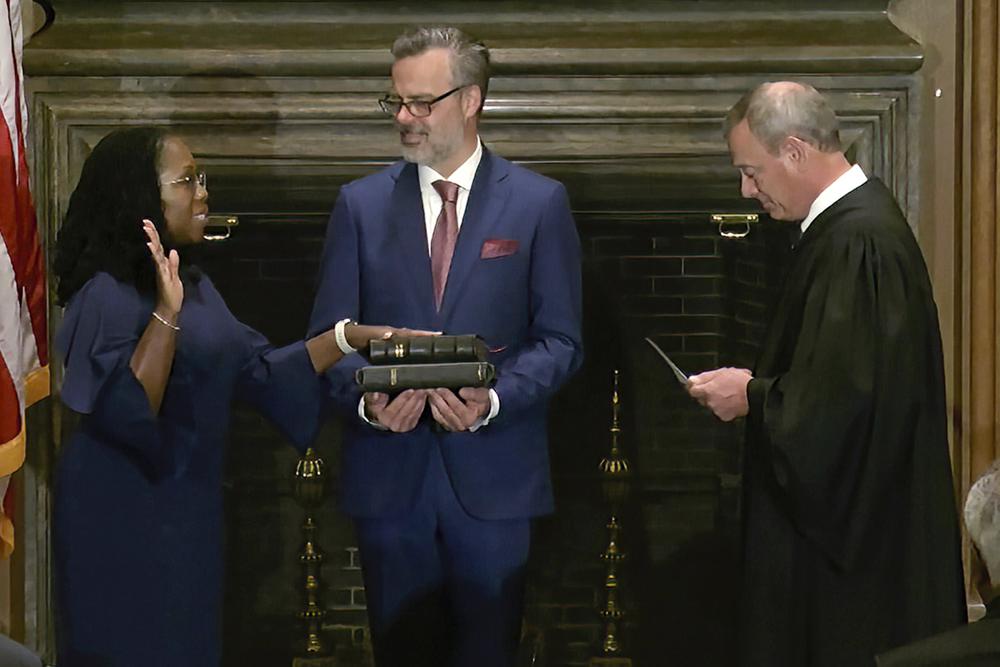
Ketanji Brown Jackson was sworn in to the Supreme Court on Thursday, shattering a glass ceiling as the first Black woman on the nation’s highest court. The 51-year-old Jackson is the court’s 116th justice, and she took the place of the justice she once worked for. Justice Stephen Breyer’s retirement was effective at noon. Moments later, joined by her family, Jackson recited the two oaths required of Supreme Court justices, one administered by Breyer and the other by Chief Justice John Roberts. “With a full heart, I accept the solemn responsibility of supporting and defending the Constitution of the United States and administering justice without fear or favor, so help me God,” Jackson said in a statement issued by the court. “I am truly grateful to be part of the promise of our great Nation. I extend my sincerest thanks to all of my new colleagues for their warm and gracious welcome.” Roberts welcomed Jackson “to the court and our common calling.” The ceremony was streamed live on the court’s website. All the justices except for Neil Gorsuch attended the swearing-in, the court said. There was no immediate explanation for Gorsuch’s absence. Jackson, a federal judge since 2013, is joining three other women — Justices Sonia Sotomayor, Elena Kagan, and Amy Coney Barrett. It’s the first time four women will serve together on the nine-member court. Biden nominated Jackson in February, a month after Breyer, 83, announced he would retire at the end of the court’s term, assuming his successor had been confirmed. Breyer’s earlier-than-usual announcement and the condition he attached was a recognition of the Democrats’ tenuous hold on the Senate in an era of hyper-partisanship, especially surrounding federal judgeships. The Senate confirmed Jackson’s nomination in early April, by a 53-47 mostly party-line vote that included support from three Republicans. Jackson had been in a sort of judicial limbo since, remaining a judge on the federal appeals court in Washington, D.C., but not hearing any cases. Biden elevated her to that court from the district judgeship to which she was appointed by President Barack Obama. Glynda Carr, president of Higher Heights for America, an organization that advocates for the growth of Black women’s political power, said the timing of Jackson’s swearing-in was bittersweet. “Although we celebrate her today, one Black woman or a cohort of Black women can’t save this democracy alone. We are a piece of it and we are doing our work, our part. She’s going to forever reshape and shape that court. But she’s just a piece of the work that needs to happen moving forward,” Carr said. Because of Jackson’s appointment, Judith Browne Dianis, a Black lawyer in Washington, said she intends to end her protest against joining the Supreme Court Bar. She started it when Justice Clarence Thomas was confirmed in 1991. She said that even the series of conservative rulings from the court over the past week cannot take away from the significance of Thursday’s ceremony. “This is a momentous occasion and it’s still a beautiful moment,” said Dianis, executive director of the civil rights group Advancement Project. But, Dianis added, “she’s joining the court at a time when conservatives are holding the line and trying to actually take us back, because they see the progress that’s being made in our country. It’s like the Civil War that never ended. That’s the court that she’s joining.” Jackson will be able to begin work immediately, but the court will have just finished the bulk of its work until the fall, apart from emergency appeals that occasionally arise. That will give her time to settle in and familiarize herself with the roughly two dozen cases the court already has agreed to hear starting in October as well as hundreds of appeals that will pile up over the summer. She helps form the most diverse court in its 232-year history and is the first former public defender to be a justice. The court that Jackson is joining is the most conservative that it has been since the 1930s. She is likely to be on the losing end of important cases, which could include examinations of the role of race in college admissions, congressional redistricting and voting rights that the court, with its 6-3 conservative majority, will take up next term. Today’s court now is surrounded by fencing, and justices and their families have 24-hour protection by the U.S. Marshals, the result of a law passed days after a man carrying a gun, knife and zip ties was arrested near Justice Brett Kavanaugh’s Maryland house after threatening to kill the justice. The bill was introduced in May shortly after the leak of a draft court opinion that would overrule Roe v. Wade and sharply curtail abortion rights in roughly half the states. The court issued final opinions earlier Thursday after a momentous and rancorous term that included overturning Roe v. Wade’s guarantee of the right to an abortion. One of Thursday’s decisions limited how the Environmental Protection Agency can use the nation’s main anti-air pollution law to reduce carbon dioxide emissions from power plants, a blow to the fight against climate change. Republished with the permission of The Associated Press.
Supreme Court: Joe Biden can end Donald Trump-era asylum policy
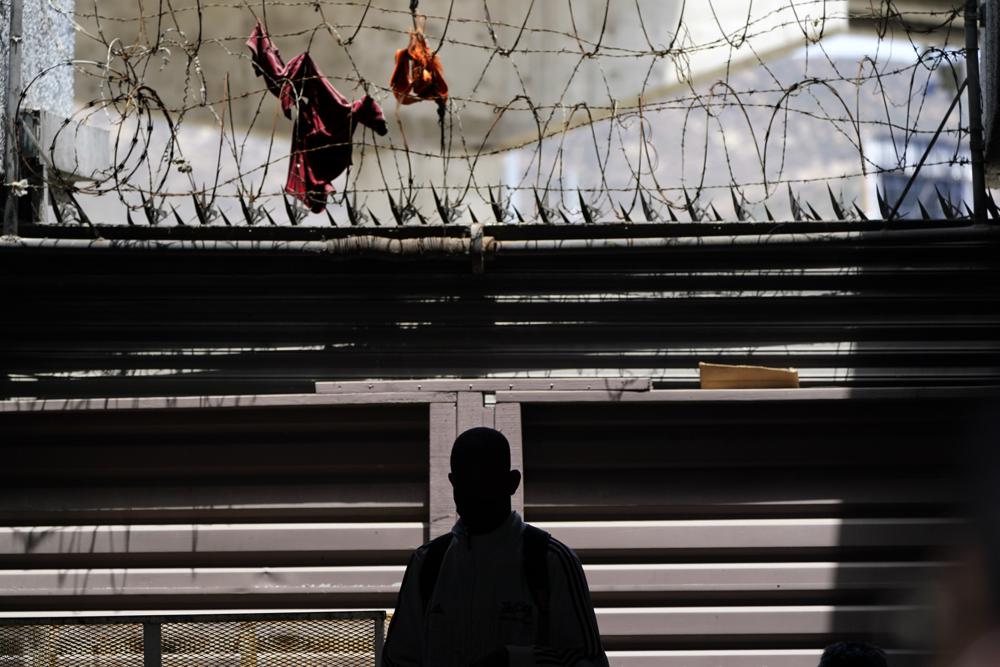
The Supreme Court said Thursday the Biden administration can scrap a Trump-era immigration policy that was at the center of efforts to deter asylum-seekers, forcing some to wait in Mexico. Two conservative justices joined their three liberal colleagues in siding with the White House. The justices’ decision came in a case involving former President Donald Trump’s “Remain in Mexico” policy, formally known as Migrant Protection Protocols, which enrolled about 70,000 people after it was launched in 2019. President Joe Biden suspended the program on his first day in office in January 2021. But lower courts ordered it reinstated in response to a lawsuit from Republican-led Texas and Missouri. The current administration has sent far fewer people back to Mexico than did the Trump administration. The ruling was released on the same day that the court dealt the administration a blow in an important environmental case about the nation’s main anti-air pollution law. That ruling could complicate the administration’s plans to combat climate change. The heart of the legal fight in the immigration case was about whether U.S. immigration authorities, with far less detention capacity than needed, had to send people to Mexico or whether those authorities had the discretion under federal law to release asylum-seekers into the United States while they awaited their hearings. After Biden’s suspension of the program, Homeland Security Secretary Alejandro Mayorkas ended it in June 2021. In October, the department produced additional justifications for the policy’s demise, but that was to no avail in the courts. Chief Justice John Roberts wrote that an appeals court “erred in holding that the” federal Immigration and Nationality Act “required the Government to continue implementing MPP.” Joining the majority opinion was fellow conservative Brett Kavanaugh, a Trump-appointee, as well as liberal justices Stephen Breyer, Sonia Sotomayor, and Elena Kagan. Kavanaugh also wrote separately and noted that in general, when there is insufficient detention capacity, both releasing asylum-seekers into the United States and sending them back to Mexico “are legally permissible options under the immigration statutes.” Cornell University law professor Stephen Yale-Loehr, an immigration expert, said the Biden administration does not need to take any further action to end the policy but that Texas and Missouri can pursue a challenge over whether the administration followed appropriate procedure in ending the program. Texas Attorney General Ken Paxton said in a statement that the decision was “unfortunate.” He argued it would make “the border crisis worse. But it’s not the end. I’ll keep pressing forward and focus on securing the border and keeping our communities safe in the dozen other immigration suits I’m litigating in court.” Because of lower court decisions, MPP resumed in December, but the administration has registered only 7,259 migrants in the program, about 6 of every 10 of them Nicaraguans. The administration has said it would apply the policy to nationalities that are less likely to be subject to pandemic-era asylum limits. Strained diplomatic relations with Nicaragua makes it extremely difficult for the U.S. to expel people back to their homeland under the pandemic rule, known as Title 42 authority. U.S. authorities stopped migrants 1.2 million times on the Mexico border from December through May, illustrating the limited impact that “Remain in Mexico” has had under Biden. Democratic-led states and progressive groups were on the administration’s side in the case. Republican-run states and conservative groups sided with Texas and Missouri. The case is Biden v. Texas, 21-954. Republished with the permission of The Associated Press.
Supreme Court sides with coach who sought to pray after game
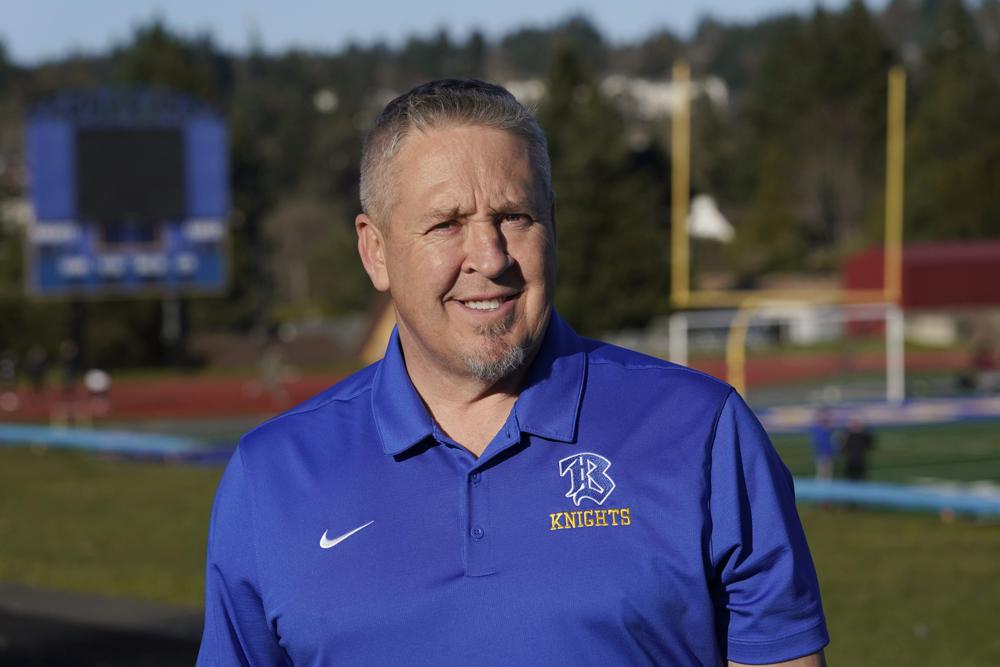
The Supreme Court sided Monday with a high school football coach from Washington state who sought to kneel and pray on the field after games, a decision that could strengthen the acceptability of some religious practices in other public school settings. The court ruled 6-3 for the coach, with the court’s conservative justices in the majority and its liberals in dissent. The justices said the coach’s prayer was protected by the First Amendment. “The Constitution and the best of our traditions counsel mutual respect and tolerance, not censorship and suppression, for religious and nonreligious views alike,” Justice Neil Gorsuch wrote for the majority. The case forced the justices to wrestle with how to balance the religious and free speech rights of teachers and coaches with the rights of students not to feel pressured into participating in religious practices. The decision is the latest in a line of Supreme Court rulings for religious plaintiffs. In another recent example, the court ruled this month that Maine can’t exclude religious schools from a program that offers tuition aid for private education, a decision that could ease religious organizations’ access to taxpayer money. In a dissent Monday, Justice Sonia Sotomayor wrote that the coach decision “sets us further down a perilous path in forcing states to entangle themselves with religion.” She was joined in her dissent by Justice Stephen Breyer and Justice Elena Kagan. The coach and his attorneys at First Liberty Institute, a Christian legal group, were among those cheering the decision. Paul Clement, the attorney who argued the case on behalf of coach Joseph Kennedy, said in a statement that the decision would allow the coach “to finally return to the place he belongs – coaching football and quietly praying by himself after the game.” Kennedy himself said in a statement: “This is just so awesome. All I’ve ever wanted was to be back on the field with my guys. I thank God for answering our prayers and sustaining my family through this long battle.” Kennedy, a Christian, is a former football coach at Bremerton High School in Bremerton, Washington. He started coaching at the school in 2008 and initially prayed alone on the 50-yard line at the end of games. Students started joining him, and over time he began to deliver a short, inspirational talk with religious references. Kennedy did that for years and also led students in locker room prayers. The school district learned what he was doing in 2015 and asked him to stop. Kennedy stopped leading students in prayer in the locker room and on the field but wanted to continue praying on the field himself, with students free to join if they wished. Concerned about being sued for violating students’ religious freedom rights, the school asked him to stop his practice of kneeling and praying while still “on duty” as a coach after the game. When he continued to kneel and pray on the field, the school put him on paid leave. In a statement, the Bremerton School District and their attorneys at Americans United for the Separation of Church and State, said the decision undermines the separation required by the Constitution. The school district said that it had “followed the law and acted to protect the religious freedom of all students and their families” and that it would work with its attorneys to make sure the district “remains a welcoming, inclusive environment for all students, their families, and our staff.” Three justices on the court — Breyer, Kagan, and Justice Samuel Alito — attended public high schools, while the rest attended Catholic schools. The case is Kennedy v. Bremerton School District, 21-418. Republished with the permission of The Associated Press.
Supreme Court overturns Roe v. Wade; states can ban abortion

The Supreme Court has ended constitutional protections for abortion that had been in place nearly 50 years in a decision by its conservative majority to overturn Roe v. Wade. Friday’s outcome is expected to lead to abortion bans in roughly half the states. The decision, unthinkable just a few years ago, was the culmination of decades of efforts by abortion opponents, made possible by an emboldened right side of the court that has been fortified by three appointees of former President Donald Trump. The ruling came more than a month after the stunning leak of a draft opinion by Justice Samuel Alito, indicating the court was prepared to take this momentous step. It puts the court at odds with a majority of Americans who favored preserving Roe, according to opinion polls. Alito, in the final opinion issued Friday, wrote that Roe and Planned Parenthood v. Casey, the 1992 decision that reaffirmed the right to abortion, were wrong the day they were decided and must be overturned. “We hold that Roe and Casey must be overruled. The Constitution makes no reference to abortion, and no such right is implicitly protected by any constitutional provision,” Alito wrote. Authority to regulate abortion rests with the political branches, not the courts, Alito wrote. Joining Alito were Justices Clarence Thomas, Neil Gorsuch, Brett Kavanaugh, and Amy Coney Barrett. The latter three justices are Donald Trump appointees. Thomas first voted to overrule Roe 30 years ago. Chief Justice John Roberts would have stopped short of ending the abortion right, noting that he would have upheld the Mississippi law at the heart of the case, a ban on abortion after 15 weeks, and said no more. Justices Stephen Breyer, Sonia Sotomayor, and Elena Kagan — the diminished liberal wing of the court — were in dissent. “With sorrow—for this Court, but more, for the many millions of American women who have today lost a fundamental constitutional protection—we dissent,” they wrote. The ruling is expected to disproportionately affect minority women who already face limited access to health care, according to statistics analyzed by The Associated Press. Thirteen states, mainly in the South and Midwest, already have laws on the books that ban abortion in the event Roe is overturned. Another half-dozen states have near-total bans or prohibitions after 6 weeks of pregnancy, before many women know they are pregnant. In roughly a half-dozen other states, the fight will be over dormant abortion bans that were enacted before Roe was decided in 1973 or new proposals to sharply limit when abortions can be performed, according to the Guttmacher Institute, a research group that supports abortion rights. More than 90% of abortions take place in the first 13 weeks of pregnancy, and more than half are now done with pills, not surgery, according to data compiled by Guttmacher. The decision came against a backdrop of public opinion surveys that find a majority of Americans oppose overturning Roe and handing the question of whether to permit abortion entirely to the states. Polls conducted by The Associated Press-NORC Center for Public Affairs Research and others also have consistently shown about 1 in 10 Americans want abortion to be illegal in all cases. A majority are in favor of abortion being legal in all or most circumstances, but polls indicate many also support restrictions, especially later in pregnancy. The Biden administration and other defenders of abortion rights have warned that a decision overturning Roe also would threaten other high court decisions in favor of gay rights and, even potentially, contraception. But Alito wrote in his draft opinion that his analysis addresses abortion only, not other rights that also stem from a right to privacy that the high court has found implicit, though not directly stated, in the Constitution. Abortion is different, Alito wrote, because of the unique moral question it poses. Whatever the intentions of the person who leaked Alito’s draft opinion, the conservatives held firm in overturning Roe and Casey. In his draft, Alito dismissed the arguments in favor of retaining the two decisions, including that multiple generations of American women have partly relied on the right to abortion to gain economic and political power. Changing the composition of the court has been central to the anti-abortion side’s strategy. Mississippi and its allies made increasingly aggressive arguments as the case developed, and two high-court defenders of abortion rights retired or died. The state initially argued that its law could be upheld without overruling the court’s abortion precedents. Then-Gov. Phil Bryant signed the 15-week measure into law in March 2018, when Justices Anthony Kennedy and Ruth Bader Ginsburg were still members of a five-justice majority that was mainly protective of abortion rights. By early summer, Kennedy had retired and was replaced by Justice Brett Kavanaugh a few months later. The Mississippi law was blocked in lower federal courts. But the state always was headed to the nation’s highest court. It did not even ask for a hearing before a three-judge panel of the 5th U.S. Circuit Court of Appeals, which ultimately held the law invalid in December 2019. By early September 2020, the Supreme Court was ready to consider the state’s appeal. The court scheduled the case for consideration at the justices’ private conference on Sept. 29. But in the intervening weeks, Ginsburg died, and Barrett was quickly nominated and confirmed without a single Democratic vote. The stage now was set, although it took the court another half year to agree to hear the case. By the time Mississippi filed its main written argument with the court in the summer, the thrust of its argument had changed, and it was now calling for the wholesale overruling of Roe and Casey. The first sign that the court might be receptive to wiping away the constitutional right to abortion came in late summer when the justices divided 5-4 in allowing Texas to enforce a ban on the procedure at roughly six weeks, before some women even know they are pregnant. That dispute turned on the unique structure of the
Supreme Court expands gun rights, with nation divided

In a major expansion of gun rights after a series of mass shootings, the Supreme Court said Thursday that Americans have a right to carry firearms in public for self-defense, a ruling likely to lead to more people legally armed. The decision came out as Congress and states debate gun-control legislation. About one-quarter of the U.S. population lives in states expected to be affected by the ruling, which struck down a New York gun law. The high court’s first major gun decision in more than a decade split the court 6-3, with the court’s conservatives in the majority and liberals in dissent. Across the street from the court, lawmakers at the Capitol sped toward passage of gun legislation prompted by recent massacres in Texas,New York and California. Senators cleared the way for the measure, modest in scope but still the most far-reaching in decades. Also Thursday, underscoring the nation’s deep divisions over the issue, the sister of a 9-year-old girl killed in the school shooting in Uvalde, Texas, pleaded with state lawmakers to pass gun legislation. The Republican-controlled legislature has stripped away gun restrictions over the past decade. President Joe Biden said in a statement he was “deeply disappointed” by the Supreme Court ruling. It “contradicts both common sense and the Constitution, and should deeply trouble us all,” he said. He urged states to pass new laws. “I call on Americans across the country to make their voices heard on gun safety. Lives are on the line,” he said. The decision struck down a New York law requiring people to demonstrate a particular need for carrying a gun in order to get a license to carry a gun in a concealed way in public. The justices said that requirement violates the Second Amendment right to “keep and bear arms.” Justice Clarence Thomas wrote for the majority that the Constitution protects “an individual’s right to carry a handgun for self-defense outside the home.” That right is not a “second-class right,” Thomas wrote. “We know of no other constitutional right that an individual may exercise only after demonstrating to government officers some special need.” California, Hawaii, Maryland, Massachusetts, New Jersey, and Rhode Island all have laws similar to New York’s. Those laws are expected to be quickly challenged. Gov. Kathy Hochul, D-N.Y., said the ruling came at a particularly painful time, with New York mourning the deaths of 10 people in a shooting at a supermarket in Buffalo. “This decision isn’t just reckless. It’s reprehensible. It’s not what New Yorkers want,” she said. Gun control groups called the decision a significant setback. Michael Waldman, president of the Brennan Center for Justice and an expert on the Second Amendment, wrote on Twitter that the decision could be the “biggest expansion of gun rights” by the Supreme Court in U.S. history. Republican lawmakers were among those cheering the decision. Tom King, president of the plaintiff New York State Rifle and Pistol Association, said he was relieved. “The lawful and legal gun owner of New York State is no longer going to be persecuted by laws that have nothing to do with the safety of the people and will do nothing to make the people safer,” he said. “And maybe now we’ll start going after criminals and perpetrators of these heinous acts.” The court’s decision is somewhat out of step with public opinion. About half of the voters in the 2020 presidential election said gun laws in the U.S. should be made more strict, according to AP VoteCast, an expansive survey of the electorate. An additional one-third said laws should be kept as they are, while only about 1 in 10 said gun laws should be less strict. About 8 in 10 Democratic voters said gun laws should be made more strict, VoteCast showed. Among Republican voters, roughly half said laws should be kept as they are, while the remaining half closely divided between more and less strict. In a dissent joined by his liberal colleagues, Justice Stephen Breyer focused on the toll from gun violence. Since the beginning of this year, “there have already been 277 reported mass shootings — an average of more than one per day,” Breyer wrote. He accused his colleagues in the majority of acting “without considering the potentially deadly consequences” of their decision. He said the ruling would “severely” burden states’ efforts to pass laws “that limit, in various ways, who may purchase, carry, or use firearms of different kinds.” Several other conservative justices who joined Thomas’ majority opinion also wrote separately to add their views. Justice Samuel Alito criticized Breyer’s dissent, questioning the relevance of his discussion of mass shootings and other gun death statistics. Alito wrote that the court had decided “nothing about who may lawfully possess a firearm or the requirements that must be met to buy a gun” and nothing “about the kinds of weapons that people may possess.” “Today, unfortunately, many Americans have good reason to fear they will be victimized if they are unable to protect themselves.” The Second Amendment, he said, “guarantees their right to do so.” Justice Brett Kavanaugh, joined by Chief Justice John Roberts, noted the limits of the decision. States can still require people to get a license to carry a gun, Kavanaugh wrote, and condition that license on “fingerprinting, a background check, a mental health records check, and training in firearms handling and in laws regarding the use of force, among other possible requirements.” Backers of New York’s law had argued that striking it down would lead to more guns on the streets and higher rates of violent crime. Gun violence, on the rise during the coronavirus pandemic, has spiked anew. Gun purchases have also risen. In most of the country, gun owners have little difficulty legally carrying their weapons in public. But that had been harder to do in New York and the handful of states with similar laws. New York’s law, in place since 1913, says that to carry a concealed handgun in public, a person applying for a license has to show “proper cause,” a specific need to
Supreme Court blocks Texas law on social media censorship
A divided Supreme Court has blocked a Texas law, championed by conservatives, that aimed to keep social media platforms like Facebook and Twitter from censoring users based on their viewpoints. The court voted in an unusual 5-4 alignment Tuesday to put the Texas law on hold, while a lawsuit plays out in lower courts. Chief Justice John Roberts and Justices Stephen Breyer, Sonia Sotomayor, Brett Kavanaugh, and Amy Coney Barrett voted to grant the emergency request from two technology industry groups that challenged the law in federal court. The majority provided no explanation for its decision, as is common in emergency matters on what is informally known as the court’s “shadow docket.” Justices Clarence Thomas, Samuel Alito, Elena Kagan, and Neil Gorsuch would have allowed the law to remain in effect. In dissent, Alito wrote, “Social media platforms have transformed the way people communicate with each other and obtain news.” It’s not clear how the high court’s past First Amendment cases, many of which predate the internet age, apply to Facebook, Twitter, TikTok, and other digital platforms, Alito wrote in an opinion joined by fellow conservatives Thomas and Gorsuch but not Kagan. The order follows a ruling last week by the 11th U.S. Circuit Court of Appeals that found a similar Florida law likely violates the First Amendment’s free speech protections. Republican elected officials in several states have backed laws like those enacted in Florida and Texas that sought to portray social media companies as generally liberal in outlook and hostile to ideas outside of that viewpoint, especially from the political right. The Texas law was initially blocked by a district judge, but then allowed to take effect by a panel of the New Orleans-based 5th U.S. Circuit Court of Appeals. Republished with the permission of The Associated Press.
Report: Supreme Court draft suggests Roe v. Wade could be overturned
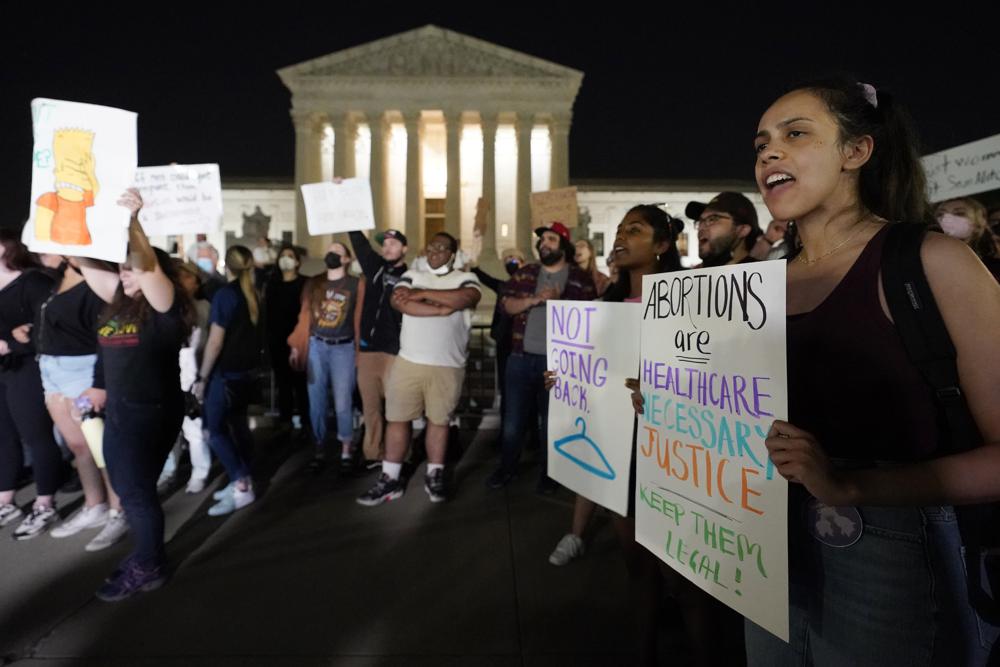
A draft opinion suggests the U.S. Supreme Court could be poised to overturn the landmark 1973 Roe v. Wade case that legalized abortion nationwide, according to a Politico report. A decision to overrule Roe would lead to abortion bans in roughly half the states and could have huge ramifications for this year’s elections. But it’s unclear if the draft represents the court’s final word on the matter — opinions often change in ways big and small in the drafting process. President Joe Biden said Tuesday that the “basic fairness and the stability of our law demand” that the court not overturn Roe. While emphasizing that he couldn’t speak to the authenticity of the draft, Biden said his administration is preparing for all eventualities for when the court ultimate rules and that a decision overturning Roe would raise the stakes for voters in November’s heated midterm elections. “If the court does overturn Roe, it will fall on our nation’s elected officials at all levels of government to protect a woman’s right to choose,” Biden said. “And it will fall on voters to elect pro-choice officials this November. At the federal level, we will need more pro-choice Senators and a pro-choice majority in the House to adopt legislation that codifies Roe, which I will work to pass and sign into law.” Whatever the outcome, the Politico report late Monday represented an extremely rare breach of the court’s secretive deliberation process and on a case of surpassing importance. “Roe was egregiously wrong from the start,” the draft opinion states. It was signed by Justice Samuel Alito, a member of the court’s 6-3 conservative majority who was appointed by former President George W. Bush. The document was labeled a “1st Draft” of the “Opinion of the Court” in a case challenging Mississippi’s ban on abortion after 15 weeks, a case known as Dobbs v. Jackson Women’s Health Organization. The court is expected to rule on the case before its term ends in late June or early July. The draft opinion, in effect, states there is no constitutional right to abortion services and would allow individual states to more heavily regulate or outright ban the procedure. “We hold that Roe and Casey must be overruled,” it states, referencing the 1992 case Planned Parenthood v. Casey that affirmed Roe’s finding of a constitutional right to abortion services but allowed states to place some constraints on the practice. “It is time to heed the Constitution and return the issue of abortion to the people’s elected representatives.” A Supreme Court spokeswoman said the court had no comment, and The Associated Press could not immediately confirm the authenticity of the draft Politico posted, which dates from February. Politico said only that it received “a copy of the draft opinion from a person familiar with the court’s proceedings in the Mississippi case along with other details supporting the authenticity of the document.” The draft opinion strongly suggests that when the justices met in private shortly after arguments in the case on December 1, at least five voted to overrule Roe and Casey, and Alito was assigned the task of writing the court’s majority opinion. Votes and opinions in a case aren’t final until a decision is announced or, in a change wrought by the coronavirus pandemic, posted on the court’s website. The report comes amid a legislative push to restrict abortion in several Republican-led states — Oklahoma being the most recent — even before the court issues its decision. Critics of those measures have said low-income and minority women will disproportionately bear the burden of the new restrictions. The leak jumpstarted the intense political reverberations that the high court’s ultimate decision was expected to have in the midterm election year. Already, politicians on both sides of the aisle were seizing on the report to fundraise and energize their supporters on either side of the hot-button issue. An AP-NORC poll in December found that Democrats increasingly see protecting abortion rights as a high priority for the government. Other polling shows relatively few Americans want to see Roe overturned. In 2020, AP VoteCast found that 69% of voters in the presidential election said the Supreme Court should leave the Roe v. Wade decision as is; just 29% said the court should overturn the decision. In general, AP-NORC polling finds a majority of the public favors abortion being legal in most or all cases. Still, when asked about abortion policy generally, Americans have nuanced attitudes on the issue, and many don’t think that abortion should be possible after the first trimester or that women should be able to obtain a legal abortion for any reason. Alito, in the draft, said the court can’t predict how the public might react and shouldn’t try. “We cannot allow our decisions to be affected by any extraneous influences such as concern about the public’s reaction to our work,” Alito wrote in the draft opinion, according to Politico. People on both sides of the issue quickly gathered outside the Supreme Court, waving signs and chanting on a balmy spring night, following the release of the Politico report. Reaction was swift from elected officials in Congress and across the country. In a joint statement from Congress’ top two Democrats, House Speaker Nancy Pelosi and Senate Majority Leader Chuck Schumer said, “If the report is accurate, the Supreme Court is poised to inflict the greatest restriction of rights in the past fifty years — not just on women but on all Americans.” New York Gov. Kathy Hochul, also a Democrat, said people seeking abortions could head to New York. “For anyone who needs access to care, our state will welcome you with open arms. Abortion will always be safe & accessible in New York,” Hochul said in a tweet. Mississippi Attorney General Lynn Fitch said in a statement, “We will let the Supreme Court speak for itself and wait for the Court’s official opinion.” But local officials were praising the draft. “This puts the decision making back into the hands of the states,
Ketanji Brown Jackson confirmed as first Black female high court justice
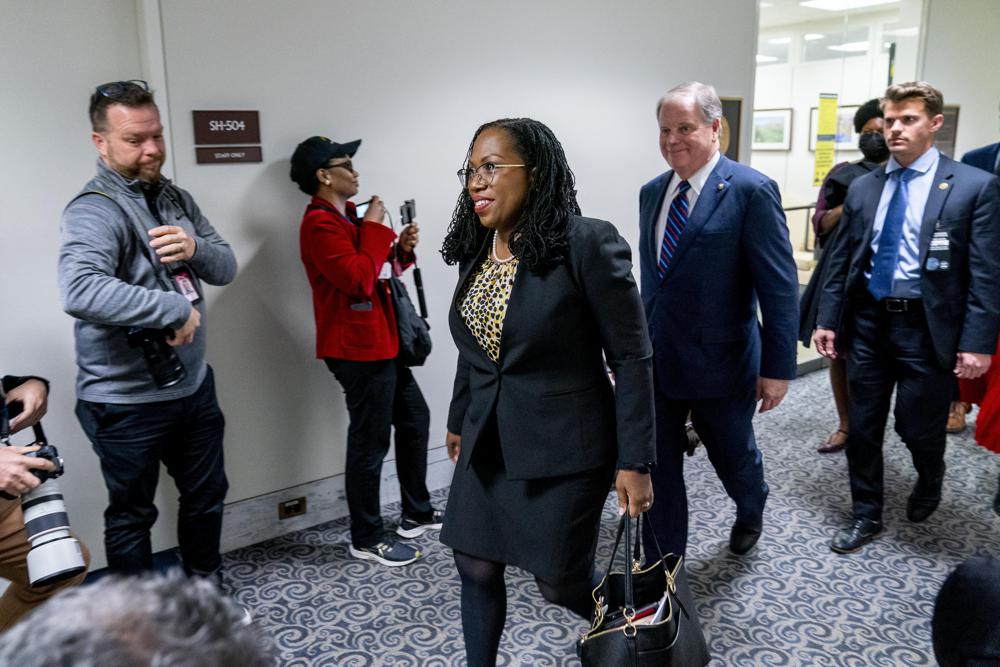
The Senate confirmed Ketanji Brown Jackson to the Supreme Court on Thursday, shattering a historic barrier by securing her place as the first Black female justice and giving President Joe Biden a bipartisan endorsement for his promised effort to diversify the high court. Cheers rang out in the Senate chamber as Jackson, a 51-year-old appeals court judge with nine years of experience on the federal bench, was confirmed 53-47, mostly along party lines but with three Republican votes. Presiding over the vote was Vice President Kamala Harris, also the first Black woman to reach her high office. Biden tweeted afterward that “we’ve taken another step toward making our highest court reflect the diversity of America.” Senate Majority Leader Chuck Schumer exulted that it was “a wonderful day, a joyous day, an inspiring day — for the Senate, for the Supreme Court, and for the United States of America.” Harris said as she left the Capitol that she was “overjoyed, deeply moved.” Jackson will take her seat when Justice Stephen Breyer retires this summer, solidifying the liberal wing of the 6-3 conservative-dominated court. She joined Biden at the White House to watch the vote, embracing as it came in. The two were expected to speak, along with Harris, at the White House Friday. During four days of Senate hearings last month, Jackson spoke of her parents’ struggles through racial segregation and said her “path was clearer” than theirs as a Black American after the enactment of civil rights laws. She attended Harvard University, served as a public defender, worked at a private law firm, and was appointed as a member of the U.S. Sentencing Commission. She told senators she would apply the law “without fear or favor,” and pushed back on Republican attempts to portray her as too lenient on criminals she had sentenced. Jackson will be just the third Black justice, after Thurgood Marshall and Clarence Thomas, and the sixth woman. She will join three other women, Sonia Sotomayor, Elena Kagan, and Amy Coney Barrett – meaning that four of the nine justices will be women for the first time in history. Her eventual elevation to the court will be a respite for Democrats who fought three bruising battles over former President Donald Trump’s nominees and watched Republicans cement a conservative majority in the final days of Trump’s term with Barrett’s confirmation. While Jackson won’t change the balance, she will secure a legacy on the court for Biden and fulfill his 2020 campaign pledge to nominate the first Black female justice. “This is a tremendously historic day in the White House and in the country,” said White House press secretary Jen Psaki after the vote. “And this is a fulfillment of a promise the president made to the country.” The atmosphere was joyful, though the Senate was divided, as Thursday’s votes were cast. Senators of both parties sat at their desks and stood to vote, a tradition reserved for the most important matters. The upper galleries were almost full for the first time since the beginning of the pandemic two years ago, and about a dozen House members, part of the Congressional Black Caucus, stood at the back of the chamber. Harris called out the tally, pausing with emotion, and Democrats erupted in loud applause and cheers, Schumer pumping his fists. A handful of Republicans stayed and clapped, but most by then had left. Despite Republican criticism of her record, Jackson eventually won three GOP votes. The final tally was far from the overwhelming bipartisan confirmations for Breyer and other justices in decades past, but it was still a significant accomplishment for Biden in the 50-50 split Senate after GOP senators aggressively worked to paint Jackson as too liberal and soft on crime. Statements from Republican Sens. Susan Collins of Maine, Lisa Murkowski of Alaska, and Mitt Romney of Utah all said the same thing — they might not always agree with Jackson, but they found her to be enormously well qualified for the job. Collins and Murkowski both decried increasingly partisan confirmation fights, which only worsened during the battles over Trump’s three picks. Collins said the process was “broken,” and Murkowski called it “corrosive” and “more detached from reality by the year.” Biden, a veteran of a more bipartisan Senate, said from the day of Breyer’s retirement announcement in January that he wanted support from both parties for his history-making nominee, and he invited Republicans to the White House as he made his decision. It was an attempted reset from Trump’s presidency, when Democrats vociferously opposed the three nominees, and from the end of President Barack Obama’s when Republicans blocked nominee Merrick Garland from getting a vote. Once sworn in, Jackson will be the second-youngest member of the court after Barrett, 50. She will join a court on which no one is yet 75, the first time that has happened in nearly 30 years. Jackson’s first term will be marked by cases involving race, both in college admissions and voting rights. She has pledged to sit out the court’s consideration of Harvard’s admissions program since she is a member of its board of overseers. But the court could split off a second case involving a challenge to the University of North Carolina’s admissions process, which might allow her to weigh in on the issue. Judith Browne Dianis, executive director of the Advancement Project, a civil rights organization, said Jackson will make the court more reflective of communities that are most impacted by the judiciary. “The highest court in the land now will have a firsthand perspective of how the law impacts communities of color — via voting rights, police misconduct, abortion access, housing discrimination, or the criminal legal system, among other issues,” she said. “This will ultimately benefit all Americans.” Jackson could wait as long as three months to be sworn in, as the court’s session generally ends in late June or early July. She remains a judge on the federal appeals court in Washington, but she stepped away from cases there when she was nominated in February. Republicans spent
Ketanji Brown Jackson on track for confirmation, but GOP votes in doubt
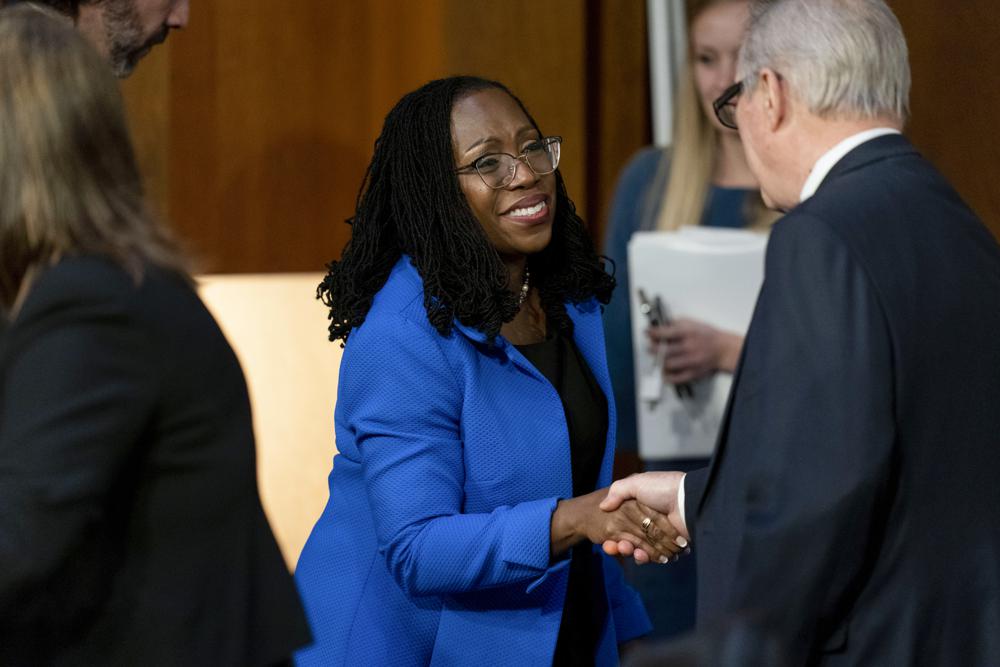
After more than 30 hours of hearings, the Senate is on track to confirm Ketanji Brown Jackson as the first Black woman on the Supreme Court. But Democrats seem unlikely to confirm her with a robust bipartisan vote, dashing President Joe Biden’s hopes for a grand reset after partisan battles over other high court nominees. On Thursday, just hours after the hearings came to a close, Senate Republican Leader Mitch McConnell announced he will vote against Jackson’s confirmation. He said in a Senate floor speech that he “cannot and will not” support her for a lifetime appointment. McConnell slammed the liberal groups that have supported Jackson, and he criticized her for refusing to take a position on the size of the nine-member court, even though that decision is ultimately up to Congress. Some advocacy groups have pushed for enlarging the court after three justices nominated by former President Donald Trump cemented a 6-3 conservative majority. McConnell also cited concerns about her sentencing of criminal defendants — a subject that dominated much of the four days of hearings and was part of a coordinated GOP effort to portray her as soft on crime. His position was expected and does not affect Jackson’s trajectory to be confirmed by mid-April. But the leader’s quick declaration could prompt many of his fellow Republicans to follow suit, thwarting Biden’s efforts to bring back the overwhelming bipartisan votes that were commonplace for Supreme Court nominees when he first came to the Senate five decades ago. “I think whomever I pick will get a vote from Republican side,” Biden said after Justice Stephen Breyer announced he would step down from the court this summer. As he started his search for a replacement, the president made a point of inviting Republican senators to the White House to hear their advice. While many GOP senators have praised Jackson’s vast experience and qualifications, it was clear at the hearings that Biden’s outreach had little effect. Republicans on the Senate Judiciary Committee interrogated Jackson about her nine-year record as a federal judge, frequently interrupting her answers. Jackson, supported by committee Democrats, pushed back aggressively on Republicans who said she gave light sentences to sex offenders, explaining her sentencing process in detail and telling them “nothing could be further from the truth.” The focus on crime dovetails with an emerging GOP theme for this year’s midterm elections and is likely to be decisive for many Republican senators. Others have brought up separate reasons to vote against her — from her support from liberal groups to her so-called “judicial philosophy.” One or more Republicans could still cast a vote for Jackson’s confirmation, but the contentious nature of the four-day hearings laid bare a familiar partisan dynamic, seen over years of pitched fighting over judicial nominations. Senate Judiciary Committee Chairman Dick Durbin, who has been privately lobbying GOP colleagues to support Jackson, said after McConnell’s announcement that it will be “sad for our country and sad as a commentary on where the parties are today” if her historic nomination is approved on a strictly partisan vote. “The Republicans are testing their messages for the November election,” Durbin said. Durbin said he is “still hoping that several Republicans — I hope many more” will vote for her. If not, Democrats can confirm Jackson without any GOP support in the 50-50 Senate, with Vice President Kamala Harris breaking a tie. As talk turned to the voting ahead, the Judiciary panel held its final day of Senate hearings Thursday with a top lawyers’ group, which said its review found Jackson has a “sterling” reputation and “exceptional” competence and is well qualified to sit on the Supreme Court. “Outstanding, excellent, superior, superb,” testified Ann Claire Williams, chair of the American Bar Association committee that makes recommendations on federal judges. “Those are the comments from virtually everyone we interviewed.” Williams said the group spoke to more than 250 judges and lawyers about Jackson. “The question we kept asking ourselves: How does one human being do so much so extraordinary well?” Jackson would be the third Black justice, after Thurgood Marshall and Clarence Thomas, and the sixth woman. She would also be the first former public defender on the court, and the first justice with experience representing indigent criminal defendants since Marshall. Her confirmation would not alter the current 6-3 conservative majority on the court. Durbin noted at Thursday’s hearing that some Republican senators argued that Jackson was out of the mainstream when it comes to sentencing, and he asked the ABA whether such a concern would have surfaced in their interviews with the judges and lawyers who worked with her. “It never came up in any of these interviews,” Williams said. During questioning Tuesday and Wednesday, GOP senators aggressively queried Jackson on the sentences she handed down to child pornography offenders in her nine years as a federal judge, her legal advocacy on behalf of suspected terrorists held at Guantanamo Bay, her thoughts on critical race theory, and even her religious views. Many of the hours of questioning were spent on the specifics of the child pornography cases, with the discussion led by several GOP senators who are eyeing the presidency. Pushing back, Jackson said she bases sentences on many factors, not just federal guidelines. Sentencing is not a “numbers game,” she said, noting that there are no mandatory sentences for sex offenders and that there has been significant debate on the subject. Democratic senators cited outside experts who said her sentences were within the norm. Some of those cases have given her nightmares, Jackson said, and were “among the worst that I have seen.” The GOP criticism was countered by effusive praise from Democrats and by reflections on the historic nature of her nomination. The most riveting came from New Jersey Sen. Cory Booker, who used his time Wednesday not to ask questions but to tearfully speak and draw tears from Jackson as well. Booker, who is Black, said he sees “my ancestors and yours” when he looks at Jackson. “I know what it’s taken
