
Steve Flowers: Inside the Statehouse
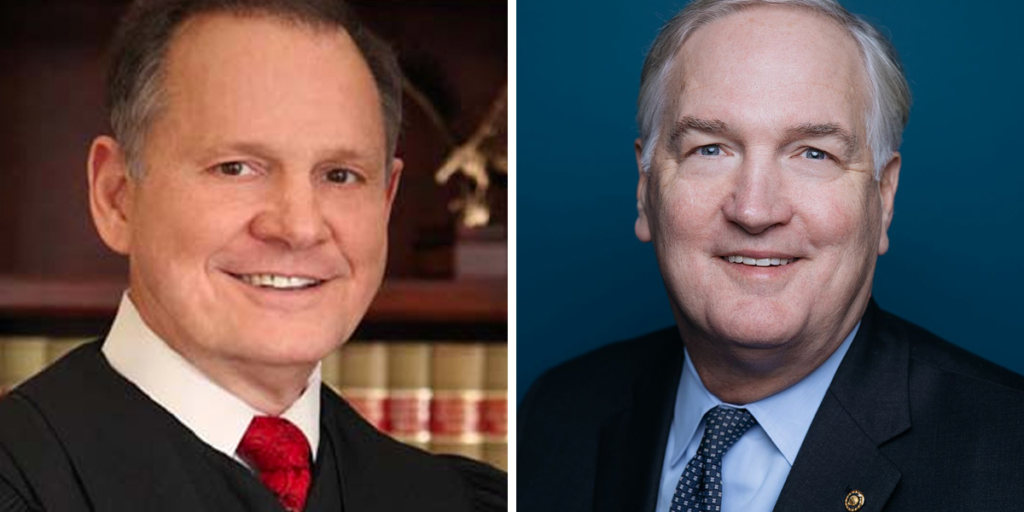
Most people would assume that as the race for the open U.S. Senate began that Luther Strange, the appointed incumbent, was the favorite. However, polling indicated that Roy Moore was the favorite and still is as we head towards the September 26 runoff. The initial polling showed that Moore had a hardcore 30 percent. It was and is as solid as a rock. He had 30 percent from the get-go. He had 30 percent midway in the race and he had 30 percent at the end. It was also a fact that with a low voter turnout that his 30 percent would become accentuated because the final poll and the one that counts is election day and who actually shows up to vote. Moore’s supporters are more ardent and are going to show up to vote for him come hell or high water. They are also older, and older people tend to vote; 65-80 year old voters are always more likely to vote. The turnout on August 15 was 18 percent and Moore’s vote total was 39 percent. Allow me to crow a little – the day before the election I predicted an 18 percent turnout and that Moore would get 39 percent. I missed Luther Strange by some six points. I had him at 27 percent. He did better than I thought. He garnered 33 percent. There was only six points separating Strange and Moore. This is not an insurmountable obstacle to overcome. My early handicapping of the runoff has it as a dead heat between Moore and Strange. As the race began, it was apparent that it was a two-man race between Moore and Strange. Moore began with an immovable evangelical block and the Washington Republican Senate leadership made it clear that they were going to treat Strange as an incumbent and that they were going to give him unlimited resources. They weren’t just whistling Dixie. They put their money where their mouth was. They must have spent $5 million. When you have that kind of money and the national powerbrokers and hierarchy dictating their choice, you not only have all the media ads available, you also have access to the very best hired guns, pollsters and media gurus in the country. They are the best gunslingers in the land. They do not lose many gunfights and they like to go negative. It was obvious that these pros saw that Donald Trump or at least his public policies are extremely popular among Alabama Republican primary voters. Therefore, their script for Luther Strange was to say he was on Donald Trump’s side and would be for the Trump agenda to make America great again. Luther stuck to the script and did a good job avoiding any negative questions about the questionable Robert Bentley appointment. Unlimited money washes away any unsavory scenarios and allows you to dictate the narrative. The early polling revealed that the Bentley appointment was an albatross for Luther. I do not personally believe that Luther and Bentley ever discussed the Bentley investigation. However, to most people it looked as though the appointment was a brazen deal or at least collusion and in politics, perception is reality. Therefore, for this reason on Luther’s part and for obvious reasons on Moore’s part, they both began with high negatives. Internal polling showed that there was fertile ground for a third person to win this race. That third person emerged in the form of Tennessee Valley Congressman, Mo Brooks. He is a firebrand arch conservative intellectual, Tea Party, Freedom Caucus, true believing ideologue. He was bold enough to take on the Mitch McConnell super PAC big money Washington establishment. He had $1.2 million in his Congressional campaign account and 20 percent statewide name recognition from his Congressional district. Mo did not plan on being shot at by a left wing Bernie Sanders socialist nut while practicing baseball for the Republican Party baseball team. However, the exposure gave him $2 million in free publicity. You could have no better introduction to Alabama GOP Primary voters. The Washington Luther Strange gunslingers saw the momentum that Mo had. He was about to catch Luther and they stopped him dead in his tracks with an ad that said he was not going to vote for Donald Trump last year. When Trump endorsed Big Luther it closed the deal. Luther had his place in the runoff and Mo has to fight to keep his U.S. House seat. The final results were predictable. Roy Moore led with 39 percent; Luther Strange got a strong 33 percent; and Mo Brooks finished with a respectable 20 percent. The runoff between Strange and Moore is too close to call at this time. See you next week. ••• Steve Flowers is Alabama’s leading political columnist. His weekly column appears in over 60 Alabama newspapers. He served 16 years in the state legislature. Steve may be reached at www.steveflowers.us.
Steve Flowers: Questionable political appointments nothing new
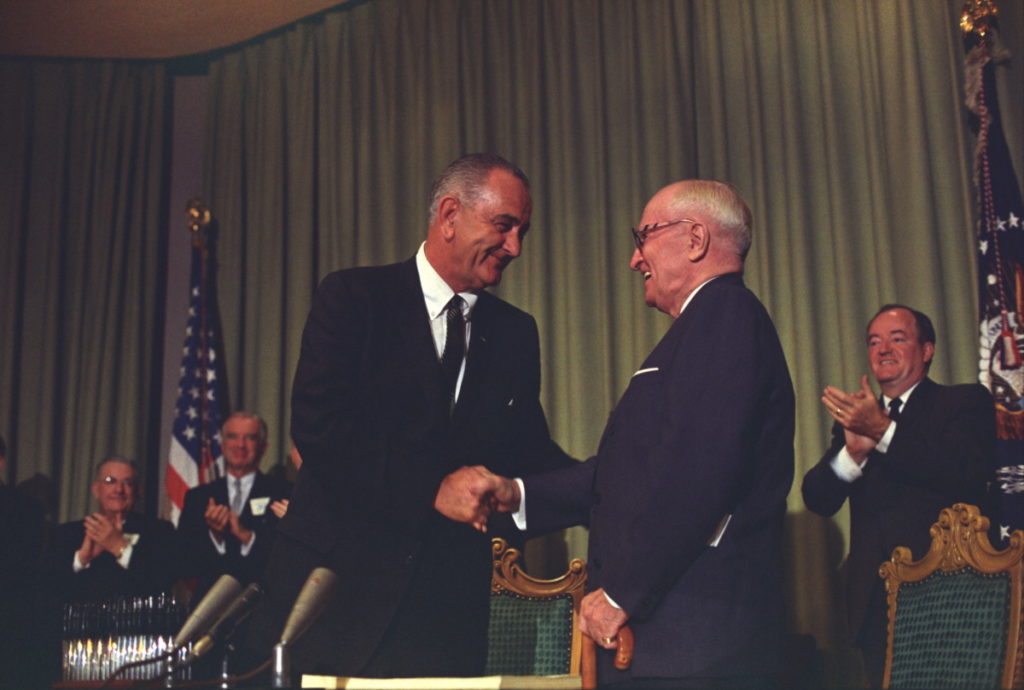
In Alabama politics, many times appointments to political offices filled by an acting governor have an adverse effect on that appointee if and when they seek election to that office for a full term. Every time George Wallace appointed someone to a political post, even in the prime of his popularity and power, they invariably lost in the next election. Well folks, ole Dr. Bentley ain’t George Wallace and his appointment of Luther Strange to the Senate seat vacated by Jeff Sessions may come back to haunt Big Luther. His appointment is even more problematic due to the appearance of collusion surrounding the appointment. The taint of the Bentley appointment hovers over Big Luther’s tall head in Washington. Lyndon Johnson had a similar cloud over his head when he arrived in the U.S. Senate in 1948. It was known that he had stolen the Texas Senate seat when he arrived. When that U.S. Senate seat came open, he made the decision to roll the dice and go for broke. Lyndon did not know that the legendary governor, Coke Stevenson, would enter the race Coke Stevenson was a legendary Texas icon. He was the epitome of a Texas gentleman and revered. He was Texas’ Horatio Alger and Davy Crockett combined. He raised himself from age 12, built a ranching empire, was Speaker of the Texas House of Representatives and a very popular Governor of Texas. Stevenson was above reproach. He would not lie, steal or cheat and Texans knew that about old Coke. On the other hand, Lyndon Johnson had already earned the reputation in Texas that he would continue to earn in Washington — he would do whatever it took to win. He was totally corrupt and ruthless without any semblance of a conscience. Johnson applied modern day politics to that era. He introduced polling and what it meant in detail. He even used a helicopter to fly from town-to-town and land on court squares to speak and shake hands, but mostly he used negative and false campaign mailings to attempt to destroy Stevenson’s stellar reputation. Stevenson was from a different era. He refused to go negative and would not reply to any negative accusations no matter how maliciously false. Johnson was able to utilize this massive media blitz because he had more campaign funds than any candidate in Texas history. He had unlimited financial backing from the giant Brown and Root Company of Texas, which is now Halliburton Corporation. They were then, as they are now, the recipients of gigantic government construction contracts. Johnson was their boy and would do their bidding as their senator so they poured money into the race like water. Johnson outspent Stevenson 10-1, but it was not enough. When the votes were counted on election night, Stevenson had won by a narrow margin. However, the election was not over; Stevenson was about to be counted out. The Rio Grande Valley along the Texas and Mexican border was known as the region where votes could be bought. Most close elections were decided in these counties, which would come in days after the original count with just the right number of votes needed to win the election. This is how Johnson won by only 87 votes in a race where over 1 million votes were cast. Johnson became known as “Landslide Lyndon” in Washington because of this 87-vote victory. It was also an allusion to how he had stolen the seat. Some people think that the nickname “Landslide Lyndon” stems from Johnson’s landslide victory over Barry Goldwater in the 1964 presidential race, but it was actually from the 1948 Texas Senate race. A legendary tale that is attributed to Johnson in this infamous race claims that in the days following the election, while garnering enough votes for victory, Johnson and the political bosses of the Valley counties were going through cemeteries and taking names of dead Mexicans off the tombstones to register voters. They could not decipher one of the names and asked Lyndon what to do, Johnson quickly replied, “Give him a name, he’s got as much right to vote as the rest of them in this cemetery.” See you next week ••• Steve Flowers is Alabama’s leading political columnist. His weekly column appears in over 60 Alabama newspapers. He served 16 years in the state Legislature. Steve may be reached at www.steveflowers.us.
Steve Flowers: Bringing Alabama sales tax into 21st-century

My tradition for over two decades has been to give my children money for Christmas. Under this system, there is no returning of items. They get what they want or need. There is no way that I would know what style of clothing, color or size they like. It works well. The most illuminating thing that occurred to me this year is that both of my daughters and my granddaughter bought all their Christmas gifts from me online. Without question, our country and state have changed dramatically technologically in my lifetime. Therefore, Alabama and other states have to change the way that sales tax is collected. States have to find a solution and the will to derive sales tax from online purchases. The legislature has wisely set up a budget reform task force to study, evaluate and come forward with long-term solutions to problems and loopholes in the law like online sales tax. The committee is headed by two stellar legislators, Sen. Clyde Chambliss (R-Prattville) and Rep. Danny Garrett (R-Trussville). This blue-ribbon panel will review and develop recommendations as to how Alabama can adjust to 21st-century budgeting. This non-collection of sales tax on online purchases is a serious problem and it perfectly illustrates how our tax system is more designed for the 20th century than the 21st. We, like many other states, are not keeping up with the technology shifts in the world. Legislators unquestionably have to re-evaluate the state’s tax structure to reflect the new online and digital economy. Rep. Garrett has wisely acknowledged, “We used to tax about two-thirds of the economy with the sales tax. Today, we tax one-third of our economy.” He further observed, “We are leaning very heavily on the income tax, and our sales tax base is eroding due to online sales.” Another issue, which will be discussed during this legislative session, is the deterioration of our transportation system in the state. This problem is not unique to Alabama. In fact, President Trump made this a hallmark issue of his campaign last year. Most Washington political observers fully expect to see a massive infrastructure package passed in a bipartisan manner early in Trump’s administration. Alabama needs to be poised to take advantage of this bonanza. The last major federal highway initiative came in the 1950s during the administration of Ike Eisenhower. It was also passed with bipartisan support. According to recent studies, 15 percent of Alabama roads and highways are in poor condition and 35 percent more are rated as fair, with 25 percent of our bridges deemed obsolete. The legislature may need to look at increasing the gas tax to take advantage of this federal windfall. More than likely, a state tax contribution will be needed to match the federal dollars. Alabama’s gas tax has not been increased since 1990. We have Richard Shelby, but he may need some help. The new Speaker of the House, Mac McCutcheon is from the Huntsville/Madison County area. The Rocket City is Alabama’s crown jewel economically. They realize the importance that adequate progressive highways are to sustained growth and prosperity. McCutcheon spearheaded the effort to increase the revenue for roads and bridges last year. About a dozen states raised the gas tax in 2016 to keep up with inflation and growth. Our neighboring state of Florida was one of them. Speaking of McCutcheon, he is adjusting well to his new role a Speaker. He is fair and even handed. His selection of Rep. Alan Boothe to be his Rules Chairman seems to be meshing well. The House leadership has changed even more dramatically since the session began. The Republican caucus has elected Rep. Nathaniel Ledbetter of Rainsville as their new Majority Leader. Ledbetter is a freshman House member and former mayor of Rainsville. Rep. Connie Rowe of Jasper will serve as Vice-Chairwoman of the Caucus. She is the first female to hold the position. Ledbetter replaces former Majority Leader Mickey Hammond of Decatur. Sen. Cam Ward has become the good shepherd, chief cook and bottle washer of the prison construction project. He has scaled back the size and scope of the original proposal. The legislature is trying to stay ahead of the federal courts on addressing the state’s prison overcrowding problem. See you next week. ___ Steve Flowers is Alabama’s leading political columnist. His weekly column appears in over 60 Alabama newspapers. He served 16 years in the state Legislature. Steve may be reached at www.steveflowers.us.
Steve Flowers: Alabama political stories that flew under the radar in 2016

While the presidential race played out this year, several things happened in Alabama politics that went under the radar. First, a federal appeals court upheld the legislature’s banning PAC to PAC transfers. The new Republican legislative majority that marched into the Statehouse in 2011 set out to destroy and bury the last bastion of Democratic power in the state – the once omnipotent Alabama Education Association. They succeeded. One of the legs they sawed off was the PAC to PAC money laundering scheme that AEA so adroitly used to funnel and hide their campaign contributions. The primary beneficiary of the AEA transfer was to Joe Reed’s Alabama Democratic Conference. The three-judge panel’s ruling does not limit the amount of money that the ADC can raise, it just disallows the AEA from transferring money to their sister organization. The AEA/ADC coalition was not the only group using this PAC to PAC shell game of hiding campaign contributions. The practice was pervasive. However, the ADC was the one that sued to say that the PAC to PAC prohibition was unconstitutional because it banned free speech and due process. Attorney General Luther Strange praised the ruling saying “the PAC to PAC transfer ban has been instrumental in limiting campaign corruption while adding greater transparency to the election process.” This federal court ruling has hammered an additional final nail in the coffin of the once vaunted AEA. In early October, the U.S. Justice Department launched a statewide investigation into the safety and sanitary conditions of Alabama’s men’s prisons. It has been common knowledge that Alabama’s prisons are overcrowded. It is probably a foregone conclusion that there is a very real possibility that the federal courts may intervene and take over control of our prisons. The state already settled a suit with the Department of Justice over problems with the Julia Tutwiler women’s prison in Wetumpka arising out of allegations of physical and sexual violence. This settlement occurred about a year ago. The Justice Department is now saying that the same problems exist in the men’s prisons. The DOJ investigation may very well be the precursor to federal intervention. The prison problem will have to be front and center when the legislature convenes in February. State Senator Cam Ward of Shelby County, who chairs the Senate Judiciary Committee and has been at the forefront of the prison issue, says, “At the end of the day you have to change the facilities to some degree not just for the safety of inmates but for the safety of those who work there.” Alabama’s prisons were at 178 percent capacity in July. This severe overcrowding is the primary contributing factor to violence in prisons. There have been six homicides at the St. Clair Correctional facility between 2011 and 2014. There have been riots at Holman prison in Atmore. The Bibb and Bessemer correctional facilities have seen numerous allegations of physical and sexual abuse. All three U.S. Attorneys in the State have tacitly agreed with the Justice Department investigation. The Governor’s Advisory Council on gambling is meeting and will formulate a plan of action to propose to the legislature when they convene in February. This seven-member advisory panel will examine the entire gambling gambit. Hopefully, this council will promulgate a plan of action for gambling in Alabama. This issue of gambling has plagued the state for decades. In fact, it has existed since the state’s founding. Gambling revenue is probably the state’s largest potential revenue source. Our state is losing millions of dollars to our surrounding states. Hopefully, this council will look at all aspects of gambling including the lottery, how to extract some money from the Poarch Creek Indian casino monopoly, and also allowing the locally sanctioned facilities in Greene, Macon and Lowndes counties to exist and pay some state taxes. The council should have a recommendation to give the legislature by Jan. 31, 2017, in time for the legislative session in February. The race for our open U.S. Senate seat is beginning to percolate. Candidates will be wise to avoid the interim appointment to the seat by Gov. Robert Bentley. The early favorites to win election to the seat are Attorney General Luther Strange and Congressman Robert Aderholt. A host of viable candidates will enter the fray. See you next week. ••• Steve Flowers is Alabama’s leading political columnist. His weekly column appears in over 60 Alabama newspapers. He served 16 years in the state Legislature. Steve may be reached at www.steveflowers.us.
