
Steve Hurst: Advocating for prescription affordability

As Congress gears up for a sprint to the end of the year, I hope Senator Tommy Tuberville and Congressman Dale Strong, will stand strong against overreaching Pharmacy Benefit Managers (PBMs) reform bills, some of which are fully supported by Senator Bernie Sanders. As an Alabama State Representative, I believe PBMs are vital for managing drug costs, which saves Americans approximately $1,000 each year and ensures affordable access to medications. The Bernie Sanders-backed effort would impose stringent regulations on PBMs and expand government control within a segment of our private healthcare system, leaving the delicate equilibrium in negotiating drug prices and reimbursement rates between PBMs and pharmaceutical firms at risk. The outcome of such disruptions will inevitably be shouldered by consumers, saddling them with escalated out-of-pocket expenditures and higher drug prices. Additionally, PBMs serve as vital negotiators in healthcare and ensure that a wider range of prescription drugs remains accessible, which is particularly important for individuals with chronic conditions who rely on multiple medications for their well-being. PBMs also utilize a variety of strategies, such as audits and rebates, to ensure the safety and quality of medicines for patients, all while providing cost savings to over 275 million Americans who benefit from their services. It is of utmost importance that we refrain from allowing Senate Democrats to introduce further governmental intervention into an already competitive industry that has proven advantageous for patients. Our collective goal should be to improve healthcare affordability while ensuring patients have access to life-saving medications. I encourage our congressional delegation to oppose PBM reform efforts that amount to unnecessary, unhelpful government interference in the healthcare marketplace. Steve Hurst serves in the Alabama Legislature representing Calhoun and Talladega Counties.
Twelve more bills to watch introduced in the legislative session

The 2023 Alabama Regular Legislative Session is almost half over. Tuesday will be legislative day 14. To this point, State Legislators have introduced 618 bills in the current legislative session. Alabama Today has been monitoring bills as they are introduced. Here are twelve of the most recently introduced bills to watch. House Bill 370 (HB370) is sponsored by Representative John Rogers. According to the synopsis, HB370 “would require the Alabama State Law Enforcement Agency to establish and maintain a database that includes a list of individuals with communication disabilities or disabilities that can impair communications, to be available to law enforcement officers. This bill would require the Alabama Department of Public Health to develop a form for individuals to voluntarily register for inclusion in the database.” Senate Bill 237 (SB237) is sponsored by Senator Tom Butler. According to the synopsis, “Under existing law, the Alabama Memorial Preservation Act of 2017 prohibits architecturally significant buildings, memorial buildings, memorial streets, and monuments that are located on public property and have been so situated for 40 or more years from being relocated, removed, altered, renamed, or otherwise disturbed unless the Committee on Alabama Monument Protection grants a waiver, and provides penalties for violations. This bill would require a controlling governmental entity that replaces a memorial building to maintain the original name or erect a marker memorializing the name. This bill would provide that a petition for waiver is deemed denied if the Committee on Alabama Monument Protection fails to act on an application for waiver within 90 days. This bill would revise the penalties for violations and would authorize the Attorney General to commence a civil action. This bill would also require the Alabama State Council on the Arts to oversee the design, construction, and installation of a replica of the Saturn 1B Rocket, previously located at the I-65 Ardmore Welcome Center in Elkmont, Alabama, at the most northern I-65 rest stop in the state.” House Bill 364 (HB364) is sponsored by State Rep. Steve Hurst. HB364 would require a public K-12 school or a local board of education to accept cash and any other form of payment of its choosing for admission to school-sponsored sporting events that are open to the public. Some venues have gone to credit card payments only during the COVID-19 pandemic. House Bill 354 (HB354) is sponsored by State Rep. Mack Butler. HB354 “would provide that classroom instruction or discussions related to gender identity or sexual orientation may not be provided to public school students in kindergarten through eighth grade or to public school students in a manner that is not age or developmentally appropriate. This bill would require the State Board of Education to adopt procedures for notifying a student’s parent if there is a change in the student’s services or monitoring relating to the student’s mental, emotional, or physical health and would prohibit local boards of education from adopting policies to the contrary. This bill would require each local board of education, at the beginning of each school year, to notify parents of the health care services available to students and allow parents to opt their child out of any health care service.” Senate Bill 224 (SB224) is sponsored by Sen. Vivian Figures. According to the synopsis, “Under existing law, the crime of transmitting obscene material to a child by computer is a Class B felony. This bill would clarify that for the purpose of this crime, a child is a person who is under 16 years of age. Under existing law, a person commits the crime of distributing a private image if he or she knowingly posts, emails, texts, transmits, or otherwise distributes a private image with the intent to harass, threaten, coerce, or intimidate the person depicted in certain circumstances. This bill would clarify that a criminal proceeding for a violation of distributing a private image could be brought in any county in which any part of the crime took place, in the county of residence of the victim, or any county where the image was received. Also, under existing law, a violation of incest is a Class C felony. This bill would provide that a violation of incest when the victim is under 16 years of age is a Class A felony. Also, under existing law, a person may not be convicted of the crime of incest or of an attempt to commit incest unless there is corroborated testimony. This bill would remove the requirement of corroborated testimony.” Senate Bill 234 (SB234) is a state constitutional amendment by Sen. Merika Coleman. SB234 would end the state’s four percent sales tax on groceries but would replace the lost revenue by ending the state’s allowing income taxpayers to deduct their federal income tax. A family of four who spends $110 a week on groceries would save $229 on the reduced sales tax on groceries. With a typical household taxable income of $54,062, they pay $4,726 in federal income taxes. Currently, they would deduct that from their state-taxable income. If SB234 passes and they lose that deduction, they would pay $281 in additional Alabama income taxes. In this example, that family would pay $52 more in taxes. A low-income family or a retired couple with no investment income would come out ahead by not having to pay the grocery tax. A high-income family will pay more taxes in this scenario if SB234 becomes law. Senate Bill 232 (SB232) is sponsored by Sen. Chris Elliott. SB232 would authorize peer-to-peer car-sharing programs, which are business platforms that connect vehicle owners with drivers, to enable the sharing of vehicles for financial consideration in this state. House Bill 342 (HB342) is sponsored by Rep. Susan Dubose. The bill states, “Under existing law, the State Superintendent of Education is authorized to issue professional educator certificates to qualified individuals who complete an alternative teacher preparation program offered by an approved alternative teacher education preparation organization. This bill would provide additional requirements for programs to provide alternative certifications for educators.” House Bill 339 (HB339) is sponsored by Rep. Chris Pringle. The bill states, “Under existing law, the second or runoff
House passes legislation requiring high school students to hit college or career benchmarks

On Thursday, the Alabama House of Representatives passed legislation requiring Alabama high school students to have achieved certain college or career benchmarks to graduate from high school. The legislation also creates a database of credentials and the workers in the state that have earned those credentials. House Bill 109 (HB109) is sponsored by State Rep. Terri Collins. HB109 is titled the Career Pathways Act. “Students, in order to graduate, will have to have a college-ready indicator or a career-ready indicator,” Collins said. Collins explained that a college-ready indicator may be achieving an ACT benchmark score, completing an advanced placement class, or taking dual enrollment classes. Collins said that a career-ready indicator may be completing an apprenticeship program, workforce training, or receiving a credential in a career. HB109 creates the Alabama College and Career Readiness Act, the Alabama Credential Quality and Transparency Act as a new Division, and the Alabama Terminal on Linking and Analyzing Statistics on Career Pathways Act. To make it easier for employers and workers to navigate the increasingly complex system of credentials needed to apply for positions in the 21st-century economy, it provides for the creation of a free searchable public online registry of educational and occupational credentials. The act includes restrictions on releasing personally identifiable information, including procedures for handling data breaches. Collins explained that “schools will let students know what are the in-demand jobs in their area” and what degrees, credentials, or other qualifications are needed to pursue that. Rep. Steve Hurst thanked Collins for bringing the Legislation. “I have been preaching for workforce development since I got here,” Hurst said. “We have got to get the workforce. If we don’t, businesses will not come here because we don’t have the workforce, and when the businesses that are here get ready to expand, they will go elsewhere because they don’t have the workforce here.” Hurst is an original co-sponsor of the Legislation. The issue of how high schools will offer the career training students will need was discussed. “We have funding in the budget for schools that may need to advance their career tech training,” Collins explained. These include funding for medical labs, construction labs, welding labs, etc., and will be awarded through a grant process. Collins said HB109 is supported by the Alabama State Board of Education, which is already implementing these changes. “This is codifying something that the school board has already done,” Collins said. “We want to make sure that students have all the opportunities possible.” HB109 passed the House of Representatives 104 to 0. 80 members of the House signed on as co-sponsors. Speaker of the House Nathaniel Ledbetter said, “Congratulations, Terry – good bill.” The Legislation now goes to the Alabama Senate, where it has been assigned to the Alabama Education Policy Committee. Thursday was the seventh legislative day of the Alabama 2023 regular legislative session. To connect with the author of this story or to comment, email brandonmreporter@gmail.com.
Steve Flowers: Incumbency prevails in 2022 State House races
Folks, believe it or not, we are closing in on six months before next year’s election year. The primary election is set for May 24, 2022. In Alabama, all our major constitutional officers are on the ballot next year. The governor’s office is the premier race in the state, and that coveted and powerful post is set for its four-year quadrennial run. Therefore, this big political year is referred to as the gubernatorial year. Those of us who follow Alabama politics have been salivating with anticipation for a cavalcade of great races. However, the power of incumbency has devasted the big year into a yawn. All the major state offices are held by popular incumbents, who are either running unopposed or have minimal opposition. The consolation prize was that there would be the legislative races. After all, this is where the real power in the state rests. You can simply look at where the special interest and PAC money is spent to verify that fact. However, the omnipotent power of incumbency has also encroached on those races. The Alabama House of Representatives has 105 members. There are 77 Republicans and 28 Democrats. The large majority of incumbents are running for reelection – both Republicans and Democrats. The overwhelming majority of these incumbents will have no opposition. However, in the House, there will be some major changes in leadership because of retirement or moving on to new posts. Speaker of the House Mac McCutcheon is not running for reelection. This has created an interesting and spirited race within the Republican Caucus ranks for Speaker. In addition, Victor Gaston of Mobile, who is Speaker Pro Tem, is also retiring. Bill Poole of Tuscaloosa, who chaired the powerful House Ways and Means Education Budget Committee, has left the House to be the State Finance Director. House Rules Committee Chairman Mike Jones of Andalusia is running for the open Senate seat of retiring Senator Jimmy Holley. Two of the freshman House members are running for statewide office. Wes Allen of Troy is running for Secretary of State, and Andrew Sorrell of Tuscumbia is running for State Auditor. In addition, Connie Rowe of Jasper is leaving the House to become an administrative assistant to Lt. Gov. Will Ainsworth. Some of the veteran House members who are choosing to hang up their legislative cleats include Howard Sanderford of Huntsville, Mike Ball of Huntsville, K.L. Brown of Jacksonville, Kerry Rich of Marshall, Allen Farley of Jefferson, Harry Shiver of Baldwin, Mike Holmes of Elmore, and Becky Nordgren of Etowah. The most noteworthy retiree may be Representative Steve McMillan of Baldwin County, who is retiring after serving close to 43 years in the House. Steve has been a quiet yet very effective voice for the people of Baldwin County. They all will be missed. Some of the high profile and powerful members of the House, who will return for another four years with no or token opposition, are Steve Clouse of Ozark, Nathaniel Ledbetter of Dekalb County, and Danny Garrett, Jim Carns, David Wheeler, and David Faulkner of Jefferson. Danny Garrett has ascended to Chairman of the House Ways and Means Education. Other leaders returning are Chris Pringle, Reed Ingram, Randall Shedd, Tracy Estes, Chris Sells, David Standridge, Ginny Shaver, Jim Hill, Alan Baker, Joe Lovvorn, Chris Blackshear, Kyle South, Paul Lee, Jeff Sorrells, Rhett Marques, Steve Hurst, Joe Faust, and Margie Wilcox. The Democratic leadership will remain intact. There is an illustrious array of House Democratic leaders, including Anthony Daniels, Chris England, Laura Hall, Peb Warren, Barbara Boyd, A.J. McCampbell, Berry Forte, Dexter Grimsley, Thomas Jackson, Kevin Lawrence, Mary Moore, Juandalynn Givan, and veteran John Rogers. Two of the Democratic House veterans from Jefferson County, Louise Alexander and Merika Coleman, are both running for an open Jefferson County Senate Seat, leaving both their House seats up for grabs. There may be an increase in the number of females in the House of Representatives. It has already begun with the election of Cynthia Almond of Tuscaloosa, who was elected without opposition to replace Bill Poole. In addition, Patrice Penni McClammy won the Montgomery District 76 seat of her late father, Thad McClammy. She won with no opposition. See you next week. Steve Flowers is Alabama’s leading political columnist. His weekly column appears in over 60 Alabama papers. He served 16 years in the state legislature. Steve may be reached at www.steveflowers.us.
State Rep. Steve Hurst introduces bill to teach Biblical creationism alongside evolution

Munford-Republican State Rep. Steve Hurst introduced a bill last month that would allow Alabama teachers to present “the theory of creation as presented in the Bible” alongside any discussion of evolution. “This bill would enable public school teachers who teach kindergarten through 12th grade to include, as a portion of instruction regarding the scientific origins of man and the Earth, instruction regarding the Biblical theory of creation, so long as evolution is also taught,” reads the bill. Under HB258, any teacher who desires to instruct students regarding the Biblical theory of creation is permitted to read passage from the Bible in class as deemed “necessary to propel the instruction forward.” It also allow students the choice as to which understanding of Earth’s natural history they wish to accept: evolutionary theory or creationist theology. In doing so, the bill would ensure students accepting creationism, instead of evolution, would not be penalized for answering exam questions in their courses in a way that reflects their preference for creationism, “provided the response is correct according to the instruction received.” The bill does however specify that teachers in public K-12 school may not stress any particular denominational religious belief. ACLU Alabama opposes the legislation, as does several atheist blogs who have noted they believe the legislation is unconstitutional, citing the 1987 Supreme Court case of Edwards v. Aguillard. In the case, the Supreme Court held unconstitutional Louisiana’s “Creationism Act.” Similar to Hurst’s bill, this statute prohibited the teaching of evolution in public schools, except when it was accompanied by instruction in “creation science.” The Court found that, by advancing the religious belief that a supernatural being created humankind, which is embraced by the term creation science, the act impermissibly endorses religion. In addition, the Court found that the provision of a comprehensive science education is undermined when it is forbidden to teach evolution except when creation science is also taught. HB258 has been referred to the House committee on Education Policy.
Lawmaker introduces bill to castrate child sex offenders
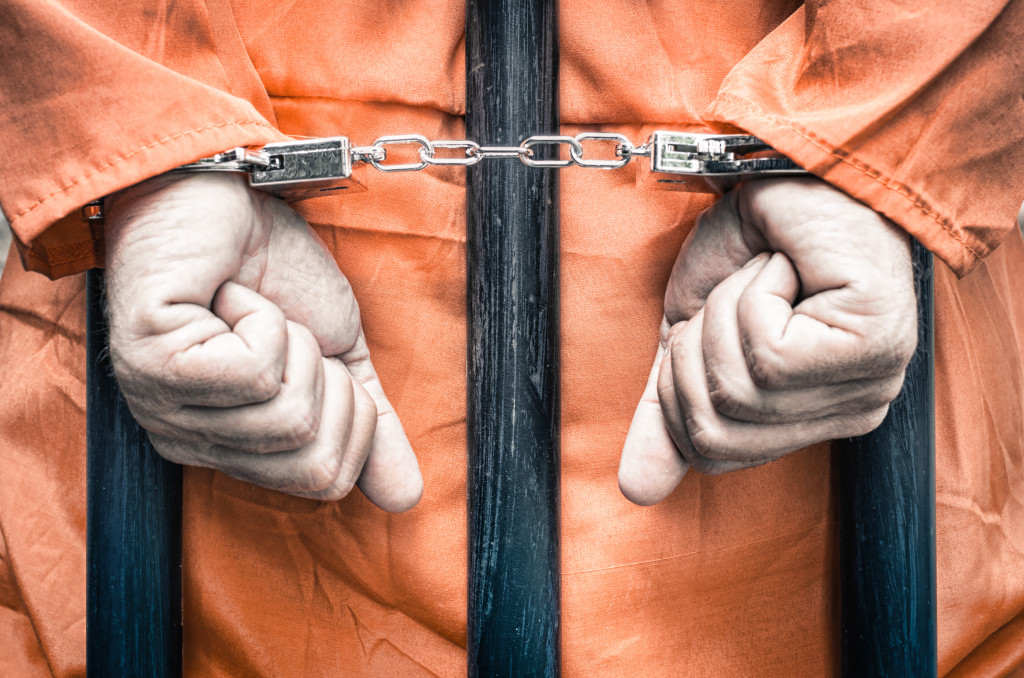
A bill proposed by Rep. Steve Hurst (R-Munford) would require sex offenders over the age of 21 to pay for their own castration prior to release from the Department of Corrections. HB365 specifies that the penalty would be reserved for those who have committed sexual crimes against a minor 12 or under. According to a report from the Connecticut General Assembly, eight states already have laws requiring the surgical or chemical castration of child sex offenders: California, Florida, Georgia, Louisiana, Montana, Oregon, Texas and Wisconsin. While opponents of such laws note that chemical castration can cause potentially life-threatening blood clots and allergic reactions, and likely stands in defiance of the U.S. Constitution’s protection from cruel and unusual punishment, a 2005 study printed in the Journal of the American Academy of Psychiatry and the Law found that only up to 10 percent of sex offenders commit similar crimes once being surgically castrated. While that number seems impressive, it is not much different than the rate at which all other sex offenders commit the same crime. According to the Department of Justice, only 5.3 percent of all sex offenders are rearrested within three years of their initial crime. Hurst did not reply to a request for comment on the legislation, which has no co-sponsors and is the first he has proposed this session
