
State opposes lawsuit to block execution of Alan Eugene Miller
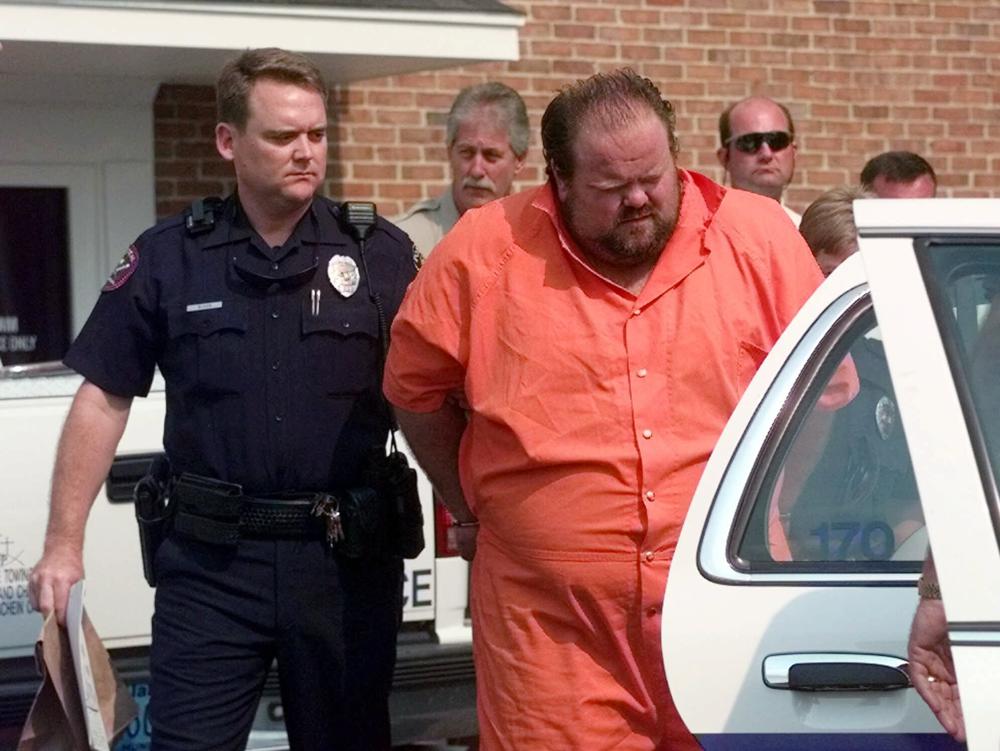
The state asked a federal judge to dismiss a lawsuit filed by an Alabama inmate who is trying to halt his lethal injection later this month by arguing officials lost paperwork in which he selected an alternate execution method. The lawsuit by Alan Eugene Miller, who was convicted of killing three men in a workplace shooting in 1999, does not state a claim a judge could use to block the execution, set for September 22, Attorney General Steve Marshall argued in a request filed Wednesday. U.S. District Judge Austin Huffaker, in an order Thursday, gave the inmate until Monday to explain why Marshall’s motion shouldn’t be granted. In the meantime, the defense asked for a preliminary court order blocking Miller’s execution by lethal injection. Miller, a delivery truck driver, was convicted in a rampage that killed Lee Holdbrooks, Scott Yancy, and Terry Jarvis in Shelby County, south of Birmingham. Testimony indicated Miller was delusional and believed the men were spreading rumors about him, including that he was gay. While lethal injection is Alabama’s primary execution method, the state in 2018 approved an untried method, nitrogen hypoxia, as an alternative amid mounting questions over lethal injection. State law gave inmates a brief window of time in which to designate hypoxia as their preferred execution method. Miller signed a sworn statement saying he gave a form selecting nitrogen hypoxia to a corrections officer at Holman Prison, where the main death row is located, in mid-2018. But the state said it does not have such a document and plans to put the man to death by lethal injection. While Miller’s lawsuit names Marshall, Prison Commissioner John Hamm, Holman Warden, and Terry Raybon as defendants, the attorney general’s office argued the suit treats all three as “interchangeable cogs in the machinery of government” and should be dismissed. Miller also cited alleged problems with past lethal injections, including that of Joe Nathan James Jr., who was put to death in July in a procedure that was delayed for hours. Death penalty opponents contend the execution was botched. “The information that is publicly available to date shows that Mr. James’s body was in ‘great distress’ during the execution as executioners sliced into his skin several times to find a vein and that he suffered many ‘unusual punctures’ that do not normally appear on an executed body,” Miller’s lawyers wrote in a request filed Thursday seeking a preliminary injunction against lethal injection. The state has acknowledged that James’ execution was delayed because of difficulties establishing an intravenous line but has not specified how long it took. James was pronounced dead hours after the U.S. Supreme Court denied his request for a stay. Republished with the permission of The Associated Press.
Steve Marshall joins nine attorneys general to call for state adoption of The Women’s Bill of Rights

Today, ten attorneys general announced their support for the Women’s Bill of Rights (WBOR). The group also is urging other state attorneys general nationwide to pledge their support. In March, the Independent Women’s Voice, the Independent Women’s Law Center (IWLC), and Women’s Liberation Front (WoLF) released the WBOR to codify the common definitions of ‘woman,’ ‘girl,’ and ‘mother.’ According to the WBOR, this would “ensure that our country’s laws recognize there are legitimate reasons to distinguish between the sexes with respect to athletics, prisons or other detention facilities, domestic violence shelters, rape crisis centers, locker rooms, restrooms, and other areas where biology, safety, and/or privacy are implicated.” Congress has since introduced H. Res. 1136, sponsored by Rep. Debbie Lesko of Arizona and co-sponsored by 28 House members, and S. Res. 644, sponsored by Sen. Cindy Hyde-Smith (MS) and co-sponsored by Sens. Cynthia Lummis (WY) and Ted Cruz (TX). Mississippi Attorney General Lynn Fitch, the first attorney general to support WBOR, said, “Feminism, once understood as the way to promote equality for women, is today disintegrating in an identity crisis of its own making. But it is not only legitimate for women to have a space of their own in which to grow and thrive; it is good for society to carve out that safe space for women to engage with one another in athletics, education, fellowship, and sometimes even in healing.” In April, Gov. Kay Ivey signed legislation restricting transgender students from participating in K-12 sports. The bill says a public K-12 school “may never allow a biological male to participate on a female team.” Additionally, a federal appeals court will hear arguments in November over Alabama’s efforts to outlaw the use of gender-affirming medications to treat transgender minors. Louisiana Attorney General Jeff Landry added, “My mother coached women’s basketball in the ‘70s, and she had to fight for everything for those girls — including simple court time. It’s despicable that radical leftists are jeopardizing the equality that my mom and many other women across the country worked so hard to achieve. Changing the biological definition of a person does not create equity; rather, it creates confusion and harm for all.” “As the first female elected Attorney General of Arkansas, I will do everything in my power to ensure that my daughter and girls across the nation have equal access to athletic, employment, and educational opportunities without being forced to unfairly compete against biological males,” said Arkansas Attorney General Leslie Rutledge. “I helped Arkansas lead this effort with the GIRLS Act, and I am proud to join my colleagues in signing the Women’s Bill of Rights.” The following attorneys general pledged their support of the WBOR: Lynn Fitch of Mississippi, Ken Paxton of Texas, Steve Marshall of Alabama, Leslie Rutledge of Arkansas, Jeff Landry of Louisiana, Doug Peterson of Nebraska, Sean Reyes of Utah, Austen Knudsen of Montana, Patrick Morrisey of West Virginia, and Alan Wilson of South Carolina.
Hearing on voting machine lawsuit is today
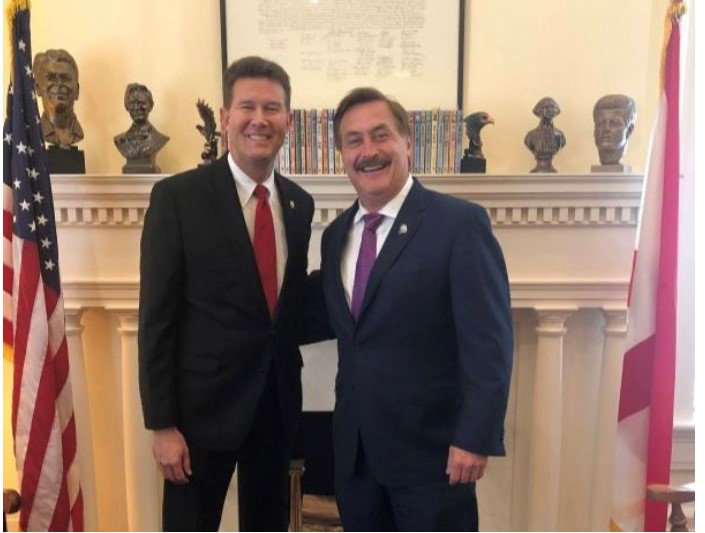
A judge will hear a motion to dismiss a lawsuit challenging the use of vote counting machines today in Montgomery at 9:00 a.m. The lawsuit was originally brought by Republican primary candidate Lindy Blanchard and State Rep. Tommy Hanes. The candidates had originally sought to bar the use of the vote tabulation machines in the May 24 Republican primary. Both Hanes and Blanchard lost in the primary. Hanes, the incumbent, lost to challenger Republican Mike Kirkland 3,707 48.4% to 3,950 51.6%. Kirkland is unopposed in the general election. Blanchard finished second to incumbent Gov. Kay Ivey, but the popular incumbent received 54.8% of the vote in the primary, besting Blanchard and seven other primary opponents combined to avoid a Republican primary runoff. No incumbent governor in Alabama has lost their party primary since George C. Wallace beat incumbent Gov. Albert Brewer in the 1970 Democratic primary. Three incumbents have lost general elections. Failing to block the machine tabulation of both the primary and primary runoff votes, the lawsuit is now just challenging the use and accuracy of the machines in general. Blanchard has left the lawsuit, which is being supported by My Pillow founder and CEO Mike Lindell. Former Gov. Don Siegelman has taken Blanchard’s place in the lawsuit. Siegelman, the last Democratic governor in Alabama history, maintains that he actually won the 2002 general election to then-Congressman Bob Riley. The Republican Party has won the last five gubernatorial elections, and incumbent Gov. Kay Ivey is expected to win re-election on November 8. The Alabama chapter of the ultra-MAGA group Focus On America (FOA) is continuing to support the lawsuit. Supporters and members of the group are being asked to attend Tuesday’s hearing to show support. Signs will not be allowed in the courtroom. Secretary of State John H. Merrill has maintained that the vote counting machines, which do not connect to the internet, are both safe and accurate. Merrill said in a statement after meeting with Lindell, “Every Alabamian should be proud that Alabama was recognized as the gold standard for election administration for the first time in our state’s history by the Concerned Women for American Legislative Action Committee. We will continue to work with those like Mr. Lindell and other concerned citizens to provide complete transparency.” Alabama Attorney General Steve Marshall has filed a motion to dismiss the lawsuit citing a lack of grounds. If the motion to dismiss is denied, the case could move forward to the trial stage in the coming weeks. Merrill maintains that replacing the vote tabulation machines with hand counts by poll workers, like Russia and some countries still use, will slow the vote counting down and add an opportunity for potential fraud as well as mistakes by the human vote counters. To connect with the author of this story, or to comment, email brandonmreporter@gmail.com.
Steve Marshall issues statement after execution of Joe Nathan James, Jr.

Attorney General Steve Marshall issued a statement Thursday night after the execution of Joe Nathan James, Jr. The execution took place at the William C. Holman Correctional Facility in Atmore, Alabama. Marshall cleared the execution to commence at 9:04 p.m. James’ time of death was 9:27 p.m. James, 50, was convicted and sentenced to death in the 1994 shooting death of Faith Hall, 26, in Birmingham. Hall’s daughters, who were 3 and 6 at the time of the murder, have said they would rather James serve life in prison. Gov. Kay Ivey said Wednesday that she planned to let the execution proceed. James had been acting as his own attorney in a bid to stop the execution. However, a lawyer filed the latest appeal with the U.S. Supreme Court on Wednesday. The request for a stay was rejected about 30 minutes before the execution was set to begin. “Justice has been served,” Marshall stated. “Joe James was put to death for the heinous act he committed nearly three decades ago: the cold-blooded murder of an innocent young mother, Faith Hall.” “In the years since, Joe James has tried to blame everything and everyone in an attempt to escape the consequences of his crime. He has claimed that his highly experienced trial counsel was “ineffective,” that his artful appellate counsel was “deficient,” and — in a demonstration of shocking cowardice and callousness — that his victim bore the blame for her own murder,” Marshall continued. “Tonight, Joe James finally received his just punishment.” The family issued a statement through state Rep. Juandalynn Givan’s office. “Today is a tragic day for our family. We are having to relive the hurt that this caused us many years ago. We hoped the state wouldn’t take a life simply because a life was taken, and we have forgiven Mr. Joe Nathan James Jr. for his atrocities toward our family. … We pray that God allows us to find healing after today and that one day our criminal justice system will listen to the cries of families like ours even if it goes against what the state wishes,” the statement read.
Gov. Kay Ivey: Execution set despite wishes of victim’s family
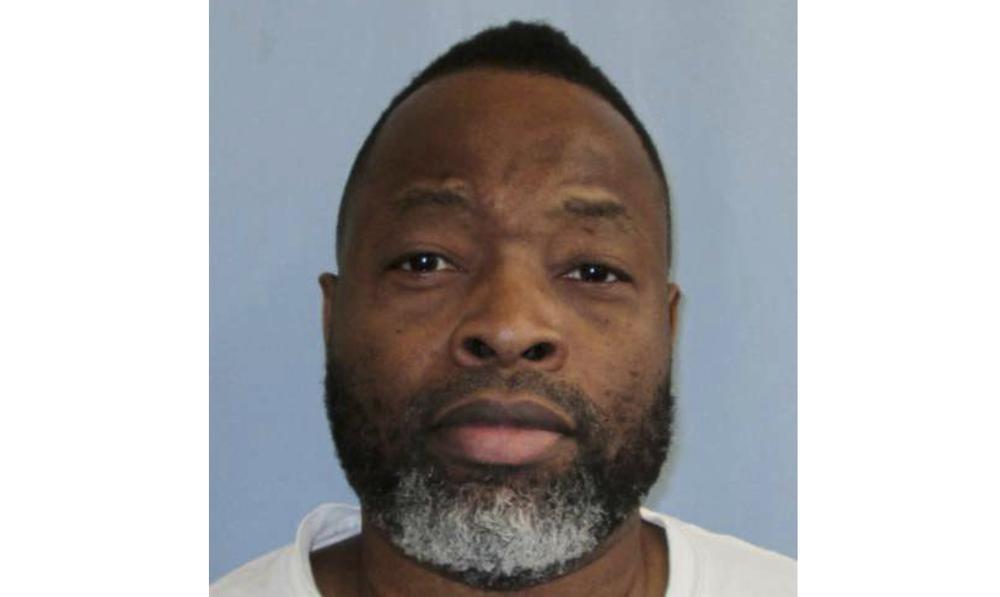
Alabama’s governor said Wednesday that she has decided the state will proceed later this week with a plan to execute a man convicted of killing his former girlfriend decades ago, overriding a plea from the victim’s family to spare the man’s life. Gov. Kay Ivey told reporters she wouldn’t call off the scheduled lethal injection of Joe Nathan James Jr. at a south Alabama prison on Thursday evening. The inmate was convicted and sentenced to die for the 1994 shooting death of 26-year-old Faith Hall in Birmingham. Hall’s daughters, who were just 3 and 6 when their mother was killed, had urged along with Hall’s brother that officials change the sentence to life in prison without parole. But Alabama Attorney General Steve Marshall urged Ivey to let execution plans proceed and ensure “justice is done.” In making public her decision Wednesday morning, Ivey said, “My staff and I have researched all the records and all the facts, and there’s no reason to change the procedure or modify the outcome. The execution will go forward.” Prosecutors said James briefly dated Hall, but that he had become obsessed after she ended their relationship, stalking and harassing her for months before killing her. On Aug. 15, 1994, he forced his way inside an apartment, pulled a gun from his waistband, and shot her three times, they said. In the weeks leading up to the scheduled execution date, Hall’s daughters and brother had said they would rather James serve a life sentence in prison rather than be put to death. “I know it may sound crazy. Like, you really want this man to live? But … I just feel like we can’t play God. We can’t take a life. And it’s not going to bring my mom back,” Terryln Hall had told The Associated Press in a recent telephone interview. State Rep. Juandalynn Givan, who was a friend of Hall’s, sent a letter to the governor relaying the family’s request. “They are simply saying our wish as the family is for him to die in the penal system of the Alabama correctional facility. That’s how we want him to suffer, and we want to see that suffering for the rest of our lives,” Givan said Wednesday. Givan said the case was unusual in that the victim’s family had asked for clemency. Though James “brutally and senselessly killed” the mother of two simply because she rejected him, Givan said the family’s wishes should carry weight. “This is a tough one,” said Givan, who remembered Hall as a kind and devoted mother. “She was just the sweetest person you ever wanted to meet,” Givan said. Meanwhile, James has acted as his own attorney in a bid to halt Thursday’s execution procedure, filing handwritten lawsuits and requests for a stay. He has claimed his lawyers were ineffective and that prison officials did not explain what was at stake when it gave inmates a form in which they could select nitrogen hypoxia as their preferred execution method. Alabama has approved nitrogen hypoxia as an execution means but hasn’t developed a system for its use or scheduled any executions by that method. Republished with the permission of The Associated Press.
AG Steve Marshall sues Joe Biden over school food assistance plan
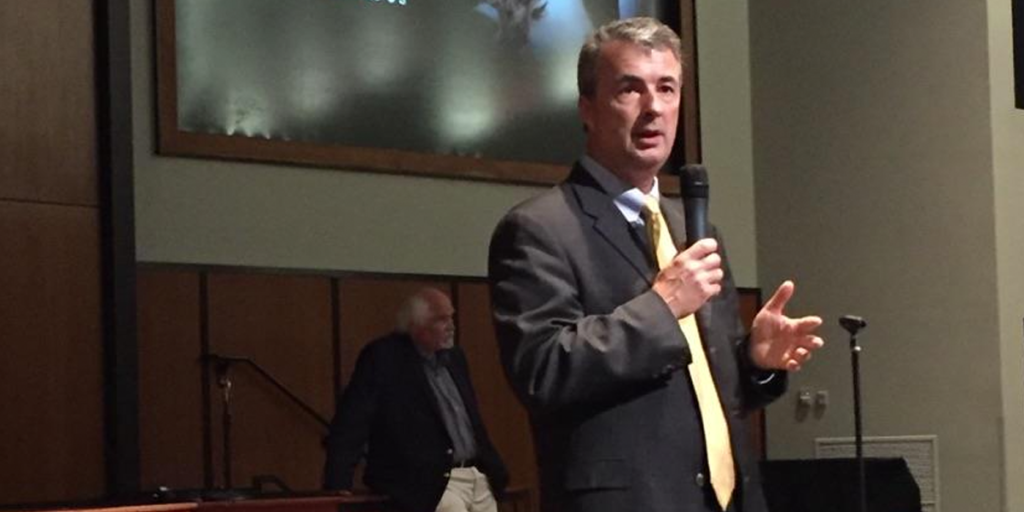
Attorney General Steve Marshall filed a lawsuit against the Biden administration over its new guidance could withhold federal nutritional assistance if schools have anti-trans policies like sex-separated bathrooms. According to Marshall’s press release, schools would risk forfeiting lunch money for their neediest students if they engage in “sex discrimination,” such as having sex-separated bathrooms or sports teams for boys and girls. AG Marshall argued that the policy was a part of Joe Biden’s ‘radical agenda.’ “Joe Biden and his administration are obsessed with imposing their extremist sexual politics on the people of our great nation, adults and children alike,” stated Marshall. “Their latest plan—which comes at a time of skyrocketing inflation and food costs, as well as a looming recession—is to hold schoolchildren’s food hostage unless their schools submit to the left’s radical ‘gender identity’ agenda. This immoral and illegal scheme cannot stand. That is why I, along with 21 of my attorney general colleagues, have filed suit in federal court to block it.” On May 5, 2022, the U.S. Department of Agriculture (USDA) announced that it would interpret the prohibition on discrimination based on sex found in Title IX of the Education Amendments of 1972 and in the Food and Nutrition Act of 2008, to include discrimination based on sexual orientation and gender identity. The USDA issued this interpretation to help ensure its programs are open, accessible, and help promote food and nutrition security, regardless of demographics. “USDA is committed to administering all its programs with equity and fairness and serving those in need with the highest dignity. A key step in advancing these principles is rooting out discrimination in any form – including discrimination based on sexual orientation and gender identity,” said Secretary of Agriculture Tom Vilsack. “At the same time, we must recognize the vulnerability of the LGBTQI+ communities and provide them with an avenue to grieve any discrimination they face. We hope that by standing firm against these inequities, we will help bring about much-needed change.” In the lawsuit, the attorneys general argue that the USDA’s guidance is unlawful because it conflicts with the requirements of Title IX and the Food and Nutrition Act and was issued without providing the State and other stakeholders the opportunity for input, as required by the Administrative Procedures Act. The attorneys general argue that the USDA premised its guidance on an obvious misreading and misapplication of the U.S. Supreme Court’s holding in Bostock v. Clayton County. The guidance imposes new and unlawful regulatory measures on state agencies and operators receiving federal financial assistance from the USDA and thus threatens essential nutritional services for Alabama’s most vulnerable children. The USDA announced the new guidance, arguing that it is consistent with the Supreme Court’s decision in Bostock v. Clayton County. In that decision, the Court held that the prohibition on sex discrimination under Title VII of the Civil Rights Act of 1964 extends to discrimination based on sexual orientation and gender identity. The National School Lunch Program services nearly 30 million schoolchildren each day, many of whom rely on it for breakfast, lunch, or both. Approximately 100,000 public and nonprofit private schools and residential childcare institutions receive federal funding to provide subsidized free or reduced-price meals for qualifying children. AG Marshall filed the lawsuit with attorneys general from Alaska, Arizona, Arkansas, Georgia, Indiana, Kansas, Kentucky, Louisiana, Mississippi, Missouri, Montana, Nebraska, Ohio, Oklahoma, South Carolina, South Dakota, Tennessee, Texas, Utah, Virginia, and West Virginia.
Daughters oppose upcoming execution of mother’s killer
Terryln Hall was just 6 years old when her mother, Faith, was fatally shot by a former boyfriend. Now, nearly 30 years later, Hall and her sister — along with their uncle — oppose Alabama’s plan to execute the man who killed their mother. Unless a judge or the governor intervenes, Joe Nathan James Jr., 49, will will die by lethal injection Thursday evening at a south Alabama prison. “We thought about it and prayed about it, and we found it in ourselves to forgive him for what he did. We really wish there was something that we could do to stop it,” Hall said in a telephone interview with The Associated Press. Faith Hall briefly dated James, but he became obsessed with her, prosecutors said. On Aug. 15, 1994, he forced his way inside an apartment, pulled a gun from his waistband and shot her three times. A Jefferson County jury convicted James of capital murder in 1996 and voted to recommend the death penalty, which a judge imposed. The conviction was overturned when the Alabama Court of Criminal Appeals ruled that a judge wrongly admitted some police reports into evidence. James was retried and again sentenced to death in 1999, when jurors rejected defense claims that he was under emotional duress at the time of the shooting. The 11th U.S. Circuit Court of Appeals denied James’ request for a stay of execution Tuesday. Faith Hall was 26 when she died, leaving behind two young daughters. Six-year-old Terryln Hall struggled to understand what had happened to her mother. “I knew that she wasn’t coming back, but I just never understood why. Why would he do that? That’s still a question that I want to know to this day: Why?” she said. Hall said her only real memory of her mother is as a hard worker who took care of her daughters and “whoever else was around.” “He took a big piece of us away, a big piece of our heart away,” she said. The road to forgiveness was a long process for Hall. “I did hate him. I did. And I know hate is such a strong feeling word, but I really did have hate in my heart. As I got older and realized, you can’t walk around with hate in your heart. You still got to live. And once I had kids of my own, you know, I can’t pass it down to my kids and have them walk around with hate in their hearts,” she said. State Rep. Juandalynn Givan sent a letter to Alabama Gov. Kay Ivey relaying the family’s request to stop the execution. “In this case, the Hall family, with deep prayer, consideration, and conviction, is asking you to have mercy by sparing the life of Mr. James,” Givan said in a statement. Alabama Attorney General Steve Marshall urged Ivey to let the execution proceed, despite the request from the victim’s family, writing that, “it is our obligation to ensure that justice is done for the people of Alabama.” The governor has not indicated what she plans to do. Ivey spokeswoman Gina Maiola wrote in an email that the governor “will carefully review all of the facts and information surrounding the case.” Hall realizes that asking the state to spare the life of the man who killed her mother may seem counterintuitive, but she’s compelled by deeply held beliefs. “I know it may sound crazy. Like, you really want this man to live? But … I just feel like we can’t play God. We can’t take a life. And it’s not going to bring my mom back,” she said. Republished with the permission of The Associated Press.
AG Steve Marshall joins coalition to issue stern warning to Google
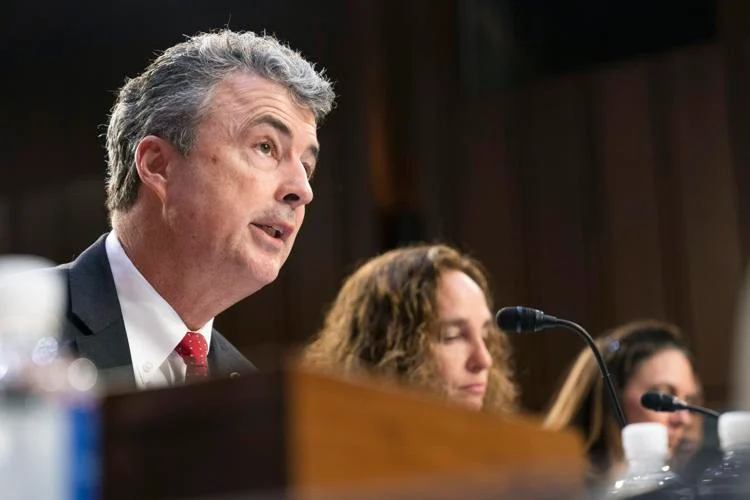
A stern warning has been issued to one tech company regarding the internet, Alabama Republican Attorney General Steve Marshall said. The state’s top law enforcement official has notified Google, telling the tech giant not to block or remove crisis pregnancy centers in the state from online searches for abortion services. Marshall said such action by the company could open Google to investigations into antitrust laws and religious discrimination. “Google accounts for more than 90% of all internet searches in the United States,” Marshall said in a release. “It also holds a dominant position in the market for online advertising. This dominant market position comes with a tremendous responsibility to Google’s users and to the American public. Google once recognized its outsized public duty in its corporate motto, ‘Don’t be evil,’ and its commitment to ‘provide … users with unbiased access to information.’” Marshall said “several national politicians,” unfortunately, are seeking to use Google’s market power “by pressuring the company to discriminate” against pro-life crisis pregnancy centers in search results, online advertising, and other products, such as Google Maps. “If Google fails to resist political pressure from those on the left and bow to their demands to censor or block crisis pregnancy centers, then we will act swiftly to protect American consumers,” Marshall said in the release. In a letter to Google, Marshall and the attorney generals gave a very clear warning. The letter, in part, reads, “If you comply with this inappropriate demand to bias your search results against crisis pregnancy centers, our offices will (1) conduct thorough investigations to determine whether this suppression violates the antitrust laws of the United States and our States; (2) investigate whether Google’s conduct amounts to an unlawful act of religious discrimination under state law; and (3) consider whether additional legislation – such as nondiscrimination rules under common carriage statutes – is necessary to protect consumers and markets.” According to the release, crisis pregnancy centers are charities that are private and show compassion and practical support to women. Those centers, in 2019, provided services to more than 1.8 million people and $266 million in services for little or no cost to women, including ultrasounds, STD testing, pregnancy tests, parenting, and parental education classes. Marshall joined other Republican attorneys general from Arizona, Arkansas, Indiana, Kansas, Kentucky, Louisiana, Mississippi, Missouri, Montana, Nebraska, Oklahoma, South Carolina, Texas, Utah, Virginia, and West Virginia in penning the letter. Republished with the permission of The Center Square.
Parker Snider: On abortion, the Alabama legislature did it right

When it came to Alabama’s response to the Supreme Court decision overruling Roe v. Wade, it is hard to imagine a more seamless transition to an abortion-free state. Around 9:15 a.m. on Friday, June 24th, news of the Court’s decision in Dobbs v. Jackson Women’s Health Organization overruling Roe v. Wade reached Alabama. At 10:37 a.m., Alabama Attorney General Steve Marshall released a statement promising that his office was immediately filing motions to dissolve any injunctions against pro-life bills held up in the court system. These would have to be dissolved before pro-life measures could go into effect in Alabama. Just before 4:00 p.m., U.S. District Judge Myron Thompson lifted the injunction on the Human Life Protection Act, which bans elective abortion in Alabama, after a conference call with AG Marshall. With very limited exceptions, such as for the life of the mother, abortion was now illegal in Alabama. This seamless transition to an abortion-free state, though buoyed by the faithful service of AG Marshall and the right judgment of Judge Thompson, is largely a result of the Alabama legislature’s insistence on getting the abortion issue right. In 2019, the Alabama legislature did just that. They passed the most pro-life law in the nation, a law that recognized the life of the unborn child and protected it from untimely death. The law was carefully crafted to be effective and implemented easily, without copious confusion around definitions or hidden loopholes for lawsuits to stop the law from going into effect. During the debate around the bill, legislators stood firm in their argument that all unborn children, regardless of how they were conceived or whether their parents desired to keep them, were worthy of life and of protection. They also were especially careful to ensure that expectant mothers are not prosecuted for pursuing an abortion. Only the person providing or performing the abortion is liable under Alabama law. Never the mother. The legislature was also careful that, in their quest to protect life, they did not overextend their reach into issues like in vitro fertilization and emergency contraception. Though opinions abound on these topics, the goal of the Human Life Protection Act was kept intentionally narrow to make it as effective as possible. All in all, the legislature did the abortion issue right, and we are seeing the fruit of their labor today. The now-effective Human Life Protection Act is true to pro-life principles, will keep women from prosecution, and represents Alabama’s conservative values well. It is a morally just law of which our state ought to be proud. It was not a haphazard political stunt but a good and thoughtful policy that considered what implementation might look like if the ban were ever allowed to go into effect. None of this thoughtfulness was portrayed by the late-night television hosts plastering the faces of Alabama legislators, who were called “dumb” and “sexist” on screens across America. Legislators likely knew those types of attacks would come, and they should be applauded for voting as they did. Governor Kay Ivey, who signed the act into law in 2019, recently rejected a call to weaken the ban. This week, House Democrats asked her to call a special session of the legislature to reconsider the Human Life Protection Act. To her credit, the Governor’s Office has made it clear that such a special session would not happen. When drafting and supporting Alabama’s abortion ban, both the legislature and the governor put their pro-life convictions into action. Their joint effort made it possible, when Roe was overturned, for Alabama to effortlessly transition into the pro-life sanctuary our residents have always wanted our state to be. Of course, this is only the beginning. There will likely be a well-funded pressure campaign to manipulate our government into weakening this law. If Alabama residents want to maintain our status as a pro-life sanctuary, legislators and the governor alike will need the public’s support to stay the course. Parker Snider is the Director of Policy Analysis for the Alabama Policy Institute.
State Supreme Court: Greenetrack owes $76 million in taxes
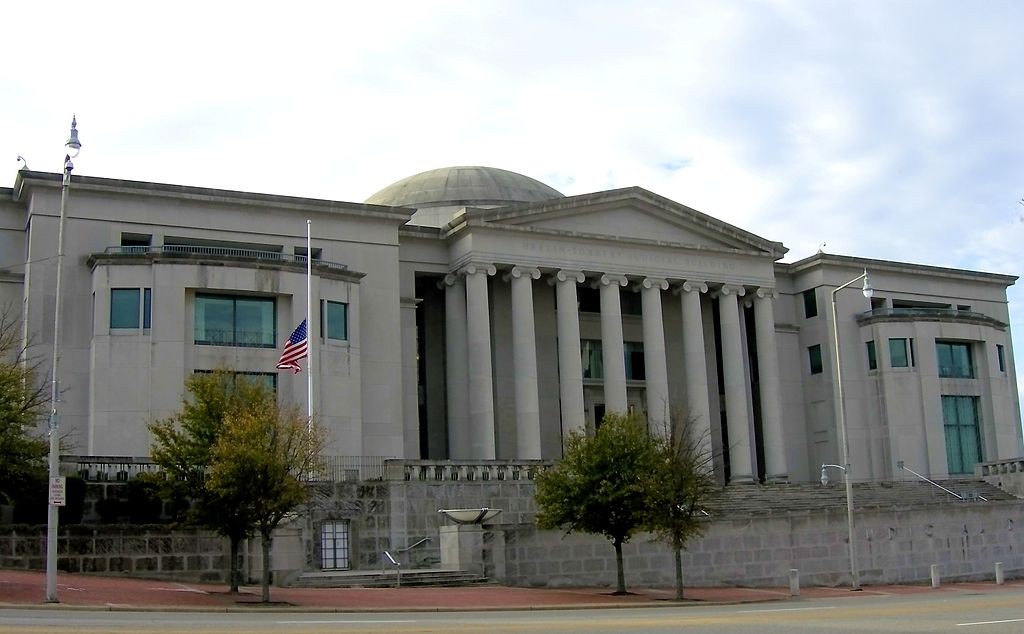
The Alabama Supreme Court on Thursday ruled that Greenetrack owes $76 million in unpaid taxes and interest in a decision that accused the dog track of using charities as a sham for a profitable electronic gambling operation. Justices sided with the state Department of Revenue, which contended that Greenetrack’s bingo operation was not in compliance with the constitutional amendment authorizing charity bingo games in the county. Thus, they said, bingo receipts were subject to state sales tax and other taxes. A state constitutional amendment allows nonprofit organizations in Greene County to offer bingo games. Greenetrack leased parts of its bingo operation to charities— paying them $4,850 a day— while Greenetrack kept the rest of the profits, justices wrote. “For the low cost of $4,850 a day, Greenetrack was able to use the nonprofit organizations’ licenses as a fig leaf for its own illegal — but extremely profitable — bingo activities,” justices wrote. The decision reversed an earlier ruling by a state tax tribunal and a circuit judge that ruled in favor of Greenetrack. Circuit Judge William E. Hereford ruled in 2021 that a 1975 dog-racing statute exempted Greenetrack from certain taxes, and the state was trying to ignore that by speculating on legislative intent. A lawyer representing Greenetrack did not immediately return an email seeking comment. The ruling came after a more than decade-long fight with the state. Alabama Attorney General Steve Marshall praised the decision. “Every day, all across our great state, the people of Alabama get up, work hard to make an honorable living, obey the law, and pay their taxes. And then there are the likes of Greenetrack, which scheme to make a dishonorable profit, break the law, and evade their taxes. Such a sordid state of affairs is more than merely unjust — it is hateful to the rule of law,” Marshall said in a statement. Bingo operators and the state attorney general’s office have been in a long-running legal battle over the legality of electronic bingo games. The state has argued the electronic games, which sometimes resemble slot machines, are not what was intended by the laws allowing charity bingo. Operators maintain the games are allowed by local constitutional amendments authorizing bingo, and it doesn’t matter if the game is played on paper or on a machine. Republished with the permission of The Associated Press.
Alabama cites abortion ruling in transgender medication case

Days after the U.S. Supreme Court ruled that states can prohibit abortion, Alabama has seized on the decision to argue that the state should also be able to ban gender-affirming medical treatments for transgender youths. The case marks one of the first known instances in which a conservative state has tried to apply the abortion ruling to other realms, just as LGBTQ advocates and others were afraid would happen. Critics have expressed fear that the legal reasoning behind the high court ruling could lead to a rollback of decisions involving such matters as gay marriage, birth control, and parental rights. The state is asking a federal appeals court to lift an injunction and let it enforce an Alabama law that would make it a felony to give puberty blockers or hormones to transgender minors to help affirm their gender identity. In its historic ruling last Friday, the U.S. Supreme Court said terminating a pregnancy is not a fundamental constitutional right because abortion is not mentioned in the Constitution and is not “deeply rooted in this nation’s history and tradition.” In a brief filed Monday, the Alabama attorney general’s office argued similarly that gender transition treatments are not “deeply rooted in our history or traditions,” and thus, the state has the authority to ban them. Alabama contends such treatments are dangerous and experimental, a view disputed by medical organizations. Shannon Minter, legal director of the National Center for Lesbian Rights, said this is the first case he is aware of in which a state cited the abortion ruling on another issue, but added, “It won’t be the last.” Supreme Court Justice Samuel Alito said in the majority opinion that the abortion ruling should not cast “doubt on precedents that do not concern abortion.” But Justice Clarence Thomas wrote that the same legal reasoning should be used to reconsider high court rulings protecting same-sex marriage, gay sex, and contraceptives. “It is no surprise that Alabama and other extremely conservative states are going to take up that invitation as forcefully as they can,” Minter said. “Justice Thomas’ concurrence was a declaration of war on groups already under attack, and we expect the hostility to be escalated.” In the aftermath of the Supreme Court’s so-called Dobbs decision, Republican Texas Attorney General Ken Paxton, in an interview with NewsNation, did not rule out defending a state law against gay sex if the GOP-controlled Legislature were to approve a new one. The previous one was struck down by the high court in 2003. On the opposite side of the political spectrum, Massachusetts lawmakers are looking to increase state protections for gender-affirming care, in addition to abortion, in reaction to the Supreme Court ruling. Alabama Attorney General Steve Marshall was unavailable for comment Thursday, a spokesman said. Jeff Walker, who has a 15-year-old transgender daughter, said this spring that it felt as if Alabama were attacking families like his with legislation targeting transgender kids’ medication and dictating their choice of school bathrooms, locker rooms, and sports teams. He said the state’s argument in this case is worrisome for everyone. “I think everyone should be concerned by the wording of this appeal. By this logic, any health care the state feels isn’t in line with its morals or beliefs should be banned,” Walker said. The Alabama case could become an early test of where judges stand on the scope of the abortion ruling. The appeals court granted the state’s request for an expedited schedule for submitting briefs, and a decision could come as early as this fall. While Alabama was already appealing the injunction in the transgender medication case, the state quickly incorporated the abortion decision into its filing. Alabama Gov. Kay Ivey this spring signed the law making it a crime punishable by up to 10 years in prison to dispense certain medication to minors to help with their gender transition. A federal judge in May issued a preliminary injunction blocking the measure, siding with parents who said the law violates their children’s rights and their own rights to direct their youngsters’ medical care. “What’s interesting about Supreme Court decisions is they tend to have a life of their own,” said Alison Gash, a professor of political science at the University of Oregon. Courts have generally supported the right of parents to make medical decisions for their children, including in cases where families don’t want to get cancer treatments recommended by doctors, Gash said. She said she is expecting to see more arguments like Alabama’s arising out of the Dobbs decision, and they could have a major effect on the right to make medical decisions. “A lot of us feel like the guardrails have completely fallen off, because there is no real predictability about how relevant Dobbs will be to a whole wide range of issues that affect so many different vulnerable communities,” Gash said. Republished with the permission of The Associated Press.
Three projects announced for North Alabama funded from Tyson spill lawsuit

Three projects funded by a settlement with Tyson farms will give recreational boaters, paddlers, and fishermen better access to the Mulberry and Sipsey Forks of the Black Warrior River. On Saturday, local leaders visited sites in Colony and Garden City in Cullman County and the Forks in the River site near the Walker County town of Sipsey – and offered details unique to all three projects. The funding comes from a state lawsuit against the Tyson company in the wake of an illegal wastewater discharge at the company’s facility in Hanceville. The spill occurred on June 8, 2019, when a pipe failed at the River Valley Ingredients poultry processing facility in Hanceville, sending tens of thousands of gallons of partially treated wastewater into the river. The spill killed an estimated 175,000 fish and damaged the river’s ecosystem. “These community enhancement projects are the result of the dedicated teamwork of legal staff from the Attorney General’s Consumer Interest Division, and our partners at the Alabama Department of Conservation and the Alabama Department of Environmental Management,” said Attorney General Steve Marshall. “As I said we when announced this settlement last August, this is another example of a Consumer Protection case done well – the money is going exactly where it ought to go – not to the state coffers or outside counsel, but to the impacted areas. It is all the more rewarding to finally see these recreational access projects come to life to benefit the impacted communities.” As part of the settlement of the lawsuit, the AG Marshall created a Restitution Fund Oversight Committee to oversee the projects that are designed to enhance the State’s natural resources, increase recreational opportunities, and benefit the environment and public health in the impacted areas. Alabama Department of Conservation and Natural Resources Deputy Commissioner Ed Poolos will serve as chairman of this committee, which selected the projects. The projects include: • Forks in the River, near Sipsey: Expand parking area and construct a dock, pavilion, and restroom facility. • Town of Colony access: Construct a gravel road and parking area, which will give local residents direct access to the river for the first time. • Garden City Park: Riverfront clean-up with new kayak launch area, add restroom facility, and create hiking trail. “I would like to express my deep appreciation to every member of this committee. They have all worked diligently as a team, to get us to this point. I’m very pleased that we can now announce these three initial sets of projects, with you having our assurance that many more will follow over the coming months,” Poolos stated. “We believe these projects will provide tremendous and long-lasting benefits for Alabama’s citizens impacted by the wastewater spill.”
