
AG Steve Marshall to host ‘Faith Forums’ in hopes of tackling crime, addiction
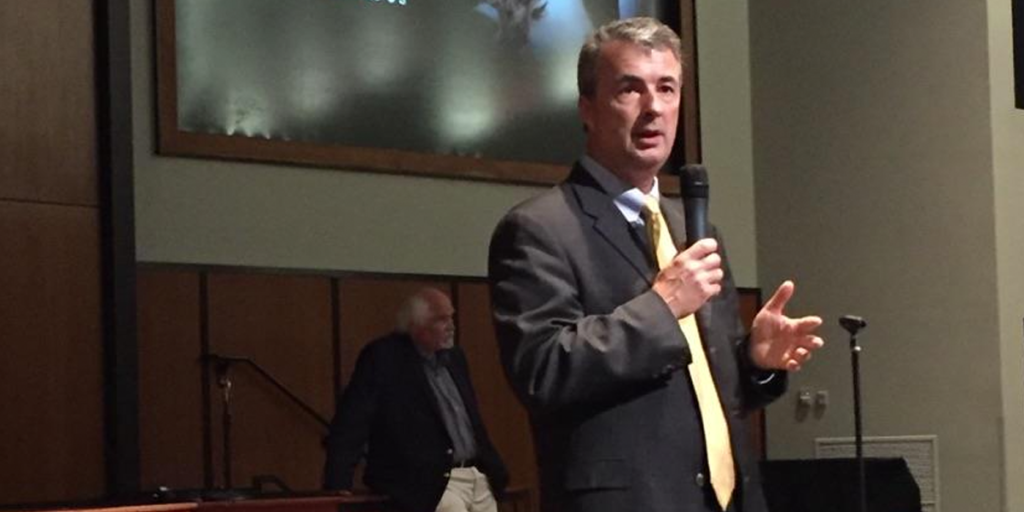
Alabama Attorney General Steve Marshall will host four “Faith Forums” across the state in April and May in hopes of engaging religious leaders of all faiths and traditions to help confront the challenges posed by increasing violent crime, security risks at places of worship, and the opioid crisis. “Whether Alabamians realize it or not, we are in a state of emergency on two fronts — violent crime and addiction,” said Marshall. “We have the unfortunate distinctions of ranking first in the nation for the number of painkiller prescriptions per capita, while also ranking in the top 10 of states with high violent crime rates. I firmly believe that the faith community can be part of the solution on both fronts and follow in the footsteps of my predecessor, Bill Pryor, in asking for their help.” The Faith Forums are a byproduct of the Marshall’s service on the Alabama Opioid Overdose and Addiction Council, which emphasized the need for increased community engagement, and his Initiative on Violent Crime, designed to help communities reclaim their streets and neighborhoods. Marshall continued, “Increased outreach and engagement can be the difference maker in the life of an addict or a would-be criminal — I have witnessed that firsthand — but to be successful, we must be willing to reach outside of our own circles and fellowships. These forums will give church leaders tools and guidance on effective engagement, but also an opportunity to shares their own experiences and ideas.” Keynoting the Faith Forums will be Shannon Royce, Director of Faith-Based and Neighborhood Partnerships for the U.S. Department of Health and Human Services; Robert T. Thetford, Treasurer and Operations Manager, Institute for Criminal Justice Education; and Attorney General Steve Marshall. Faith Forum Schedule Montgomery: April 26, 2018 8:30 a.m. – 12:00 p.m. Church of the Highlands 4255 Taylor Road Montgomery, Ala. 36116 Mobile: May 1, 2018 1 – 4:30 p.m. Mount Hebron Church Ministries 2531 Berkley Avenue Mobile, Ala. 36617 Birmingham: May 3, 2018 1 – 4:30 p.m. Briarwood Presbyterian Church 2200 Briarwood Way, Birmingham, Ala. 35243 Huntsville: May 15, 2018 8:30 a.m. – 12:00 p.m. The Rock Family Worship Center 3401 Holmes Avenue NW Huntsville, Ala. 35816 Any interested members of the faith community are urged to attend one of the Attorney General’s Faith Forums. To attend a Faith Forum, please RSVP with the Attorney General’s Office by: Registering online at https://agstevemarshall.eventbrite.com; E-mailing rsvp@ago.state.al.us (please include your full name and the Faith Forum you wish to attend); Or calling (334) 242-7401 Watch Marshall discuss the forums below:
Alabama Retail Association endorses over 50 candidates

With less than two months until the June 5 primaries, the Alabama Retail Association’s state political action committee, Alabama RetailPAC made a large number of endorsements on Friday. “The Alabama Retail Association believes these candidates understand the issues retailers face and that, if elected, these individuals will give retailers’ interests a fair hearing,” said Alabama Retail Chairman Jacob Shevin. The association evaluated each candidate’s record and discussed the ramifications of each race before providing their endorsement; “We are confident these candidates are the best choices for these positions,” said Rick Brown, Alabama Retail President. The Alabama Retail Association is an organization for retailers by retailers who represent retail businesses in Alabama Legislature and U.S. Congress. The association currently represents 4,200 members and 6,000 locations statewide, ranging from small, family owned retail stores to large national chains. Read the full list of candidate endorsements below: For the state’s constitutional offices, RetailPAC endorses: Governor Kay Ivey Lieutenant Governor: Twinkle Cavanaugh Attorney General Steve Marshall Secretary of State John Merrill State Treasurer: John McMillan For the appellate court races, RetailPAC endorses: Supreme Court Chief Justice Lyn Stuart Place 1 Associate Supreme Court Justice Brad Mendheim Place 4 Associate Supreme Court Justice: Jay Mitchell Place 1 Court of Civil Appeals Judge: Christy Edwards Place 2 Court of Civil Appeals Judge Terri Thomas Place 1 Court of Criminal Appeals Judge: Richard Minor Place 2 Court of Criminal Appeals Judge: Chris McCool Place 3 Court of Criminal Appeals Judge: Bill Cole For the Alabama Senate, RetailPAC endorses: District 2: Tom Butler, R-Huntsville District 4: Garlan Gudger, R-Cullman District 6: Larry Stutts, R-Tuscumbia District 8: Steve Livingston, R-Scottsboro District 10: Mack Butler, R-Rainbow City District 12: Del Marsh, R-Anniston District 13: Randy Price, R-Opelika District 21: Gerald Allen, R-Tuscaloosa District 25: Ronda Walker, R-Montgomery District 26: John Knight, D-Montgomery District 33: Vivian Davis Figures, D-Mobile District 34: Jack Williams, R-Wilmer For the Alabama House of Representatives, RetailPAC endorses: District 4: Parker Moore, R-Decatur District 9: Scott Stadthagen, R-Hartselle District 10: Mike Ball, R-Madison District 12: Corey Harbison, R-Cullman District 14: Tim Wadsworth, R-Arley District 16: Kyle South, R-Fayette District 19: Laura Hall, D-Huntsville District 22: Ritchie Whorton, R-Owens Cross Roads District 27: Wes Kitchens, R-Arab District 30: Robert McKay, R-Ashville District 31: Mike Holmes, R-Wetumpka District 32: Barbara Boyd, D-Anniston District 33: Ron Johnson, R-Sylacauga District 39: Ginny Shaver, R-Leesburg District 42: Jimmy Martin, R-Clanton District 45: Dickie Drake, R-Leeds District 48: Jim Carns, R-Birmingham District 49: April Weaver, R-Alabaster District 55: Rod Scott, D-Fairfield District 56: Louise Alexander, D-Bessemer District 58: Rolanda Hollis, D-Birmingham District 60: Juandalynn Givan, D-Birmingham District 64: Harry Shiver, R-Bay Minette District 65: Elaine Beech, D-Chatom District 67: Prince Chestnut, D-Selma District 69: Kelvin Lawrence, D-Hayneville* District 73: Matt Fridy, R-Montevallo District 76: Thad McClammy, D-Montgomery District 82: Pebblin Warren, D-Tuskegee District 85: Dexter Grimsley, D-Newville District 97: Adline Clarke, D-Mobile* District 102: Willie Gray, R-Citronelle District 105: Chip Brown, R-Mobile Alabama Retail Association PAC endorses these federal candidates: 2nd District: U.S. Rep. Martha Roby, R-Montgomery 4th District: U.S. Rep. Robert Aderholt, R-Haleyville Twinkle Andress Cavanaugh candidate for Lieutenant Governor released a statement on Monday regarding her endorsement. “I am honored to receive the endorsements of job creators across Alabama,” said Cavanaugh. “Through the sale of food, clothing, furniture, medicine and much more, the Alabama Retail Association’s thousands of members touch almost every aspect of daily life in our great state. Having owned several small businesses, I have signed both sides of a paycheck and am committed to sound conservative policies that allow job creators to do what they do best. With education, infrastructure, and workforce development as priorities, our brightest days are ahead of us.” Alabama Attorney General candidate Steve Marshall said he was honored to receive the endorsement. “The backing of the Alabama Retail Association signals significant momentum for our campaign and I’m truly honored to receive their support.”
Attorney General candidates make their case in candidate forum
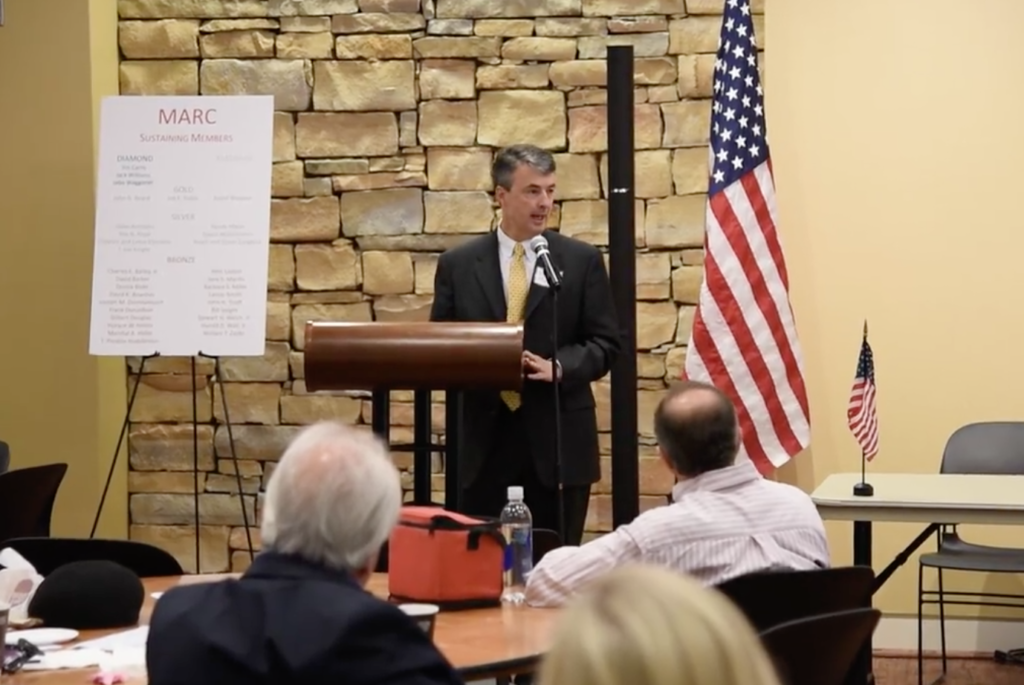
Republican candidates for attorney general shared a stage for the first time in an occasionally contentious forum that previewed a race shaping up to be one of the most hotly contested of 2018. Attorney General Steve Marshall, former U.S. Attorney Alice Martin, former Attorney General Troy King and GOP lawyer Chess Bedsole spoke Saturday to the Mid-Alabama Republican Club. Marshall, who was appointed by then-Gov. Robert Bentley, said he is running an independent office focused on enforcing the law, not politics. Martin emphasized her record prosecuting public corruption cases, while King said the state had been embarrassed by recent scandals. Martin criticized Marshall as a party-switcher. Bedsole said he was the only one who had not sought the appointment from Bentley, who resigned during an ethics investigation. Republished with the permission of the Associated Press.
Business Council of Alabama endorses Steve Marshall for Attorney General
ProgressPAC — the political action committee of the Business Council of Alabama — on Monday announced the endorsement of incumbent Attorney General Steve Marshall in the Republican primary. “Attorney General Steve Marshall’s commitment to the rule of law, putting violent criminals in jail and working to put an end to the opioid crisis made our endorsement an easy decision. His willingness to fight federal overreach makes him a tremendous asset to Alabama’s vibrant business community,” said ProgressPAC Chairman Mike Kemp. ProgressPAC’s board of directors said they voted to endorse Marshall because of his character and his support of issues that are important to Alabama’s business community. “For these reasons and others, ProgressPAC is proud to endorse Steve Marshall in the June 5 primary,” explained Kemp. Marshall said he is honored to receive the endorsement. “ProgressPAC understands the importance of fostering a pro-business environment in Alabama and I’m honored to receive their endorsement,” said Marshall. “This support from the business community will give us great momentum heading into the June primary.” Marshall served as district attorney in Marshall County Ala. for 16 years. He built a reputation of fighting crime and was instrumental in the passage of state legislation to track the sale of ingredients used to produce crystal meth. Marshall also took a lead role supporting the passage of the Brody Act which has made it possible to prosecute criminals for two crimes if they kill or injure an unborn baby during an attack on the mother. Marshall also serves as co-chair of Governor Kay Ivey’s Opioid Overdose and Addiction Council. Steve and his wife, Bridgette, have a daughter named Faith and currently reside in Albertville, Ala. Marshall faces Alice Martin, Chess Bedsole, and Troy King in the June 5 Republican primary.
State House passes data breach protections for consumers

Before Thursday, Alabama was one of only two states in the nation that did not require a data breach notification. SB318, or the Data Breach Notification Act, passed through the Alabama house with a unanimous 101-0 vote Thursday evening. The bill requires all companies doing business in the state to notify their customers if their personal information has been compromised. “Virtually all of our vital personal information – including Social Security numbers, military IDs, drivers’ licenses, bank account numbers, and medical data – is now online,” said the bill’s sponsor Decatur-Republican state Sen. Arthur Orr. “With this bill, consumers will know if their information has been compromised and what steps a company is taking to recover and protect consumers’ data.” “Tonight, the Alabama House took action to arm Alabama consumers in the event that their personal information is compromised in a data breach,” added state Attorney General Steve Marshall. “Passage of the Alabama Data Breach Notification Act has been a high priority for my office. It is all the more important now, as yesterday the only other state in the country without such a consumer-protection law – South Dakota – enacted a data breach notification law, leaving Alabama alone.” Marshall congratulated Orr and Huntsville-Republican state Rep. Phil Williams, who advanced the bill through the House. “I appreciate the hard work of Williams and Orr in moving the data breach notification bill a step closer toward final passage,” said Marshall. The Alabama Senate passed SB318 by a vote of 24 to 0 earlier in March, the bill now returns to the Senate for a vote on whether to concur with the House changes.
Steve Marshall praises Donald Trump’s opioid abuse initiative
President Donald Trump on Monday announced a new initiative to stop opioid abuse and to reduce the drugs supply and demand. The president’s list of requirements for this initiative include: Reduce the over-prescription of opioids which has the potential to lead Americans down a path to addiction or facilitate diversion to illicit use. Cut off the flow of illicit drugs across our borders and within communities. Save lives now by expanding opportunities for proven treatments for opioid and other drug addictions. Alabama Attorney General Steve Marshall praised Trump’s initiative in a statement on Tuesday: I want to thank President Trump for his dedication to fight the terrible blight of opioid abuse in America. Opioid abuse is an epidemic that ignores cultural and political boundaries; it affects all of us—and thus demands a response that includes all of us. While I am still reviewing the specifics of President Trump’s initiative, I am heartened to see that his outline includes many of the recommendations of Alabama’s Opioid Overdose and Addiction Council; recommendations such as improved prescription monitoring, increased access to treatment and recovery support for persons suffering from opioid addiction, and legislation targeting low-dosage, super-lethal drugs like fentanyl. My hope is that, in the coming months, President Trump and Attorney General Sessions will work side-by-side with state and local officials to turn these ideas into reality. Together, we can conquer what the President has rightly called the ‘Crisis Next Door.’ In August of 2017, Gov. Kay Ivey named Marshall co-chair of the Alabama Opioid Overdose and Addiction Council. Ivey established this council to “develop and submit a strategic action plan to the Governor by December 31, 2017, which establishes recommendations for policy, regulatory and legislative actions to address the overdose crisis in Alabama. A request that was fulfilled by the council. Alabama’s plan includes four actions: Prevention Intervention Treatment Community Response Since 2016, Alabama has remained at the top of the list of states in the nation with an extremely high amount of opioid prescriptions. In fact, Alabamians receive more prescription opioids per person than residents of any other state in the country, according to the U.S. Centers for Disease Control and Prevention (CDC) — equating to a rate of 1.2 prescriptions per person. By comparison, the national per capita use was 0.71 in 2015.
US government to rewrite 2 endangered species rules, AG Steve Marshall applauds

The Trump administration will rewrite rules governing how to choose areas considered critical to endangered species to settle a lawsuit brought by 20 states and four trade groups, according to state attorneys general. The endangered species director for an environmental nonprofit says that’s terrible news. Noah Greenwald of the Center for Biological Diversity says the administration has “shown nothing but hostility toward endangered species.” The attorneys general for Alabama and Louisiana said in news releases Thursday that the administration made the agreement Thursday to settle a lawsuit brought by 20 states and four national trade groups, challenging two changes made in 2016. According to the lawsuit, the rules are now so vague that the U.S. Fish and Wildlife Service and National Marine Fisheries Service “could declare desert land as critical habitat for a fish and then prevent the construction of a highway through those desert lands, under the theory that it would prevent the future formation of a stream that might one day support the species.” A spokeswoman for Fish and Wildlife referred a request for comment to the U.S. Justice Department, which did not immediately respond to phoned and emailed queries. A NOAA Fisheries spokeswoman did not immediately respond Thursday. “We are encouraged that the Trump administration has agreed to revisit these rules, which threaten property owners’ rights to use any land that the federal government could dream that an endangered species might ever inhabit,” Alabama Attorney General Steve Marshall said in his news release. “These Obama-era rules were not only wildly unreasonable, but contrary to both the spirit and the letter of the Endangered Species Act.” Greenwald said, “Their case didn’t have a leg to stand on.” But, he said, “The Trump administration doesn’t want strong and needed protection for endangered species. It’s not surprising they would just roll over and agree to rewrite the rules.” He said critical habitat doesn’t require landowners to do anything. “It requires federal agencies to ensure that actions they take don’t adversely modify critical habitat,” Greenwald said. “So it’s only when the federal government is involved in a project — either through funding or through permitting — that there’s additional requirements.” Critical habitat is at the center of a separate lawsuit before the U.S. Supreme Court. The high court agreed in January to review district and appeals court rulings that upheld Fish and Wildlife’s designation of 1,500 acres (607 hectares) of Louisiana timberland as critical habitat for the dusky gopher frog, an endangered frog found only in Mississippi. The 3½-inch-long frogs once lived in Louisiana, Mississippi and Alabama, but now live only in a few parts of Mississippi with temporary ponds that dry up in the summer, leaving them free of fish that might eat the frogs’ eggs. Adults come out of underground burrows in the winter and spring to breed in those ponds. The Louisiana tract is the only land outside Mississippi that could be made suitable as a breeding ground, experts testified. Greenwald said he doesn’t think new regulations would be approved in time to affect that suit. He says he doesn’t know of any other active suits involving critical habitat. Republished with permission from the Associated Press.
Colonial Pipeline Company to pay $3.3M to Alabama for damages

Both the Alabama Attorney General Steve Marshall and the Alabama Department of Environmental Management (ADEM), announced an agreement with the Colonial Pipeline Company on Thursday. The agreement resolves environmental claims made when the company’s gasoline pipeline ruptured in Shelby County, and three other areas in Alabama, in September and October 2016. During the September 9, 2016 disaster, Colonial’s gasoline pipeline leaked into a rural area of Shelby county, southeast of Helena. While a portion of the gasoline was recovered, reports indicate that the pipeline leaked approximately 250,000 gallons into the area. The leak was caused by pipe fatigue that resulted from improper compaction of soil below that portion of the pipeline. The October 31, 2016 pipeline explosion and fire killed one and injured six workers, and involved the release of over 180,000 gallons of gasoline near County Road 251 in Shelby County. Gov. Robert Bentley declared a month-long State of Emergency after the disaster. It was reported that the explosion was caused by an accidental strike to the pipeline by excavating equipment. The strike to the pipeline ignited gasoline, which resulted in releases into the environment. The three remaining releases totaled approximately 21 barrels of petroleum products, a portion of which was recovered. “This agreement first and foremost addresses the environmental damage to land and water caused by significant gasoline spills in Shelby County during 2016,” said Marshall. “I am pleased by the outstanding work of ADEM’s legal team who worked closely with our lawyers to achieve a settlement which I believe is fair, reasonable and benefits the people of Alabama.” The settlement includes several specifications for Colonial including: Colonial must complete the cleanup of petroleum products released into the soil and waters of the State, which will be overseen by ADEM $1.3 million civil penalty $1.8 million in projects to benefit the State of Alabama $200,000 to the Alabama Department of Conservation and Natural Resources as restitution for damages incurred by the closure of its Cahaba River Wildlife Management Area for nearly three months
Ethics Commission director says bill weakens ethics law

The director of the state Ethics Commission said a bill before Alabama lawmakers could open up a potentially wide loophole in state ethics law by carving out an exemption for people doing economic development work. “I think it’s a bad bill that weakens the ethics law considerably,” Alabama Ethics Commission Executive Director Tom Albritton said. The House of Representatives on Tuesday approved a bill to exempt economic developers from the definition of lobbyist under the state ethics law. Supporters argued it is needed to help Alabama compete with other states for projects and factories by keeping developers’ activity confidential, but critics said it opens up an exemption in the ethics law that governs interactions with government officials. The bill says that an economic development professional — defined as a person who does full-time economic development work or works part-time and is “precertified” by the Ethics Commission — shall not be considered a lobbyist. “It exempts people from the definition of lobbying when I think most people would agree that what they are doing is in fact lobbying,” Albritton said. “You are also declaring that the other portions of the ethics act related to a lobbyist’s transaction with public officials no longer apply to them. That’s where the problem lies in my view.” He said another danger is that “economic development is “often used as kind of catch all designation for activity that people want to conduct with executive branch agencies, or executive offices or the legislature itself.” “At the end of the day, there’s a good bit of activity that could be argued is economic development,” Albritton said. Alabama Commerce Secretary Greg Canfield, who oversees the state’s industry recruitment efforts, said his department and professional economic developers asked for the legislation because of confusion that began arising in 2015 on whether developers should register as lobbyists. “If we don’t clarify this under the law, professional site consultants are going to draw a big red line around Alabama,” Canfield said. “That red line is going to say avoid bringing projects to the state of Alabama because there are too many states that will, for one, protect the confidentiality of your project and two, not require you go through training and registration on a regular basis. It will be easier to conduct professional economic development activities in these other states,” Canfield said. Rep. Ken Johnson, the bill’s sponsor, said the state should not put a “hurdle” on professional site developers by requiring them to register as lobbyists. Johnson said the five-member Alabama Ethics Commission previously tabled an advisory opinion on the matter so lawmakers could attempt to address the issue. Johnson said he believes lawmakers have prevented it from becoming a wide loophole by specifying that the exemption couldn’t be claimed by legislators, other public officials and people who are otherwise lobbyists. The Alabama Attorney General Steve Marshall said he opposed the bill at first but was pleased with changes to the bill, before its House passage, that he said creates a “narrowly-drawn exemption for full-time economic development professionals.” Albritton said a better way, in his view, would be to keep the developers under the state ethics law, but allow the reports on their activity to remain confidential for a period of time so deals in the making are not publicly disclosed. The bill now moves to the Alabama Senate. Senate President Pro Tem Del Marsh said he wanted to speak with both Marshall’s office and the state ethics commission. “I’m not going to move anything unless the attorney general and the ethics commission are on board with it,” Marsh said. Republished with the permission of the Associated Press.
Alabama creates training program to fight cyber bullying

The Alabama Department of Education and the Alabama Attorney General’s office have joined together to fight cyber bullying and other concerns in the cyber world. While social media and other online resources offer unbelievable learning opportunities for students in today’s society, they come with some very real risks including: cyber bullying, inappropriate connections, and securing personal data. According to a 2016 WalletHub study, Alabama was ranked number eight in the nation for states with the biggest bullying problems, and was the fifth highest ranked state in the nation for percentage of high school students who attempted suicide. Which is one of the many reasons why the Alabama Department of Education and the Attorney General’s office have created a training program to help both teachers and parents fight against the dangers of cyber bullying. “Modern technology, in the right hands, brings the world to our children’s front door and enables them to live and learn limitlessly. However, as parents, educators, and law enforcement, we all have a unique responsibility to keep them safe,” said Ed Richardson, Interim Alabama State Superintendent of Education. “All those involved have a shared vision of keeping our children shielded from the ills of society. This training will assist in that effort.” The training for parents will include: understanding how quickly children can be contacted by non-age appropriate predators online working cell phone applications and formats (SnapChat, Instagam, etc.) and other less known video chatting platforms used to lure students indicators that a student may be a victim, and how to respond in that event laws pertaining to the cyber world, and much more. Investigators will also train school faculty and staff members on how important the school environment is when dealing with online issues and how to develop policies that address the issues before they start. When to contact law enforcement, preserving evidence for law enforcement, and how to make a report for law enforcement will be covered as well. “We have been working together for several months to develop cyber training that helps parents and teachers determine if children are being targeted and how to report it to law enforcement. Our training is focused on protecting our children and our schools,” said Attorney General Steve Marshall. Training will be conducted by seasoned veterans in law enforcement who are skilled in cyber world safety issues. They are: Sterling “Jake” Frith – Frith is a Special Agent in the Investigations Division of the Alabama Attorney General’s Office, responsible for Computer Forensics and Cybercrimes. Before coming to the AG’s office, Agent Frith served with the Prattville Police Department and Baldwin County Sheriff’s Office. He began working in the cyber realm 8 years ago, with 18 years in Law Enforcement. Agent Frith is a Certified Ethical Hacker, Certified Hacking Forensic Investigator, Access Data Certified Examiner, Seized Computer Evidence Recovery Specialist and an Open Source Practitioner. He has over 600 hours of training in cyber crimes and cyber forensics to go along with his experience. Agent Frith has an Undergraduate Degree in Criminal Justice and a Graduate degree in Information Security and Assurance. Agent Frith serves as a member of the Internet Crimes Against Children Task Force, the United States Secret Service Electronic Crimes Task Force, and the Federal Bureau of Investigation’s Cybercrime Task Force. Robert “Bobby” Moore – Moore is a Special Agent in the Investigations Division of the Alabama Attorney General’s Office. S.A. Moore has over 10 years of experience as a law enforcement professional, with a majority of his experience as an investigator assigned to handle Cyber and White Collar Crimes with a focus on sexual crimes against children that involved technology. S.A. Moore is also a certified digital forensics examiner, holding the Certified Computer Forensics Examiner, Access Data Certified Examiner, and Certified Fraud Examiner certifications related to digital forensics and fraud investigation. He holds degrees from The University of Southern Mississippi – Undergraduate in Accounting and Finance and Graduate Degrees in Criminal Justice with a focus on Cyber Criminology. He has taught courses in digital forensics and cyber-related crime for Troy University, Auburn University at Montgomery, The University of Mississippi and Loyola University of New Orleans.
Steve Marshall announces Alabama cybercrime lab

Alabama Attorney General Steve Marshall on Wednesday announced the formation of a new cybercrime Lab located in the Attorney General’s office to assist law enforcement officials in the state with cyber-related investigations. “For law enforcement, investigating cybercrime and accessing digital evidence present real challenges. But these hurdles can be overcome when agencies work together to combine expertise and training,” said Marshall. “The Cybercrime Lab provides cutting edge tools to enable our investigators to more effectively conduct online investigations of criminal activity, ranging from child sexual exploitation and human trafficking to network intrusions and data breaches. Equally important, the Cybercrime Lab will serve as a resource for federal, state and local law enforcement in Alabama seeking assistance in accessing criminal evidence stored on digital devices.” The Alabama Attorney General’s Office was joined by U.S. Attorney for the Middle District of Alabama, Louis Franklin, the Federal Bureau of Investigation, officials with the U.S. Secret Service, U.S. Department of Homeland Security Investigations, the Alabama Fusion Center, and the Alabama Office of Prosecution Services in announcing the new lab. The AG’s office has also joined the Alabama Focus Group on Skimming in launching a new web link for owners of victimized payment card systems and law enforcement for the reporting of suspected debit/credit card skimming devices, the collected information will then be used to investigate and prosecute criminals involved in illegal skimming operations within state. “Cybercrime is ever increasing and touches most people in some form,” added Franklin. “As the level of cybercrime becomes more sophisticated, it is important that our investigative techniques are expansive enough to combat these criminals. This cybercrime lab will give us extra tools in our investigative toolbox to identify and prosecute those cyber offenders.” According to the AG’s office, over the last year cyber agents with the Alabama Attorney General’s Office have already assisted more than 30 agencies in cyber investigations, including unlocking cell phone evidence in homicides, tracking down credit/debit card skimmers, and unmasking criminals behind identity theft cases. These agents have also helped businesses and local governments recover nearly $1 million potentially lost in cyber theft cases. The new Cybercrime Lab will expand the ability of the Attorney General’s Office to conduct such investigative work.
Steve Marshall leads effort to protect states’ rights, prevent TVA rate increase

Alabama is leading the fight against a federal court ruling that would undercut state authority to regulate its own groundwaters and would result in debt to the Tennessee Valley Authority (TVA), causing rate increases that could leave many customers in Alabama and other states unable to afford electricity. Joined by Kentucky Attorney General Andy Beshear, Alabama Attorney General Steve Marshall filed an amicus brief on Tuesday evening in the U.S. Circuit Court of Appeals for the Sixth District arguing a federal judge’s order to excavate a coal ash pond in Tennessee “usurps States’ authority to regulate groundwaters” in the case of Tennessee Clean Water Network v. TVA. According to the brief: “The lower court’s remedy, ordering closure of the Gallatin ash ponds by excavation and removal, would cost approximately $1.8 billion to 4.0 billion. As TVA will pass this cost on to its captive utility customers, such a costly remedy will have an unanticipated, immediate, and profound impact on utility ratepayers. If this Court upholds the lower court’s remedy, and closure-by-removal is subsequently applied throughout the Sixth Circuit, the resulting costs to utility customers would be astronomical, costing in the tens-of-billions of dollars.” Yikes. Under the Clean Water Act (CWA), Congress designated states as the main controllers of groundwater pollutants.The issue, however, is whether or not “hydrological connectivity” (the theory that the groundwaters might connect to navigable waters) could extend federal control to groundwater pollutants. Using this approach, a lower court has ordered that the TVA clean up a coal ash pond at its Gallatin coal plant using a close-by-removal procedure rather than the TVA’s preferred close-in-place method. “Not only is this matter clearly designated for state rather than federal regulation and the proposed remedy unnecessary and overwhelmingly costly, but the theory of hydrological connectivity could be extended to ridiculous circumstances,” said Marshall. “For example, owners of large parking lots could find themselves subject to CWA citizen suits as storm water runoff mixes with petroleum products discharged by cars parked on pavement, and may make its way into groundwater and eventually ‘navigable water.’ The same logic extends to runoff from state, county and municipal roads and highways.” 16 other states are joining Alabama and Kentucky in support of the brief: Arkansas, Georgia, Indiana, Kansas, Louisiana, Mississippi, Missouri, Montana, Nebraska, Oklahoma, South Carolina, Texas, Utah, West Virginia, Wisconsin and Wyoming.
