
Republicans see bright spot in voter registration push
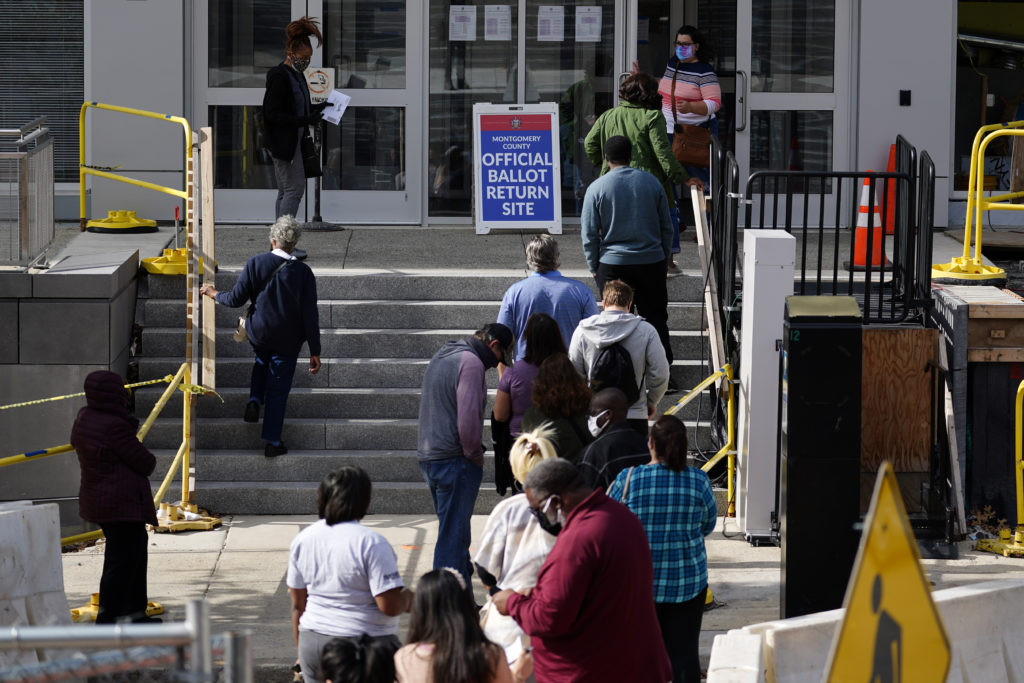
The Republican Party has cut into Democrats’ advantage in voter registration tallies across some critical presidential battleground states, a fact they point to as evidence of steady — and overlooked — enthusiasm for President Donald Trump and his party. Even though Trump trails in national polls and struggles with fundraising with just weeks before Election Day, Republicans see their progress signing up voters in Florida, Pennsylvania, Arizona, and other states as a rare bright spot. Democrats appear to have been set back by their decision to curb in-person voter registration drives during much of the pandemic. And in something of a reversal, Republicans are crowing about their success bringing in new voters who could ramp up turnout and deliver the White House to their candidate. “The best thing for voter registration is enthusiasm for a candidate and the infrastructure,” said Nick Trainor, director of battleground strategy for Trump’s re-election campaign. “The lack of enthusiasm for Joe Biden, coupled with the lack of structure is the reason they’re not doing what they did in the past.” In Florida, Republicans netted 146,644 voters over Democrats since the pandemic hit in March, leaving Democrats with their smallest overall lead in party registrations since the state began tracking them in 1972. In Pennsylvania, which Trump won with 44,000 votes in 2016, the GOP added 103,171 more voters since November than Democrats did. Even in Arizona, where Democrats have steadily been chipping away at the GOP’s advantage among registered voters due to a growing number of young Latinos voters, Republicans added 30,000 more voters than Democrats since mid-August. Democrats argue that Republican gains are partly illusory: Some of the GOP registrants are former Democratic voters who have been voting for Republicans but have not updated their registration until now. They also note young voters, who lean heavily Democratic, increasingly register as unaffiliated with either party, which helps pad the GOP’s advantage on paper but it might not help on Election Day, David Bergstein, a spokesman for the Democratic National Committee, said Republicans were “cherry-picking” voter registration statistics. Still, he noted: “Democrats are taking nothing for granted and pulling out all the stops to reach every voter we need.” Voters can still sign up to vote in a handful of states, and several, including the key battlegrounds of Michigan, Minnesota, and Wisconsin, allow voters to sign up to vote on Election Day. Still, the numbers reflect a broader reality: The coronavirus pandemic hobbled voter registration since it broke out in March, shutting down hubs of voter registration such as street festivals, college campuses, and departments of motor vehicles. Even as society has opened back up since March, registrations are 38% lower than they were during a comparable stretch in 2016, according to a report from the Brennan Center for Justice. Experts note that a registration drop-off of that size disproportionately hurts young, urban, and minority voters — voters that tend to lean Democratic. “Most definitely, the pandemic has impacted Democratic voter registration numbers, especially among core constituencies,” said Jonathan Robinson of the Democratic data firm Catalist. Democrats were starting ahead of Republicans. They’ve had success registering new voters through much of the Trump administration. Their gains after Trump’s election helped lead to their success flipping the House of Representatives in an election with record young voter participation rates — a sign, they argue, that their pre-pandemic work will pay off in November. Since the outbreak, things have been harder for Democrats and the wide array of nonprofit groups that work to sign up new voters. These organizations have been hesitant to resume face-to-face interactions. The Biden campaign only resumed some this month while Republicans have not been as shy — they began going back into the field this summer. “They ceded the playing field,” Trainor said of Democrats. In Arizona, online registration efforts don’t have the same impact as in-person ones, said Alejandra Gomez, co-executive director of the Latino organizing groups Living United for Change in Arizona and the Arizona Center for Empowerment. “While we were seeing an increased number in online participation, it’s still not the same as face-to-face work and being able to have a conversation with a person,” Gomez said. Still, Democrats feel good about their position in the state. Data analyst Sam Almy said that, of the 66,000 voters added to the rolls since August who don’t register with either party, half are 35 or younger, a key Democratic demographic. In Pennsylvania. Republicans have been steadily gaining on Democrats since Trump’s election. Democrats in the state acknowledge the president has a striking appeal to many longtime members of their party who may be switching to the GOP. “Donald Trump is a singularly, unique personality,” said John Fetterman, the state’s Democratic lieutenant governor. Fetterman noted that despite the attrition in registration numbers, Democrats won the state’s Senate and gubernatorial races in 2018. “I’m not really concerned by the voting registration difference,” Fetterman said. In Nevada, where Democrats routinely out-register Republicans in the run-up to elections, the GOP has bested Democrats for at least five months since the pandemic hit. In North Carolina, where a competitive Senate race could determine which party controls the upper chamber, Republican registration has leapt by 51,381 over Democratic since mid-March. In Florida, Democrat Hillary Clinton lost the state when her party’s registration advantage was more than 320,000 in 2016. It’s now about half of that. But Democrats note that there’s been an even larger increase in new voters who decline to register with either party. Steve Schale, a veteran Florida Democratic strategist who’s complained publicly about his party’s failure to keep up with the GOP in registrations, said during a call with reporters Monday that those unaffiliated voters are overwhelmingly young and people of color. “That’s probably a pretty good sign,” said Schale, who also runs a group supporting Biden. Republished with the permission of the Associated Press.
Joe Biden hopes South Carolina win means a Super Tuesday boost
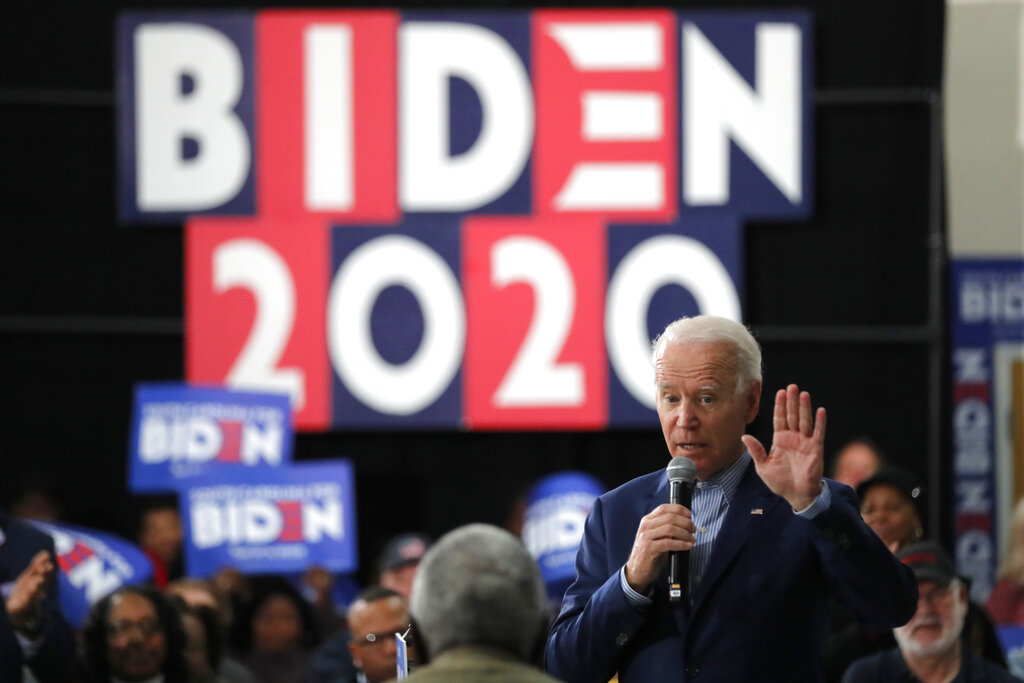
Biden so far has failed to live up to expectations in the three states that have held their primary or caucus to date.
Steve Schale: Unsolicited advice for Bernie Sanders

One of the hardest things for a campaign, particularly one completely engaged in the fight, is to see beyond itself. Typically, this only gets worse when campaigns, both ones winning and losing, reach the desperate phase — the point when you have simply run out of options because the end is near. Every candidate wants to win, so no campaign, at any level of the ballot, is immune. Right now, Bernie Sanders falls into this box. Over the past month or so, as it became more and more clear his campaign is nearing the end, the campaign has taken on a sharper edge, saying and doing things that make it harder for him to land the plane softly. But now the plane is going to land regardless – and after tomorrow, there really is no tomorrow. If he were to ask, below is the advice I would give to Bernie Sanders. So here goes, my Memo to Bernie Sanders 1. Use Your Political Capital Wisely: You will never have more political capital than you have today, but every day that goes by, you will lose a bit of your capital. Whether you want it to or not, the party is going to move on. You want to define the terms of your exit, not have it defined for you, and in this frame, you need to figure out what deliverables they can actually give you. As you know, politics is zero-sum, so be realistic, and remember, that conversation isn’t the end game. 2. You need to go all in for her: It may be counter-intuitive, but the success of your movement — and your ability to lead it, is entirely dependent on Hillary Clinton winning. If she loses, your movement won’t look to you for leadership, but instead will start looking for new candidates — and many Democrats will blame you for the loss. But when she wins, you can use your movement to push for more progressive policies. 3. Don’t obsess about the platform: No one has ever read it. No one ever will. And yes, the nomination process in both parties is messed up. But that isn’t today’s fight – beating Donald Trump is. 4. Help her win, then take credit for it: Right now, the sense is the Democratic Party is not united. You often say that you can’t make your followers do what you want, but we all know this isn’t true. Just like Hillary Clinton made it easy for her supporters to join up with Obama, you need to do the same. And when she wins in November, driven by a united Democratic coalition, the campaign obits will all give you credit for it, and all of the sudden, you will find yourself in charge of an incredibly powerful movement — with a president who can help you get things done. 5. Think long term. Change doesn’t happen in Washington, change starts in local communities. Encourage and help your activists run for school boards, city commissions, and state legislatures. Your campaign has been a moment — but you can build a movement by inspiring a generation of young activists to understand a lifetime of public service is an honorable one, and look back in 15-20 years and see what real change looks like. The biggest thing you should do Wednesday is get some sleep. Go back to Burlington for a day or two, get your team off the television, and take a day or two to catch your breath. At some level, I’ve been there. After three months in the barrel for Joe Biden, it was hard to stop fighting. But with space and rest, the path will become clear. And senator, remember leadership isn’t just about inspiring a movement, it is also about knowing when to lead your team off the mountain before you are trapped in a storm. Your job now is to give your movement the best chance to succeed in the future. Your loudest supporters will want you to push on — but your job is to help them understand why it is time to move on.
