
Shutdown inches closer as U.S. House GOP fails to pass defense bill, lawmakers exit D.C.
by Jennifer Shutt, Alabama Reflector September 21, 2023 WASHINGTON — U.S. House Republicans were unable for a third time Thursday to begin debate on the Defense funding bill, throwing another wrench into Speaker Kevin McCarthy’s leadership tenure. The 212-216 vote that rejected the rule for the $826 billion Defense spending measure was unexpected, coming less than a day after House GOP lawmakers gathered in a room in the Capitol basement to broker a path forward. Arizona Rep. Eli Crane and Georgia Rep. Marjorie Taylor Greene switched their votes to oppose the rule, after voting on Tuesday to adopt it. Colorado Rep. Ken Buck and South Carolina Rep. Ralph Norman both supported adoption of the rule on Thursday after opposing it earlier in the week. Other Republicans voting no included Andy Biggs of Arizona, Dan Bishop of North Carolina, and Matt Rosendale of Montana. The rule would have allowed the House to begin officially debating the bill and voting on nearly 200 amendments. The failed vote led McCarthy to reverse course on the schedule, with many lawmakers heading home for the weekend on Thursday instead of sticking around for votes throughout the weekend. McCarthy had said exactly one week ago, “When we come back, we’re not going to leave. We’re going to get this done.” The update to the House schedule sent around Thursday afternoon said ”ample notice will be given ahead of any potential votes tomorrow or this weekend.” The stalemate and change of plans does not bode well for efforts to approve the short-term spending bill that’s needed to stave off a partial government shutdown when the new fiscal year begins Oct. 1. McCarthy has yet to unify his members amid deep disagreements about how much the federal government should spend and what policy restrictions should be included in full-year bills as well as the stopgap measure. The ongoing dispute has ground the House chamber to a halt as McCarthy searches for a way to unify his razor-thin majority without turning to Democrats to pass a bipartisan bill. Arkansas Republican Rep. Steve Womack, a senior appropriator, said Thursday that his fellow lawmakers need to accept the Senate will re-work any partisan bills the House sends over. “Remember, this is all going to go to the Senate, so people don’t need to get real hot and bothered over where we are today,” Womack said. “It’s going to be based on what comes back and whether or not it can get to the floor.” Discussions among House Republicans, he said, are likely to become “heated” once the Senate re-works a short-term spending bill and sends it back to the House for a final approval vote. Infighting and political differences within the House Republican Conference have so far prevented GOP lawmakers from reaching agreement on their opening offer on a short-term spending bill, which is also called a continuing resolution or CR. Defense spending bill falters Before the Thursday vote, McCarthy had been somewhat optimistic the House could finally approve the rule and begin debate on the full-year Defense spending measure. Greene wrote on X that she switched her vote “because they refused to take the war money for Ukraine out and put it in a separate bill.” The rule approved 184 amendments for floor debate and votes, including one from Florida’s Matt Gaetz that would have prohibited “security assistance for Ukraine.” Crane wrote on X on Thursday that he believes votes “on CRs, omnibus bills and raising the debt ceiling should never take place.” “I’m going to do whatever I can to change the way this place works,” he wrote. Oklahoma Republican Rep. Tom Cole, chair of the Rules Committee, switched his vote on Thursday to a no vote after voting yes a few minutes earlier. The procedural maneuver allows him to bring the rule back up for a vote at a later time. The whip count error appeared to be a surprise for Defense Appropriations Chair Ken Calvert, a California Republican; ranking member Betty McCollum, a Minnesota Democrat; and staff — all of whom were seated at the tables on the House floor ready to lead debate on the measure. The Republican table held thick white binders as well as a large accordion folder, all filled with paperwork, and the Democratic table was stacked with paperwork as well. It’s highly unlikely that staff would have brought all the materials needed to debate the bill and amendments if they knew the rule vote was going to fail. ‘At least a short-term shutdown’ In addition to strong disagreement among House Republicans about the full-year spending bills, the House GOP Conference has yet to solidify a plan to pass the short-term stopgap spending bill that’s needed to hold off a funding lapse. Idaho Republican Rep. Mike Simpson, chair of the Interior-Environment spending subcommittee, said he expects there will be “at least a short-term shutdown” as the House and Senate try to reach agreement on a short-term spending bill. “That’s a lot of work to do in a very short time,” Simpson said. House Freedom Caucus Chair Scott Perry, a Pennsylvania Republican, said Thursday that he hasn’t seen details on any new short-term spending bills that might come to the floor. “I haven’t seen the language of any additional CR,” he said. Kansas Sen. Jerry Moran, the top Republican on the Commerce-Justice-Science spending panel, said he’s “hoping the House chaos is set aside.” “I keep saying I’m not voting for another CR again, but I keep voting for them because the outcome is worse with a shutdown,” Moran said. “But this just needs to be resolved in the House. I don’t think there’s a problem in the Senate that would cause a shutdown.” Any short-term spending bill will have to be bipartisan in order to get through the Democratically controlled Senate, where at least 60 votes are needed to limit debate on legislation. That could take more time than lawmakers have before Oct. 1, he said. “Nothing about this is conducive to getting
Robert Aderholt named Chairman of Labor, Health and Human Services & Education Subcommittee of the House Appropriations Committee
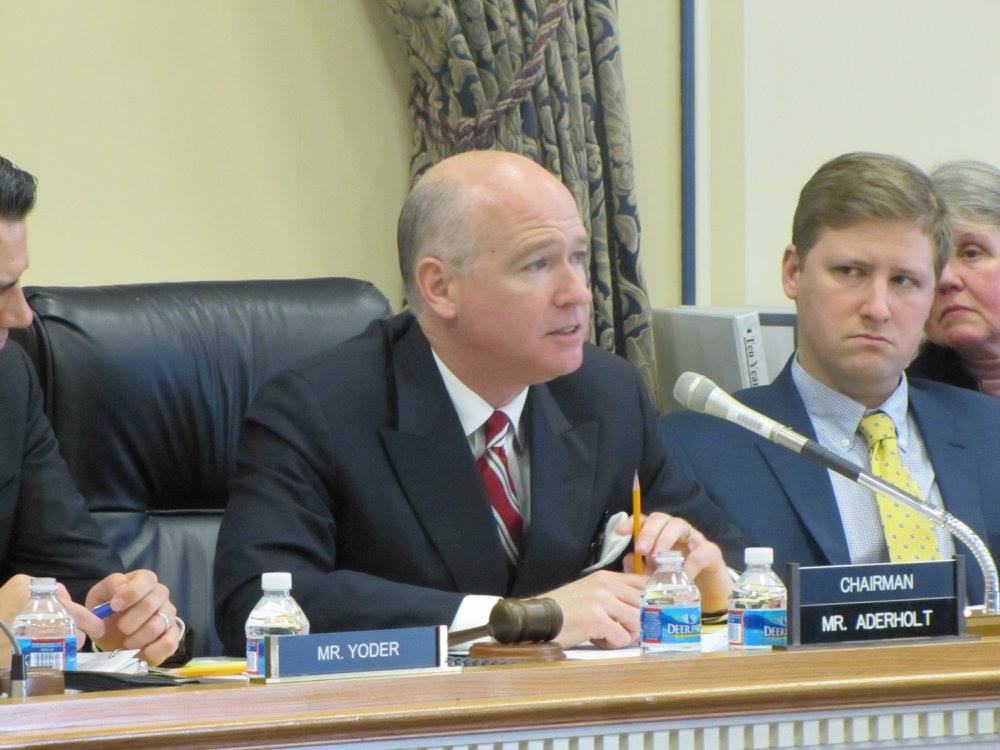
Congressman Robert Aderholt was selected as the Chairman of the Labor, Health and Human Services & Education Subcommittee of the House Appropriations Committee on Monday. “It is an honor to have been chosen to chair this important Appropriations Subcommittee,” Rep. Aderholt said. “The Labor, Health and Human Services & Education subcommittee is responsible for the largest pool of non-defense government spending in the entire federal budget, and with that comes the commitment to renewed oversight and fiscal responsibility as we move into the Fiscal Year 23 Appropriations cycle.” “The new Republican majority in the House has made a commitment to the American people to get government spending under control,” Aderholt continued. “As chairman of this committee under Appropriations, I will be laser-focused on looking at areas where we can reign in out-of-control spending, much of it put in place during the pandemic and no longer needed.” “As the national debt approaches $33 trillion, we must get control of the discretionary, non-defense spending,” Aderholt added. “With so many threats to our national security from the likes of China, Russia, Iran, and North Korea, cutting defense spending is, in my opinion, not an option. Therefore, we must look at areas of our domestic spending that have grown wildly out of control.” “I want to use the power of the gavel to make sure that this subcommittee is meeting its commitments to the departments and agencies it funds without breaking the bank built by American taxpayers,” Aderholt concluded. “Lastly, and most certainly not least, I will work as chairman to make sure we defend the most vulnerable among us by protecting the Hyde Amendment. For decades, this amendment, which prevents tax dollars from being used to pay for abortions, received bipartisan support. Only in recent years have some on the left tried to remove this important safeguard. I will work to make sure it stays firmly in place.” House Appropriations Chairwoman Kay Granger announced, “I’m proud to have this outstanding group of Members leading the Committee at this critical time for the country. These Members understand we must find ways to cut wasteful government spending while increasing the safety and security of the American people.” “We’ve got our work cut out for us, and this is the best team to get the job done,” Chairwoman Granger added. “We have an exceptional leader in Tom Cole and an experienced lineup of subcommittee chairs, all who are committed to passing conservative appropriations bills.” The House Appropriations Committee subcommittee chairs are: Since control of the House of Representatives has shifted from the Democrats to the Republicans, that means that all the powerful House Chairs are now Republicans. Congress members Terri Sewell and Jerry Carl serve on House Appropriations along with Aderholt. Aderholt is the dean of the Alabama Congressional delegation, having served in the House of Representatives since 1996. Aderholt represents Alabama’s Fourth Congressional District. Aderholt lives in Haleyville. To connect with the author of this story, or to comment, email brandonmreporter@gmail.com.
Alabama National Guard adjusts to looming budget shortfall

States around the nation are facing budget shortfalls for their National Guards following long stints in Washington D.C. after they were called upon to protect the U.S. Capitol. Gov. Kay Ivey activated the Alabama National Guard in January. The 750 soldiers were activated soon after the Capitol protests and returned home the day after the Inauguration. During The Dan Morris radio show on 93.1 Newstalk last week, guest host Apryl Marie Fogel* fielded a call stating that some Alabama National Guard training camps and drills were being canceled. Fogel reached out to Gina Maiola in Governor Kay Ivey’s office, who referred her to the National Guard. Sandra D. Lucas, the Deputy Director of Public Affairs for the JFHQ Alabama National Guard, replied that Lucas responded, “The FY21 federal reimbursement to the National Guard Bureau has been delayed, causing a funding shortfall for the remainder of the fiscal year. This is due to supported events that were not planned for, or were underfunded, or underestimated. Although we are going to have to make changes to our schedule, every effort is being made to minimize impact to readiness. “As we are preparing to minimize expenses due to a shortage of fourth-quarter funding, the Alabama National Guard is adjusting the remaining FY21 annual training requirements. Readiness is our main priority, therefore, individuals who require annual training days will be given the opportunity to attend annual training to meet their 15-day active training requirement. “The head of the National Guard Bureau, Gen. Daniel Hokanson, publicly warned lawmakers in May that the Guard must be reimbursed by August to avoid impacts on training in the final months of the fiscal year. In the ensuing months, those warnings have become more stark. A July 6 National Guard report warns of far-reaching effects on training, vehicle, and aviation readiness as well as facility sustainment efforts if lawmakers don’t approve more money by the beginning of August.” “Without timely reimbursement by August 1, 2021, the National Guard will experience critical readiness impacts across its entire enterprise,” the report states. The report was shared by the offices of Steve Womack and Rep. Cheri Bustos (D-Ill.), who are pressing House and Senate leadership to quickly reimburse the Guard. “We are preparing to minimize expenses due to a shortage of fourth-quarter funding, but none of this is a new challenge for the Alabama National Guard. If the past year has proved anything, it’s the capability and adaptability of Guardsmen to meet any demands regardless of unforeseen circumstances.” Lucas concluded, “We are confident in the resilience of our Soldiers and Airmen. Whether we drill 12 months per year or only 10, we will remain Always Ready and Always There.” *Editorial Disclaimer: Apryl Marie Fogel is the owner and publisher of Alabama Today.
Donald Trump’s $4.8 trillion budget proposal revisits rejected cuts

The budget proposes cuts to domestic programs and relies on strong economic growth.
