
Medical Marijuana Commission awards cannabis industry licenses
On Thursday, the Alabama Medical Cannabis Commission (AMCC) awarded medical cannabis licenses to 24 different entities for the inaugural Alabama cannabis industry – under authority granted to the Commission by the Alabama Legislature in 2021. Five entities were granted integrated facility licenses: · Insa Alabama, LLC · Flowerwood Medical Cannabis, LLC · Southeast Cannabis Company, LLC · Sustainable Alabama, LLC · TheraTrue Alabama, LLC In June, Flowerwood, Southeast Cannabis, Sustainable Alabama, and TheraTrue were awarded integrator licenses by the AMCC as well as Verano Alabama, LLC. Those license awards were suspended just days later after the AMCC discovered tabulation errors in the tabulation of the scores. Verano was not awarded a license in this do-over by the Commission, but Insa Alabama was. Seven entities were awarded cultivator licenses on Thursday: · Gulf Shore Remedies, LLC · Pure by Sirmon Farms, LLC · Blackberry Farms, LLC · Twisted Herb Cultivation, LLC · I AM FARMS · Greenway Botanicals, LLC · CRC of Alabama, LLC In the previous round of awards, Blackberry Farms, LLC, Gulf Shore Remedies, Pure by Sirmon Farms, and Twisted Herb Cultivation all received awards. All four still received awards on Thursday, but they were joined by I AM FARMS, Greenway, and CRC of Alabama. This was still less than the twelve maximum cultivator licenses allowed by the 2021 enabling legislation. Four entities were granted marijuana processor licenses. · Enchanted Green, LLC · 1819 Labs, LLC · Organic Harvest Lab, LLC · Jasper Development Group Inc. In June, all four of the same entities were awarded licenses. There was no change in this category on Thursday. On Thursday, the AMCC voted to give medical cannabis dispensary licenses to: · Yellowhammer Medical Dispensaries, LLC · CCS of Alabama, LLC · RJK Holdings AL, LLC · Statewide Property Holdings AL, LLC CCS of Alabama, Yellowhammer Medical, RJK Holdings, and Statewide Properties received awards in June as well. There were no changes by the AMCC in this category. Three entities were granted secure transporter licenses on Thursday. · Tyler Van Lines, LLC · International Communication, LLC · XLCR, Inc. In June, the Commission announced awards to International Communication and Tyler Van Lines. Alabama Secure Transport, LLC received an award in June but was replaced by XLCR, Inc. in Thursday’s grant awards. The AMCC awarded only one license for the certified state testing laboratory. That award went to Certus Laboratories – the same as in June. Rex Vaughn, a farmer, has replaced Dr. Steven Stokes, an oncologist, as the Chairman of the Commission. “Since the Commission’s inception, we have worked to develop a fair, honest, and equitable process to select licensees,” explained Chairman Rex Vaughn. “It is regrettable that the tabulation errors occurred. However, we have acknowledged the miscalculations and have taken the necessary steps to ensure that the data provided to the Commission was accurate. We are sincerely appreciative of the Court for allowing us to take corrective actions.” According to the AMCC, the University of South Alabama (USA) was engaged by the AMCC to coordinate the application review process and recruit evaluators to assess the scored exhibit items for all 90 applicants. USA utilized 66 evaluators with experience relevant to the application content to review one of eight scoring categories: (1) Financial Ability; (2) Business/Management Approach; (3) Operations Plans & Procedures; (4) Facility Suitability & Infrastructure; (5) Security Plan; (6) Personnel; (7) Quality Control & Testing; or (8) Marketing & Advertising. Each scored exhibit was independently reviewed by two evaluators to assess the applicant’s solvency, stability, suitability, capability, projected efficiency, and experience, both in relation to any baseline set by the Commission, as well as in comparison with other applicants. Applicants who did not receive awards in June brought a lawsuit asking a judge to stay those awards. Nothing happened on Thursday that is likely to satisfy those plaintiffs, so the next phase of this process could potentially be in a Montgomery courtroom. To connect with the author of this story or to comment, email brandonmreporter@gmail.com.
Marijuana licenses expected to be awarded on Thursday
The Alabama Medical Cannabis Commission (AMCC) will meet on Thursday. On the proposed agenda for Thursday’s meeting will be awarding medical cannabis licenses. The AMCC previously awarded licenses to a number of entities in June. Days later, the Commission suspended those license awards after errors were found in the scoring of some of the applications. On Monday, Montgomery Judge James Anderson ruled that the AMCC could proceed with discussions on license applicants at their August 10 meeting, provided that the Commission abides by the Alabama Open Meetings Act. The temporary restraining order that Judge Anderson previously issued staying the licensing process will expire once the Commission announces the award of licenses on August 10. Some applicants who were denied licenses sued the Commission, and that lawsuit is proceeding. Those plaintiffs will be closely monitoring what the AMCC does on Thursday, as that directly impacts how they proceed with their litigation. The AMCC is expected to award licenses for cultivators, processors, laboratories, transporters, dispensaries, and integrated facilities. The integrator license was the license that was most in demand by applicants. Applicants were not allowed to apply in multiple categories. Chey Garrigan is the founder and CEO of the Alabama Cannabis Industry Association (ACIA). “We are confident that the Commission has resolved the scoring issues, and we look forward to working with all of the licensees as we build the medical cannabis industry into a new vibrant sector of the Alabama economy,” Garrigan said. The Commission will also have to select a new chair. Rex Vaughn, whose expertise is in agriculture, is the vice chair and is expected to be appointed as the new chairman. Former Chairman Dr. Steven Stokes resigned after receiving criticism for serving as both the Chair of the AMCC and serving on the board of the University of South Alabama. The University of South Alabama (USA) was tasked with evaluating and scoring the applications. According to some reports, USA may have made some errors in tabulating those scores leading to the suspension of the license awards. Stokes is a Dothan-based oncologist who has treated cancer patients both in Alabama, where cannabis is not a legal option, and Florida, which has had medical cannabis for years. Stokes played a key role in the 2019 Alabama Medical Cannabis Study Commission that drafted the bill that eventually became Alabama’s medical cannabis law that passed in 2021. That legislation created the AMCC and tasked it with writing the rules for creating legal, medical cannabis in Alabama and regulating the fledging Alabama medical cannabis industry. Since marijuana is presently illegal in Alabama, all of the infrastructure for the cannabis industry has to be built, the first crop grown from seed, that crop processed into an AMCC-approved form, and that product transported to the new dispensaries before any medical cannabis is sold to any patients. Possession of cannabis in its raw plant form, including seeds and plants, will remain illegal in Alabama unless you are licensed by the AMCC. No smokable products will be legally sold in the state. There will likely be more litigation even after the Commission makes its license awards on Thursday. The first legal Alabama-grown and processed medical cannabis will likely not be available until early 2024 – at the earliest. To connect with the author of this story or to comment, email brandonmreporter@gmail.com.
Dr. Steven Stokes, Chairperson of Alabama’s medical marijuana commission steps down
The chairperson of the Alabama Medical Cannabis Commission stepped down on Thursday after a lawsuit challenged his eligibility to serve on the board. Dr. Steven Stokes, a radiation oncologist from Dothan, Alabama, submitted his resignation Thursday from the commission tasked with regulating medical marijuana providers in the state. “Dr. Stokes has a genuine desire to see medical cannabis products available to patients in Alabama. … We greatly appreciate Dr. Stokes’ contribution to the Commission and anticipate that he will remain at the forefront of the development of Alabama’s medical cannabis program,” a spokesperson for the commission wrote in an email. The statement from the commission did not give a reason for the resignation. A lawsuit filed last month challenged Stokes’ eligibility to serve on the commission since he also serves as a trustee for the University of South Alabama. State law says public officials, lobbyists, and candidates for public office cannot serve on the board. The Alabama Medical Cannabis Commission in June pulled back licenses that had been awarded to cultivators, dispensaries, and others after discovering potential problems with how applicants were scored. Brittany Peters, a spokesperson for the commission, said the board is scheduled to re-award licenses and restart the procedural timelines associated with the licensing process at its meeting on Aug. 10. Alabama lawmakers in 2021 ended years of resistance and approved the creation of a program to allow marijuana to be used for certain medical conditions. However, it is not available yet to patients as the state develops rules and procedures for the program. Republished with the permission of The Associated Press.
Alabama’s tax revenues are up slightly over last May
Alabama’s tax revenues, both for May and the year to date, are up more than 2.5% over the same period last year according to data from the state Department of Revenue. The report for May showed $1.54 billion in tax revenues, up 2.63% from May 2022 ($1.5 billion). Year-to-date collections added up to $11.27 billion, or a 2.68% increase from 2022 ($10.98 billion). Sales tax revenues dipped slightly in May compared to the same time last year ($267.5 million from $273.6 million, a drop of 2.23%), but are up for the year to date ($2.14 billion compared to $2.05 billion in 2022, an increase of 4.3%). Corporate income taxes were a big gainer compared to May 2022. Collections are $48.3 million compared to $41.4 million, an increase of 16.65%. For the year to date, the state collected $829.4 million compared to $719.7 million (15.4% gain). Individual income taxes were up in May compared to the same time last year, as the state collected $882 million compared to $854.9 million last year, an increase of 3.21%. Income tax collections for the year to date are down 1.63%, going from $4.81 billion in 2022 to $4.73 billion. Gasoline tax collections for May were largely static compared to the same period last year. This May, the Department of Revenue took in $58.4 million in gas tax revenue compared to nearly $58 million in May 2022, an increase of 0.71%. Gas tax revenue for the year to date totaled $454.9 million, compared to $453.7 million in 2022, a gain of 0.26%. Republished with the permission of The Center Square.
Judge stays medical marijuana licenses as companies argue selection process was flawed
A judge on Friday ordered Alabama Medical Cannabis Commission to temporarily halt the issuance of licenses to growers and distributors as two companies argue the state used a flawed and secretive process to selecting winners for the potentially lucrative licenses. The order re-enforces a decision already made last week by the Alabama Medical Cannabis Commission to pull back the licenses awarded on June 12 after the chairman said they discovered “potential inconsistency in the tabulation of scoring data.” Montgomery Circuit Judge James Anderson on Friday issued a temporary restraining order on top of that, staying the licenses until the issue regarding the scoring data is resolved. The state and companies agreed to the stay. Anderson scheduled a July hearing on the companies’ request for a preliminary injunction as the companies argue the entire selection process was flawed. Alabama Always and Hornet Medicinals, two companies that applied for the five integrated “seed to sale” licenses, have sued the Alabama Medical Cannabis Commission arguing there were problems with the process for awarding licenses. A lawyer for Alabama Always argued in court filing that the commission used anonymous graders hired by the University of South Alabama to score applications and then awarded them without any discussion on June 12. “We think from day one that this process has been cloaked in secrecy,” William Somerville, an attorney for Alabama Always told Anderson during the Friday court hearing. Somerville told reporters that the company disagreed with how it was scored, particularly on finances, noting the company had already invested $4.5 million on a cultivation facility. The company wrote in court filings that it is prepared to open and stock stores with medical marijuana by January, if not sooner. Alabama Always is asking Anderson to order the commission to turn over additional information about the scoring and selection process. The commission has not elaborated on the problems with the scoring other than to say there were potential inconsistencies, “The stay is recommended due to the (commission’s) discovery of potential inconsistency in the tabulation of scoring data,” Dr. Steven Stokes, an oncologist who chairs the commission, said during last week’s meeting. Alabama lawmakers in 2021 ended years of resistance and approved the creation of a program to allow marijuana to be used for certain medical conditions. However, it is not available yet to patients because the state has to develop rules and award grower and distributor licenses. Republished with the permission of The Associated Press.
Alabama cannabis license awards announced
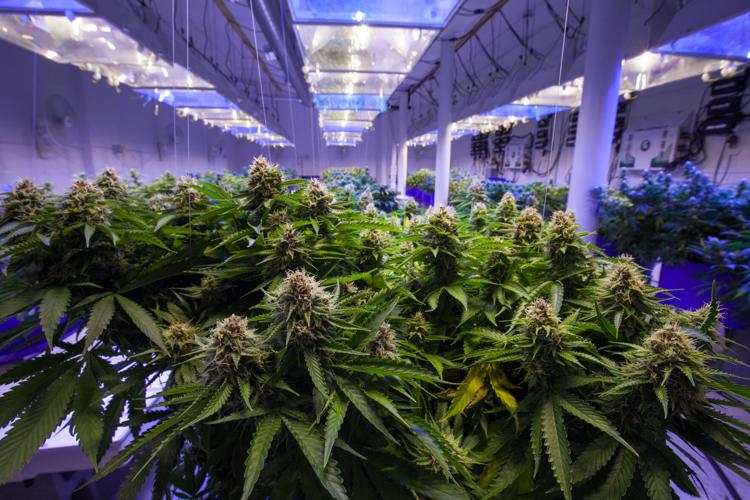
On Monday, the Alabama Medical Cannabis Commission (AMCC) met and voted to award the state of Alabama’s first-ever medical cannabis business licenses. Of the 90 applications accepted by the Commission at their meeting on April 13, just 21 were awarded licenses by the AMCC. The 2021 legislation legalizing medical cannabis in Alabama created the AMCC. It tasked the Commission with regulating the industry and awarding the permits to the integrated facilities, cultivators, secure transporters, processors, and diagnostic labs that the state will allow to participate in this industry. The medical cannabis business licenses were awarded to the following applicants. There were five integrated facility licenses awarded. These went to Flowerwood Medical Cannabis, LLC; Southeast Cannabis Company, LLC; Sustainable Alabama, LLC; TheraTrue Alabama, LLC; and Verano Alabama, LLC. Only four cultivator licenses were awarded. These went to Blackberry Farms, LLC.; Gulf Shore Remedies, LLC; Pure by Sirmon Farms, LLC; and Twisted Herb Cultivation, LLC. Four processor licenses were awarded. These went to 1819 Labs, LLC; Enchanted Green, LLC; Jasper Development Group Inc.; and Organic Harvest Lab, LLC. Four dispensary licenses were awarded. These went to CCS of Alabama, LLC; RJK Holdings AL, LLC; Statewide Property Holdings AL, LLC; and Yellowhammer Medical Dispensaries, LLC. Three secure transport licenses were awarded. These went to Alabama Secure Transport, LLC; International Communication, LLC; and Tyler Van Lines, LLC. Certus Laboratories was awarded the license to be the state’s only licensed state testing laboratory. The Legislature authorized the Commission to award up to twelve cultivator licenses, four processor licenses, four dispensary licenses, five integrated facility licenses, and an unspecified number of secure transport and state testing laboratory licenses. The Commission elected to award fewer licenses, particularly the cultivator licenses than they were allowed to by the legislation. “There was no shortage of qualified individuals and entities who provided applications for us to consider,” explained Commission Chairman Dr. Steven Stokes. “Based on the evaluators’ assessments and the Commission’s considerations, we believe that we have selected an outstanding slate of inaugural licensees to represent Alabama’s new medical cannabis industry.” At first glance, it seems like four licensed processors depending on supply from just four licensed cultivators might be problematic for processors concerned about supply. Vice Chairman Rex Vaughn, however, announced at the meeting that the Commission intends to open a second offering of licenses for cultivators, secure transporters, and state testing laboratories. “The Commission looks forward to affording more opportunities for individuals to participate in the industry,” explained Vice Chairman Vaughn. “These businesses will not only serve the patients of Alabama but provide business and job opportunities for local communities.” The University of South Alabama (USA) was engaged by AMCC to coordinate the application review process and recruit evaluators to assess the scored exhibit items for all 90 applicants. USA utilized 66 evaluators with experience relevant to the application content to review one of eight scoring categories: (1) Financial Ability; (2) Business/Management Approach; (3) Operations Plans & Procedures; (4) Facility Suitability & Infrastructure; (5) Security Plan; (6) Personnel; (7) Quality Control & Testing; or (8) Marketing & Advertising. Each scored exhibit was independently reviewed by two evaluators to assess the applicant’s solvency, stability, suitability, capability, projected efficiency, and experience, both in relation to any baseline set by the Commission, as well as in comparison with other applicants. “The Commission has worked diligently since the passage of the Darren Wesley “Ato” Hall Act to develop regulations and policies to facilitate an effective and safe medical cannabis industry,” explained Commission Director John McMillan. “We are excited to begin working with those applicants who were awarded licenses to meet the needs of so many Alabamians who are living with debilitating conditions that can benefit from medical cannabis.” The applicants awarded a license now have 14 days to pay the AMCC the appropriate license fee to the Commission. At its meeting on July 10, 2023, the Commission is scheduled to formally issue the licenses in each license category. There remains a possibility that those final license awards could be further delayed if one or more of the 69 applicants the AMCC rejected appeal the decision to the courts. Litigation, in theory, could delay this process for weeks or even months. In order for a doctor to be qualified to make a medical cannabis recommendation, they must become certified. Under the rules promulgated by the Alabama Board of Medical Examiners, physicians may begin the certification process to recommend medical cannabis after the business licenses have been issued. In order for a patient to be able to purchase Alabama medical cannabis products, they must have at least one of the qualifying conditions and then receive a recommendation for medical cannabis from a certified physician. Medical cannabis products that may be recommended to patients include tablets, capsules, tinctures, gelatinous cubes, gels, oils or creams for topical use, suppositories, transdermal patches, nebulizers, or liquids or oils for use in an inhaler. Raw plant materials and any smokable or vaped products will not be allowed and will remain illegal to possess, even for those with an Alabama Medical Cannabis card. People with a legitimate medical need for cannabis should be able to purchase products in Alabama by the end of this year. To connect with the author of this story or to comment, email brandonmreporter@gmail.com.
Friday is last day to turn in marijuana license applications
The Alabama Medical Cannabis Commission (AMCC) is still accepting applications from Alabama individuals and companies that want to be licensed to participate in the state’s new medical marijuana industry, but the deadline is Friday, December 30. Chey Garrigan, the founder and President of the Alabama Cannabis Industry Association, told Alabama Today that applicants are rushing to finalize plans and obtain sites for potential cannabis locations. “We in the industry are working really hard this week to finalize details in order to get these applications turned in,” Garrigan said. “Time is running out to get the application finished and turned in.” The AMCC began allowing potential business applicants to download the application forms on September 1 and closed those requests for application forms on October 17. The Commission wrote the rules for the new industry in August, following the requirements set in the legislation (SB46) passed in the 2021 Alabama Regular Commission. Only applicants who submitted a Request for Business Application by that October 17 deadline can turn in an application. Those requestors then received a Business Application Form. The deadline to turn in those forms to the Commission is Friday at 4:00. “Since the passage of the Darren Wesley “Ato” Hall Compassion Act last year, the Commission has worked diligently to lay the groundwork for the new medical cannabis industry in Alabama by developing administrative rules and regulations and by obtaining necessary software systems,” said AMCC Director John McMillan in a statement. “We are excited to see the many components of the program come together and provide not only business and career opportunities to Alabamians, but most importantly, we are one step closer to meeting the needs of thousands of residents who suffer from various medical conditions whose symptoms may be alleviated by the proper use of medical cannabis products.” Applicants will be allowed to submit amendments and corrections to their previously filed applications in the coming months. Garrigan said that she is helping members finish their applications. “Along with being the most regulated state in the country, this is the most complicated application anyone in the industry has seen,” Garrigan said. “We still will have time to file amended applications to make any necessary changes. Also, the Commission will review the applications and make requests for applicants to make corrections. The applicants will have time to submit a corrected application.” The number of licenses is strictly limited by the statute passed by the Alabama Legislature. The Commission may award up to twelve cultivator licenses, four processor licenses, four dispensary licenses, five integrated facility licenses, and an unspecified number of secure transport and state testing laboratory licenses. “Throughout the development of the program, the Commission’s focus has been to ensure that future patients receive high-quality, safe, and affordable products. That focus will continue as we begin to evaluate medical cannabis business applicants,” explained Commission Chairman and Oncologist Dr. Steven Stokes. “We hope our efforts will foster a model program where Alabama’s medical cannabis business licensees are providing qualified patients with safe products that they can trust.” The University of South Alabama has been contracted to review all of the applications for the Commission. Under Alabama’s program, only registered certifying physicians will be allowed to recommend medical cannabis to their patients. Those doctors must take mandatory training approved by the AMCC and the Alabama Medical Association. The doctors may only prescribe medical cannabis to patients who have been diagnosed with autism spectrum disorder; cancer-related pain or nausea; Crohn’s Disease; depression; epilepsy or conditions causing seizures; HIV/AIDS-related nausea or weight loss; panic disorder; Parkinson’s Disease; persistent nausea; post-traumatic stress disorder (PTSD); sickle cell anemia; spasticity associated with multiple sclerosis or spinal cord injury; Tourette’s Syndrome; a terminal illness; or conditions causing chronic or intractable pain. Alabama law does not allow dispensing of raw plant material or smokable products. Medical cannabis products that may be recommended to patients are limited to tablets, capsules, tinctures, gelatinous cubes, gels, oils or creams for topical use, suppositories, transdermal patches, nebulizers, or liquids or oils for use in an inhaler. Qualifying patients are expected to be able to obtain a state-issued Alabama medical cannabis card and the first legal Alabama medical cannabis late in 2023. To connect with the author of this story, or to comment, email brandonmreporter@gmail.com.
State Treasurer John McMillan picked as Medical Cannabis Commission executive director
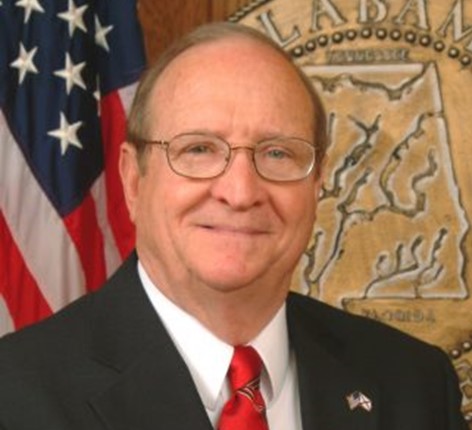
The Alabama Medical Cannabis Commission has picked State Treasurer John McMillan as the first executive director of the new agency, reported Al.com. McMillan has over 40 years of experience and was picked over two other finalists. A 14-member commission picked McMillan on a voice vote with no dissenting votes. The commission voted to set his starting pay at $209,877.66 reported Alabama Political Reporter. Medical Cannabis Commission member Dwight Gamble, who led a search committee, said McMillan’s work history helped him nab the job. “He just had a wealth of knowledge, over 40 years in state government, working at so many agencies, just gave him a leg up,” Gamble stated. McMillan will have to resign as State Treasurer in order to take the job. Gov. Kay Ivey will appoint someone to fill the remainder of McMillan’s term. The treasurer would then have to face voters in the major party primaries on May 24, 2022. When asked why he wanted the job, McMillan stated, “More than anything it’s just the challenge of being able to start a significant state agency that I think stands to really help a lot of people that need it as we move forward. We’ve had some good research going on and there’s been interest in this for a number of years.“It just appeals to me with my experience in state government and government agencies, you might say fixing some of them, that this is an opportunity to start something from scratch and get it right and see it bloom.” Dr. Steven Stokes, chair of the Medical Cannabis Commission, said he hoped McMillan could start by Oct. 1. “The Commission made an excellent choice,” Alabama Cannabis Industry Association President Chey Garrigan said. “We look forward to working with Director McMillan as Alabama builds its medical marijuana business from the ground up.”
