
Travel ban case is justices’ first dive into Trump policy
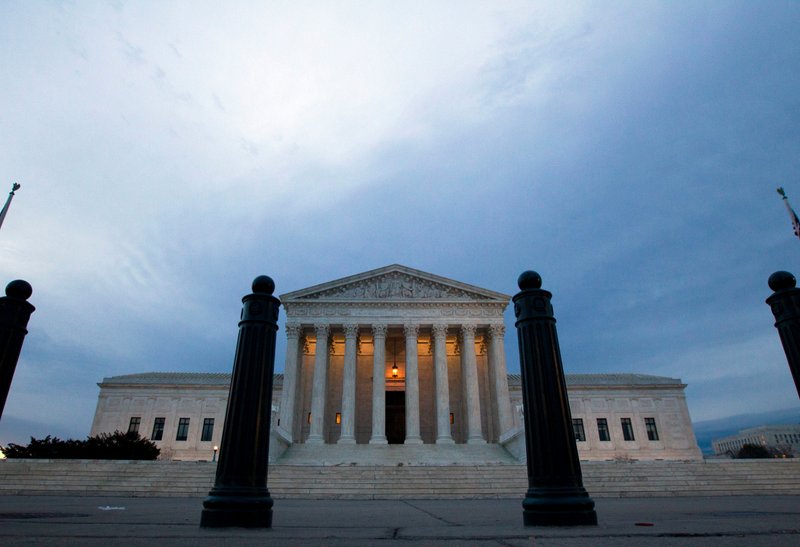
The Supreme Court has so far had little to say about Donald Trump’s time as president, even as the nation has moved from one Trump controversy to another. That’s about to change. The justices’ first deep dive into a Trump administration policy comes in a dispute over the third and latest version of the administration’s ban on travel from some countries with majority Muslim populations. Opponents of the policy and some lower courts have labeled it a “Muslim ban,” harking back to Trump’s campaign call to keep Muslims from entering the country. The high-stakes arguments at the high court on Wednesday could offer some indication about how a court that runs on respect for traditions and precedent will deal with a president who regularly breaks with convention. Apart from the campaign statements, Trump’s presidential tweets about the travel ban and last fall’s retweets of inflammatory videos that stoked anti-Islam sentiment all could feature in the court’s discussion of the travel ban’s legality. “The court could get to the right outcome without getting into the question of his tweets. But I think the president set it up so that it’s virtually impossible to ignore him when he’s shouting from the rooftops about what his purpose was in the three versions of the ban,” said Cecillia Wang, the American Civil Liberties Union’s deputy legal director. Solicitor General Noel Francisco, who will argue the administration’s case, said in a court filing that the ban is well within the president’s authority and is not based on prejudice against Islam. In a sign of heightened public interest, the court is taking the rare step of making an audio recording of the proceedings available just hours after the arguments end. One key issue will be how the court evaluates administration actions. Neil Eggleston, President Barack Obama’s last White House counsel, suggested in an online forum last week that Trump does not merit the same measure of latitude that courts usually give presidents, especially in the areas of national security and immigration. “The court will have to wrestle with how much to defer to a President who has created this record of chaos and animus,” Eggleston and co-author Amanda Elbogen wrote on justsecurity.org. Josh Blackman, a professor at the South Texas College of Law in Houston, cautioned that the court would be breaking new ground if it were to treat Trump differently from other presidents. The policy under review at the court applies to travelers from five countries with overwhelmingly Muslim populations — Iran, Libya, Somalia, Syria and Yemen. It also affects two non-Muslim countries: blocking travelers from North Korea and some Venezuelan government officials and their families. A sixth majority Muslim country, Chad, was removed from the list this month after improving “its identity-management and information sharing practices,” Trump said in a proclamation. Francisco said the Chad decision shows that the restrictions are premised only on national security concerns. He also said that the State Department has cleared more than 430 visa applicants from the affected countries for waivers that would allow them to enter the U.S. But the challengers argue that the administration cannot ask the court to ignore all that has happened. Trump’s first travel ban was issued just a week after he took office in January 2017, and was aimed at seven countries. It triggered chaos and protests across the U.S. as travelers were stopped from boarding international flights and detained at airports for hours. Trump tweaked the order after the 9th U.S. Circuit Court of Appeals in San Francisco refused to reinstate the ban. The next version, announced in March 2017, dropped Iraq from the list of covered countries and made it clear the 90-day ban covering Iran, Libya, Somalia, Sudan, Syria and Yemen didn’t apply to those travelers who already had visas. It also eliminated language that would give priority to religious minorities. Critics said the changes didn’t erase the ban’s legal problems. The 9th Circuit and the 4th U.S. Circuit Court of Appeals in Richmond, Virginia, agreed with the ban’s opponents. The 4th Circuit said the ban “drips with religious intolerance, animus and discrimination.” The 9th Circuit ruled that Trump violated immigration law. The third version is indefinite, unlike the other two, and the administration said it is the product of a thorough review of how other countries screen their own citizens and share information with the U.S. It fared no better than its predecessors in the lower courts, but the Supreme Court said in an unsigned order in December that it could take full effect while the legal dispute continues. The justices said nothing about the substance of the policy, either in December or in earlier actions involving the ban. Now, though, they are confronted with the administration’s view that Trump has broad discretion to impose limits on immigration and that the courts don’t even have a role to play. The Justice Department has said throughout the course of the legal fight that the lawsuits challenging the policy should be dismissed without ever reaching the challengers’ claims. The administration says that foreigners have no right to enter the United States and no right to challenge their exclusion in American courts. Supporting briefs for the ban’s challengers dwarf filings on the administration’s side. Retired high-ranking military officers, former Republican officeholders, Catholic bishops, Amazon, Facebook and 113 other companies, the children of Japanese-Americans who were held in internment camps during World War II and more than a dozen mainly Democratic-led states are among those calling on the court to strike down the Trump policy. The administration’s supporters include roughly the same number of Republican-led states, as well as conservative groups and Jay Sekulow, one of Trump’s personal lawyers. A decision in Trump v. Hawaii, 17-965, is expected by late June. Republished with the permission of the Associated Press.
Alabama joins 15-state coalition in amicus brief supporting Donald Trump’s travel ban

A team of state attorneys general submitted an amicus brief to the U.S. Supreme Court on Thursday in support of the Trump administration’s efforts to restrict travel to the United States by providing a 90-day delay of travelers entering America from Iran, Libya, Somalia, Sudan, Syria and Yemen due to national security concerns regarding those countries. Alabama Attorney General Steve Marshall joined 15 other states in the brief the Court to uphold the travel ban to protect American citizens from terrorism. “The President is rightfully exercising his legal authority to restrict the entry of those who may endanger the safety and security of Americans,” said Marshall. “The restricted countries have a strong record of violent acts and terrorism, and it is vital and appropriate that the President’s provisions stand to properly vet travelers from these areas for the protection of our citizens.” The brief relates to an executive order Trump signed March 6, a revision to an earlier travel ban he signed January 27, a week into his presidency. Federal judges subsequently prevented both versions from being fully implemented, dealing a major legal setback to the new administration’s immigration policy. The Trump administration appealed the injunctions to the Supreme Court, which allowed a limited version of the ban to take effect and will hear full arguments in October. Thursday’s amicus brief was filed by the State of Texas and joined by Alabama, Arizona, Arkansas, Florida, Kansas, Louisiana, Missouri, North Dakota, Ohio, Oklahoma, South Carolina, South Dakota, Tennessee, and West Virginia, along with Gov. Phil Bryant of Mississippi.
Supreme Court ruling in travel ban case leaves many questions
The Supreme Court’s decision to partially reinstate President Donald Trump‘s temporary travel ban has left the effort to keep some foreigners out of the United States in a murky middle ground, with unanswered questions and possibly more litigation ahead. The justices ruled Monday in an unsigned opinion they would hold a full hearing on the case in October. In the meantime, the administration can bar travelers from six majority-Muslim countries from the U.S. if they don’t have a “credible claim of a bona fide relationship” with someone or some entity in the country. It’s unclear what will ultimately constitute a “bona fide relationship,” though the ruling suggested that an American job, school enrollment or a close relative could meet that threshold. Equally unclear is how many foreigners will be affected from the six countries: Syria, Sudan, Iran, Yemen, Libya and Somalia. The ruling was seen as at least a partial victory for Trump in the biggest court case of his presidency. Trump claims the temporary ban is needed to prevent terrorist attacks. Opponents reject that and argue it’s a backdoor way to bar Muslims from entering the United States, as Trump promised in his campaign. The early indications are that the administration will use the decision to take a tough line on travelers from those countries. A senior U.S. official familiar with the situation said the Trump administration has plans in place to relaunch the stalled ban and tourists will be among those kept out. Under these plans, largely orchestrated by White House adviser Stephen Miller, tourists from those countries and any academics, lecturers or others invited to speak or make presentations in the U.S. will be barred. Those groups are regarded as unable to show a substantial and pre-existing tie to a person or institution in the United States. The official who described the plans was not authorized to discuss them publicly by name and spoke on condition of anonymity. But some immigration lawyers and advocates said relatively few people would fall under the ban because these travelers tend to have sufficient relationships with people or institutions in the United States. Jamal Abdi, policy director for the National Iranian American Council, said most Iranians who visit the United States have relatives here or are coming to work or study. He said his group has no idea how the administration plans to judge family relationships and a hard line could mean a significant number of Iranians will be kept out the country for the time being. It could also mean more lawsuits if advocates for immigrants believe the administration is going beyond the Supreme Court’s guidelines in barring visitors to the United States. Like the fate of would-be tourists and scholars, the immediate future for refugees is murky. In its opinion, the court partially reinstated Trump’s temporary prohibition on refugees from any country, using criteria similar to that used in the travel ban. The effect on refugees could be greater because they are less likely to have family, school or business relationships in the United States. Lavinia Limon, CEO of the U.S. Committee for Refugees and Immigrants, said she was dismayed by the ruling, but insisted that her agency has “an existing relationship with incoming refugees, certified and arranged through the Department of State.” “Travel plans are in process, beds have been made and staff around the country plan to meet new Americans at the airports today, tomorrow and in the coming weeks and months,” Limon said. Trump’s initial travel ban caused panic and chaos at airports around the world in late January as it took effect immediately after being signed. Refugees, legal U.S. residents and visa holders were turned back at airports or barred from boarding U.S.-bound planes. A federal court blocked it about a week later. There may be less confusion as the ban is partially reinstated. The administration has revised its travel ban to exclude legal residents and visa holders. Also, the government said last week the ban would go into effect 72 hours after the Supreme Court ruling – which would be Thursday morning in Washington. Republished with permission of The Associated Press.
Donald Trump travel ban partly reinstated; fall court arguments set
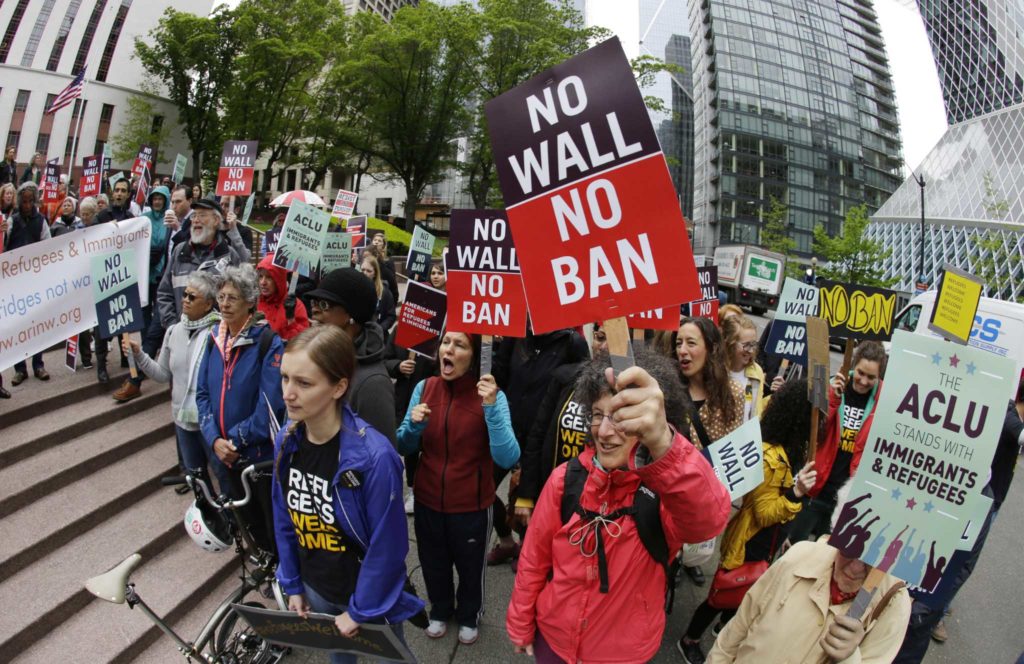
The Supreme Court is letting a limited version of President Donald Trump’s ban on travel from six mostly Muslim countries take effect, a victory for Trump in the biggest legal controversy of his young presidency. The justices will hear full arguments in October in the case that has stirred heated emotions across the nation. In the meantime, the court said Monday that Trump’s ban on visitors from Iran, Libya, Somalia, Sudan, Syria and Yemen can be enforced if those visitors lack a “credible claim of a bona fide relationship with a person or entity in the United States.” Trump said last week that the ban would take effect 72 hours after being cleared by courts. The administration has said the 90-day ban was needed on national security grounds to allow an internal review of screening procedures for visa applicants from the six countries. Opponents say the ban is unlawful, based on visitors’ Muslim religion. The administration review should be complete before Oct. 2, the first day the justices could hear arguments in their new term. A 120-ban on refugees also is being allowed to take effect on a limited basis. Three of the court’s conservative justices said they would have let the complete bans take effect. Justice Clarence Thomas, joined by Samuel Alito and Neil Gorsuch, said the government has shown it is likely to succeed on the merits of the case, and that it will suffer irreparable harm with any interference. Thomas said the government’s interest in preserving national security outweighs any hardship to people denied entry into the country. Some immigration lawyers said the limited nature of the ban and the silence of the court’s liberals on the issue Monday suggested that the court had not handed Trump much of a victory. The White House did not immediately comment. The court’s opinion explained the kinds of relationships people from the six countries must demonstrate to obtain a U.S. visa. “For individuals, a close familial relationship is required,” the court said. For people who want to come to the United States to work or study, “the relationship must be formal, documented and formed in the ordinary course, not for the purpose of evading” the travel ban. The opinion faulted the two federal appeals courts that had blocked the travel policy for going too far to limit Trump’s authority over immigration. The president announced the travel ban a week after he took office in January and revised it in March after setbacks in court. The 4th U.S. Circuit Court of Appeals in Richmond, Virginia, said the ban was “rooted in religious animus” toward Muslims and pointed to Trump’s campaign promise to impose a ban on Muslims entering the country as well as tweets and remarks he has made since becoming president. The San Francisco-based 9th U.S. Circuit Court of Appeals said the travel policy does not comply with federal immigration law, including a prohibition on nationality-based discrimination. That court also put a hold on separate aspects of the policy that would keep all refugees out of the United States for 120 days and cut by more than half, from 110,000 to 50,000, the cap on refugees in the current government spending year that ends September 30. Trump’s first executive order on travel applied to travelers from Iraq and well as the six countries, and took effect immediately, causing chaos and panic at airports over the last weekend in January as the Homeland Security Department scrambled to figure out whom the order covered and how it was to be implemented. A federal judge blocked it eight days later, an order that was upheld by a 9th circuit panel. Rather than pursue an appeal, the administration said it would revise the policy. In March, Trump issued the narrower order. Republished with permission of The Associated Press.
Court likely to question if Donald Trump’s travel ban discriminates

For the second time in a week, government lawyers will try to persuade a federal appeals court to reinstate President Donald Trump‘s revised travel ban – and once again, they can expect plenty of questions Monday about whether it was designed to discriminate against Muslims. A three-judge panel of the 9th U.S. Circuit Court of Appeals has scheduled arguments in Seattle over Hawaii’s lawsuit challenging the travel ban, which would suspend the nation’s refugee program and temporarily bar new visas for citizens of Iran, Libya, Somalia, Sudan, Syria and Yemen. Last week, judges on the 4th Circuit Court of Appeals heard arguments over whether to affirm a Maryland judge’s decision putting the ban on ice. They peppered Acting Solicitor General Jeffrey Wall with questions about whether they could consider Trump’s campaign statements calling for a ban on Muslims entering the U.S., with one judge asking if there was anything other than “willful blindness” that would prevent them from doing so. Monday’s arguments mark the second time Trump’s efforts to restrict immigration from certain Muslim-majority nations have reached the San Francisco-based 9th Circuit. After Trump issued his initial travel ban on a Friday in late January, bringing chaos and protests to airports around the country, a Seattle judge blocked its enforcement nationwide – a decision that was unanimously upheld by a three-judge 9th Circuit panel. The president then rewrote his executive order, rather than appeal to the U.S. Supreme Court, and in March, U.S. District Judge Derrick Watson in Honolulu blocked the new version from taking effect, citing what he called “significant and unrebutted evidence of religious animus” in Trump’s campaign statements. “Again, in this court, the President claims a nearly limitless power to make immigration policy that is all but immune from judicial review,” Hawaii Attorney General Douglas Chin wrote to the 9th Circuit. “Again, he must be checked.” The administration’s lawyers are seeking to persuade the judges that the lower court’s decision is “fundamentally wrong,” and that the president’s order falls squarely within his duty to secure the nation’s borders. The order as written is silent on religion, and neither Hawaii nor its co-plaintiff, the imam of the Muslim Association of Hawaii, has standing to sue, they say – arguments that were rejected in the lower court. The travel ban cases are expected to reach the Supreme Court, but that would likely be cemented if the 4th and 9th Circuits reach differing conclusions about its legality. Because of how the courts chose to proceed, a full slate of 13 judges heard the 4th Circuit arguments last week, while just three, all appointees of President Bill Clinton, will sit in Seattle. For that reason – with the possibility for myriad concurring or dissenting opinions – it could take the 4th Circuit longer to rule, noted Carl Tobias, a law professor at University of Richmond law school in Virginia. Republished with permission of The Associated Press.
Alabama’s senators back new Trump travel ban order
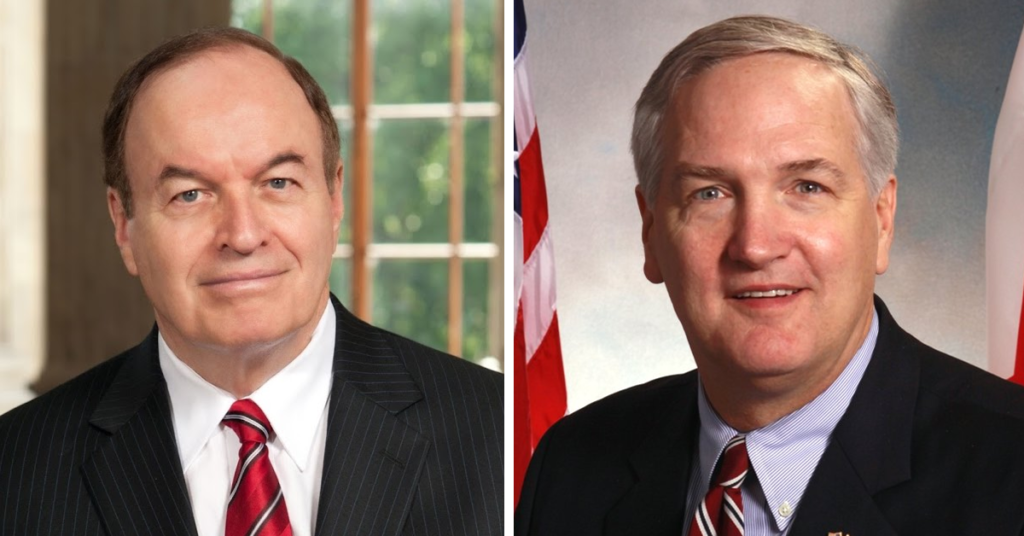
President Donald Trump’s new travel ban executive order received a warm reception from Alabama’s senators this week. U.S. Senators Richard Shelby and Luther Strange praised President Donald Trump‘s revised executive order, which bar new visas being issued to travelers from six countries — Iran, Syria, Somalia, Sudan, Yemen and Libya — for 90 days. Shelby says he’s been a long-time supporter of “a rigorous review of our vetting process” in regards to those allowed to enter the country. “The safety and security of the American people must be a top priority,” Shelby said in a statement. “I have always supported a rigorous review of our vetting process for those who cross our nation’s borders, and I am pleased that President Trump has appropriately modified his executive order to achieve this critical goal. I look forward to working with the Trump Administration and my colleagues in Congress to keep our citizens safe from any individual seeking to enter our nation and do us harm.” Alabama’s newest senator, who replaced Jeff Sessions, Luther Strange calls the new order “a proactive, comprehensive approach.” “Protecting Americans and securing the homeland are solemn obligations of the President,” weighed-in Strange. “The latest executive order takes a proactive, comprehensive approach, and gives us clarity about what steps are being taken to protect our communities. I applaud the President for taking action, and I look forward to working further on keeping America free from violent terrorists.” Trump signed the new order Monday weeks after his initial ban was put on hold by a federal judge and later upheld by an appeals court. The updated order clarifies the implementation of new U.S. visa and immigration protocol, provides resources for enhanced vetting of foreign nationals, and increases transparency in sharing these steps with the American people. It will go into effect on March 16th.
Donald Trump signs new travel ban targeting those seeking new visas
President Donald Trump on Monday signed a new version of his controversial travel ban, aiming to withstand court challenges while still barring new visas for citizens from six Muslim-majority countries and shutting down the U.S. refugee program. The revised travel order leaves Iraq off the list of banned countries but still affects would-be visitors from Iran, Syria, Somalia, Sudan, Yemen and Libya. Trump privately signed the new order Monday while Homeland Security Secretary John Kelly, Secretary of State Rex Tillerson and Attorney General Jeff Sessions formally unveiled the new edict. The low-key rollout was a contrast to the first version of the order, signed in a high-profile ceremony at the Pentagon’s Hall of Heroes as Secretary of Defense James Mattis stood by Trump’s side. White House Press Secretary Sean Spicer was not scheduled to hold an on-camera briefing Monday either, leading to the appearance that the president was distancing himself from the order, which was a signature issue during his campaign and the first days of his presidency. The order also risks being overshadowed by unsubstantiated accusations the president made over the weekend that former President Barack Obama had ordered the wiretapping of his phone during the campaign. The original travel ban caused immediate panic and chaos at airports around the country as Homeland Security officials scrambled to interpret how it was to be implemented and travelers were detained before being sent back overseas or blocked from getting on airplanes abroad. The order quickly became the subject of several legal challenges and was ultimately put on hold last month by a federal judge in Washington state. That ruling was upheld by a federal appeals court. The revised order is narrower and specifies that a 90-day ban on people from the six countries does not apply to those who already have valid visas or people with U.S. green cards. The White House dropped Iraq from the list of targeted countries following pressure from the Pentagon and State Department, which had urged the White House to reconsider, given Iraq’s key role in fighting the Islamic State group. Syrian nationals are also no longer subjected to an indefinite ban, despite Trump’s instance as a candidate that Syrian refugees in particular posed a serious security threat to the United States. In a call with reporters Monday morning, senior officials from Homeland Security and Justice Department said the travel ban was necessary to allow the government to review what more can be done to properly vet would-be visitors and refugees. The officials said 300 people who arrived in the United States as refugees were currently under investigation as part of terrorism-related cases. The officials pointed to those cases as evidence of the need for the travel order, but refused repeated requests to address how many of those people were from the six banned countries or how long they have been in the United States. A fact sheet describing the new order circulated before the new order was announced cites negotiations that resulted in Iraq agreeing to “increase cooperation with the U.S. government on the vetting of its citizens applying for a visa to travel to the United States.” The mere existence of a fact sheet signaled that the White House was taking steps to improve the rollout of the reworked directive. The initial measure was hastily signed at the end of Trump’s first week in office, and the White House was roundly criticized for not providing lawmakers, Cabinet officials and others with information ahead of the signing. Trump administration officials say that even with the changes, the goal of the new order is the same as the first: keeping would-be terrorists out of the United States while the government reviews the vetting system for refugees and visa applicants from certain parts of the world. According to the fact sheet, the Department of Homeland Security will conduct a country-by-country review of the information the six targeted nations provide to the U.S. for visa and immigration decisions. Those countries will then have 50 days to comply with U.S. government requests to update or improve that information. Additionally, Trump’s order suspends the entire U.S. refugee program for 120 days, though refugees already formally scheduled for travel by the State Department will be allowed entry. When the suspension is lifted, the number of refugees allowed into the U.S. will be capped at 50,000 for fiscal year 2017. The new version also to removes language that would give priority to religious minorities. Critics had accused the administration of adding such language to help Christians get into the U.S. while excluding Muslims. “I think people will see six or seven major points about this executive order that do clarify who was covered,” said presidential counselor Kellyanne Conway in an interview with Fox News Channel’s “Fox & Friends.” She said the new order will not go into effect until March 16, despite earlier warnings from the president and his team that any delay in implementation would pose a national security risk, allowing dangerous people to flow into the country. Legal experts say the new order addresses some of the constitutional concerns raised by a federal appeals court about the initial ban, but leaves room for more legal challenges. “It’s much clearer about how it doesn’t apply to groups of immigrants with more clearly established constitutional rights,” said University of Texas law professor Stephen Vladeck. “That’s a really important step.” Removing language that would give priority to religious minorities helps address concerns that the initial ban was discriminatory, but its continued focus on Muslim-majority countries leaves the appearance that the order is a “Muslim ban,” Vladeck said. “There’s still going to be plenty of work for the courts to do,” he said. Republished with permission of The Associated Press.
Donald Trump’s options for restoring travel ban
President Donald Trump has promised more legal action after a federal appeals court refused to reinstate his ban on travelers from seven predominantly Muslim nations. Trump tweeted “SEE YOU IN COURT” after the decision came out Thursday, but what he has in mind remains to be seen. Trump said Friday that he has “no doubt” he will win the case in court and told reporters he’s considering signing a “brand-new order” on immigration. The 3-0 ruling means that refugees and people from the seven nations — Iran, Iraq, Libya, Somalia, Sudan, Syria and Yemen — can continue entering the United States for now. The administration has several options on how to proceed. A look at where the legal fight goes from here. REHEARING AT THE APPEALS COURT The Trump administration could decide to ask the 9th U.S. Circuit Court of Appeals to reconsider the three-judge panel’s ruling. But the odds of success seem low, said Margo Schlanger, a law professor at the University of Michigan. She noted that the three-judge panel was unanimous and included a judge chosen by a Republican president. SUPREME COURT APPEAL The government could file an emergency appeal to the Supreme Court and ask the justices to restore the ban. But it would take at least five justices to overturn the ruling from the 9th U.S. Circuit Court of Appeals, and that may be a long shot. The high court still has only eight members since the death of Justice Antonin Scalia — four conservative and four liberal justices. “There are almost surely four votes to deny an emergency request to reinstate the order,” said Peter Spiro, a law professor at Temple University. The last immigration case to reach the justices ended in a 4-4 deadlock last year. That suggests a similar split over Trump’s order, which would let the 9th Circuit ruling stand and keep the freeze in place. WAITING FOR GORSUCH If the Supreme Court declines to intervene right away, the case would remain in the 9th Circuit and ultimately be considered on its legal merits. It also could return to U.S. District Judge James Robart in Seattle, who temporarily blocked the ban after Washington state and Minnesota urged a nationwide hold on the Jan. 27 order. The lower court action so far is temporary and hasn’t resolved broader questions about the legality of Trump’s order. It simply halts deportations or other actions until judges can more fully consider whether the order violates legal or constitutional rights. Allowing the case to play out longer at the appeals court has one advantage: By the time a ruling on the merits comes down, the Senate may have confirmed Judge Neil Gorsuch to the Supreme Court. That may improve Trump’s chances to prevail on appeal. But just how the issue might reach the Supreme Court isn’t clear. Several other challenges have been launched in courts around the country, and the court could opt to wait before stepping in. REVISING THE EXECUTIVE ORDER The White House could amend the executive order to expressly carve out existing green card holders and other people that already have some ties to the United States. Up to 60,000 visas were initially canceled in the wake of the ban, affecting the lives of students, professors and workers. White House counsel Donald McGahn had issued guidance days after the executive order saying it didn’t apply to legal permanent residents of the U.S., but the appeals court said that was not enough. “The government has offered no authority establishing that the White House counsel is empowered to issue an amended order superseding the executive order signed by the president,” the opinion said. Revising the order “shifts the legal boundaries so that it becomes a tougher constitutional target,” Spiro said. The appeals court issued a sharp rebuke to the Justice Department’s argument that the president has the constitutional power to restrict entry to the United States to prevent terrorism, and that courts cannot second-guess that authority. “There is no precedent to support this claimed unreviewability, which runs contrary to the fundamental structure of our constitutional democracy,” the opinion said. Washington state, Minnesota and other states say Trump showed his intent in the presidential campaign when he called for a ban on Muslims entering the country. They also say his order discriminates against Muslims because it provides exceptions for refugees who practice a religion that makes them a minority in their home country. That would favor Christians in the countries affected. The appeals court said the administration failed to show that the order satisfied constitutional requirements to provide notice or a hearing before restricting travel. But it did not rule on whether the order violated religious protections under the First Amendment. Justice Department lawyer Erez Reuveni told a Virginia judge hearing arguments in a similar case on Friday that the administration hasn’t decided what to do. Republished with permission of The Associated Press.
