
John Merrill: Voting Rights Advancement Act is an unjustifiable power grab
Earlier this month, H.R.4 was introduced by Representative Terri Sewell, who represents Alabama’s 7th Congressional District. H.R.4 is the latest attempt by Washington Democrats to nationalize our federal electoral system. In reality, H.R.4 is a solution in search of a problem. H.R.4’s advocates refuse to acknowledge the substantial progress our nation has made since the enactment of the Voting Rights Act of 1965. The legislation extends the practice of preclearance, the federal approval of any state’s election administration changes, to every state in the union and threatens to overturn many popular election integrity laws, such as Voter ID laws. What justifies this federal takeover of elections? The answer is nothing. It has never been easier to vote in America than it is today. Washington Democrats are attempting to manufacture a crisis in order to justify their unconstitutional power grab. At the Constitutional Convention, the framers were careful to ensure that each state retained its right to administer its own elections. However, today’s congressional Democrats assert that the Elections Clause of the U.S. Constitution grants them the authority to enact H.R.4, but many disagree with that assertion. The Elections Clause is a constitutional fail-safe, which is only applicable if a state is unwilling or unable to conduct their own federal elections. Many Federalists, like Alexander Hamilton, worried that the federal government could not survive if a portion of the states either refused to hold elections or were unable to hold elections due to war. In Arizona v Inter-Tribal Council of Arizona Inc., the Supreme Court confirmed that the Elections Clause was “the Framer’s insurance against the possibility that a state would refuse to provide for the election of representatives to the Federal Congress.” It is important to note that the Voting Rights Act has historically been justified by the 14th and 15th Amendments, but after a string of unfavorable court decisions, congressional Democrats have resorted to this approach. H.R.4 not only lacks proper legal standing, but current conditions do not justify the extraordinary measures that H.R.4 would implement nationwide. When examining the VRA’s coverage formula in their landmark decision, Shelby County, Alabama v. Holder, the Supreme Court stated, “The question is whether the Act’s extraordinary measures…continue to satisfy constitutional requirements. As we put it a short time ago, ‘the Act imposes current burdens and must be justified by current needs.” In Shelby, SCOTUS ruled that Section 4 of the VRA was unconstitutional because its “extraordinary” measures were no longer justified by current needs, and similarly, the burdensome measures proposed by H.R.4 are not justified by the conditions of 2021. It has never been easier to vote than it is today in Alabama and the rest of the nation. Since the beginning of my term as Secretary of State in 2015, we have registered 1,902,057 new voters, and we have a total of 3,602,266 registered voters. Since 2016, we have set records for voter participation in every primary and general election. In Alabama, 96% of African-Americans, 91% of White-Americans, and 94% of all eligible residents are registered to vote. Our office works hard each and every day to ensure that every Alabamian is able to register to vote and has access to some form of government-issued photo ID. It is beyond foolish to pretend as if we still live in the Alabama of 1965. I completely agree with Chief Justice John Robert’s observation that “no one can fairly say (the record] shows anything approaching the ‘pervasive,’ ‘flagrant,’ ‘widespread,’ and ‘rampant discrimination that clearly distinguished the covered jurisdictions from the rest of the nation in 1965.” If H.R.4 is enacted, then every state in the Union will be treated as if they were the “covered jurisdictions” of 1965 and placed under the authority of unelected federal bureaucrats. In fact, H.R.4 goes beyond the requirements of the original preclearance regime by requiring that all states seek approval from the Justice Department for certain voting practices regardless of whether they are discriminatory or if the state has met any other criteria for preclearance coverage. The goal of “practice-based preclearance” is obvious. Congressional Democrats want to cater to their far-left base by overturning current state election laws and stop any state from enacting future election integrity legislation in the future. H.R.4 is an attempt to outlaw Voter ID laws and other similar election security measures. Despite the fact that ID laws maintain widespread public support, the Democrats continue to claim that ID laws are discriminatory against minorities. However, the public disagrees. According to Rasmussen, 69% of African Americans support voter ID laws, and the Atlanta Journal Constitution also found that two-thirds of Georgia voters support voter ID laws. As John Adams famously said, “Facts are stubborn things,” but it does not appear that any amount of factual evidence will stop the congressional Democrats’ attempt to manufacture a crisis for their partisan agenda. Democrats continued to push this narrative despite the fact that Alabama increased participation in every primary and general election since 2016. The disparities of 1965 are not the realities of 2021, and congressional Democrats should stop refusing to acknowledge that fact. I encourage every concerned Alabamian to reach out to Senator Richard Shelby and Senator Tommy Tuberville and ask them to stop this unconstitutional federal takeover of our electoral system by congressional Democrats. If you would like to make your voice heard, please call Senator Shelby’s Office at (202) 224-5744 or Senator Tuberville’s Office at (202) 224.4124. John Merrill is currently serving as Alabama’s 53rd secretary of state.
Here’s what the SCOTUS ruling that states can collect online sales tax means for Alabama

In a decision that will impact online shopping for all Alabamians, on Thursday the U.S. Supreme Court upheld a South Dakota law that required online companies to collect and remit state sales taxes, even if that company did not have a ‘physical presence’ in the state. In the landmark ruling, the court reversed a 26-year-old decision and in saying that states can require internet retailers to collect sales and use tax in states where they lack a physical presence. In Alabama Alabama is expected to be among the states most likely to see the biggest percentage increase in revenue based on the Barclays research. The ruling is likely to lead the Yellowhammer State to collect sales tax on purchases from out-of-state online businesses more aggressively. Translation: many consumers will likely pay more at the online checkout. History behind the opinion Justice Anthony Kennedy, who wrote the majority opinion in the 5-4 decision, said the 1992 decision, known as Quill, resulted in “a judicially created tax shelter for businesses that decide to limit their physical presence and still sell their goods and services to a state’s consumers — something that has become easier and more prevalent as technology has advanced.” According to the U.S. Census Bureau, from 1992 to 2018 internet and mobile sales have grown from zero to nine percent of all retail sales. Online sales are growing at four times the rate of total retail sales – 16 percent vs. 4.4 percent. The pre-internet era physical presence rule put “local businesses … at a competitive disadvantage relative to remote sellers,” and it “produced an incentive to avoid physical presence in multiple states,” Kennedy wrote in his opinion. Prior to the SCOTUS ruling In 2015, Alabama was looking for a solution to the problems they were encountering due to the Quill decision. That year, the Alabama Department of Revenue (ADOR) adopted a Simplified Sellers Use Tax program (SSUT) that took effect October 22: “Pursuant to this rule, an out-of-state seller with a substantial economic presence in Alabama will be required to collect and remit Alabama tax on its sales into the state, regardless of whether it has an Alabama physical presence. The rule imposes a collection obligation on out-of-state sellers who engage in one or more of the activities listed in Code of Alabama 1975, Section 40-23-68, activities subjecting out-of-state sellers to the state’s sellers use tax levy, and who had $250,000 or more in retail sales sold into Alabama in the previous year. Out-of-state sellers may satisfy the rule’s requirements by collecting, reporting and remitting tax on sales made into Alabama pursuant to the provisions of Article 2, Chapter 23 of Title 40, Code of Alabama 1975, or by participating in the Simplified Sellers Use Tax Remittance Program.” SSUT allowed, and continues to do so, participating sellers to collect, report, and remit an eight percent simplified sellers use tax on sales of tangible personal property delivered to Alabama purchasers, covering both state and local taxes. If SSUT is collected, neither the purchaser or the seller are liable for any additional use taxes on the transaction, regardless of whether the actual combined local and state rate is higher than eight percent. Before the SSUT was launched in 2015, online sellers with no physical presence in the state had no obligation to collect and remit use taxes on sales made within the state. Not only did this result in millions of dollars of revenue lost, but it also meant that brick-and-mortar retailers in the state, who did collect and remit sales tax, were at a disadvantage. In April 2018, Gov. Kay Ivey signed into law HB470, which amended the 2015 SSUT law by requiring online marketplaces to collect and remit use taxes on sales made through their marketplaces by third-party sellers, or to report such sales to the Alabama Department of Revenue and notify customers of use tax obligations. The legislation also allows existing sellers participating in the SSUT that establish a physical presence in this state, only through the acquisition of an in-state business, to continue to participate in the SSUT program. What the changes mean for Alabama? Since it’s inception, approximately 185 online vendors have voluntarily joined the state’s SSUT program. They are protected from a change in the physical presence rule. Only if the change in law is caused by “the enactment of federal legislation” is their grandfather protection voided (see Ala. Code § 40-23-191 et seq.). What they’re saying “The U.S. Supreme Court has ruled that online-only sellers should have to play by the same rules that in-state retailers do. Local retailers have been playing by the rules and collecting state sales tax on every purchase, every year since the Supreme Court’s original decision,” said Rick Brown, president of the Alabama Retail Association. “This is a victory for Alabama’s Main Street retailers. No longer will the federal government select winners and losers in the retail industry. Our 4,200 retail members and our association have advocated for this decision for decades.” Brown added, “Out-of-state, online-only businesses will no longer have an unfair advantage over our friends and neighbors who own local businesses. This ruling clears the way for a fair and level playing field where all retailers compete under the same sales tax rules whether they sell merchandise online, in-store or both.” Ivey says the decision “will promote parity between our state’s brick and mortar businesses and competing out-of-state sellers.” “Technology and the advent of e-commerce has drastically changed the retail landscape and the states’ ability to collect sales taxes. The Supreme Court’s ruling related to online sales taxes is a common-sense approach that modernizes existing limitations on the taxation of e-commerce sales and will facilitate collections in our global, technology-driven economy,” said Ivey. “The change effected by the Court’s decision will promote parity between our state’s brick and mortar businesses and competing out-of-state sellers.” ADOR has not responded to request for comment at the time of publishing. *This article will be updated as the decision is reviewed further.
US Supreme Court says online shoppers can be forced to pay sales tax
States will be able to force shoppers to pay sales tax when they make online purchases under a Supreme Court decision Thursday that will leave shoppers with lighter wallets but is a big win for states. More than 40 states had asked the high court to overrule two, decades-old Supreme Court decisions that they said cost them billions of dollars in lost revenue annually. The decisions made it more difficult for states to collect sales tax on certain online purchases. On Thursday, the Supreme Court agreed to overturn those decisions in a 5-4 ruling. The cases the court overturned said that if a business was shipping a customer’s purchase to a state where the business didn’t have a physical presence such as a warehouse or office, the business didn’t have to collect the state’s sales tax. Customers were generally responsible for paying the sales tax to the state themselves if they weren’t charged it, but most didn’t realize they owed it and few paid. Justice Anthony Kennedy wrote that the previous decisions were flawed. “Each year the physical presence rule becomes further removed from economic reality and results in significant revenue losses to the States. These critiques underscore that the physical presence rule, both as first formulated and as applied today, is an incorrect interpretation of the Commerce Clause,” he wrote in an opinion joined by Justices Clarence Thomas, Ruth Bader Ginsburg, Samuel Alito and Neil Gorsuch. In addition to being a win for states, the ruling is also a win for large retailers, who argued the physical presence rule was unfair. Large retailers including Apple, Macy’s, Target and Walmart, which have brick-and-mortar stores nationwide, already generally collect sales tax from their customers who buy online. That’s because they typically have a physical store in whatever state the purchase is being shipped to. Amazon.com, with its network of warehouses, also collects sales tax in every state that charges it, though third party sellers who use the site to sell goods don’t have to. But sellers that only have a physical presence in a single state or a few states have been able to avoid charging customers sales tax when they shipped to addresses outside those states. Online sellers that haven’t been charging sales tax on goods shipped to every state range from jewelry website Blue Nile to pet products site Chewy.com to clothing retailer L.L. Bean. Sellers who use eBay and Etsy, which provide platforms for smaller sellers, also haven’t been collecting sales tax nationwide. Under the Supreme Court’s decision Thursday, states can pass laws requiring sellers without a physical presence in the state to collect the state’s sales tax from customers and send it to the state. The National Retail Federation trade group, said in a statement that the court’s decision was a “major victory” but the group said federal legislation is necessary to spell out details on how sales tax collection will take place, rather than leaving it to each of the states to interpret the court’s decision. Chief Justice John Roberts and three of his colleagues would have kept the court’s previous decisions in place. Roberts wrote that Congress, not the court, should change the rules if necessary. “Any alteration to those rules with the potential to disrupt the development of such a critical segment of the economy should be undertaken by Congress,” Roberts wrote in a dissent joined by Justices Stephen Breyer, Elena Kagan and Sonia Sotomayor. The case the court ruled in has to do with a law passed by South Dakota in 2016. South Dakota’s governor has said his state has been losing out on an estimated $50 million a year in sales tax that doesn’t get collected by out-of-state sellers. Lawmakers in the state, which has no income tax, passed a law designed to directly challenge the Supreme Court’s 1992 decision. The law requires out-of-state sellers who do more than $100,000 of business in the state or more than 200 transactions annually with state residents to collect sales tax and turn it over to the state. South Dakota wanted out-of-state retailers to begin collecting the tax and sued several of them: Overstock.com, electronics retailer Newegg and home goods company Wayfair. The state conceded in court, however, that it could only win by persuading the Supreme Court to do away with its physical presence rule. After the decision was announced, shares in Wayfair and Overstock both fell, with Wayfair down more than 3 percent and Overstock down more than 2 percent. The Trump administration had urged the justices to side with South Dakota. The case is South Dakota v. Wayfair, 17-494. Republished with permission from the Associated Press.
Donald Trump cries foul on judges, but he’s ahead of Barack Obama
President Donald Trump says Democrats are holding up his judicial nominees, but almost nine months into his presidency, he has had more judges confirmed than President Barack Obama did in the same time period, and his numbers aren’t far off those of other recent presidents. Trump counts the confirmation of Supreme Court Justice Neil Gorsuch as one of his signature achievements. But on Monday he charged that Senate Democrats are holding up confirmation of his other judicial nominees “beyond comprehension.” A top Senate Democrat said claims Democrats are obstructing judicial nominees are false. Speaking in the White House Rose Garden on Monday afternoon, Trump said “something that people aren’t talking about is how many judges we’ve had approved, whether it be the court of appeals, circuit judges, whether it be district judges.” “The Democrats are holding them up beyond anything. Beyond comprehension, they’re holding them up,” Trump said. Earlier in the day, at a Cabinet meeting, Trump said his judicial nominees are “some of the most qualified people ever, and they’re waiting forever on line.” Since taking office in January, Trump has nominated 61 people to federal judgeships, according to information available on the Administrative Office of the U.S. Courts’ website. Approximately 100 more seats are open and awaiting a nominee. Seven of Trump’s judicial nominees, including Gorsuch, have been confirmed by the Senate. According to statistics available online from the Federal Judicial Center, the judicial branch’s research and education agency, Obama had three judicial nominees confirmed at the same point of his presidency, just shy of nine months in, including Supreme Court Justice Sonia Sotomayor. President George H.W. Bush had four confirmed. President George W. Bush had eight. President Bill Clinton, who had a number of nominees confirmed in October of his first year, had nine, including Justice Ruth Bader Ginsburg. And President Ronald Reagan had 13, including Justice Sandra Day O’Connor. Sen. Dianne Feinstein, the top-ranked Democrat on the Judiciary Committee, said in a statement Monday that Obama’s first four appeals court nominees waited an average of 213 days from nomination to confirmation while Trump’s first four appeals court nominees waited an average of 84 days. “Republicans appear to believe they can compensate for their stalled legislative agenda by attacking Democrats with false claims about judicial nominations,” the statement said. White House spokeswoman Kelly Love repeated in a statement Wednesday that Democrats continue to obstruct the confirmation process for judges and also for other presidential nominees. “The President has delivered on his promise to nominate highly qualified judges, starting with Justice Gorsuch. Now, it is time to confirm the outstanding nominees because it’s what the American people deserve,” the statement read. Russell Wheeler, a visiting fellow at the Brookings Institution who studies judicial nominations, said Trump has made many more judicial nominations than Obama in the same window. But Wheeler said it’s too soon to talk about the rate at which Trump’s nominees are confirmed. At the same point in their first terms, Obama had nominated 22 people to federal trial and appeals courts and George W. Bush 59, about the same as Trump, Wheeler said. “I don’t put too much stock in his comments that Democrats are obstructing,” Wheeler said of Trump. Sheldon Goldman, a professor of political science at the University of Massachusetts Amherst who studies judicial selection and confirmation, said he thinks “Trump is doing very well,” in terms of getting his nominees confirmed. He said it “strains credulity” to say Democrats are responsible for any obstruction. Republicans, he said, “hold almost all the cards.” That’s in part because in 2013, then-majority Democrats changed Senate rules so judicial nominations for trial and appeals courts are filibuster-proof, meaning it takes only 51 votes, a simple majority in the 100-member Senate, for confirmation. Republicans currently hold 52 seats. The only thing left for Democrats, Goldman said, is a longstanding Senate tradition that home-state senators must sign off on a judge before a Senate vote. By tradition, senators return a so-called blue slip to sign off on a home-state judicial nominee. Without the blue slip, nominees are not given a vote in the Judiciary Committee. As a result, Democrats only have sway over judicial nominees in states where they hold at least one Senate seat. The Senate’s top Republican, Majority Leader Mitch McConnell of Kentucky, has said the Senate should no longer abide by the tradition. But how to apply the blue slip tradition is up to Judiciary Committee Chairman Charles Grassley, R-Iowa. “Senator Grassley has said that he expects senators and the president to continue engaging in consultation when selecting judicial nominees,” Grassley spokesman Taylor Foy said in a statement. Republished with permission from the Associated Press.
Travel ban, church-state case await action by Supreme Court
Before taking their long summer break, the Supreme Court justices are poised to act on the Trump administration’s travel ban and a separation of church and state dispute involving a Missouri church playground. But something could overshadow rulings in those high-profile cases: If Justice Anthony Kennedy were to use the court’s last public session on Monday to announce his retirement. Kennedy has given no public sign that he would step down this year and give President Donald Trump his second high court pick in the first months of his administration. Kennedy’s departure would allow conservatives to take firm control of the court. But Kennedy turns 81 next month and has been on the court for nearly 30 years. Several of his former law clerks have said they think he is contemplating stepping down in the next year or so. Kennedy did not address the retirement rumors when he and his clerks gathered over the weekend for a reunion, according to three clerks who were there. The decision to push up the reunion by a year helped spark talk he might be leaving the court. The justices on Monday were expected to decide the case of Trinity Lutheran Church of Columbia, Missouri, which was excluded from a state grant program to pay for soft surfaces on playgrounds run by not-for-profit groups. The case was being closely watched by advocates of school vouchers, who hope the court will make it easier to use state money to pay for private, religious schooling in states that now prohibit it. Missouri has since changed its policy under Republican Gov. Eric Greitens so that churches may now apply for the money. Also expected in the next few days, though there’s no deadline by which the court must decide, was a ruling on whether to allow the administration to immediately enforce a 90-day ban on visitors from six mostly Muslim countries. Justice Neil Gorsuch, Trump’s first Supreme Court nominee, could play a pivotal role in both the travel ban and church playground cases. In all, six cases that were argued between November and April remain undecided. Three of those, all involving immigrants or foreigners, were heard by an eight-justice court, before Gorsuch joined the bench in April. If the eight justices are evenly divided, those cases could be argued a second time in the fall, with Gorsuch available to provide the tie-breaking vote. Republished with permission of The Associated Press.
Supreme Court upholds ‘soft money’ limits; Gorsuch, Thomas disagree

The Supreme Court is upholding federal limits on political parties’ use of so-called soft money for federal elections. A three-judge court in Washington, D.C., had earlier upheld the restrictions in a challenge brought by Louisiana Republicans. Political parties may only use money they raise through the federal system for elections for Congress and president. This money often is called hard money because it is raised under rules limiting the size of contributions and requiring disclosure of its source. Justice Neil Gorsuch joined Justice Clarence Thomas in calling for the Supreme Court to consider striking down limits on how political parties spend money. Gorsuch and Thomas said they would have set the case for argument. They did not otherwise comment. Republished with permission of The Associated Press.
Supreme Court order unlikely to deter voting restrictions
The Supreme Court’s refusal to breathe new life into North Carolina’s sweeping voter identification law might be just a temporary victory for civil rights groups. Republican-led states are continuing to enact new voter ID measures and other voting restrictions, and the Supreme Court’s newly reconstituted conservative majority, with the addition of Justice Neil Gorsuch, could make the court less likely to invalidate the laws based on claims under the federal Voting Rights Act or the Constitution. The justices on Monday left in place last summer’s ruling by the 4th U.S. Circuit Court of Appeals striking down the law’s photo ID requirement to vote in person and other provisions, which the lower court said targeted African-Americans “with almost surgical precision.” But Chief Justice John Roberts noted that the court’s decision to stay out of the case rested on a partisan dispute over who had the authority to present North Carolina’s case to the court, not the justices’ views on the substance of the issue. Indeed, before Gorsuch joined the court, the other eight justices split 4-4 over whether to allow the challenged provisions to remain in effect despite the court ruling striking them down. In January, when the high court rejected a Texas appeal over its voter ID law, Roberts practically invited Texas Republicans to bring their appeal back to the Supreme Court after lower court consideration of the issue is finished. “The issues will be better suited for certiorari review at that time,” Roberts wrote, using the Latin term for the court’s process of deciding whether to hear a case. Two earlier Supreme Court decisions paved the way for the wave of voter ID laws that are now in place in 32 states, according to the National Conference of State Legislatures. Roberts was part of a conservative-led decision upholding Indiana’s voter ID law in 2008 and he was the author of the court’s 5-4 decision in 2013 that gutted a provision of the federal Voting Rights Act that had required North Carolina, Texas and other states, mainly in the South, to get approval before changing laws dealing with elections. Republicans in North Carolina and Texas moved to enact new voting measures after the Supreme Court ruling. Voters, civil rights groups and the Obama administration quickly filed lawsuits challenging the new laws. Advocates of requiring voters to show identification at the polls say it is a prudent, painless way to deter voter fraud. Opponents contend that in-person voter fraud has historically not been a problem and that poorer and minority voters, who tend to support Democrats, are more likely to lack driver licenses and other acceptable forms of identification. Roberts’ and the other conservatives’ track record in voting cases suggests they’ll be “quite skeptical of voting rights claims,” said election law specialist Richard Hasen, a law professor at the University of California at Irvine. “You could certainly see a five-justice majority overturning a case like this,” Hasen said of the North Carolina appeal. He acknowledged that Gorsuch himself has yet to weigh in on the topic. A conservative defender of the voting laws agreed. “I’d think challengers to voter ID laws would be extremely nervous about any such case coming to the court,” said Hans von Spakovsky, a senior legal fellow at the Heritage Foundation. Already this year, Arkansas, Iowa and North Dakota have approved voter ID laws, according to the Brennan Center for Justice at New York University. Georgia and Indiana are among states that have added other voting restrictions to their identification laws, the Brennan Center said. The voter ID issue itself could return to the court in the next year or two in cases from Texas and Wisconsin. The 5th U.S. Circuit Court of Appeals already has ruled that Texas’ law violates the Voting Rights Act, but a broader challenge to the law is pending at the New Orleans-based appeals court. The 7th U.S. Circuit Court of Appeals appeared inclined to uphold Wisconsin laws requiring voter ID and limiting early voting when it heard arguments in February. Republican Gov. Scott Walker signed the measures into law in 2011. Republished with permission of The Associated Press.
Neil Gorsuch asks his first questions from Supreme Court bench
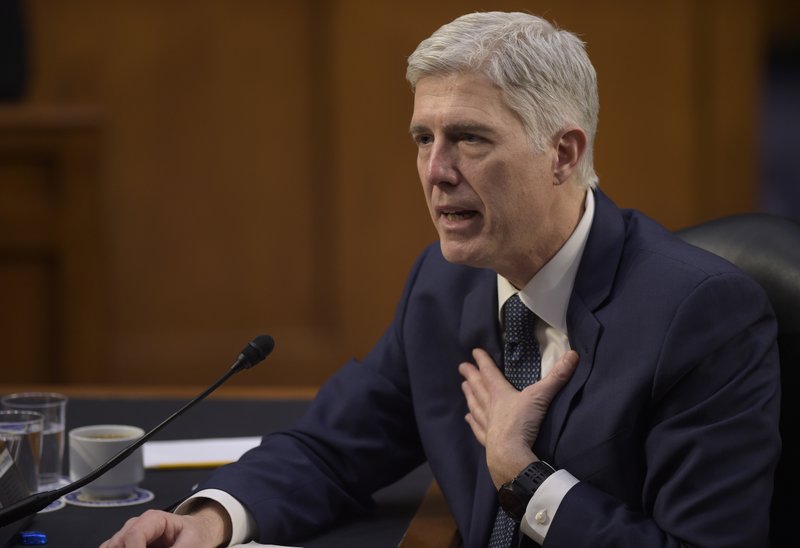
Supreme Court Justice Neil Gorsuch wasn’t shy Monday about making his voice heard as he took his seat on the bench for the first time to hear arguments. The new justice took less than 15 minutes before asking questions during an employment discrimination case. Gorsuch and his colleagues were hearing cases for the first time since President Donald Trump‘s pick was sworn in April 10. The case before the justices involved a technical issue about the process for a federal worker to appeal his discrimination claim. Gorsuch asked the worker’s lawyer Christopher Landau four questions in a row about the wording of a statute, saying he was “sorry for taking up so much time.” Gorsuch later sparred with Justice Department lawyer Brian Fletcher over the meaning of the Civil Service Reform Act, sticking to his reputation for focusing on the text of the law. “Wouldn’t it be a lot easier if we just followed the plain text of the statute,” Gorsuch asked. It was the first of three hour-long arguments the high court was set to hear on Monday. The court is back to its full contingent of nine members after being short-handed since Justice Antonin Scalia‘s death more than 14 months ago. The session started with Chief Justice John Roberts welcoming Gorsuch and wishing him “a long and happy career in our common calling.” Gorsuch responded briefly to thank Roberts for the “warm welcome.” Gorsuch took his seat at the end of the bench next to Justice Sonia Sotomayor, with the two sharing a laugh together before arguments began. Republished with permission of The Associated Press.
Supreme Court , including Neil Gorsuch, to hear church-state case
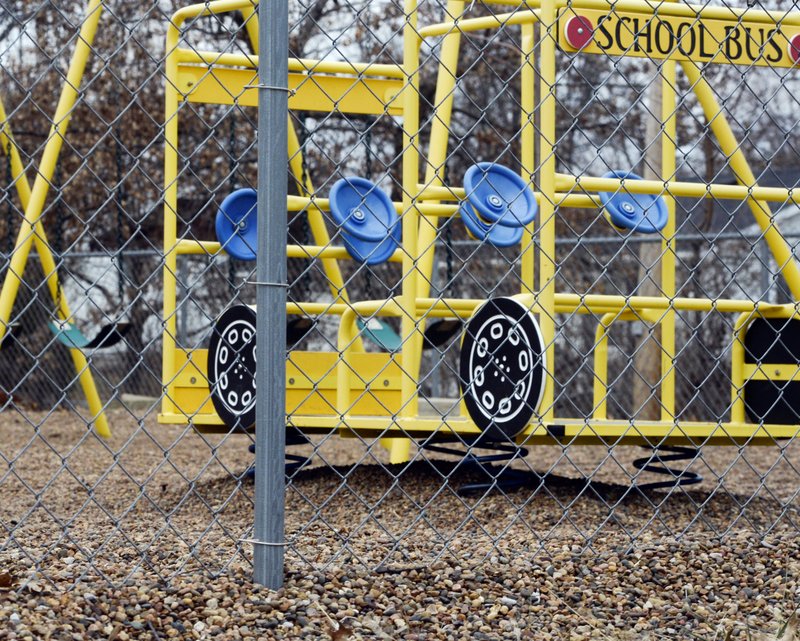
Justice Neil Gorsuch‘s first week on the Supreme Court bench features an important case about the separation of church and state that has its roots on a Midwestern church playground. The outcome could make it easier to use state money to pay for private, religious schooling in many states. The justices on Wednesday will hear a Missouri church’s challenge to its exclusion from a state program that provides money to use ground-up tires to cushion playgrounds. Missouri is among roughly three dozen states with constitutions that explicitly prohibit using public money to aid a religious institution, an even higher wall separating government and religion than the U.S. Constitution erects. Trinity Lutheran Church of Columbia, Missouri, says its exclusion is discrimination that violates its religious freedoms under the U.S. Constitution. If the justices agree, “the decision could have implications far beyond scrap tires and playgrounds,” said Michael Bindas of the Institute for Justice, which is backing the church. “It has the potential to remove one of the last legal clouds hanging over school choice.” That prospect worries groups of public school teachers and others who oppose vouchers and other forms of public aid for private schooling. Adding to the intrigue is the long delay between when the Supreme Court agreed to hear Trinity Lutheran’s appeal, a month before Justice Antonin Scalia died in February 2016, and the argument. The span of more than 15 months suggests the justices were concerned they might divide 4-4. Indeed, the case wasn’t scheduled for argument until after President Donald Trump nominated Gorsuch for the seat. The timing of the argument “heightened our concern that the court has held this case for so long,” said Alice O’Brien, general counsel of the National Education Association, which opposes state aid to private schools. Missouri’s new governor, Republican Eric Greitens, injected some uncertainty into the high court case on Thursday, when he directed state agencies to allow religious groups and schools to receive taxpayer money for playgrounds and other purposes. The court on Friday asked both the church and the state to tell it whether the governor’s announcement affects the case. A lawyer for the church said in an interview with The Associated Press that the case would be unaffected because Greitens’ policy change does not resolve the legal issue. But a top aide to state Attorney General Josh Hawley told the AP that state lawyers were evaluating whether the new policy would affect the case. Should the court decide to go forward, Gorsuch’s votes and opinions in religious liberty cases as a judge on the federal appeals court in Denver would seem to make him more inclined to side with the church, and potentially provide the decisive, tie-breaking vote if the rest of the court is divided between liberals and conservatives, Bindas said. The case arose from an application the church submitted in 2012 to take part in Missouri’s scrap tire grant program, which reimburses the cost of installing a rubberized playground surface made from recycled tires. The money comes from a fee paid by anyone who buys a new tire. The church’s application to resurface the playground for its preschool and daycare ranked fifth out of 44 applicants. But the state’s Department of Natural Resources rejected the application, pointing to the part of the state constitution that says “no money shall ever be taken from the public treasury, directly or indirectly, in aid of any church, sect or denomination of religion.” A recycled scrap tire is not religious, the church said in its Supreme Court brief. “It is wholly secular,” the church said. Leslie Hiner, vice president of programs at Ed Choice, a school voucher advocacy group said, “It is difficult to understand that a little school could not participate in a safety measure determined by the state because somehow safety of children is conflated with religious purpose.” But the question of where the dividing line should be between church and state is complicated, said the NEA’s O’Brien. The Supreme Court has upheld some school voucher programs and state courts have ratified others. But “in many instances challenges to voucher programs have succeeded based on state court views that their constitutions draw a different line than does the federal constitution,” O’Brien said. Thirty states and the District of Columbia have some form of school choice, including vouchers, tax credits and education savings accounts, according to Ed Choice. The justices could themselves draw a line that decides the case in Missouri without saying anything more broadly about school choice. But that issue already is looming at the high court in appeals from a Colorado Supreme Court ruling that blocked the nation’s first county-initiated voucher program in Douglas County, Colorado. The Missouri church and some of the groups backing it have invoked what they describe as anti-Catholic bias that motivated the adoption of the Missouri provision and similar measures in other states in the late 1800s. They are similar to the proposed 1875 Blaine Amendment to the U.S. Constitution that would have prohibited the allocation of public school funds to religious institutions. “Both the Colorado and Missouri Blaine Amendments share discriminatory, anti-Catholic origins that make their contemporary use to compel religious discrimination particularly unacceptable,” lawyer Paul Clement wrote on behalf of the Colorado county. But 10 legal and religious historians said in a separate court filing that there is no evidence that “anti-Catholic or anti-religious animus” played a role in the adoption of the Missouri constitutional provision. And they said anti-Catholicism was a minor factor behind the Blaine Amendment. The broader debate was about the future of American education, they said. Republished with permission of The Associated Press.
Neil Gorsuch sworn into Supreme Court, vows to serve Constitution
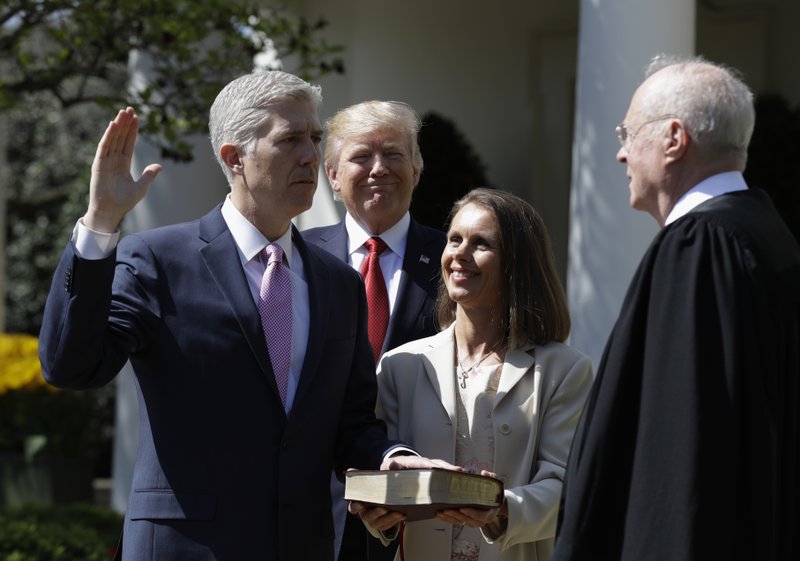
President Donald Trump praised new Supreme Court Justice Neil Gorsuch during a White House swearing-in ceremony on Monday as a jurist who will rule “not on his personal preferences but based on a fair and objective reading of the law.” In the Rose Garden ceremony, Trump said Americans would see in Gorsuch “a man who is deeply faithful to the Constitution of the United States” and predicted greatness for the 49-year-old former appeals court judge from Colorado. “I have no doubt you will go down as one of the truly great justices in the history of the U.S.,” Trump said. The president noted that the successful nomination came during his first 100 days in office and added: “You think that’s easy?” Gorsuch, who restores the court’s conservative majority, was sworn in during the ceremony by Justice Anthony Kennedy, for whom he once served as a law clerk. It was the second of two oaths — the first was conducted privately in the Justices’ Conference Room by Chief Justice John Roberts. In remarks in the Rose Garden, Gorsuch said he was humbled by his ascendance to the nation’s high court and thanked his former law clerks, saying of his former law clerks, “your names are etched in my heart forever.” Gorsuch promised to be a “faithful servant of the Constitution and laws of this great nation.” He fills the nearly 14-month-old vacancy created after the death of the late Justice Antonin Scalia, who anchored the court’s conservative wing for nearly three decades before he died unexpectedly in February 2016. In nominating Gorsuch, Trump said he fulfilled a campaign pledge to pick someone in the mold of Scalia. During 11 years on the federal appeals court in Denver, Gorsuch mirrored Scalia’s originalist approach to the law, interpreting the Constitution according to the meaning understood by those who drafted it. Like Scalia, Gorsuch is a gifted writer with a flair for turning legal jargon into plain language people can understand. Gorsuch will be seated just in time to hear one of the biggest cases of the term: a religious rights dispute over a Missouri law that bars churches from receiving public funds for general aid programs. His 66-day confirmation process was swift, but bitterly divisive. It saw Senate Republicans trigger the “nuclear option” to eliminate the 60-vote filibuster threshold for Gorsuch and all future high court nominees. The change allowed the Senate to hold a final vote to approve Gorsuch with a simple majority. Most Democrats refused to support Gorsuch because they were still seething over the Republican blockade last year of President Barack Obama‘s pick for the same seat, Merrick Garland. Senate Republicans refused to even hold a hearing for Garland, saying a high court replacement should be up to the next president. The White House swearing-in ceremony was a departure from recent history. Justices Sonia Sotomayor and Elena Kagan were both sworn in publicly at the Supreme Court. Former Justice John Paul Stevens has argued that holding the public ceremony at the court helps drive home the justice’s independence from the White House. Some interesting facts about Gorsuch and the court: He is the youngest nominee since Clarence Thomas, who was 43 when confirmed in 1991. The Colorado native went to high school in Washington while his mother served as EPA administrator in the Reagan administration. He’s the sixth member of the court who attended Harvard Law School; the other three got their law degrees from Yale. Gorsuch credits a nun with teaching him how to write. He and his family attend an Episcopal church in Boulder, though he was raised Catholic and attended Catholic schools as a child. He joins a court that has five Catholics and three Jews. As an associate justice, Gorsuch will earn $251,800 a year — over 15 percent above his $217,600 salary as an appellate judge. Gorsuch joins the ranks of justices who are millionaires. He reported financial assets in 2015 worth at least $3.2 million, according to his latest financial disclosure report. Republished with permission of The Associated Press.
Alabama delegation on Neil Gorsuch SCOTUS confirmation
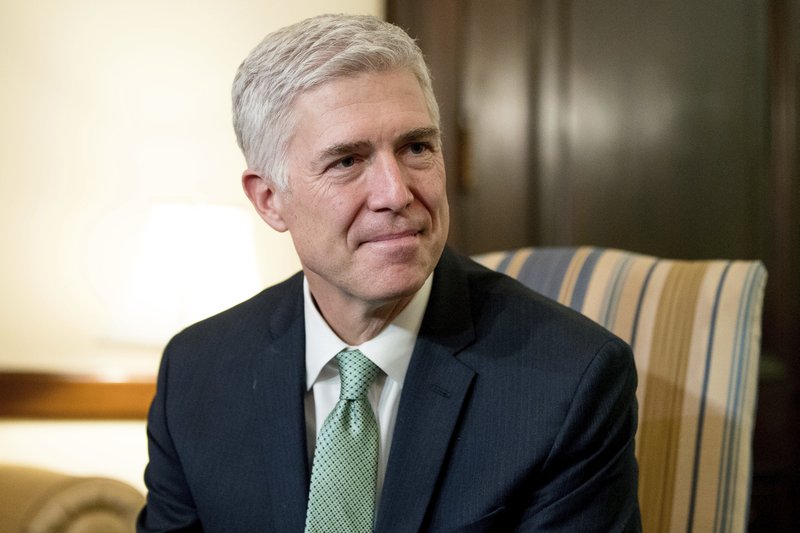
Judge Neil Gorsuch was confirmed Friday morning as the 113th justice to serve on the Supreme Court of the United States. The 54-45 vote was mostly along party lines as only three Democrats — Sens. Joe Manchin, Heidi Heitkamp and Joe Donnelly — sided with the GOP majority. Gorsuch is expected to restore a 5-4 conservative tilt on the bench as he fills the vacancy left by late Justice Antonin Scalia, a conservative icon who died unexpectedly in February 2016. Here’s what the Alabama delegation is saying of Gorsuch’s confirmation: Senator Richard Shelby: I was proud to support and confirm Judge Neil Gorsuch to serve on the United States Supreme Court. Judge Gorsuch has clearly demonstrated that he consistently applies the law, as it is written, fairly and equally to all. There is no doubt that Judge Gorsuch will use this position to serve the American people with unwavering commitment to the Constitution, and I am confident that he will preserve the late Justice Antonin Scalia’s legacy on the bench for years to come. Senator Luther Strange: For so many Americans, casting a vote last November for Donald Trump meant restoring faith in the federal judiciary. Alabamians want a high court that respects and affirms the rule of law, and because of today’s historic vote, that is what they are getting. I was proud to cast my vote to confirm Neil Gorsuch and help the President deliver on this important promise. His intellect, humility and fair judgment were displayed throughout the hearing process, and I look forward to these tremendous assets being employed on behalf of our nation’s highest court. Alabama 1st District U.S. Rep. Bradley Byrne: Neil Gorsuch is the perfect replacement for Justice Antonin Scalia, and I applaud the Senate for confirming him to serve on our nation’s highest court. Judge Gorsuch has distinguished himself as a thoughtful and balanced jurist who understands it is not the job of the courts to write laws but rather to interpret the law as written. Our nation will be better off with him on the Supreme Court. Alabama 2nd District U.S. Rep. Martha Roby: I applaud the Senate for wasting no time in confirming Justice Neil Gorsuch to the Supreme Court. I believe our country will benefit from the new energy and experience that Justice Gorsuch will bring to the bench. Throughout the confirmation process, Justice Gorsuch proved himself to be a highly capable individual who is supremely qualified for this great responsibility. I believe his stated commitment to interpreting the Constitution as it was written will hasten a long overdue return to the separation of powers and rule of law in this country. Alabama 5th District U.S. Rep. Mo Brooks: President Donald Trump made an outstanding nomination in Neil Gorsuch, and today I commend his confirmation as the next associate justice of the United States Supreme Court. Further, I support the Senate’s use of the Democrat Harry Reid precedent (sometimes called the “nuclear option”) to ensure Gorsuch’s confirmation. He was unanimously confirmed by the Senate in 2006, enjoying the full support of the Democrat senators. Despite failed partisan attempts and political theater aimed to paint Gorsuch as an ideologue who will rule based on personal beliefs, Gorsuch has consistently demonstrated his commitment and record of ruling on issues before his court based on rational interpretation of the original intent of the Constitution or law, regardless of his personal opinions. I am certain Neil Gorsuch will honor the legacy of Justice Antonin Scalia.
Senate GOP ‘goes nuclear,’ clearing way for Trump court pick
Republicans invoked the “nuclear option” in the Senate Thursday, unilaterally rewriting the chamber’s rules to allow President Donald Trump‘s nominee to ascend to the Supreme Court. Furious Democrats objected until the end, but their efforts to block Judge Neil Gorsuch failed as expected. Lawmakers of both parties bemoaned the long-term implications for the Senate, the court and the country. “We will sadly point to today as a turning point in the history of the Senate and the Supreme Court,” said Minority Leader Chuck Schumer of New York. The maneuvering played out in an atmosphere of tension in the Senate chamber with most senators in their seats, a rare and theatrical occurrence. First Democrats mounted a filibuster in an effort to block Gorsuch by denying him the 60 votes needed to advance to a final vote. Then Republican Majority Leader Mitch McConnell of Kentucky raised a point of order, suggesting that Supreme Court nominees should not be subjected to a 60-vote threshold but instead a simple majority in the 100-member Senate. McConnell was overruled, but appealed the ruling. And on that he prevailed on a 52-48 party line vote. The 60-vote filibuster requirement on Supreme Court nominees was effectively gone, and with it the last vestige of bipartisanship on presidential nominees in an increasingly polarized Senate. A final confirmation vote on Gorsuch is expected Friday and he could then be sworn in in time to take his seat on the court later this month and hear the final cases of the term. The maneuvering played out with much hand-wringing from all sides about the future of the Senate, as well as unusually bitter accusations and counter-accusations as each side blamed the other. The rules change is known as the “nuclear option” because of its far-reaching implications. McConnell accused Democrats of forcing his hand by trying to filibuster a highly qualified nominee in Gorsuch, 49, a 10-year veteran of the 10th U.S. Circuit Court of Appeals in Denver with a consistently conservative record. McConnell vowed that the rules change would block the Gorsuch filibuster, and all future ones, a change many lawmakers lamented could lead to an even more polarized Senate, court and country. “This will be the first, and last, partisan filibuster of a Supreme Court nominee,” McConnell declared. “This is the latest escalation in the left’s never-ending judicial war, the most audacious yet, and it cannot and will not stand.” Supreme Court filibusters have been nearly unheard of in the Senate, but the confrontation is playing out amid an explosive political atmosphere with liberal Democrats furious over the Trump presidency and Republicans desperate to get a win after months of chaos from Trump. Democrats also remain livid over McConnell’s decision last year to deny consideration to then-President Barack Obama‘s Supreme Court nominee, Judge Merrick Garland, who was ignored for the better part of a year by Senate Republicans after the death of Justice Antonin Scalia. Instead, McConnell kept Scalia’s seat open, a calculation that is now paying off hugely for Republicans and Trump, who will be able to claim the biggest victory of his presidency to date if Gorsuch is confirmed as expected. “We believe that what Republicans did to Merrick Garland was worse than a filibuster,” Schumer said. “We didn’t hear two words in the long speech of Senator McConnell: Merrick Garland.” Emotions were running high ahead of the votes with raised voices on the floor where proceedings are normally sedate. All involved were keenly aware of the long-term implications of the proceedings, some of them hard to predict for the future of Trump’s presidency and the 2018 midterm elections, when Republicans will be defending their slim 52-48 Senate majority and 10 vulnerable Democrats in states Trump won will be up for re-election. Senators on both sides of the aisle lamented the trajectory they were on toward the Senate rules change, though they themselves were in position to prevent it from happening and failed to do so. Moderate Republican Sen. Susan Collins of Maine said roughly 10 senators of both parties worked over the weekend to come up with a deal to stave off the so-called “nuclear option,” as the rules change is known, but couldn’t come to agreement. In 2005, a bipartisan deal headed off GOP plans to remove the filibuster barrier for lower-court nominees, but in 2013 Democrats took the step, leaving the filibuster in place only for Supreme Court justices. And now it too is gone. For now the filibuster barrier on legislation will remain, though many fear it could be the next to go. “I fear that someday we will regret what we are about to do. In fact, I am confident we will,” said Sen. John McCain, R-Ariz. “It is imperative we have a functioning Senate where the rights of the minority are protected regardless of which party is in power at the time.” Nonetheless, McCain voted with McConnell on the rules change, saying he felt he had no choice. Gorsuch now counts 55 supporters in the Senate: the 52 Republicans, along with three moderate Democrats from states that Trump won last November — Joe Manchin of West Virginia, Heidi Heitkamp of North Dakota and Joe Donnelly of Indiana. A fourth Senate Democrat, Michael Bennet from Gorsuch’s home state of Colorado, has said he will not join in the filibuster against Gorsuch but has not said how he will vote on confirmation. Republished with permission of The Associated Press.
