
Polling shows Alabama voters want Doug Jones to confirm Brett Kavanaugh
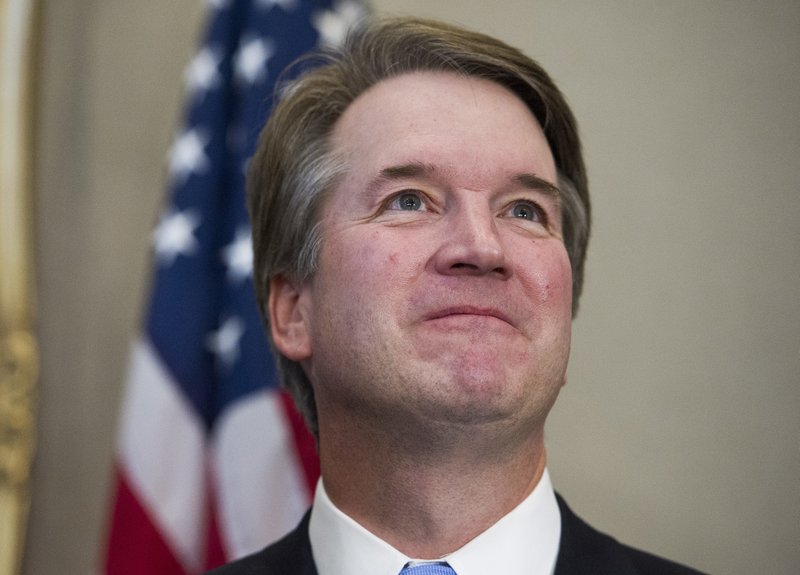
Polling shows that 54 percent of Alabama voters want Brett Kavanaugh confirmed as a Supreme Court Judge, according to the Susan B. Anthony (SBA) List. The SBA List and pro-life activists assembled in Mobile on Wednesday to call on U.S. Senator Doug Jones; compelling him to confirm Kavanaugh and adding themselves to the growing list of groups urging him to do so. “Polling shows that 53 percent of Alabama voters agree President Trump has chosen well qualified judges for the Supreme Court,” Jill Stanek, national campaign chairman for Susan B. Anthony list said at the rally. “And 54 percent want the senate to confirm Kavanaugh.” “We urge senator Jones to stand against Chuck Schumer and the radical abortion lobby; stand with the President…and pledge to vote to confirm judge Kavanaugh immediately,” Stanek continued. The SBA list is a national non-profit organization aimed at ending abortion by electing leaders and advocating for anti-abortion laws, according to the group’s website. Several organizations have called on Jones to support Kavanaugh. Last week, the National Rifle Association’s political arm the Institute for Legislative Action (NRA-ILA) posted a video asking voters to tell Jones they support Kavanaugh by signing a pledge on their website. This week, an Alabama bus company joined Concerned Women of America in an eight-state tour to promote the confirmation of Kavanaugh. Earlier this week, Jones held a town hall meeting in Birmingham during which the conversation was dominated by his decision on Kavanaugh. “I am doing a lot of work on the Supreme Court nominee,” Jones told the crowd. “He will be there for life twenty, thirty years, maybe more, we do not know.” Jones has previously stated that he would be keeping an “open mind” on his vote, and told the Associated Press he wanted to do his “due diligence” on Kavanaugh’s work. “Respectfully, Senator Jones, when you go to the Senate floor there is not a moderate button to push; it is a yes, or it is a no,” Alabama Republican Party (ALGOP) Chairman Terry Lathan told the crowd at the rally. “Humbly, and very gratefully, we ask you Senator Jones, to hear our voices…We are here to share with you and we are here to tell you very clearly; the people of this state want this judge seated and we’re asking you to cast that vote.” According to AL.com, this is not the first stop the group has made. The SBA list has also visited Florida, Indiana, North Dakota and Missouri, “urging Democratic Senators in battleground states to back Kavanaugh’s confirmation.” Watch the full video of the rally below:
Donald Trump wades deeper into abortion politics as midterms loom
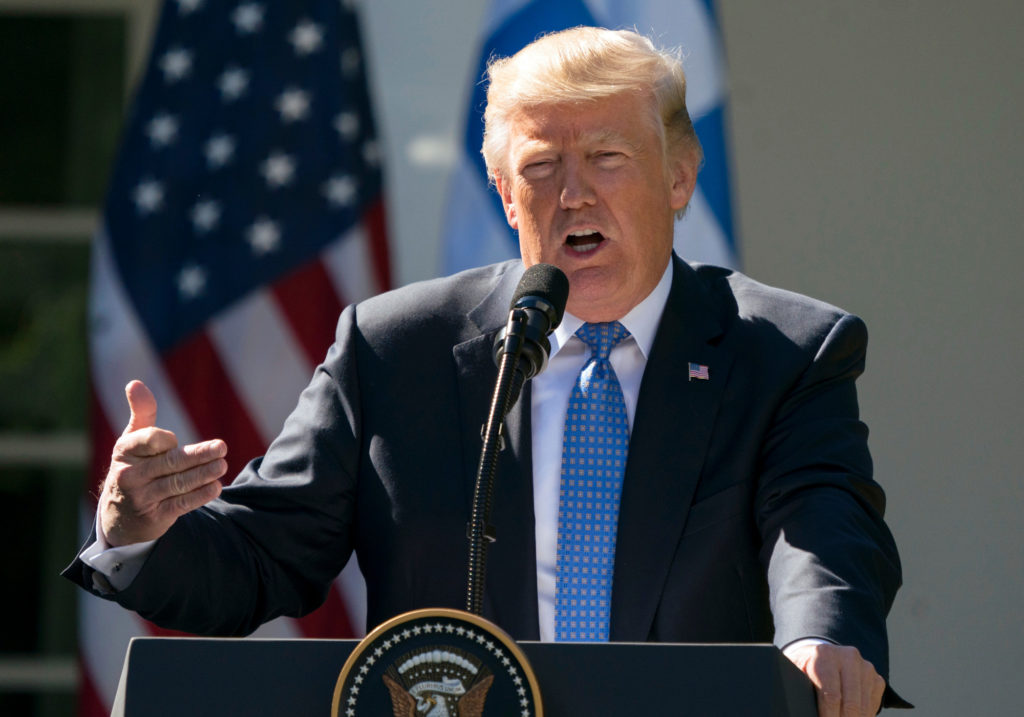
President Donald Trump has long been an unlikely sweetheart for conservative and evangelical voters. Now, in the lead-up to the midterm elections, the thrice-married former Democrat who used to describe himself as “very pro-choice” is offering catnip to conservative voters with a new administration push to strip funding from Planned Parenthood and other family planning clinics. The initiative, announced last week, has arrived just in time for Trump to highlight it Tuesday night when he speaks at the Susan B. Anthony List’s annual “Campaign for Life Gala.” It is aimed at resurrecting parts of a Reagan-era mandate banning federally funded family planning clinics from referring women for abortions, or sharing space with abortion providers. Marjorie Dannenfelser, president of the anti-abortion Susan B. Anthony List, says the move “will help tremendously” in the midterm elections. It’s also the latest evidence that as he frets over the Russia investigation and prepares for a planned summit with North Korea, Trump has also been focused on fulfilling campaign promises and tending to issues that galvanize his base: holding a series of events to rail against the dangers of illegal immigration, pulling out of the Iran-nuclear deal and wading anew into the fight over abortion rights. Trump is far from a natural fit for conservative voters. He recently admitted to reimbursing his lawyer for paying pay hush money to a porn star who claimed she had sex with Trump (a charge that he denies). And Trump has bragged about groping women without their permission. During the campaign, he sometimes had trouble articulating his views on abortion, at one point suggesting women should be punished for having abortions. His campaign later walked back the statement, saying that if abortion were ever outlawed, he believed that doctors who perform them should be punished. Nonetheless, white evangelical voters overwhelmingly supported Trump in 2016, and that support has only grown. A PRRI survey released last month found white evangelical support for Trump at an all-time high, with 75 percent of those polled holding a favorable view of the president and just 22 percent holding an unfavorable view. Support for Trump within the general population in the poll stood at just 42 percent. Religious groups like the Catholic Medical Association approve of a series of actions Trump has taken, beginning with his appointment of judges who oppose abortion rights, including Supreme Court Justice Neil Gorsuch, and Trump’s reinstatement of the global “gag rule” that bars federal funding for nongovernmental organizations that provide abortion referrals. Trump has also surrounded himself with staffers with deep ties to conservative groups, including counselor Kellyanne Conway and Director of Strategic Communications Mercedes Schlapp. Ralph Reed, chairman of the private Faith & Freedom Coalition, also pointed to the president’s dismantling of the Iran nuclear deal and his decision to move the U.S. Embassy in Israel from Tel Aviv to Jerusalem as steps that have played especially well with evangelical voters. But he said the president’s actions on abortion hold special sway, in part because of Trump’s early struggle with the issue. “On a policy level, I see it as a series of promises made and promises kept. And in this case, a pro-life promise made and pro-life promise kept. And I would argue those are the most important promises to keep because he was someone who was believed, accurately or otherwise, as a recent arrival to conservatism and someone who had an ideologically mixed past,” Reed said. Reed added that as president, “Trump has done everything that he can to keep faith with the faith-based voters that provided him with his margin of victory in 2016.” When it comes to the midterms, Reed said, “I expect Donald Trump to be rewarded for these efforts by a similarly historic turnout among evangelical and other pro-life voters.” Dannenfelser, whose group works to elect candidates who want to reduce and ultimately end abortion, is planning to raise and spend $25 million this cycle, up from the $18 million the group spent in the lead-up to the 2016 elections. She said the president’s latest move would play especially well with voters in states like Missouri, where Republican Attorney General Josh Hawley is challenging Democratic Sen. Claire McCaskill, one of the Senate’s most vulnerable incumbents, as well as in Indiana and North Dakota, where Republican Rep. Kevin Cramer is challenging Democratic Sen. Heidi Heitkamp. “He has proved himself refreshingly predictable,” Dannenfelser said of Trump’s record on abortion issues. The other side, meanwhile, is preparing for a potential legal fight against Trump’s latest action and aiming to build support for candidates who support abortion rights. “We have to fight back in the best way we know how,” the group Emily’s List wrote in a fundraising email, “electing pro-choice Democratic women who will always protect reproductive freedom.” Republished with permission from the Associated Press.
Pro-life SBA List endorses Twinkle Cavanaugh for Lieutenant Governor
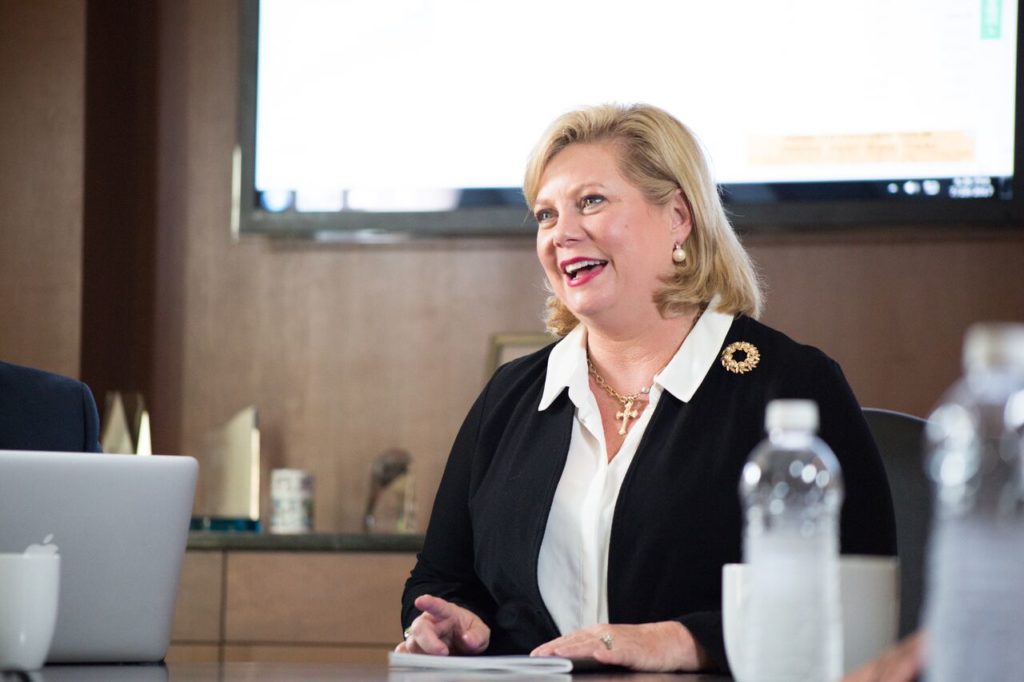
The national pro-life group Susan B. Anthony List (SBA List) on Thursday announced its endorsement of Twinkle Cavanaugh for Lieutenant Governor of Alabama. Dedicated to pursuing policies and electing candidates who will reduce and ultimately end abortion, the SBA List and its network of more than 630,000 pro-life Americans nationwide emphasize the education, promotion, mobilization, and election of pro-life women. “Susan B. Anthony List has a special calling to promote strong pro-life, pro-woman leaders like Twinkle Cavanaugh. We are proud to endorse her for lieutenant governor,” said former congresswoman Marilyn Musgrave, SBA List’s Vice President of Government Affairs. “Twinkle’s pro-life convictions are unshakeable. She will be a powerful advocate for unborn children and their mothers, as well as the taxpayers of Alabama in the role of lieutenant governor, which doubles as president of the state senate. We encourage pro-life voters to support her.” Cavanaugh said she was humbled by the endorsement. “I am humbled by Susan B. Anthony List’s endorsement,” said Cavanaugh. “Alabama is a profoundly pro-life state where the voters believe every life is precious and deserving of protection. I am deeply committed to the future of all our children, including those yet unborn. It will be a privilege to serve as lieutenant governor and stand up for these values at every opportunity.” Twinkle Cavanaugh is president of Alabama’s Public Service Commission where she works to ensure taxpayers’ confidence in local government. Previously, she was the first woman to serve as chair of the Alabama Republican Party. The primary election will take place on June 5.
Donald Trump’s abortion flub shows risks of ‘winging it’ on policy
It was a question sure to come up at some point in the Republican primary campaign. “What should the law be on abortion?” asked MSNBC’s Chris Matthews to Donald Trump at a town hall event in Wisconsin. “Should the woman be punished for having an abortion?” Matthews pressed. “This is not something you can dodge.” Trump’s bungled response — an awkward, extended attempt to evade the question, followed by an answer that, yes, “there has to be some form of punishment” — prompted a backlash that managed to unite abortion rights activists and opponents. And it also brought an unprecedented reversal from the notoriously unapologetic candidate less than a week before Wisconsin’s important primary. The episode demonstrated the extent to which Trump has glossed over the rigorous policy preparation that is fundamental to most presidential campaigns, underscoring the risks of the billionaire businessman’s winging-it approach as he inches closer to the Republican nomination. “Well, bear in mind I don’t believe that he was warned that that question was coming” and didn’t have a chance to really think about it, said Ben Carson, a former Trump rival who has since endorsed him, in an interview with CNN. He should have, said political professionals. “When you’re just winging it, that’s what happens,” said Kevin Madden, a veteran of 2012 nominee Mitt Romney‘s campaign. “Running for president, it’s not a take-home exam.” And this wasn’t the first time Trump’s approach has gotten him in trouble. He raised eyebrows during a debate when he appeared unfamiliar with the concept of the nuclear triad, an oversight his opponents happily pointed out. At a town hall on CNN earlier this week, Trump appeared to falter when asked to name what he believed were the top three priorities of the federal government. Among his answers: health care and education. Trump has vowed to repeal President Barack Obama‘s landmark health care law and gut the budget of the Department of Education. The lack of preparation extends beyond policy. This week, Trump called into a series of radio stations in Wisconsin, apparently unaware the interviews were likely to be combative. At the end of a remarkable interview in which he compared Trump’s behavior to that of “a 12-year-old bully on the playground,” WTMJ-AM’s Charlie Sykes asked Trump if he was aware he’d called into someone unabashedly opposed to his candidacy. “That I didn’t know,” Trump said. During a recent rally in Vienna, Ohio, Trump delivered his usual indictment of the North American Free Trade Agreement and blasted American companies that have shipped jobs overseas. But he seemed unaware that Chevrolet, which builds the Chevy Cruze sedan in nearby Lordstown, had recently announced that it was planning to build its 2017 hatchback model in Mexico. It was the kind of local knowledge that requires research and legwork, and could have helped Trump connect with his audience and others in the state. For most presidential candidates, especially those new to it all, getting up to speed on the intricacies of domestic and foreign policy is a process that begins early. While Trump’s campaign did not respond Thursday to questions about the kind of briefings he receives, it’s clear he has done things differently. Who does he consult on foreign policy? “I’m speaking with myself, number one, because I have a very good brain and I’ve said a lot of things,” Trump said on MSNBC this month. He’s also said he gets information about international affairs from “the shows” and newspapers. He announced members of his foreign policy team only this month and met with them Thursday as part of a series of appointments in Washington. Out on the trail, Trump largely skipped town hall events in the early-voting states that were the hallmarks of several rival campaigns. Chris Christie and John Kasich, for example, held dozens of the events, fielding hundreds of questions on every topic imaginable. Trump might well note that most of his GOP rivals are gone, and he’s still the front-runner. But what about his abortion comments? “None of the other candidates would have made that mistake,” said Marjorie Dannenfelser, president of the Susan B. Anthony List, which supports anti-abortion legislation and candidates. Michael Steel, an adviser to former Trump rival Jeb Bush, said that candidates and presidents have to be able to respond to issues as they arise, which requires a “tremendous amount” of work behind the scenes. It’s one reason major candidates from both parties typically have government experience. “I think we’ve seen in a variety of venues including the debates that he doesn’t seem to have the knowledge and background on important policy issues that you would expect from a presidential candidate,” Steel said. Bush spent the months after he announced his candidacy last summer developing a comprehensive domestic and foreign policy platform. Campaign employees assisted by more than 100 outside advisers briefed him in frequent sessions, said Justin Muzinich, the campaign’s policy director. “He took policy extraordinarily seriously,” Muzinich said. Dannenfelser, the abortion opponent, said there is still time for Trump. “The question is, will he be able to get to the point of confidently communicating his position to contrast with Hillary Clinton in a way that helps?” she said. “I think it’s possible.” Republished with permission of the Associated Press.
Activists predict abortion will be a hot issue in campaigns
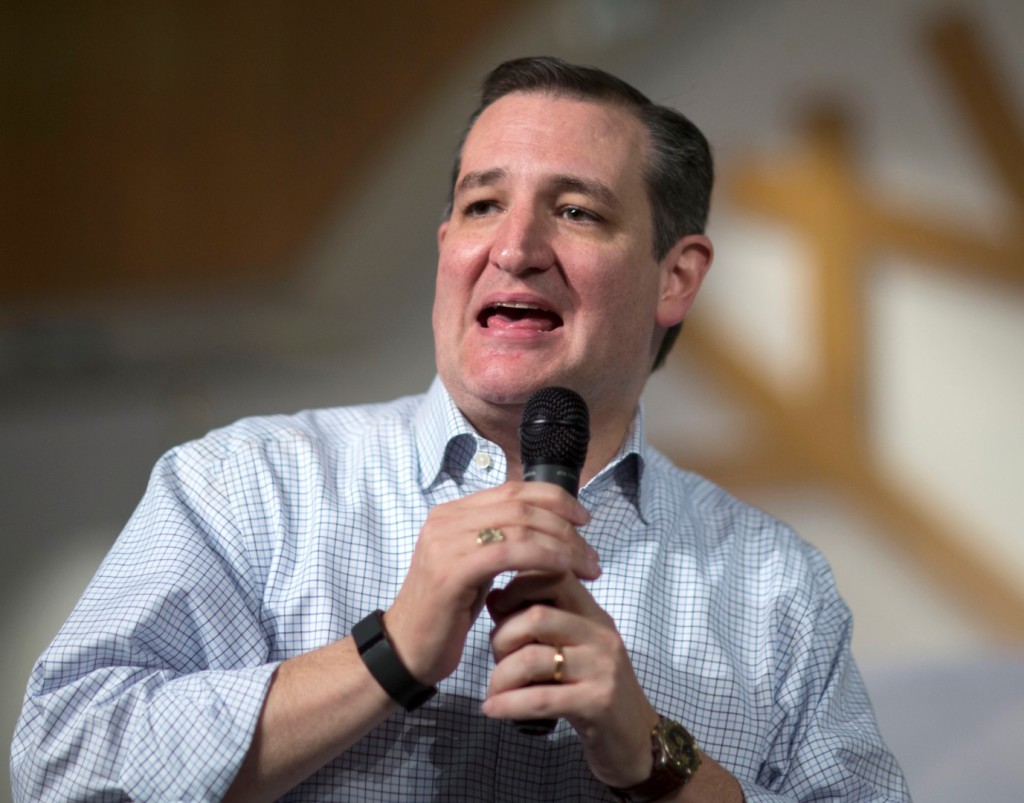
With a deeper-than-ever split between Republicans and Democrats over abortion, activists on both sides of the debate foresee a 2016 presidential campaign in which the nominees tackle the volatile topic more aggressively than in past elections. Friction over the issue also is likely to surface in key Senate races. And the opposing camps will be further energized by Republican-led congressional investigations of Planned Parenthood and by Supreme Court consideration of tough anti-abortion laws in Texas. “It’s an amazing convergence of events,” said Charmaine Yoest, CEO of the anti-abortion group Americans United for Life. “We haven’t seen a moment like this for 40 years.” In the presidential race, Democratic front-runner Hillary Clinton is a longtime defender of abortion rights and has voiced strong support for Planned Parenthood — a major provider of abortions, health screenings and contraceptives — as it is assailed by anti-abortion activists and Republican officeholders. In contrast, nearly all of the GOP candidates favor overturning the Supreme Court’s 1973 Roe v. Wade decision that legalized abortion nationwide. Some of the top contenders — including Sens. Ted Cruz and Marco Rubio — disapprove of abortions even in cases of rape and incest. “We may very well have the most extreme Republican presidential nominee since Roe — a nominee who’s not in favor of abortion in any possible way,” said Stephanie Schriock, president of EMILY’s List. The organization, which supports female candidates who back abortion rights, says it is en route to breaking its fundraising records. A similar claim is made by some anti-abortion political action groups. What’s changed for this election? One factor is the increased polarization of the two major parties. Only a handful of anti-abortion Democrats and abortion-rights Republicans remain in Congress, and recent votes attempting to ban late-term abortions and halt federal funding to Planned Parenthood closely followed party lines. Another difference: Republicans in the presidential field and in Congress seem more willing than in past campaigns to take the offensive on abortion-related issues. Past nominees George W. Bush, John McCain and Mitt Romney opposed abortion but were not as outspoken as some of the current GOP candidates. “Abortion will bubble over into the general election,” said Marjorie Dannenfelser, president of the Susan B. Anthony List, which supports female candidates opposed to abortion. “If you don’t know how to handle this issue, you will be eviscerated.” As the campaign unfolds, other factors will help keep the abortion debate in the spotlight. The Supreme Court will be hearing arguments, probably in March, regarding a Texas law enacted in 2013 that would force numerous abortion clinics to close. One contested provision requires abortion facilities to be constructed like surgical centers; another says doctors performing abortions at clinics must have admitting privileges at a local hospital. The Texas dispute will have echoes in other states as social conservatives lobby for more laws restricting abortion. Americans United for Life plans a multistate push for a package of bills called the Infants’ Protection Project; one measure would ban abortions performed because of fetal abnormalities such as Down syndrome while another would ban abortions after five months of pregnancy. Also unfolding during the campaign will be a new investigation launched by House Republicans to examine the practices of Planned Parenthood and other major abortion providers. The panel’s chair, Rep. Marsha Blackburn of Tennessee, says its work will likely continue past Election Day. The investigation — denounced by Democrats as a partisan witch hunt — is among several congressional and state probes resulting from the release of undercover videos made by anti-abortion activists. They claim the videos show Planned Parenthood officials negotiating the sale of fetal tissue in violation of federal law; Planned Parenthood denies any wrongdoing and says the programs in question at a handful of its clinics entailed legal donations of fetal tissue. Cruz is among many Republicans who have already passed judgment on Planned Parenthood, calling it “an ongoing criminal enterprise.” He welcomed the endorsement of anti-abortion activist Troy Newman, who helped orchestrate the undercover video operation. Donald Trump, who leads the GOP presidential polls, has been harder to pin down on the issue. He describes himself as “pro-life” and open to defunding Planned Parenthood, while acknowledging that he held different views in the past. Planned Parenthood’s leaders say a majority of U.S. voters oppose efforts to cut off its federal funding, most of which subsidizes non-abortion health services for patients on Medicaid. Planned Parenthood’s political action fund hopes to spend a record amount — more than $15 million — on election-related advocacy. The fund’s executive vice president, Dawn Laguens, contends that some GOP presidential hopefuls, including Cruz and Rubio, may have hurt their general election prospects by making strong bids for anti-abortion votes in the primaries. “They’ve gone so far out on the limb that they won’t be able to crawl back,” she said. National polls over the years show the American public deeply divided on abortion. An Associated Press-GfK poll released Dec. 22 found 58 percent of U.S. adults saying abortion should be legal in most or all cases, and 39 percent saying it should be illegal in most or all cases. Forty-five percent viewed Planned Parenthood favorably; 30 percent unfavorably. Abortion and Planned Parenthood are likely to surface as divisive issues in several of the races that will decide control of the Senate. New Hampshire features an intriguing race between two women. Democratic Gov. Maggie Hassan, a supporter of abortion rights, hopes to unseat GOP incumbent Kelly Ayotte, who is endorsed by anti-abortion groups and favors halting Planned Parenthood’s federal funding. Other key Senate races likely to feature sharp divisions over abortion include those in Pennsylvania, Nevada, Wisconsin and the crucial presidential battleground of Ohio, where GOP incumbent Rob Portman is expected to be challenged by former Democratic Gov. Ted Strickland. Republished with permission of the Associated Press.
