
Donald Trump indicted; 1st ex-president charged with crime
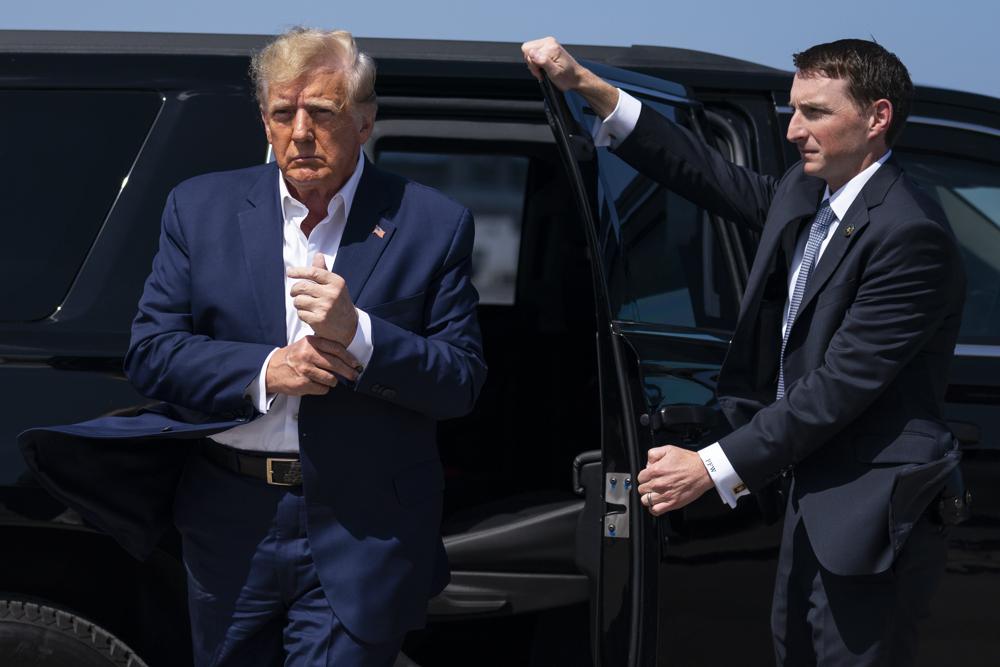
Donald Trump has been indicted by a Manhattan grand jury, prosecutors and defense lawyers said Thursday, making him the first former U.S. president to face a criminal charge and jolting his bid to retake the White House next year. The charges remained under seal late Thursday, but the investigation centered on payments made during the 2016 presidential campaign to silence claims of an extramarital sexual encounter. Prosecutors said they were working to coordinate Trump’s surrender, which could happen early next week. They did not say whether they intended to seek prison time in the event of a conviction, a development that wouldn’t prevent Trump from seeking or winning the presidency. The indictment, an extraordinary development after years of investigations into Trump’s business, political and personal dealings, injects a local district attorney’s office into the heart of a national presidential race and ushers in criminal proceedings in a city that the ex-president for decades called home. Arriving at a time of deep political divisions, the charges are likely to reinforce rather than reshape dueling perspectives of those who see accountability as long overdue and those who, like Trump, feel the Republican is being targeted for political purposes by a Democratic prosecutor. Trump, who has denied any wrongdoing and has repeatedly assailed the investigation, called the indictment “political persecution” and predicted it would damage Democrats in 2024. In a statement confirming the charges, defense lawyers Susan Necheles and Joseph Tacopina said Trump “did not commit any crime. We will vigorously fight this political prosecution in court.” A spokesman for the Manhattan district attorney’s office confirmed the indictment and said prosecutors had reached out to Trump’s defense team to coordinate a surrender. Trump was asked to surrender Friday but his lawyers said the Secret Service needed additional time as they made security preparations, two people familiar with the matter told The Associated Press. The people, who couldn’t publicly discuss security details, said Trump is expected to surrender early next week. District Attorney Alvin Bragg left his office Thursday evening without commenting. The case centers on well-chronicled allegations from a period in 2016 when Trump’s celebrity past collided with his political ambitions. Prosecutors for months scrutinized money paid to porn actor Stormy Daniels and former Playboy model Karen McDougal, whom he feared would go public with claims that they had extramarital sexual encounters with him. The timing of the indictment appeared to come as a surprise to Trump campaign officials following news reports that criminal charges were likely weeks away. The former president was at Mar-a-Lago, his Florida estate, on Thursday and filmed an interview with a conservative commentator earlier in the day. For a man whose presidency was defined by one obliterated norm after another, the indictment sets up yet another never-before-seen spectacle — a former president having his fingerprints and mug shot taken, and then facing arraignment. For security reasons, his booking is expected to be carefully choreographed to avoid crowds inside or outside the courthouse. The prosecution also means that Trump will have to simultaneously fight for his freedom and political future, while also fending off potentially more perilous legal threats, including investigations into attempts by him and his allies to undo the 2020 election as well as the hoarding of hundreds of classified documents. In fact, New York was until recently seen as an unlikely contender to be the first place to prosecute Trump, who continues to face long-running investigations in Atlanta and Washington that could also result in charges. Unlike those inquiries, the Manhattan case concerns conduct by Trump that occurred before he became president and is unrelated to his much-publicized efforts to overturn the 2020 presidential election. The indictment comes as Trump seeks to reassert control of the Republican Party and stave off a slew of one-time allies who may threaten his bid for the presidential nomination. An expected leading rival in the race, Florida Gov. Ron DeSantis, called the indictment “un-American” in a statement Thursday night that pointedly did not mention Trump’s name. In bringing the charges, Bragg, the Manhattan district attorney, is embracing an unusual case that was investigated by two previous sets of prosecutors, both of which declined to take the politically explosive step of seeking Trump’s indictment. The case may also turn in part on the testimony of a key witness, Trump’s former lawyer and fixer Michael Cohen, who pleaded guilty to federal charges arising from the hush money payments. The probe’s fate seemed uncertain until word got out in early March that Bragg had invited Trump to testify before a grand jury, a signal that prosecutors were close to bringing charges. Trump’s attorneys declined the invitation, but a lawyer closely allied with the former president briefly testified in an effort to undercut Cohen’s credibility. Trump himself raised anticipation that he would be indicted soon, issuing a statement earlier this month in which he predicted an imminent arrest and called for protests. He did not repeat that call in a fresh statement Thursday, but the New York Police Department told its 36,000 officers to be fully mobilized and ready to respond to any potential protests or unrest. Late in the 2016 presidential campaign, Cohen paid Daniels $130,000 to keep her silent about what she says was a sexual encounter with Trump a decade earlier after they met at a celebrity golf tournament. Cohen was then reimbursed by Trump’s company, the Trump Organization, which also rewarded the lawyer with bonuses and extra payments logged internally as legal expenses. Over several months, Cohen said, the company paid him $420,000. Earlier in 2016, Cohen also arranged for the publisher of the supermarket tabloid the National Enquirer to pay Playboy model Karen McDougal $150,000 to squelch her story of a Trump affair in a journalistically dubious practice known as “catch-and-kill.” The payments to the women were intended to buy secrecy, but they backfired almost immediately as details of the arrangements leaked to the news media. Federal prosecutors in New York ultimately charged Cohen in 2018 with violating federal campaign finance laws, arguing that the
