Alabama Democratic Party draft bylaws do not include disability caucus

Jemma Stephenson, Alabama Reflector A draft of new bylaws for the Alabama Democratic Party’s governing body restore almost all the diversity caucuses abolished by the party in May, but not one for people with disabilities. The new bylaws, ordered by the Democratic National Committee in October amid criticism of party leadership, must be voted on by Feb. 1. The bylaws, if approved, would restore caucuses for Hispanics, Native Americans, LGBTQ+ individuals, Asian and Pacific Islanders, and youth. Josh Raby, the chair of the party’s disability caucus prior to its abolition at the May 6 meeting, said in a phone interview last week that he was told they were removed from the bylaws because of an unclear definition of what a disability caucus is. “When I received the bylaws, my heart broke, literally, that a party that is supposed to be for the people was excluding people because they couldn’t find a definition of what a disability caucus is,” he said. Raby said that 23 other states have disability caucuses. He said he is sending those bylaws to Alabama Democratic Party chair Randy Kelley, Vice Chair for Minority Affairs Joe Reed, and others. Kelley told the Reflector in a Wednesday morning phone interview that the bylaws were still in draft form. He said he has not heard from membership about other concerns. “I can’t give you the complete update, but we are soliciting input now from the members,” he said. Reed said in a Wednesday morning interview that disability had a range of definitions. “We never had a disability caucus until two years ago when they created it a caucus and couldn’t define it,” he said. When asked why they did not use the definition used by the National Democratic Party, which has a disability caucus, Reed said “we are not required to have every caucus everybody in the world wants.” Reed said that many other states have much shorter bylaws than Alabama. He said that New Jersey’s bylaws are only nine pages. The New Jersey Democratic Party has a disability caucus, according to their website. An ongoing battle The state Democratic Party has been divided for years over representation of individual groups. In 2019, a faction of the party aligned with then-U.S. Sen. Doug Jones won control of the party and implemented DNC-ordered changes to create diversity caucuses representing the full range of groups supporting the state party. A faction of the party aligned with Reed, which included Kelley, objected to the new bylaws, arguing they deprived Black Democrats, who provide the party’s main support, of leadership of the state Democratic Party. Kelley won election as chair in August 2022. At a contentious meeting last May, the State Democratic Executive Committee (SDEC), the governing body of the party, voted to adopt new bylaws that abolished the new caucuses. Following complaints from membership, including Vice Chair Tabitha Isner, the DNC held hearings this fall and ordered the adoption of new bylaws. Raby said people with disabilities deserve a seat at the table. “Republicans should have a disability caucus, independents should have a disability caucus because we are the ones who are always left without a voice,” he said. “We are the ones who get ignored,” he said. Raby said that he believes those in the disability community have not had proper representation. “The people in the disability community want to be seen as being a part of this party and seeing that our voices are being heard. I don’t even think we’re being even respected within the DNC. I can’t even tell you who the chair is of the disability caucus for the DNC, but we got one, you know what I’m saying?” he said. “We got one. But in Alabama, we can’t even say we have one.” Isner said in a phone interview that she was not part of the drafting process and has concerns about the caucuses, but does not know if some of her concerns will be addressed in the final form of the bylaws. She said that not all of the caucuses have vice-chairs, and she wants to make sure that all groups have equal inclusion and access to input to the plan of affirmative action for inclusion in the party. “Certainly making sure that all groups are treated equally is critical to DNC’s policies and bylaws,” she said. The Young Voters Caucus and the Racial Minority Caucus have vice chairs, according to the draft. Kelly said he has been thinking about it and caucuses might not need vice-chairs. Reed says they are satisfied with their bylaws. Both Isner and Raby said the Democratic Party is intended to be for everyone. “It’s the Demo-freaking-cratic party,” Raby said. “We’re supposed to be the party for everyone. Not just some people, not just your friends, not just your buddies, but for everyone, and if you can’t be that, change the mission statement of your party.” Alabama Reflector is part of States Newsroom, a network of news bureaus supported by grants and a coalition of donors as a 501c(3) public charity. Alabama Reflector maintains editorial independence. Follow Alabama Reflector on Facebook and Twitter.
DNC gives Alabama Democrats February deadline to pass new bylaws
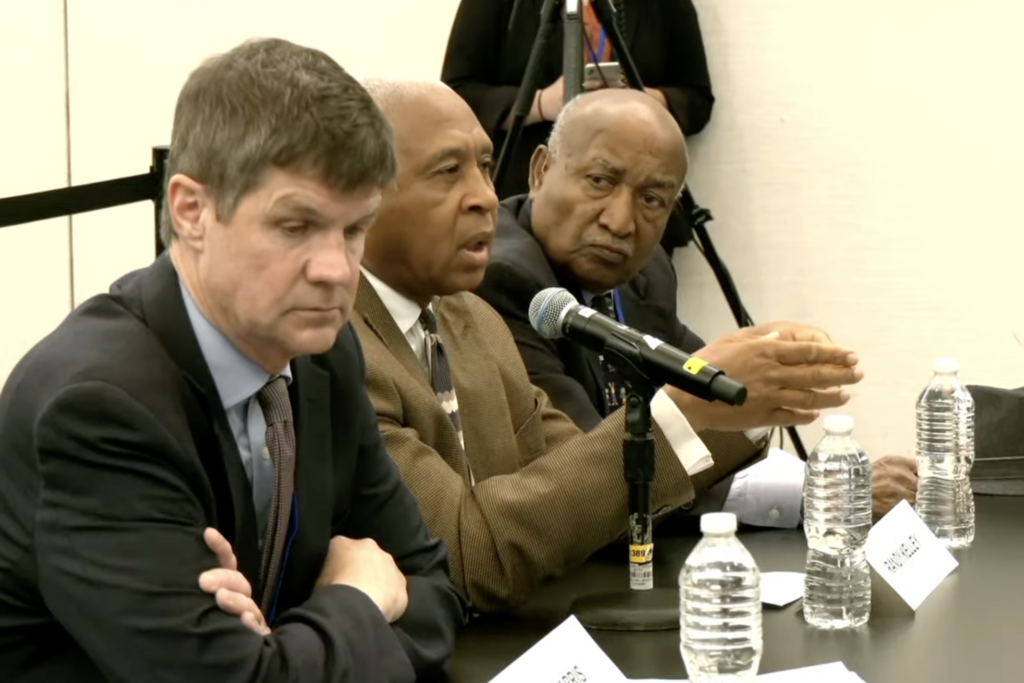
by Alander Rocha, Alabama Reflector The Democratic National Committee will give the Alabama Democratic Party a chance to resolve a divisive battle over the rules and governance of the state party on its own. The DNC’s Rules and Bylaws Committee (RBC) Friday gave ADP Chair Randy Kelley a November 28 deadline to develop new bylaws and provide the DNC a list of members of the State Democratic Executive Committee (SDEC), the party’s governing body. The RBC ordered the party to hold a vote on the bylaws by Feb. 1, 2024. A resolution authorizing the action added that the RBC may take necessary action to enforce the resolution, “including but not limited to the appointment of DNC representatives.” Kim Keenan, a lawyer charged with overseeing a Sept. 8 hearing on the party dispute, said the battles stemmed from longstanding issues of representation within the state party. “I like to say that what happened here is a perfect storm of the faraway past and the near past, basically colliding with the present,” she said. Ben Harris, an attorney and ADP’s vice chair for county affairs and a lawyer, said Kelley and Vice Chair for Minority Affairs Joe Reed were prepared to pass amended bylaws that “satisfied the DNC’s requirements,” with the at-large members who were previously denied a vote. He stressed that he feels it’s important that the party come to a voluntary agreement by working together. “We need the opportunity to reach that by agreement, and not by one side winning and one side losing. We’ve had too much of that,” Harris said. A controversial May meeting The ADC in May adopted a new set of bylaws that abolished three diversity caucuses set up under bylaws adopted by the party in 2019 and reduced the power of other diversity caucuses. The 2019 bylaws emerged after a fight between Reed and then-U.S. Sen. Doug Jones over control of the party. The DNC that year ordered the party to create caucuses reflecting the diversity of the state Democratic electorate. Reed’s group opposed the bylaws, saying they unfairly reduced the power of Black voters, who provide most of the Democratic support in the state. Kelley, a Reed ally, was elected chair of the party in August 2022. The May meeting was tumultuous, and members of the affected caucuses, some of whom are Black, sharply criticized the moves, saying they stripped key groups of representation. Another complaint came over a $50 qualifying fee charged by party officials to enter the meeting, which several SDEC members said they had not been informed about previously and which some called a poll tax. ADP members opposed to the new rules soon filed complaints with the DNC. Keenan said during the RBC hearing Friday she found two issues at the heart of the conflict between the two factions of the party. The qualifying fee, she said, was a barrier to participation in the May meeting, but she doesn’t believe it was imposed for “nefarious” reasons. “People on both sides had paid the fee, but unfortunately the fee didn’t have any rule support or any objective support,” Keenan said. “So in effect, it was alleged to be a poll tax, and it does follow what happens when you have a poll tax — you cannot participate unless you pay the fee.” She said that was the “fatal flaw” in the vote on the new bylaws. While requiring the fee may not have been ill-intentioned, Keenan said, denying participation is not consistent with DNC rules. Keenan also said she could not find anything in the existing bylaws to support the fee. “Preventing that number of people from participating was probably the difference between those May bylaws passing,” Keenan said. ‘A lot of self-determination’ Keenan also said that turning diversity caucuses — youth, LGBTQ+, Native American, disabled, and Hispanic — into committees while maintaining the Minority Caucus, representing Black Democrats, was an issue. “Caucuses have a lot of self-determination ability. They are able to do things. They are able to choose their members. They’re able to move forward in a way where they have determination over who their members are and whose appointed and who’s added,” Keenan said. “But once you become a committee, that right is delegated off to the Executive Committee.” ADP’s position, she said, stems from a “unique history where Black Alabama Democrats really had to sue, protest and be activistic to get the equity that they deserved in the party.” Hawthorne v. Baker, a 1990 case which allowed Black Democrats to have self-determination, a federal court said that unless a group meets the standard that Black Democrats met, they can’t be a caucus. “And I think that’s I think that that’s mixing an apple with an orange,” Keenan said. Kelley, who attended the Friday hearing, said during the meeting he wanted to “heal and move the party forward.” In an interview after the meeting, he said the resolution was reasonable, and that the meeting “came out as well as I thought it would.” “We don’t have a problem whatsoever with changing the bylaws,” Kelley said. Kelley added that he was pleased that the hearing report found what he referred to as misinformation regarding the $50 qualifying fee, which has been characterized as a poll tax. “It was a good forum to clarify that,” Kelley said, adding that it’s been in existence for at least 30 years. ADP Vice Chair Tabitha Isner, one of the challengers, said in a text after the meeting that she appreciates the DNC trying to find a solution that is collaborative. “The challengers have been fighting for a seat at the table, and the RBC has said that we must be granted one,” she wrote. “I look forward to hearing how the DNC intends to provide the necessary oversight to this process.” Reed, who was also in attendance, took a more forceful approach and said “this issue comes down to one fundamental issue and is rooted in racism.” “There’s nothing in Alabama we’ve
Randy Kelley: Democrats have work to do after election showing
Alabama Democrats saw disappointing results in Tuesday’s election as the party continues to struggle to find its footing after the defeat of former U.S. Sen. Doug Jones. Democratic candidates in statewide races were held to about 30% of the vote on Tuesday, about 10 percentage points lower than four years ago, in an election noted for low voter turnout and a lack of competitive races at the top of the ticket “We’ve got to debrief, regroup and call our troops together. So, we’ll strategize and go on from here,” Alabama Democratic Party Chairman Randy Kelley said in a telephone interview. “I’m still optimistic despite being disappointed that our candidates didn’t win. We had some wonderful people running … But on the other hand, we’ve got some homework to do.” Voter turnout on Tuesday was an estimated 38.5%, according to unofficial returns. Democratic gubernatorial candidate Yolanda Flowers, who carried only 29% of the vote against Republican Gov. Kay Ivey after a poorly financed, shoestring campaign, said many voters didn’t realize her status as the first Black female to win a major party’s nomination for the office in Alabama. Speaking at a small gathering of supporters on election night, she told reporters some of the blame lies with the Alabama Democratic Party. “My team, they shared with me there was some hurt,” said Flowers, a longtime educator and political novice who made frequent mention of her Christian faith. “I wasn’t acknowledged as the candidate, the one to represent the state or the party.” Flowers said she received donations from some local Democratic groups, but her only real support from the state organization was contact with its vice chair, Tabitha Isner. Describing both the Democratic and Republican parties as “messed up,” Flowers said she plans to run for governor again in four years and won’t do anything differently. Her main purpose, she said, is “to keep God at the forefront.” The party has been through a power struggle in the past several years, as well as recent internal squabbling. Kelley this week sent party leaders a memo accusing Isner of overstepping her role. The Alabama Democratic Party’s Twitter account has been silent since August, when leadership changed hands. The party’s Youth Caucus wrote in a tweet this week that, “Alabama Democratic Party Leadership are fighting like 2-year-olds.” The Deep South was once the Solid South for the Democratic Party. But Alabama and other Southern states shifted to Republican control as white Southerners increasingly flocked to the GOP in a trend largely set in motion by the civil rights movement more than 50 years ago. Beleaguered Alabama Democrats were heartened by Jones’ 2017 victory in a special election. But the win did not translate to other gains. A slate of Democratic candidates were held to about 40% of the vote in 2018. Jones was defeated in 2020. Democrats on Tuesday were able to flip a legislative seat for the first time since 2010. Attorney Phillip Ensler defeated Republican incumbent Charlotte Meadows to win the Montgomery House seat. However, that win was tempered by the loss of longtime Democratic incumbent Dexter Grimsley to Republican challenger Rick Rehm in a southeast Alabama district. Both wins were aided by changes to district lines during the last redistricting process. Democratic hopes to pick up additional legislative seats did not materialize. Lisa Ward, who unsuccessfully challenged Republican incumbent Sen. Gerald Allen for the district that includes both the University of Alabama and rural west Alabama, said she remains optimistic. “You can’t give up because they say it’s a red state,” Ward said. She said she ran to bring attention to rural Alabama, and she said people in need don’t care about the party’s internal squabbles. “All they know is their water is brown, and they can’t pay rent, and their grocery tax is too high,” Ward said.
Alabama Democrat Party: Chaos has returned
The Alabama Democrat Party has had its share of turmoil in the past several years. Now the most recent event is happening just before this year’s mid-term Election Day. In August, Randy Kelley was elected chair of the Alabama Democratic Party in a victory for longtime powerbroker Joe Reed, who lost a battle over control three years ago. Kelley won with 104 votes out of the 202 cast by members of the state Democratic Executive Committee. Kelley is a former vice-chair of the party but lost the position during the 2019 power struggle when the Democratic National Committee ordered new elections. The change of power is not going as smoothly as planned. Randy Kelly sent out a letter expressing frustration with Vice-Chair Tabitha Isner and her refusal to recognize the results of the election. Isner has been public about her disapproval of the way Kelley is working, or not working. This follows the return of what many call the “old guard” of the party. This ongoing struggle has split the party’s executive committee into two factions. On one side is a reform group whose actions have been approved by the Democratic National Committee. On the other side are members aligned with the former chair, the late Nancy Worley and Joe Reed. Reed loyalists claimed victory winning control of the party with Kelley. Chaos has ensued. Scott Buttram wrote on Twitter, “Just when you thought the Alabama Democrats couldn’t possibly be any more dysfunctional, they rise to the occasion. Watching the @aldemocrats operate is like watching a dead body stab itself.” Even progressive AL.com columnist Kyle Whitmire wrote a column mocking the sad state of affairs. Whitmire wrote, “This is a column about the Alabama Democratic Party not holding Republicans accountable. Nor doing much of anything else. Zilch. Diddly squat.” It is worth noting, that the Alabama Democrat Party, in the 32 days since that story was published, has managed to update its website. We will follow the internal conflict of the party.
Steve Flowers: Buck’s Pocket
For decades, losing political candidates in Alabama have been exiled to “Buck’s Pocket.” It is uncertain when or how the colloquialism began, but political insiders have used this terminology for at least 60 years. Alabama author the late Winston Groom, wrote a colorful allegorical novel about Alabama politics in the 1960s and referred to a defeated gubernatorial candidate having to go to Buck’s Pocket. Most observers credit Big Jim Folsom with creating the term. He would refer to the pilgrimage and ultimate arrival of his opponents to the political purgatory reserved for losing gubernatorial candidates. Which brings me to another contention surrounding Buck’s Pocket. Many argue that Buck’s Pocket is reserved for losing candidates in the governor’s race. Others say Buck’s Pocket is the proverbial graveyard for all losing candidates in Alabama. One thing that Winston Groom clarified is that once you are sent to Buck’s Pocket, you eat poke salad for every meal. It is not certain whether Big Jim or Groom began the poke salad myth. Once you are sent to Buck’s Pocket, Groom suggested you were relegated to the rural resting place forever. However, history has proven that a good many defeated Alabama politicians have risen from the grave and left Buck’s Pocket to live another day. Most folks do not know that there really is a Buck’s Pocket. Big Jim was the first gubernatorial aspirant to hail from North Alabama in the twentieth century. He was the first one to campaign extensively in rural North Alabama, often one-on-one on county roads. One day while stumping in the remote Sand Mountain area of Dekalb County, he wound up in an area he referred to as Buck’s Pocket. It was a beautiful and pristine area, but it was sure enough back in the woods. Big Jim, who loved the country and loved country folks, was said to say, “I love the country, but I sure wouldn’t want to be sent to Buck’s Pocket to live.” Buck’s Pocket is no longer a mythical place. If you are traveling up the interstate past Gadsden on the way to Chattanooga, you will see it. There is a Buck’s Pocket State Park in Dekalb County, thanks to Big Jim. So next time you hear an old timer refer to a defeated candidate as going to Buck’s Pocket, you will know what they are talking about. After the primary runoffs, Auburn City Councilman Jay Hovey was declared the winner of the State Senate District 27 race. He won the senate seat by one vote. Folks, the old saying that one vote makes a difference is not just an adage. It is nearly impossible to defeat an incumbent state senator, especially one who has served two terms and amassed an enormous war chest. Jay Hovey was outspent by the incumbent Tom Whatley $1.2 million to $96,000 – an unbelievable more than 12-1 advantage. The district includes Lee, Tallapoosa, and Russell counties. However, most of the votes are in Lee County. Hovey ran like a scalded dog through Auburn and Lee County. Obviously, he and his wife, Anna, are well thought of in Auburn, Opelika, and Lee County. Home folks know you best. He will make a good senator for that important part of the state. Elmore County Circuit Judge Bill Lewis is a bright star on the judicial political horizon. Judge Lewis has been on the bench for six years. His Circuit includes Elmore, Autauga, and Chilton counties. Judge Bill Lewis could wind up on the State Supreme Court one day if he had not plucked earlier for a federal district judge spot by a Republican president. He is 43 and sharp. The state Democratic Party has elected Randy Kelley, a Huntsville minister, as Chairman, and Tabitha Isner, a Montgomery political activist, as Vice-Chairman. They were the choices of the five-decade king of Democratic politics, Joe Reed. The Alabama Republican Party right-wing hierarchy has passed a resolution asking the legislature to have a closed private primary. It is doubtful that the legislature will give credence to the group’s wishes. It would disenfranchise over half of the Republican-leaning voters in the state and shoot the Republican Party in the foot. It would also discriminate against black voters in the state and, if passed, would never withstand Justice Department approval under the Voting Rights Act. See you next week. Steve Flowers is Alabama’s leading political columnist. His weekly column appears in over 60 Alabama newspapers. Steve served 16 years in the state legislature. Steve may be reached at www.steveflowers.us.
Randy Kelley elected chair of Alabama Democratic Party
Randy Kelley was elected chair of the Alabama Democratic Party on Saturday in a victory for longtime powerbroker Joe Reed, who lost a battle over control three years ago. Kelley won with 104 votes out of the 202 cast by members of the state Democratic Executive Committee. Kelley is a former vice-chair of the party but lost the position during the 2019 power struggle when the Democratic National Committee ordered new elections. “I personally know we are more in line with what Jesus stood for. He was for the least of these, and our opposition is for the most wealthy of these,” Kelley, a minister from Huntsville, told the gathered Democrats after winning the election. Kelley narrowly escaped a runoff that would have been required if no candidate captured more than 50% of the vote. Kelley defeated former congressional candidate Tabitha Isner and Josh Coleman, the president of Alabama Young Democrats. Coleman received 56 votes. Isner received 42 votes. Isner was later elected vice-chair of the party. State Rep. Chris England, who had served as party chair since the 2019 power struggle, did not seek another term as chair. Kelley’s election was a victory for Reed, who had supported former chair Nancy Worley and Kelley in the 2019 power struggle. Reed, chairman of the Alabama Democratic Conference, the state’s oldest Black political organization, had backed lawsuits that challenged bylaw changes that led to England’s election. Both of the state’s two major political parties met over the weekend. The governing body of the Alabama Republican Party passed a resolution urging the Alabama Legislature to approve closed primaries that require voters to register with a political party in order to vote in that party’s primary. Currently, Alabama has open primaries. The GOP also passed a resolution condemning the FBI raid of former President Donald Trump’s residence as harassment and a federal overreach. The FBI recovered “top secret” and even more sensitive documents from Trump’s home, according to court papers released Friday. Republished with the permissionof The Associated Press.
Representative Chris England running for chair of Democratic Party
State Rep. Chris England of Tuscaloosa said Monday that he is running for chairman of the Alabama Democratic Party. The Tuscaloosa legislator has been one of the leading advocates for changes in how the state party is run. England first made the announcement Sunday night on Twitter. He joins former congressional candidate Tabitha Isner and lieutenant governor candidate Will Boyd, who have already announced bids for party chair. England said the party needs to rebuild its deteriorated infrastructure and do more to welcome voters into the party’s “big tent.” “I think I can play a role in bringing those folks into our big tent and then hopefully we all work together to build a functional, diverse and competitive Democratic Party,” England said in a telephone interview. An ongoing struggle has split the party’s governing board into two factions — a reform group whose actions have been blessed by the Democratic National Committee and members aligned with current chairwoman Nancy Worley and Joe Reed, the party’s vice chairman of minority affairs. The DNC directed the Alabama party to hold new elections for chair and vice chair and update bylaws to provide for the representation of more minorities and underrepresented groups in the party and not just African Americans. England led an Oct. 5 meeting in which a faction of the State Democratic Executive Committee adopted new bylaws and planned a new election for chair. The Oct. 5 bylaws set up diversity caucuses to nominate Hispanics, LGBTQ individuals, young voters and others to the governing board known as the State Democratic Executive Committee. The group has scheduled a second meeting for Saturday to elect a chair. Worley has argued the Oct. 5 meeting was illegitimate. She scheduled a different meeting where a different set of bylaws were approved. The dispute appears likely to end up in court. Republished with the permission of the Associated Press.
Martha Roby takes home a win over opponent Tabitha Isner in Alabama’s 2nd District
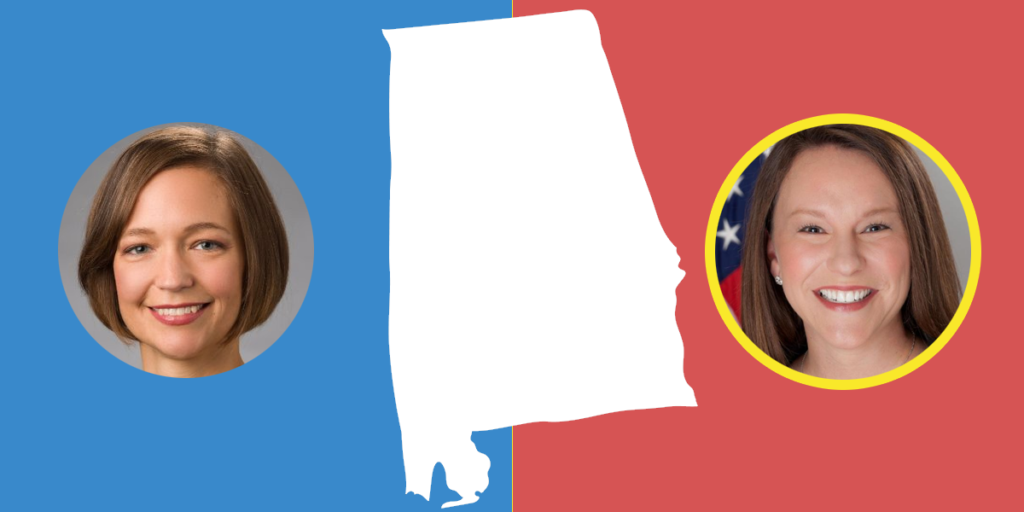
Republican Martha Roby easily won a fifth term Tuesday in her re-election bid against opponent, Democrat Tabitha Isner to represent Alabama’s 2nd Congressional District in the U.S. House of Representatives. With 99 percent of precincts reporting, Roby leads Isner 61.5 percent to 38.5 percent. Following the win, Roby said she was humbled and deeply grateful to the people of the 2nd District. “I am humbled and deeply grateful to the people who live and work in Alabama’s Second District for once again placing their trust in me to fight for them in Congress. I am proud of the work we have been able to accomplish, and I am eager to continue doing my part to deliver even more results for our military, veterans, farmers, and all of the hardworking Alabamians I represent,” Roby said in a statement. “Each and every day, I wake up and strive to be the best possible representative of our Alabama values in Congress, and I am looking forward to the next two years.” Meanwhile, her opponent took the opportunity to make one last jab at her. “To Martha Roby, I want to say congratulations. You get to keep this job, you didn’t work for it. That’s not an insult because you know as well as I do, Martha, that you didn’t work for this job, because you know as well as I do that your best strategy was to make sure the people in this district thought and talked as little as possible and to win on those grounds in shameful,” Isner said. Located in southeastern Alabama, the district includes Autauga, Barbour, Bullock, Butler, Coffee, Conecuh, Covington, Crenshaw, Dale, Elmore, Geneva, Henry, Houston, and Pike counties and a portion of Montgomery County.
A look at the voting history of Alabama’s 2nd Congressional District
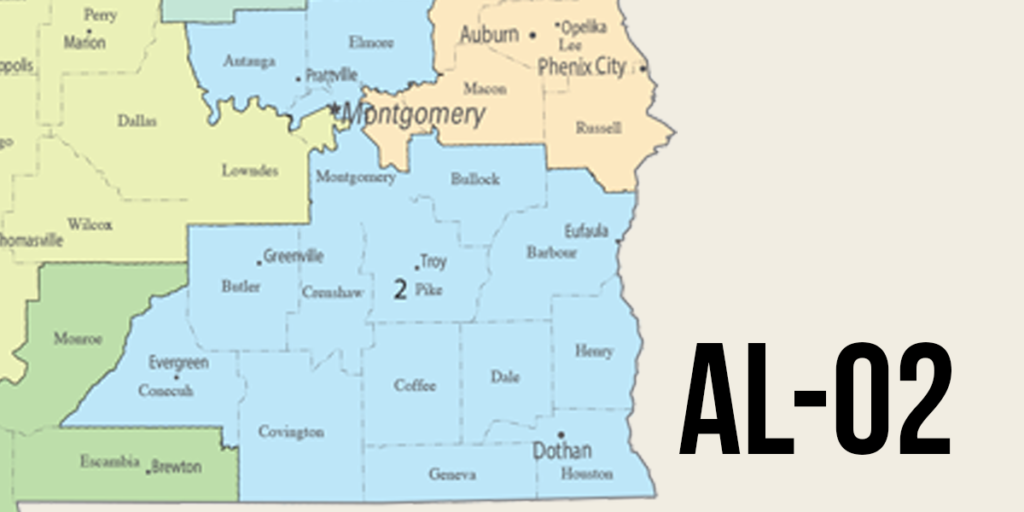
Alabama’s 2nd Congressional District in the U.S. House of Representatives is considered a solid red district. In fact, Cook Political Report deems it R+16, meaning in the previous two presidential elections, this district’s results were 16 percentage points more Republican than the national average. Located in southeastern Alabama, the district includes Autauga, Barbour, Bullock, Butler, Coffee, Conecuh, Covington, Crenshaw, Dale, Elmore, Geneva, Henry, Houston, and Pike counties and a portion of Montgomery County. Currently Rep. Martha Roby fills the seat. First elected during the Tea Party wave of 2010, Roby has be re-elected three times, in 2012, 2014 and 2016. Prior to her time in Congress, Roby worked as an attorney and served as a city councilman in her hometown of Montgomery. In the 2018 General Election Byrne faces political newcomer, Democrat Tabitha Isner, an ordained minister turned policy analyst. FiveThirtyEight, a statistics-driven news-and-analysis site, anticipates the 2nd District race being in the closest in the state, giving Isner a 1 in 40 chance of winning the seat. That said, Alabama’s 2nd District has only supported a Democrat for Congress once, and only for only two years, since 1965. Here’s a look at the voting history of the District: U.S. House, Alabama District 2 General Election 2016 Martha Roby (R) 48.8 percent 134,886 votes Nathan Mathis (D) 40.5 percent 112,089 votes Write-in 10.7 percent 29,609 276,584 total votes General Election 2014 Martha Roby (R) 67.3 percent 113,103 votes Erick Wright (D) 32.6 percent 54,692 votes Write-in 0.1 percent 157 votes 167,952 total votes General Election 2012 Martha Roby (R) 63.6 percent 180,591 votes Therese Ford (D) 36.3 percent 103,092 votes Write-in 0.1 percent 270 votes 283,953 total votes General Election 2010 Martha Roby (R) 51.1 percent 111,645 votes Bobby Bright (D) 48.9 percent 106,865 votes 218,510 total votes General Election 2008 Bobby Bright (D) 50.2 percent 180,591 votes Jay Love (R) 49.6 percent 142,578 votes Write-in 0.2 percent 448 votes 287,394 total votes
Tabitha Isner says Russians tried hacking her campaign website
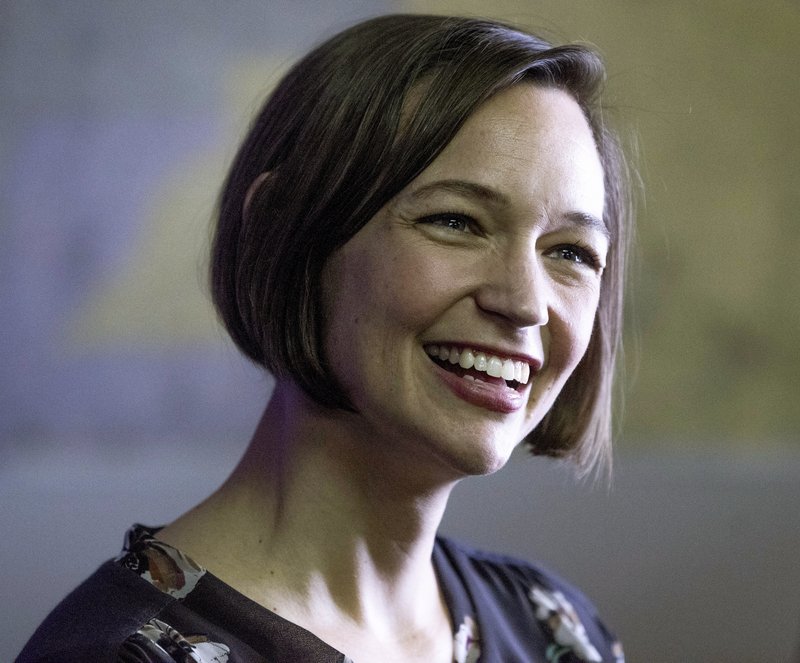
Tabitha Isner, the Democratic candidate in Alabama’s 2nd Congressional District, said Monday that Russian hackers appeared to have made more than a thousand attempts to break into her campaign website last month. Isner said there were 1,400 attempts to break into the website over two days in July. The attempts were discovered after the web hosting company reported a sudden surge of traffic to the campaign website around the time of the GOP runoff in the district. “He did some digging and found not just a high level of traffic, but a high level of brute force attacks … The majority of those came from Russian IP addresses,” Isner said. The reported hacking attempts come after the nation’s intelligence chiefs warned earlier this year that Russia remains interested in disrupting U.S. elections after a multipronged effort to interfere two years ago. Isner, a minister and business and policy analyst, is challenging Republican Rep. Martha Roby, a four-term incumbent, in the midterm election. Isner said she has no idea why her campaign was targeted. “It may just be too that they are just trying to waste my time and give me one more thing I have to worry about,” Isner said. She said the hackers were attempting to log in manually to the site, appearing to just guess at credentials. The attempts were unsuccessful, but her campaign reported the activity to the Federal Bureau of Investigation as well as the Democratic Congressional Campaign Committee. Isner said the FBI has been back in touch with her campaign. “They are going to talk to me about it. I don’t know what they are going to do about it,” Isner said. Thomas Loftis, a spokesman for the FBI’s Mobile office, said Monday that the FBI cannot confirm the existence or absence of an investigation. Isner said the DCCC can offer software for encryption of email and messaging, but said her campaign would not be discussing anything “terribly secretive.” “It’s hard to know what is worth pursuing. We are a relatively small campaign,” Isner said. Republished with the permission of the Associated Press.
2018: Year of the Woman in Alabama politics, primary update

If there ever was a “Year of the Woman” in Alabama, it’s 2018. Following the national trend, more Alabama women are stepping up to run for political office as a major party candidate than ever before, according to the Center for American Women and Politics at Rutgers University. But how did the female candidates fare in the June 5 primaries? Below is a list of women who prevailed in their races. Statewide Executive Office Currently only two women serve in statewide elected executive positions — Gov. Kay Ivey and Alabama Public Service Commission President Twinkle Andress Cavanaugh. But after last night’s election results, those numbers could change in November. Governor Gov. Kay Ivey (Republican candidate) triumphed over her three male opponents, and will face Walt Maddox in November’s general election. Lt. Governor Twinkle Andress Cavanaugh (Republican candidate) will face Will Ainsworth in a runoff election, July 17. Secretary of State Heather Milam (Democratic candidate) won her primary election, and will face John Merrill in the November general election. Alabama Court of Civil Appeals Christy Olinger Edwards (Place 1, Republican candidate) won her spot over Michelle Manley Thomason, another female republican candidate. U.S. Congress Currently only two women represent the Yellowhammer State in the United States Congress — 2nd District U.S. Rep. Martha Roby and 7th District U.S. Rep. Terri Sewell. Five other women ran for office in U.S. house races. Alabama 2nd District in the U.S. House of Representatives Rep. Martha Roby (incumbent, Republican candidate) was forced into a runoff set for July 17 with former Rep. Bobby Bright. Tabitha Isner (Democratic candidate) won the democratic primary for the 2nd district and will face either Roby or Bright in November. Alabama 3rd District in the U.S. House of Representatives Mallory Hagan (Democratic candidate) won the democratic primary for the 3rd district and will face incumbent Mike Rogers in the November general election. Alabama 7th District in the U.S. House of Representatives Rep. Terri Sewell (incumbent, Democratic candidate) was the only candidate in her race. State Legislature Amy Wasyluka (Democratic candidate) won the State Senate District 2 race Deidra Willis (Democratic candidate) won the State Senate, District 7 race Vivian Davis Figures (Democratic candidate) won the State Senate, District 33 race Laura Hall (Democratic candidate) won the State House District 19 race Barbara Bigsby Boyd (Democratic candididate) won the State House District 32 race Debbie Hamby Wood (Republican candidate) won the State House District 38 race April Weaver (Republican candidate) won the State House District 49 race Louise “Lulu” Alexander (Democratic candidate) won the State House District 56 race Rolanda Hollis (Democratic candidate) won the State House District 58 race Mary Moore (Democratic cadet) won the State House District 59 race Juandalynn Givan (Democratic candidate) won the State House District 60 race Elaine Beech (Democratic candidate) won the State House District 65 race Pebblin Walker Warren (Democratic candidate) won the State House District 82 race Pat “Patsy” Jones (Democratic candidate) won the State House District 83 race Adline C. Clarke (Democratic candidate) won the State House District 97 race
Who’s who in statewide and congressional races on the primary ballot
Alabama’s primary ballot features multiple offices and something voters in the Republican-controlled state haven’t seen in years: Democratic races for statewide and congressional positions. Alabama Democrats have 27 total candidates running for state positions or Congress this year, more than double the 13 from 2014. That means there are several Democratic primary races, compared to just one for a statewide office four years ago. Many of the eventual Republican nominees will still run unopposed in the General Election because no Democrats qualified. But with Democratic opposition to President Donald Trump running high and after Democrat Doug Jones’ victory in Alabama’s U.S. Senate in December, the once-powerful party is trying to show signs of life. Aside from the governor’s campaign, in which five Republicans and six Democrats are vying for their party’s nominations, here are some other races to watch: ___ Attorney General Republican appointee Steve Marshall is facing voters for the first time in a statewide race as he seeks election to the office of attorney general, and it might not be easy. Marshall, a former Marshall County district attorney, has served in the job since February 2017, when then-Gov. Robert Bentley tapped him after naming Luther Strange to the U.S. Senate. Marshall is being opposed in the GOP primary by Alice Martin, a former federal prosecutor who was the state’s chief deputy attorney general; Troy King, a former state attorney general and Birmingham lawyer Chess Bedsole. Birmingham attorneys Joseph Siegelman and Chris Christie are vying for the Democratic nomination. Siegelman is the son of former Gov. Don Siegelman. The attorney general is responsible for representing the state in criminal and civil matters, and the office often is a stepping-stone to other positions. Just ask U.S. Attorney General Jeff Sessions, a former Alabama attorney general. ___ Congress Rep. Martha Roby’s bid to hold on to her District 2 seat from the Wiregrass region of southeastern Alabama for a fifth term highlights the state’s congressional primaries. The House Appropriations Committee member is being opposed by candidates including Bobby Bright, who Roby defeated to claim the seat in 2010. Other opponents include Rich Hobson of Enterprise, who managed Roy Moore’s unsuccessful Senate campaign last year. Roby gained Republican critics after distancing herself from Presidential Donald Trump’s vulgar comments about women in 2016. The eventual GOP nominee will face either education researcher Tabitha Isner of Montgomery or activist and military veteran Audri Scott Williams of Cottonwood. They’re competing for the Democratic nomination in the Republican-dominated district. Reps. Mo Brooks of Huntsville and Robert Aderholt of Haleyville also have challengers in the GOP primary, and Democrats have primaries in four districts in all. There was just one Democratic congressional primary in 2014. ___ Lieutenant Governor Alabama has been without a lieutenant governor for more than a year, and the primary is a first step toward filling the office. Alabama Public Service Commission president Twinkle Andress Cavanaugh is running in the Republican primary against two state legislators: Rep. Will Ainsworth of Guntersville and Sen. Rusty Glover of Mobile. Cavanaugh has outpaced other candidates in fundraising with nearly $1.1 million in total contributions through April. The eventual Republican nominee will face Democratic minister Will Boyd, who lost the U.S. Senate primary against Doug Jones in the special election last year. The office of lieutenant governor, who is president in the state Senate, has been vacant since April 2017, when Kay Ivey succeeded Robert Bentley as governor following his resignation and guilty plea amid a sex-tinged scandal. Ethics is a top issue in the race as the Legislature looks to review Alabama’s ethics law next year and lawmakers currently face corruption charges. ___ Supreme Court The Alabama Supreme Court isn’t in the news as often as it used to be without Roy Moore as chief justice, but the primary ballot includes three contested races on the nine-member, all-Republican panel. Current court members Lyn Stuart and Tom Parker are vying for the Republican nomination for chief justice. Stuart has been serving in the position since Moore’s suspension for violating judicial ethics and later resignation to run for the Senate. Either Stuart or Parker will face Bob Vance Jr., a Jefferson County circuit judge who is unopposed for the Democratic nomination. Court appointee Brad Mendheim is opposed by circuit judges Debra Jones of Anniston and Sarah Hicks Stewart of Mobile for the GOP nomination for Place 1 on the nine-member court. And attorneys John Bahakel and Jay Mitchell of Birmingham are both seeking the Republican nomination for the Place 4 seat. The winner will face Democrat Donna Wesson Smalley in November. ___ State School Board Republicans are fighting over two seats on the Alabama State Board of Education, and the winners of both races will have Democratic opponents in the fall. Four Republicans are running for the District 2 seat held by Betty Peters, who isn’t seeking re-election. They include former Dothan school board member Melanie Hill; Coffee County resident Sybil Little; John Taylor of Dothan; and Auburn City School Board President Tracie West. The winner will face Democrat Adam Jortner in November. Business executive and former Madison school board Rich McAdams and Wayne Reynolds, a retired educator and registered nurse from Athens, are seeking the Republican nomination in District 8. The seat is now held by Mary Scott Hunter, who is running for the Alabama Senate. Jessica Fortune Barker is on the ballot as a Democrat in the General Election. Republished with the permission of the Associated Press.