
Constables: who they are, and what they do

Only 24 counties, out of the 67 in Alabama, have constables. But who are they, and what do they do? The Code of Alabama defines constables as an elected or appointed “conservator of the peace within his county,” and according to the Alabama Constables Association, they are one of the only two remaining elected peace officers in the world. Their duties include: attending the circuit court of the county when summoned by the sheriff for that purpose; executing and returning all summons, executions and other process directed to him by any lawful authority; paying over moneys collected by virtue of his office to the person entitled thereto performing such other duties as are or may be required of him by law Constables are also permitted to carry a gun, are authorized to make arrests, stop and question, search for dangerous weapons, escort weddings and funerals, and enforce traffic at churches and schools. Although not permitted to write a traffic ticket, they can also pull over vehicles who disobey traffic laws. According to a 2015 AL.com article, the qualifications to become a constable are very few. “You must be a citizen of the county you’re running in, have no criminal record, and be old enough to carry a firearm.” The report continues to name the counties have constables including: Barbour, Colbert, Conecuh, Coosa, Dallas, Dekalb, Elmore, Etowah, Franklin, Green, Jackson, Jefferson, Marengo, Marion, Mobile, Monroe, Russell, Sumter, Talladega, Tallapoosa, Walker, Wilcox and Winston. Tallapoosa County will only have constables until 2020, after which they will be abolished according a court ruling in April of this year.
Alabama metro ranks No. 1 for manufacturing jobs, analysis says
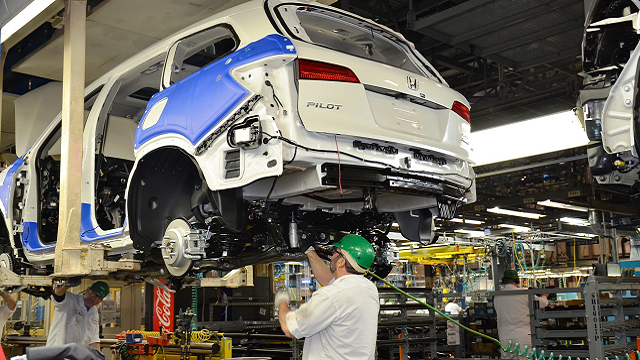
The Talladega-Sylacauga Micropolitan Statistical Area was rated the best place in the U.S. for manufacturing jobs in a detailed analysis by SmartAsset, a financial technology company that studied data on nearly 500 cities. SmartAsset singled out the high concentration of well-paying manufacturing jobs in the Talladega-Sylacauga area in its analysis. Here’s what the firm says about the micropolitan: “A large chunk of the workforce in this Alabama metro area work in manufacturing – just over 39 percent. Only three other metro areas in this study can beat this stat. “Manufacturing jobs here also pay pretty well, especially when you consider the area’s average housing costs. We estimate the average manufacturing worker earns $58,461 after accounting for housing costs.” The Talladega-Sylacauga micropolitan area consists of Talladega and Coosa counties, with a total population of around 93,000. The area’s top employer is Honda Manufacturing of Alabama, which operates an auto assembly plant in Lincoln with more than 4,500 workers. “Alabama has a strong heritage in manufacturing, and it remains an important pillar in the state’s economy,” said Greg Canfield, secretary of the Alabama Department of Commerce. “Alabamians have the expertise to produce top-class products that are in high demand around the world, and the workers in the Talladega-Sylacauga area are especially good at it.” Manufacturing workers in Alabama total more than 260,000, representing more than 13 percent of the state’s workforce. That’s the fifth-highest concentration among the states, according to data from the National Association of Manufacturers. Rising incomes To identify the best places to work in manufacturing, New York-based SmartAsset looked at data for 483 metro areas in the United States. Specifically, the firm looked at data on employment growth in manufacturing, income growth in manufacturing, density of manufacturing jobs and housing costs. The number of manufacturing jobs in the Talladega-Sylacauga micropolitan area expanded by 3.4 percent in the past year, reaching 39.4 percent of total jobs, according to SmartAsset’s data. Incomes, meanwhile, climbed 6.2 percent over the year. The area’s annual income after housing figure of $58,461 was second-highest among cities making the list’s Top 25, and it was more than $10,000 higher than the city ranking just behind it on the overall list. “Manufacturers rely on the skills of their workers for success, and the talents of manufacturing workers in the Talladega-Sylacauga region are highlighted by this impressive ranking,” said Ed Castile, deputy Commerce secretary and director of AIDT, the state’s primary job training agency. After the Talladega-Sylacauga micropolitan, other areas rounding out the Top 5 on SmartAsset’s list of the top places for manufacturing were: Greenville-Anderson-Mauldin, South Carolina Ogden-Clearfield, Utah Rockford, Illinois Elizabethtown-Fort Knox, Kentucky The Talladega-Sylacauga area ranked No. 11 in the 2016 installment of the SmartAsset analysis. This story originally appeared on the Alabama Department of Commerce’s Made in Alabama website. Republished with permission from the Alabama NewsCenter.
Talladega Superspeedway offers free campground space for Irma evacuees

Hurricane Irma, a massive Category 5 storm, is barreling towards Florida and already Florida Gov. Rick Scott has already declared a state of emergency for those in its path. As Floridians prepare for what could be one of the largest mass evacuations in U.S. history, Alabama’s own Talladega Superspeedway is doing what it can to help. Beginning Thurs. Sep. 7 at 9 a.m., the NASCAR’s largest track property will offer a portion of its campgrounds — which will include hot shower and restroom facilities, as well as water hookups on gravel and grassy areas — free to evacuees seeking temporary refuge “Our track is committed to helping our friends in Florida and the surrounding states during this time of need,” Talladega Superspeedway Chairman Grant Lynch stated of the venue, which is located just off I-20 between Atlanta (GA) and Birmingham, AL. “We hope to provide a sense of relief by offering a place to stay for no charge for evacuees during this time of adversity. Our thoughts and prayers go out to everyone in the path of the storm.” Like our friends at @amsupdates, Talladega Superspeedway is welcoming anyone seeking refuge from #HurricaneIrma. https://t.co/ZTuXGKVMlQ — TalladegaSuperspdwy (@TalladegaSuperS) September 6, 2017 On Wednesday, Atlanta Motor Speedway announced it would open up its camping facilities free of charge to any Hurricane Irma evacuees as well. The Talladega Superspeedway is located less than 10 minutes from the Talladega Municipal Airport. Evacuees with questions may reach the superspeedway’s guest services department at (256) 761-4709.
Alabama city ranked as 5th most student debt city nationwide

Millennials may be typecast as an entitled, unmotivated and lazy generation that choose to crash in mom’s basement after college because they can’t find a job they like, but even those who fight the narrative and pound the pavement are facing massive post-college debts as they struggle to earn their independence in entry-level jobs. Today, college graduates spend nearly a fifth, or 18 percent, of their salaries just on student-loan payments, according to a recent report from Citizens Bank. And those debts are likely to grow old with them. Three in five graduates, who belong to the Millennial generation, expect to keep paying their college loans into their 40s. With college graduation season upon us, the personal finance website WalletHub on Tuesday released its 2016 report on the Cities with the Most & Least Student Debt where it compared the average student-loan balance against the median income in each of 2,513 U.S. cities to determine where Americans are most overleveraged on their college-related debts. Unfortunately for some Alabama students, the debt burden is devastating. In Selma, students are graduating with an average debt of $28,035. With a median income for ages 25 to 44 at $17,610, that means these graduates have a ratio of student debt to median income of a crippling 159 percent — the fifth worst in the nation. But Selma’s not alone, Talladega’s student debt to median income ratio ranks in the top two percent nationwide at 116 percent, followed close behind by Birmingham with 109 percent. According to Sandy Baum, Professor of Higher Education Administration in the Graduate School of Education & Human Development at George Washington University, and Senior Fellow at the Urban Institute, part of the problem is that college-bound students make the wrong choice about where to go to school and what to study. “Too many people make the wrong choice about where to enroll and what to study,” explained Baum. “That means they may be financing an endeavor in which they are unlikely to succeed, that leads to weak employment prospects even if they do succeed, or that is much more expensive than alternatives of equal or higher quality.” The other issue: some students borrow too much. “They take all the loans for which they are told they are eligible,” continued Baum. “Instead, they should think hard about what their needs will be over the course of the school year. This is particularly an issue for part-time students, who are eligible for the same amounts as full-time students … borrowing moderately is important.” To identify the cities that are most overleveraged on their student-loan debts, WalletHub’s analysts divided the average student-loan balance (based on TransUnion data from September 2015) by the median income of residents aged 25 to 44 in each of 2,513 U.S. cities. According to WalletHub, the most overleveraged cities include Voorhees, N.J.; Opa-locka, Fla.; College Park, Ga.; Bastrop, La.; and Selma, Ala. The least overleveraged cities include Lake Forest, Ill.; Sammamish, Wash.; Severna Park, Md.; Winchester, Mass.; and Scarsdale, N.Y.
Luther Strange calls on EPA to cancel rule to limit emissions from modified cars
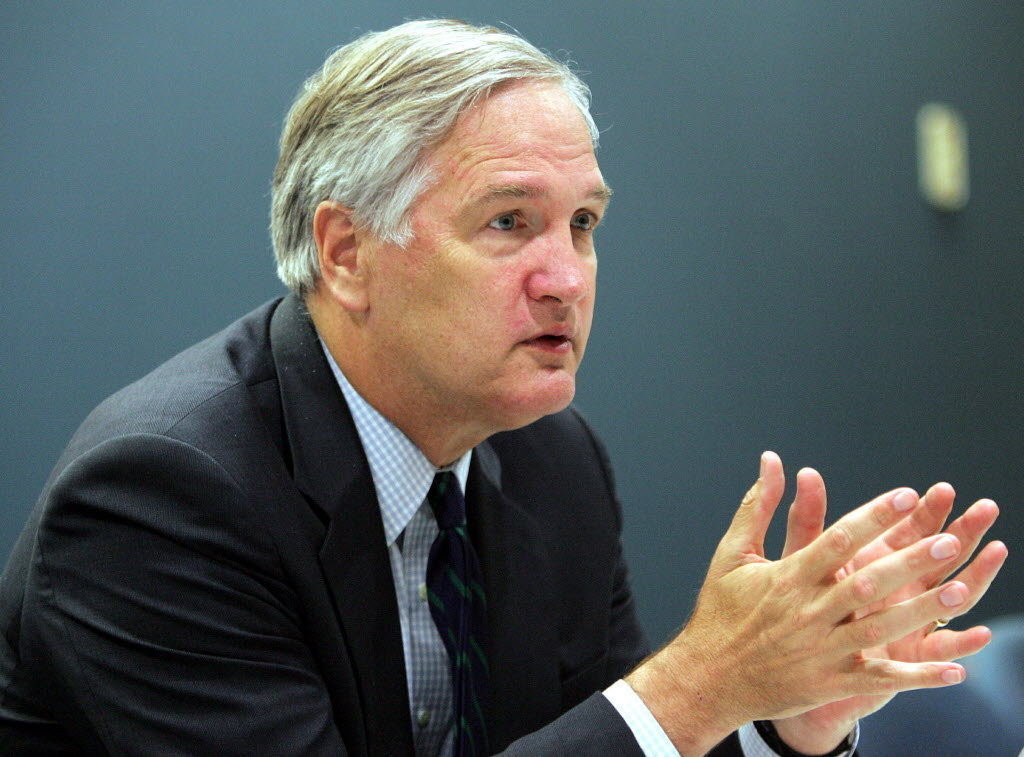
Alabama Attorney General Luther Strange is calling on federal environmental authorities to drop a proposal that would stop off-road racing hobbyists from removing or reconfiguring emissions control devices on modified street vehicles. Strange joined Attorneys General from seven other states in sending a letter to EPA Administrator Gina McCarthy asking her not to implement the proposed rule, saying it would effectively stall the industry related to conversion of street vehicles to racing vehicles. “In another example of federal bureaucrats seeking to expand their regulatory reach, the EPA is pushing a proposed change to the federal Clean Air Act to effectively prohibit street vehicles from being converted into off-road race cars,” said Strange. Strange said the move by regulators, if implemented, would be an economic blow to mechanics and parts suppliers who participate in the cottage industry of car modification. “In Alabama and across the country, modifying race cars is a popular pastime and a significant contributor to the economy,” said Strange. “In 2014, $36 billion was spent nationally on automotive specialty equipment parts and accessories. Off-road racing parts businesses which sell their products in Alabama and elsewhere, as well as local racetracks, would be adversely affected by the implementation of the new EPA rule.” The proposed rule mandates that “Certified motor vehicles and motor vehicle engines and their emission control devices must remain in their certified configuration even if they are used solely for competition or if they become non-road vehicles or engines.” The letter from Strange and the other attorneys general claims the EPA rule change is contrary to existing statute, and conflicts with the expressed intent of Congress not to subject race cars to the same federal emission standards as street vehicles. According to Strange, potecting race cars from emissions requirements was such a concern when Congress passed the Clean Air Act in 1970 that Alabama Congressman Bill Nichols – who represented Talladega, the notorious hometown of Deep South auto racing – specifically asked that the environmental reform law not penalize “vehicles and vehicle engines manufactured for, modified for or utilized in organized motorized racing events.” The other state joining Strange were Arkansas, Georgia, Louisiana, Michigan, Nevada, Ohio, and West Virginia, all states with Republican attorneys general.
Mayor says assault tied to election, not rumored affair and sex tape
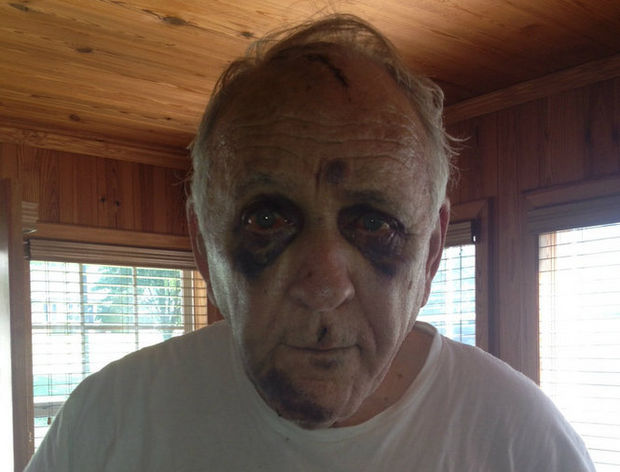
An Alabama mayor who was re-elected despite a federal conviction says recovering from an assault outside a barbershop where he works part time and allegations of a sex tape with the suspect’s wife won’t derail the final push of his campaign for a fifth term. With just over a week left before municipal elections, Talladega Mayor Larry Barton is sporting bruises on his face, head and elsewhere after being beaten Aug. 8 outside a barber shop in Vestavia Hills, just outside Birmingham. After being thrust once again into a less than flattering spotlight, Barton, 75, is dismissing notions that a rumored affair caught on camera with the wife of the assault suspect was the root cause of the beating. The mayor served about three years in prison in the 1990s after being convicted of defrauding the city. Prosecutors said Barton had city officials issue about $5,000 in checks to a fictitious worker for removing tree stumps from city property, but cashed the checks himself. Benny Green, 71, was arrested and charged with assault in the attack. Green is in the process of a divorce. An attorney who represented him in the case, Stewart Springer, has said Barton was secretly recorded having sex with Green’s wife and that he saw the footage himself. Vestavia Hills police have said Barton was hit multiple times with a baseball bat or a similar object and Green tried fleeing the scene on a bicycle but was stopped by bystanders. Authorities have said the two were longtime friends and Barton said they worked together on a local show he still hosts. It’s unclear if Green has an attorney and calls and emails to numbers and addresses listed for him weren’t returned. Divorce court documents indicate that Green’s wife was recorded with a man other than her husband, but didn’t identify him. The documents said she and the man were recorded numerous times in the back office of a liquor store the Greens own. Barton said he had an office in the back of the store and worked as bookkeeper. The secret videos were shot in December 2013 and were presented in February, according to court records. “If he had a tape for all these years, why didn’t he confront me with it?” Barton asked. “He had no reason to beat me up.” Barton was subpoenaed in the couple’s case but hasn’t yet given a deposition. Barton said given his background, the incident may have been an attempt to smear him before voters cast their ballots roughly 55 miles away from where he was assaulted. Police spokesman Brian Gilham has said he isn’t authorized to release additional details about Green’s potential motive. “This is nothing new on elections and me running for office,” Barton said. “Every time I run they come out with something to try and beat me.” Barton lost several runoffs for mayor before being elected again in 2011. Seated on a wicker bench at his house on Shady Lane Circle with two black eyes, bruises and cuts throughout his body – Barton said the assault and recovery process won’t impact the final week of his campaign. Opponent Jerry Cooper Sr. declined to comment and calls to another candidate, Vann Caldwell, weren’t returned. Septuagenarian sex tape or not, lifelong Talladega resident Nisha Davis, 34, said she thinks uninformed voters helped Barton return to office despite his federal conviction. “He’s been the butt of a lot of jokes around town, I hate to say it,” Davis said after explaining how Barton’s checkered past and what she considers lackluster development in the city has impacted her decision on which candidate to support. “It’s definitely time for some new blood.” Talladega’s municipal elections are set for Aug. 25. Republished with permission of the Associated Press.
Talladega looks to ban sagging pants
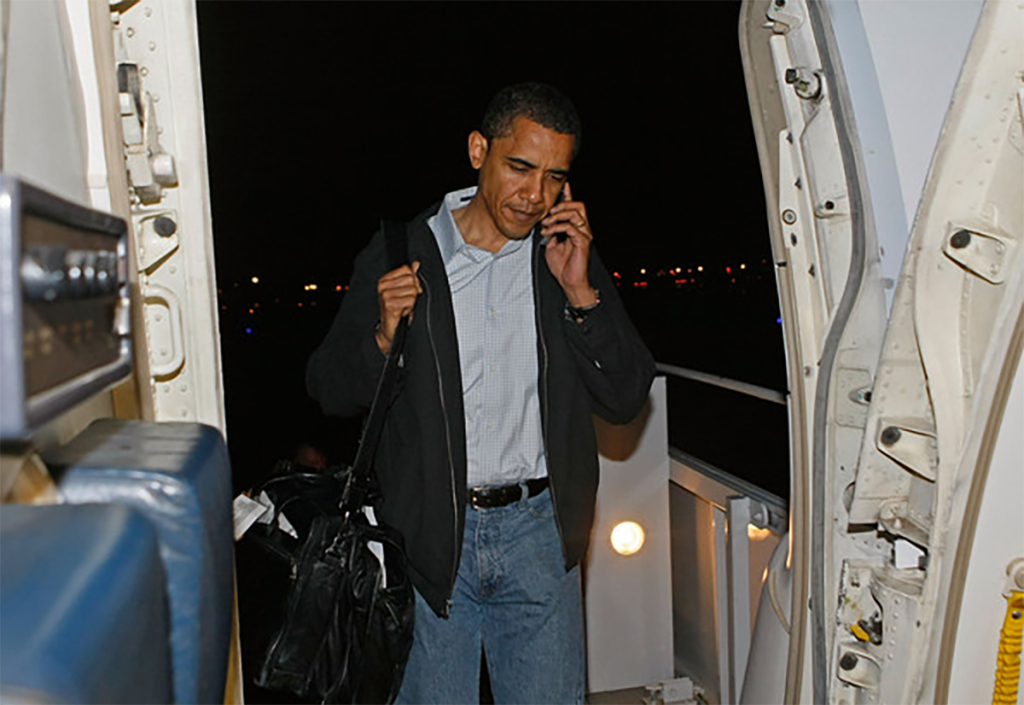
Should terrible fashion choices be outlawed? If so after we ban sagging pants can we re-evaluate the high-waisted Daisy-Duke cutoff jeans that young women wear these days? Joining a long line of cities before them the Talladega City Council is renewing a previous look into a resident’s request to ban sagging pants. The Anniston Star reports that resident Paul Johnson became concerned about the way sagging pants effects the community as a whole. He told the newspaper he considers them disrespectful, specifically to his granddaughter and the women in town. He asked that a ban be put in place and that punishments for violating it have teeth. Johnson told the Star, “I care about my community, about how and where I live. I want to teach my granddaughter what’s right, but we can’t do that if (sagging) is what she sees in public. If we don’t do something, it’s just going to get worse.” Bans on sagging pants have been proposed throughout the nation including in Talladega in the past. Last year, Ocala, Fla., passed a ban but repealed it when the NAACP threatened legal action. Even President Barack Obama weighed in on the issue. As a candidate in 2008 he said, ““Here’s my attitude: I think passing a law about people wearing sagging pants is a waste of time.” He did however go on to say, “Having said that, brothers should pull up their pants. You’re walking by your mother, your grandmother, and your underwear is showing. … What’s wrong with that? Come on. There are some issues that we face that you don’t have to pass a law [against], but that doesn’t mean folks can’t have some sense and some respect for other people. And, you know, some people might not want to see your underwear: I’m one of them.” Councilors have said they will hold public meetings on the issue and have the new city manager look into it when he starts. I’m hoping this issue only comes up just after the city gets to all the other important ones like actual crimes, poverty, hunger, etc.
