
Alabama set record with 2018 holiday sales

The Alabama Retail Association said final figures from the confirm that 2018 holiday sales in Alabama set a record and topped $12 billion for the first time. According to the Revenue Department, shoppers in the state spent nearly $12.07 billion, up 2.66 percent from 2017. The numbers were just shy of the Alabama Retail Association’s prediction of $12.2 billion. The National Retail Federation’s preliminary numbers show a 4.6 percent growth in holiday sales nationally. The Alabama Retail Association said the state’s early adoption of tax policy related to online sales helped boost sales figures during the holiday season. A U.S. Supreme Court decision and a state tax rule broadened the collection of online taxes starting Oct. 1. For the holiday season, those sales brought an additional $12 million dollars in tax revenue into the state compared to 2017. The sales reflected in Alabama’s simplified sellers use tax jumped 72.27 percent, or $154.5 million, in November and December 2018, from $213.8 million to $368.3 million. Alabama holiday sales for the almost 1,000 simplified sellers represent just 3.05 percent of total holiday sales in the state. The Alabama Revenue Department reports sales tax collections on general merchandise, restaurant and other food service, automobiles, machinery and vending. Republished with permission from Alabama NewsCenter
2019 Oscar nominations have Alabama roots, do tax credits work?

Nominations have been announced for the 2019 Academy Awards, and AL.com reports that Alabama is well represented among the nominees. Hale County This Morning, This Evening was nominated for best documentary feature film. This film, about Hale County, Alabama, “allows the viewer an emotive impression of the Historic South – trumpeting the beauty of life and consequences of the social construction of race, while simultaneously a testament to dreaming – despite the odds.” Up for best picture is the film The Green Book. One of the producers was Alabamian Octavia Spencer. The First Man, based on Auburn professor Emeritus James R. Hansen‘s book on the life of Neil Armstrong, has been nominated for several awards. Alabamian Jason Isbell contributed to the soundtrack for the nominated film A Star is Born. Alabama is tempting to many filmmakers because of their generous tax incentives in a state that offers a wide range of scenery, according to Variety. “Specifically,” they report, “Alabama provides a 35% refundable tax credit on resident above-the-line and below-the-line workers. For non-resident above- and below-the-line personnel, the refundable tax credit is 25%.” They continue “There is also a 25% refundable tax credit on all other qualified expenditures. A $20 million project cap applies. The compensation is $1 million for above-the-line contributions and $500,000 for below-the-line work.” We are considered one of the best states for filming tax incentives. Some believe that the tax incentives do not provide a large enough return on investment. In 2007, Republican Rep. Phil Williams of Huntsville introduced a bill that would abolish the Entertainment Industry Incentive Act of 2009 which provided those incentives. Birmingham Business Journal cited a study by the University of Tennessee that said the state could “almost certainly generate larger and more enduring economic benefits to the state with an alternative use of these taxpayer dollars that is more closely linked to stated economic development goals.” The Alabama Film Office reports that “Alabama has catered to everything from small, independent shorts to massive Hollywood film productions.” A new film, Inheritance, starring Kate Mara (House of Cards) and Simon Pegg (Ready Player One), will begin filming in Birmingham in February, according to Bham Now, which also has a list of films that have been filmed in the city, including Live! and Trading Paint.
Daniel Sutter: Should We Tax Greenhouse Gases?
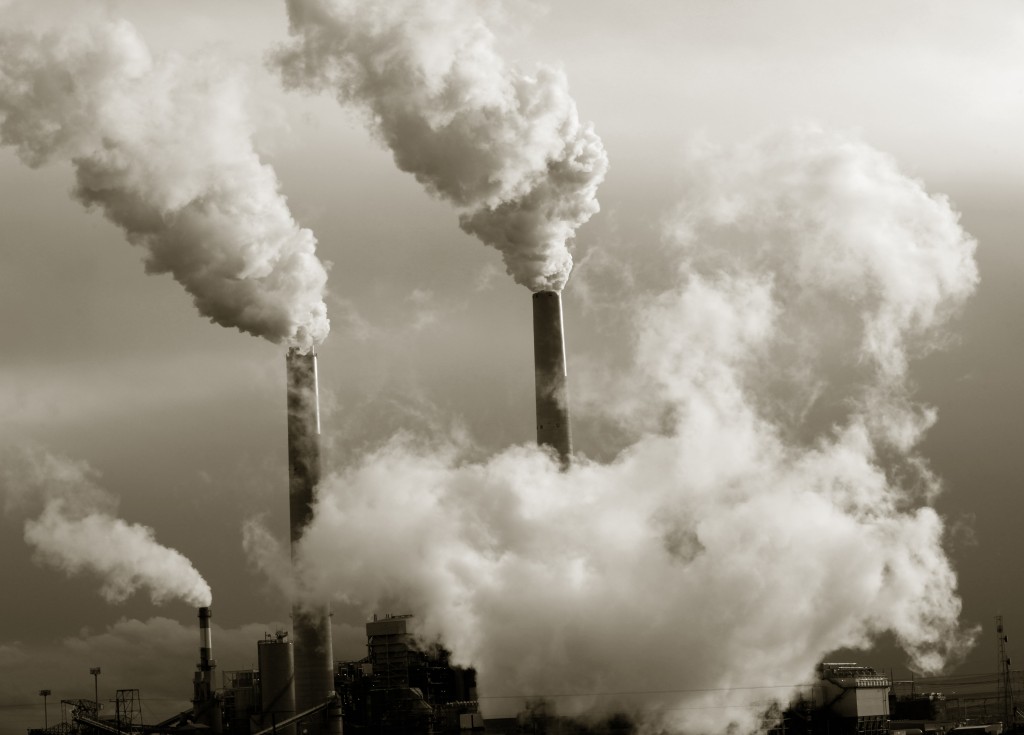
A group of distinguished economists, including Nobel prize winners and past Council of Economic Advisors members, recently supported a carbon tax. While the economic case for such a tax is strong, I nonetheless think the policy is ill-advised. Today, let’s consider the economics of a carbon tax. A carbon tax would limit emissions of greenhouse gases, most notably carbon dioxide, due to their impact on global warming. The tax differs only subtly in effect from the “cap and trade” policy considered by Congress in 2010; I will not consider the differences here. A tax is probably the best way to limit greenhouse gases if we choose. The economists propose replacing regulations and other policies to limit fossil fuels or encourage alternative energy – from the Clean Power Plan to tax credits for electric cars – with the carbon tax. This makes perfect sense. The pollution problem arises because actions like burning gasoline in a car effectively use clean air without the driver or oil company having to pay for it. The price is too low, resulting in too much pollution. Economist A. C. Pigou hit upon a solution almost a century ago. Tax the good, or better yet the pollution, the amount of damage to the environment. The tax gets reflected in the price, and we can then let prices coordinate economic activity and protect the environment. Prices never prohibit any activity for which someone is willing and able to pay. This is a huge advantage relative to regulation. A carbon tax ensures that we can use fossil fuels for highly valued activities like powering jet planes or running generators for hospitals during blackouts. Regulations often prohibit highly valued uses, causing significant costs. Quantifying environmental damage is always challenging, and the impacts of global warming will not occur for decades. Any tax we impose now must rely on climate models to estimate future impacts. Integrated Assessment Models pioneered by 2018 Nobel Prize winning economist William Nordhaus show how to value the estimated climate impacts. Economic analysis shows that the carbon tax should increase over time. Fossil fuels become more expensive in a predictable manner. These rising prices provide the incentive to invest in electric cars or solar or wind energy without direct subsidies. A carbon tax would also hit “alternatives” to fossil fuels generating significant carbon dioxide emissions. Ethanol blends corn with gasoline and is subsidized as a clean fuel. Yet growing corn uses fossil fuels to power tractors, harvesters, and irrigation equipment. We can avoid wasting money on politically favored non-solutions. Using pollution taxes to fund government offers another benefit. When we tax anything, we get less of it. Taxing income, investment, or employment leaves us with less of things which drive prosperity. Each dollar in taxes raised costs the economy more than a dollar. When we tax pollution, we get less of a bad thing. The economists propose rebating carbon tax revenue to Americans as a climate dividend. This also makes sense. A carbon tax will increase energy prices and poor Americans spend more of their income on energy than others. A carbon tax would be regressive, falling more heavily on lower income families. Each household’s climate dividend would be an equal share of the tax revenue. Poorer households spend a larger share of their income on energy, but high income households consume more energy. Low income households should receive a dividend larger than carbon tax paid. Rebating the revenue might seem to just reverse the tax. Yet this is not true provided that the revenue is not refunded exactly as collected. If paying an extra $50 tax increases our climate dividend by exactly $50, then the refund cancels the tax. If I pay an extra $50 tax, it will be divided among more than 100 million households, so practically speaking I get none of it back. A carbon tax makes economic sense, particularly if we eliminate other climate change regulations and alternative fuels subsidies. But the political process does not always employ policies as economists suggest. So there’s more to this story than just economics, although the rest of the story will have to wait until next time. Daniel Sutter is the Charles G. Koch Professor of Economics with the Manuel H. Johnson Center for Political Economy at Troy University and host of Econversations on TrojanVision. The opinions expressed in this column are the author’s and do not necessarily reflect the views of Troy University.
Ready to check out? Don’t forget, Alabama’s online sales tax is now in effect

Starting Monday, Alabamians will have to pay more to shop online, in some cases. The Alabama Department of Revenue is requiring online retailers that do not have a physical presence in the state with sales of more than $250,000 a year to register with the Alabama Simplified Sellers Use Tax Program (SSUT), and to start collecting taxes on Oct. 1. The SSUT program allows registered companies to pay a flat 8 percent sales tax, instead of navigating different county and city tax rates. Alabama is expected to be among the states most likely to see the biggest percentage increase in revenue based on the Barclays research. But a number of online retailers, including Amazon, already remit taxes to the state through the SSUT, so shoppers will see no changes in their purchase taxes. The U.S. Supreme Court paved the way for this tax back in June when it made a 5-4 ruling to overturn two decades-old Supreme Court decisions that impacted online sales tax collection. Alabama is among 10 states whose online sales tax is going into effect Monday. Illinois, Indiana, Kentucky, Massachusetts, Minnesota, Michigan, North Dakota, Washington and Wisconsin are also beginning Oct. 1. Similar laws will go into effect in Connecticut and Iowa in the coming months.
Donald Trump eyes changes to Barack Obama’s tax and Wall Street rules
The Trump administration embarked Friday on new efforts to study and possibly dismantle some of the tax and financial regulations established by former President Barack Obama. President Donald Trump will sign an executive order to review tax regulations set last year by his predecessor, as well as two memos to potentially reconsider major elements of the 2010 Dodd-Frank financial reforms passed in the wake of the Great Recession. The review of tax regulations could give greater leeway to companies looking to shelter income overseas, or simply seeking to reduce paperwork related to the enforcement of such regulations. Treasury Secretary Steven Mnuchin said a “significant” issue to be examined will be the crackdown by Obama on inversions, which are mergers that enable U.S. firms to relocate their headquarters overseas where tax rates are lower. The review could also touch on overlapping rules designed to stop foreign-based companies from shifting their U.S. profits abroad. Mnuchin said the goal of the executive order is to reduce the burden of time and money from complying with tax regulations. “The tax system is way too complicated and burdensome,” he said. The administration is also trying to pass tax reform that would reduce corporate rates and encourage businesses that have trillions of dollars stowed overseas to bring their profits back to the U.S. “We’re not going to do anything that makes U.S. businesses less competitive,” Mnuchin said. The two memos would focus on possible adjustments to the Dodd-Frank law, which was designed to stop banks from growing “too big to fail” and requiring public bailouts. One memo will order Mnuchin to review a component of the law that allows federal regulators to liquidate failing financial firms during an economic crisis if those companies are large enough that their collapse would pose a threat to the entire U.S. economy. The other memo will order the Treasury to review a process that designates which non-bank firms could threaten the financial system if they fail. Critics argue this process is costly and arbitrary. Both measures will be suspended while they’re under review. Mnuchin said taxpayers won’t be left on the hook. “Let me make it absolutely clear: President Trump is absolutely committed to make sure that taxpayers are not at risk for government bailouts of entities that are too big to fail,” he said. His report will explore if it would be better to liquidate troubled financial firms through a modified form of bankruptcy. Former Federal Reserve chair Ben Bernanke argued in a February blog post that there is no provision for the government to inject money into a failing firm as was done during the 2008 financial meltdown. This means that all losses would be borne by private investors. Also, Bernanke said his experience is that financial regulators are often better equipped to respond to these emergencies than bankruptcy judges. Mnuchin suggested Friday that it might be necessary to update bankruptcy laws to accommodate collapsing firms during an economic crisis. Republished with permission of The Associated Press.
IRS says thieves stole tax info from 100,000
Sophisticated criminals used an online service run by the IRS to access personal tax information from more than 100,000 taxpayers, part of an elaborate scheme to steal identities and claim fraudulent tax refunds, the IRS said Tuesday. The thieves accessed a system called “Get Transcript,” where taxpayers can get tax returns and other filings from previous years. In order to access the information, the thieves cleared a security screen that required knowledge about the taxpayer, including Social Security number, date of birth, tax filing status and street address, the IRS said. “We’re confident that these are not amateurs,” said IRS Commissioner John Koskinen. “These actually are organized crime syndicates that not only we but everybody in the financial industry are dealing with.” Koskinen wouldn’t say whether investigators think the criminals are based overseas — or where they obtained enough personal information about the taxpayers to access their returns. The IRS has launched a criminal investigation. The agency’s inspector general is also investigating. Identity thieves, both foreign and domestic, have stepped up their efforts in recent years to claim fraudulent tax refunds. The agency estimates it paid out $5.8 billion in fraudulent refunds to identity thieves in 2013. “Eighty percent of the of the identity theft we’re dealing with and refund fraud is related to organized crime here and around the world,” Koskinen said. “These are extremely sophisticated criminals with access to a tremendous amount of data.” Congress is already pressing the IRS for information about the breach. “That the IRS — home to highly sensitive information on every single American and every single company doing business here at home — was vulnerable to this attack is simply unacceptable,” said Republican Sen. Orrin Hatch of Utah, chairman of the Senate Finance Committee. “What’s more, this agency has been repeatedly warned by top government watchdogs that its data security systems are inadequate against the growing threat of international hackers and data thieves.” Koskinen said the agency was alerted to the thieves when technicians noticed an increase in the number of taxpayers seeking transcripts. The IRS said they targeted the system from February to mid-May. The service has been temporarily shut down. Taxpayers sometimes need copies of old tax returns to apply for mortgages or college aid. While the system is shut down, taxpayers can still apply for transcripts by mail. The IRS said its main computer system, which handles tax filing submissions, remains secure. “In all, about 200,000 attempts were made from questionable email domains, with more than 100,000 of those attempts successfully clearing authentication hurdles,” the agency said. “During this filing season, taxpayers successfully and safely downloaded a total of approximately 23 million transcripts.” The agency is still determining how many fraudulent tax refunds were claimed this year using information from the stolen transcripts. Koskinen provided a preliminary estimate, saying less than $50 million was successfully claimed. Thieves can also use the information to claim fraudulent tax refunds in the future. As identity theft has exploded, the agency has added filters to its computer system to identify suspicious returns. These filters look for anomalies in the information provided by the taxpayer. Until recently, tax refund fraud has been surprisingly simple, once thieves obtain a taxpayer’s Social Security number and date of birth. Typically, thieves would file fake tax returns with made-up information early in the filing season, before the legitimate taxpayers filed their returns — and before employers and financial institutions filed wage and tax documents with the IRS. The refunds would often be sent electronically to prepaid debit cards or bank accounts. IRS officials say new computer filters are helping to stop many crude attempts at identity theft. This year, the IRS stopped almost 3 million suspicious returns, Koskinen said. However, old tax returns can help thieves fill out credible-looking returns in the future, helping them get around the IRS filters. Tax returns can include a host of personal information that can help someone steal an identity, including Social Security numbers and birthdates of dependents and spouses. The IRS said the thieves appeared to already have a lot of personal information about the victims. The IRS said it is notifying taxpayers whose information was accessed. Republished with permission of The Associated Press.
