Paul Ryan aiming for mid- to low-20 percent corporate tax rate
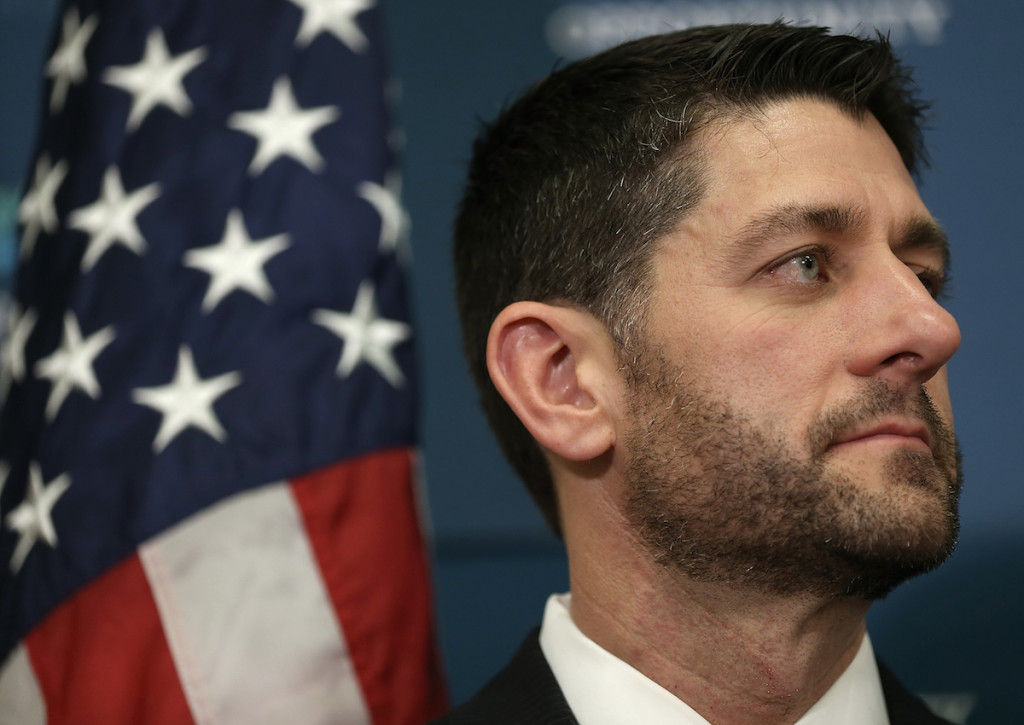
House Speaker Paul Ryan said Thursday the Republican tax plan will aim to reduce the corporate tax rate to mid- to low-20 percent – a smaller cut than what President Donald Trump wants. Ryan is providing some specifics as the GOP starts to write legislation overhauling the tax system, with help for the middle class a main goal. Trump, who made overhauling taxes a pillar of his push for economic growth, has called for a 15 percent tax rate for corporations. The rate now ranges from 15 percent to 35 percent. Some experts say a 15 percent rate isn’t possible without blowing a hole in the deficit. Ryan recognized that as he discussed a higher range during an appearance at a New York Times forum. “Numbers are hard to make that work,” he said. Ryan expects tax legislation to pass Congress this year. “This is our No. 1 priority this fall,” he said at a Capitol Hill news conference later Thursday. “It’s about growth. It’s about fairness. It’s about finally giving American families a tax break.” Revising the nation’s tax system for the first time in three decades is a GOP priority in the wake of the collapse of efforts to repeal and replace former President Barack Obama‘s health care law. But Hurricane Harvey and Trump’s decision to rescind a program protecting some 800,000 immigrants from deportation have saddled Congress with new challenges. When Trump blocked the program known as Deferred Action for Childhood Arrivals, created by Obama through administrative action in 2012, he gave Congress six months to act. To ensure money for hurricane relief, Trump overruled congressional Republicans and his own treasury secretary Wednesday to cut a deal with Democrats to keep the government operating and raise the U.S. debt limit. The already compressed timetable for coming up with an overhaul of the tax system came under further pressure with Congress’ additional and urgent workload. Treasury Secretary Steven Mnuchin said Thursday he thinks “it’s still very viable to get it done this year.” “We’ve made a lot of progress” in talks with GOP congressional leaders, Mnuchin said in an interview on Fox Business Network’s “Mornings with Maria.” ”Our objective is to get this done.” Asked whether he was worried about a revolt by Republicans in Congress if a tax overhaul isn’t achieved, Mnuchin said, “I’m not worried about any GOP revolt at all. You know we’ve been meeting with them on the tax plan. We have an understanding on this tax plan.” Republished with permission from the Associated Press.
Alabama ranked 8th lowest tax burden in the U.S., says study
With less than a week remaining until Tax Day, Americans across the country are finding the current tax code too confusing to determine exactly how much their home states are actually taking from their income in taxes. Which is why personal finance website, WalletHub, conducted an in-depth analysis of states with the highest and lowest tax burdens. As luck would have it for Alabamians, the state ranks toward the bottom of the list of states with the highest tax burdens in the country with the 8th lowest tax burden in the country. Tax Burden in Alabama (1=Highest, 25=Avg.): 43rd: Overall tax burden (7.41%) 49th: Property tax burden (1.51%) 35th: Individual income tax burden (1.90%) 16th: Total sales and gross receipts tax burden (4%) In order to determine which states tax their residents most aggressively, WalletHub’s analysts compared the tax burdens of the 50 states by measuring property taxes, individual income taxes, and state and gross receipts taxes — the three components of state tax burden — as percentages of the total personal income in each state. While Alabama ranked the 8th lowest in overall tax burden, the state ranked as the nation’s 16th highest sales tax burden. “The least fair tax is the sales tax specifically sales tax levied on life’s necessities, such as food purchased in grocery stores,” said David Shock, a professor of political science at Kennesaw State University an expert who weighed in on the study. Shock explained that southern states, like Alabama and Tennessee, the poor often pay a higher percent of their wages in state and local taxes have because these states still tax grocery items, while many states across the country no longer tax such necessities. Here’s how the entire country ranked: Source: WalletHub